


Understanding casino bonus codes in Australia
Anyone searching for a casino bonus code in Australia is looking for a working key — a string of letters, a promotional token, a phrase pasted at the cashier — that unlocks something extra at an online casino. That key, when it works, almost always belongs to an offshore site the ACMA has already moved against. Reading this page before chasing one is the cheaper option, because the bonus the code promises and the conditions attached to it almost never line up in the player’s favour. The rest of the page works through what a code actually unlocks, what it costs to clear, and where the legal exposure sits when the site issuing it has no Australian licence.
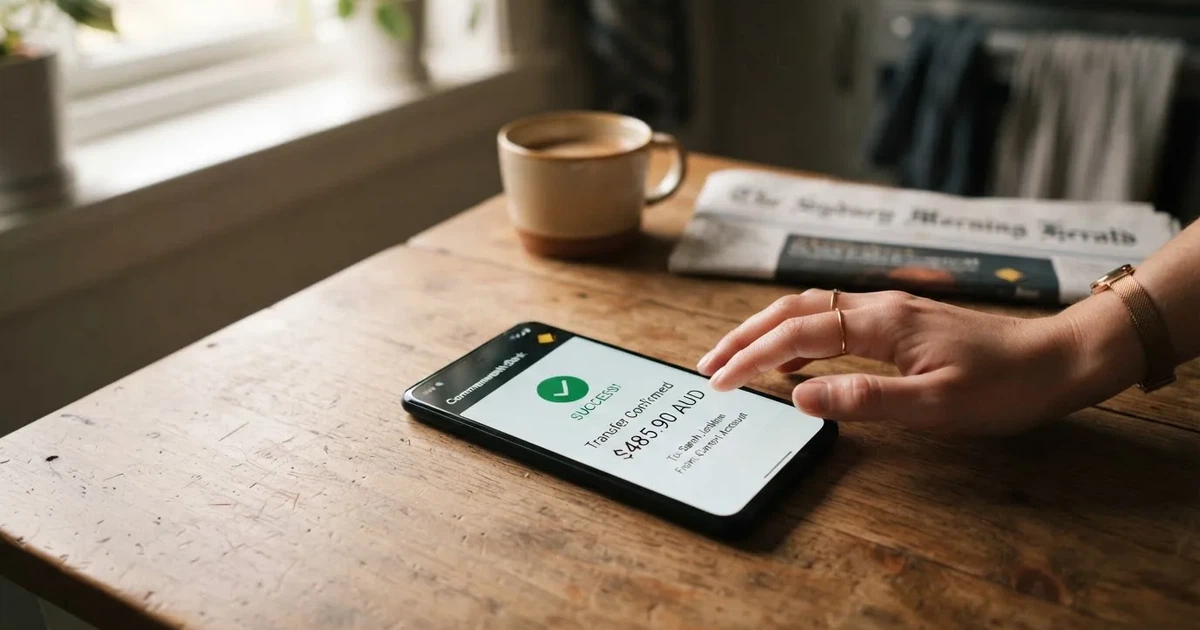
Current as of 29 October 2026, checked against the ACMA register of formal warnings and blocking actions, and against the Australian Payments Plus public documentation for PayID, Osko and BPAY.
Table of Contents
- Settlements, transfers and the bonus-code cashier
- Fundamentals of a bonus-code offer
- How this ranking is put together — and what it can and cannot do
- Legality — what the Interactive Gambling Act actually prohibits
- Responsible gambling — what the protections cover, and what they do not
- Operator write-ups — what the ACMA record shows
- What the blocking cadence actually looks like
- What an Australian player is actually choosing between
- Frequently asked questions
Settlements, transfers and the bonus-code cashier
Payment method availability
| Deposit Method | Licensed Site Status | Offshore Site Status |
|---|---|---|
| Debit Card | Allowed | Allowed |
| Bank Transfer | Allowed | Allowed |
| PayID / Osko | Allowed | Allowed |
| Credit Card | Banned | Often Accepted |
| Crypto | Banned | Often Accepted |
A bonus code sits at the cashier of an offshore casino, and it is the moment between deposit and play where most of the conditions are actually locked in. The code is just a switch — it tells the site’s engine which promotional balance to credit and which set of terms to attach. The interesting money is in what happens after.
How deposits settle when a bonus code is in play
Players who fund a casino account through an Australian bank generally move money one of three ways. A PayID transfer, using a phone number, email or ABN as the address, shows the recipient’s name before the transfer is sent and arrives in under a minute through the Osko rail. A standard BSB-and-account transfer to a bank account held in the casino’s name can sit in pending for longer, particularly on weekends, and reaches the casino wallet only when the receiving bank clears it. BPAY, the bill-payment service that has run through Australian online banking since 1997 and sits at more than 140 banks and 95,000 billers, is not built for casino deposits — the Biller Code and Customer Reference Number pair addresses a bill, not a person, and the casino’s wallet has no CRN to print.
The New Payments Platform, the infrastructure that carries PayID and Osko, was opened to the public on 13 February 2018, and by April 2025 more than 25 million PayIDs had been registered across it. Participants in the platform are required to keep monthly outages to two minutes or fewer — a tight ceiling for an Australian audience that has grown used to instant settlement, and the reason an Osko transfer almost never stalls where an older transfer might.
The bonus code, if the site accepts it, is usually applied at the deposit step rather than the withdrawal step, which means the wagering requirement is calculated against the deposit and bonus together the moment the funds land. A PayID deposit that arrives in under a minute starts the wagering clock earlier than a bank transfer that sits pending — a small thing, but on a 40x requirement it is several hours of play that the slower route loses for free.
Where the cashier runs into Australian bank policy
Australian banks have spent the last few years adding friction to gambling flows, and three of them matter here. Westpac’s gambling block is set at card level — the issuing bank refuses authorisation on transactions carrying the merchant category code that flags betting and casino activity, on eligible personal credit and debit cards. Commonwealth Bank offers a similar lock through its app, with the same caveat: most gambling transactions are blocked, none can be guaranteed blocked. ANZ’s block extends beyond the plastic card into the wallet — transactions made through Apple Pay on an eligible ANZ card are blocked, not just the underlying card transaction. Removing the ANZ block once it is on requires a 48-hour cooling-off period.
Apple Pay’s spread in Australia is significant enough to be worth naming — by the end of 2025, Apple Pay, Google Pay and Samsung Pay together accounted for around 45% of all card payments in Australia by number. The wallet route is no longer an edge case, it is the dominant way many Australians pay online, which is why a bank block that does not reach into the wallet is partly leaking. ANZ’s wallet-aware block is the more thorough of the three.
Amex sits outside this discussion in a particular way. Under the Reserve Bank’s July 2025 review, surcharges on Mastercard, Visa and eftpos transactions are proposed for removal — Amex is explicitly left outside the scope of the proposed ban, because it is a three-party scheme rather than the four-party model of the card networks. A casino site that quotes an Amex deposit may therefore carry a different cost basis than one that quotes a Visa or Mastercard deposit, even at the same headline stake. American Express has been issuing cards since 1 October 1958 and processes transactions itself; that is the structural reason it sits apart, not a marketing choice.
What AUSTRAC sees and what it does not
The AUSTRAC threshold-transaction reporting rule applies to physical cash transfers of A$10,000 or more — ordinary electronic bank transfers are not subject to per-transaction reporting, whatever the amount. A PayID transfer of A$2,000 to a casino’s published account holder is not, by itself, an AUSTRAC event. What an offshore casino’s bank account is registered as under AUSTRAC’s reporting categories is a different question, and one the player does not have access to — the threshold rule does not protect a payment, it just means the threshold is not the line the player should think in terms of.
The other line worth knowing is the credit-card ban that came in on 11 June 2024 under amendments to the Interactive Gambling Act. Australian-licensed wagering services cannot accept payment by credit card or credit-related product, and the same logic applies to credit-funded digital wallets like Apple Pay linked to a credit card. A site that asks an Australian player for a credit card deposit at the cashier is operating outside Australian rules, regardless of what bonus code it has just accepted.
See also Understanding casino promo codes in Australia.
Fundamentals of a bonus-code offer
A bonus code is a marketing lever, not a gift. The deposit it unlocks carries an attached set of conditions, and the conditions determine whether the player ever sees the bonus balance as cash. Three of those conditions matter more than the rest.

What the code technically unlocks
At sites that issue them, the code changes one or more of three things. It selects which promotional balance is credited, and which one matters because the bonus balance is usually non-withdrawable until the wagering requirement clears. It can adjust the wagering multiple — the number of times the combined deposit and bonus must be turned over before any of it becomes withdrawable. It can also change the maximum-bet-per-spin rule, the contribution rate of different game types, or the maximum cashout cap that applies to winnings earned from the bonus.
A no-deposit code is a different shape — it credits a small bonus or a bundle of free spins without requiring a deposit, and the conditions attached are usually tighter: a higher wagering multiple, a maximum cashout cap of two or three times the bonus value, and a short window in which the wagering has to clear. The mechanism is the same; the numbers the player works against are smaller and the conditions are heavier, because the casino is funding the play rather than the player.
Wagering requirements in plain language
A 40x wagering requirement on a A$100 bonus means the player has to place A$4,000 worth of bets before any of the bonus balance becomes withdrawable. The contribution rate is the second number to find — slots typically contribute 100% of each bet to the requirement, table games often contribute 10% or less, and a few game types contribute nothing. A player running a A$100 bonus through blackjack at 10% contribution needs to bet A$40,000 to clear what the same bonus would have cleared in A$4,000 on slots.
The maximum-bet-per-spin rule is the third trap. A typical offshore site caps bets at A$5 while a bonus is active; a single bet above the cap usually voids the bonus and any winnings earned from it. The cap is enforced automatically — it is not a rule the casino tells the player about when the bet is placed.
Time limits and the expiry question
Bonus codes almost always carry an expiry, and it usually attaches in two places. The code itself may stop being valid after a promotion window closes, often a week or two from issue. The bonus balance, once credited, then has its own expiry — typically 30 days from credit, sometimes 7, occasionally 14. If the wagering requirement is not cleared inside that window the bonus balance is removed, and any winnings earned from it go with it. The casino’s own terms page carries these dates, but the marketing email that delivered the code usually does not.
A free-spin bundle attached to a code carries the same shape, with a tighter expiry — free-spin winnings are typically credited as bonus balance, which then carries its own wagering requirement and its own expiry. Two windows, both short, stacked on top of each other.
How this ranking is put together — and what it can and cannot do
This page lists eleven brands the ACMA itself has named in a formal warning. It is not a ranking. The ACMA’s register is the only ordering principle that matters, because every brand on this list is one the regulator has moved against for offering a prohibited interactive gambling service to people in Australia, and the order of the names is the order in which the warnings were issued or in which they were re-issued over the same operator.
What this list can do is give a player a clear answer to one question: which offshore casino brands have been formally warned, who is operating them, and how recently. What it cannot do is give a player a working bonus code. The ACMA’s register is not a coupon book — it is the regulator telling the Australian public, and the Australian internet service providers it then directs to act, that these sites are offering a product that cannot be licensed here. The marketing terms that surround each brand are affiliate material, not independent verification, and that is the line this page stops at.
The criteria that separate one entry from another are therefore narrow: which company the ACMA named, when the warning was issued, whether the same operator was warned over additional brands in the same group, and the payment-method shelf the brand sits on as reported by payment-method listings. Bonus size, wagering multiple and game catalogue are deliberately not criteria here, because the only sources for them are affiliate marketing pages that profit from the click.
The landscape, in one table
The columns below are not bonus terms — they are the regulator’s record. A dash marks a field the ACMA’s published warning does not carry.
| Brand | ACMA action and date | Operator named by the ACMA | Subject support |
|---|---|---|---|
| RocketPlay | Formal warning, March 2026 (Pulsup Ltd); earlier warning, May 2022 (Dama N.V.) | Pulsup Ltd | listings-only |
| Level Up Casino | Formal warning, May 2022 | Dama N.V. | listings-only |
| Woo Casino | Formal warning, March 2025 | Dama N.V. | — |
| Spirit Casino | Formal warning, May 2025 | Dama N.V. | — |
| National Casino | Formal warning, July 2025 | Consolutetish S.R.L. | listings-only |
| Bizzo Casino | Formal warning, July 2025; earlier warning, 2022 (TechSolutions) | Consolutetish S.R.L. | listings-only |
| Ignition Casino | Formal warning, July 2025 | Bamboo Media | — |
| Instant Casino | Formal warning, February 2025 | EOD Code SRL | listings-only |
| Jackbit | Formal warning, April 2026 | Ryker B.V. | — |
| Casino Intense | Formal warning, April 2025 | Sterplay Holding Ltd | listings-only |
| Sky Crown | Formal warning, September 2022 | Hollycorn N.V. | — |
The “listings-only” tag on subject support means the brand has been written up in third-party listing or payment-method pages consulted in researching this page, not that it has any verified standing. A dash means no listing consulted carries that brand on the subject, and the brand is therefore not affirmed or denied on the payment-method axis here.
Understanding casino bonus codes in Australia — More on this topic at casino payout.
Legality — what the Interactive Gambling Act actually prohibits
Online casino games and online pokies cannot be licensed anywhere in Australia, no matter what licence badge the site displays. The Interactive Gambling Act 2001, as tightened by the Interactive Gambling Amendment Act 2017, makes it an offence to provide those products to a person physically in Australia. What can be licensed is wagering on racing and sport placed before the event, lotteries and keno — in practice, licensed by the Northern Territory Racing and Wagering Commission, which oversees 52 of Australia’s online bookmakers, including Sportsbet, Bet365 and Ladbrokes, despite operating with no full-time staff and meeting once a month in Darwin.
The legal exposure sits with the operator, not with the player. The IGA targets the provider of the prohibited service. An individual Australian who plays at an offshore casino is not prosecuted. What that player loses is the consumer-protection side of the deal: no Australian complaints body, no recourse if a withdrawal is refused, no guarantee that the balance sitting in the offshore wallet is reachable when the site is added to a blocking list.
Enforcement at the blocking layer
The ACMA investigates complaints, issues formal warnings and directs Australian internet service providers to block illegal sites. As reported in June 2026, a total of 1,751 illegal gambling and affiliate marketing websites had been blocked since the first blocking request in November 2019, and more than 230 unlicensed gambling services had left the Australian market since enforcement was strengthened in 2017. The blocking cadence is continuous — the June 2026 round alone added 12 more names: 7Signs, ChromaBet, Donbet, Duospin, Freshbet, Slots Gem, Jacks Club, Lucky Start, Pointsbetz, Spinrise, Vinyl Casino and Wildsino.
H2 Gambling Capital’s 2025 estimates put Australian losses to illegal gambling at around A$3.9 billion a year, with the share of gambling going through legal channels falling from 74% in 2021 to 64%. The legal channel is shrinking as a share of the market even as the blocking list grows — a counter-intuitive pattern that reflects how quickly new offshore sites replace blocked ones, and how far affiliate marketing reaches before any one site lands on the ACMA’s radar.
The 2026 reform package
The Interactive Gambling Amendment (Gambling Reform) Bill 2026 passed Parliament on 19 August 2026. Its advertising and inducement measures commence on 1 January 2027. This is a law with a start date, not yet in force at the time of writing — a marketing email offering a bonus code in late 2026 is governed by the existing framework, not by the new one. The relevant change for a page about bonus codes is the inducement-side tightening, which is the part of the package aimed squarely at the kind of promotional content this page is about. It is worth flagging because it is the next thing the marketing terms attached to a code will be tested against.
Responsible gambling — what the protections cover, and what they do not
Australian player-protection infrastructure is built around Australian-licensed services. An offshore casino sits outside every one of the mechanisms below, which is why a player using a bonus code at one is functionally unprotected by them.
BetStop and the state registers
BetStop, the National Self-Exclusion Register, has been live since August 2023. It binds Australian-licensed online and phone wagering services — an offshore casino is not connected to it, and a self-exclusion registered on BetStop does not carry across to a Curaçao-licensed site that the ACMA has just added to a blocking list. State-level self-exclusion schemes operate on the same logic: they bind the venues and licensed operators in their jurisdiction, not the offshore marketing channel.
Gambling Help Online
The National Gambling Helpline is 1800 858 858 — free, 24/7, with web chat at Gambling Help Online. The service is the right place to start for a player who is reading this page because they have already moved money to an offshore site and want to think through what to do next. The line is staffed around the clock and is set up to handle the conversation that the offshore site will not.
What the offshore channel does not provide
An offshore site gives no Australian consumer protection, no complaints body, no enforced withdrawal timeline, and no guarantee that funds sitting in the wallet are reachable when the site is blocked. A balance that sits on a site the morning it is added to the ACMA’s blocking list is a balance the player may not see again — the IGA does not require the offshore operator to refund, and the player’s bank will not reverse a settled PayID transfer. That is the asymmetry this page is built around.
Operator write-ups — what the ACMA record shows
Each brand below is one the ACMA has formally warned under the Interactive Gambling Act 2001. The write-up covers what the regulator has on record, the operator behind the brand as the ACMA names it, and what the surrounding material in the listings consulted actually carries. No bonus terms are reproduced — affiliate material is not an independent source, and that line is held throughout.
RocketPlay
The ACMA issued a formal warning to Pulsup Ltd over Rocketplay in March 2026. The same brand had been the subject of an earlier Dama N.V. warning in May 2022 — two operators over the same URL is a change of corporate wrapper rather than a change of product. Online casino games cannot be licensed in Australia, and the site’s claims to the contrary do not change that. Subject support on the payment-method side is carried by gambling-industry listings only.
Level Up Casino
The ACMA issued a formal warning to Dama N.V. in May 2022 covering Level Up among five other brands. Dama N.V. has been one of the more frequently warned operators on the ACMA’s register, which is itself information — a single warning is a regulatory moment; a pattern of warnings is a business model. The brand is named in Westpac’s documentation around gambling transactions, which puts it on the bank’s radar at the merchant-category level rather than at the player-policy level.
Woo Casino
The ACMA issued a further formal warning to Dama N.V. over Woo Casino in March 2025. The Dama N.V. shelf is now a thick one on the ACMA’s record, with three of the eleven brands on this list — Level Up, Woo and Spirit — sitting under the same operator. This data does not surface the brand on the subject, and the summary focuses strictly on the regulator’s formal warnings.
Spirit Casino
The ACMA issued a formal warning to Dama N.V. over Spirit Casino in May 2025, the third of the Dama N.V. warnings relevant to this list. The pattern of warnings over the same corporate operator is the read here — three brands, three dates, one company, the same product category. No subject-matter listings were found for this brand.
National Casino
The ACMA issued a formal warning to Consolutetish S.R.L. in July 2025 covering National Casino alongside Bizzo Casino. National Casino is named in third-party listings consulted, including the ACMA’s own site and the AUSTRAC documentation around gambling transaction categories, and is also flagged on BetStop-adjacent listings. The brand sits across several registers, none of them positive.
Bizzo Casino
The ACMA issued a formal warning to Consolutetish S.R.L. over Bizzo Casino in July 2025 — the same Consolutetish warning that covered National Casino. Bizzo had already been the subject of a 2022 formal warning to TechSolutions (CY) Group Limited and TechSolutions Group N.V., so the brand carries two operators and two dates on the regulator’s record. Industry data categorizes this brand under listings-only, reflecting third-party aggregation rather than verified site standing.
Ignition Casino
The ACMA issued a formal warning to Bamboo Media over Ignition Casino in July 2025. Bamboo Media is the operator the regulator named in the warning; the brand’s payment-method footprint in the listings consulted is not carried. Ignition is one of three brands named in the same July 2025 batch that includes National Casino and Bizzo Casino — a single month, two operators, three brands, one product type.
Instant Casino
The ACMA issued a formal warning to EOD Code SRL over Instant Casino in February 2025. The brand is named in listings consulted around ecoPayz and PayID, which is one of the more unusual positions on the list — the payment-method shelf reads onto a wallet product the player might be asked to fund at the cashier, rather than the standard bank-transfer axis. A player who has searched for the brand by name and is reading this section is also the kind of player who has been asked to fund an account through a non-bank rail, and that combination is the one to be careful about.
Jackbit
The ACMA issued a formal warning to Ryker B.V. over Jackbit in April 2026 — the most recent warning on this list and the one closest to the page’s publication window. The same Ryker B.V. warning also covered CasinOK, so the operator carries two brands on the same warning. The brand does not appear in subject-specific datasets.
Casino Intense
The ACMA issued a formal warning to Sterplay Holding Ltd over Casino Intense in April 2025. The brand is named in listings consulted across the AUSTRAC and BetStop axes, and is also flagged on gambling-industry listings. Casino Intense is one of the more thoroughly listed brands on this page, and the listings-only tag is the right one because the listings are not verification — they are the same marketing-channel material the ACMA’s warning is aimed at.
Sky Crown
The ACMA issued a formal warning to Hollycorn N.V. over its Sky Crown and Blue Leo casino services in September 2022 — the earliest warning on this list. The Hollycorn N.V. shelf on the regulator’s record is the same shape as the Dama N.V. shelf: one operator, multiple brands, the same product category. The brand’s payment-method footprint in the listings consulted is not carried.
What the blocking cadence actually looks like
This data highlights the scale of the blocking effort. The ACMA’s blocking record starts in November 2019, and as of June 2026 a total of 1,751 illegal gambling and affiliate marketing websites had been blocked. The June 2026 round added 12 sites in a single action.
That gives a band — a long-run average that smooths the early enforcement years and the recent enforcement years into a single rate. The first blocking request was in November 2019; the count reached 1,751 by the June 2026 reporting round. Across roughly six and a half years of enforcement, that is an order-of-magnitude picture: somewhere between 200 and 300 sites added to the blocking list each year, on average, with monthly batches running between a handful and a dozen at a time. The rate has not been steady — the early years saw fewer blocks as the framework was being built out, and the recent years have run hotter as the ACMA’s resourcing has scaled.
The figure to keep is the asymmetry. A blocking round that adds 12 sites in a single month is not matched by 12 sites leaving the offshore market — the operator can register a new domain, open a new corporate wrapper, and start again. The 230-odd unlicensed services that have left the Australian market since 2017 is the cleaner number: the blocking list grows faster than the exit list, and the gap is the volume of new offshore entry that the ACMA has to keep up with.
What an Australian player is actually choosing between
A player who has read this page and decides to play anyway is choosing between two things, neither of them a clean option.
The Australian-licensed channel offers pre-event sports and race wagering, lotteries and keno. No casino games, no pokies, no live dealer tables, no bonus codes tied to those products. The deposit routes are debit card, bank transfer, PayID through Osko, and BPAY — and the credit-card ban that came in on 11 June 2024 closes off the credit-funded side of the wallet, including credit-funded Apple Pay. The bonus offers that do exist on the licensed channel are smaller and simpler than the offshore equivalent, because the inducement-side rules are tighter and the wagering requirements are spelled out in Australian consumer law.
The offshore channel offers the product this page is about — online casino games, pokies, live dealer tables — and a bonus code at the cashier to go with it. The deposit routes are more varied, including crypto at some sites and credit card at others. The wagering requirements are heavier, the maximum-bet-per-spin caps are enforced automatically, and the conditions attached to a free-spin bundle are tighter. The bonus code is the marketing wrapper on top of all of that, and the wrapper is what the player pays for in the end, because the wagering requirement is calculated against the bonus and the conditions are the cost.
The choice is not between a good offer and a bad one. It is between a regulated channel that does not offer the product, and an unregulated channel that offers the product with a marketing wrapper the regulator has already moved against. Reading this page does not resolve that choice. Reading it before chasing a bonus code makes the choice less surprising.
Frequently asked questions
What does a casino bonus code technically unlock at the site that issues it?
A bonus code is a switch at the cashier that selects which promotional balance is credited and which set of terms is attached. It can adjust the wagering multiple, the maximum-bet-per-spin cap, the game-contribution rate, or the maximum cashout ceiling. The code is not a discount — it is the entry point to the conditions the bonus carries.
Is it legal for an offshore casino site to advertise bonus codes to visitors in Australia?
No. The Interactive Gambling Act 2001, as amended in 2017, makes it an offence to provide online casino games, online pokies or in-play betting to a person in Australia. A bonus code attached to those products is part of the prohibited offering, not something separate from it. The ACMA’s enforcement action against the brands on this list is the live demonstration of how that rule operates.
Do bonus codes typically expire, and how is that usually disclosed?
Yes, and usually in two places. The code itself stops being valid after the promotion window closes — typically one to two weeks from issue. The bonus balance, once credited, then has its own expiry — typically 30 days, sometimes 7 or 14. The expiry dates are on the casino’s terms page, not always on the marketing email that delivered the code.
What wagering requirements are commonly attached to a bonus-code offer?
The common shape is a 35x to 50x multiple on the combined deposit and bonus, with slots contributing 100% of each bet to the requirement and table games contributing 10% or less. A maximum-bet-per-spin cap of around A$5 is enforced automatically during the bonus period. A maximum cashout cap of two to three times the bonus value is common on no-deposit offers.
Can entering a bonus code change the minimum deposit an offshore site requires?
Sometimes. A bonus code can unlock a lower minimum deposit — typically A$10 or A$20 instead of the site’s standard A$30 — and a matched percentage at the same time. The wagering requirement is calculated against the deposit and bonus together from the moment the funds land, so the lower minimum does not lower the turnover the player has to clear. It lowers the entry point, not the cost.
Why does the ACMA warn about offshore sites regardless of what bonus codes they advertise?
Because the prohibited product is the casino game itself, not the marketing wrapper around it. A bonus code is part of the inducement to use a prohibited service — it does not change the legal status of the service being offered. The ACMA’s warnings are about the product category, which is why the same operator can be warned over multiple brands and why the warnings keep coming.