


Best casino in Canberra 2026: what the legal venue costs and what the offshore alternatives hide
 Available in US
Data current as of 24 September 2026; verified against the ACMA blocking register and the ACT Gambling and Racing Commission’s casino licence record.

Canberra has one legal casino and a single address for it: Casino Canberra, at 21 Binara Street, in the city centre. Beyond the door, an Australian reader searching for the “best casino in Canberra” finds an online world of offshore sites no Australian regulator licenses, and a regulator — the ACMA — that has named eleven of them in formal warnings. This page walks through both. It sets out what Casino Canberra actually offers on the floor, what each of the eleven offshore alternatives in the comparison looks like, and what each path costs a player in plain dollar terms.
Table of Contents
- The venue: Casino Canberra, 21 Binara Street
- Games on the floor: tables, poker, and the absence of pokies
- The shortlist: eleven offshore sites the ACMA has named
- Fundamentals: the legal landscape and the basic mechanics
- The prohibition: how the IGA 2001 makes offshore casinos unlawful
- Player wellbeing: safeguards outside the four walls of Casino Canberra
- Frequently asked questions
The venue: Casino Canberra, 21 Binara Street
Casino Canberra sits at 21 Binara Street, a few minutes’ walk from Civic and Glebe Park in the Canberra central business district. The building was the first legal casino in the Australian Capital Territory, opened on a parcel of land excised from Glebe Park under a 99-year lease. There is no hotel attached, no theatre, no shopping precinct — just a gaming floor, two lounges and a bar. For an Australian punter weighing the “best casino in Canberra” question, the answer starts here and ends here: this is the only place in the ACT licensed to run gaming tables.
The licence, the lease, and the building
The licence that authorises Casino Canberra to operate sits inside the ACT’s Casino Control Act 2006 and the Casino Control Regulation 2006. The ACT Gambling and Racing Commission is the body that administers both. On 23 December 2014, the commission issued the ACT casino licence to Aquis Canberra Pty Ltd under section 22 of the Act; that licence is now held by Casino Canberra Limited. The lease on the land — 99 years from when the casino first opened — is what binds the premises to Glebe Park for the next several decades, regardless of who holds the operating licence.
Employee licensing is part of the same framework. The commission issues short-term casino employee licences valid up to six months, and full licences valid for three years. That cadence — short renewals for new starters, longer for established staff — is part of how the regulator keeps the venue’s workforce under continuous scrutiny. It is also the framework the rest of the ACT’s gambling regulators work within.
The cost frame this licence creates is two-sided. A player walking into Casino Canberra carries the consumer protection of the ACT framework — a venue inspected by the commission, a workforce licensed under it, a complaints path through the territory’s gambling-harm structures. The same framework does not extend to anything outside the building. The 21 Binara Street address is the only address at which the framework applies.
What’s not in the building
Casino Canberra is the only casino in Australia not licensed to operate poker machines. Every other state and territory casino runs a pokies floor; Casino Canberra runs only tables. There is also no hotel. The 99-year lease prevents the operator from building one on the excised Glebe Park land, and the Casino Control Act 2006 does not give the licence holder the right to add accommodation as an afterthought. There are no theatres and no retail. The building is a gaming venue, two lounges, a bar — and that is the lot.
The cost of that absence shows up in two places for a punter. A visitor from out of town who wants to stay on-site has to walk to a hotel across Civic instead. A gambler who prefers poker machines over tables has to find another ACT venue — there were 3,587 gaming machines operating in 46 venues across the territory on 1 November 2023 — or accept that Casino Canberra simply doesn’t run them.
The ACT-wide picture for that fall-back is not pretty. Player losses across the territory’s gaming-machine venues totalled about A$0.19 billion in the 2022–23 financial year. South Australia, by comparison, runs 11,672 gaming machines outside Adelaide Casino across 471 venues, with losses of about A$0.92 billion in the same financial year — roughly A$497 per adult. Queensland runs 21,122 gaming machines across 351 venues. A reader who treats Casino Canberra’s no-pokies policy as an inconvenience should weigh it against what those pokies cost the punter who uses them.
How Casino Canberra compares to Adelaide and Brisbane
Three state-territory casinos sit at the top of any Australian comparison. Adelaide Casino, on North Terrace in the heritage-listed Adelaide railway station, runs 90 gaming tables and around 950 gaming machines, and adds the EOS by SkyCity hotel tower — 120 rooms — that opened in 2021 after a roughly A$330 million precinct redevelopment. Casino Canberra, by contrast, runs 39 gaming tables and no machines. The Treasury Casino in Brisbane used to run more than 80 tables and over 1,300 machines, with a hotel and six restaurants; it closed on 25 August 2024 to make way for The Star Brisbane at Queen’s Wharf, a A$3.6 billion precinct that opened in stages from 29 August 2024.
What unifies them, and what doesn’t, is the regulatory bed each sits in. Adelaide Casino holds the only South Australian casino licence, extended to 30 June 2035 under the Casino Act 1997. The licence was formalised on 11 October 2013 and it allows the casino to expand up to 200 gaming tables and 1,500 gaming machines subject to redevelopment. Adelaide Casino is regulated by South Australia’s Independent Gambling Authority and the Liquor and Gambling Commissioner; in the 2007–08 financial year alone it paid more than A$41 million in taxes and charges to the state. Casino Canberra holds the only ACT casino licence under the Casino Control Act 2006, and runs a fraction of the footprint.
The Star Brisbane at Queen’s Wharf has been a different story. In late 2022, the Queensland Government, acting on an independent review by former Court of Appeal judge Robert Gotterson, found Star Entertainment Group unsuitable to hold its Queensland casino licences after concluding it had misled regulators and failed its anti-money-laundering duties. Star was fined A$100 million on 9 December 2022, with a 90-day suspension of the Treasury Brisbane and Star Gold Coast licences deferred to 1 December 2023 to allow remediation. Queen’s Wharf opened amid concerns about the licence position of its lead partner. Casino Canberra has no comparable disciplinary finding against its current operator, and the regulator’s published register carries no current enforcement against Casino Canberra Limited.
The Star Brisbane at Queen’s Wharf was developed jointly by Star Entertainment Group and Hong Kong-based Chow Tai Fook Enterprises. That joint-venture structure is itself a contrast with Casino Canberra, which sits under a single ACT-licensed operator. For a reader weighing where the ACT’s regulatory rigour sits in the national picture, Casino Canberra’s clean disciplinary record and its narrow, table-only setup are the two pieces that distinguish it from Adelaide’s larger-scale licence and Brisbane’s recent troubles.
Games on the floor: tables, poker, and the absence of pokies
Casino Canberra runs 39 gaming tables. They cover blackjack, roulette, baccarat, craps and other table games — the standard fare of any Australian casino floor, with no poker machines bolted onto the side. Two non-table spaces share the building: a poker lounge and a sports lounge. For a punter weighing “best casino in Canberra” by what they can actually play at the venue, this is the floor they get.
What the 39 tables cover
A reader who searches for “canberra casino baccarat”, “canberra casino blackjack” or “canberra casino craps” is asking about the same floor. Casino Canberra’s table mix covers all four of those games, with roulette and baccarat typically running at higher minimums than blackjack. The 39 tables is the headline number, and unlike the bigger state casinos it does not get split across a “high limit” and a “mass” floor — most of what runs at Casino Canberra is mid-stakes, with the table minimums set by the operator within the ACT Casino Control Regulation 2006 framework.
The poker lounge sits apart from the tables. It is the only place in the venue where the punter is wagering against other players rather than against the house, which is one reason poker players treat it as the closest thing to a “skill” contest in the building. The sports lounge runs separately — a screen-and-seat setup for race and sports betting through the venue’s wagering partners. Search queries for “canberra casino slots” or “canberra casino online pokies” return nothing inside Casino Canberra: there are no slots and no online pokies on this floor.
The unique absence of pokies
Casino Canberra is the only casino in Australia without poker machines. The 99-year lease and the Casino Control Act 2006 sit behind that: the licence as issued does not authorise gaming machines. The rest of the ACT is not pokies-free — there were 3,587 gaming machines operating in 46 venues across the territory on 1 November 2023, with player losses of about A$0.19 billion in 2022–23 — but the casino is.
That asymmetry has a cost consequence the reader should see. Table games at Casino Canberra — particularly blackjack played with basic strategy and the banker bet on baccarat — carry a house edge closer to 1% than the 7% to 15% range that poker machines run at in other ACT venues and in clubs and pubs state by state. South Australia, for comparison, sets a minimum gaming-machine return-to-player rate of 87.5% with a maximum bet of A$5.00 outside the casino; Adelaide Casino itself has no maximum-bet limit. Casino Canberra’s table-only setup is, for the punter, a higher-stakes-per-hour activity than the average pokie, but a lower expected-loss-per-dollar-wagered one than the pokies they would otherwise be playing across Civic.
The framing is worth pausing on. “Best casino” in the search results sense might suggest the venue with the most games. Casino Canberra has fewer games than Adelaide, fewer than Brisbane used to have, and none of the pokies that the rest of Australia’s clubs and casinos run. It is the best casino in Canberra only because it is the only casino in Canberra — and because the table-heavy mix it does run is, dollar-for-dollar, less expensive to lose on than the pokies the rest of the territory offers.
What “online pokies” means at Casino Canberra
Searches for “canberra casino online pokies” return nothing on the floor. Online pokies cannot be offered to Australians by any licensed operator; the Interactive Gambling Act 2001, as strengthened by the 2017 amendments, makes the supply of online casino games — pokies included — a prohibited interactive gambling service, regardless of the offshore licence the site displays. The detail of that prohibition sits in the section on legality below, but the practical result is that Casino Canberra’s floor is the only legal way a Canberra-based punter plays pokies-adjacent games: at a table, with chips in front of them, in a building at 21 Binara Street.
The shortlist: eleven offshore sites the ACMA has named
The brands below are not a ranked list. They are the eleven offshore operators the Australian Communications and Media Authority has issued a formal warning over for offering prohibited interactive gambling services to people in Australia. The warnings are public, dated, and tied to the parent company named by the ACMA on each one. None of them holds an Australian licence that would authorise online casino games for Australians.
The table sets them out by the date the ACMA named them, the parent company the regulator named in the warning, any earlier warning covering the same brand, and where the brand otherwise surfaces in public listings — which is no-data for several of them, meaning research carries no listing pages where they appear.
| Casino | Formal warning | Operator named by the ACMA | Earlier warning | Where it surfaces in listings |
|---|---|---|---|---|
| RocketPlay | March 2026 | Pulsup Ltd | Dama N.V., May 2022 | — |
| Level Up Casino | May 2022 | Dama N.V. | — | Wikipedia; VGCCC |
| Woo Casino | March 2025 | Dama N.V. | — | Wikipedia |
| Spirit Casino | May 2025 | Dama N.V. | — | — |
| National Casino | July 2025 | Consolutetish S.R.L. | — | ABC News; infrastructure.gov.au |
| Bizzo Casino | July 2025 | Consolutetish S.R.L. | TechSolutions, 2022 | — |
| Ignition Casino | July 2025 | Bamboo Media | — | — |
| Instant Casino | February 2025 | EOD Code SRL | — | — |
| Jackbit | April 2026 | Ryker B.V. | — | — |
| Casino Intense | April 2025 | Sterplay Holding Ltd | — | ABC News; Asian Gaming Brief; CBS SA |
| Sky Crown | September 2022 | Hollycorn N.V. | — | Wikipedia |
The shapes of these warnings are not uniform. Two brands — RocketPlay and Bizzo Casino — have been warned twice, on each occasion with a different parent company named. Eight brands have a single warning each. Hollycorn N.V.’s September 2022 warning covered both Sky Crown and Blue Leo; only Sky Crown is on this list, but the parent company was named over the full portfolio. The newest warning is March 2026 (RocketPlay); the oldest is September 2022 (Sky Crown). Three different parent operators appear across the eleven warnings: Dama N.V. appears four times, Consolutetish S.R.L. twice, and the rest once each.
RocketPlay — warned twice, by two different operators
RocketPlay is the only brand in this shortlist that the ACMA has named twice, and the second warning is a tell. The first came in May 2022, when the ACMA issued a formal warning to Dama N.V. covering six brands at once — Bambet, Dazard, Level Up, RocketPlay, Wild Tornado and Cobra Casinos. The second came in March 2026, naming Pulsup Ltd as the operator behind Rocketplay.com.au. Two formal warnings, four years apart, two different parent companies: the ACMA treats RocketPlay as a recurring target rather than a one-off slip.
Each warning cites the Interactive Gambling Act 2001: providing online casino games to people in Australia is a prohibited interactive gambling service, regardless of any offshore licence the site displays. RocketPlay carried Curaçao-style credentials across both periods of operation; the IGA cares about the customer location, not the licence the operator holds. The subject-support material research has for the brand is no-data — RocketPlay does not appear on Wikipedia, the VGCCC site, or in mainstream Australian coverage in a way that adds anything beyond the ACMA warning itself.
The reader-facing cost here is the same one any prohibited site carries: no Australian consumer protection, no complaints body, no recourse if a withdrawal stalls or refuses. The IGA does not prosecute the player — but the ACMA can direct Australian internet providers to block the domain, and that block can come down on a site where the reader still has a balance. The register is the closest thing the Australian regulator offers to a list of brands to read twice before depositing.
Level Up Casino — a 2022 Dama N.V. warning
Level Up Casino sat inside the same six-brand warning the ACMA issued to Dama N.V. in May 2022 — the one that also named Bambet, Dazard, Rocketplay, Wild Tornado and Cobra Casinos. Dama N.V. has since become one of the most-named operators on the ACMA’s register; this warning was just the first of several in this shortlist. Level Up is the cleanest example of the pattern because it carries no second warning. The regulator named it once, in 2022, and that is the entirety of Level Up’s public Australian enforcement record.
The brand surfaces in listings beyond the ACMA register. Wikipedia carries a page on Level Up Casino, and the Victorian Gambling and Casino Control Commission has referenced the brand in the context of international counterpart monitoring. Neither listing treats Level Up as a brand a Victorian punter can lawfully use — both reflect the same Australian prohibition the ACMA’s warning sits behind. The listings are useful as evidence the brand has operated under a recognisable name across the period the warning covers, not as a route in.
For a reader weighing whether to try Level Up as a substitute for Casino Canberra, the question is not winning or losing. It is whether they are willing to deposit with a brand the regulator has asked ISPs to block.
Woo Casino — Dama N.V.’s March 2025 warning
Woo Casino came under a separate Dama N.V. formal warning in March 2025. The ACMA had already warned Dama N.V. over the six-brand cluster in May 2022; Woo was not in that first wave. Two years and ten months later, the regulator returned to Dama N.V. and named Woo specifically. The gap between warnings is a useful piece of context: it tells the reader the ACMA’s enforcement is not a single sweep, and that the parent company’s portfolio continued to operate after the 2022 wave.
Woo surfaces in public listings beyond the ACMA register — Wikipedia carries a Woo Casino page. That page reflects the brand’s offshore operation; it does not authorise use by Australians. The Australian position on Woo is the same as for Level Up: the IGA prohibits the supply of online casino games to people in Australia, and the ACMA’s March 2025 warning tells ISPs the site is a candidate for blocking.
The cost to a reader considering Woo is twofold. The first is the same lack of Australian consumer protection any offshore site carries. The second is that Dama N.V. has now been named twice by the ACMA, across two different brand-level warnings. The parent company is on the regulator’s list, and Woo is the most recent way that parent has been called out. The headline on the Woo site is “online casino”. The headline on the IGA is “prohibited interactive gambling service”. The reader sits between those two.
Spirit Casino — Dama N.V.’s May 2025 warning
Spirit Casino is the third Dama N.V. brand in this shortlist and the fourth ACMA warning over the parent company. It came in May 2025, two months after Woo. By this point the ACMA’s pattern of Dama N.V. action is unambiguous. 2022 was the broad sweep over the six-brand cluster. 2025 was a series of brand-level follow-ups. Spirit is one of those follow-ups.
No public Australian sources or independent listings provide details on the operator beyond what the ACMA warning states. This absence of supplementary information does not reflect on the brand’s seriousness; it simply leaves the reader with the regulator’s own documentation as the only verified record.
For an Australian punter, the cost calculus on Spirit is unchanged from Woo Casino and the 2022 Dama N.V. cluster: offshore operation, no Australian licence, ACMA warning that names a parent company the regulator has been after for three years. The reader who deposits on Spirit is gambling against a house edge the regulator has formally said is being offered illegally.
National Casino — a Consolutetish S.R.L. warning
National Casino sat inside the July 2025 warning the ACMA issued to Consolutetish S.R.L., which also named Bizzo Casino. The two brands share an operator. Consolutetish S.R.L. is a less-familiar name on the ACMA’s register than Dama N.V., but the July 2025 warning put it on the map in this shortlist.
National does surface in public listings beyond the ACMA warning. ABC News has covered the brand, and infrastructure.gov.au references it. Neither makes National usable in Australia — the IGA’s prohibition is on supply, not on coverage. The listings reflect the brand’s prominence in the offshore market rather than any Australian authorisation.
The recurring message here, for a reader weighing Casino Canberra’s 39 tables against a National Casino sign-up, is that the second option operates outside the Australian framework by the regulator’s own description. The cost on the National side is not the loss rate. Table-game loss rates are broadly similar offshore. The cost is the loss of protection: a withdrawal that stalls cannot be adjudicated by the ACMA, and a balance the reader keeps on the site can be stranded when the ACMA asks Australian ISPs to block the domain.
Bizzo Casino — warned twice, by two different operators
Bizzo Casino is the second brand in this shortlist with two warnings behind it. The first came in 2022, when the ACMA named TechSolutions (CY) Group Limited and TechSolutions Group N.V. over Bizzo. The second came in July 2025, when the regulator named Consolutetish S.R.L. — the same operator it named over National Casino in the same round.
That the ACMA returned to Bizzo with a different operator is a stronger signal than a repeat warning over the same parent. It tells the reader the brand has changed hands — moved from one offshore operator group to another — and the regulator is tracking the brand through the change rather than letting the rebrand reset the enforcement record. Three years apart, two different operators, the same brand.
Bizzo has no presence in the public listings research can verify beyond the ACMA warnings. No Wikipedia page. No ABC News or Asian Gaming Brief coverage. No entry on infrastructure.gov.au or the VGCCC site. The reader gets no independent evidence the brand is what it claims to be beyond the regulator’s repeated naming.
For an Australian punter, depositing on Bizzo in 2026 is depositing on a brand the ACMA has named twice — most recently in July 2025 — and is one ACMA round away from being added to the next blocking request.
Ignition Casino — a Bamboo Media warning
Ignition Casino came under the July 2025 warning to Bamboo Media. It is the only brand in this shortlist whose operator name is a single word on the register (“Bamboo”) without the usual corporate suffix. The July 2025 round also named Consolutetish S.R.L. over National Casino and Bizzo Casino — Bamboo Media sat alongside that operator in the same month’s enforcement activity.
The brand has no presence in the public listings research can verify beyond the ACMA warning. The reader gets no independent confirmation Ignition Casino is what it claims to be, beyond the regulator’s naming.
For an Australian reader who searches “Ignition Casino Australia” and lands on the site, the cost framework is unchanged from the rest of this list: prohibited supply under the IGA, no Australian licence, no recourse. The fact that the operator name is shorter and less corporate-flavoured than most on this list does not change the IGA’s reach. Bamboo Media is the company the ACMA has named. Ignition Casino is the brand it operates. Both sit on the public warning register.
Instant Casino — an EOD Code SRL warning
Instant Casino was the subject of the February 2025 warning the ACMA issued to EOD Code SRL. The brand-name “Instant Casino” is the kind of label a reader could plausibly type into a search engine when looking for a quick gambling session — and the ACMA’s February 2025 warning is what comes back.
EOD Code SRL is not a name that appears elsewhere on this shortlist. It is one operator, one warning, one brand. The reader does not have any listing pages on Wikipedia, ABC News or the VGCCC to verify the operator’s history. The ACMA warning is the only public document research can verify names the brand and its operator.
The cost to an Australian reader is the prohibition cost: the IGA prohibits the supply, the ACMA has formally warned the operator, no Australian consumer protection regime applies. For a punter who treats “instant” as a feature, the only way to read that feature as a cost they understand is to recognise that an instant casino account can be just as instantly blocked as it was opened — and the regulator has the form letter for that.
Jackbit — a 2026 Ryker B.V. warning
Jackbit came under the April 2026 warning to Ryker B.V. It is the second most recent warning in this shortlist — the most recent is the March 2026 warning over RocketPlay, also in this list. The April 2026 round also named CasinOK, a brand not on this shortlist but named in the same Ryker B.V. warning.
The brand has no presence in the public listings research can verify beyond the ACMA warning. Ryker B.V. is a fresh name on the ACMA’s register compared to Dama N.V. or Consolutetish S.R.L. — one warning, two brands, no follow-up sweep yet. The reader has no listing pages to confirm the brand’s offshore credentials independently.
The cost calculus is the same as every other brand in this shortlist: prohibited supply, no Australian licence, ACMA warning that names an operator. What Jackbit adds is timing. It is on the register as of April 2026. For an Australian reader looking for a “best online casino” this month, Jackbit is one of the most recently named brands the regulator has called out. That is the freshness signal — and it cuts the other way a reader might expect. The regulator has just been here.
Casino Intense — a Sterplay Holding Ltd warning
Casino Intense came under the April 2025 warning to Sterplay Holding Ltd. The brand surfaces in public listings beyond the ACMA register — ABC News has covered it, Asian Gaming Brief has reported on it, and CBS South Australia has referenced it. Three independent listings across three different jurisdictions, none of which authorises the brand’s supply to Australians.
The CBS South Australia entry is worth a note: the brand has appeared in coverage relating to the Consumer and Business Services regulator in South Australia, which is the body that handles some gambling-related consumer complaints at a state level. That listing does not make Casino Intense lawful in Australia — the IGA still prohibits the supply — but it tells the reader the brand has been visible to Australian regulators outside the ACMA as well.
For a reader weighing Casino Intense against Casino Canberra, the cost of the offshore option is unchanged from the rest of the shortlist. They are weighing a venue with 39 tables, no pokies, no hotel, and a 99-year lease against a brand that has surfaced in ABC News, Asian Gaming Brief and CBS South Australia — but never with an Australian licence behind it.
Sky Crown — a Hollycorn N.V. warning
Sky Crown is the oldest warning in this shortlist. The ACMA issued a formal warning to Hollycorn N.V. in September 2022 over its Sky Crown and Blue Leo casino services. Blue Leo does not appear on this shortlist, but the warning covered both brands — and Hollycorn N.V. is the only operator on this list whose warning covered more than one brand at once.
The brand surfaces in public listings beyond the ACMA register: Wikipedia carries a Sky Crown page. That page reflects the brand’s offshore operation; it does not authorise use by Australians.
The reader-facing cost is unchanged from every other brand in this shortlist. What makes Sky Crown distinctive is the timing. A September 2022 warning sits at the front of this list. Three years later, Hollycorn N.V. has not been re-warned in this shortlist, but the ACMA’s overall enforcement record has only grown since — 1,751 blocked sites and counting by mid-2026. Sky Crown sits near the start of that timeline. The brands warned over RocketPlay and Jackbit sit near the end. The reader looking at this list in 2026 is looking at a brand the regulator named three years ago and a brand the regulator named last month.
Fundamentals: the legal landscape and the basic mechanics
The reader who searched “best casino in Canberra” probably wanted a shortlist. What they have instead is a single legal venue and an enforcement record naming eleven offshore alternatives. This section sketches the legal landscape behind that contrast — what the Interactive Gambling Act 2001 prohibits, what it allows, and what an Australian punter can and cannot do with the brands in the comparison table above.
The IGA targets the supplier, not the player. The Act, as amended by the Interactive Gambling Amendment Act 2017, makes it an offence to provide a “prohibited interactive gambling service” to a person physically in Australia. Online casino games, online pokies and in-play betting are all prohibited interactive gambling services under the IGA. What the Act does not prohibit is the act of gambling itself by an individual — the player who deposits with an offshore site is not the subject of an IGA prosecution. The site is.
What is allowed is narrower than many readers expect. Licensed online and telephone wagering on races and sport placed before the event is licensable — in practice, by the Northern Territory Racing and Wagering Commission, which regulates 52 of Australia’s online bookmakers including Sportsbet, Bet365 and Ladbrokes. Lotteries and keno are also licensable. What is not licensable, in any Australian state or territory, is online casino games — table games, slots, live dealer — for Australians.
The regulatory map behind the prohibition has three moving parts. The ACMA investigates and issues formal warnings, and directs Australian internet service providers to block sites. The state and territory casino regulators (in the ACT’s case, the ACT Gambling and Racing Commission) issue licences for the physical venues the law does authorise. The Northern Territory Racing and Wagering Commission holds the de facto national role for online wagering, with no full-time staff and a once-a-month meeting cadence in Darwin.
For an Australian reader, the practical implication of this map is binary. The only casino in Canberra that authorises a player to wager under Australian law is Casino Canberra at 21 Binara Street. Every other brand that markets a “casino” to an Australian IP address is offering a prohibited service, and the regulator has named eleven of them in this shortlist alone. The cost of choosing an offshore brand is not a wagering edge — those edges are broadly similar to a land-based table. The cost is the absence of any Australian consumer protection when the offshore site does not pay.
The fundamental mechanics of the prohibition also reach payment. Since 11 June 2024, credit cards, credit-related products and digital currency have been banned as payment for licensed online wagering in Australia. Penalties for operators offering credit-card or crypto deposit routes run up to A$247,500. Legal deposit routes for licensed wagering are debit card, bank transfer, PayID/Osko and BPAY. A site asking an Australian for a credit card or a crypto deposit is operating outside the Australian rules — and the offshore sites in this shortlist are by definition outside Australian rules.
The 2026 reform package is in the wings but not yet in force. The Interactive Gambling Amendment (Gambling Reform) Bill 2026 passed Parliament on 19 August 2026. Its advertising and inducement measures commence on 1 January 2027. Until that commencement date, the framework this section describes is the operative one. A punter in 2026 who signs up with one of the eleven brands above is signing up under the IGA-as-amended-in-2017 framework, not the 2027 one.
The prohibition: how the IGA 2001 makes offshore casinos unlawful
The Interactive Gambling Act 2001 sits behind every warning in the comparison table above. This section sets out what the Act prohibits, how the ACMA enforces that prohibition, and what the 2026 reform package will change when its advertising measures commence in 2027.
The Interactive Gambling Act 2001, in plain terms
The IGA, as amended by the Interactive Gambling Amendment Act 2017, defines a “prohibited interactive gambling service” as one provided to a person physically in Australia that involves online casino games, online pokies, or in-play betting on sport. The Act targets the supplier: a person or company that provides such a service to an Australian commits an offence, regardless of where the supplier is incorporated. The offshore licence a site displays does not change that. A Curaçao-issued authority, a Malta Gaming Authority licence, an Anjouan registration — none of them authorise supply to Australians under the IGA.
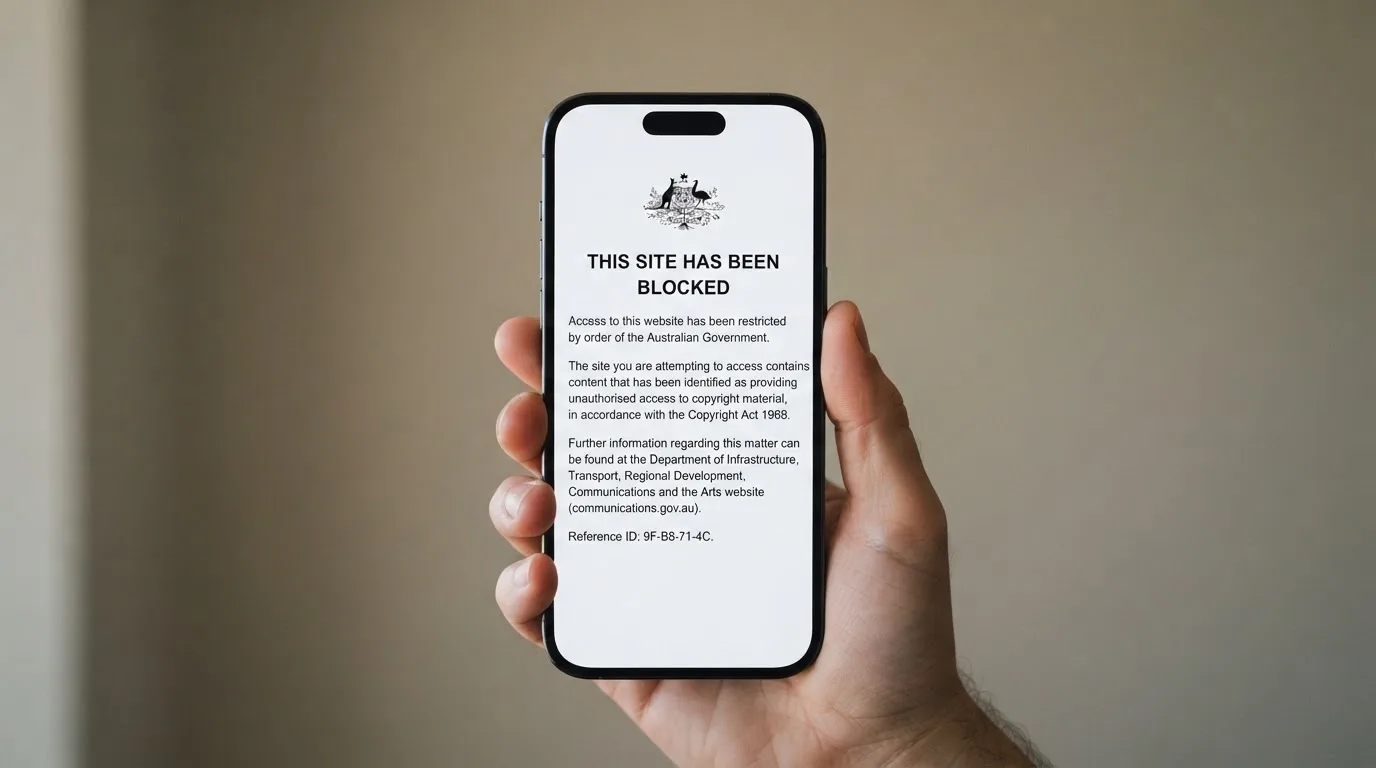
The reader is not the target. The Act does not criminalise the individual player who deposits with an offshore site. What the player loses is not legal standing under Australian law; it is consumer protection. The ACMA cannot adjudicate a complaint about a delayed withdrawal, a refused bonus, or a closed account. Australian internet providers can be directed to block the site. The block can come down with the player’s balance still on the site. The player has no recourse under Australian law to recover it.
What is licensable in Australia, by contrast, is wagering on racing and sport placed before the event, lotteries and keno. Online bookmakers licensed in the Northern Territory — under the Northern Territory Racing and Wagering Commission, which regulates 52 of them including Sportsbet, Bet365 and Ladbrokes — are the legal route for sports and racing bets. The commission has no full-time staff and meets once a month in Darwin. That arrangement is the de facto national framework for online wagering, and it is what the 2017 amendments preserved when they tightened the prohibition on casino-style supply.
For the reader, the practical shape of the prohibition is simple. The 21 Binara Street address is the only one inside the ACT where the prohibition does not bite. Every other casino address a search engine surfaces for an Australian IP is offering a prohibited service. The ACMA’s job is to enforce that prohibition on the supply side. The player’s job, if they want to be on the right side of the line, is to use the venue that does not trigger it.
ACMA enforcement, by the numbers
The ACMA’s enforcement record is the most concrete measure of the prohibition in action.
| Total blocked sites | Date of first blocking request |
|---|---|
| 1,751 sites | November 2019 |
As of the round reported in June 2026, the regulator had asked Australian internet service providers to block 1,751 illegal gambling and affiliate marketing websites since the first blocking request in November 2019. Across the same period, more than 230 unlicensed gambling services had left the Australian market since enforcement was strengthened in 2017. The June 2026 round alone covered 7Signs, ChromaBet, Donbet, Duospin, Freshbet, Slots Gem, Jacks Club, Lucky Start, Pointsbetz.com, Spinrise, Vinyl Casino and Wildsino — twelve sites at once.
What does that running total look like over time? Across the 80 months between the first blocking request in November 2019 and the report in June 2026, the ACMA’s 1,751 blocks average to a pace of roughly 20 to 25 sites a month — a band that masks significant variation between rounds. A quiet month can pass without a single new request, while the June 2026 round alone covered 12. The blocking register grows by round, not by month, and the size of each round has trended up over the period. The blocking request is the regulator’s strongest tool — once a domain is on the register, Australian ISPs stop resolving it, and any Australian player reaching for the URL from inside Australia is redirected to a block notice. The balance the player keeps on the site is not recoverable from the ISP, the ACMA, or any Australian body.
H2 Gambling Capital’s 2025 report provides the demand-side context. Australians lose about A$3.9 billion a year to illegal gambling sites, and the share of gambling going through legal channels fell from 74% in 2021 to 64%. The fall in legal-channel share is what enforcement of the prohibition is trying to reverse; the A$3.9 billion figure is what an unregulated market absorbs while enforcement catches up. Casino Canberra’s own contribution to the legal-channel share is modest — a single venue running 39 tables — but it sits inside the framework that the prohibition preserves.
The eleven brands in the comparison table above sit inside that enforcement record. The ACMA’s formal warnings cover suppliers, not the individual brand domains the player sees — but the warnings name the parent company, and the parent company is the entity the regulator pursues. A brand that has been the subject of one formal warning can rebrand, change parent, and resurface; the warning that covers it stays on the register. The regulator’s record is cumulative. The punter’s exposure is not.
The 2026 reform and what’s next
The Interactive Gambling Amendment (Gambling Reform) Bill 2026 passed Parliament on 19 August 2026. The Bill’s headline measures are advertising and inducement restrictions — the kind of offer an Australian punter sees on a banner ad or in a paid promotion. Those measures commence on 1 January 2027. Until that date, the framework described above is the operative one: the IGA 2001 as amended by 2017, enforced through the ACMA’s blocking register and formal warnings.
What the 2026 reform adds, when it commences, is a tighter regime around inducements — the offers designed to draw an Australian punter onto a site. The Bill does not change the underlying prohibition on online casino supply. That prohibition stays. What changes is the layer above it: the marketing channel.
The reader’s practical takeaway from the 2026 reform is timing. The 11 brands in this shortlist are illegal to use in 2026 under the existing IGA framework. From 1 January 2027, the way they market to Australians changes as well. What does not change is the prohibition itself. A punter who waits out the year for the rules to soften will be waiting in vain: the 2026 reform tightens, it does not loosen.
Player wellbeing: safeguards outside the four walls of Casino Canberra
The safeguards that wrap around gambling in Australia apply unevenly to the two paths this page compares. For Casino Canberra, the ACT’s Casino Control Act 2006 framework, the ACT Gambling and Racing Commission’s licensing regime, and the territory’s own self-exclusion process all apply. For the offshore brands in the comparison table, none of them apply. This section sets out what is in place, what it costs the player to use it, and where the gap sits between the two.

Age, identification, and entry
The minimum age to enter Casino Canberra is 18. Identification is checked at the door. That is the legal floor across Australian gambling venues — the IGA and the state and territory casino acts all set 18 as the entry age. There is no carve-out for the ACT. The ACT Gambling and Racing Commission, which administers the Casino Control Act 2006, also issues casino employee licences — short-term licences valid up to six months for new starters, full licences valid for three years for established staff. The framework treats staff as well as patrons as part of the responsible-gambling regime.
For the offshore brands, age verification is a feature claim, not a regulatory floor. The IGA prohibits the supply to Australians; the Act does not impose an Australian age-verification standard on offshore operators. A reader who is under 18 should not deposit on any brand in the comparison table — but the reader who does so will not be stopped by an Australian regulator.
The cost on the legal side is small but real. Carrying ID to Casino Canberra is the price of entry. The cost on the offshore side is larger than it looks. An under-age punter who passes an offshore site’s own age check is still using a prohibited service. The IGA prohibits the supply; the regulator does not check ages at the door of a site it has blocked.
Self-exclusion and the gap BetStop doesn’t fill
BetStop is Australia’s National Self-Exclusion Register. It launched on 21 August 2023 and is administered by the ACMA. The register covers Australian-licensed online and telephone wagering services — the legal bookmakers licensed by the Northern Territory Racing and Wagering Commission, the licensed lotteries, the licensed keno operators. An Australian punter who registers on BetStop is excluded from those services for the period they nominate.
BetStop does not cover Casino Canberra. The register also does not cover any of the offshore brands in the comparison table above. For in-venue gambling at Casino Canberra, ACT residents wanting to self-exclude use the ACT Gambling Harm Prevention team’s own process — a separate scheme, available for exclusion periods of 6 months to 3 years. For the offshore brands, self-exclusion is whatever the brand itself offers. There is no Australian register binding them.
That gap is the central piece of information an Australian punter weighing a self-exclusion decision needs to understand. BetStop is the right tool for a punter who wants to step back from Sportsbet, Bet365, Ladbrokes and other licensed bookmakers. It does not extend to Casino Canberra. It does not extend to RocketPlay, Level Up Casino, Woo Casino, Spirit Casino, National Casino, Bizzo Casino, Ignition Casino, Instant Casino, Jackbit, Casino Intense or Sky Crown.
For a punter who wants out of Casino Canberra and the offshore sites alike, the practical path is two separate registrations. BetStop handles the licensed wagering. The ACT Gambling Harm Prevention team handles Casino Canberra. The offshore brands handle themselves — at their discretion. A punter who registers on BetStop and assumes the rest is covered is mistaken about what they have registered for.
Help lines and counselling
The ACT Gambling Support Service runs a free, 24-hour Gambling Helpline on 1800 858 858. Telephone, online and face-to-face gambling and financial counselling are all available through the service, which is funded by the ACT Gambling Harm Prevention and Mitigation Fund. The national Gambling Help Online service, reachable through the same number, is also a 24/7 resource — chat, online counselling, self-help tools.
The help lines are not gated by what the player has been gambling on. A punter who has been wagering on RocketPlay, Level Up Casino or any other offshore brand can call. A punter who has been playing tables at Casino Canberra can call. The cost of reaching out is the cost of the call — free, from any Australian phone.
For a punter weighing whether the wellbeing net covers their preferred path, the honest answer is partial. The ACT’s in-venue self-exclusion process covers Casino Canberra. BetStop covers the licensed wagering market. The 1800 858 858 helpline covers the punter themselves, regardless of where they have been playing. The offshore sites in the comparison table above are not part of any Australian self-exclusion scheme, and any self-exclusion they offer is voluntary on their side.
Frequently asked questions
What is the name of the main casino in Canberra?
Casino Canberra, at 21 Binara Street in the Canberra CBD. It is the only casino licensed to operate in the Australian Capital Territory under the ACT Casino Control Act 2006. The licence is now held by Casino Canberra Limited, after being issued to Aquis Canberra Pty Ltd on 23 December 2014.
Where is Casino Canberra located?
Casino Canberra sits at 21 Binara Street, in the Canberra city centre. The building is a few minutes’ walk from Civic and Glebe Park — Glebe Park being where the land was excised from under the 99-year lease that authorised the venue. The site is the only casino site in the territory.
What is the minimum age to enter Casino Canberra?
Eighteen. Identification is checked at the door. The 18-year floor is the same across all Australian casino and wagering venues, set by the IGA and the state and territory casino acts. The ACT Gambling and Racing Commission also licenses Casino Canberra’s staff — short-term licences valid up to six months, full licences valid for three years.
Does Casino Canberra offer blackjack, baccarat and other table games?
Casino Canberra runs 39 gaming tables covering blackjack, roulette, baccarat, craps and other table games, plus a poker lounge and a sports lounge. It is the only casino in Australia not licensed for poker machines. Table minimums are set by the operator under the ACT Casino Control Regulation 2006.
Can Australians legally play at an online casino instead of visiting Casino Canberra?
No. The Interactive Gambling Act 2001 makes it an offence to supply online casino games to a person in Australia. No state or territory licenses them. The ACMA issues formal warnings and directs ISPs to block sites. The player is not prosecuted, but offshore casinos offer no Australian consumer protection or recourse.
Prepared by the Casino Payout Hub editorial staff.