

The search for an Australian online casino, and the legal floor underneath it
 Available in US
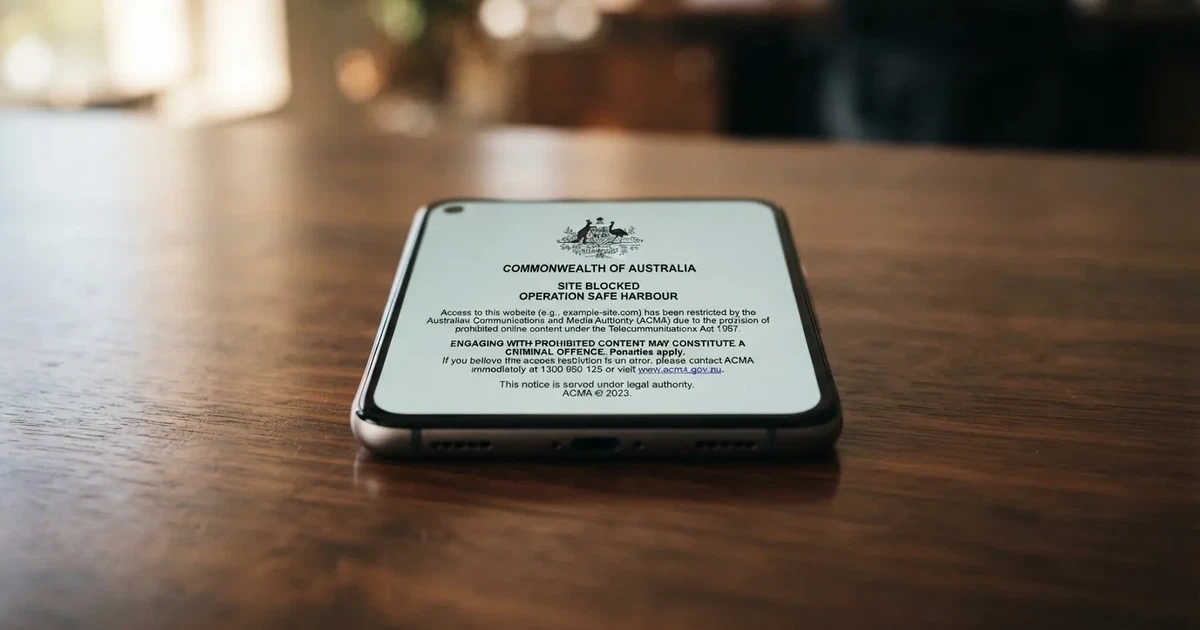
Every shortlist for the best aussie online casino 2026 is built on the same uncomfortable fact: no online casino is licensed to operate in Australia at all. The Interactive Gambling Act 2001 (IGA) — strengthened in 2017 and again in 2023 — makes it an offence for any operator to offer online casino games, online pokies or in-play betting to a person physically in Australia. No state or territory issues a licence for any of it. So when a search result ranks brands, the page is ranking offshore sites running outside Australian law, and the only authority that has anything to say about them — the ACMA — has been telling Australians not to use them. The trade-off isn’t between a good casino and a bad one; it’s between an illegal site and another illegal site.
That changes what “best” can possibly mean on this page. A useful answer looks at the cost to the punter, not at which offshore brand has the slicker welcome screen. It weighs how the money moves, what bonuses actually demand in play, what the ACMA has already said about each operator, and what happens if a withdrawal stalls. The eleven brands below are all on ACMA’s formal warning list. That is the frame, not an accident of selection.
Current as of 24 September 2026 · Licence claims verified against the ACMA register of formal warnings and the Interactive Gambling Act 2001 as in force.

Table of Contents
- Paying in and getting paid out on offshore casinos
- What an “Australian” bonus actually costs
- Playing on a phone
- What counts as a “new” Australian casino
- Ranking offshore casinos is not the same as ranking legal ones
- The Australian online casino landscape, and why the list above is what it is
- What the law says, and what it doesn’t
- What responsible play looks like when the regulator isn’t watching the operator
- The eleven operators, and what each one is worth to a punter
- Reading the warnings in operator-level terms
- What a punter who has already signed up should consider
- Reading the page as a single argument
- Frequently asked questions
Paying in and getting paid out on offshore casinos
What a player pays with, and how reliably it arrives on the other side, is where an offshore site either earns a little trust or loses it instantly. The Australian payments system is one of the fastest in the world for legal products, and the contrast with what an illegal site can offer is sharp. PayID and Osko clear between participating banks in under a minute, around the clock, and more than 25 million PayID identifiers were registered on the New Payments Platform by April 2025. Apple Pay, Google Pay and Samsung Pay together carried roughly 45% of all card payments in Australia by number at the end of 2025. None of that speed applies on the other side of an ACMA warning: the deposit may be instant, but a withdrawal that the operator can stall, cap or refuse is the more expensive half of the trade.
In July 2025 the ACMA issued formal warnings over Ignition Casino, National Casino and Bizzo Casino, the last of which had already been warned in 2022.
In July 2025 the ACMA issued formal warnings over Ignition Casino, National Casino and Bizzo Casino, the last of which had already been warned in 2022.
The rails Australians actually use
-
PayID. An account is identified by a phone number, email or ABN, and the holder’s name appears before a transfer is sent. AP+ warns that a request to send money to a PayID on an illegal gambling site is almost certainly a scam — useful as a sanity check before the deposit button is hit. PayID is offered by more than 100 Australian financial institutions.
-
Osko by AP+. The same near-instant settlement through BSB and account number, available 24/7, even on a Sunday morning.
-
BPAY. A bill-payment rail inside online banking — biller code and a Customer Reference Number — operating in Australia since 1997, with over 140 banks and 95,000 billers on the system. It is owned equally, through Cardlink Services Limited, by ANZ, Commonwealth Bank, NAB and Westpac.
-
Eftpos, Mastercard, Visa debit. Standard debit rails. Credit cards and credit-related products are banned as a payment method for any Australian-licensed online wagering service, and that prohibition has been in force since 11 June 2024. A site that insists on a credit card deposit is a site ignoring the rule the moment a withdrawal is also at stake.
In February 2025 the ACMA issued a formal warning over Instant Casino.
In February 2025 the ACMA issued a formal warning over Instant Casino.
In February 2025 the ACMA issued a formal warning over Instant Casino.
The rails an Australian cannot use on a licensed wagering product
The IGA amendment of 2023 closes off more than the credit card. Digital currency is also banned as a funding source for any Australian-licensed wagering service, so a brand that wants a crypto deposit is operating outside the Australian framework by definition. American Express sits in an unusual position too: the Reserve Bank’s July 2025 review proposes removing surcharges on eftpos, Mastercard and Visa transactions but explicitly leaves Amex outside the scope of the ban. Amex also runs as a three-party scheme rather than the four-party Visa/Mastercard model — it issues its own cards and processes its own transactions — and a surcharge, where a merchant charges one, is the merchant’s call, not Amex’s.
What the banks do on the player’s side
Three of the major banks have built the player a guardrail that doesn’t depend on the casino’s good behaviour. Westpac’s gambling block works at the card level: it refuses authorisation of any transaction registered under the merchant category code “Betting/Casino Gambling” on eligible personal credit and debit cards. ANZ’s gambling transaction block does the same, and reaches further — it also blocks gambling transactions routed through a digital wallet such as Apple Pay on an eligible ANZ card, not just the plastic. Commonwealth Bank offers a gambling lock in the CommBank app that automatically blocks most gambling transactions, though the bank is upfront that it cannot guarantee every gambling-related purchase will be stopped. ANZ adds a quieter cost: turning the block off again requires a 48-hour cooling-off period, which is itself a feature for an account holder who wants friction between an impulse and the deposit button. Each of these is a card-level filter, so it sits above the offshore casino rather than inside it — it protects an account even when the operator is one the ACMA has warned.
Where the speed stops
The “instant” Australian rails are fast on the way in and silent on the way out. AUSTRAC’s threshold-transaction-report rule applies only to physical cash, not to electronic bank transfers, so a large deposit or withdrawal doesn’t trigger a per-transaction report by itself. But the rule that speeds up a PayID transfer does nothing for an offshore site that decides, on its own terms, how long a withdrawal takes — and the terms usually grant the operator days, not minutes. A balance sitting in pending status during that window is a balance the ACMA can also try to block.
What an “Australian” bonus actually costs
Every welcome offer on every offshore site is built from the same ingredients: a bonus amount, a wagering requirement, a maximum cashout, a time limit, and often a list of games that don’t count. Two of those ingredients — the wagering multiple and the cashout cap — decide what the offer is really worth. The marketing word for that is “free”; the arithmetic is less generous.
How a bonus is built
A deposit-gated bonus matches a percentage of what the player puts in: 100% up to a stated cap means a A$200 deposit turns into A$400 of playable balance, on paper. The wagering requirement, expressed as a multiple — typically 35x to 50x — is then applied either to the bonus alone, or to the deposit plus the bonus. The smaller base and the smaller multiple are what an honest welcome package looks like; the larger ones are what a player is asked to do before any of the bonus becomes withdrawable. Free spins attached to the same welcome add an RTP-shaped cost: each spin pays out the slot’s stated return, less the house edge, and the wagering requirement usually wraps around the winnings rather than the stake.
What the wagering multiple hides
A 40x multiplier on a A$200 bonus is A$8,000 of required turnover before any winnings become cash. At a typical slot stake of A$1 per spin, that is 8,000 spins; at five seconds per spin, the clearing time runs into a working day’s worth of uninterrupted play. A player who reads the bonus as a gift hasn’t read the multiplier. A player who reads the multiplier hasn’t read the game weighting — slots often count 100% toward the requirement, but table games frequently count 10% or zero, so a blackjack hand meant to clear the same bonus is in reality ten times more expensive in volume.
What a max-cashout cap hides
Even after the wagering is cleared, an offshore welcome bonus often caps the amount that can be withdrawn from bonus-derived winnings — sometimes at a small multiple of the bonus, sometimes at the bonus amount itself. A cap of 5x the bonus on a A$200 bonus is a ceiling of A$1,000 on what the welcome is actually worth in cash, no matter how the run went. The marketing presents the bonus as a path to winnings; the cap is the part of the contract that decides how much of those winnings the player is allowed to take out.
The shape of “no deposit”
A no-deposit bonus — free chips or free spins granted on sign-up, before any money has been sent — looks like the cleanest offer on the market because there is no money at risk. The reality is that no-deposit bonuses carry the steepest multipliers and the tightest cashout caps of any category, because the operator has taken no deposit risk and is pricing accordingly. A A$10 no-deposit chip with a 60x wagering requirement is A$600 of required turnover to clear, with the winnings capped at a small multiple. The offer is real; what it is worth is small.
Playing on a phone
A mobile casino is, in the Australian market, two different things: a downloadable app that the punter installs, or a browser-based site that the phone loads on demand. The offshore market leans heavily on the second; the IGA makes the first a particular kind of problem.
What a browser-based casino looks like on a phone
Most offshore sites run on HTML5, with a responsive layout that resizes to the screen. A modern phone will load a slot in a browser tab, accept a PayID or debit-card deposit, and let the player spin. No installation, no app store approval required, no local footprint on the device. That convenience is part of what makes the offshore market hard to police — the operator’s brand is in a URL, not an installed binary, and a blocked domain can be replaced by another within days.
What an app would mean, and why almost no operator offers one
A downloadable casino app that targets Australian customers would put the operator inside the app stores’ local-distribution rules, and the IGA’s prohibition on providing interactive gambling services to Australians sits uncomfortably with that. The few offshore brands that do offer a downloadable casino APK do so outside Google Play and outside Apple’s Australian App Store, which puts the player in the position of having to side-load an application from an unverified source. The browser-based version avoids that step entirely and is the reason nearly every offshore casino on the ACMA’s list is mobile-first without being app-first.
What the punter gives up to play on a phone
Three small things. The browser version doesn’t push notifications, so a withdrawal confirmation or a session-end reminder has to be something the player checks manually. Mobile data caps and signal dropouts can interrupt a spin mid-feature, which is the worst possible moment to lose connection. And a phone is a smaller screen for the fine print — the wagering multiple, the game-weighting table and the bonus expiry are easier to skim past than to read, and that is the design.
What counts as a “new” Australian casino
A “new” offshore casino is not a fresh legal option opening up locally; it is a brand that has been registered recently enough that its domain isn’t yet on an ACMA blocking list. The novelty is operational, not regulatory — and it cuts both ways.
How fast the new becomes the blocked
The ACMA’s enforcement pace in 2025 and 2026 shows how quickly a fresh offshore brand can attract attention. In February 2025 a formal warning went to EOD Code SRL over Instant Casino; in April 2025 one went to Sterplay Holding Ltd over Casino Intense; in July 2025 warnings went to Bamboo Media over Ignition Casino and to Consolutetish S.R.L. over National Casino and Bizzo Casino, with Bizzo already warned in 2022. In March and May 2025 Dama N.V. picked up warnings over Woo Casino and Spirit Casino; in April 2026 Ryker B.V. drew warnings over Jackbit and CasinOK; in March 2026 Pulsup Ltd drew one over Rocketplay.com.au. A new domain in the offshore casino space is typically six to eighteen months away from its first ACMA notice, and a brand that was new last quarter is usually a brand that has been added to a list by this one.
What the operator gains by being new
A new domain has no ACMA warning, no Australian complaints history and no blocked-domain footnote attached to its name, and that is a marketing asset. It also has no proven track record on payouts. A punter who picks the newest name on the affiliate page is betting that the operator will still be paying withdrawals a year from now — and the ACMA’s rolling tally of 1,751 blocked sites since November 2019 is a reminder of how many offshore brands have not lasted that long.
What the punter should assume
Assume the newness is the marketing and the rest of the operator profile is identical to every other offshore casino on the market: a Curaçao or similar offshore licence, no Australian consumer protection, no connection to BetStop, and a bonus small enough to be plausible only because the wagering multiple is large.
Ranking offshore casinos is not the same as ranking legal ones
A ranking of legal products weighs licence, RTP disclosures, payout time and complaint history against a known regulator. Offshore sites do not comply with that system, so any comparison between them is not a measure of quality or reliability — it is a summary of which brands the regulator has flagged as non-compliant. Any analysis of these sites is constrained by the lack of independently verifiable data.
What the eleven brands on the ACMA list share

Every brand in the comparison below has been the subject of a formal ACMA warning under the Interactive Gambling Act 2001 for offering prohibited interactive gambling services to Australians. The warnings were issued between 2022 and 2026, and the operator names behind them are Dama N.V., Consolutetish S.R.L., EOD Code SRL, Sterplay Holding Ltd, Bamboo Media, Ryker B.V., Pulsup Ltd and Hollycorn N.V. — none of them Australian, none of them licensed to provide online casino games to anyone in Australia. The single thing the comparison can fairly say about them is which operator the ACMA named, when, and over which brand.
What the comparison cannot say
It cannot say which site pays out fastest, because the research set carries no independently verified payout figures for any of the brands; affiliate listings reporting hours or minutes were the only source and they are not the operator’s own data. It cannot say which welcome bonus is worth claiming, because the same problem applies to bonus terms — the only sources were affiliate marketing pages, and they were excluded. It cannot say which is safest for a player, because none of them are licensed in Australia and the offshore licence a site displays is not an answer to a complaint from a person in Australia. What it can say is what the ACMA itself has published.
The ACMA enforcement record
| Brand | ACMA Action and Date | Operator | ACMA Warning Status |
|---|---|---|---|
| RocketPlay | Formal warning, March 2026; earlier warning, May 2022 | Pulsup Ltd (2026); Dama N.V. (2022) | Active |
| Level Up Casino | Formal warning, May 2022 | Dama N.V. | Active |
| Woo Casino | Formal warning, March 2025 | Dama N.V. | Active |
| Spirit Casino | Formal warning, May 2025 | Dama N.V. | Active |
| National Casino | Formal warning, July 2025 | Consolutetish S.R.L. | Active |
| Bizzo Casino | Formal warning, July 2025; earlier warning, 2022 | Consolutetish S.R.L. (2025); TechSolutions (2022) | Active |
| Ignition Casino | Formal warning, July 2025 | Bamboo Media | Active |
| Instant Casino | Formal warning, February 2025 | EOD Code SRL | Active |
| Jackbit | Formal warning, April 2026 | Ryker B.V. | Active |
| Casino Intense | Formal warning, April 2025 | Sterplay Holding Ltd | Active |
| Sky Crown | Formal warning, September 2022 | Hollycorn N.V. | Active |
The right reading of this table is that every name on it sits inside the same regulatory frame: offshore, warned, and unconnected to any Australian consumer-protection body. The differences between rows are which company the ACMA named and when the warning was issued — small distinctions at the level of the legal exposure, much larger ones if a punter is weighing how visible the brand is to Australian enforcement.
The Australian online casino landscape, and why the list above is what it is
The shape of this market is set by the Interactive Gambling Act 2001 and the 2023 amendment that closed off credit and crypto as deposit routes for licensed wagering. Anything that calls itself an Australian online casino is by definition an offshore brand serving a market it is prohibited from serving; the ACMA’s enforcement work is the only public accounting of who is doing it.
What is and isn’t licensed in Australia
Licensed Australian online gambling is wagering — sports and racing — placed before the event, plus lotteries and keno. Online casino games, online pokies and in-play betting are not licensed anywhere in Australia and cannot be. The Northern Territory Racing and Wagering Commission (NTRWC) regulates 52 of Australia’s online bookmakers, including Sportsbet, Bet365 and Ladbrokes — the commission has no full-time staff and meets once a month in Darwin. That thin regulator exists because of the Territory’s wagering tax base, not because online casino is permitted; the NTRWC has nothing to do with a pokies site. New South Wales, Victoria and the ACT run their own lotteries and keno through state-controlled operators, again outside the online casino frame.
What enforcement has actually removed
By June 2026 the ACMA had asked Australian ISPs to block 1,751 illegal gambling and affiliate marketing websites since the first blocking request in November 2019, and more than 230 unlicensed gambling services had left the Australian market since enforcement was strengthened in 2017. In a single round reported on 26 June 2026, the ACMA requested the blocking of 12 more websites: 7Signs, ChromaBet, Donbet, Duospin, Freshbet, Slots Gem, Jacks Club, Lucky Start, Pointsbetz.com, Spinrise, Vinyl Casino and Wildsino. H2 Gambling Capital’s 2025 report puts the annual loss to illegal sites at about A$3.9 billion, and estimates that the share of gambling going through legal channels fell from 74% in 2021 to 64%. That last figure is the most important one on the page for a reader who thinks the offshore market is a niche. It isn’t. It’s the majority of the money.
The rate the ACMA has been removing sites
At 1,751 blocked sites over roughly six and a half years from the first blocking request in November 2019 to June 2026, the ACMA has been adding illegal operators to the blocklist at a rate of around 260 to 280 websites per year on average — closer to 350 in the most recent reporting year as enforcement rounds have grown. In a single late-June 2026 round, 12 sites were added in one batch, a pace that has become typical rather than exceptional. The bandwidth of that removal is the bandwidth a punter should weigh against any new offshore brand that promises to be different.
What an offshore licence on the site is and isn’t
A Curaçao, Anjouan or similar offshore licence displayed in the footer of an offshore casino is a statement that the operator has registered a company somewhere outside Australia; it is not a statement that an Australian complaint has a destination. The IGA targets the provider, not the individual player — no Australian punter has been prosecuted for playing — but the same gap means an offshore site that refuses a withdrawal has no Australian complaints body the player can take it to. A block from the ACMA can also land with a balance still on the account, in which case the operator’s obligations to that balance become a question with no answer.
What the law says, and what it doesn’t
The IGA is the floor, the ACMA is the enforcer, and the difference between a licensed Australian wagering service and an offshore casino is not a matter of licence quality — it is a matter of law. The 2026 reform package sits on top of that.
What the IGA prohibits
The Interactive Gambling Act 2001, as amended by the Interactive Gambling Amendment Act 2017 and the 2023 amendments, makes it an offence to provide online casino games, online pokies or in-play betting services to a person in Australia. The provider is the target; the customer is not prosecuted. Minimum age is 18. The 2023 amendment closed the credit and crypto funding loophole for licensed wagering, which means a licensed Australian bookmaker cannot accept a credit card or a crypto deposit even for a legal product — a credit card deposit request is itself a signal that the operator is outside the Australian rules.
What the ACMA can do
The ACMA investigates complaints, issues formal warnings, and can direct Australian internet service providers to block illegal sites. A formal warning is a published notice naming the operator and the brand, which is why the table above carries operator names rather than just brand names. The blocking mechanism works at the ISP level: an Australian customer’s DNS request for the blocked domain fails to resolve. It is a blunt tool — it also blocks the affiliate marketing page that drove the customer there — but it has been the ACMA’s primary lever since 2019.
What a player can and cannot use as a backstop
BetStop, the National Self-Exclusion Register, has been live since August 2023 and binds every Australian-licensed online and phone wagering service. It does not bind an offshore casino; an excluded punter can still open an account at one. The National Gambling Helpline — 1800 858 858 — is free, confidential and available 24/7, with chat at Gambling Help Online. For someone trying to stop, the helpline is the right call regardless of where they have been playing. The card-level gambling blocks at ANZ, Westpac and Commonwealth Bank are also available regardless of the operator, because they sit on the player’s account rather than the casino’s domain.
The 2026 reform that isn’t yet in force
The Interactive Gambling Amendment (Gambling Reform) Bill 2026 passed Parliament on 19 August 2026; its advertising and inducement measures commence on 1 January 2027. As of the date this page was last checked, those provisions are law with a start date rather than law in force. A reader who sees an inducement offer on an offshore site in 2026 is not seeing a violation of the new advertising rules yet, but is also not seeing an inducement that the Australian licensed market is permitted to make.
Tax, briefly
Winnings of a recreational player are not assessable income under section 6-5 of the ITAA 1997, and losses are not deductible. A punter who carries on a business of gambling is a different matter and should check with the ATO — the rule is not that winnings are taxed; the rule is that they aren’t, unless the ATO treats the activity as a business.
What responsible play looks like when the regulator isn’t watching the operator

The Australian licensed market has BetStop, deposit limits enforced at the operator level and the National Gambling Helpline as a backstop. The offshore market has none of those things. The responsible-play infrastructure that an Australian punter can actually use is on the player side — the banks, the helpline and the self-exclusion register — rather than on the casino side.
What BetStop does, and what it doesn’t
BetStop blocks a registered user from opening new accounts with Australian-licensed online and phone wagering services and from using existing ones. It does not block an offshore casino. A punter who has self-excluded and then moves to an offshore site has moved outside the frame the exclusion was designed for, and the offshore operator has no way of knowing the registration exists. That gap is part of what makes the offshore market unsafe for someone who has already decided to stop.
What the banks add
A gambling block at Westpac, ANZ or Commonwealth Bank sits on the player’s card, not on the casino, so it works against an offshore operator as effectively as it works against a licensed Australian bookmaker. ANZ’s 48-hour cooling-off period before the block can be removed is a deliberate friction point; Westpac’s merchant-category-code filter refuses authorisation at the card network; Commonwealth Bank’s lock in the app is a single toggle. A punter who is serious about stopping should turn at least one of these on before contacting the helpline, because the helpline can advise on the bank tools, and the bank tools can be set before the next impulse arrives.
What the helpline is for
The National Gambling Helpline — 1800 858 858 — is free, confidential and 24/7. Gambling Help Online adds chat and email. The service is for the moment the play has started to feel compulsive or stressful, and it is also for the moment before it. It is not a service that depends on the operator being Australian.
What offshore sites cannot offer
They cannot offer BetStop. They cannot offer an Australian complaints body. They cannot offer a regulator who can compel a payout. They can offer a self-exclusion toggle on their own site, which is a courtesy rather than a binding exclusion, and which is also a feature a player cannot verify from outside the account. The asymmetry between what a licensed Australian wagering service can offer and what an offshore casino can offer is not a matter of quality; it is a matter of jurisdiction.
What the bank-side blocks actually catch
| Bank | Block Type | Feature |
|---|---|---|
| Westpac | Card-level | Refuses transactions with ‘Betting/Casino Gambling’ MCC |
| ANZ | Card-level | Includes digital wallet transactions (e.g., Apple Pay) |
| Commonwealth Bank | App-based | Automated toggle for gambling transactions |
A gambling block on an Australian card sits above the merchant, which is why it works against an offshore site the same way it works against a licensed Australian bookmaker. It is also why the bank-side block is the most reliable piece of responsible-play infrastructure available to a punter, because it does not depend on the operator’s behaviour at all.
How a card-level block decides what to stop
Westpac’s block reads the merchant category code attached to a transaction — specifically the “Betting/Casino Gambling” code — and refuses authorisation when that code matches. An offshore casino that processes its card transactions through an acquirer using the betting MCC will be blocked. ANZ’s block operates at the card level and extends to transactions routed through a digital wallet such as Apple Pay on an eligible card; it does not depend on the wallet itself. Commonwealth Bank’s lock is similar: it is set in the app and applied to eligible cards automatically.
What the blocks don’t catch
The banks are upfront about this. ANZ warns that not all gambling transactions will be blocked, and that some non-gambling transactions might be blocked in error. Commonwealth Bank states it cannot guarantee all gambling-related purchases will be stopped. The block is a high-confidence filter rather than a perfect one, and a punter who relies on it as a total barrier is over-reading what the bank offers.
Why a bank block is more useful than a casino self-exclusion
A self-exclusion on an offshore site is a setting inside a single account on a single brand, and it can be reset by opening another account on another brand. A bank block is a setting inside the player’s own account at a regulated Australian institution, and it covers every merchant in the betting MCC across every brand the punter might try next. It is also a setting that survives the offshore site being blocked by the ACMA — the block on the bank’s side is independent of the block on the ISP’s side, and either one alone would catch most of what the other doesn’t.
Where a card-level block leaves the punter
A bank block does not stop a deposit made through a channel the bank cannot read — a direct bank transfer to an account the operator controls, or a crypto transfer outside the card network. PayID-to-account transfers and BPAY payments can land at a destination the bank doesn’t see as gambling at all. The block is therefore a strong filter on the card rails and a soft filter on the bank-transfer rails, which is part of why the responsible-play guidance for an Australian punter treats the bank block as one layer rather than the whole solution.
The eleven operators, and what each one is worth to a punter
Each brand below is one of the eleven the ACMA has issued a formal warning over. The write-ups are arranged in the same order as the table above; the verdicts close on what the ACMA action itself establishes about the brand, not on its marketing.
RocketPlay
Two formal warnings, one in May 2022 to Dama N.V. and one in March 2026 to Pulsup Ltd over Rocketplay.com.au. Receiving two warnings over four years from two different operators is unusual — the ACMA rarely names the same brand twice, which means the brand either moved operators or was sold between warnings. For a punter, that is the wrong kind of stability: the corporate change happened while the warning record kept growing, and the brand a player signed up to in 2022 is not necessarily the brand a player would sign up to today. ACMA has had to address this brand twice, which highlights a persistent compliance issue.
Level Up Casino
One formal warning in May 2022 to Dama N.V. The brand shares its operator with several others on this list, which means the ACMA’s enforcement work was operating at the company level rather than chasing individual sites one by one. A punter weighing Level Up is reviewing a brand associated with a portfolio that the ACMA has named repeatedly. This company-level pattern is the most critical factor to consider.
Woo Casino
One formal warning in March 2025 to Dama N.V. The brand sits inside the same Dama N.V. portfolio as Level Up, RocketPlay, Spirit Casino and others. The March 2025 warning is the most recent Dama N.V. action on the list, which means the ACMA is still actively pursuing the operator. This operator remains a focus for ACMA enforcement.
Spirit Casino
One formal warning in May 2025 to Dama N.V., two months after the Woo Casino warning. Two warnings to the same operator within three months is a clear signal that the ACMA’s view of Dama N.V. has hardened. The operator-level risk is escalating, and any brand within that portfolio carries that same heightened exposure.
National Casino
One formal warning in July 2025 to Consolutetish S.R.L. The July 2025 round named both National Casino and Bizzo Casino, the latter of which was warned in 2022 under TechSolutions. These multiple warnings show that the ACMA views the operator as the primary target for enforcement rather than individual brands. Operators should be the focus for anyone reviewing enforcement history.
Bizzo Casino
Two formal warnings: one in 2022 to TechSolutions (CY) Group Limited and TechSolutions Group N.V., and one in July 2025 to Consolutetish S.R.L. The 2022 warning was the original action; the 2025 warning followed a corporate change that did not insulate the brand from further enforcement. Brands can be transferred between operators, but the warning remains attached to the service itself, demonstrating that the ACMA pursues the brand regardless of administrative changes.
Ignition Casino
One formal warning in July 2025 to Bamboo Media. The brand operates outside the Dama N.V. portfolio, making it a smaller entity in enforcement terms, with a single warning rather than a widespread pattern. For now, Ignition’s enforcement risk is limited to this one identified action.
Instant Casino
One formal warning in February 2025 to EOD Code SRL. The warning is older than most on this list, which means the brand has had more time to address the ACMA’s notice, yet the warning remains active on the ACMA’s published record. A punter reviewing this should consider the ongoing presence of the warning as a clear indicator of its status.
Jackbit
One formal warning in April 2026 to Ryker B.V., alongside a warning over CasinOK in the same action. The brand is recent on the warning list, which means a punter weighing Jackbit is weighing a brand the ACMA is actively pursuing. Recent enforcement actions carry more weight than older ones, and this brand has clearly caught the regulator’s attention.
Casino Intense
One formal warning in April 2025 to Sterplay Holding Ltd. The brand sits in its own operator-level bucket, separate from the Dama N.V. and Consolutetish S.R.L. portfolios. The verdict is that the operator-level signal is single-warning, and the brand’s own history on the list is short. A punter weighing Casino Intense is weighing a one-name operator with one published ACMA action.
Sky Crown
One formal warning to Hollycorn N.V., published in September 2022. The Hollycorn N.V. warning covered Sky Crown and Blue Leo together, which is the ACMA’s standard practice of naming every brand under one operator in a single action. Sky Crown is the oldest warning on the list — September 2022 — and a punter reading it now is reading a four-year-old enforcement event. The verdict is that the brand has had more time than any other on the list to either resolve the ACMA’s notice or to keep operating regardless, and the warning is a historical fact rather than an active pursuit.
Reading the warnings in operator-level terms
Eleven brands on the list collapse into eight distinct operators, and four of those brands sit inside one operator (Dama N.V.). The ACMA’s pattern over 2022 to 2026 has been to pursue operators rather than chase individual brands, which means the warning list is best read as a list of companies and second-best read as a list of brand names.
What the operator-level view shows
Dama N.V. has been named four times across 2022, March 2025 and May 2025, with warnings covering at least seven brands. Consolutetish S.R.L. was named once in July 2025 covering two brands. Hollycorn N.V., Bamboo Media, EOD Code SRL, Sterplay Holding Ltd, Ryker B.V. and Pulsup Ltd were each named once. The ACMA’s working pattern is to escalate within an operator — Dama N.V.’s four warnings over four years is the trajectory the regulator returns to — rather than to issue one warning per brand and move on. A punter reading the list at the operator level sees a small number of companies and a much larger number of brand names, and the larger number is the marketing, not the substance.
What a punter should take from that
A brand that has changed operators once has changed operators; a brand that has changed operators twice is two warning records long. A brand whose operator has been named four times is the brand most likely to attract the ACMA’s next round of attention. The marketing name on the URL is the variable the operator changes; the warning record the ACMA keeps is the constant.
What a punter who has already signed up should consider
The reader who reaches this point of the page is either choosing whether to sign up or deciding what to do about an account already open. The two cases are different, and the guidance runs in different directions.
Before signing up
The bank-side gambling block at Westpac, ANZ or Commonwealth Bank can be turned on before the first deposit. That single setting — a few minutes in the respective banking app — is the most reliable piece of responsible-play infrastructure available, because it sits above the operator and applies to every brand on this list. PayID gives a name check before the transfer, which is a useful way to see whether the receiving account matches the brand on the URL. The helpline — 1800 858 858 — is free and confidential and is the right call before a deposit if the reader is already uncertain.
After signing up
BetStop registration is the right next step regardless of the operator, because it binds the Australian-licensed wagering services that the punter might otherwise drift into. An offshore casino’s own self-exclusion toggle is a courtesy, not a backstop. A bank-side gambling block applies to deposits, not to balances already on the casino, which is part of why withdrawal terms deserve as much attention as deposit terms before any money is sent. If a withdrawal stalls beyond the operator’s stated time window, the practical recourse is limited: there is no Australian complaints body for an offshore brand, and the ACMA’s enforcement work targets operators rather than disputes.
The cleanest exit
Withdraw whatever balance is in the account before any further play, turn on the bank’s gambling block, and contact the National Gambling Helpline if the decision to stop feels difficult. BetStop then handles the Australian-licensed side; the bank block handles the card rails; the offshore casino’s account can be closed by the player at any time. The asymmetry — that the offshore site cannot bind the player to anything, but also cannot protect the player from anything — is the asymmetry that should shape every step of the exit.
Reading the page as a single argument
This page outlines the legal environment for online gambling in Australia. Players considering offshore options should be aware that the regulator has prohibited the product category, and every operator discussed here has been issued a formal warning for non-compliance. There is no legitimate “best” option in an unregulated market; what follows is an examination of risk.
What the page establishes
The ACMA has been actively blocking sites since 2019, removing thousands of illegal operators from the Australian market. Official figures show that 64% of gambling activity occurs through regulated channels, while 36% remains outside that framework. Banks have also introduced card-level blocks to prevent transactions from reaching offshore entities.
What the page does not establish
Operators to consider carefully. Welcome offers that are complex and difficult to clear. A payout timeline that lacks independent verification. These factors are significant, and reliable data for offshore brands is generally unavailable for independent review.
Frequently asked questions
Is there a licensed online casino based in Australia that Australians can legally join?
No. The Interactive Gambling Act 2001 prohibits the provision of online casino games, online pokies and in-play betting in Australia. Licensed wagering is strictly limited to sports, racing, lotteries and keno, and these services operate under different regulatory frameworks. No state or territory issues a licence for any of them. Any other gambling product is prohibited in this jurisdiction.
What does “best” mean when every option being compared is an offshore, unlicensed site?
It can only describe which offshore brand is least bad for a person who has already decided to play anyway, because the regulator has decided none of them are lawful. The honest comparison is of ACMA enforcement history, withdrawal terms and bank-side protections the player can control — not of welcome bonuses or payout speeds, which are affiliate-marketing figures without an independent source.
How does the ACMA decide which offshore casino sites to warn about or block?
The ACMA investigates complaints, issues formal warnings naming the operator and the brand, and can direct Australian ISPs to block the domain. The pace has been accelerating — roughly 260 to 280 sites blocked per year since November 2019, with 12 added in a single late-June 2026 round — and the pattern has been to pursue operators across multiple brands rather than to chase individual URLs.
Can an offshore casino site legally register an Australian-style web address and call itself Aussie?
The use of “.com.au” is restricted to Australian-registered businesses, and an offshore casino cannot hold one. An “.au” address without “.com.au” is available but carries its own registration rules. A “.au” suffix on the URL is a marketing choice, not a regulatory one — what matters is whether the operator is licensed in Australia, and for online casino games the answer is no, for every operator.
What legal, licensed alternative exists for someone wanting a casino night in Australia?
A land-based casino at Crown Melbourne, Crown Perth, The Star Sydney, The Star Gold Coast, Wrest Point, Country Club or Skycity Darwin is licensed and regulated. These are physical venues, not online products, and they sit inside the Australian gambling framework rather than outside it. The 18-and-over entry, the responsible-conduct officers and the on-site self-exclusion all belong to that licensed frame.
Does any state or territory issue online casino licences to operators serving Australians?
No state or territory licenses online casino games. The Northern Territory Racing and Wagering Commission regulates online wagering — sports and racing — for 52 of Australia’s online bookmakers, but that is a wagering licence, not a casino licence, and the commission has no jurisdiction over online casino products. New South Wales, Victoria, Queensland and the ACT regulate their own lotteries and keno through state-controlled operators, again outside the online casino frame.
Published by the Casino Payout Hub team.