


Offshore ‘most trusted’ casinos in Australia, weighed against the regulator’s record
The phrase “most trusted online casino” sits awkwardly in Australia. The local law — the Interactive Gambling Act 2001 — makes it an offence to supply online casino games to a person physically in Australia, so no Australian licence exists for the brands these rankings name. The “trust” the lists sell is reputation scored offshore: payment speed, support quality, dispute history, bonus terms. The trust the regulator publishes is whether the brand should be allowed to keep serving Australians at all. Eleven brands lead the offshore rankings. The ACMA has issued a formal warning over each one. This page puts those two records side by side.

Data current as of 8 November 2026, cross-checked against the ACMA’s formal warning register and the iGamingBusiness reporting of the 26 June 2026 blocking round.
Table of Contents
- Wellbeing labels and the offshore ‘most trusted’ ranking
- Fundamentals of an offshore casino licence — and where it stops
- Prohibition under the Interactive Gambling Act and how ACMA enforces it
- What player protection actually reaches an Australian offshore gambler
- The eleven operators, one warning at a time
- How fast the ACMA clears the open web
- Frequently asked questions
Wellbeing labels and the offshore ‘most trusted’ ranking
Affiliate “most trusted” lists in Australia are built without an Australian licence to evaluate. There isn’t one to evaluate. Online casino games, online pokies, and in-play betting cannot be licensed anywhere in Australia under the Interactive Gambling Act 2001, so the brands a ranking can recommend are, by construction, offshore. The scoring happens outside the regime the rankings ostensibly serve. A site that pays out fast, answers support tickets promptly, and resolves disputes without confiscating balances earns its “trusted” badge through behaviour that players observe and reviewers aggregate. None of that observation is a check on whether the brand can lawfully accept a deposit from someone in Sydney at 2am.
That is the gap the table below exposes. It lists eleven brands Australian affiliate rankings regularly place near the top of their “most trusted” lists, alongside what the ACMA has formally published about each one. The brand column is the affiliate consensus; the operator column is the regulator’s; the third-party listings column is where the brand itself surfaces in the registers research consulted. None of the columns is a defence of legality. Read across the rows, the same handful of operator names turn up: Dama N.V. holds four of the eleven brands and has been warned about each one. Consolutetish holds two. The brand changes; the corporate vehicle behind it largely doesn’t.
| Brand | ACMA warning date | Operator named by the ACMA | Where the brand surfaces in third-party listings |
|---|---|---|---|
| RocketPlay | March 2026 (also May 2022) | Pulsup Ltd (also Dama N.V.) | Gambling Insider |
| Level Up Casino | May 2022 | Dama N.V. | Westpac |
| Woo Casino | March 2025 | Dama N.V. | — |
| Spirit Casino | May 2025 | Dama N.V. | — |
| National Casino | July 2025 | Consolutetish S.R.L. | ACMA, AUSTRAC, BetStop |
| Bizzo Casino | July 2025 (also 2022) | Consolutetish S.R.L. (also TechSolutions) | Gambling Insider |
| Ignition Casino | July 2025 | Bamboo Media | — |
| Instant Casino | February 2025 | EOD Code SRL | ecoPayz, PayID |
| Jackbit | April 2026 | Ryker B.V. | — |
| Casino Intense | April 2025 | Sterplay Holding Ltd | AUSTRAC, BetStop, Gambling Insider |
| Sky Crown | September 2022 | Hollycorn N.V. | — |
The order is the order the ACMA published these warnings in, grouped by operator. It is not a ranking from most trusted to least. Nothing on the page ranks these brands on trustworthiness — that would require measurement the regulator doesn’t publish and the affiliate sites don’t agree on. The order simply lets the same operator name sit in adjacent rows, which makes the concentration visible.
Three things the table shows without needing commentary. First, every brand on the list carries a formal ACMA warning — a step the regulator takes before directing Australian internet providers to block the site, not a casual note. Second, several operators have been warned more than once. Dama N.V. has received at least three published warnings across its brand group since 2022 — one in 2022 covering six brands, then March 2025 over Woo Casino and May 2025 over Spirit Casino. Consolutetish S.R.L. has been warned over National Casino and Bizzo Casino in July 2025, the second formal warning tied to Bizzo since a 2022 warning to TechSolutions (CY) Group Limited and TechSolutions Group N.V. The operator name changes when the warning round gets close. Third, a handful of brands leave no trace in the third-party registers research checked — the “—” cells. That does not mean they are safer or riskier. It means research could not place them on the side of either argument.
What the table doesn’t show is the cost to a player who follows the ranking. The affiliate list and the regulator list both name these brands; they just don’t agree on what to do with the naming. The affiliate list asks the reader to trust the brand. The regulator’s list asks the brand to stop. The reader sits between two recommendations and chooses.
A ranking that doesn’t check legality isn’t dishonest in the way most readers assume. It is honest about the question it asks — does this brand pay out, does it answer support, does it resolve disputes — and silent about the question it doesn’t. The “most trusted” framing is the framing that confuses the two. The brand is “most trusted” among a population of brands that have all done the thing Australia told them not to do, and the regulator has said so.
The marketing side of this works hard. A trusted-list headline usually leads with a five-star rating graphic, a payout-time chart, and a curated list of bonuses. Each item is real. None of them, individually or together, addresses the regulator. The reader who only sees the marketing page sees a clean, fast, audited brand. The reader who reads the ACMA’s formal warning register sees a brand the regulator has told to stop, twice in some cases. Both readers are looking at the same brand at the same time. The difference is which side of the page they’re reading.
Fundamentals of an offshore casino licence — and where it stops
An offshore casino licence is a permission granted by a foreign regulator to operate a gambling business within that regulator’s jurisdiction. The Curaçao Gaming Control Board, the Anjouan Gaming Authority, the Tobique Gaming Commission — each issues licences on its own terms, in its own jurisdiction, under its own rules. The licence authorises the operator to run a casino, take bets, pay out winnings, and submit to whatever oversight the licensing regime provides. The licence does not, and cannot, authorise the operator to take bets from a country where offering those bets is illegal. A Curaçao licence is a Curaçao permission. It is not an Australian one, and no foreign regulator has standing to override the Interactive Gambling Act 2001 inside Australia.

That is the foundational fact most “trusted” lists leave out, or mention in a footnote sized so the reader skips it. The footer of an offshore casino usually displays the licence — often with a clickable seal, sometimes a licence number, sometimes a verification link to the regulator’s own register. The seal is genuine. The number is genuine. The verification link works. None of those things make the brand legal in Australia. They make the brand licensed somewhere else, which is a different category of fact.
What an offshore licence actually covers is the operator’s conduct inside its own licensing jurisdiction. A Curaçao-licensed casino, if it follows the licence’s terms, is bound by Curaçao’s rules on game fairness, anti-money-laundering reporting, segregated player funds, dispute resolution through the licensing authority, and so on. The player who is also in Curaçao gets the protection of those rules through the Curaçan regulator. The player who is in Australia does not, because Australia’s prohibition on the supply of online casino games means the operator should not be serving them. The protection flows from the licence to the player through the law of the country where the service is being supplied. Australia does not recognise the supply as lawful, so the chain breaks at the Australian border.
This is why an offshore casino’s “trust” can’t be read off the licence seal alone. The seal tells the player which regulator oversees the operator. It does not tell the player which regulator oversees the player’s experience. The player’s experience is governed by the law of the country the player is in when they log in. For an Australian player, that law prohibits the supply. The player is not the prosecuted party — the IGA targets the provider — but the player is also the party with no Australian complaints body to approach if the operator refuses a withdrawal.
The fundamentals here are simple and they don’t move. An offshore licence authorises a business in a foreign jurisdiction. It does not authorise a service to Australians. The brand displays the licence to demonstrate the business is regulated somewhere. The reader in Australia is invited to treat that demonstration as if it also regulated the reader. It doesn’t. The Australian reader sits outside the chain. That is the basic shape of the offshore market.
A useful way to read the licence is to ask three questions. First, which regulator issued it, and does that regulator publish a public register the reader can check? Second, does the brand display a verifiable licence number, and does the regulator’s register match the brand, the domain, and the operator company behind it? Third, does the regulator’s own jurisdiction actually cover the player, or does the player fall outside the licensing regime entirely? For an Australian player, the third answer is the one that determines everything else. No foreign regulator covers an Australian player by default. The brand operates at the reader’s risk, and the reader’s recourse runs through the foreign regulator if the brand’s terms permit, or through no one if they don’t.
The same logic applies to the operators the ACMA has named. Dama N.V. held a Curaçao licence across its 2022 warning round. The licence was real, the regulator’s register showed the operator, and the brand’s footer displayed the seal. None of that changed the ACMA’s position: the supply of online casino games to Australians remained prohibited under the IGA, and Dama N.V. was formally warned for making the supply. The licence and the warning are not in conflict; they operate on different legal axes. The licence says “you may operate in Curaçao”. The warning says “you may not supply to Australia”. Both can be true at once. Both have been true of Dama N.V. since 2022.
A second fundamental: the operator behind the brand is often not the licence holder, and the licence holder is often not the brand. Curaçao-issued licences in particular are issued to operator companies, not to brand names. A single Curaçao licence can cover dozens of brand wrappers, each marketed separately, each with its own bonus structure, its own affiliate team, its own terms page. The “trusted” list reads across the brands. The regulator’s record sits on the operator. Reading one without the other hides the pattern. The table in the previous section puts them side by side; that is the only way to see the concentration.
A third fundamental: even within the licensing jurisdiction, the protection the licence provides is narrower than it looks. Segregated player funds mean the operator keeps customer balances in a separate account from operating capital, so a bankruptcy doesn’t sweep the player’s money. Anti-money-laundering reporting means the operator files reports on large or unusual transactions. Game fairness certification means the random number generators are tested. None of those mechanisms reach a player who has been locked out of an account, denied a withdrawal on a bonus dispute, or told that the operator’s terms permit a confiscation. For those, the player relies on the operator’s own dispute process — and if that fails, the licensing regulator’s complaint mechanism, which is real but slow and offshore, and offers no enforcement against an operator who has already exited the market.
The reader reading the licence seal in the footer should weigh what the seal says against what the seal doesn’t say. The seal says: regulated. It does not say: regulated where you live. It does not say: authorised to take your deposit. It does not say: your withdrawal will be honoured if the operator decides otherwise. None of those things are implied by the seal, and no affiliate “trusted” list — which scores payment, support, and dispute history on the operator’s own terms — substitutes for the protections the seal cannot reach.
Prohibition under the Interactive Gambling Act and how ACMA enforces it
The Interactive Gambling Act 2001, strengthened by the Interactive Gambling Amendment Act 2017, makes it an offence for a person to supply a prohibited interactive gambling service to a person physically in Australia. The term “prohibited interactive gambling service” covers online casino games, online pokies, and in-play betting on sport. Racing and sports wagering placed before the event, lotteries, and keno are not prohibited and can be licensed — in practice, the Northern Territory Racing and Wagering Commission (NTRWC) regulates most of Australia’s online bookmakers, including Sportsbet, Bet365, and Ladbrokes. The NTRWC has no full-time staff and meets once a month in Darwin. The regulation of legal online wagering in Australia is, structurally, a thin committee in the Top End. The prohibition of online casino is the main event, and the main event’s enforcement sits with the ACMA.
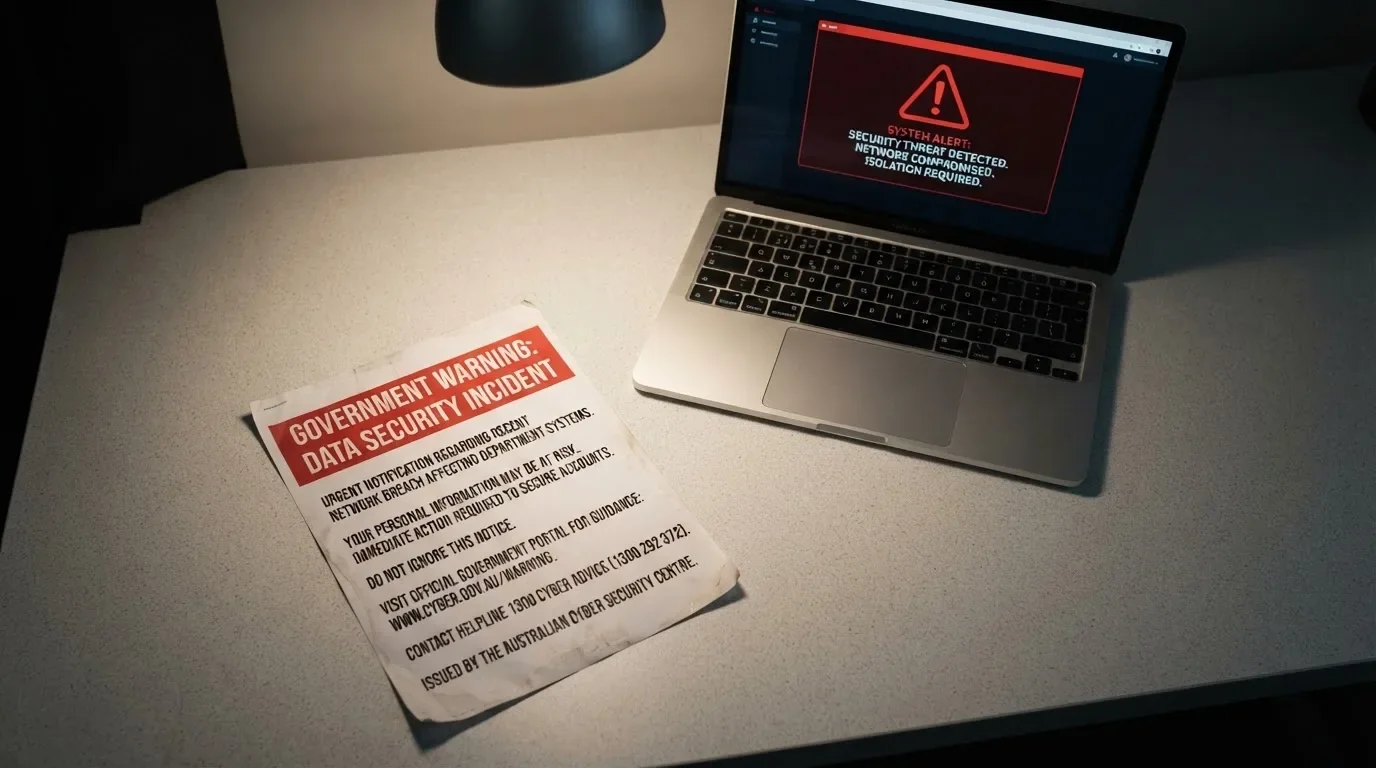
The ACMA investigates complaints, issues formal warnings, and can direct Australian internet service providers to block illegal services. Enforcement is asymmetric: the IGA targets the provider, not the player. An Australian player who deposits at an offshore casino is not prosecuted. The offshore casino is. That asymmetry makes the offshore market unusually persistent: the legal risk sits on the operator, the practical risk sits on the player, and the two are never the same person.
The warning step is the one most of the operators in the table have hit. A formal warning under the IGA is a written notice to the operator identifying the prohibited service, naming the Australian-facing brand and the corporate vehicle behind it, and giving the operator a chance to comply before further action. Compliance in practice means the operator stops accepting Australian players — by geo-blocking Australian IP ranges, by no longer accepting Australian payment methods, by no longer marketing to Australian affiliate traffic. Most don’t. The next step is the blocking request.
In a single round reported on 26 June 2026, the ACMA asked Australian internet service providers to block 12 more illegal gambling websites: 7Signs, ChromaBet, Donbet, Duospin, Freshbet, Slots Gem, Jacks Club, Lucky Start, Pointsbetz.com, Spinrise, Vinyl Casino, and Wildsino. Cumulatively, since the first blocking request in November 2019, the ACMA had directed the blocking of 1,751 illegal gambling and affiliate marketing websites by June 2026. The pace is not constant; the early years were quieter, the recent rounds are louder. The most recent reporting rounds have cleared between 10 and 12 sites each, while the early rounds added a handful at a time. The reader should hold both numbers — the cumulative total and the latest-round count — together, because neither alone describes the market.
What the warnings look like in practice is what the table in the previous section records. Dama N.V. was warned in May 2022 covering six brands. Two of those six — Rocketplay and Wild Tornado — were re-warned under different operator names later. Dama N.V. itself received a March 2025 warning over Woo Casino and a May 2025 warning over Spirit Casino. Consolutetish S.R.L. was warned in July 2025 over National Casino and Bizzo Casino, with Bizzo having already been the subject of a 2022 warning to TechSolutions (CY) Group Limited and TechSolutions Group N.V. The pattern that emerges is not a single warning per brand but a chain: an operator warned, the operator forms a new corporate vehicle, the new vehicle operates the same brand, the regulator warns the new vehicle, the cycle continues.
The 2026 reform adds another layer. The Interactive Gambling Amendment (Gambling Reform) Bill 2026 passed Parliament on 19 August 2026, with its advertising and inducement measures commencing on 1 January 2027. That is law with a start date, not law in force on a page dated 2026. The advertising measures target the affiliate “trusted” list itself — inducements, sign-up offers, and the kind of marketing language that runs through every ranking this page discusses. Until 1 January 2027 the existing regime applies: the IGA’s prohibition on supply, the ACMA’s enforcement, and the warnings and blocking requests the regulator has run since November 2019.
The reader sitting in Australia and considering an offshore casino should hold three things at once. First, the supply to them is prohibited under the IGA, and the offshore operator is the prosecuted party if the regulator pursues. Second, the regulator does pursue — at a pace that has cleared more than 1,750 sites since November 2019, with the most recent rounds clearing between 10 and 12 each. Third, the regulator’s action doesn’t reverse a deposit already made. A player whose casino is added to a blocking list in a Tuesday morning notification has whatever balance is on the site at that moment, and may have no way to withdraw it through Australian channels. The operator’s own terms, and the operator’s willingness to honour them, are what the player has.
The ACMA’s warnings do not name every brand. They name the brands the regulator has investigated and decided to publish. The affiliate “trusted” lists do not name every offshore casino. They name the brands the affiliate has chosen to score. The two lists overlap on the eleven in the table at the top of this page, which is the only honest answer to the question “which offshore casinos do Australians most often use and what has the regulator done about each one?” The brands not on either list exist in larger numbers; this page does not score them, and the regulator has not warned them.
What player protection actually reaches an Australian offshore gambler
An Australian player at an offshore casino has the player protection that operator’s terms, that operator’s licence, and that operator’s dispute process provide. The player does not have Australian consumer protection, because Australia has no jurisdiction over an offshore supply the IGA prohibits. The player does not have access to an Australian complaints body for the same reason — the Australian bodies that hear gambling disputes, state and territory regulators, are the bodies that license wagering operators, and offshore casino operators aren’t licensed by them. The player has the helpline, the exclusion register, and the offshore operator’s customer service, and the gap between those is the gap this section is about.
BetStop, the National Self-Exclusion Register, has been live since August 2023. It binds Australian-licensed online and phone wagering services — sportsbooks, racing operators, the licensed wagering market. An Australian player who registers with BetStop is excluded from every Australian-licensed wagering brand simultaneously. The mechanism is binding on the operator, not the player; the operator must check BetStop and refuse service to a registered player. An offshore casino is not connected to BetStop. A player who registers with BetStop is excluded from licensed wagering and not excluded from offshore casinos. The exclusion does not follow the player out of the licensed market and into the offshore market, because the offshore casino has no integration with the register and is under no obligation to honour it.
The National Gambling Helpline, 1800 858 858, is free, available 24/7, and supports chat at Gambling Help Online. It is a counselling and referral service, not a complaints body. A player who has a dispute with an offshore casino cannot ring the helpline and have the helpline reverse a withdrawal. The helpline can support the player with the underlying behaviour — referral to counselling, harm-reduction planning, advice on financial self-exclusion — and it can advise the player on which Australian body to approach if the dispute touches licensed wagering. For an offshore dispute, the helpline is support, not recourse.
The payments system provides one layer of player-controlled protection. Most Australian banks now offer a gambling transaction block — Westpac blocks transactions under the merchant category code “Betting/Casino Gambling” on eligible cards, ANZ runs the equivalent through its app, Commonwealth Bank lets customers apply a gambling lock through the CommBank app. ANZ’s block covers Apple Pay and other digital wallets attached to the blocked card, not just the physical card, and removing the block requires a 48-hour waiting period. The banks are explicit that these blocks cannot guarantee every gambling transaction is caught — they operate on merchant codes, and offshore operators sometimes route transactions through codes the bank doesn’t categorise as gambling. Some non-gambling transactions can be blocked in error. The blocks reduce the chance of an impulsive deposit; they don’t eliminate it.
The 2023 amendments to the IGA added a credit-card ban for Australian-licensed online wagering. Since 11 June 2024, licensed online and phone wagering services cannot accept credit cards or other credit-related products, with penalties of up to A$247,500 for operators. The ban also constrains credit-linked digital wallets. Debit card, bank transfer, PayID/Osko, and BPAY remain the legal deposit routes for licensed wagering. A site asking an Australian player for a credit card or a crypto deposit is operating outside Australian rules for licensed wagering, and for offshore casinos the credit-card question is moot in a different direction: the offshore site doesn’t accept credit cards from Australians because the offshore site doesn’t want the chargeback risk, regardless of the Australian ban.
PayID makes a different point. PayID, run by Australian Payments Plus, lets the payer see the recipient’s name before the transfer is sent, and AP+ warns that a request to transfer to a PayID on an illegal gambling site almost certainly indicates a scam site. Osko delivers bank transfers in under a minute, 24/7, including weekends. Both systems are domestic, fast, and name-verified. They are also the rails most offshore casinos avoid for Australian deposits, because the traceability is too clean. The offshore deposit routes — crypto, vouchers, some e-wallets — sit outside the domestic system precisely to avoid the visibility PayID and Osko provide.
What this leaves the player is a layered set of protections, each partial. BetStop excludes from licensed wagering and not from offshore. The helpline supports and does not adjudicate. The bank blocks reduce but cannot guarantee. The payments system names the recipient and doesn’t enforce the prohibition. None of those layers substitute for the protections an Australian licence provides, because the offshore operator is not covered by an Australian licence. The cost the player pays for using an offshore casino is not the bonus terms, the wagering multiples, or the volatility rating. It is the absence of Australian recourse. If the operator declines a withdrawal, the player has the operator’s dispute process, the operator’s licensing regulator, and the courts of the operator’s jurisdiction. The player does not have the regulator of the player’s own country.
That is the shape of the gap the page has been mapping throughout. The “trusted” list ranks operators on behaviour the reader can observe. The regulator names the operators on a list of formal warnings. The licensed-wagering framework provides protections the offshore operator doesn’t sit inside. The player reading the affiliate list and the ACMA’s register at the same time is reading two records that don’t speak to each other in the language either uses.
The eleven operators, one warning at a time
Each brand below carries a formal ACMA warning, named in the regulator’s own register. The order follows the order in the regulator’s publications. Where an operator company holds more than one of the eleven brands, the writeups note the concentration. Where the regulator named a brand under a different operator in a previous round, the writeups note that too. The verdicts at the end of each section are the page’s own read of what the warning record means for a player who is choosing between ranking the brands.
RocketPlay
The ACMA issued a formal warning to Pulsup Ltd over Rocketplay.com.au in March 2026. That is the most recent action against the brand. The earlier action was in May 2022, when Dama N.V. received a formal warning covering six casino brands, Rocketplay among them. The brand is the same. The operator company is not. The same brand was the subject of two formal warnings, four years apart, under two different operator names. A warning under Dama N.V. did not stop Rocketplay; the brand resurfaced under Pulsup Ltd, and the regulator warned again. Where the brand surfaces in third-party listings, it does so through Gambling Insider, the affiliate and industry publication that aggregates coverage of online gambling operators. The pattern is the page’s verdict: a brand re-warned under a new operator company is the clearest signal the warning round hasn’t deterred the supply — only changed the corporate wrapper. For a player weighing this brand, the question isn’t whether Rocketplay is “trusted” in the affiliate sense. It is whether a brand that has cycled through one formal warning to the next is the brand to put a balance on.
Level Up Casino
The ACMA issued a formal warning to Dama N.V. in May 2022 covering six casino brands, Level Up Casino among them. The warning sits in the same enforcement round as Rocketplay, Wild Tornado, Bambet, Dazard, and Cobra Casinos — the first major Dama N.V. cluster the regulator named. Level Up has not been the subject of a separately published warning since. That doesn’t mean the brand has changed conduct; it means the operator has cycled warnings across the group. Level Up surfaces in third-party listings where Westpac’s gambling-block documentation names the brand — Westpac’s documentation lists gambling-related merchant categories that its card block covers, and Level Up has been named in those lists. A brand that surfaces in a bank’s block documentation is a brand the bank treats as falling under gambling merchant codes, which is one signal of how the payment system categorises it. The verdict on Level Up is structural: in the original 2022 Dama warning round, Level Up was one of six brands named together, and any trust a player places in Level Up is shared with the five other brands in that round.
Woo Casino
The ACMA issued a formal warning to Dama N.V. over Woo Casino in March 2025. This was Dama N.V.’s second published warning round, three years after the 2022 cluster. Woo Casino was named alone in the March 2025 warning; the May 2025 warning over Spirit Casino completed the second-round pair. Woo Casino is absent from the third-party registers covered by this research. The verdict on Woo Casino is about cadence: a second warning round from the same operator, three years after the first, means the operator absorbed the 2022 warning, kept supplying, and is now facing a second round. For a player reading an affiliate ranking that places Woo Casino on a “trusted” list, the read is that the trust claim sits beside a regulator’s second-round action against the same operator.
Spirit Casino
The ACMA issued a formal warning to Dama N.V. over Spirit Casino in May 2025. Spirit Casino was the second of Dama N.V.’s two 2025 warnings, paired with the March 2025 warning over Woo Casino. Spirit Casino does not appear in any of the third-party registers reviewed here. The verdict on Spirit Casino is about operator concentration. When the same operator holds four of the eleven brands on a “trusted” ranking — Rocketplay, Level Up, Woo Casino, Spirit Casino, all Dama N.V. or its successor — the trust the ranking attributes to each brand is, in practice, trust in the operator’s brand portfolio. The reader choosing between these four is choosing between marketing surfaces of the same underlying operator. The rank the affiliate list gives them is a wrapper distinction, not a conduct distinction.
Bizzo Casino
The ACMA issued a formal warning to Consolutetish S.R.L. over Bizzo Casino in July 2025. That was the second formal warning tied to Bizzo Casino — the first was in 2022, when TechSolutions (CY) Group Limited and TechSolutions Group N.V. were warned over the same brand. The brand has cycled through two operator names under the regulator’s notice. Bizzo Casino surfaces in third-party listings through Gambling Insider. The verdict on Bizzo is the clearest example of the operator-rotation pattern on this page: the brand stayed, the operator moved, and the regulator followed. A player who follows the brand across the rotation will notice the marketing change; a player who reads the regulator’s record will see the brand has been named twice, under two operators. The first read says continuity. The second read says warning.
National Casino
The ACMA issued a formal warning to Consolutetish S.R.L. over National Casino in July 2025, in the same round as Bizzo Casino. The Consolutetish S.R.L. warning round is the only formal warning the ACMA has published over National Casino. National Casino surfaces in third-party listings across three registers — the ACMA’s own register, AUSTRAC’s threshold-transaction reporting pages, and BetStop’s National Self-Exclusion Register. A brand that surfaces in three registers is a brand the Australian system has touched, even if none of those touches is an Australian licence. The verdict on National Casino is that the brand sits inside the Australian regulatory infrastructure at the documentation level without sitting inside it at the licensing level. The registers track it; the licence does not cover it.
Ignition Casino
The ACMA issued a formal warning to Bamboo Media over Ignition Casino in July 2025. Ignition Casino is a brand name also associated with US-facing poker products, but the ACMA-warned entity is Bamboo Media’s Australian-facing casino operation. The brand name is shared; the operator is not. Bamboo Media is the entity named in the warning, and Bamboo Media does not operate the US-facing Ignition Casino products. The brand does not surface in the third-party registers research checked. The verdict on Ignition Casino is naming: the brand name travels across markets, and the reader who recognises “Ignition” from another jurisdiction is reading a brand name that crosses two different operating entities. The trust the reader attributes to the brand across both markets is a reading the operator hasn’t authorised.
Instant Casino
The ACMA issued a formal warning to EOD Code SRL over Instant Casino in February 2025. Instant Casino markets itself on speed — instant withdrawals, instant play, instant sign-up — and that marketing is consistent with the brand’s positioning. Instant Casino surfaces in third-party listings through ecoPayz and PayID, both of which are payment-rail providers the brand integrates with. A brand that surfaces in two payment-rail integrations is a brand that has done the integration work to accept deposits through those rails. The verdict on Instant Casino is that the speed claim is real, the integration work is real, and the regulator’s February 2025 warning is also real. A player reading “instant” as a trust signal should hold it next to the regulator’s date. Speed and regulatory exposure don’t cancel out.
Jackbit
The ACMA issued a formal warning to Ryker B.V. over Jackbit in April 2026. Jackbit is one of the most recent brands the regulator has named. The brand does not surface in the third-party registers research checked. The verdict on Jackbit is recency. The ACMA’s April 2026 warning is closer to the date on this page than almost any other entry in the table. A brand the regulator named this year is the brand most likely to be on a fresh blocking-list round, and the brand whose operator has the least time to have changed conduct since the warning. For a player choosing between the eleven, Jackbit is the one whose regulator record is the most current.
Casino Intense
The ACMA issued a formal warning to Sterplay Holding Ltd over Casino Intense in April 2025. Casino Intense surfaces in third-party listings through AUSTRAC, BetStop, and Gambling Insider — the broadest register footprint of any brand in the table, alongside National Casino. AUSTRAC’s threshold-transaction reporting applies to physical cash transfers of A$10,000 or more and not to ordinary electronic bank transfers, so the AUSTRAC touch here is documentation rather than a live report. BetStop’s register pages document the exclusion mechanism; Casino Intense appears in those pages because BetStop tracks offshore brand names as part of its exclusion-policy coverage. Gambling Insider covers the brand in industry reporting. The verdict on Casino Intense is that the brand has the largest documentation footprint outside the regulator’s own warning register. The documentation doesn’t authorise the brand; it documents the systems the brand intersects with.
Sky Crown
The ACMA issued a formal warning to Hollycorn N.V. over Sky Crown, with the formal warning publication dated September 2022. Sky Crown is one of the earliest warnings on this page — earlier than the 2025 Dama N.V. round, earlier than the 2025 Consolutetish round. Hollycorn N.V. also operated Blue Leo, named in the same warning publication. The brand does not surface in the third-party registers research checked. The verdict on Sky Crown is that the brand is a leading indicator: an early warning round against a single operator company, named in the same document as a sister brand. What the ACMA’s later rounds look like — Dama, Consolutetish, Bamboo Media, Ryker — they look like the structure the Hollycorn round set up. Sky Crown is the entry the reader can read first to understand the operator-concentration pattern the rest of the table confirms.
How fast the ACMA clears the open web
Between November 2019 and June 2026, the ACMA directed the blocking of 1,751 illegal gambling and affiliate marketing websites, at an average rate of close to 22 sites per month across the roughly 79 months of cumulative enforcement. That average flattens a great deal of variation. The early rounds were quieter — single-digit additions each, with the first blocking request in November 2019 starting the count. The 2025 and 2026 rounds have been louder: the most recent notification, on 26 June 2026, added 12 sites in a single round, with the prior rounds clearing similar numbers.
The honest read of the rate is a band. Across the full window, the ACMA’s blocking activity averages close to 22 sites per month. In the most recent rounds, the activity has run between roughly 10 and 12 sites per round, with multiple rounds each year. The reader looking at the cumulative total sees a regulator that has been clearing sites faster than the affiliate market has been bringing them up — the ACMA’s June 2026 cumulative of 1,751 exceeds most published estimates of how many illegal gambling sites an Australian player would encounter in a typical search. The reader looking at the per-round rate sees a regulator adding a round’s worth of sites in roughly the time it takes the affiliate market to refresh a “top 10.”
The cost to the player sitting in the middle of this rate is simple. A site that is on the affiliate “trusted” list today is on a regulator’s watchlist tomorrow. The June 2026 round cleared 12 sites in one notification. None of those sites had been on the regulator’s warning register long; the regulator’s blocking request is the step after a formal warning, and the formal warning is the step after investigation. A site added to a June 2026 blocking list was, by construction, on a regulator’s radar for some time before the round. The site the player uses today is either on the next round’s list, or it isn’t — and the answer to “is it” is not visible from the affiliate ranking page.
H2 Gambling Capital’s 2025 report puts the Australian losses to illegal gambling sites at about A$3.9 billion a year, with the share of gambling going through legal channels falling from 74% in 2021 to 64% in 2025. The illegal market is not a corner of the Australian market. It is a third of it. The blocking rate the ACMA has run since November 2019 has reduced the visibility of those sites, not the demand that drives them. The reader choosing an offshore casino is choosing to participate in that third, and the regulator’s clearing rate is the speed at which the regulator reduces the supply of brands within it. The two rates are not equal. The reader’s choice is the one that runs at human speed. The regulator’s rate is the one that runs at monthly round speed.
Frequently asked questions
Does a “trusted online casino” label mean a site is legal for an Australian player?
No. The label measures reputation — payment speed, support quality, dispute history, bonus terms — not legality. Online casino games cannot be licensed anywhere in Australia under the Interactive Gambling Act 2001, so no offshore brand carrying an Australian “trusted” badge is licensed to serve Australian players in the Australian sense. The brand is licensed somewhere else.
What does an offshore casino licence actually cover, and where?
An offshore licence authorises an operator to run a gambling business inside the licensing regulator’s own jurisdiction — Curaçao, for example, or Anjouan. The licence covers the operator’s conduct inside that jurisdiction. It does not authorise the operator to supply online casino games to a person physically in Australia, because Australia’s law prohibits that supply regardless of the foreign licence. The seal in the footer is real; the permission it represents does not extend across the Australian border.
How are “most trusted online casino” rankings actually built?
Affiliate rankings score offshore brands on payment speed, support responsiveness, dispute history, and bonus terms. The brands are scored by reviewers, sometimes by aggregated player reviews. The methodology rarely includes a check on whether the brand is licensed to serve the country the reader is in, because that check returns the same answer for every brand — no Australian licence exists for online casino games. The ranking is honest about its scoring and silent about legality.
Can a casino’s reputation for trustworthiness change without the player noticing?
Yes, and routinely. Operators warned under one corporate vehicle often continue operating the same brand under a new vehicle. The brand name, the affiliate presence, and the marketing can stay constant while the operator company changes. A player who last checked a brand two years ago may be looking at a brand now operated by an entity the regulator has only recently named. The ACMA’s warnings to Dama N.V., Consolutetish S.R.L., and TechSolutions across different brands make the rotation visible once the regulator’s record is read alongside the brand name.
What separates a genuinely regulated operator from one that just claims to be trusted?
A genuinely regulated operator holds a licence from a regulator that covers the player, that operates a public complaints body the player can approach, that publishes enforcement actions against the operator’s peers, and that has standing in the player’s jurisdiction. An offshore brand carrying a “trusted” badge usually holds an offshore licence and uses the badge to imply a level of regulation that only an Australian licence could provide. The verification is in the regulator’s own register, not in the brand’s footer, and the player should look for the register before trusting the seal.