


International casinos for Australian players: what the search actually turns up
 Available in US
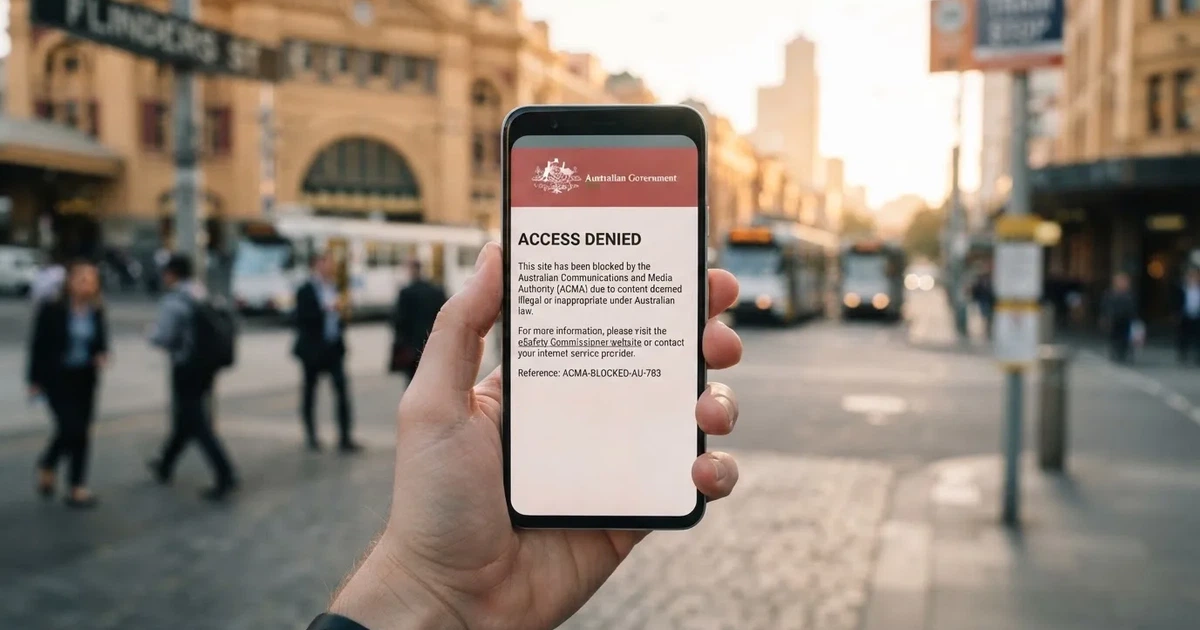
Every review page that promises a shortlist of international casinos for Australian players starts from the same problem and papers over it. The Interactive Gambling Act 2001 makes it an offence to provide online casino games, online pokies or in-play betting to a person physically in Australia. No state or territory licenses those products. What people find when they search for “international casino” or “international casinos” is a category of site the ACMA has been warning, blocking and chasing for years. This page is the honest version of that list — eleven brands the regulator has named, the dates and operators behind each warning, the pace at which blocking requests have stacked up, and the lawful alternatives an Australian reader can use instead.
Data current as of 24 September 2026 and verified against the Australian Communications and Media Authority’s published formal-warning register.
Table of Contents
- Eleven offshore casinos the ACMA has named — and what that means
- What “international casino” actually means in Australia
- The Australian legal frame — what is and is not allowed
- How payments shape the choice
- What is actually lawful for an Australian player
- Protecting yourself if you are going to use an offshore site anyway
- Where an Australian reader goes for help
- Frequently asked questions
Eleven offshore casinos the ACMA has named — and what that means
The table below is not a ranking and not a recommendation. It is the set of casino brands the ACMA itself has published formal warnings over for offering prohibited online casino games to Australians. The column on subject support lists what Australian consumer-facing registers and the banks’ own pages actually say about each operator; where none of those sources mention the brand, the column stays blank. An offshore casino carries no Australian licence regardless of what its footer claims.

| Brand | ACMA action and date | Operator named by the ACMA | Subject support |
|---|---|---|---|
| RocketPlay | Formal warning, March 2026 | Pulsup Ltd (Rocketplay.com.au); earlier Dama N.V. in May 2022 | Mentioned by Gamblinginsider.com listings |
| Level Up Casino | Formal warning, May 2022 | Dama N.V. | Westpac’s gambling block page references the domain class |
| Woo Casino | Formal warning, March 2025 | Dama N.V. | — |
| Spirit Casino | Formal warning, May 2025 | Dama N.V. | — |
| National Casino | Formal warning, July 2025 | Consolutetish S.R.L. | Listed on the ACMA register, AUSTRAC’s reporting thresholds and BetStop |
| Bizzo Casino | Formal warning, July 2025 | Consolutetish S.R.L.; earlier TechSolutions, 2022 | Mentioned by Gamblinginsider.com listings |
| Ignition Casino | Formal warning, July 2025 | Bamboo Media | — |
| Instant Casino | Formal warning, February 2025 | EOD Code SRL | Listed by EcoPayz and PayID notice pages |
| Jackbit | Formal warning, April 2026 | Ryker B.V. | — |
| Casino Intense | Formal warning, April 2025 | Sterplay Holding Ltd | Listed on the AUSTRAC page, BetStop and Gamblinginsider.com |
| Sky Crown | Formal warning, September 2022 | Hollycorn N.V. | — |
The first thing to read from this table is the date column. The ACMA has not slowed down. Of the eleven brands, seven were the subject of warnings issued in 2025 or 2026, and the operator names change each time — Pulsup Ltd, Consolutetish S.R.L., Bamboo Media, EOD Code SRL, Ryker B.V. and Sterplay Holding Ltd — while the older warnings still sit on the regulator’s register. The repetition of Dama N.V. across four entries (Level Up, Woo, Spirit and the 2022 Rocketplay) is the closest thing to a pattern: one corporate vehicle, four skins.
The second thing is what the brand-name column does not say. These are not the worst sites in the offshore market — the ACMA publishes warnings because the operator has been found offering prohibited services, not because it has been judged on quality, fairness or solvency. The regulator names names; it does not run a quality mark.
The third is the subject-support column. Most cells are blank because the Australian-facing registers and payment-system notices simply do not cover these brands. Where a name does appear, it usually turns up because AUSTRAC’s threshold-reporting page, BetStop’s exclusion register or Westpac’s merchant-category-code list has grouped it with the broader class of offshore gambling services. A listing there is not an endorsement — it is a flag that the institution treats the domain class as one worth blocking or excluding.
RocketPlay
Pulsup Ltd was the operator the ACMA named in its March 2026 warning, after the same brand had already been the subject of an earlier warning to Dama N.V. back in May 2022. The brand has been visible enough on affiliate pages to earn a mention in Gamblinginsider.com listings, which is the kind of visibility that draws the regulator’s attention in the first place. RocketPlay’s position on the table is the simplest lesson in this list: an offshore brand can change its parent company without changing its offer, and the ACMA has tracked both.

Level Up Casino
Level Up’s only formal warning dates from May 2022, when it sat among six Dama N.V. brands named on the same notice — Bambet, Dazard, Level Up, Rocketplay, Wild Tornado and Cobra Casinos. It is the oldest warning on this list and the one with the longest interval since action. That does not make it legal; it makes it stale. The Interactive Gambling Act 2001 does not have a statute of limitations on the offer itself.
Woo Casino
Dama N.V. picked up another formal warning in March 2025, this time over Woo Casino. The same operator had been warned in 2022 over a different set of skins, which is what makes the Dama cluster worth watching: the corporate vehicle persists, the brand names rotate.
Spirit Casino
Spirit Casino is the May 2025 half of the same Dama N.V. pair. Two warnings in three months to the same operator is the regulator signalling that a single corporate response, if any was filed, did not change the underlying behaviour.
National Casino
Consolutetish S.R.L. took a formal warning in July 2025 covering both National Casino and Bizzo Casino. National is the one that surfaces on the ACMA’s own register page, the AUSTRAC threshold-reporting page and the BetStop exclusion register, which is the broadest Australian-side footprint on this list.
Bizzo Casino
Bizzo is the one with the prior history. TechSolutions (CY) Group Limited and TechSolutions Group N.V. took a 2022 warning over the same brand, then Consolutetish S.R.L. was warned in July 2025. Two operators, one brand, three years — the corporate re-papering of an offer the regulator has already said is prohibited.
Ignition Casino
Bamboo Media took a July 2025 warning over Ignition Casino. Ignition sits lower in the affiliate-visibility ranking than the Dama cluster, which probably explains the thinner Australian-side footprint on the registers.
Instant Casino
EOD Code SRL was warned in February 2025, and Instant Casino is the brand whose name has reached the EcoPayz and PayID notice pages — both of which treat the offshore casino category as one worth naming. A payment processor warning an Australian customer not to deposit is a different order of friction from an ACMA notice; it can arrive at the checkout, in real time.
Jackbit
Ryker B.V. was warned in April 2026 covering both Jackbit and CasinOK. The brand is recent on the ACMA’s register and has no Australian-side listing footprint, which simply means it has not yet drawn one in.
Casino Intense
Sterplay Holding Ltd took a formal warning in April 2025, and Casino Intense is the brand with the broadest Australian-side trace of any entry on this list — it appears on the AUSTRAC page, the BetStop register and Gamblinginsider.com listings. AUSTRAC’s threshold-transaction reporting rule applies only to physical cash, but a name surfacing there flags that the brand has crossed paths with the financial-crime side of Australian enforcement, not just the media authority.
Sky Crown
Hollycorn N.V. was named in the ACMA’s September 2022 warning covering Sky Crown and Blue Leo. It is the oldest warning on this list and the one whose parent has been most consistent in carrying casino brands through the regulator’s gates. Sky Crown has no Australian-side listing footprint in the sources the ACMA, AUSTRAC and BetStop cover.
What “international casino” actually means in Australia
The phrase covers three quite different products, and an Australian reader lands on different consequences depending on which one they meant.
An international online casino is what ninety per cent of search traffic asks about — an offshore-licensed website offering slots, table games and live-dealer tables to anyone with an internet connection and a payment method. Curacao, the Malta Gaming Authority and a handful of smaller jurisdictions license this category. None of those licences authorise the offer inside Australia, and the licence footer on the site changes nothing about that.
An international casino resort is the land-based equivalent — Crown Melbourne, Crown Perth, The Star Sydney, The Star Gold Coast, SkyCity Adelaide and SkyCity Darwin are all owned by offshore operators (Crown Resorts is now part of Blackstone; the SkyCity properties are New Zealand-listed) and are licensed by their state or territory. These are lawful for an Australian resident to walk into.
An Australian-licensed online casino does not exist as a product. The Interactive Gambling Act 2001 and its 2017 amendments close that category off. Online wagering on sport and racing before the event is licensed; online casino games are not. Searches that mix the two terms produce the same result.
The most useful distinction for an Australian reader is the simplest one. A venue in your state or territory is lawful to visit, and licensed online wagering is lawful to use for sport and racing. An offshore casino site offering slots, blackjack or roulette to a person in Australia is the product the ACMA has been chasing since 2017, and it carries none of the consumer protection an Australian licence would attach.
The Australian legal frame — what is and is not allowed
The Interactive Gambling Act 2001 is the central statute. As amended by the Interactive Gambling Amendment Act 2017, it makes it an offence to provide a prohibited interactive gambling service — online casino games, online pokies and in-play sports betting — to a person physically in Australia. The 2017 amendments also gave the ACMA the powers it has been using since: investigatory powers, formal warnings, and the ability to ask Australian internet service providers to block illegal sites by directing them to a maintained list.
The 2023 amendments tightened the payment side. Since 11 June 2024, Australian-licensed online wagering services cannot accept payment by credit card or other credit-related products. Digital currency is also out of bounds for licensed wagering. Penalties for operators that breach the credit-card ban reach A$247,500. The practical effect is that any Australian-facing site asking for a credit card or a Bitcoin deposit at the cashier is operating outside the Australian rules — that single line at checkout tells you which side of the law the operator has chosen.
The 2026 reform adds an inducement layer. The Interactive Gambling Amendment (Gambling Reform) Bill 2026 passed Parliament on 19 August 2026. Its advertising and inducement measures commence on 1 January 2027. As of writing, the bill is law with a commencement date that has not yet arrived; any inducement complaints an Australian reader has today would fall under the existing provisions, not the new ones.
What is licensable sits on a narrow shelf. Online wagering on sport and racing, where bets are placed before the event; lotteries; keno. In practice the licensing of online wagering is concentrated through the Northern Territory Racing and Wagering Commission, which regulates fifty-two of Australia’s online bookmakers — Sportsbet, Bet365 and Ladbrokes among them. The commission has no full-time staff and meets once a month in Darwin, which is the structural fact behind every debate about offshore competition.
The minimum age is 18. The individual player is not prosecuted under the IGA; the statute targets the provider. That asymmetry is the reason enforcement has run through the ACMA’s blocking-and-warning machinery rather than through player prosecutions.
What the ACMA has actually done since 2017
The enforcement record is the page’s most concrete evidence. By June 2026 the ACMA had asked Australian ISPs to block 1,751 illegal gambling and affiliate-marketing websites since the first blocking request in November 2019, and more than 230 unlicensed gambling services had left the Australian market since enforcement was strengthened in 2017. The June 2026 round alone added twelve more: 7Signs, ChromaBet, Donbet, Duospin, Freshbet, Slots Gem, Jacks Club, Lucky Start, Pointsbetz.com, Spinrise, Vinyl Casino and Wildsino.
The blocking-rate arithmetic provides a sense of the enforcement pace. Spread 1,751 blocking requests across the roughly 79 months between November 2019 and June 2026, and the average pace is somewhere in the band of 22 sites blocked per month. That is the quiet rate; the ACMA publishes batches, so a single month can land zero or forty. Read it as a baseline, not a projection. The earlier years of the regime ran slower as the regulator built the list; the later years have run faster as the operators rotate brand names faster than the warnings can be issued. H2 Gambling Capital’s 2026 report estimates Australians lose about A$3.9 billion a year to illegal sites, and the share of gambling going through legal channels fell from 74 per cent in 2021 to 64 per cent — that drop is the dollar cost behind the blocking count.
The second layer is what an offshore site does not give an Australian reader when something goes wrong. There is no Australian consumer-protection body to complain to. There is no Australian regulator with the power to compel a payout. There is no BetStop binding the site. If the offshore operator refuses a withdrawal, the practical recourse is a complaint to the licensing jurisdiction — Curacao, Malta or wherever the footer names — and the practical chance of that complaint producing a payout is the same as the chance an unregulated operator hands the money back voluntarily. The blocking request can land while the balance is still on the account.
How payments shape the choice
The payment rails are where the law and the offer collide most directly for an Australian reader.
Cards and wallets
Credit cards and credit-related products have been banned for Australian-licensed online wagering since 11 June 2024, and the ban extends in practice to digital wallets like Apple Pay when they ride a credit instrument. Debit cards are the card route that still works for licensed wagering. American Express sits in a separate corner — the Reserve Bank’s July 2025 review proposes removing surcharges only on eftpos, Mastercard and Visa, leaving Amex explicitly outside the proposed surcharge ban. That is a small thing on a single transaction and a large thing if a reader is comparing surcharges across card networks.
The card networks also carry gambling blocks at the issuing bank. Westpac’s gambling block works at the card level, refusing authorisation on transactions registered under the merchant category code “Betting/Casino Gambling” on eligible personal credit and debit cards. ANZ’s block, activated in the ANZ app, blocks gambling transactions made through a digital wallet such as Apple Pay on an eligible card as well as the physical card — once turned on, removing the block requires a 48-hour waiting period. Commonwealth Bank’s gambling lock is set up through the CommBank app, with the same caveat that not all gambling-related purchases will necessarily be stopped. Apple Pay itself does not surcharge consumers — any fee at the till is the merchant’s card-processing fee — and transaction limits and PIN requirements are set by the card issuer or the merchant, not by Apple. The bank-level block is the choke point, and the digital wallet is downstream of it.
By the end of 2025, Apple Pay, Google Pay and Samsung Pay collectively accounted for around 45 per cent of all card payments in Australia by number. That share is why the credit-card ban matters more than it would have a decade ago: a much larger slice of card transactions now pass through a wallet before they reach the issuer, and a wallet on a credit instrument inherits the ban.
Bank transfers, PayID and Osko
PayID-linked transfers run on the New Payments Platform, which went live on 13 February 2018 and is owned by New Payments Platform Australia Ltd — a non-profit whose thirteen shareholders include the Reserve Bank of Australia and the four major banks. With Osko, a transfer between participating banks arrives in under a minute, twenty-four hours a day, seven days a week, whether it is addressed to a BSB and account number or to a PayID. Over 100 Australian financial institutions offer PayID, and more than 25 million PayID identifiers had been registered on the platform by April 2025.
The New Payments Platform carries two hard constraints worth knowing. Participants must keep the platform’s monthly outages to no more than two minutes — a service-level figure that explains why the rails are usually up. And in 2021 the ACCC authorised merging NPP Australia with BPAY and eftpos into a single company, Australian Payments Plus (AP+).
PayID has a built-in friction point that matters for this page. Paying to a PayID shows the name of the account holder before the transfer is sent. AP+ warns that being asked to transfer money to a PayID on an illegal gambling site almost certainly means a scam site — that one screen is the single most useful thing an Australian reader has when an offshore site asks for an instant transfer.
BPAY
BPAY has operated in Australia since 1997 (launched 18 November 1997), is available in the online banking of over 140 banks and financial institutions and is offered by over 95,000 businesses. The payer enters the Biller Code and the Customer Reference Number (CRN) printed on the bill — a closed-loop design that fits licensed wagering and billers, not offshore casinos. BPAY is run by AP+, the same operator that runs PayID and Osko. An offshore casino asking for a BPAY payment is asking for something outside BPAY’s design; the biller-code model does not match the offshore deposit flow.
Cash and AUSTRAC
AUSTRAC’s threshold-transaction-report rule requires reporting of transfers of A$10,000 or more. It applies only to physical cash. Ordinary electronic bank transfers — the PayID/Osko/BPAY routes — are not subject to the per-transaction reporting requirement regardless of the amount sent. That fact does not change a reader’s obligations, but it sets a clean line: the cash threshold is for cash, and a debit-card or bank-transfer deposit to an offshore site does not trip the threshold report even at large amounts.
What is actually lawful for an Australian player
Strip the offshore casino category out and three lawful routes remain.
Licensed wagering on sport and racing — pre-event — is the licensed online product. The Northern Territory Racing and Wagering Commission regulates fifty-two online bookmakers, including Sportsbet, Bet365 and Ladbrokes. The commission is the de facto national regulator for online wagering; the structural thinness of that regulator is the reason offshore competition has kept growing.
Land-based casinos are licensed by their state or territory. Crown Melbourne, Crown Perth, The Star Sydney, The Star Gold Coast, SkyCity Adelaide and SkyCity Darwin are all licensed venues an Australian resident can visit. The SkyCity properties are New Zealand-listed; Crown Resorts is now owned by Blackstone. None of that changes the licence to enter, eat, play the tables and walk out.
Lotteries and keno are licensed products in every state and territory, with Tatts, Tabcorp and the state lottery operators running the bulk of retail and online offers.
The honest shortlist an Australian reader can act on is shorter than what the search results suggest. For anyone who wants the casino experience that the offshore category offers, the lawful version is the venue down the road. For pre-event sports and racing, the licensed bookmakers are the route. For slots, blackjack, roulette and live-dealer tables at home, there is no licensed Australian offer; the offshore category is what the ACMA has been warning about since 2017, and the table at the top of this page is what that category looks like in 2026.
Protecting yourself if you are going to use an offshore site anyway
This page cannot recommend any of the brands in the table, and that recommendation gap is not an oversight. The brands named are there because the ACMA has warned them, the balance is at the operator’s discretion, and BetStop does not bind them. A reader who decides to use one anyway is choosing against the regulator’s published position, and the section that follows is for that reader — the practicalities of minimising the harm, not the marketing case for using one.
Set the bank-level gambling block before opening an account. Westpac, ANZ and Commonwealth Bank all offer card-level gambling blocks; ANZ’s block covers Apple Pay on the same card, and removal requires a 48-hour waiting period. A card-level block is the most reliable single friction available because it sits between the cashier and the deposit. None of the banks guarantee every gambling transaction will be blocked, but the block stops most.
Do not pay by credit card, and do not pay by credit-linked wallet. The credit ban that applies to licensed wagering does not bind an offshore operator, which means an offshore site asking for a credit card is choosing to operate outside Australian rules. A debit card on a bank with the gambling block turned on is the more cautious choice, and a PayID transfer to a named account holder is the most cautious of the standard rails. AUSTRAC’s cash threshold does not apply to electronic transfers, so large PayID transfers do not trip a per-transaction report — but the absence of a report does not make the transfer safe.
Read the bank’s own caveat. Westpac, ANZ and Commonwealth Bank each state in their own terms that not all gambling transactions will be blocked and some non-gambling transactions might be blocked in error. The block is a friction layer, not a firewall.
Register with BetStop if you have any concern about your own play. BetStop is the National Self-Exclusion Register, live since August 2023. It binds every Australian-licensed online and phone wagering service. It does not bind an offshore casino. That limitation is the reason it appears in this section rather than the main recommendation: the register is the strongest tool the Australian system offers, and it does not reach the brands the page is about.
Keep a single balance figure in mind. If the site refuses a withdrawal, the balance is in the operator’s hands and the ACMA’s blocking power can be exercised while the money is still there. The blocking-rate arithmetic earlier on this page — a band of about 22 sites per month since November 2019 — is the rhythm at which the regulator catches up with a brand.
Where an Australian reader goes for help
The National Gambling Helpline is 1800 858 858. It is free, available 24/7, and runs a chat service at Gambling Help Online. The helpline is the single number to keep beside the bank-level block.
BetStop — the National Self-Exclusion Register at betstop.gov.au — is the formal exclusion mechanism. It has run since August 2023 and binds Australian-licensed online and phone wagering services only.
For a complaint about an Australian-licensed operator, the relevant state or territory regulator is the right address. For an offshore operator, the practical route is the licensing jurisdiction named in the site’s footer, with the practical caveat that the offshore route rarely produces a payout.
For a tax question about winnings, the starting position is section 6-5 of the Income Tax Assessment Act 1997: gambling winnings of a recreational player are not assessable income, and losses are not deductible, unless the person carries on a business of gambling. That is a model answer, not personal tax advice; the ATO is the body to confirm a reader’s own position.
Frequently asked questions
What does “international casino” mean as distinct from an Australian-licensed one?
“International casino” usually means an offshore-licensed website — typically Curacao or Malta — offering slots, table games and live-dealer tables to anyone with an internet connection. No Australian jurisdiction licenses online casino games, so the contrast is not between two licensed categories; it is between licensed (none) and unlicensed-for-Australia (the offshore category the ACMA has been warning since 2017).
Can an international online casino legally accept players located in Australia?
No. The Interactive Gambling Act 2001, strengthened by the Interactive Gambling Amendment Act 2017, makes it an offence to provide a prohibited interactive gambling service — including online casino games and online pokies — to a person physically in Australia. The target of the offence is the provider, not the player, but the provider is the one breaking the law.
Does an overseas gambling licence carry any weight for an Australian player?
It carries what the licensing jurisdiction enforces. Curacao and the Malta Gaming Authority operate their own dispute routes, and an Australian reader’s practical recourse against an offshore refusal is a complaint to that jurisdiction. The licence does not confer any Australian consumer protection, no Australian complaints body has authority over the operator, and an ACMA blocking request can be issued while the player’s balance is still on the site.
What protections, if any, apply to an Australian using an international casino site?
The bank-level gambling blocks at Westpac, ANZ and Commonwealth Bank are the most reliable friction, because they sit at the card authorisation layer and stop most deposits before they reach the cashier. BetStop, the National Self-Exclusion Register, binds Australian-licensed operators only — an offshore casino is not connected to it. The credit-card ban that applies to licensed wagering does not bind an offshore operator, so a site asking for a credit card is operating outside the Australian rules.
How does an international land-based casino resort differ from an international online site?
The land-based resorts — Crown Melbourne, Crown Perth, The Star Sydney, The Star Gold Coast, SkyCity Adelaide, SkyCity Darwin — are licensed by their state or territory and are lawful for an Australian resident to visit. International ownership (Blackstone for Crown, New Zealand-listed SkyCity) does not change the licence. The offshore sites offering slots and live-dealer tables over the internet are the product the ACMA has been warning about and the one that has no Australian licence.
Who can an Australian contact if an international casino site will not pay out?
Start with the licensing jurisdiction named in the site’s footer. The National Gambling Helpline (1800 858 858, free, 24/7) is the number to keep for the player-protection side. BetStop (betstop.gov.au) is the exclusion register. None of these routes can compel an offshore payout; that gap is the structural cost of using a brand outside the Australian system.
Written by the editors at Casino Payout Hub.