

Betsoft Casinos in Australia: A Market the Interactive Gambling Act Has Closed
 Available in US
Current as of 24 September 2026 · cross-checked against the Australian Communications and Media Authority register of formal warnings and blocking actions.
A reader searching for Betsoft online casinos in Australia is, in a strict legal sense, searching for something the country has chosen not to allow. The Interactive Gambling Act 2001 prohibits the supply of online casino games — and Betsoft is a casino-game studio, not a sports book — to anyone physically in Australia. No state or territory issues a licence for them. Every site that markets itself as a “Betsoft casino” to an Australian punter is doing so from outside the country, and every one of them has been on the receiving end of regulator attention in the last three years.
This page works through that gap rather than around it. It sets out what Betsoft actually is, why offshore sites lean on the studio’s name, what the ACMA has done about it, and what an Australian player is actually agreeing to when they sign up offshore — because the cost of an offer, on this subject, is not the wagering multiple, it is the absence of any Australian recourse when a withdrawal stalls.
Table of Contents
- How the Payment Side Stops Mattering Once You Read It
- What “Betsoft Bonus” Means Once You Strip the Marketing
- The Mobile Version Is Just the Browser, Minus the Browser Bar
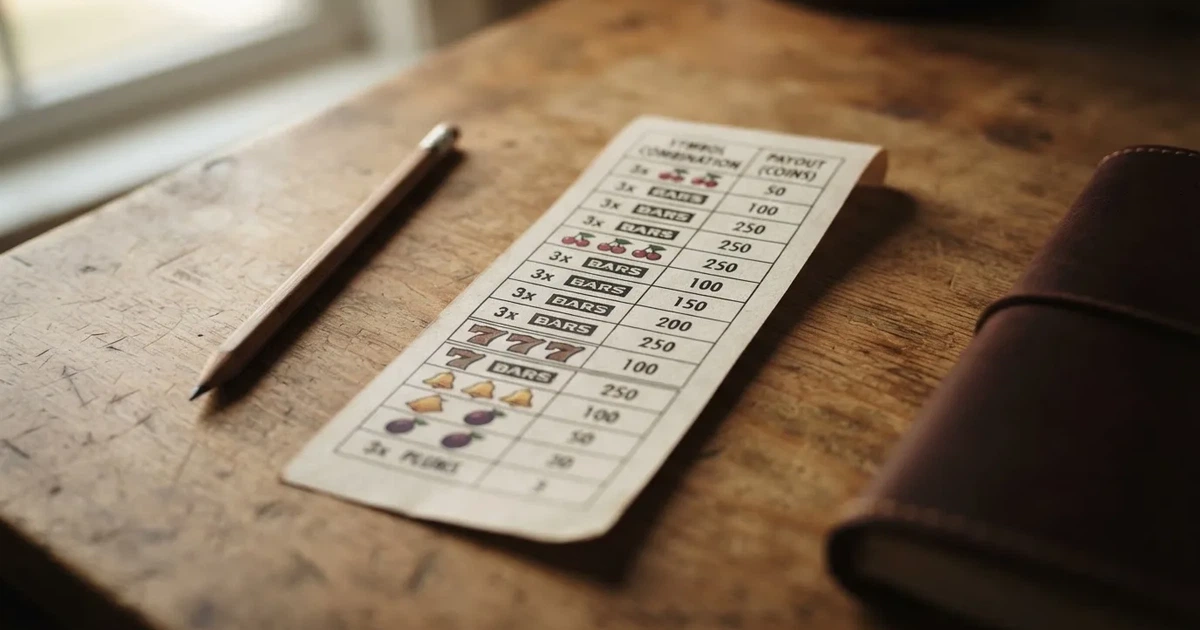
- Betsoft as a Studio, and What Its Paytables Actually Show
- The Eleven Operators the ACMA Has Acted Against
- How the ACMA’s Blocking Record Sets the Real Context
- The Australian Legal Frame Around All of This
- Help Is Available, and What It Actually Looks Like
- What a Fair Comparison Would Weigh, If One Were Possible
- Where the Reader Is Left
- Frequently Asked Questions
How the Payment Side Stops Mattering Once You Read It
Betsoft-powered online casino play in Australia has no Australian banking product on the other end. There is no local deposit channel, no local payout rail, and no complaints body an Australian can write to if a balance is held. That is the first fact the payments shelf has to deliver, because every figure that follows sits inside it.

For licensed Australian wagering — sports and racing only — the credit-card ban that came in on 11 June 2024 shut cards and crypto out of the deposit box. The permitted routes are debit card, bank transfer, PayID/Osko and BPAY. None of those rails serves an online casino, because no Australian bank is on the other side of one. An offshore site asking for a credit card or a Bitcoin deposit is not asking because it wants to; it is asking because the entire transaction lives outside the Australian rules.
This page treats the money side as background reading rather than as guidance. There is no licensed local product to bank into or out of, so a comparison of payout speeds across operators reduces to a comparison of how quickly an offshore operator chooses to release funds it never had to hold in the first place. The reader interested in that figure is reading about a product they cannot use from inside Australia.
Why the “Instant Withdrawal” Promise Stops Meaning What It Says
Offshore casinos that carry Betsoft content lean heavily on payout speed as a selling point. The pitch usually runs in hours, sometimes in minutes, almost always in a window narrower than the bank-transfer timelines at licensed Australian bookmakers. The fine print on most of these sites holds the speed up against a verification step the site runs on first withdrawal — a step that, in practice, takes the better part of a week the first time around and is repeated whenever the deposit or withdrawal method changes. The “instant” in the headline covers the second withdrawal onward, not the first.
And the verification step is the point at which an Australian player hands over the documents an Australian regulator would normally handle: proof of identity, proof of address, sometimes proof of source of funds. The site is now in possession of an Australian passport scan and a recent utility bill. What it does with those documents is governed by the privacy law of whatever jurisdiction the operator is registered in, which is not Australia’s. The withdrawal arrives, but the cost of getting it there is information a reader did not have to hand over at any licensed Australian bookmaker.
Crypto Deposits and the Credit-Card Ban That Doesn’t Reach Them
The credit-card ban on licensed Australian wagering is one of the cleaner pieces of consumer protection in the IGA regime: it took effect on 11 June 2024, carries penalties up to $247,500 per breach, and applies to credit cards, credit-related products and digital currency. The ban applies only to operators licensed in Australia. An offshore site does not fall under it.
That is why “Bitcoin accepted” or “crypto deposits welcome” is a frequent line in offshore marketing aimed at Australian visitors. The line is not aimed at a reader who wants a fast deposit. It is aimed at a reader whose usual payment route the Australian rules have just shut down. The trade is real: a crypto deposit clears faster than a bank transfer and leaves no Australian card statement behind. The reader pays for the speed in two ways. The first is that the deposit is irreversible — a chargeback is not available on a Bitcoin transaction — and the second is that the exchange rate at the moment of conversion is the exchange rate the site sets, not the rate the reader would see on a retail exchange.
What “Betsoft Bonus” Means Once You Strip the Marketing
A Betsoft welcome package on an offshore site is built out of the same parts as every other offshore welcome package: a deposit match, free spins on named Betsoft slots, a wagering multiple, a maximum cashout, a list of games that contribute at less than 100% to clearing. The Betsoft angle is that the free spins are usually tied to one of the studio’s marquee titles — The Slotfather, Good Girl Bad Girl 2 — rather than to a generic slot from a less-recognised provider.
The reader interested in what an offer costs has to read three numbers together: the percentage match, the wagering multiple, and the contribution percentage of the games the bonus is locked to. A 100% match up to A$500 at 40× the bonus looks one way on the headline and another way on the calculation, because 40× a A$500 bonus is A$20,000 of turnover before the bonus converts to withdrawable cash. The reader doing that calculation on a Betsoft-only game list — usually about 50–80 titles — will spend most of the bonus clearing time inside the studio’s catalogue, which is also where the site’s house edge on those games sits.
Free Spins on Betsoft Slots — the Real Yield
Free-spin packages tied to Betsoft titles are pitched on the spin count, not on the slot’s published return. The studio’s own pages carry the return-to-player figure for each title — Good Girl Bad Girl 2 at 96.22% RTP and “Very High” volatility, The Slotfather at 95.69% RTP and “Medium” volatility, both from the Betsoft site itself. The free-spin package carries the spin count, the coin value, and sometimes a cap on the winnings that converts to withdrawable cash.
The figure that matters is the volatility tag, because “Very High” volatility on a slot is what most readers hear as “the slot pays rarely and pays big when it does.” A free-spin package of 50 spins at A$0.20 on a very-high-volatility title is not 50 chances at a small prize — it is a coin-flip for whether the package pays anything at all. The marketing line “50 free spins on Good Girl Bad Girl 2” reads one way on a page and another way in the wallet.
Wagering Contribution and the Slots-Only Bonus
A standard offshore welcome package restricted to slots has a contribution chart that usually lists Betsoft titles at 100% — that is, every dollar wagered on a Betsoft slot counts a full dollar against the wagering requirement. The chart then steps down for table games, live casino and sometimes for jackpot slots, which is where the studio’s high-volatility titles tend to land. A reader playing jackpot titles to clear a bonus may find themselves contributing 20% or less, which means the A$20,000 turnover figure above becomes A$100,000 of jackpot wagering at 20% contribution.
The marketing page rarely carries the contribution chart in full. It carries the spin count, the headline RTP and a sentence to the effect that “wagering requirements apply.” The calculation the reader has to do to find out what the offer actually costs lives in the site’s terms page, and the terms page is the page an Australian player should read in full before depositing to any of the operators reviewed below — including the ones the ACMA has acted against.
The Mobile Version Is Just the Browser, Minus the Browser Bar
A mobile Betsoft casino on an offshore site is, in the great majority of cases, a responsive web page rendered through the phone’s browser rather than an app installed through a store. The studio’s own titles ship in HTML5 and were built for low-bandwidth connections, which is also what a responsive casino site expects. The reader who taps “mobile casino” on a marketing page and lands on a casino site is, in most cases, exactly where they would have landed on a desktop browser, with the navigation collapsed to fit the screen.
There is a difference in two places. The first is that a real-money-gambling app on an iPhone or Android device has to clear app-store rules on real-money gaming, and the offshore sites covered here do not go through that review. They live on the browser. The second is that the browser session is the session the ACMA can ask an Australian internet service provider to block, which the app-store version is not, in the same sense, because the app-store version does not exist.
What “Mobile-Friendly” Actually Delivers
The mobile-friendly promise on an offshore site translates, in practice, to four things. The game library opens in landscape orientation. The deposit and withdrawal pages fit a thumb-sized tap target. The live-dealer lobby, if the site has one, streams through the browser rather than through an app. The login session times out faster than on desktop, which is the only one of the four that is unambiguously a benefit for the reader.
The trade is that the browser session is the session the site tracks, and the tracking it does is governed by the privacy law of wherever the site is registered. A reader leaving a real-money session open on a phone browser in a public place is leaving a balance visible to anyone glancing at the screen, and the auto-logout is the only thing standing between them and a screenshot.
HTML5 and the Low-Bandwidth Promise
Betsoft’s catalogue is HTML5-built, which is also what most modern slot studios ship. The “low-bandwidth” line in the studio’s own marketing is real — the games load on a 3G connection and stay playable there — and it is one of the cleaner delivery promises in the studio side of the industry. The reader on a regional Australian mobile network is playing the same game as the reader on a European fibre connection. What is different is the network round-trip to the offshore site’s server, which is the round-trip that turns a fast-loading slot into a laggy one during a free-spin sequence. A reader who has experienced this knows the difference. A reader who hasn’t should expect it.
Betsoft as a Studio, and What Its Paytables Actually Show
Betsoft was founded in 2006 and describes a catalogue of more than 200 RNG games spanning slots, table games, video poker and specialty titles. The studio operates under licensing arrangements including Italy’s ADM, with RNG certification from Quinel and Gaming Labs International, and lists more than 500 operator partnerships across regulated markets in Europe, Scandinavia, Latin America and Africa. None of those markets is Australia. The studio is not licensed to supply its games to Australian-licensed operators, because Australian-licensed operators do not exist for online casino games.
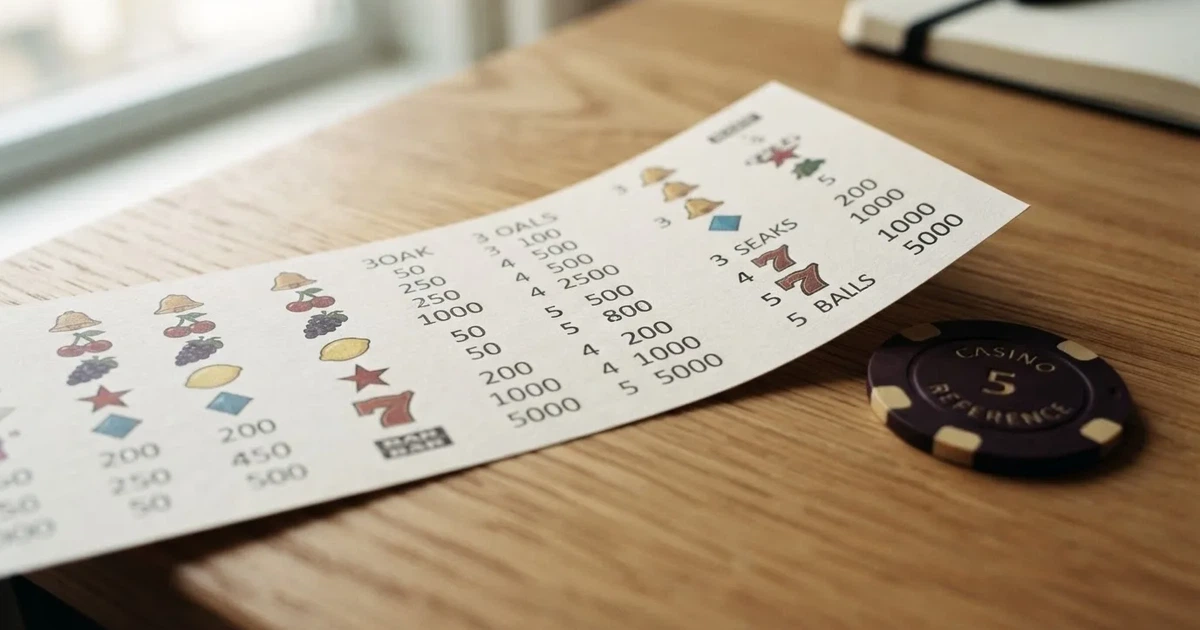
The paytable on a Betsoft slot follows the studio’s own template. Five reels. A payline count that varies by title — 20 lines on Good Girl Bad Girl 2, 30 on The Slotfather. A coin-value selector that drops the line bet low enough that a casual stake is possible. A bonus trigger built around a scatter count. The “double up” feature on many of the studio’s older titles, which is the gamble-after-win mechanic in which the reader chooses red or black to double or lose the round’s payout. The double-up is the line a careful reader draws: it converts a small win into a coin flip for twice the amount, and a coin flip on a casino game is a coin flip against the house edge.
The Slotfather and Good Girl Bad Girl 2 as Examples
The Slotfather, live since 13 December 2012, is the studio’s most quoted older title. Its published RTP is 95.69%, volatility “Medium” and hit rate 8.17%. The “Medium” volatility tag means the slot pays more often than the studio’s very-high-volatility titles and at a smaller average size when it does. Good Girl Bad Girl 2 sits on the other end of the studio’s range: 96.22% RTP, “Very High” volatility, 15.59% hit rate. The higher hit rate means the slot lands a winning combination more often; the “Very High” volatility means the size of those wins is spread further apart, with a long tail of small wins and a thin tail of large ones.
A reader looking at those two paytables side by side has the choice between a steadier experience and a spikier one. The house edge sits in both — 3.78% on Good Girl Bad Girl 2, 4.31% on The Slotfather — and is the gap between the published RTP and 100%. The house edge is the number a casino’s marketing department does not print on the paytable. It is also the number that decides, over enough spins, what the average session costs the player who is not counting cards or running a system.
Why the Paytable Stops Being Useful Once You Compare It to the Site
A reader looking at two Betsoft slots on two different offshore sites is, in most cases, looking at the same game. The RNG is the studio’s. The math model is the studio’s. The published RTP is the studio’s. What changes between sites is the welcome package attached to the spins on that title, the wagering multiple on the bonus, and the site’s own withdrawal terms. The paytable is the constant. The cost of playing it varies.
That is the gap the marketing material on the operator side works hardest to close. A reader who has done the calculation on the paytable and arrived at the house edge is, at that point, a harder sell than a reader who has only seen the welcome page. The welcome page leads with the spin count. The terms page leads with the contribution chart and the maximum cashout. The paytable page, if the site bothers with one, leads with the published return and the volatility tag. Three different framings of the same product. The reader’s job is to put them on the same page.
The Eleven Operators the ACMA Has Acted Against
The list below is not a ranking. The Australian Communications and Media Authority has issued a formal warning to each of these operators for providing prohibited interactive gambling services to people in Australia. The list is ordered by the ACMA’s own publication sequence and the order research pins to it — it is not a recommendation, and the inclusion of a brand on the list does not make it more or less safe than a brand not on it. Every brand on the list is, by definition, operating outside the Australian regime.
A reader who has decided to deposit with one of them anyway — a decision this page does not endorse and cannot make for them — should treat the ACMA action date as the most useful single piece of information the regulator provides. It tells the reader when the operator was told, formally, that what it was doing was prohibited. The list below uses the ACMA’s own wording on the operator name and the date of the action.
RocketPlay
The ACMA issued a formal warning to Pulsup Ltd over Rocketplay.com.au in March 2026. A separate warning was issued earlier, in May 2022, to Dama N.V. for the same brand under an earlier corporate entity. The brand has changed hands at least once since the 2022 action and is currently on the receiving end of a fresh formal warning from the regulator. RocketPlay’s own marketing continues to target Australian players. The reader looking at this operator is looking at a brand the ACMA has told, in writing and twice, to stop.
The verdict here is straightforward: an operator on its second formal warning is an operator the regulator has already given the benefit of a first one. The reader’s calculation on any RocketPlay offer starts from that fact.
Level Up Casino
The ACMA issued a formal warning to Dama N.V. over Level Up Casino in May 2022. Level Up is one of six casino brands that Dama N.V. was warned over in the same action — the others were Bambet, Dazard, Rocketplay, Wild Tornado and Cobra Casinos. The studio-side connection for Level Up is to Wazdan, whose own site lists Level Up among the operators carrying Wazdan content. The Betsoft connection is not established on any of the pages research carries, so the page treats Betsoft support for Level Up as a listings-only data point on the studio’s site rather than as an operator claim.
The verdict here is that Level Up is on a list of six brands, which means the regulator treated the warning as a portfolio-wide action. A reader choosing between Level Up and any other Dama N.V. brand is choosing between siblings, not between different operators.
Woo Casino
The ACMA issued a formal warning to Dama N.V. over Woo Casino in March 2025. Woo is the first of two Dama N.V. brands the regulator returned to in 2025 — the second is Spirit Casino, warned in May 2025. The earlier 2022 action over Dama N.V. did not name Woo Casino, which means the 2025 warning is Woo’s first. The corporate parent, however, had already been told. Woo is the brand the regulator returned to, having warned the parent first.
The verdict is that the regulator treated Woo and Spirit as a pair, and the reader should too. A welcome package on either of them is, in the regulator’s eyes, a continuation of the same conversation.
Spirit Casino
The ACMA issued a formal warning to Dama N.V. over Spirit Casino in May 2025. Spirit is the second of the two Dama N.V. brands warned in 2025. The operator named in the formal warning is the same corporate entity the regulator warned in 2022, which is the through-line the reader should follow: the brand changes, the operator does not.
The verdict is that Spirit sits where Woo sits, on the same corporate spine. A reader comparing the two on welcome package terms is comparing siblings on the same conversation with the regulator.
National Casino
The ACMA issued a formal warning to Consolutetish S.R.L. over National Casino in July 2025. The studio-side connection for National Casino is broader than for most brands on this list: the studio pages research carries list National Casino as a partner for Betsoft content, alongside Pragmatic Play and other major providers. The page treats Betsoft support for National Casino as a listings-only data point on the studio’s site, which means the studio’s own page lists National Casino but the operator’s own claim is not separately verified.
The verdict is that National Casino has the cleaner studio-side trail than most of the brands on this list, which is what a careful reader would expect from a brand that has been around longer than most offshore targets. The regulator’s position is unchanged.
Bizzo Casino
The ACMA issued a formal warning to Consolutetish S.R.L. over Bizzo Casino in July 2025. The same warning also named National Casino. Bizzo had already been warned in 2022, when TechSolutions (CY) Group Limited and TechSolutions Group N.V. were the named operators. The 2025 action is the regulator returning to a brand it had already addressed, under a new corporate parent. A reader following the corporate history of Bizzo will find two operators, two warnings and a brand that has changed hands between them.
The verdict is that Bizzo is on its second formal warning under a different corporate parent, and the calculation on any Bizzo offer starts from the same fact as the calculation on any RocketPlay offer.
Ignition Casino
The ACMA issued a formal warning to Bamboo Media over Ignition Casino in July 2025. Ignition is one of two brands Bamboo Media was warned over in the same action. No official Betsoft partnership is verified for this brand in the current data.
The verdict is that Ignition is on a list of brands the regulator addressed as a portfolio action in mid-2025. The studio-side question is open and stays open until the studio or the operator publishes a list that includes the brand.
Instant Casino
The ACMA issued a formal warning to EOD Code SRL over Instant Casino in February 2025. Instant is one of the earlier 2025 actions on this list and the brand the regulator addressed before Woo Casino and Spirit Casino. Information linking Betsoft games to this operator’s catalogue remains unverified.
The verdict is that Instant is on the list by virtue of the regulator’s action, not by virtue of any studio-side relationship. The reader looking for the studio connection is not finding it on the studio’s site.
Jackbit
The ACMA issued a formal warning to Ryker B.V. over Jackbit in April 2026. Jackbit was warned alongside CasinOK, another Ryker B.V. brand. The 2026 date places this action in the most recent round of regulator activity research carries. This operator does not appear in the verified lists of Betsoft-powered casinos.
The verdict is that Jackbit is on the latest regulator action on this list, which is the data point the reader has. The studio-side question is open.
Casino Intense
The ACMA issued a formal warning to Sterplay Holding Ltd over Casino Intense in April 2025. The studio-side connection for Casino Intense is broader than for most brands on this list: the studio pages research carries list Casino Intense as a partner for 1spin4win content, alongside other providers. The page treats Betsoft support for Casino Intense as a listings-only data point on the studio’s site, which means the studio’s own page lists Casino Intense but the operator’s own claim is not separately verified.
The verdict is that Casino Intense has a cleaner studio-side trail than most of the brands on this list, and the regulator’s position is unchanged.
Sky Crown
The ACMA issued a formal warning to Hollycorn N.V. over Sky Crown. The formal-warning publication the ACMA carries for Hollycorn also names Blue Leo. There is no public studio-side evidence linking Betsoft to this site.
The verdict is that Sky Crown sits on the regulator’s list by virtue of the Hollycorn action, and the studio-side question is open.
How the ACMA’s Blocking Record Sets the Real Context
The Interactive Gambling Act 2001 targets the provider of an illegal service, not the player. The Australian Communications and Media Authority investigates, issues formal warnings and, where the warning is not acted on, asks Australian internet service providers to block the offending site. The cumulative blocking record is what gives the marketing line “Betsoft casino” its real shape.
The ACMA’s published record, as reported in June 2026, carries a total of 1,751 illegal gambling and affiliate marketing websites blocked since the first blocking request in November 2019. More than 230 unlicensed gambling services had left the Australian market since enforcement was strengthened in 2017. The June 2026 round alone asked ISPs to block a further twelve sites — 7Signs, ChromaBet, Donbet, Duospin, Freshbet, Slots Gem, Jacks Club, Lucky Start, Pointsbetz.com, Spinrise, Vinyl Casino and Wildsino.
Set against that record, a Betsoft casino is, on the ACMA’s own terms, one of the 1,751 or one of the next 1,751. The market the regulator has built in six years is the same market the offshore sites are still addressing.
The Blocking Rate as the Page’s Context The arithmetic on the ACMA’s blocking record gives the context for these numbers, and the calculation is deliberately a band rather than a single number. From the first blocking request in November 2019 to the June 2026 round, the ACMA moved from zero blocked sites to 1,751. That is 1,751 blocks across roughly 79 months, which works out at an average of just over 22 blocks per month across the full period. The early months were slower, the recent rounds are faster — the June 2026 round alone added twelve — so the rate at any given moment in the last two years is well above the long-run average.
The honest reading of the figure is that the ACMA is blocking sites at a rate of roughly 20 to 25 per month on a long-run basis, and faster than that on recent rounds. The reader interested in the regulatory trajectory is looking at a record that is accelerating, not slowing. The single-figure summary (“about 22 per month”) is the page’s compromise between an under-count and an over-count, and the page presents it as a band so the reader can see the range the arithmetic actually covers.
The Other Side of the Record — Sites That Left Without Being Blocked
The 230-plus unlicensed services that left the Australian market since 2017 are the regulator’s quieter counter. A site that receives a formal warning and acts on it — by stopping Australian-targeted marketing, by geo-blocking Australian IP addresses, by withdrawing from the Australian-facing affiliate programme — is a site the ACMA does not need to ask an ISP to block. The 230 figure is, in part, the count of operators who read the formal warning and changed course.
A reader comparing that record to the blocking list above is reading two sides of the same regime. The formal-warning list is the regulator telling sites to stop. The blocking list is the regulator telling ISPs to step in when the warning was not enough. The two lists together are the regime the Interactive Gambling Act 2001 built, and the page below the calculation is the regime every operator on the list above is operating under.
The Australian Legal Frame Around All of This
The Interactive Gambling Act 2001, as amended by the Interactive Gambling Amendment Act 2017, makes it an offence to provide online casino games, online pokies or in-play betting to a person in Australia. The offence sits with the provider, not the player — the Australian who deposits at an offshore casino is not committing an offence under the IGA. The site accepting the deposit is. That asymmetry is the reason offshore sites continue to operate: the legal risk is on the operator side, the marketing pitch is on the player side, and the player’s money crosses the border in between.
What is licensable in Australia is wagering on races and sport placed before the event, lotteries and keno. In practice, online wagering is licensed by the Northern Territory — the Northern Territory Racing and Wagering Commission regulates 52 of Australia’s online bookmakers, including Sportsbet, Bet365 and Ladbrokes, with no full-time staff and a once-a-month meeting in Darwin. The arrangement works because the Territory collects the tax revenue and the rest of the country gets the wagering product. The arrangement does not extend to casino games because no state or territory has chosen to license them.
What the Credit-Card Ban Actually Bought
The credit-card ban that came in on 11 June 2024 closed credit cards, credit-related products and digital currency as payment methods for licensed Australian wagering. Penalties for operators that breach the ban run up to A$247,500. The legal deposit routes for licensed wagering are debit card, bank transfer, PayID/Osko and BPAY. The ban is one of the cleaner pieces of consumer protection in the regime: it stops the reader from running a credit-card balance into a gambling account, which is a path that should not have been open in the first place.
An offshore site does not fall under the ban. The “Bitcoin accepted” line on offshore marketing is aimed at readers whose usual payment route the Australian rules have just shut down, and the line works because the offshore site is not under the Australian rules. The ban did its job. It also pushed a chunk of the deposit flow off-shore, which is the side effect the ban did not address.
The 2026 Reform and What It Actually Changes
The Interactive Gambling Amendment (Gambling Reform) Bill 2026 passed Parliament on 19 August 2026. Its advertising and inducement measures commence on 1 January 2027, which is law with a start date rather than law in force. A page read in 2026 is reading about a reform that is not yet binding on operators. A page read in 2027 is reading about a reform that is binding. The page below treats the reform as a forthcoming change rather than a current rule.
Tax, and the ATO Position
Gambling winnings of a recreational player are not assessable income under section 6-5 of the Income Tax Assessment Act 1997, and gambling losses are not deductible. The position holds unless the person carries on a business of gambling, which is a different case the ATO assesses on its own facts. A reader who has won at an offshore casino and is wondering whether to declare it is, in almost all cases, looking at a non-event on the tax side. The ATO is the right place to confirm the position for any individual case.
Help Is Available, and What It Actually Looks Like
If thinking about Betsoft-powered online casino play ever starts to feel compulsive or stressful, free confidential help is available around the clock. The National Gambling Helpline is 1800 858 858, free, 24/7. Gambling Help Online carries the chat service. BetStop, the National Self-Exclusion Register, has been live since August 2023 and binds Australian-licensed online and phone wagering services — an offshore casino is not connected to it, which is a limit the page below treats as a limit rather than as a hole.
What BetStop Covers and What It Does Not
BetStop binds operators licensed in Australia. A reader who registers with BetStop is excluded from every Australian-licensed wagering service that takes the register seriously. The exclusion does not extend to offshore casino sites, because those sites are not part of the Australian licensing regime. A reader registering with BetStop and continuing to deposit at an offshore casino is not defeating the exclusion — the exclusion was never going to reach the offshore site.
The page treats BetStop as a useful tool for the licensed wagering side of a reader’s activity, and as a non-reach on the offshore casino side. The two are different tools for different parts of the same problem.
The Helpline and the Chat Service
The National Gambling Helpline at 1800 858 858 is free and operates 24/7. The chat service at Gambling Help Online is the same service in a different medium. Both are confidential. Neither is connected to the ACMA or to any operator. A reader using either is using a service that exists because the Australian regime recognises that gambling harm is a real cost of an industry it has chosen to license in part and prohibit in part. The help line is one of the parts of the regime that has not been outsourced to offshore operators.
What a Fair Comparison Would Weigh, If One Were Possible
A fair comparison of Betsoft-powered online casino sites would weigh three things: the studio’s catalogue on the site, the welcome package’s real cost after the wagering multiple and the contribution chart are applied, and the operator’s withdrawal record once a verification step is included. On a licensed-Australian product, that comparison is the kind a reviewer can make. On an offshore product addressing Australian players, every one of the three weights is harder to verify.
The studio catalogue is the easiest of the three to verify. The studio’s own site lists its operator partners, and a reader can cross-check the brand they are looking at against that list. The list is not exhaustive, and not every brand on the partner list will surface the studio’s full catalogue, but it is the cleanest cross-check available. The welcome package’s real cost is harder, because the calculation lives in the terms page and the terms page is the page the welcome page points to without quoting from. The withdrawal record is hardest of all, because no Australian complaints body collects it, and a site’s own published withdrawal times are the site’s own claim.
The page below treats those three weights as the comparison a fair review would run, and treats them as the comparison a reader should run themselves before deciding whether the calculation makes sense at the offer on the table. The decision is the reader’s. The arithmetic is the reader’s.
Where the Reader Is Left
The reader who came to this page looking for a Betsoft casino to play at is, on the ACMA’s own record, looking for one of 1,751 sites the regulator has already moved against, or one of the next batch the regulator is preparing to move against. Every operator reviewed above has been told, formally, that what it is doing is prohibited. The studio the reader came in for is real, the catalogue is real, the paytables are real. The Australian site the reader came in for does not exist.
The page does not recommend a brand. It does not run a ranking. It does not carry a welcome package. It carries the ACMA’s record, the studio’s own catalogue, and the calculation the reader can run on the paytable once they find a site willing to take their deposit. The reader is the one deciding whether the calculation makes sense for them. The regulator has decided the offer should not be available in the first place.
Frequently Asked Questions
Is Betsoft itself an operator, or just a game studio that supplies content to sites?
Betsoft is a game studio, founded in 2006, that supplies content to operators. The studio describes a catalogue of more than 200 RNG games spanning slots, table games, video poker and specialty titles, and lists more than 500 operator partnerships across regulated markets in Europe, Scandinavia, Latin America and Africa. None of those markets is Australia, because no Australian-licensed operator exists for online casino games. A reader signing up to play Betsoft titles is signing up with one of the studio’s operator partners, not with the studio itself.
Can Betsoft titles be played for real money at any licensed Australian casino?
No. The Interactive Gambling Act 2001 prohibits the supply of online casino games and online pokies to anyone in Australia, and no state or territory issues a licence for them. A “licensed Australian casino” for casino games does not exist. What is licensed is wagering on races and sport before the event, lotteries and keno — the Northern Territory Racing and Wagering Commission regulates 52 Australian online bookmakers, but those bookmakers do not offer Betsoft slots. Any site offering Betsoft titles to an Australian punter is doing so from outside the Australian regime.
How does a Betsoft slot typically differ from other studios’ games in its paytable?
A Betsoft paytable follows the studio’s own template: five reels, a variable payline count (20 lines on Good Girl Bad Girl 2, 30 on The Slotfather), a coin-value selector that drops the line bet low, a scatter-triggered bonus round and, on many older titles, a “double up” gamble-after-win feature. The published RTPs sit in the 95–97% range — 96.22% on Good Girl Bad Girl 2, 95.69% on The Slotfather — and the volatility tags vary from “Medium” to “Very High”. The “double up” feature is the line a careful reader draws: it converts a small win into a coin flip for twice the amount, and a coin flip on a casino game is a coin flip against the house edge.
Does Betsoft operate its own casino, or license its games to other operators?
Betsoft licenses its games to other operators. The studio’s own materials describe its licensing arrangements, including Italy’s ADM and RNG certification from Quinel and Gaming Labs International, and list the operator partnerships the studio maintains. The studio does not run a casino of its own. A reader looking at a casino site offering Betsoft titles is looking at one of the studio’s licensees, and the casino they are looking at is the entity the studio has licensed the games to. The license does not transfer any Australian regulatory standing to the casino — the licence is for the studio’s supply of games, not for the casino’s supply of them to Australian players.
Why do offshore casinos highlight Betsoft as a selling point to Australian visitors?
Offshore casinos highlight Betsoft because the studio’s name carries recognition with players who have played at overseas-licensed or earlier-Australian-facing sites. The 3D slot branding the studio is known for, the marquee titles (The Slotfather, Good Girl Bad Girl 2) and the studio’s long operating history since 2006 make the name a trust signal. The signal is studio-side trust, not operator-side trust — it tells the reader something about the games, not about the operator. The operator’s own standing with Australian regulators is the part of the offer the studio name does not speak to, and the ACMA’s formal-warning record is the part that speaks to it directly.
Is it legal for a site to offer Betsoft games for real money to people in Australia?
No. Under the Interactive Gambling Act 2001, it is an offence to provide online casino games and online pokies to a person physically in Australia. The offence sits with the provider, not the player. An Australian who deposits at an offshore site offering Betsoft games is not committing an offence, but the site accepting the deposit is. The site has no Australian consumer protection, no Australian complaints body and no Australian recourse if a withdrawal is refused, and it can be blocked by the ACMA with a balance still on it. The credit-card ban that came in on 11 June 2024 covers licensed Australian wagering only; an offshore site does not fall under it, which is why “Bitcoin accepted” is a frequent line on offshore marketing aimed at Australian readers.
Written by the editors at Casino Payout Hub.