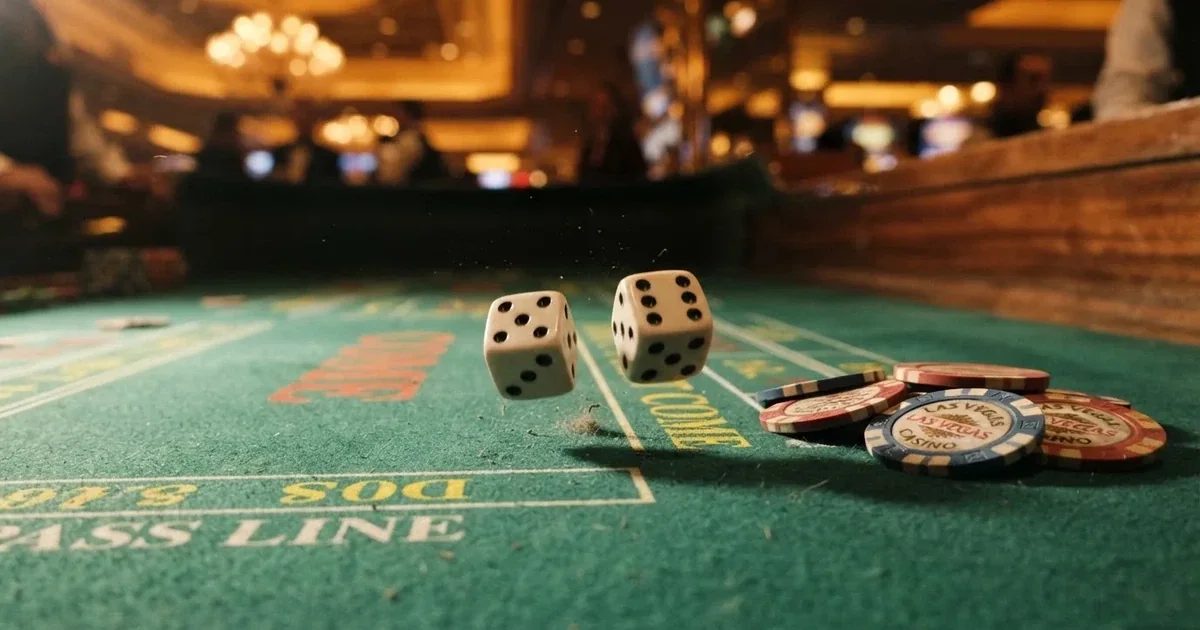


Best live casino online australia 2026: the legal shape of the question
 Available in US
Anyone searching for the best live casino online australia 2026 is, in effect, asking which of a dozen offshore brands is the safest place to sit down at a streamed baccarat or blackjack table. The honest version of that answer does not name a winner. Under the Interactive Gambling Act 2001, providing an online casino game — including a live-dealer stream — to a person in Australia is a prohibited interactive gambling service. No state or territory issues a licence for it. What follows is therefore not a ranking of offshore casinos but a working picture of what the Australian Communications and Media Authority (ACMA) has done about that prohibition, who the regulator has caught out, and where a reader who wants a table game lawfully can actually go.
Current as of 24 September 2026; verified against the ACMA’s published list of formal warnings and blocking requests.
Table of Contents
- Bonuses, wagering and the live-dealer shelf
- Mobile and the live-dealer app question
- Live-dealer games, providers and the catalogue
- The shortlist the ACMA has actually drawn up
- The Australian legal frame for live-dealer play
- Responsible play: BetStop and the limits of self-exclusion
- What the ACMA’s running total actually means
- Picking through the eleven brands on the ACMA list
- What an Australian reader actually has
- The cost of the question
- Frequently asked questions about live casino play in Australia
Bonuses, wagering and the live-dealer shelf
The shelf that drives most “live casino bonus” searches is the promotional one: cash match offers, “live casino welcome bonus” packages, the occasional live-casino free-spin bundle that promotion pages push at sign-up. Read as marketing, they look generous. Read against the wagering requirement that comes attached, they tell a different story.

A live-casino bonus is a credit the operator lends against a deposit, and the player has to turn it over — bet through — a stated multiple of times before any winnings become withdrawable. The multiple is the variable that matters: a 35× turnover on a modest bonus is one thing, the same 35× on a large bonus is a vastly larger number of bets before the cash is yours. Live-dealer games contribute unevenly to that turnover too. Most operators count baccarat, blackjack and roulette at a reduced percentage compared to slots, sometimes at zero for the side-bet heavy titles. The bonus page tends to bury that line.
Then there is the max-cashout cap, the game-weighting table, the “real money first, bonus money second” treatment of deposits, and the time limit in which the requirement has to be cleared. None of these are hidden; they are just rarely the headline.
For an Australian reader the more pointed observation is upstream of all of that. A bonus offered by an operator the ACMA has warned for providing a prohibited interactive gambling service is being offered in breach of section 15A of the Interactive Gambling Act 2001. The “terms and conditions” apply; the underlying contract is with an entity that, by definition, has no Australian licence. That is not a small distinction when something goes wrong with a withdrawal. There is no Australian complaints body to escalate to, no Australian regulator to lean on, and no guarantee the balance survives the next blocking request. The “free” money is not free in any useful sense.
For anyone comparing live-casino welcome offers internationally, the order of operations is the same everywhere: read the wagering multiple, read which games count and at what percentage, read the cap on winnings from a bonus, then read the deposit side. The deeper you read, the more the marketing shape flattens into an arithmetic.
Mobile and the live-dealer app question
“Live casino app” is a search in its own right. The pitch is a one-tap table, push notifications on the next promotion, biometric login, sometimes a portrait-only layout that mimics a phone-screen roulette wheel. The reality is that most live-dealer studios stream in landscape from a fixed rig of cameras — the dealer’s left, the dealer’s overhead, a wide shot. A phone held vertically shows roughly a third of that frame; the rest is letterboxed.
A mobile browser works just as well as a dedicated app for nearly every live-casino client on the market today. HTML5 streams render natively in Safari and Chrome, the in-browser cashier takes PayID, BPAY or a debit card at most operators, and there is nothing the app version does that the browser version does not. The exceptions are operators that wrap the casino inside a native shell for live-chat and touch-ID convenience, and operators that run a separate “live” lobby rather than the slot lobby in the browser.
Two warnings worth carrying. The first is that an “app” downloaded from a third-party store or a sideloaded APK is, on Android, indistinguishable from a hostile overlay that harvests banking credentials — there is no Google Play protection layer over it. The second is that any operator offering a live-dealer app to an Australian reader is offering exactly the service the IGA prohibits, and is on the ACMA’s list for that reason. The app polish does not change the legal status.
For the small subset of Australians who actually have a legal path to a live-dealer stream — staff at international broadcasters, members of an offshore licensee playing from outside Australia, and so on — the browser is the right place to start.
Live-dealer games, providers and the catalogue
“Live casino online” and its variants — “casino live”, “live online casino”, “live casino AU” — are the broad searches, and the shelf behind them is the catalogue: which games are actually streamed, who supplies the stream, and how the betting works in practice.
The dominant supplier is Evolution. Founded in 2006, Evolution opened its Riga studio in 2013 with 100 live tables, then the largest single-site casino operation in Europe, and added a Malta studio in 2020. It completed the acquisition of NetEnt on 1 December 2020, and now runs a group that includes Red Tiger, Big Time Gaming, Nolimit City and Ezugi. The Evolution site states that more than 700 gambling platforms worldwide offer its live-casino games, streamed 24/7 from its studios. Pragmatic Play Live is the second-largest live supplier by studio footprint, with a Dubai and Bucharest presence. There are several smaller studios (OnAir, BetGames, Vivo Gaming) that specialise in regional games and lottery-style draws.
The catalogue itself splits three ways. The first is the table-game core: baccarat, blackjack and roulette, with side bets and “VIP” higher-limit rooms running alongside the open-floor ones. The second is the game-show layer: titles such as Crazy Time, Monopoly Live, Dream Catcher and Mega Wheel, which mix a wheel of fortune with a multiplier round. The third is the regional layer: Andar Bahar, Teen Patti, Sic Bo, Dragon Tiger, slots-style live products.
Baccarat
Baccarat is the game the high-limit rooms are built around. Cards two through nine count at face value, ten and the face cards count as zero, and aces count as one, with hand totals taken modulo 10. Punto banco — the variant nearly every live table runs — is dealt from a shoe of six or eight decks, and the casino banks the game at all times: both hands are played out by fixed drawing rules, the player does not choose whether to draw a third card. Chemin de fer and baccarat banque are older variants where players do choose, and where the role of banker rotates; both are rare in the live-dealer world and common on European land-based floors.
The house edge in baccarat is what makes it the table-game favourite of high-roller rooms. The Banker bet carries a 1.06% edge, the Player bet 1.24% and the Tie 14.36% — a wider gap than in almost any other standard table game. That is also why no strategy system in circulation moves the long-run result: the Banker bet is the cheapest line, the Tie is a marketing line, and nothing the player decides changes the underlying margin.
The game has a longer history than the live studio it streams from. Some accounts place baccarat in nineteenth-century France, others say it travelled from Italy at the end of the fifteenth century during the reign of King Charles VIII, and David Parlett treats Macao as its immediate precursor. Punto banco itself was developed in Havana in the 1940s and is the form the Australian land-based industry runs.
Blackjack
Blackjack is the second of the three core live tables. Number cards count at their number, jack/queen/king at ten, and an ace counts as one or eleven; a starting two-card total of twenty-one is a “blackjack” or “natural” and beats any other hand. The dealer must keep drawing until reaching a total of seventeen or higher, with some rule sets adding a hit on a soft seventeen.
The house edge in blackjack depends almost entirely on the rule sheet. Under a liberal Las Vegas Strip configuration — dealer stands on soft 17, double on any two cards, double after split, resplit aces, late surrender — optimal strategy plays to about 0.28% of every dollar wagered. Under Atlantic City rules the figure is closer to 0.43%. The difference is not in the cards but in the rules, which is why the live-dealer lobby of any one operator can run blackjack at two or three distinct edges at once.
Variants on the live floor include Spanish 21 (played without tens but with liberal player-friendly rules), Double Exposure Blackjack (both dealer cards dealt face-up, with a couple of rule tweaks to compensate), Blackjack Switch (the player can swap the top cards between two hands), and Super Fun 21 (allowing up to four splits).
Roulette
Roulette is the third pillar. The European single-zero wheel has a 2.70% house edge on every bet except the five-number basket; the American double-zero wheel sits at 5.26% on most bets. Nearly every live-casino studio runs European roulette as its default, with American roulette and French roulette (with the la partage rule that halves the house edge on even-money bets) as adjacent tables.
Live roulette is also where the “racetrack” bet layout shows up — the annular betting grid for neighbour and section bets that does not fit on the rectangular felt. It is also where the slow-motion replays come from, and where “lightning” variants such as Evolution’s Lightning Roulette add random multipliers to straight-up wins at the cost of a higher overall edge.
Craps
R craps is rarer on the live-dealer floor but worth knowing about. The Pass and Come bets have a 1.41% house edge, Don’t Pass and Don’t Come 1.36%, and Any Craps 11.11%. The come-out roll wins on seven or eleven and loses on two, three or twelve; any other number becomes “the point”, and the shooter must roll it again before rolling a seven for the Pass Line to win. The table layout is the densest in the casino — proposition bets in the centre run at far higher margins — which is why most live studios run a simplified single-bet version rather than the full Las Vegas layout.
Croupiers, recognition and the live-dealer mechanic
Live-dealer games stream real-time action from a studio or land-based casino. Optical camera recognition technology converts the dealer’s physical actions — a card dealt, a roulette result, a chip placed — into the data that lands on the player’s screen. The recognition layer is what lets a player click on the felt and have the bet registered; without it the croupier would have to read every chip placement out loud.
That is also where “live” stops being a synonym for “watched”. A live-dealer table is a software platform with a video feed attached, and the betting interface is a separate render of the same bet object. The streamed video is one layer; the bets are another; the connection between them is the recognition system.
The shortlist the ACMA has actually drawn up
The page a reader is looking for usually ranks ten or eleven live casinos. This page does not, for the reason already given: there is no Australian-licensed live casino to rank. What can be ranked honestly is the ACMA’s enforcement record — the list of brands the regulator has issued a formal warning to, in the order the regulator has acted.
The brands below are presented in that order. They are not recommended. The accompanying table reproduces the ACMA’s published wording, with the operator the regulator named and the date of the formal warning, alongside the subject-key token the research file carries for each brand. Where the research file marks a brand as no-data on the subject key, the table cell is left blank — there is no reliable fact to place in it, and inventing one is the failure this article is built to avoid.
Brands the ACMA has formally warned
| Brand | ACMA action and date | Operator named by the ACMA | Subject support |
|---|---|---|---|
| RocketPlay | Formal warning, March 2026 | Pulsup Ltd | — |
| Level Up Casino | Formal warning, May 2022 | Dama N.V. | Listings report live-dealer support via BGaming |
| Woo Casino | Formal warning, March 2025 | Dama N.V. | — |
| Spirit Casino | Formal warning, May 2025 | Dama N.V. | — |
| National Casino | Formal warning, July 2025 | Consolutetish S.R.L. | Listings report a live-dealer lobby |
| Bizzo Casino | Formal warning, July 2025; prior warning 2022 | Consolutetish S.R.L.; TechSolutions earlier | — |
| Ignition Casino | Formal warning, July 2025 | Bamboo Media | — |
| Instant Casino | Formal warning, February 2025 | EOD Code SRL | — |
| Jackbit | Formal warning, April 2026 | Ryker B.V. | — |
| Casino Intense | Formal warning, April 2025 | Sterplay Holding Ltd | Listings report a live-dealer lobby |
| Sky Crown | Formal warning, September 2022 | Hollycorn N.V. | — |
RocketPlay is the most recent of the set. The ACMA issued a formal warning in March 2026 to Pulsup Ltd over Rocketplay.com.au; the same brand had already drawn a May 2022 warning to Dama N.V. as part of a six-brand group that included Bambet, Dazard, Level Up, Wild Tornado and Cobra Casinos. Two warnings on the same URL across two operators point to a continuity of intent, not a change of heart.
Level Up Casino carries the May 2022 Dama N.V. warning. Woo Casino and Spirit Casino are later Dama N.V. warnings, in March and May 2025 respectively, which makes Dama N.V. the operator the ACMA has named most often in this cluster of brands. National Casino and Bizzo Casino were named together in July 2025, with Consolutetish S.R.L. as the operator — Bizzo had already been the subject of a 2022 warning to TechSolutions (CY) Group Limited and TechSolutions Group N.V., so the warning is a second action, not a first. Ignition Casino sits alongside them in the same July 2025 round under Bamboo Media. Instant Casino was caught in February 2025 under EOD Code SRL. Jackbit and CasinOK were caught in April 2026 under Ryker B.V., and Casino Intense in April 2025 under Sterplay Holding Ltd. Sky Crown’s warning was issued by the ACMA to Hollycorn N.V. alongside Blue Leo, in September 2022.
These eleven brands do not exhaust the ACMA’s enforcement record. They are the ones the research file names. The wider record, as published by the ACMA, runs into the dozens across the same period.
The Australian legal frame for live-dealer play
Australian online gambling law sits on a single statute. The Interactive Gambling Act 2001, strengthened by the Interactive Gambling Amendment Act 2017, makes it an offence to provide an interactive casino-style gambling service to a person in Australia. Online blackjack, online roulette and other live-dealer-style games are the worked examples the ACMA itself gives on its “About the Interactive Gambling Act” page. What is licensable is wagering on races and sport placed before the event, lotteries and keno. In practice the online bookmakers — Sportsbet, Bet365, Ladbrokes and the rest — are licensed in the Northern Territory by the Northern Territory Racing and Wagering Commission. The commission has no full-time staff and meets once a month in Darwin; it is the regulator for 52 of Australia’s online bookmakers, and it regulates them for tax reasons more than for consumer-protection ones.
The minimum age is 18. The provider faces the criminal exposure; the individual player does not, but an offshore site gives no Australian consumer protection, no complaints body and no recourse if a withdrawal is refused. The Interactive Gambling Amendment (Gambling Reform) Bill 2026 passed Parliament on 19 August 2026, and its advertising and inducement measures commence on 1 January 2026 — law with a start date, not yet in force on this page.
How the ACMA enforces the prohibition
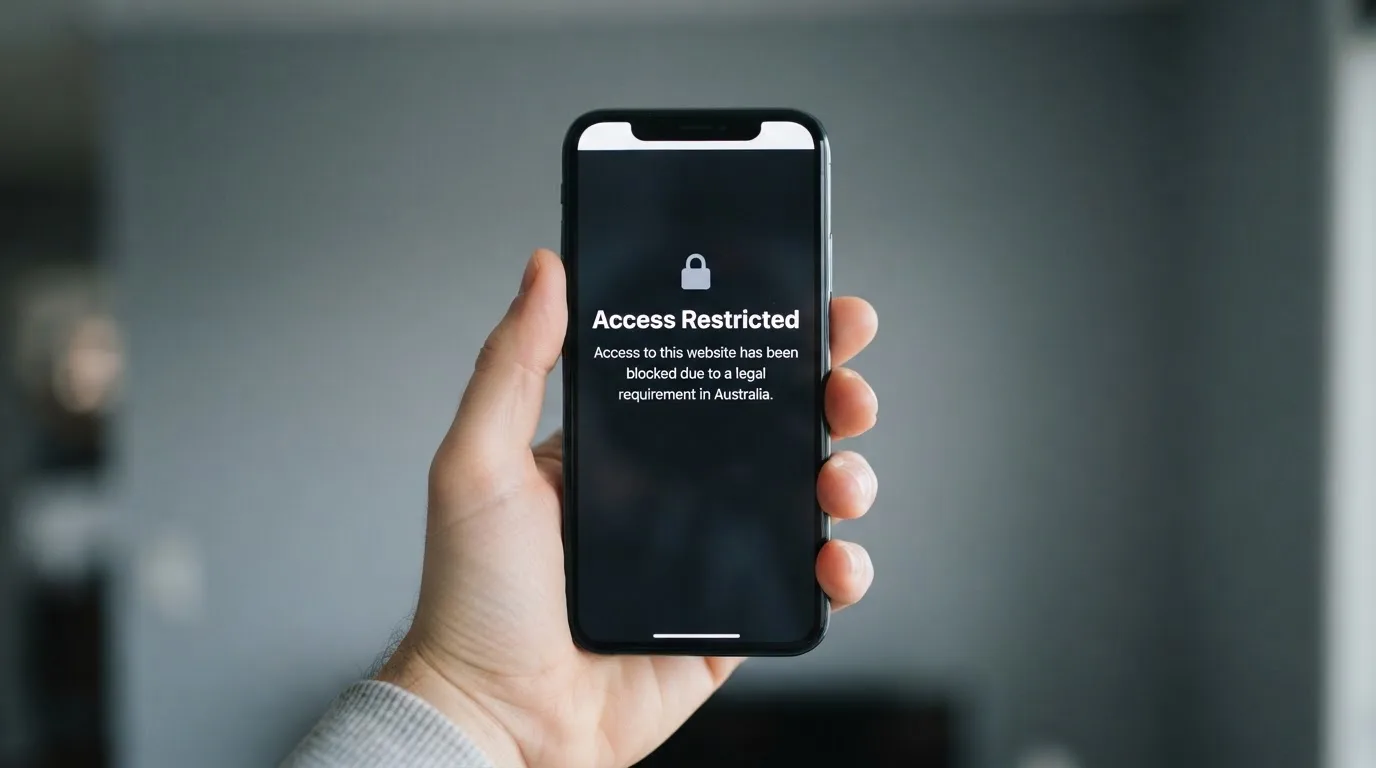
The ACMA investigates complaints, issues formal warnings, and directs Australian internet service providers to block illegal sites. As reported in June 2026, the running total stood at 1,751 illegal gambling and affiliate marketing websites blocked since the first blocking request in November 2019, with more than 230 unlicensed gambling services having left the Australian market since enforcement was strengthened in 2017. The June 2026 round alone asked ISPs to block a further twelve names: 7Signs, ChromaBet, Donbet, Duospin, Freshbet, Slots Gem, Jacks Club, Lucky Start, Pointsbetz.com, Spinrise, Vinyl Casino and Wildsino. A reader thinking about signing up with any of those twelve in 2026 would find the URL failing before the cashier loaded.
What that costs the country
H2 Gambling Capital’s 2026 report estimates that Australians lose about A$3.9 billion a year to illegal gambling sites. The share of gambling going through legal channels fell from 74% in 2021 to 64% by the time the report was published. That is a one-in-three flow of money out of the regulated perimeter, into venues the ACMA is trying to block.
The payment layer
The payment layer is the one that bites a reader at the cashier, not the regulator. Since 11 June 2024, credit cards, credit-related products and digital currency have been banned as payment for licensed online wagering; the penalty for an operator accepting them is up to A$247,500. The legal deposit routes for a licensed wagering service are debit card, bank transfer, PayID/Osko and BPAY. A site that asks an Australian customer for a credit card or a crypto deposit is operating outside the Australian rules, and the page that links to such a deposit method is doing the same.
Tax
Gambling winnings of a recreational player are not assessable income under section 6-5 of the Income Tax Assessment Act 1997. Losses are not deductible unless the person carries on a business of gambling, which a reader almost certainly does not. The ATO’s own guidance is the source to check; the rule above is the rule, not the answer to a specific return.
Responsible play: BetStop and the limits of self-exclusion
The Australian framework for player protection has two parts. The first is BetStop, the National Self-Exclusion Register, which has been live since August 2023 and binds Australian-licensed online and phone wagering services. A punter who registers with BetStop is excluded from every Australian-licensed wagering account they hold and from opening new ones for the period they select. The second is the National Gambling Helpline on 1800 858 858, free, 24/7, with chat at Gambling Help Online.
BetStop does not bind an offshore casino. An Australian who registers with BetStop and then signs up at an offshore live-dealer site the ACMA has warned has not excluded themselves from anything in that site, and the offshore operator has no obligation to honour the exclusion. The safeguard is real for the Australian-licensed market and absent outside it.
The deeper question is what the framework asks of an Australian reader who wants to play a live-dealer game at all. The answer is the lawful alternatives: a licensed pokies venue, a land-based casino, a Crown Melbourne baccarat table approved by the Victorian Gambling and Casino Control Commission, or any of the equivalent state-based regulators for the other licensed Australian casinos. The casino floor is a licensed environment with player-protection obligations BetStop cannot reach on the other side of the border. The offshore live-dealer stream is not.
For a reader who has already registered with BetStop and finds the urge to play surfacing again, the right next step is the helpline, not a search for an unblocked offshore brand. For a reader who has not registered but is spending more than they planned on offshore sites, the same.
What the ACMA’s running total actually means
The arithmetic on the ACMA’s blocking record gives a clear picture of the scale. As of June 2026 the ACMA had asked Australian ISPs to block 1,751 illegal gambling and affiliate marketing websites since November 2019, which is the date of the first blocking request. That is roughly six and a half years of enforcement, which puts the blocking rate somewhere in the region of 260 to 270 sites a year — closer to the upper end of that range once the post-2017 acceleration is accounted for, and lower in the early years when the blocking regime was still being built. The round reported on 26 June 2026 alone added twelve names. The 230-plus unlicensed services that have left the Australian market since 2017 sit on top of the blocks: a service that withdraws is one the ACMA no longer has to act against.
The way to read that figure is as a trend, not a score. The blocks keep coming. The service withdrawals keep coming. The new brands the ACMA names in 2026 look very like the brands it named in 2022, 2023 and 2024 — same handful of Curaçao-registered operators, same handful of white-label platforms, same handful of marketing affiliate networks. The legal shape of the market has not changed.
Picking through the eleven brands on the ACMA list
A reader who has already decided to play offshore will reach one of the eleven brands above regardless of any advice given here. The honest thing to do is to make sure they know what they are signing up to.
RocketPlay has been warned twice — once as a Dama N.V. brand in May 2022, and again under Pulsup Ltd in March 2026. The URL itself has been the subject of an ACMA action across a four-year span, and the operator behind it has changed once. Woo Casino, Spirit Casino, Level Up Casino, Bambet, Dazard, Wild Tornado and Cobra Casinos are all Dama N.V. brands, and the ACMA has caught up with the parent company repeatedly. National Casino and Bizzo Casino share an operator and a warning date. Ignition Casino sits next to them under a different operator, Bamboo Media. Instant Casino is a single EOD Code SRL brand. Jackbit and CasinOK are caught together under Ryker B.V. Casino Intense is caught under Sterplay Holding Ltd. Sky Crown and Blue Leo are caught under Hollycorn N.V.
The pattern is the more useful fact than any individual brand. The ACMA is not naming these brands in isolation; it is naming the operators behind them. The same handful of operators turn up across multiple brands, and a warning to one of their brands is, in practice, a warning that the operator as a whole is on notice.
What that means at the cashier
At the cashier the player pays with a debit card, a bank transfer or — at the offshore sites — a credit card or a cryptocurrency, both of which the Australian rules do not allow. A withdrawal request at any of these brands is governed by the operator’s own terms, with no Australian regulator behind the player. The ACMA’s enforcement has nothing to say about an unpaid withdrawal: it acts on the offer of a prohibited service, not on a contractual dispute.
The block is the other side. A reader who has signed up and deposited, and then finds their next visit routed to the ACMA’s blocking page, has lost the balance on the account. There is no compensation route. That is the cost of using an unlicensed service in plain arithmetic.
The question of “the safest”
A reader looking for the safest of the eleven would still be looking for the least unsafe. The honest ranking places them in a single band: all eleven are unlicensed for Australian customers, all eleven are subject to ACMA action, all eleven rely on the operator’s own dispute resolution if a withdrawal goes wrong. The variable differences — the licence the brand displays in its footer (Curaçao in most cases), the payment methods on the cashier, the precise wording of the bonus terms — are second-order against that.
The two operational differences worth flagging are the length of the brand’s track record under the ACMA’s eye and whether the operator has been caught multiple times. RocketPlay scores twice on the first and is a single operator on the second. Level Up Casino, Woo Casino, Spirit Casino, Bambet, Dazard, Wild Tornado and Cobra Casinos are all Dama N.V. brands, which means the operator has been warned repeatedly. The newer the brand’s entry into the ACMA’s record, the less history the regulator has with it; the older, the more history it has, and that history is uniformly a sequence of formal warnings.
What an Australian reader actually has
For a reader in Australia the live-dealer choices that the law recognises are not offshore. They are:
-
The land-based casinos. Crown Melbourne runs three baccarat variants — Traditional Baccarat, Crown Baccarat and 2 to 1 Baccarat — as approved table games regulated by the Victorian Gambling and Casino Control Commission, which replaced the VCGLR as Victoria’s casino regulator on 1 July 2022. Crown’s blackjack lobby has its own set of approved rule changes — including the renaming of the “Perfect Pairs” side bet to “Crown Pairs” on 23 December 2024 and the introduction of a “Free Bet” option with a new “Pot of Gold” side bet on 25 March 2024. NSW and the other states and territories run their own approval regimes; in NSW, section 66 of the Casino Control Act 1992 requires the regulator to approve any game and its rules and to make a copy of the approved rules available to patrons on request.
-
The licensed online bookmakers, for wagering on racing and sport placed before the event. Sportsbet, Bet365 and Ladbrokes are the three named in the research file, all licensed in the Northern Territory, and all bound by the BetStop exclusion register and the credit-card ban. None of them stream a live-dealer casino game, and none of them are licensed to.
-
The licensed pokies venues, for poker-machine play. These are licensed by the relevant state or territory regulator and bound by the same responsible-gambling obligations as the casinos.
That is the full lawful list. The eleventh live-casino brand on the ACMA’s list, and the dozen blocked in the most recent round, are not on it. The decision a reader makes about whether to play offshore is real even where the regulator’s list does not name the specific brand: the IGA prohibits the offer, and the ACMA’s enforcement record shows what that prohibition looks like in practice.
The cost of the question
The honest reading of “best live casino online australia 2026” is that the question’s premise is wrong for an Australian reader. The market the question imagines does not exist lawfully, and the offshore brands that answer it do so by breaching the Interactive Gambling Act 2001. The ACMA’s enforcement is real, the payment bans are real, the responsible-gambling safeguards do not extend to the offshore operators, and the player carries the residual risk.
The arithmetic on the ACMA’s running total — 1,751 sites blocked since November 2019, with twelve added in June 2026 alone, and 230-plus unlicensed services having left the Australian market since 2017 — is the trend that holds. The brands named in this article are the trend’s recent examples. The lawful alternatives — Crown Melbourne’s baccarat tables, the NSW casino floors under section 66 of the Casino Control Act 1992, the licensed bookmakers, the licensed pokies venues — are the ones a reader can sign up to without taking on the ACMA’s risk.
The page’s verdict is the same one the regulator has been delivering for six and a half years. The offer is prohibited; the blocks keep coming; the law has not changed.
Frequently asked questions about live casino play in Australia
What makes a live casino game different from a standard online slot?
A live-dealer game streams real-time video of a croupier dealing cards or spinning a roulette wheel from a studio, with optical camera recognition converting the dealer’s physical actions into the data shown on the player’s screen. A standard online slot is a self-contained software render of reels and paylines with no human in the loop.
Who is Evolution and why does its name come up around live casino games?
Evolution was founded in 2006 and is the largest live-casino supplier in the world; it completed its acquisition of NetEnt on 1 December 2020 and now runs a group that includes Red Tiger, Big Time Gaming, Nolimit City and Ezugi. The Evolution site states that more than 700 gambling platforms worldwide offer its live-casino games, which is why its name appears in the lobby of most live-dealer casinos.
Is it legal for an online casino to stream live dealer games to players in Australia?
No. Under the Interactive Gambling Act 2001, providing an interactive casino-style gambling service — including online blackjack, online roulette and other live-casino-style games — to a person in Australia is a prohibited interactive gambling service, and the ACMA’s published guidance lists those games as worked examples. The provider faces the criminal exposure; the individual player does not.
Can a live casino app be used on a mobile browser?
Most live-dealer clients run in any modern mobile browser via HTML5, and there is little the app version adds on top of the browser version beyond push notifications and biometric login. An app downloaded outside an official app store on Android is, in addition, indistinguishable from a hostile overlay, and any operator offering a live-dealer app to an Australian reader is offering the prohibited service the ACMA has been warning about.
What welcome offers are commonly advertised for live casino play?
Live-casino welcome packages typically combine a matched deposit bonus with free-spin bundles and a live-dealer-specific reload. The variable that changes the offer’s real value is the wagering requirement, the contribution rate for live-dealer games (most operators count baccarat, blackjack and roulette at a reduced percentage compared to slots), the max-cashout cap and the time limit in which the requirement has to be cleared. For an Australian reader the deeper question is upstream: an offer from an operator the ACMA has warned is being made in breach of section 15A of the Interactive Gambling Act 2001.
Are there licensed live table games at Australian land-based casinos?
Yes. Crown Melbourne offers three baccarat variants — Traditional Baccarat, Crown Baccarat and 2 to 1 Baccarat — approved by the Victorian Gambling and Casino Control Commission. The NSW Casino Control Act 1992 requires the state regulator to approve any game and its rules before a casino operator offers it, and the other states and territories run their own equivalent approval regimes. The lawful live-dealer table in Australia is the one on the casino floor, not the one in an offshore stream.
Written by the editors at Casino Payout Hub.