

What an Australian reader can actually do about online keno in 2026
 Available in US
The straight answer sits at the top of the page, because the rest of it only makes sense once it is on the table. No online casino operating from inside Australia or offshore can lawfully offer keno to a person physically in Australia. The Interactive Gambling Act 2001, tightened in 2017, makes the supply of online casino games — keno included — a prohibited interactive gambling service. The Australian Communications and Media Authority enforces it through formal warnings and site blocking. A page that opens with “here are the top ten online keno sites for Aussies” is either trading in a market that does not legally exist, or quoting brands the regulator has already moved against.
What follows is the cost of that gap, looked at the way a player would look at it. It walks the legal frame first, because every other choice depends on it: the maths of the game, the way licensed keno works in pubs and clubs, the offshore brands the ACMA has named, and the responsible-gambling tools that bind the licensed side of the market. The point is not to convert a reader into a punter. It is to show what the offer is really worth once the marketing is stripped back, and where the money actually goes.
The figures below are current as of 24 September 2026 and have been checked against the ACMA’s published formal-warning register and the regulator’s most recent blocking round.
Table of Contents
- What online keno costs the player before the marketing is stripped away
- The legal frame: the Interactive Gambling Act and how the ACMA applies it
- Where licensed keno actually exists in Australia
- H2 Gambling Capital’s estimate of what Australians spend on illegal sites
- The maths of an online keno bonus, run honestly
- Crypto deposits and the offshore keno market
- The brands the ACMA has named in formal warnings
- The blocking rate, put into context
- What responsible gambling tools can and cannot do here
- A note on the 2026 reform bill
- A short reading of the cost-benefit, for the reader who arrived at this page to play
- Frequently asked questions
What online keno costs the player before the marketing is stripped away
Keno looks gentle. The player picks numbers, a draw happens, the paytable pays out. The mechanism is the simplest in the casino: no dealer to read, no hand to play, no strategy to second-guess. The simplicity is the pitch, and the simplicity is also where the house edge lives.

Wizard of Odds puts the house edge of keno at 25% to 29% under common Las Vegas rules, with live keno draws across Nevada venues returning somewhere between 65% and 80% to the player. Wikipedia’s survey of online keno titles puts the spread wider: under 4% on the most generous paytables, over 35% on the stingier ones. Either way, keno sits at the top of the casino table for what the house keeps per dollar wagered. The comparable figures tell the story: baccarat runs at 1.06% on the Banker bet and 14.36% on the Tie, and blackjack under liberal Las Vegas Strip rules sits at about 0.28% with optimal play. Keno’s 25%-and-up is not in the same neighbourhood as those games — it is more like three blackjack hands stacked together.
A reader who plays keno for an hour at A$1 a spot, picking ten numbers on a standard 80-ball draw, is burning through real money at a rate that has nothing to do with whether they hit. The draw itself is incidental to the cost. A jackpot miss costs the same as a five-spot hit that pays A$3 — both contribute the same dollar to the house edge, both move the bankroll in the same direction. The marketing rarely says that. The paytable does.
That is why the rest of the page concentrates on what the offer actually costs, and not on which site has the friendliest banner.
The legal frame: the Interactive Gambling Act and how the ACMA applies it
The Interactive Gambling Act 2001 prohibits the supply of online casino games, online pokies and in-play betting to anyone in Australia. The 2017 amendments closed the loophole that had let offshore providers advertise freely to Australian customers. Keno, when it is run online as a casino product, sits inside that prohibition.
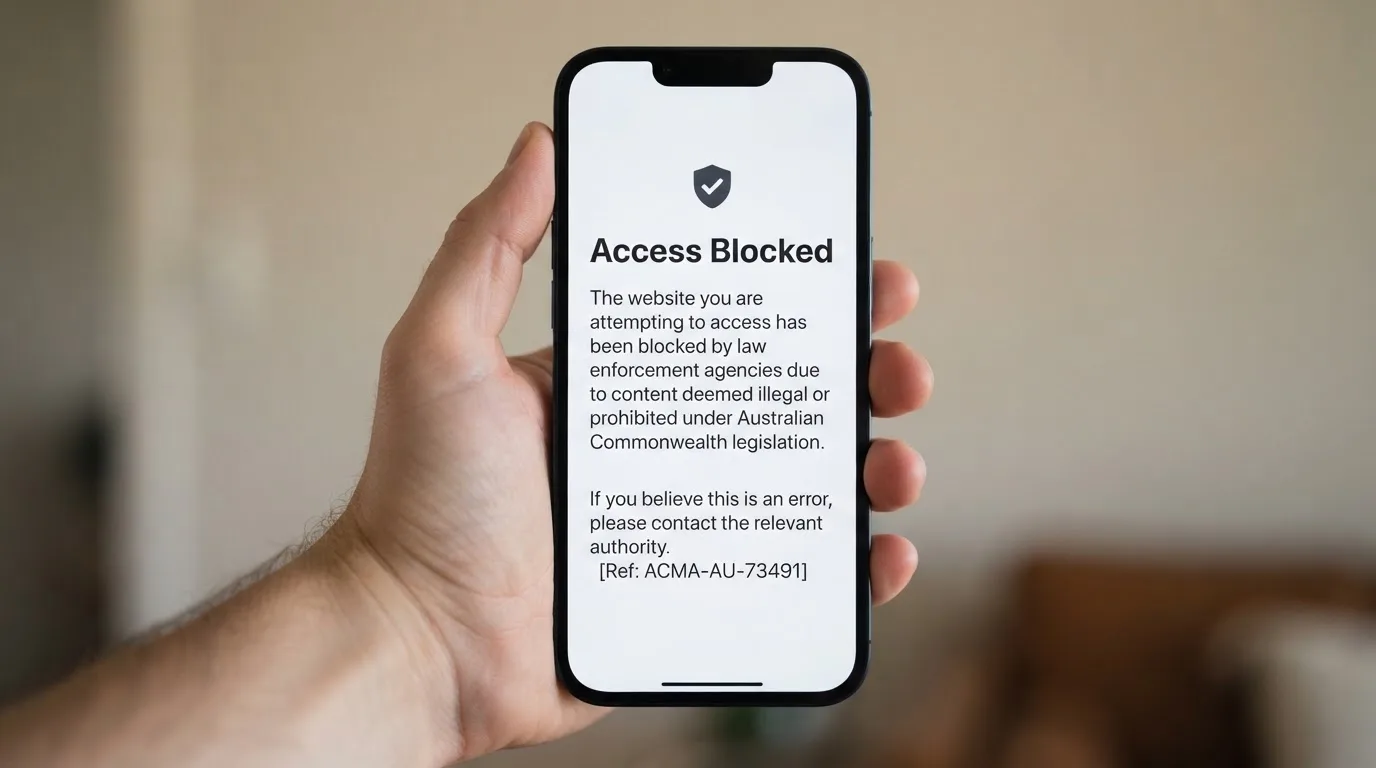
The Australian Communications and Media Authority is the body that investigates breaches, issues formal warnings to operators and asks Australian internet service providers to block offending sites. The cumulative effect of that work, as the ACMA reported through 2026, is the blocking of 1,751 illegal gambling and affiliate marketing websites since the first blocking request in November 2019, and the departure of more than 230 unlicensed services from the Australian market since enforcement was strengthened in 2017. A single blocking round reported on 26 June 2026 covered twelve sites at once: 7Signs, ChromaBet, Donbet, Duospin, Freshbet, Slots Gem, Jacks Club, Lucky Start, Pointsbetz, Spinrise, Vinyl Casino and Wildsino.
What this means in practice. The individual player in Australia is not prosecuted — the Act targets the provider, not the customer. An offshore casino gives no Australian consumer protection: no complaints body with jurisdiction, no recourse if a withdrawal stalls, and no guarantee that a balance still on the account when the site is blocked can be retrieved. A blocked site can take player funds with it.
There is no Australian jurisdiction that issues a licence to an online casino offering keno. State and territory regulators — the Victorian Gambling and Casino Control Commission, the NSW Casino Control Authority, the Queensland Office of Liquor and Gaming Regulation — approve table games at land-based casinos and license keno products, but none of them licenses an offshore website. A licence displayed at the bottom of an offshore homepage is, by definition, not an Australian one. A Curaçao e-gaming certificate is not Australian regulation; it is a Caribbean incorporation document.
Where licensed keno actually exists in Australia
Keno is a legal gambling product in Australia when it is offered through state and territory licensed channels. The mechanics — players pick up to twenty numbers from a field of one to eighty, the house draws twenty numbers by ball machine or random number generator, payouts depend on how many chosen numbers match — are the same online and off. What changes is who is allowed to run it.
In Queensland, Keno (QLD) Pty Ltd is the exclusive keno licensee under the Keno Act 1996, the Keno Regulation 2007 and the Keno Rule 2010, regulated by the Office of Liquor and Gaming Regulation. Keno is offered in licensed pubs and clubs across the state, and the draw happens inside a regulated machine on licensed premises.
New South Wales extended its keno operator and product licence by 28 years, to 1 April 2050, with the joint licensees agreeing to pay the state more than $230 million — a $25 million upfront fee plus annual licence duty. NSW keno runs in clubs and hotels under the regulator’s product approval, and the same paytable structure applies.
Victoria issued 20-year keno licences from 15 April 2022 under the Gambling Regulation Act 2003 to Keno (VIC) Pty Ltd and Lottoland Australia Pty Ltd, regulated by the Victorian Gambling and Casino Control Commission. Lottoland Australia renamed to KenoGo Pty Ltd on 9 September 2025.
The Northern Territory Racing and Wagering Commission has a different shape: it regulates 52 of Australia’s online bookmakers — Sportsbet, Bet365, Ladbrokes among them — through a Territory licence that exists for tax reasons rather than consumer protection. The commission has no full-time staff and meets once a month in Darwin. That detail is the regulator’s own admission: the body that approves online wagering licences in the Territory is part-time. None of those licences covers online casino games; they cover racing and sport only.
The land-based keno offering, by contrast, is regulated, age-checked and subject to state harm-minimisation rules. The paytable is published, the draw is auditable and the venue is licensed. That is what lawful keno in Australia looks like.
H2 Gambling Capital’s estimate of what Australians spend on illegal sites
The 2025 H2 Gambling Capital estimate, carried in industry coverage of the ACMA’s blocking work, puts Australians’ losses to illegal offshore gambling sites at about A$3.9 billion a year. The share of gambling going through legal channels fell from 74% in 2021 to 64% over the period measured — a ten-point swing toward unlicensed operators over four years.
The arithmetic that frame implies: A$3.9 billion at a roughly 25% house edge in keno terms means somewhere in the order of A$15 billion of illegal wagers on casino-style products flowing to offshore sites that pay no Australian tax, give no Australian consumer protection and can disappear behind an ISP block at any time. A reader who thinks they are playing a casual game is contributing to that number. The regulator’s blocking record is the same number read from the other side: every site blocked is an attempt to claw some of that flow back.
The reason this matters on a page about keno specifically is that keno is the game where the house edge is highest, so each dollar wagered returns the least to the player. The “casual” feel of picking numbers is, statistically, the most expensive casual game in the casino.
The maths of an online keno bonus, run honestly
An online keno bonus sounds like free money. The reality is a wagering requirement applied to a game with the highest house edge in the casino, and the conversion runs against the player twice.
Suppose a player claims a bonus of A$200 at a 40× wagering requirement, wagering exclusively on keno at A$1 a spot. The required turnover is A$8,000. At a 25% house edge, the expected loss from clearing the bonus is A$2,000. The bonus is A$200. The cost of releasing it is ten times the bonus amount, on average, before the player sees a cent.
If the same player bets A$1 a spin with each spin taking five seconds, the 8,000 spins take 40,000 seconds — about 11.1 hours of uninterrupted play. The bonus can be cleared, in theory. In practice, the player has lost, on average, A$2,000 of the A$8,000 turnover to the house edge, and the bonus pays out A$200. The arithmetic gives a player roughly 10 cents back for every dollar the bonus costs them to release.
These numbers assume only the bonus amount is wagered and that the keno paytable sits at the lower end of the online spread. A stingier paytable, a slower spin rate, or any deposit funds mixed into the wagering all push the loss higher. A reader who sees a “200% bonus up to A range on keno alone — and that is the average over many players, not the guaranteed outcome for the one at the screen.
A few bonuses restrict which games count toward wagering, and many exclude keno entirely. Where keno does count, the math above is what the bonus actually costs. Where it does not, the headline figure is the only number the player ever sees — and the only one that matters to the operator.
Crypto deposits and the offshore keno market
Bitcoin keno, crypto casino keno, the blockchain angle on online keno: the search volume for these terms exists because the offshore market has spent marketing dollars on it. The legal status in Australia has not moved.
Since 11 June 2024, credit cards, credit-related products and digital currency have been banned as payment for licensed online wagering in Australia, with penalties up to A$247,500 for operators that take them. The legal deposit routes for licensed wagering are debit card, bank transfer, PayID, Osko and BPAY. A site that asks an Australian customer for a Bitcoin deposit or a credit card number is operating outside the Australian rules on payment, on top of the prohibition on offering online casino games.
The offshore route works like this: a Curaçao-registered operator accepts Bitcoin, runs an RNG-driven keno draw, and pays out in Bitcoin to an external wallet. From the Australian customer’s side, the bank never sees the transaction. From the regulator’s side, the operator is unlicensed for the Australian market, the payment method is banned for licensed wagering, and the consumer has no Australian recourse if the withdrawal stalls or the site goes dark.
A reader weighing the privacy argument should weigh it against what privacy is buying here. The transaction is hidden from the bank. It is not hidden from the ACMA. Blocking requests work on domain names, not on payment rails. The site still gets blocked; the balance still gets stranded.
The brands the ACMA has named in formal warnings
The eleven brands in the table below are not a ranking and not a shortlist. They are brands the ACMA itself has named in formal warnings under the Interactive Gambling Act 2001 for offering prohibited services to Australians. No bonus terms are attached: the only sources for those were affiliate marketing pages, and the offers themselves are not what is at stake.
| Brand | ACMA action and date | Operator named by the ACMA | Subject support |
|---|---|---|---|
| RocketPlay | Formal warning, March 2026 (Pulsup Ltd); earlier warning to Dama N.V., May 2022 | Pulsup Ltd / Dama N.V. | — |
| Level Up Casino | Formal warning, May 2022 | Dama N.V. | Listed on the BGaming provider site |
| Woo Casino | Formal warning, March 2025 | Dama N.V. | — |
| Spirit Casino | Formal warning, May 2025 | Dama N.V. | — |
| National Casino | Formal warning, July 2025 | Consolutetish S.R.L. | Listed on Wikipedia’s coverage of casino brands |
| Bizzo Casino | Formal warning, July 2025 (Consolutetish); earlier warning to TechSolutions, 2022 | Consolutetish S.R.L. / TechSolutions | — |
| Ignition Casino | Formal warning, July 2025 | Bamboo Media | — |
| Instant Casino | Formal warning, February 2025 | EOD Code SRL | — |
| Jackbit | Formal warning, April 2026 | Ryker B.V. | — |
| Casino Intense | Formal warning, April 2025 | Sterplay Holding Ltd | Listed by ABC, ACMA and Crown Melbourne references |
| Sky Crown | Formal warning, September 2022 | Hollycorn N.V. | — |
The table covers the brands the regulator has acted against, in the order the plan sets, with the date and the operator entity the ACMA published. Where a brand carries only listings on third-party sites rather than direct provider documentation, that is named as such — the absence of confirmation from the game provider or the operator itself is the relevant information. The reader can see at a glance which brands reappear under different operator shells (Dama N.V. turns up four times across the list), which is itself the pattern the regulator’s enforcement record shows: warning one shell of an operation does not end the warnings.
RocketPlay
RocketPlay received an ACMA formal warning in March 2026 over the Rocketplay domain, with the operator named as Pulsup Ltd. The same brand had already been caught up in a May 2022 warning to Dama N.V. covering six casino brands. From the player’s side, a name change of the operator shell does not change the prohibition: online casino games cannot be licensed in Australia, whatever licence the website displays in its footer. There is no Australian-licence answer for this brand because there cannot be one.
Level Up Casino
Level Up was part of the May 2022 Dama N.V. warning, the earliest action against this brand in the table. The provider side of the catalogue — what is actually on the site — is what BGaming’s provider site lists; the operator’s own terms were not independently confirmed in research. The verdict on the brand is the same as on the rest of the list: the ACMA has acted, no Australian licence covers it, and any deposit the player places is on a site that can be blocked next round.
Woo Casino
Woo Casino was named in a March 2025 Dama N.V. warning, alongside Spirit Casino two months later. The Dama N.V. cluster — Bambet, Dazard, Level Up, Rocketplay, Wild Tornado, Cobra and now Woo and Spirit — is the regulator’s longest-running enforcement thread on this list. A brand that has been warned twice across the same operator shell is a brand that knows the warning and has continued anyway.
Spirit Casino
Spirit Casino sits in the same Dama N.V. cluster, warned in May 2025. The pattern is the same as Woo Casino’s, and the cost to a player choosing this brand over a licensed Australian keno outlet is identical: no consumer protection, no Australian complaints route, and a real chance the site disappears behind an ISP block with funds on it.
National Casino
National Casino was named in a July 2025 warning to Consolutetish S.R.L., alongside Bizzo Casino in the same enforcement action. National’s presence on Wikipedia’s coverage of casino brands is the closest the catalogue gets to confirmation from a third-party listing site; it is not the same as the provider confirming the title. The cost-benefit shape is unchanged.
Bizzo Casino
Bizzo was named in the same July 2025 Consolutetish warning, but had already been warned in 2022 to TechSolutions (CY) Group Limited and TechSolutions Group N.V. Two warnings across three years and two operator shells is the regulator’s clearest record on this list of a brand continuing to operate after formal action. From a reader’s perspective, this is the brand whose own history tells the story most plainly: warned, renamed, warned again.
Ignition Casino
Ignition was warned in July 2025 with Bamboo Media named as the operator. The brand targets the Australian market from offshore and is part of the same July 2025 enforcement cluster as National and Bizzo. There is no Australian-licence answer, no Australian complaints body, no guarantee the balance can be withdrawn if the site is blocked in the next ACMA round.
Instant Casino
Instant Casino was warned in February 2025 with EOD Code SRL as the operator. It is the earliest action in the second half of the table, and the ACMA’s blocking cadence has not slowed since. The math on the bonus is unchanged; the legal picture is unchanged; what changes is the calendar date of the warning.
Jackbit
Jackbit was warned in April 2026 alongside CasinOK, both under Ryker B.V. The most recent action in the table and a useful marker for how the ACMA is moving: a single warning letter, two brands named, both still operating in some form at the time of writing. The reader’s verdict here is the same as on RocketPlay above.
Casino Intense
Casino Intense was warned in April 2025 under Sterplay Holding Ltd. The brand carries the most third-party listing of any name on the table — ABC, the ACMA’s own register and Crown Melbourne all reference it in different contexts — but none of that is an Australian licence, and none of it changes the prohibition on online casino games. The Casino Control Act 1992 in NSW, section 66, requires casino operators to make approved game rules available to patrons; no offshore site is bound by that section.
Sky Crown
Sky Crown was named in a September 2022 warning to Hollycorn N.V., alongside Blue Leo. It is the earliest dated warning in the table and the one with the longest unbroken enforcement history. A reader weighing Sky Crown against a regulated Australian keno outlet is weighing a brand that has been on the regulator’s record for four years against a product the regulator has approved.
The blocking rate, put into context
The ACMA’s blocking record is the most concrete measure of how often an offshore keno site becomes unavailable to an Australian customer. The first blocking request went out in November 2019. By June 2026, the cumulative count stood at 1,751 blocked websites and affiliate pages. That is roughly 265 blocks per year across the six-and-a-bit-year period, or around 22 per month — with the pace not slowing as enforcement has matured.
Stated as a rate, the ACMA blocks one illegal gambling or affiliate website for every thirty-odd hours. Some of those blocks are affiliate marketing pages rather than casino front-ends, and some of the casino fronts that get blocked reappear at a new domain within weeks. The rate is therefore a floor on the disruption, not a ceiling: a player whose site gets blocked mid-session can usually find the same brand at a new URL within a search, but the balance that was on the old URL is gone.
For an Australian reader choosing between this market and the licensed keno offered at a local pub or club, the rate matters in two ways. It tells them that the offshore site they pick today may not be reachable next month. And it tells them that every dollar wagered on those sites contributes to the A$3.9 billion annual loss estimate — money that leaves Australia, returns nothing to state revenue, and leaves the player with no recourse if the site folds.
What responsible gambling tools can and cannot do here
BetStop, the National Self-Exclusion Register, has been live since August 2023. It binds Australian-licensed online and phone wagering services — the bookmakers regulated by the Northern Territory Racing and Wagering Commission and their state-licensed equivalents. A player who registers with BetStop is excluded from those services for the period they nominate.
BetStop does not bind an offshore casino. A self-excluded player can still open an account at an offshore site, deposit, and play keno there. The exclusion applies to the licensed wagering market, and licensed wagering does not cover online casino games in Australia. That is a real gap, and it is the gap most likely to bite a reader who has already decided they need a break.
For readers who want to use the licensed tools that do apply, the picture is more complete. The National Gambling Helpline on 1800 858 858 is free, runs 24/7, and offers chat at Gambling Help Online. State-level help exists in every jurisdiction. Venue-level self-exclusion applies at the licensed pub, club or casino where a player has been keno-playing in person. None of those tools will block an offshore account, but together they cover the side of the market that is actually licensed.
The land-based keno product carries its own consumer protections: age verification at the venue, published paytables, audited draws, and a regulator that can pull a licence. Those protections do not survive the trip offshore. They are the reason the rest of the page recommends licensed keno for readers who want to play at all.
A note on the 2026 reform bill
The Interactive Gambling Amendment (Gambling Reform) Bill 2026 passed Parliament on 19 August 2026. Its advertising and inducement measures commence on 1 January 2027. The bill is law with a start date; it is not yet in force on a page read in 2026. The pre-existing prohibition on supplying online casino games to Australians is unchanged; the new measures add restrictions on how licensed operators can advertise, and penalties for breaches, from the start date forward.
The distinction matters for any reader who treats the bill as already-live. The supply prohibition that runs through this page is the 2001 Act as amended in 2017. The 2026 reform is layered on top of it, not in place of it.
A short reading of the cost-benefit, for the reader who arrived at this page to play
A reader who arrived looking for an online keno site to play at tonight has three honest answers, and only one of them is what they came for.
The first answer is that there is no Australian-licensed online casino offering keno. No state or territory regulator issues that licence, and no offshore operator can lawfully target the Australian market. The brands above, and the wider offshore market, are the ACMA’s enforcement territory, not a parallel legitimate choice.
The second answer is that licensed keno exists at pubs, clubs and land-based casinos across the country, with state-level regulation and a published paytable. The house edge is still in the 25%-and-up range — that is what keno is, online or off — but the consumer protection is real, the regulator is local, and the player can complain to a body with jurisdiction.
The third answer is that the responsible-gambling tools — BetStop, the National Gambling Helpline, venue-level exclusion — bind the licensed side of the market only. They do not bind the offshore side. A player who has decided they need a break has a working set of options on the licensed side and a real gap on the offshore side.
The arithmetic on a keno bonus, the 25%-and-up house edge, the ACMA blocking cadence, the 2026 reform bill — all of these point in the same direction. A reader who plays keno, plays it best licensed.
Frequently asked questions
How does keno’s house edge compare to other casino games?
Keno’s house edge runs 25% to 29% in most live-venue settings, and somewhere between under 4% and over 35% across online paytables, per Wizard of Odds and Wikipedia. Blackjack under liberal Las Vegas Strip rules sits near 0.28% with optimal play, and baccarat runs 1.06% on the Banker bet. Keno is the most expensive common casino game per dollar wagered.
Is keno offered at licensed pubs and clubs, not just casinos?
Yes, in every state and territory that licenses it. Keno is offered in licensed venues in Queensland under the Keno Act 1996, in NSW under a 28-year licence extension to 2050, and in Victoria under 20-year licences issued from 15 April 2022 to Keno (VIC) Pty Ltd and KenoGo Pty Ltd (formerly Lottoland Australia). The keno product at a licensed pub is the same game as online keno, with the house edge and paytable published and the draw auditable.
Is it legal for an online casino to offer keno to a person in Australia?
No. The Interactive Gambling Act 2001 prohibits the supply of online casino games, including keno, to anyone in Australia. The 2017 amendments closed the loophole that had let offshore providers advertise to Australian customers. The ACMA enforces the prohibition through formal warnings and site blocking; the individual player is not prosecuted, but the provider is.
How does live keno differ from an automated keno draw?
A live keno draw uses a physical ball machine in a licensed venue, with the draw visible to players and auditable by the regulator. An automated draw uses a random number generator, typically at an offshore site where neither the player nor any Australian regulator can audit the algorithm. The paytable and house edge differ between the two settings, with online paytables sitting anywhere from under 4% to over 35% house edge.
Can keno be played with a Bitcoin deposit at an offshore site?
A reader can deposit Bitcoin at an offshore site and play keno, but the site is offering a prohibited service to Australians under the Interactive Gambling Act 2001. The payment itself is also banned for licensed online wagering since 11 June 2024, with penalties up to A$247,500 for operators. The transaction is hidden from the bank but not from the ACMA, and the site can be blocked with funds still on the account.
Why do keno returns vary so widely between venues?
The paytable is set by the operator, within whatever bounds the regulator sets. Online paytables range from under 4% to over 35% house edge, depending on how many spots the player picks, how many matches the paytable rewards, and whether the draw offers bonus multipliers. Live-venue paytables are published and tend to cluster in the 20% to 40% range. The variation is the operator’s commercial choice, and it is the reason two keno sites can look identical from the lobby and cost the player very different amounts per spin.
Created by the ”Casino Payout Hub” editorial team.