


Bitcoin pokies in Australia 2026: what changes when the deposit is on-chain, and what doesn’t
 Available in US
An Australian punter who wants to play pokies with Bitcoin hits the same wall as one funding a deposit with a debit card. The Interactive Gambling Act 2001 makes online casino games, online pokies and in-play betting prohibited interactive gambling services; no state or territory licences them, and no offshore operator with a Curaçao or Anjouan envelope at the foot of its homepage changes that. Switching the funding rail from PayID to a Bitcoin wallet does not switch the product back into the licensable category. It switches which consumer-protection regime does not apply to the balance a player keeps there.
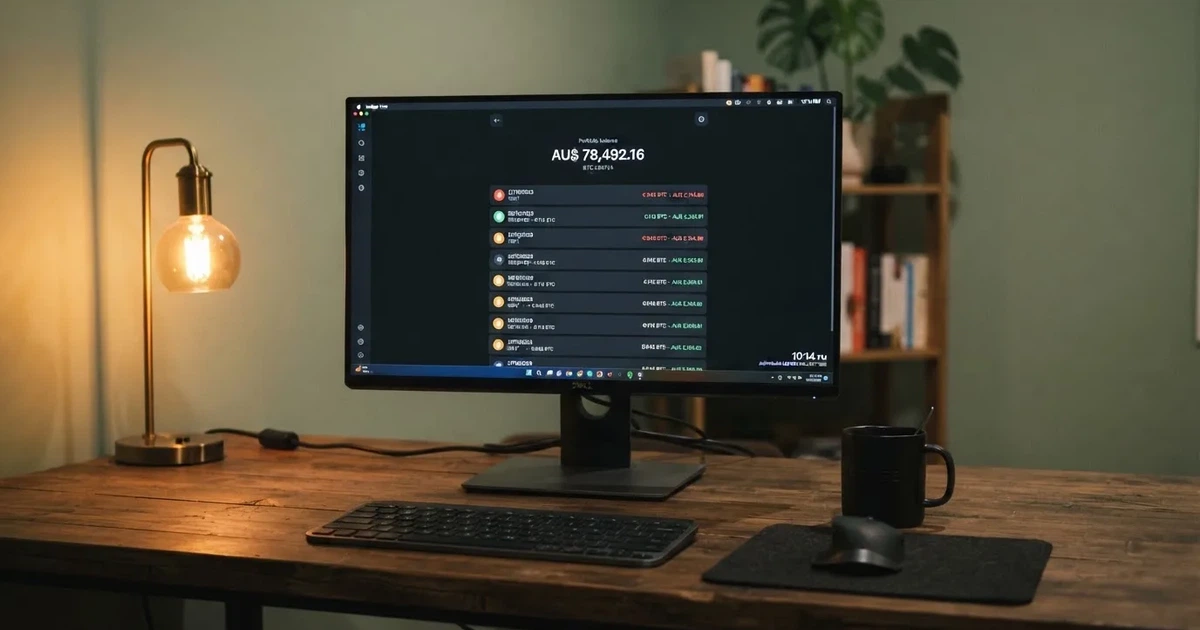
That gap is the page. The rest is detail.
Verified against the ACMA register and AUSTRAC guidance as of 24 September 2026.
Table of Contents
- Why an offshore Bitcoin pokies site is not a legal Australian option
- How crypto funding changes the picture, and where it doesn’t
- The mechanics of a Bitcoin deposit at an offshore site
- How to read an offshore casino’s licence in this market
- The ACMA record on sites that market Bitcoin pokies to Australians
- The Australian-licensed alternative that does exist
- What offshore play actually costs an Australian punter
- How heavy the ACMA blocking has actually been
- Responsible gambling supports available in Australia
- Reading the small print before signing up anywhere
- Bitcoin Cash and other coins pitched at the same market
- The five questions a punter should answer before funding any offshore site
- Frequently asked questions about Bitcoin pokies in Australia
Why an offshore Bitcoin pokies site is not a legal Australian option
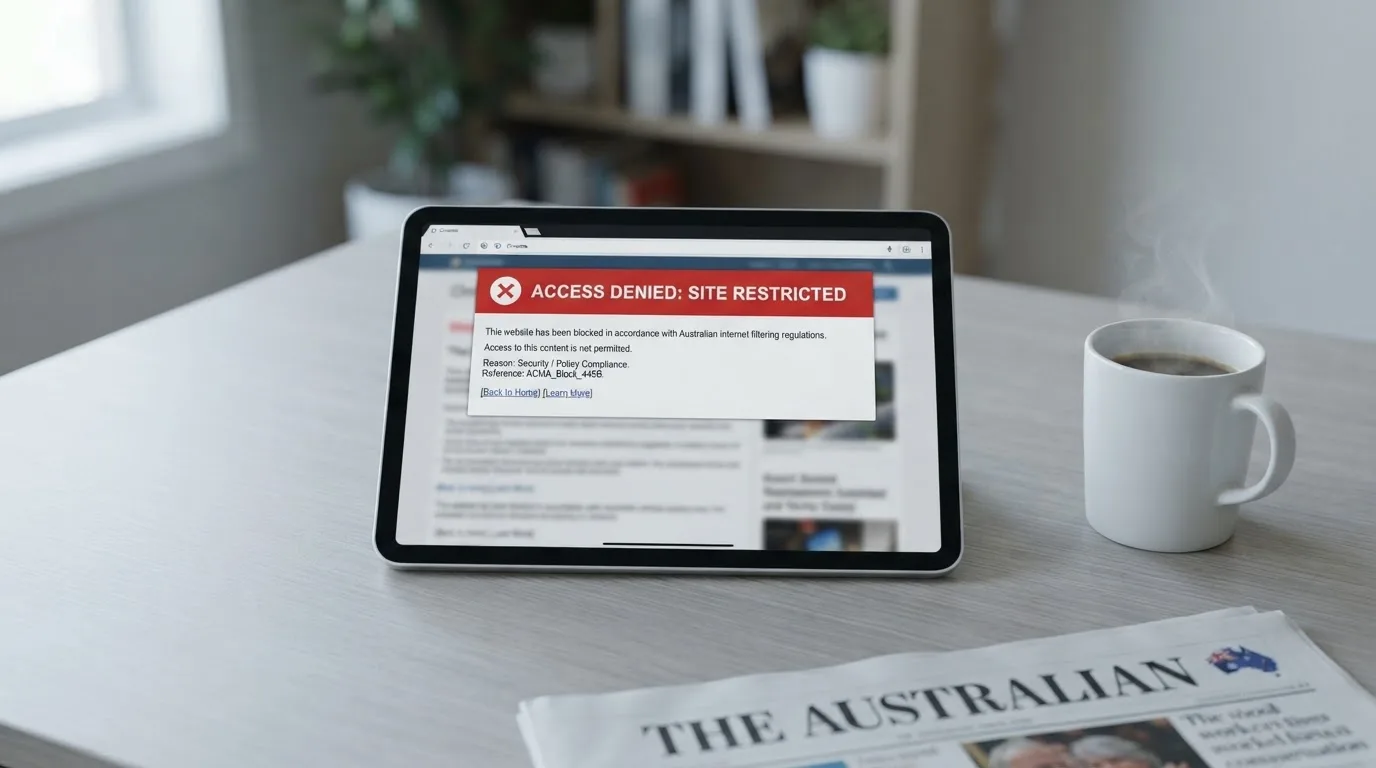
The Interactive Gambling Act 2001, tightened by the Interactive Gambling Amendment Act 2017, makes it an offence to supply online casino games, online pokies or in-play betting to a person physically in Australia. The offence sits with the provider, not the player. A site licensed in Curaçao, Anjouan or any other offshore jurisdiction is not, by that licence, entitled to take Australian customers for casino products. ACMA enforcement since 2017 has used formal warnings, civil penalty proceedings and blocking requests to internet service providers, and the numbers add up: as of June 2026 the ACMA had directed ISPs to block 1,751 illegal gambling and affiliate-marketing websites since the first such request in November 2019, and more than 230 unlicensed gambling services had left the Australian market since enforcement was intensified.

What the IGA does not cover matters for understanding the rest of the page. Wagering on races and sport placed before the event is licensable. Lotteries and keno are licensable. Online casino games, online pokies and in-play betting are not. Australians who want to bet on the Melbourne Cup or on a Saturday afternoon NRL game can do so through an Australian-licensed bookmaker; a punter who wants to spin a reel with Bitcoin is being offered a prohibited product by definition. The licence the offshore site displays at the bottom of its homepage is a licence to operate in the jurisdiction that issued it; it is not, and has never been, a licence to serve Australians.
The Interactive Gambling Amendment (Gambling Reform) Bill 2026 passed Parliament on 19 August 2026. Its advertising and inducement measures commence on 1 January 2027, which means the Bill is law but not yet in force on a 2026 page. The new measures tighten how offshore operators can market to Australians and how inducements such as bonus offers and “free” credits are presented; they do not legalise what the underlying Act already prohibits.
The IGA in plain language
Three things are helpful to keep separate:
- Prohibited supply. Supplying an online casino game, an online pokie or in-play betting to a person in Australia is the IGA offence. The site, the platform, the white-label operator and the marketing affiliate can all be on the hook.
- Prohibited advertising. Advertising a prohibited service to Australians is itself regulated, and the 2026 reforms extend that further from 1 January 2027.
- No player offence. Playing on an offshore site is not the offence. The reader who has done so is not personally liable; the reader is also without the Australian consumer protections that come with a licensed bookmaker.
What enforcement actually looks like
Formal warning, blocking request, civil penalty, and an ISP-level block at the network edge. A formal warning puts the operator on notice and is published on the ACMA register. A blocking request makes the site unreachable through major Australian ISPs without a VPN. A civil penalty is the rare, expensive end of the spectrum.
The June 2026 round alone asked Australian ISPs to block twelve more sites: 7Signs, ChromaBet, Donbet, Duospin, Freshbet, Slots Gem, Jacks Club, Lucky Start, Pointsbetz, Spinrise, Vinyl Casino and Wildsino. The list changes each round; the pattern does not. Blocked sites come back under new domains and the round repeats.
How crypto funding changes the picture, and where it doesn’t
Bitcoin changes two things about how the deposit gets from a bank account to an offshore casino: the rail it travels on, and the consumer-protection regime that does not travel with it. Everything else — the licence, the legality, the dispute path — is unaffected.
The retail mechanic most pokies players notice is speed. A Bitcoin transaction broadcast to the network sits in the mempool until a miner picks it up; once included in a block, a confirmation has arrived. New Bitcoin blocks are added approximately every ten minutes on average, but block discovery is probabilistic, which is the polite way of saying a confirmation can arrive much sooner than ten minutes or considerably later, with no guaranteed minimum or maximum delay. A punter who has funded with PayID and is used to near-instant debits will notice the wait. A punter who has funded with a bank wire from a Curaçao site will notice that the wait is shorter than the wire.
What the wait does not change:
- No recourse at the ACMA. A balance stuck at an offshore site is, from the ACMA’s perspective, the punter’s problem with that operator; the ACMA can warn the operator and block the site, but it does not arbitrate withdrawals.
- No BetStop binding. BetStop, the National Self-Exclusion Register, has been live since August 2023 and covers Australian-licensed online and phone wagering services. An offshore casino is not connected to it; an Australian who has self-excluded via BetStop can still be accepted by an offshore site.
- No credit-card or digital-currency prohibition enforcement for the player. The prohibition on credit cards and digital currency as payment for licensed online wagering took effect on 11 June 2024, with operator penalties up to A$247,500. The prohibition bites the licensed operator. The offshore site asking a punter for a Bitcoin deposit is not a licensed operator and is unaffected by the rule; the punter’s deposit, however, leaves the regulated banking system entirely.
What “anonymous” means on a Bitcoin pokies site
The word does a lot of work in this corner of the market, and most of that work is misleading. A Bitcoin address is pseudonymous, not anonymous: the address is a string of letters and numbers, but every transaction is recorded on a public ledger that anyone can read, and chain-analysis firms link addresses to known exchanges and to identity behind them. The on-ramp and the off-ramp are where anonymity is lost. Funding the wallet through a KYC-compliant Australian exchange such as one that is itself enrolled with AUSTRAC as a Digital Currency Exchange, and cashing out back to an Australian bank account, leaves a complete trail. Funding through an ATM that does not require identification buys some time; it does not buy identity.
The DCE registration framework is worth knowing because it is the part of the crypto rail that does reach Australian jurisdiction. Under the AML/CTF Act, any business providing digital currency exchange services to Australian customers must register with AUSTRAC as a Digital Currency Exchange provider, regardless of where the business is incorporated; operating unregistered is an offence. From 31 March 2026 the registration requirement was expanded beyond crypto-to-fiat exchange to cover crypto-to-crypto exchange platforms, digital asset transferors, digital asset custody providers, and stablecoin issuers and distributors. The Australian exchange a punter buys Bitcoin through sits inside that framework. The offshore casino the Bitcoin reaches does not.
The volatility cost a player pays to sit on the rail
Bitcoin is property, not money, in the eyes of the Australian Taxation Office. Most disposals — selling for AUD, swapping for another crypto, spending the Bitcoin on a deposit — are CGT events. The ATO currently allows a 50% CGT discount on crypto assets held longer than twelve months; from 1 July 2027 that flat discount is replaced by CPI indexation of the cost base plus a 30% minimum tax rate on net capital gains.
A punter who buys 0.1 BTC at A$100,000, lets it ride for a week while Bitcoin falls to A$90,000, and then deposits 0.05 BTC to a pokies site has crystallised a paper loss of A$5,000 on the half he kept. If he wins A$1,000 at the site and converts the withdrawal back to AUD, the conversion is a CGT event against the AUD value at deposit. The volatility sits on the player’s side of the rail, and so does the tax outcome.
There is one carve-out worth flagging because it is regularly misunderstood. Under ATO guidance, a capital gain on a crypto asset held as a personal use asset is disregarded for CGT purposes, but only if the asset cost A$10,000 or less to acquire. Holding a crypto asset as an investment takes it outside this exemption, and all capital losses made on personal use crypto assets are disregarded and cannot offset other gains or carry forward. A punter who treats Bitcoin as a poker-bank buy-in rather than as an investment should not rely on the personal-use exemption to do the tax work the ATO says it does not do.
The mechanics of a Bitcoin deposit at an offshore site
Five steps run through every deposit, and only one of them is genuinely new for a punter who already uses online banking.
Funding the wallet. Most Australian punters buy Bitcoin through a domestic exchange that is enrolled with AUSTRAC as a Digital Currency Exchange and that runs KYC. The exchange quotes a price in AUD, debits the linked bank account, and credits the BTC to a wallet the punter controls. Some exchanges support PayID and Osko, which shortens the time between the AUD debit and the BTC credit. The KYC step is the point at which identity meets chain.
Sending to the casino wallet. The pokies site generates a deposit address, usually a fresh address per deposit. The punter copies the address into their wallet, enters the amount, and broadcasts the transaction. Bitcoin fees on this leg are usually well under one AUD at current fee markets; the network does not price the player out of small deposits.
Waiting for confirmations. Most pokies sites credit after a small number of confirmations — one to three is common — rather than waiting for the full six confirmations that exchanges typically require for large deposits. That shortens the wait, but it does mean the credit can in theory be reversed by a chain reorganisation, and it puts the credit at the casino’s discretion. The exchange takes six confirmations because they do not want to be the party holding the loss on a reorg.
Playing. Nothing about the pokie itself changes. The reel outcomes come from an RNG that does not see the funding rail. The RTP, the volatility, the bonus features and the max-cashout cap are all set on the casino side and are not affected by which asset was used to buy the credit.
Cashing out. The reverse leg. The site sends BTC to a withdrawal address the punter controls. The punter sends the BTC to an Australian exchange, sells for AUD, and waits for the AUD to clear. This leg is where the bulk of complaints originate, not because the chain is slow but because the operator is slow. An offshore casino sitting outside Australian jurisdiction has no incentive to process a withdrawal quickly and no obligation to do so. The punter whose balance is stuck cannot escalate to the ACMA, to AFCA, or to any Australian ombudsman.
How to read an offshore casino’s licence in this market
The licence a Bitcoin pokies site displays is real, in the narrow sense that the regulator named at the foot of the page issued it. It is also irrelevant to whether the site can lawfully take Australian customers for casino products, because no licence issued anywhere in the world authorises that supply. Three variants show up most often.
- Curaçao. The classic offshore envelope. The licence number is verifiable on the Curaçao Gaming Authority’s public register, and the operator’s corporate name is on the licence. Verifying the licence does not verify that the operator is allowed to take Australian customers for online pokies; it confirms the company has paid the relevant fee in Curaçao.
- Anjouan. Cheaper to obtain, faster to issue, weaker player-protection regime. The same logic applies: the licence authorises supply in the Comoros Union’s regulatory framework, not in Australia.
- Kahnawake or another smaller jurisdiction. Same shape again. The licence is to the operator in that jurisdiction.
What no offshore licence does is convert a prohibited product into a permitted one for Australian customers. The Interactive Gambling Act is not a competition-of-jurisdictions question. A site licensed anywhere is not, by that licence alone, entitled to supply a prohibited interactive gambling service to a person in Australia.
The ACMA record on sites that market Bitcoin pokies to Australians
Eleven brands sit at the centre of this page because the ACMA itself has acted against them. Each has received at least one formal warning under the Interactive Gambling Act 2001 for offering prohibited services to Australians, and several have been acted against more than once under successive operators. The pattern tells a reader something useful: a brand that has cycled through two operators in three years is a brand whose legal exposure in Australia is a recurring cost of doing business, not a one-off. The operators change; the warnings do not.
The table lists the brands, the ACMA action and date, the operator named by the ACMA at the time of the warning, and whether the page can say anything specific about Bitcoin or cryptocurrency support for that brand. A dash in the support column means the page has no data: it is neither a denial nor a confirmation, and a reader should treat it as the absence of a finding rather than as a finding.
| Brand | ACMA action and date | Operator named by the ACMA | Subject support |
|---|---|---|---|
| RocketPlay | Formal warning, March 2026 | Pulsup Ltd (Rocketplay); earlier Dama N.V., May 2022 | — |
| Level Up Casino | Formal warning, May 2022 | Dama N.V. | — |
| Woo Casino | Formal warning, March 2025 | Dama N.V. | listings-only |
| Spirit Casino | Formal warning, May 2025 | Dama N.V. | — |
| National Casino | Formal warning, July 2025 | Consolutetish S.R.L. | listings-only |
| Bizzo Casino | Formal warning, July 2025; earlier 2022 | Consolutetish S.R.L.; earlier TechSolutions | — |
| Ignition Casino | Formal warning, July 2025 | Bamboo Media | — |
| Instant Casino | Formal warning, February 2025 | EOD Code SRL | — |
| Jackbit | Formal warning, April 2026 | Ryker B.V. | — |
| Casino Intense | Formal warning, April 2025 | Sterplay Holding Ltd | — |
| Sky Crown | Formal warning, September 2022 | Hollycorn N.V. | — |
The same operators cycle across these brands more than the table makes obvious. Dama N.V. took a formal warning over six brands in May 2022 — Bambet, Dazard, Level Up, Rocketplay, Wild Tornado and Cobra Casinos — and then separate warnings over Woo Casino in March 2025 and Spirit Casino in May 2025. The pattern is the same corporate entity offering the same prohibited product under successive brand names, with each new brand presenting a fresh licence page and the same offshore address. A punter who treats the brand name as the entity is being shown a marketing surface rather than the operator.
Brand-by-brand note
What follows is what the register tells a reader about each brand, and what the page could not confirm. The aim is honest reporting of what is and is not known, not a recommendation either way.
RocketPlay. The ACMA acted in March 2026 against Pulsup Ltd over Rocketplay, and earlier in May 2022 against Dama N.V. across a bundle of brands that included this one. Two operators, two warnings, the same product. No specific support data is available for this brand.
Level Up Casino. One of the six brands named in the May 2022 Dama N.V. warning. No data available for this brand.
Woo Casino. Dama N.V. was warned in March 2025 over this brand, separately from the 2022 bundle. The page carries a listings-only note on Bitcoin support, which means the listings the research consulted mentioned cryptocurrency without specifying how the site processes it; treat the listings as marketing surface rather than as a regulatory description.
Spirit Casino. Dama N.V. again, May 2025. No data available for this brand.
National Casino. Consolutetish S.R.L., July 2025. The page carries a listings-only note on Bitcoin support, of the same kind as Woo Casino’s: listings mentioned it without operational detail.
Bizzo Casino. Two warnings across three years: TechSolutions in 2022 and Consolutetish S.R.L. in July 2025. The hand-off between operators is a data point of its own; the product stayed the same across both. No data available for this brand.
Ignition Casino. Bamboo Media, July 2025. No data available for this brand.
Instant Casino. EOD Code SRL, February 2025. Subject support for Bitcoin pokies: no data on the page.
Jackbit. Ryker B.V., April 2026. The brand has been associated in marketing with Bitcoin-native play more than most of the others, but the page carries no data on subject support; the ACMA’s action is the only verifiable record.
Casino Intense. Sterplay Holding Ltd, April 2025. Subject support for Bitcoin pokies: no data on the page.
Sky Crown. Hollycorn N.V., September 2022. Subject support for Bitcoin pokies: no data on the page.
The brands in the table together account for a meaningful share of the ACMA’s formal-warning activity against online casinos over the last four years. The recurring lesson is the same one: a brand name is not the operator, an offshore licence does not authorise supply in Australia, and a formal warning is a marker of an ongoing relationship with the regulator, not a closed chapter.
The Australian-licensed alternative that does exist
The licensed alternative to an offshore Bitcoin pokies site is not, strictly, an alternative to the product. Australians who want to play pokies can do so at a licensed venue, in person: a pub, a club or a casino in a state that permits them. The Victorian Commission for Gambling and Liquor Regulation, the NSW Liquor and Gaming Authority, the Queensland Office of Liquor and Gaming Regulation, and their equivalents elsewhere regulate the machines themselves, the venues, the hours, and the player-protection obligations.
Cryptocurrency is not, in practice, a payment method at those venues. The 11 June 2024 prohibition covers credit cards, credit-related products and digital currency for licensed online wagering; even where the rule’s literal scope does not reach an in-venue purchase, the venue’s EFTPOS is the conventional rail, and a pokie machine does not have a Bitcoin wallet. The product is licensed, the funding rail is conventional, and the two combine to give the player the consumer-protection regime the offshore site does not.
What a licensed venue does not offer is the marketing surface of an offshore casino: the multi-thousand-title lobby, the live-dealer suite, the progressive jackpot ticker, the welcome package. The licensed venue offers a number of approved machines, a maximum bet per spin, a maximum prize per machine, a state-level self-exclusion register where one applies, and an authority to complain to. The product is a different shape; the consumer protection is on the page rather than absent.
What offshore play actually costs an Australian punter
The honest accounting has four lines.
The price of being blocked. A blocked site is a balance stranded on a server outside Australian reach. The ACMA can direct an ISP to block the site; the ACMA does not arbitrate withdrawals. The punter whose withdrawal was in transit when the block landed is, in practice, waiting on the operator’s goodwill.
The price of dispute. An Australian-licensed bookmaker sits inside AFCA and the relevant state regulator’s complaints process. An offshore operator does not. A dispute over a voided bet, a confiscated bonus balance or a delayed withdrawal has no Australian forum. The punter’s recourse is the operator’s commercial decision and, in extremis, the operator’s domestic regulator in Curaçao or Anjouan — neither of which has a consumer-friendly complaints process for an Australian customer.
The price of self-exclusion. BetStop, the National Self-Exclusion Register, binds Australian-licensed online and phone wagering services. Self-excluding via BetStop stops the licensed bookmaker from accepting the punter’s bets; it does not stop an offshore casino. The punter who has self-excluded and continues to gamble offshore is using a rail that the self-exclusion does not reach.
The price of volatility. Bitcoin can move ten per cent in a day. A punter who holds BTC for a week between buying and spending has accepted that risk as the cost of sitting on the rail. The ATO treats the disposal as a CGT event regardless of size; the punter’s tax position tracks the AUD value at the moment of conversion, not the marketing value at the moment of purchase.
Together, those four lines are the cost of the “anonymous” pitch the offshore site runs. None of them is a fee the punter pays to the casino. All of them are costs the punter pays to be outside the Australian regime rather than inside it.
How heavy the ACMA blocking has actually been
The ACMA’s statistics illustrate the scale of the regulatory task.
As of June 2026, the ACMA had directed Australian ISPs to block 1,751 illegal gambling and affiliate-marketing websites since the first blocking request in November 2019. That is the running total the research carries, and the date of the first blocking request is November 2019. The gap between those two numbers — 1,751 blocks over roughly six and a half years — is the page’s working figure.
A conservative band: the average rate of blocking across the whole period is around 270 sites per year, or a little over five sites per week. The actual rate has not been flat. Early rounds were smaller; recent rounds have been larger, with twelve-site rounds becoming common in 2026. The June 2026 round alone added twelve, and earlier rounds in 2025 and 2026 added similar batches. A reader who wants a current sense of the rate should look at the most recent two or three rounds rather than at the long-run average; the long-run average understates the current pace.
The upper edge of the band is harder to fix because the ACMA publishes the running total periodically and rounds in between do not always get individual press releases. The cleanest reading is that the regulator has now blocked more than 1,750 illegal sites, with new rounds arriving roughly monthly and each round typically adding a dozen sites.
The cost of enforcement in real terms
H2 Gambling Capital’s 2025 report estimated that Australians lose about A$3.9 billion a year to illegal gambling sites, and that the share of gambling going through legal channels fell from 74% in 2021 to 64%. The legal-channel share is the inverse of the offshore-channel share: as the legal share drops, the illegal share grows. The 1,751 blocked sites are the ACMA’s response to a market that has shifted away from licensed operators, and the H2 figure is what the shift has cost the licensed side of the industry.
The Northern Territory Racing and Wawering Commission regulates 52 of Australia’s online bookmakers — including Sportsbet, Bet365 and Ladbrokes — which are licensed in the Territory for tax reasons. The commission has no full-time staff and meets once a month in Darwin. The regulator on the licensed side is small; the regulator on the prohibited side, the ACMA, has been doing the bulk of the visible enforcement. The asymmetry shows up in the numbers.
Responsible gambling supports available in Australia
The licensed side of the Australian market has a small but real set of supports that an offshore casino cannot replicate, because the supports depend on the operator being inside the regulatory regime.
BetStop, the National Self-Exclusion Register, has been live since August 2023. Registration is free, online, and binds every Australian-licensed online and phone wagering service simultaneously. A registered punter cannot deposit or bet with a participating licensed operator for the chosen exclusion period. The exclusion does not reach offshore casinos. A punter who self-excludes and continues to gamble at an offshore site is using a rail BetStop cannot reach, which is itself a useful diagnostic.
Gambling Help Online is the national counselling service. The National Gambling Helpline is 1800 858 858, free and 24/7. The online service offers live chat, email and SMS, and the counsellors are familiar with the full range of products a caller might be using, from sports betting to offshore casino play. A punter who is concerned about their own play, or about someone else’s, can call without giving a name.
State-level self-exclusion registers exist alongside BetStop for in-venue play, and most state gambling regulators run their own support and complaints pathways for licensed venues. The Victorian, NSW and Queensland regimes are the largest by population.
The page is not the place to recommend one support over another. The supports are free, they are confidential, and they are independent of any operator.
Reading the small print before signing up anywhere
A punter reading the small print on an offshore Bitcoin pokies site should know what to look for, because the small print is the only place the site’s terms are visible.
- Withdrawal pending periods. Offshore sites commonly impose 24 to 72 hours of pending time on withdrawals, during which the withdrawal can be reversed by the punter — and, in practice, by the operator if the operator decides the bonus terms have not been met. A pending period is a window in which the balance is committed but not sent.
- Max-cashout caps on bonuses. A bonus offer will often carry a cap on how much of a bonus-funded win can be withdrawn. A “A$500 max cashout on free spins” rule is a common shape; the punter’s win above the cap is removed on withdrawal.
- Wagering requirements on bonuses. A bonus comes with a multiplier — 35x, 40x, 50x — that determines how much the punter must wager before a withdrawal is allowed. The wagering requirement applies to the bonus, to the deposit, or to both, depending on the site’s terms.
- Country restrictions. Most offshore sites maintain a list of excluded jurisdictions. Australia is, in practice, on that list, even when the site accepts Australian customers. A punter whose country is excluded has, by the site’s own terms, no contractual standing.
- KYC on withdrawal. A site that accepts a Bitcoin deposit with no KYC will often require full KYC on the first withdrawal — passport, proof of address, sometimes a video call. The punter who has not completed KYC cannot withdraw. The site does not refund the deposit.
The small print does not legalise the product. It does tell the punter what to expect from the operator’s commercial decisions.
Bitcoin Cash and other coins pitched at the same market
Bitcoin Cash is the most-marketed alternative to Bitcoin on offshore pokies sites that pitch themselves to Australian visitors, and the marketing makes claims worth testing against the underlying protocol.
Bitcoin Cash launched on 1 August 2017 as a hard fork of Bitcoin at block height 478,558, after a long-running dispute over Bitcoin’s block size limit. The Bitcoin Cash protocol uses SHA-256 proof-of-work like Bitcoin and targets a ten-minute average block time, but with a larger block size limit — 8 megabytes at launch, raised to 32 megabytes in 2018 — which the project describes as enabling lower transaction costs. Bitcoin Cash’s transaction fees are described by the project as “under a penny” and confirmations as taking minutes; both claims are operating-arithmetic claims, dependent on network conditions, and should be read as typical-case statements rather than guaranteed figures. The protocol caps supply at 21 million coins, the same hard cap as Bitcoin.
The Australian-side framing does not change with the coin. The ATO treats crypto assets, including Bitcoin Cash, as property for CGT purposes; gains are taxed at marginal rates, assets held over twelve months qualify for a 50% CGT discount. AUSTRAC requires any business exchanging cryptocurrencies such as Bitcoin Cash for fiat to register as a digital currency exchange provider, and operating unregistered is a criminal offence. The AML/CTF regime covers the rail regardless of the asset; the IGA covers the product regardless of the asset.
Ethereum shows up in the same marketing, and the claims are similar in shape. Ethereum launched on 30 July 2015 with Vitalik Buterin as its primary creator, switched from proof-of-work to proof-of-stake in an upgrade called The Merge on 15 September 2022, and now produces a new block roughly every twelve seconds. The faster block time is real; the consumer-protection consequences for an Australian punter are the same as for Bitcoin. The IGA, the ATO treatment and the AUSTRAC registration regime apply to all crypto assets used as payment for gambling services.
What the same-rail pattern means in practice
Three things follow from the same-rail pattern:
- The product is constant. Online pokies on an offshore site are a prohibited interactive gambling service in Australia, regardless of which crypto is used to fund the deposit. Bitcoin, Bitcoin Cash, Ethereum, Tether and a stablecoin pitched on the marketing page all reach the same legal endpoint.
- The consumer-protection gap is constant. No Australian regulator arbitrates disputes with an offshore casino. The rail does not change that.
- The volatility cost is variable. Bitcoin and Bitcoin Cash are more volatile than stablecoins, and stablecoins carry their own issuer and peg risks. A punter who chooses a stablecoin has accepted the issuer’s solvency as a variable.
The choice of coin changes the speed, the fee and the volatility exposure. It does not change the legal status of the product, and it does not change the consumer-protection regime.
The five questions a punter should answer before funding any offshore site
The questions are not new. They sit at the centre of every consumer-protection frame for gambling, and an offshore Bitcoin pokies site is a particularly good place to ask them.
- Who do I complain to if the withdrawal stalls? The answer is, in practice, the operator. There is no Australian forum and no effective offshore forum.
- Is the operator inside BetStop’s reach? No. The self-exclusion does not bind offshore operators.
- Is the product licensable in Australia? No. Online pokies are not licensable in Australia under the IGA, regardless of the funding rail.
- What is the cost of being blocked? A balance on a blocked site is, in practice, stranded.
- What is the volatility and tax cost of sitting on the rail? Variable, and a CGT event on disposal.
A punter who answers those five questions honestly and still chooses to play offshore is making a choice with the relevant information. A punter who answers them and chooses a licensed venue has chosen a product with a different shape and a different regime.
Frequently asked questions about Bitcoin pokies in Australia
Does paying with Bitcoin make an offshore pokies site legal for Australians to use?
No. The Interactive Gambling Act 2001 prohibits the supply of online casino games, online pokies and in-play betting to a person in Australia, and the funding rail does not appear in the definition. A Curaçao or Anjouan licence authorises supply in the issuing jurisdiction, not in Australia. The ACMA enforces against the operator and can direct ISPs to block the site; the punter does not become liable by playing, but does give up the Australian consumer protections that would otherwise apply.
How long does a typical Bitcoin transaction take to confirm?
A new Bitcoin block is added approximately every ten minutes on average, but the timing is probabilistic. A confirmation can arrive in a few minutes or take considerably longer. Most pokies sites credit a deposit after one to three confirmations, which is faster than the six confirmations an Australian exchange typically waits for on a large deposit. The credit sits at the casino’s discretion until the network has done the work.
Why is block confirmation time for Bitcoin described as probabilistic rather than fixed?
Mining is a competitive search for a hash below a difficulty target that readjusts roughly every two weeks to keep the average block interval near ten minutes. The difficulty target is calibrated to the average, not to a single block, which is why a confirmation can come well before ten minutes or well after. The protocol is designed so the long-run average holds; no individual block carries a guaranteed delay.
Can licensed Australian pokies venues accept cryptocurrency as payment?
In practice, no. From 11 June 2024, credit cards, credit-related products and digital currency have been prohibited as payment for licensed online wagering in Australia, with operator penalties up to A$247,500. Licensed in-venue pokies operate through conventional EFTPOS and do not take Bitcoin deposits. The licensed side of the market and the crypto side of the market do not overlap in any meaningful way at the moment.
What risk does price volatility add to holding Bitcoin before it is used anywhere?
Bitcoin is property in the eyes of the ATO, and most disposals are CGT events. Holding Bitcoin for a week while the price falls crystallises a paper loss on the conversion at the AUD value of the moment of disposal. The ATO allows a 50% CGT discount on assets held longer than twelve months; from 1 July 2027 that flat discount is replaced by CPI indexation of the cost base plus a 30% minimum tax rate on net capital gains. A punter who treats Bitcoin as a poker-bank buy-in should not assume the personal-use CGT exemption applies; it is available only on assets costing A$10,000 or less to acquire, and all losses on personal-use crypto assets are disregarded.
Written by the editors at Casino Payout Hub.