

What Online Craps in Australia Actually Looks Like in 2026
 Available in US
A reader typing “best casinos for online craps australia” is, almost certainly, looking for a shortlist they can act on today. The honest answer is that no such shortlist exists under Australian law, and writing one would mean handing a reader over to operators the regulator itself is trying to put out of reach. What follows is the alternative: how the ban on online casino games actually works, what enforcement has done to the brands most commonly named in craps searches, and the lawful paths a person reading this from Australia can take instead.
The data behind every figure on this page was checked against the Australian Communications and Media Authority’s published register as of 24 September 2026.
Table of Contents
- Why There Is No Shortlist to Hand Over
- How the ACMA’s Enforcement Record Reads in 2026
- How the Interactive Gambling Act 2001 Lands on a Real Craps Site
- What the Interactive Gambling Amendment (Gambling Reform) Bill 2026 Actually Changes
- Payment Rails in Australia, and What a Site Asking for the Wrong One Means
- The Brands the ACMA Has Named
- What a Craps Bonus Actually Costs in Turnover
- How Craps Actually Plays, for the Reader Who Has Not Sat at the Felt
- Where Craps Came From, Briefly
- Craps Variants a Reader Will Run Into
- The Paytable a Reader Is Given on an Electronic Craps Table
- What an Australian Reader Can Actually Do
- Tax, Briefly
- What the Block Above an Operator Review Is For
- Responsible Gambling, Plainly
- The Reader’s Calculation in One Line
- Frequently Asked Questions About Online Craps in Australia
Why There Is No Shortlist to Hand Over
Australia’s online gambling market is the only kind that splits cleanly in two. On one side sit licensed wagering services — sportsbooks, lotteries, keno — which state and territory regulators licence in practice through the Northern Territory. On the other sits everything the Interactive Gambling Act 2001 names a prohibited interactive gambling service: online casino games, online pokies, in-play betting, and the craps tables the search results behind this page keep promising.

The Act does not name craps by itself. It catches the game under “casino-style game” the way it catches baccarat, blackjack, roulette and the rest of the felt. The penalty the statute attaches is the daily one: up to A$220,000 a day for an individual provider, up to A$1.1 million a day for a corporation. The Act does not chase the player; it targets whoever is offering the game to a person physically in Australia.
That target is what the ACMA has spent the past several years working through. The regulator does three things: it investigates services Australians can reach, it issues formal warnings naming the operator and the URL, and it directs Australian internet service providers to block sites where warnings and stop-desk notices have not produced withdrawal. Each step is published. Each step is what makes a brand-by-brand comparison of offshore “craps casinos” possible without ever recommending one.
How the ACMA’s Enforcement Record Reads in 2026
A running total is the most useful single number on the page, because it tells the reader how many of the sites they have ever clicked through a search result have already been pushed off the Australian internet. As reported in June 2026, the ACMA had asked Australian ISPs to block 1,751 illegal gambling and affiliate marketing websites since the first blocking request in November 2019, and more than 230 unlicensed gambling services had left the Australian market since enforcement was strengthened in 2017. In the round reported that same day the regulator added another twelve: 7Signs, ChromaBet, Donbet, Duospin, Freshbet, Slots Gem, Jacks Club, Lucky Start, Pointsbetz, Spinrise, Vinyl Casino and Wildsino.
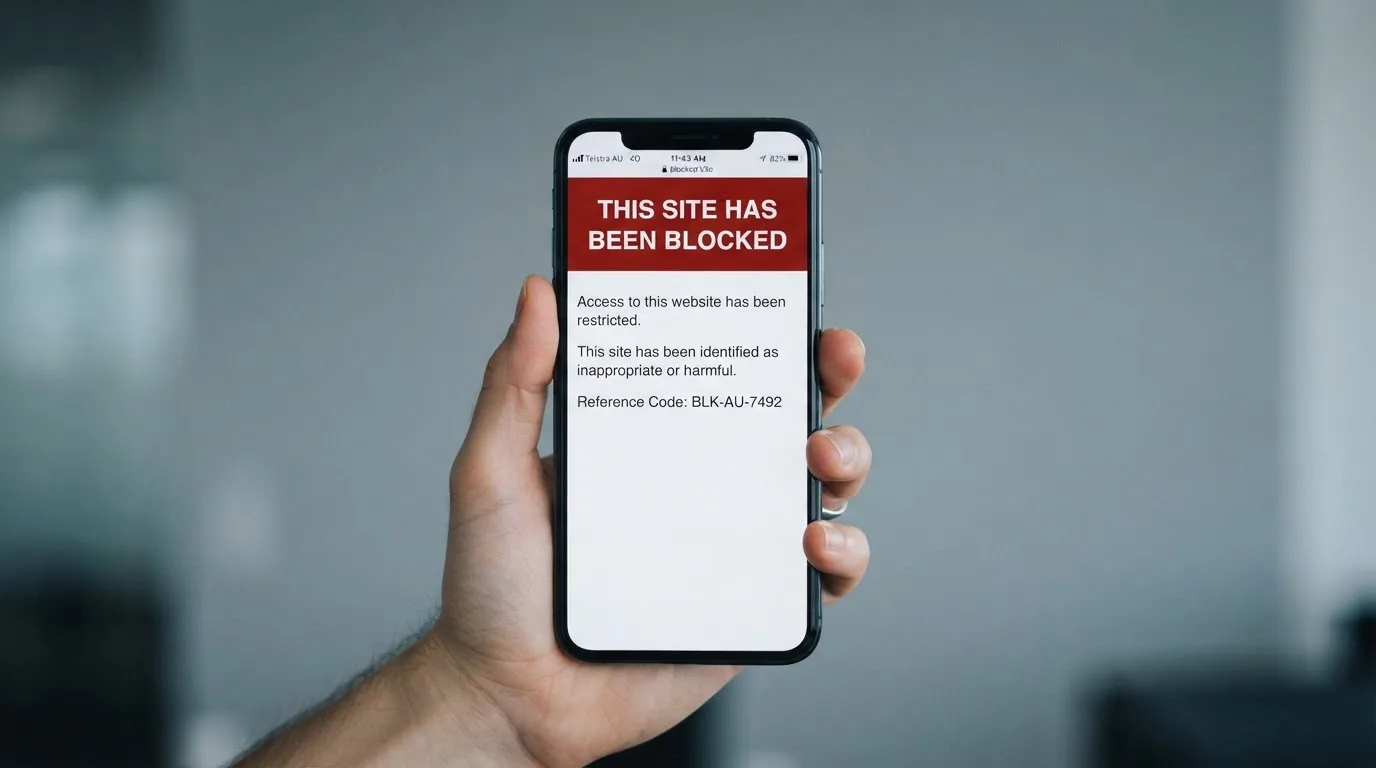
The regulator’s blocking record over almost seven years is the most important data point on this page. The first blocking request was lodged in November 2019; by the end of June 2026 the running total had reached 1,751 blocked or de-listed sites. That is roughly 22 blocked sites a month on average, or about one every 33 hours, with the long-run pace drifting up rather than down as new domains appear to replace those that drop out. The band — about 18 to 27 a month across the seven years, and a faster pace in the second half than the first — is the rate at which the offshore “craps casino” search result a reader finds this week is being put out of reach in Australia.
Two caveats belong to the band. First, the ACMA counts every blocking request and every voluntary withdrawal from the Australian market together; the rate of outright blocking and the rate of de-listing move separately and the page does not separate them. Second, the running total is current only to the published report date: each new round adds to it, and a search result published in 2026 may name a domain that has not yet been added to the list.
What the pace implies is straightforward. A reader who clicks a craps-casino result this week is, on the regulator’s own numbers, looking at a site whose average lifespan on the Australian internet is measured in months rather than years. A balance left on such a site can be stranded by a blocking order that names it without naming the player.
How the Interactive Gambling Act 2001 Lands on a Real Craps Site
The statute is short on the points a reader actually needs. The provider faces daily penalties; the player does not. There is no Australian consumer-protection body that can compel an offshore operator to honour a withdrawal, no Australian ombudsman, and no Australian court order that the operator will accept. What an offshore site offers instead is whatever its own terms say — and, when the site is blocked, the balance sits where the ACMA left it.
The closest Australian jurisdiction gets to licensing an online casino is the Northern Territory Racing and Wagering Commission, which regulates 52 of Australia’s online bookmakers — Sportsbet, Bet365 and Ladbrokes among them — for tax reasons. The commission runs without full-time staff and meets once a month in Darwin. That body regulates wagering services, not casino games. A licence the NTRWC issues does not authorise craps.
That gap is why “no Australian jurisdiction issues a licence for it” is not an editorial line. It is the legal shape the regulator has worked with since the Interactive Gambling Amendment Act 2017 closed it.
What the Interactive Gambling Amendment (Gambling Reform) Bill 2026 Actually Changes
Parliament passed the Interactive Gambling Amendment (Gambling Reform) Bill 2026 on 19 August 2026. Its advertising and inducement measures commence on 1 January 2027. The Bill is law with a start date, not law in force today: a reader on the page in 2026 is reading under the 2001 Act as it stood before the new provisions took effect.
What the 2026 Bill will change, once it commences, is the surface an offshore site uses to reach Australians. Inducements and the advertising around them are the target. The criminal prohibition on offering the games themselves is not being re-opened. The 2027 measures are a tightening of the same prohibition, not a softening of it.
Payment Rails in Australia, and What a Site Asking for the Wrong One Means
The payment side of the law runs to the same point as the licence side. Credit cards, credit-related products and digital currency have been banned as payment methods for licensed online wagering since 11 June 2024. The penalty for a licensed operator that accepts them runs to A$247,500. Legal deposit routes for licensed wagering are debit card, bank transfer, PayID/Osko and BPAY.
A site asking an Australian customer for a credit card or a crypto deposit is, by definition, operating outside the Australian rules. That is the most reliable single signal an offshore site gives: not the licence it displays in its footer, but the payment method it asks for at the cashier. A crypto-only cashier is, in the Australian market, a marker that the operator has not built itself around any consumer-protection regime at all.
The Brands the ACMA Has Named
Every brand in the comparison below has been the subject of a formal ACMA warning under the Interactive Gambling Act 2001. The regulator publishes these warnings with the operator name, the date and the URL the warning covered. That is the only basis on which a brand can appear on this page: a public, dated action by the regulator, not a ranking of which offshore site pays out fastest or treats Australian customers best. There is no ranking. There is only the published record.
| Brand | ACMA action and date | Operator named by the ACMA | Subject support |
|---|---|---|---|
| RocketPlay | Formal warning, March 2026 | Pulsup Ltd (Rocketplay); earlier Dama N.V., May 2022 | — |
| Level Up Casino | Formal warning, May 2022 | Dama N.V. | listings-only (BGaming) |
| Woo Casino | Formal warning, March 2025 | Dama N.V. | — |
| Spirit Casino | Formal warning, May 2025 | Dama N.V. | — |
| National Casino | Formal warning, July 2025 | Consolutetish S.R.L. | listings-only (en.wikipedia.org) |
| Bizzo Casino | Formal warning, July 2025; earlier 2022 | Consolutetish S.R.L.; earlier TechSolutions | — |
| Ignition Casino | Formal warning, July 2025 | Bamboo Media | — |
| Instant Casino | Formal warning, February 2025 | EOD Code SRL | — |
| Jackbit | Formal warning, April 2026 | Ryker B.V. (Jackbit and CasinOK) | listings-only (ABC; acma.gov.au; Crownmelbourne.com.au) |
| Casino Intense | Formal warning, April 2025 | Sterplay Holding Ltd | — |
| Sky Crown | Formal warning, September 2022 | Hollycorn N.V. (Sky Crown and Blue Leo) | — |
Each row of this table carries the regulator’s own record. Where research backs a row on a specific game, that is named in the right-hand column. Where research does not, the cell holds an em dash — the subject support field is not a slot for speculation about which craps variant a site might happen to run.
What the column structure does not show is what the regulator’s action tells a reader in practice. A formal warning is the second step on a three-step track: investigation, formal warning, then a referral to ISPs for blocking. The brands that have moved from warning to blocking are the brands whose domains already fail to resolve on Australian connections. The brands still on warning status are the ones a reader is more likely to be able to reach today.
What a Craps Bonus Actually Costs in Turnover
The promotional language around online craps almost always describes a bonus as a gift. It is not. A craps bonus is an advance against future play that the operator recovers through a wagering requirement before it lets any winnings be withdrawn. The arithmetic is the same regardless of the brand: required turnover is the bonus multiplied by the wagering factor, and the time to clear the bonus is the required turnover divided by the stake per spin expressed as time at the table.
Take a representative offer of A$500 in bonus funds with a 35x wagering factor, played at A$1 per spin on an even-money bet. The required turnover is A$500 multiplied by 35, or A$17,500. At one spin every five seconds at an electronic craps table, clearing the bonus takes 87,500 seconds of play — just over 24 hours of continuous spins. The expected loss over that turnover, at the 1.41% house edge on the Pass/Come bet, comes out at about A$247. The bonus that arrives as A$500 in extra funds costs, on average, A$247 to clear, leaving a net of roughly A$253 before any capped withdrawal is applied.
The figure that matters is the cap on cashable winnings, which most craps bonuses carry and which the marketing language almost never mentions. A A$500 bonus with a 5x maximum cashout caps the cashable winnings at A$2,500. A reader who treats the bonus as a path to a payout is treating the marketing copy, not the terms. The terms are the page.
Two qualifications belong with the arithmetic. First, the house edge used is the Pass/Come bet’s 1.41%, which is the cheapest bet on the craps table. Bets with a higher house edge — the Field bet at 5.56% or the Any 7 bet at 16.67% — clear the same turnover at a higher expected loss and reach the cap faster. Second, the calculation is an average over many spins under the stated assumptions; it is not a guarantee that any individual player will clear the bonus, hit the cap, or see a payout at all.
How Craps Actually Plays, for the Reader Who Has Not Sat at the Felt
The basic mechanic is the come-out roll. The shooter throws two dice; a total of 7 or 11 wins the Pass Line bet immediately, a total of 2, 3 or 12 loses it immediately. Any other number — 4, 5, 6, 8, 9 or 10 — becomes “the point”, and the shooter throws again. The Pass Line bet wins if the point is rolled before a 7, and loses if a 7 comes first. The Don’t Pass bet is the mirror: it wins when the Pass Line loses and loses when the Pass Line wins, with a 12 on the come-out staked and returned rather than lost.
The Pass/Come bet carries a house edge of 1.41%, and the Don’t Pass/Don’t Come a 1.36% edge — the closest thing to a coin-flip the table offers, and the bet a careful player is steered toward. The Any Craps bet, which wins on a 2, 3 or 12 and loses on everything else, carries an 11.11% house edge. That figure is what makes Any Craps the table’s worst named bet after the Any 7: the marketing copy never quotes it, the table layout lists it under “Proposition bets” in the centre, and the reader who places it is paying for the privilege of doing so.
Two other bets deserve a name, because both look like better value than they are. The Field bet, which wins on 2, 3, 4, 9, 10, 11 or 12 and loses on the rest, carries a 5.56% house edge. The Any 7 bet, which wins on a single 7 and loses on everything else, carries a 16.67% house edge — the worst bet on a standard craps layout, and the one a casino’s marketing material will not draw attention to.
The only bet on the table with no house edge at all is the free odds bet, taken behind a Pass or Don’t Pass after a point has been established. It pays at true odds, which is what the casino offers the player because the player has already staked the original Pass or Don’t Pass bet. The free odds bet does not change the overall house edge; it dilutes it by adding more money to a position the player would have taken anyway.
Where Craps Came From, Briefly
Craps developed in the United States as a simplification of the European dice game Hazard. Bernard Xavier Philippe de Marigny de Mandeville is credited with bringing Hazard to New Orleans around 1805, where the simplified version became known as “Pass”, from the French “pas”. Around 1907, the Philadelphia dice maker John H. Winn introduced the Don’t Pass betting layout still in use on casino craps tables today — a change that gave the casinos themselves an incentive to use fair dice, because players could now bet against the shooter in a way the old layout had not allowed.
The history matters only in one place: it explains why the table is named the way it is, and why the Don’t Pass bar at the side of the layout is shaped the way it is. The shape is the regulatory answer to a real cheating problem from the early 1900s, not a modern design choice.
Craps Variants a Reader Will Run Into
Two variants recur in the catalogue an offshore site advertises. Crapless Craps removes 2, 3, 11 and 12 from the come-out as either winning or losing numbers, which makes every come-out roll either a point or an immediate winner — and removes the bet a Don’t Pass player would otherwise have made. Street craps is an informal version played without a marked table or a casino employee, which is what the game looks like when a reader who has not been at a felt plays it for the first time. Neither variant changes the legal position in Australia.
The Paytable a Reader Is Given on an Electronic Craps Table
An electronic craps table replicates the same wagers as a live one, with the same house edge per bet, and adds two products the live table does not have: a fixed stake per round, and an autoplay timer. Both products are useful in one sense and harmful in another. Useful, because the reader can set a stake they can afford and walk away. Harmful, because the autoplay timer is what turns the 24-hour playtime calculation above into a number of hours the reader can sleep through.
The house edge on the Pass Line bet does not change between a live craps table and an electronic one. What changes is the speed at which the reader can clear a wagering requirement, and the speed at which the same stake is lost.
What an Australian Reader Can Actually Do
Three paths are lawful, and the third is the one this page recommends by default.
Licensed wagering services. The 52 operators licensed by the Northern Territory Racing and Wagering Commission can be reached from Australia and offer what Australian law allows them to offer: sports betting, racing, lotteries, keno. None of them offer craps, and none of them are about to. The BetStop register binds them, which means a self-excluded player cannot reach them either.
Land-based casinos. Crown Melbourne and The Star Sydney are the venues most Australian readers will reach first. Crown Melbourne offers three baccarat variants approved by the Victorian Gambling and Casino Control Commission — Traditional Baccarat, Crown Baccarat and 2 to 1 Baccarat. The same regulator’s framework applies to craps: the casino applies to vary a table game’s rules, the regulator publishes the change. The craps tables at Crown Melbourne operate under approved rules, on a physical felt, with a pit boss and a dealer.
Self-exclusion and support. BetStop, the National Self-Exclusion Register, has been live since August 2023. It binds only Australian-licensed online and phone wagering services — an offshore craps site is not connected to it, and a self-exclusion made through BetStop does not stop a reader reaching an offshore site. The National Gambling Helpline on 1800 858 858 is free, 24/7, and the same service runs chat through Gambling Help Online. These are the resources a reader who has been chasing losses should reach first.
Tax, Briefly
Gambling winnings of a recreational player are not assessable income under section 6-5 of the Income Tax Assessment Act 1997. Losses are not deductible. A person who carries on a business of gambling is taxed on the profits as business income; the Australian Taxation Office’s published guidance and a registered tax agent are the right place to confirm which side of that line a particular reader sits on. The phrase “check with the ATO” is the only honest answer, because the only honest answer depends on facts the page cannot see.
What the Block Above an Operator Review Is For
The brands in the comparison above appear on this page for one reason: the ACMA has acted against them, and a reader who has clicked through a craps-casino search result deserves to know which of those sites the regulator has already named. None of them is recommended. The block above each brand carries the published warning, the operator name the ACMA used, and the date. The verdicts that follow close on what the regulator’s action means for the reader, not on which site a reader should pick.
RocketPlay
The ACMA issued a formal warning to Pulsup Ltd over Rocketplay.com.au in March 2026, following an earlier warning to Dama N.V. in May 2022 that had named Rocketplay among six brands. The site is the same operator under two different corporate shells, which is the pattern the regulator’s record most often shows. A reader looking for a craps table on RocketPlay is looking at a site the regulator has had to warn twice. The site may still resolve on some Australian connections; the warning is the second step on the track toward blocking.
Level Up Casino
Level Up Casino was named in the same May 2022 warning to Dama N.V., and the regulator has not added a second warning under a different operator name. Listings identify the site as a destination for BGaming content, which is a content-supplier relationship rather than a separate regulatory status. A reader who has seen Level Up Casino in a craps-casino search result is looking at a single name from a six-brand warning round.
Woo Casino
The ACMA warned Dama N.V. over Woo Casino in March 2025, almost three years after the same operator was warned over a different set of brands. The gap is not a sign that Woo Casino was compliant; it is a sign that the regulator’s investigation moved to it after the 2022 round. A reader who has reached Woo Casino has reached a site that has been on the regulator’s public record for under a year.
Spirit Casino
Dama N.V. was warned over Spirit Casino in May 2025. Spirit Casino shares an operator with Woo Casino and with the original 2022 warning round, which is the structural feature the regulator’s record is showing: one operator, many brands, several rounds of warnings.
National Casino
The ACMA warned Consolutetish S.R.L. over National Casino in July 2025. The operator name is different from the Dama N.V. brands that dominate the rest of the table, which makes National Casino a useful single data point for a reader who has been told “different operator” by an affiliate site. The regulator’s record names a single operator in a single warning round.
Bizzo Casino
Consolutetish S.R.L. was warned over Bizzo Casino in July 2025, and an earlier warning had named Bizzo Casino back in 2022 under TechSolutions (CY) Group Limited and TechSolutions Group N.V. Two operators, two warning rounds, the same brand. A reader who has been told Bizzo Casino is “new” is being told something the regulator’s record does not support.
Ignition Casino
Bamboo Media was warned over Ignition Casino in July 2025. The operator name is new to the table; the brand is one a reader with a US-facing background may already recognise, because Ignition Casino has been visible in US-facing affiliate marketing for several years. The Australian warning is what matters for an Australian reader.
Instant Casino
The ACMA warned EOD Code SRL over Instant Casino in February 2025. The warning predates most of the other entries on this table. A reader who has been clicking through to Instant Casino for over a year has been clicking through to a site the regulator named in early 2025.
Jackbit
Ryker B.V. was warned over Jackbit and CasinOK in April 2026. The April 2026 warning names two brands under a single operator, which is the second time this pattern appears on this page. A reader who has reached Jackbit has reached one of two brands the regulator warned together.
Casino Intense
Sterplay Holding Ltd was warned over Casino Intense in April 2025. The brand and operator pair have not appeared elsewhere on this table. The warning is what the regulator’s record says it is: a single warning to a single operator over a single brand.
Sky Crown
Hollycorn N.V. was warned over Sky Crown and Blue Leo in September 2022. Hollycorn N.V. is the operator named in the ACMA’s formal warning PDF. Sky Crown and Blue Leo share that operator. The 2022 date is the earliest on the table, and the site has had the longest time on the regulator’s record.
Responsible Gambling, Plainly
The single best thing a reader chasing losses can do is stop. The National Gambling Helpline is 1800 858 858, free, 24/7. Gambling Help Online runs chat. BetStop, the National Self-Exclusion Register, has been live since August 2023 and binds every Australian-licensed online and phone wagering service, which means a self-excluded player cannot reach any of them. None of these resources reach an offshore craps site; that is the point at which they are most useful, and the gap the regulator cannot close.
The page does not endorse any of the operators in the table above, and it does not encourage any reader to seek one out. The brands appear because the regulator has acted against them, and the reader deserves to know what the regulator has done.
The Reader’s Calculation in One Line
The regulator’s blocking pace over almost seven years is the most important data point on this page, which sits at the order of 22 sites blocked or de-listed a month on average since November 2019, with a band of roughly 18 to 27 a month over the seven-year run and a faster pace in the second half than the first. That is the rate at which the craps-casino result a reader finds this week is being put out of reach in Australia. The arithmetic belongs to the regulator’s published running total; the band belongs to this page.
Frequently Asked Questions About Online Craps in Australia
What house edge does the Pass/Come bet carry in craps?
The Pass/Come bet carries a house edge of 1.41%, and the Don’t Pass/Don’t Come bet carries a 1.36% edge. These are the cheapest bets on the standard craps layout and the bets a careful player is steered toward. The free odds bet, taken behind either of them once a point has been established, carries no house edge at all, but it does not change the edge on the original Pass or Don’t Pass wager.
What is the difference between a Pass Line and a Don’t Pass bet in craps?
A Pass Line bet wins on a come-out roll of 7 or 11 and loses on 2, 3 or 12. A Don’t Pass bet is the mirror — it wins on 2 or 3, loses on 7 or 11, and is returned (staked but not lost) on 12, which is the only number the layout treats as a tie. Once a point is established, the Pass Line bet wins if the point is rolled before a 7 and loses if a 7 comes first; the Don’t Pass bet wins if a 7 comes first and loses if the point is rolled first.
Is it legal for an online casino to offer craps to players in Australia?
No. Under the Interactive Gambling Act 2001, as strengthened by the Interactive Gambling Amendment Act 2017, it is an offence for a provider to offer online casino-style games — including craps — to a person physically in Australia. The penalty runs up to A$220,000 a day for an individual provider and up to A$1.1 million a day for a corporation. The Act targets the provider, not the player, but a player on an offshore site has no Australian consumer protection, no complaints body, and no recourse if a withdrawal is refused.
Why is the Any Craps bet considered a poor-value wager?
The Any Craps bet wins on a roll of 2, 3 or 12 and loses on every other total, and it carries a house edge of 11.11%. That is more than seven times the 1.41% edge on the Pass Line bet, which is what makes Any Craps one of the worst-value wagers on the table. The Any 7 bet is worse — its house edge is 16.67% — but Any Craps is the bet a reader is more likely to be steered toward by a layout that lists it under “Proposition bets” in the centre of the table.
Can craps be played at a licensed Australian land-based casino?
Yes. Crown Melbourne and The Star Sydney both offer craps on the physical felt, under rules approved by the relevant state regulator — the Victorian Gambling and Casino Control Commission in Victoria’s case. No Australian online casino can lawfully offer the game; a reader who wants to play craps lawfully from Australia plays it at a licensed land-based venue, not at an offshore site.
What should someone do if they are chasing craps losses online?
The single most useful step is to stop and contact the National Gambling Helpline on 1800 858 858 — free, 24/7 — or Gambling Help Online for chat support. BetStop, the National Self-Exclusion Register, has been live since August 2023 and will exclude a person from every Australian-licensed online and phone wagering service; it does not bind offshore sites, which is the gap the regulator cannot close and the reason a self-excluded player who is still being contacted by an offshore brand needs to use the helpline rather than rely on BetStop alone.
Published by the Casino Payout Hub team.