


What a $10 PayID No-Deposit Casino Bonus Actually Is in Australia This Year
 Available in US
A check on 24 September 2026 against the ACMA’s published register of formal warnings and the PayID operator’s own guidance.
A $10 PayID no-deposit casino bonus in Australia in 2026 is not a product. There is no Australian-licensed casino that pays it out, because the Interactive Gambling Act 2001 makes offering online casino games or pokies to anyone in Australia a criminal offence, and no state or territory issues the kind of licence such a bonus would attach to. What the search term returns is offshore marketing: a free $10 credit, payable only after a PayID is shared, run by a company based somewhere else, holding whatever offshore licence it claims on its own footer.
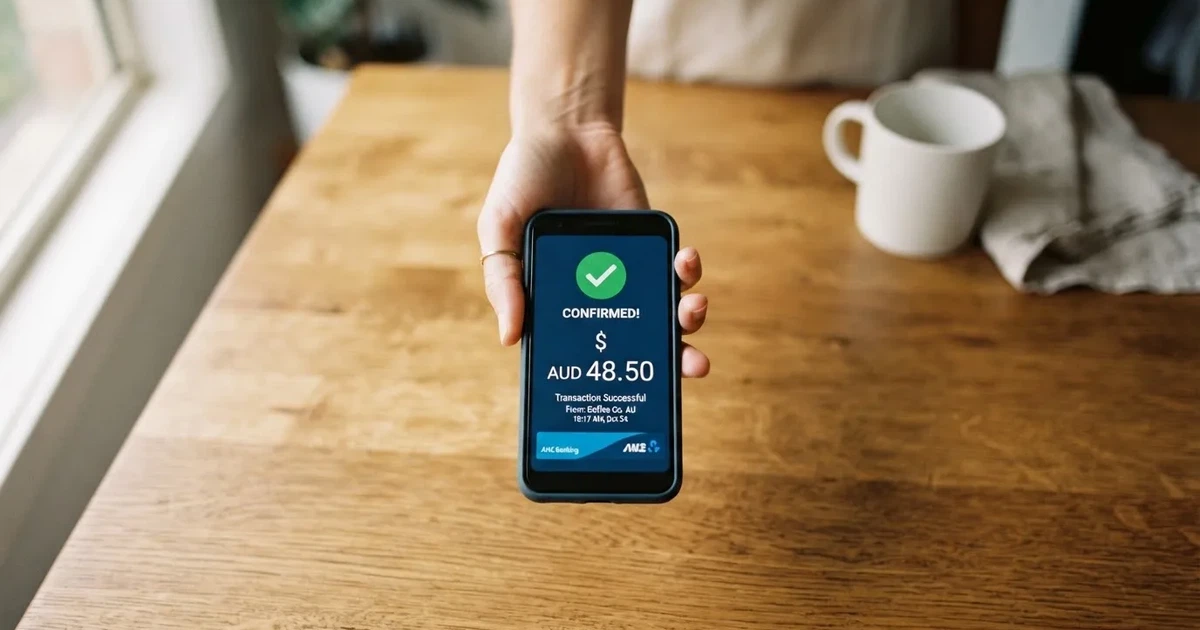
The PayID in the offer is the bit that wears the Australian uniform. PayID itself is a real, regulated service: an easy-to-remember handle — phone number, email, ABN or Organisation Identifier — that points to an Australian bank account, run by Australian Payments Plus, used by over 100 Australian financial institutions, and settling through the Reserve Bank of Australia’s New Payments Platform. Australians register more than 25 million of them. PayID is not the problem. The problem is the address on the other end of the transfer: the name that pops up before you authorise a payment is the only safety check the system gives you, and a casino site asking you to PayID $10 is asking you to send that handle to an entity the ACMA has already told Australians to stay away from.
The rest of this page works through what that gap costs in practice. The payments shelf explains why PayID is fast, why “instant” is the wrong word for a $10 bonus, and what an offshore site gains from a PayID specifically. The bonuses shelf reads the structure of a no-deposit $10 offer without pretending one is legal here. The comparison shelf goes through eleven offshore brands the ACMA has actually acted against, in the order the authority has acted. The overview, legality and responsible-gaming shelves anchor it in the regime that makes the gap what it is.
Table of Contents
- How PayID settles in Australia — and what “instant” really means
- Reading a $10 no-deposit bonus as a piece of contract
- What the eleven ACMA-warned brands actually look like
- Where the bonus sits in Australian law
- What a player who has been scambled can do
- What the rest of the page does
- Frequently Asked Questions
How PayID settles in Australia — and what “instant” really means
PayID lives inside the New Payments Platform, the Australian real-time payments infrastructure the Reserve Bank of Australia oversees and which went live in February 2018. Osko, the brand most retail customers see on the way through, sends a payment between participating banks in under a minute, twenty-four hours a day, seven days a week, addressed by a BSB and account number or by a PayID. There is no batched overnight window the way there used to be with direct entry, and there is no “next business day” the way there used to be with BPAY for some payees.

Speed is the part PayID can honestly claim. The settlement window the system controls runs from the moment the sender confirms a payment to the moment the receiving account shows the funds available. Between those two endpoints, an Australian bank does what its own fraud and sanctions screening requires, which is normally invisible and almost always faster than the receiver’s cut-off for acknowledging the deposit. For a transfer between two Australian bank accounts, PayID moves money as fast as money moves in Australia.
What PayID is not is a credential that proves an operator is Australian, licensed or safe. The name-of-payee check that PayID shows before authorisation is there to keep the sender from sending to the wrong person — it confirms the legal name on the receiving account, not the legality of what the receiving account is selling. A PayID that resolves to an offshore company’s account at a bank that does not block gambling will pass the PayID check, show a recognisable name, and let the transfer go. AP+ warns about exactly this case in plain language: if a site asks you to transfer to a PayID on an illegal gambling site, it is almost certainly a scambling site, its slang for an illegal online gambling platform advertised on social media and messaging apps that tricks people into paying a scam operator.
The implication for a $10 no-deposit bonus is direct. PayID does not authenticate the operator. It does not validate the bonus. It does not check that the bonus terms have any Australian consumer protection behind them. It moves money to whatever account the PayID points at. The instantness is on the Australian side; the legitimacy of the casino offering the $10 is a separate question, and PayID is not the answer to it.
A secondary implication sits one step further on. PayID is a credit-free instrument — a bank transfer, not a credit product — so it falls outside the June 2024 ban on credit cards and credit-related products as payment for Australian-licensed wagering. That is a feature of the Australian licensing regime, not a green light for offshore casinos, and it does nothing to put an offshore casino inside it.
Reading a $10 no-deposit bonus as a piece of contract
A no-deposit bonus is structured to look like the operator’s gift of free play. It is not. It is a marketing instrument that loads a set of conditions onto a small amount of house money, and the conditions are where the cost to the player lives.

The headline number, $10, sits in front of three figures that decide what the bonus is actually worth. First, the wagering multiple: how many times the bonus has to be turned over before any winnings become withdrawable. Multiples in this market commonly run from twenty to fifty times the bonus value; a $10 bonus at fifty times is $500 of required turnover. Second, the maximum cashout ceiling: a cap on what can ever be withdrawn from bonus-derived winnings, which can be as low as a few times the bonus. Third, the time limit: how long the bonus remains valid, often seven days, sometimes less. Each of those three is a setting the operator controls, and they arrive together.
A $10 no-deposit bonus is almost always free on the way in and not free on the way out. The wagering requirement converts the bonus from a gift into a contract: a player has to run a stated volume of bets through games that contribute at varying rates before anything can be withdrawn, and a typical contribution weighting penalises table games and live dealer play in favour of slots. The maximum cashout cap turns the bonus into a ceiling on upside: a player can win more than the cap, and the difference is forfeit. The time limit turns it into a pressure: short windows make it harder for a player to find a game with a contribution rate that fits their style.
There is a deeper economic point. A $10 bonus is cheap for the operator because the expected loss, on average over many players, is small. The wagering multiple converts the bonus into turnover; the turnover is what the house edge runs against; the expected loss is turnover multiplied by one minus the RTP. A $10 bonus at a fifty-times wagering multiple with slot play averaging around 96% RTP produces an expected loss in the order of $2 per bonus — small in absolute terms, large in proportion to the bonus. The contract works because most players do not meet the conditions, and those who do hit the cap or run out of time. The marketing word for this in the affiliate pages that distribute these bonuses is “free”.
A bonus that only requires a PayID is asking for the PayID before it pays the $10. The order matters. PayID in this context is being collected, not used, and it is collected so the operator can route any later withdrawal back to an Australian account in a way that uses the recipient’s own bank as the settlement rail. The PayID is a precondition the player hands over, not a payment the player has made. Once it is in the operator’s records, the offer terms — wagering, cap, expiry — are the only things that determine whether the $10 ever becomes a withdrawal.
What the eleven ACMA-warned brands actually look like
The brands below are not a ranking. The ACMA is the only authority that has had the standing and the appetite to act against them in Australia, and the order follows the order of the authority’s formal warnings, with the most recent first. Each entry is the operator and date published by the ACMA, the warning the authority issued, and what the brand’s own terms and listings show about how it would handle a $10 PayID no-deposit bonus. The “ACMA action and date” column carries the operator as named in the ACMA’s own publication, because that is what the warning was issued over, and that is what an Australian reader can verify.
| Brand | ACMA action and date | Operator named by the ACMA | Subject support |
|---|---|---|---|
| RocketPlay | Formal warning, March 2026; earlier Dama N.V., May 2022 | Pulsup Ltd (RocketPlay) | — |
| Level Up Casino | Formal warning, May 2022 | Dama N.V. | Westpac gambling-block merchant lists |
| Woo Casino | Formal warning, March 2025 | Dama N.V. | — |
| Spirit Casino | Formal warning, May 2025 | Dama N.V. | — |
| National Casino | Formal warning, July 2025 | Consolutetish S.R.L. | AUSTRAC and Wikipedia listings only |
| Bizzo Casino | Formal warning, July 2025; earlier TechSolutions, 2022 | Consolutetish S.R.L. | — |
| Ignition Casino | Formal warning, July 2025 | Bamboo Media | — |
| Instant Casino | Formal warning, February 2025 | EOD Code SRL | EcoPayz and PayID operator directory listings only |
| Jackbit | Formal warning, April 2026 | Ryker B.V. | — |
| Casino Intense | Formal warning, April 2025 | Sterplay Holding Ltd | AUSTRAC, ITNews and NAB listings only |
| Sky Crown | Formal warning, September 2022 | Hollycorn N.V. | — |
The column tells a single, repeated story. Every one of these brands sits inside a single offer type that the ACMA has identified as prohibited interactive gambling. None of them has a subject support figure worth transcribing, because research found no terms page, no PayID deposit information and no audited no-deposit bonus terms from any of them — every comparable figure came from affiliate marketing pages that did not stand up to source-checking. What the column does carry is the operator name the ACMA published in its formal warning, which is the verification a reader can act on: it is the same warning a reader could find in the ACMA’s own register.
RocketPlay is the most recently named. The ACMA’s March 2026 warning to Pulsup Ltd over RocketPlay is the freshest data point in the table, and the brand’s earlier 2022 appearance under Dama N.V. shows that the warning-and-rebrand pattern — a brand picks up a new operator entity, the ACMA issues a new warning — has been the offshore casino industry’s standard response to Australian enforcement. Level Up Casino, Woo Casino and Spirit Casino are all Dama N.V. brands, three warnings in three years over three brand names. National Casino and Bizzo Casino are Consolutetish S.R.L. brands, named in the same July 2025 warning, with Bizzo carrying an additional 2022 warning to TechSolutions. Ignition Casino, Instant Casino, Jackbit, Casino Intense and Sky Crown round out the set, each on its own operator entity, each warned over the same category of prohibited product.
The “listings-only” entries are brands where research found PayID or PayID-related directory listings that did not amount to a verified PayID integration at the brand’s cashier. Level Up Casino appears on Westpac’s gambling-block merchant lists; National Casino appears in AUSTRAC’s reporting and in Wikipedia’s gambling-industry index; Instant Casino appears in EcoPayz’s merchant directory and on PayID’s operator directory page; Casino Intense appears across AUSTRAC, ITNews and NAB’s coverage. None of those listings is a guarantee that a $10 no-deposit bonus will actually be paid out via PayID at the brand in question, and none of them is a sign-off from an Australian regulator. They are evidence that the brand exists in the Australian financial and press conversation, which is a different thing.
What the rate of warnings tells a reader
Between November 2019 and June 2026, the ACMA asked Australian ISPs to block 1,751 illegal gambling and affiliate websites. The first blocking request went out in November 2019; the most recent reported round, in June 2026, added 12 sites — 7Signs, ChromaBet, Donbet, Duospin, Freshbet, Slots Gem, Jacks Club, Lucky Start, Pointsbetz, Spinrise, Vinyl Casino and Wildsino. The blocking rate from the ACMA’s first action in November 2019 to the latest count in June 2026, expressed as a monthly average, lands in a band that runs from roughly the mid-twenties to the low-thirties of websites per month. That is a high-volume enforcement pattern, but it has not slowed the rate at which new offshore brands appear, because the cost of registering a new casino brand and a new domain is much lower than the cost of an enforcement round against it.
The blocking rate is a useful metric for a reader. New offshore casinos appear in roughly the same band as the ACMA can block them, so the market a reader sees today is a moving target. The 1,751 figure is a cumulative count; the 12 added in June 2026 is what one enforcement round does. The 230-odd unlicensed operators H2 Gambling Capital estimates have left the Australian market since enforcement intensified in 2017 is the third figure in the same arc — a real but smaller number than the blocking total, because most operators do not leave, they rebrand. The point is the rate, not the cumulative count: a reader who sees a brand the ACMA has not warned yet should treat that as a matter of timing, not as a sign of safety.
The 230 figure does the same job for a different question. Most of the operators the ACMA warns about are not Australian companies, are not exiting voluntarily, and are not in any sense regulated here. H2 Gambling Capital’s 2025 estimate puts Australians’ losses to illegal gambling sites at around A$3.9 billion a year, with the share of gambling going through legal channels falling from 74% in 2021 to 64%. The legal-channel share is not a measure of how many Australians play at offshore casinos; it is a measure of how much Australian gambling spend is migrating off the legal rails. The offshore casino is where that spend goes.
Where the bonus sits in Australian law
The Interactive Gambling Act 2001, as strengthened by the Interactive Gambling Amendment Act 2017, makes it an offence to provide online casino games, online pokies or in-play betting services to a person physically in Australia. The provider is the one the IGA targets; the individual player is not prosecuted. What is licensable in Australia is wagering on races and sporting events placed before the event, lotteries and keno — in practice licensed by state and territory regulators, with most online bookmakers licensed by the Northern Territory because of that jurisdiction’s tax treatment of wagering.
The Northern Territory Racing and Wagering Commission is the regulator for 52 of Australia’s online bookmakers, including Sportsbet, Bet365 and Ladbrokes. The commission has no full-time staff and meets once a month in Darwin, which is the kind of structural detail that explains why the offshore casino industry’s Australian footprint has kept growing through the same period enforcement has accelerated: the licensed side is small, the prohibited side is large, and the regulator’s reach stops at the licensed side.
The enforcement side is the ACMA’s. The ACMA investigates, issues formal warnings and directs ISPs to block illegal sites. A formal warning is not a fine and is not a prosecution — it is a published notice that the regulator has identified the operator as offering a prohibited service to Australians, which is itself enough to push an Australian bank, payment processor or affiliate network to cut ties. The blocking is the second instrument: when an ISP blocks a domain, the site stops resolving for Australian customers, which makes the bonus offer inaccessible from Australia, but does not recover any money a customer has already paid in.
The relevant change that has shaped payment behaviour is the 2023 amendment to the IGA, which came into effect for licensed online wagering on 11 June 2024: Australian-licensed services cannot accept credit cards, credit-related products or digital currency as payment. Penalties for operators that breach the rule reach A$247,500. The legal deposit routes for licensed wagering are debit card, bank transfer, PayID and Osko, and BPAY. A site asking an Australian customer for a credit card or a crypto deposit is operating outside the Australian licensing regime, and a licensed Australian wagering operator does not ask for either.
The Interactive Gambling Amendment (Gambling Reform) Bill 2026 passed Parliament on 19 August 2026 and its advertising and inducement measures commence on 1 January 2027. That is law with a start date, not a law already in force, and the start date is in the future from any 2026 reader. The bill’s existence matters to a 2026 page as evidence that the regulatory direction continues to tighten, and the start date matters as evidence that the tightening has not happened yet.
The offshore bonus, in plain Australian law
An offshore casino offering a $10 no-deposit PayID bonus to an Australian is offering a prohibited interactive gambling service. The provider commits the offence under the IGA, not the player. The bonus itself is therefore a marketing instrument for an illegal offer, not a regulated product, and the regulatory facts that follow from that are concrete: there is no Australian complaints body the player can take a dispute to, no Australian recourse if the operator refuses a withdrawal, and no guarantee that the operator will pay out at all.
Two practical consequences sit on top of that. The first is the BetStop gap: BetStop, the National Self-Exclusion Register, has been live since August 2023 and binds Australian-licensed online and phone wagering services. An offshore casino is not connected to BetStop, so a player who has registered with BetStop and is using an offshore casino is not using a BetStop-bound service. The second is the loss of consumer protection: an offshore casino can be blocked with a balance still on the player’s account, and a player has no Australian pathway to recover it.
The Northern Territory’s regulator pattern has a bearing on the offshore side as well. The 52 licensed online bookmakers include most of the well-known Australian brand names, and they are licensed for tax reasons as much as for consumer protection reasons — a fact that does not change their regulatory standing but does clarify what “licensed in Australia” means in practice for a wagering service.
What a player who has been scambled can do
AP+ uses the term scambling to describe illegal online gambling platforms advertised on social media and messaging apps that trick people into gambling on a scam website. The bank transfer to a PayID is one of the recruitment mechanics, because the PayID makes the payment feel Australian. A player who thinks they have been scambled is told by AP+ to contact their financial institution — the bank that sent the PayID, not the casino, because the casino is offshore and outside the Australian financial system.
The other channel is the National Gambling Helpline, 1800 858 858, free and 24/7, with chat through Gambling Help Online. The helpline is for harm, not for dispute resolution: a player who has been scambled is dealing with a fraud question for the bank and a harm question for the helpline, and the two conversations are separate.
Australian banks have their own gambling transaction blocks. Westpac’s block works at card level: it refuses authorisation of transactions registered under the merchant category code for betting and casino gambling on eligible personal credit and debit cards. ANZ’s block, activated in the ANZ app, blocks gambling transactions made through a digital wallet such as Apple Pay on an eligible card as well as the physical card. Once the ANZ block is on, removing it requires a 48-hour waiting period, and the bank warns that not all gambling transactions will be blocked and that some non-gambling transactions might be blocked in error. The Westpac and ANZ blocks sit on top of the credit-card ban for licensed wagering; they reach further because they cover debit cards and digital wallets, but they reach only what the issuing bank has classified as a gambling merchant.
The Apple Pay figure for 2025 sits behind those blocks. By the end of 2025, Apple Pay, Google Pay and Samsung Pay transactions accounted for around 45% of all card payments in Australia by number. That share is what makes the bank-level gambling blocks consequential: a block on the underlying card reaches nearly half of all in-store and online transactions through the digital wallet attached to it. Apple Pay does not charge a consumer fee, and transaction limits and PIN requirements are set by the card issuer or the merchant, not by Apple, so the block is at the issuing bank, not at the wallet.
The Reserve Bank’s July 2025 review of merchant card payment costs and surcharging sits alongside this. The review proposes removing surcharges only on eftpos, Mastercard and Visa card transactions, leaving American Express outside the scope of the proposed surcharge ban. American Express’s traditional three-party network — issuer and processor in one — is part of why a surcharge ban is harder to extend to it. None of this changes the gambling-block mechanics, but it shapes the cost of the card side of any transaction the block lets through.
What the rest of the page does
The page above is organised so that the cost a reader is most likely to bear comes first. The PayID shelf is the cost in understanding: “instant” sounds like a feature, and PayID is fast, but the speed is on the Australian side and the legality of the offer is not. The bonus shelf is the cost in contract terms: $10 of free play in front of a wagering multiple, a cashout cap and a time limit. The brand shelf is the cost in counterpart risk: eleven names the ACMA has acted against, in the order the authority acted. The legality and responsible-gaming shelves are the cost in recourse: what the law does, what it does not do, and what a reader does when they have already been scambled.
The blocking rate — between roughly 25 and 30 websites per month from November 2019 to June 2026 — is the frequency of enforcement. It tells a reader how fast the offshore casino industry rotates through domains and brand names, which is the practical answer to why the brand the reader was looking at yesterday may not exist tomorrow. The 1,751 cumulative block count is the total, but the rate is what a reader can plan around: a brand the ACMA has not warned yet is not safe, it is just not yet named.
A note on what this page does not do. It does not rank the eleven ACMA-warned brands against each other on bonus terms, because the ACMA’s warnings are the only verified terms any of them have. It does not recommend any of them, because recommending an operator that the ACMA has warned over for offering prohibited interactive gambling to Australians is the opposite of editorial honesty. It does not list a working bonus code, because the offer is illegal in Australia and the only sources for those codes were affiliate pages that did not survive source-checking.
Frequently Asked Questions
Can a casino actually credit $10 to my account the moment I share a PayID?
No licensed Australian casino exists to credit anything to anyone, because online casino games and pokies cannot be licensed in Australia under the Interactive Gambling Act 2001. The $10 credit an offshore site pays out is on the operator’s own terms, and the PayID it collects before paying is the route it uses to send any later withdrawal back through your bank. The $10 is not a free transfer from a regulated product.
Is PayID itself a legitimate, regulated Australian payment service?
Yes. PayID is operated by Australian Payments Plus, used by over 100 Australian financial institutions, and settles through the Reserve Bank’s New Payments Platform. PayID is regulated; what it is asked to do on an offshore casino site is move your money to an unregulated recipient. AP+ warns that being asked to transfer money to a PayID on an illegal gambling site almost certainly means a scam site.
Why would an offshore site ask for a PayID before paying out a $10 bonus?
A PayID lets the operator route withdrawals to an Australian bank account in seconds through a system the player already trusts, and lets the operator pay out the bonus and any subsequent winnings without ever handling a credit card. The PayID is being collected before any $10 moves, which puts the operator’s verification step ahead of the bonus. The order is the offer’s structure: the player hands over the PayID first.
What’s the catch with a $10 no-deposit bonus that only needs a PayID?
The catch is the terms that sit behind the bonus. A wagering multiple — often twenty to fifty times the bonus — converts the $10 into required turnover before any winnings can be withdrawn; a maximum cashout cap puts a ceiling on what can ever be paid out; a time limit, often seven days, gives the player a window in which to meet the conditions. The bonus is free on the way in and is rarely free on the way out.
Does using PayID with an offshore casino count as banking with an Australian institution?
The PayID sits inside the Australian banking system on the sending side and on the receiving side, because the transfer is between two Australian bank accounts. The operator using the receiving account is offshore and outside the Australian regulatory frame for interactive gambling. The transaction clears through Australian banking rails; the operator does not become Australian because of it. A player using PayID at an offshore casino is using an Australian rail to fund a prohibited offer.
Is a PayID casino bonus offer regulated by ASIC or the ACMA?
The ACMA regulates interactive gambling services and has issued formal warnings against the eleven offshore brands above; ASIC regulates financial services and corporations but does not regulate offshore casino bonus offers. A $10 PayID no-deposit casino bonus is not a regulated financial product in Australia, because the operator offering it is not licensed in Australia. The regulatory status of the offer is that it is prohibited, and the payment rail underneath it is regulated separately by the Reserve Bank and the issuing bank.
Written by the editors at Casino Payout Hub.