


What “offshore casino” means in Australia, and why the shortlist below is built the way it is
A reader interested in offshore casinos for Australian players is, almost always, looking for a working list — names, comparisons, a recommendation at the end. The first thing to get straight is that this page does not deliver one. Online casino games cannot be licensed in any Australian state or territory, the Interactive Gambling Act 2001 prohibits offering them to anyone in Australia, and the brands a search turns up are the same brands the Australian Communications and Media Authority has spent the last several years warning, blocking and referring to ISPs for blocking. What follows is therefore a different kind of shortlist: eleven brands the ACMA has acted against, set against the law that prompted that action, the bank-level tools that can stop the money reaching them, and the lawful alternatives that sit on the Australian side of the line.
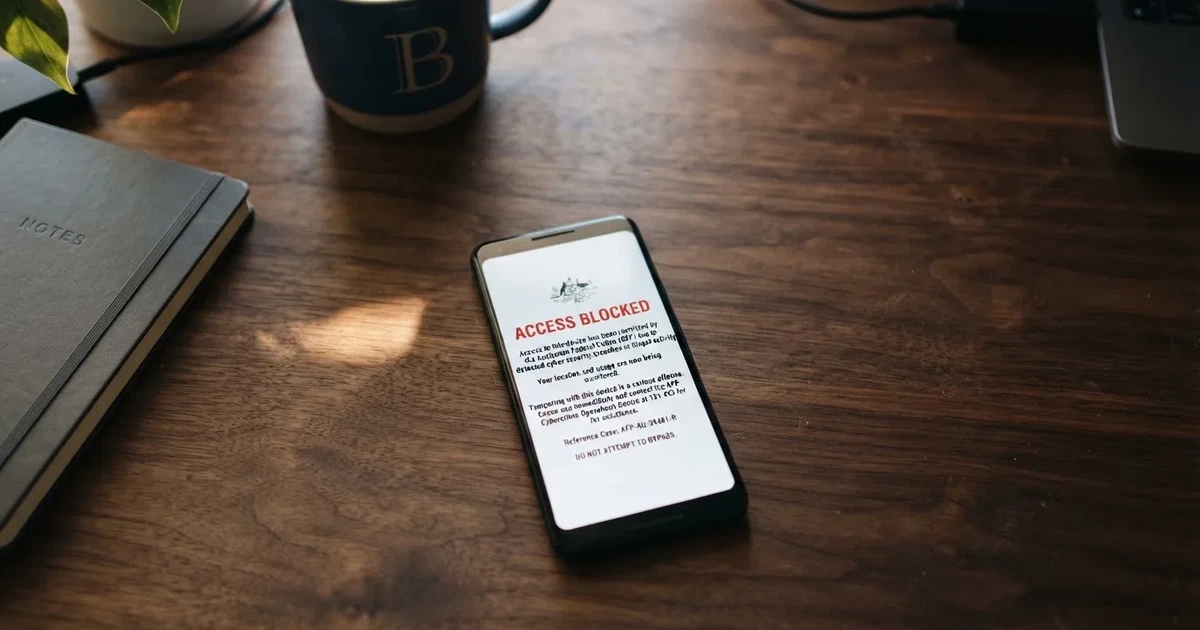
Current as of 8 November 2026 against the ACMA’s published list of formal warnings and blocking requests.
Table of Contents
- Eleven brands the ACMA has named, and what the regulator actually said
- The legal frame, written so a reader can use it
- Findings on illegal market size, and what they actually say
- The blocking rate, in plain prose
- How the operator columns break down across the eleven
- Payment methods that reach these sites, and the bank-level blocks that stop them
- The bank’s own caveats
- Responsible gambling tools that bind only the licensed side
- What the marketing pitch actually costs, in plain arithmetic
- The eleven, one by one
- What the eleven tell a reader, taken together
- The lawful side of the line, for a reader in Australia
- What this page will not do, and why
- Frequently asked questions
Eleven brands the ACMA has named, and what the regulator actually said
The table below is not a ranking and not a recommendation. Each row is a brand the ACMA has issued a formal warning over, naming the operator behind it and the month and year the warning was published. The licence line the site displays — Curaçao, Anjouan, Costa Rica — is irrelevant to that warning: no offshore licence authorises the service in Australia, and the ACMA does not adjudicate the offshore licence, only the fact that the brand is offering prohibited interactive gambling services to Australians.

| Brand | ACMA action and date | Operator named by the ACMA | Subject support from the operator |
|---|---|---|---|
| RocketPlay | Formal warning, March 2026 (Pulsup Ltd); earlier warning to Dama N.V., May 2022 | Pulsup Ltd (Rocketplay.com.au); previously Dama N.V. | Listings-only — what affiliate listings report, not the operator’s own statement |
| Level Up Casino | Formal warning, May 2022 | Dama N.V. | Listings-only |
| Woo Casino | Formal warning, March 2025 | Dama N.V. | No-data |
| Spirit Casino | Formal warning, May 2025 | Dama N.V. | No-data |
| National Casino | Formal warning, July 2025 | Consolutetish S.R.L. | Listings-only |
| Bizzo Casino | Formal warning, July 2025 (Consolutetish S.R.L.); earlier warning to TechSolutions, 2022 | Consolutetish S.R.L.; previously TechSolutions Group | Listings-only |
| Ignition Casino | Formal warning, July 2025 | Bamboo Media | No-data |
| Instant Casino | Formal warning, February 2025 | EOD Code SRL | Listings-only |
| Jackbit | Formal warning, April 2026 | Ryker B.V. | No-data |
| Casino Intense | Formal warning, April 2025 | Sterplay Holding Ltd | Listings-only |
| Sky Crown | Formal warning, September 2022 | Hollycorn N.V. | No-data |
A few patterns are worth pointing out, because the patterns are the information. Dama N.V. surfaces four times in the table — for RocketPlay, Level Up, Woo and Spirit — which is not four independent operators so much as one Curaçao-registered company running a stable of brands the ACMA has had to warn separately. Hollycorn N.V., Consolutetish S.R.L., TechSolutions Group and the rest of the operator names sit behind a similarly long tail. The brands look like a market; the operators look like a small industry. The ACMA’s blocking requests cover both. In the round reported on 26 June 2026 the authority asked Australian ISPs to block 12 more names — 7Signs, ChromaBet, Donbet, Duospin, Freshbet, Slots Gem, Jacks Club, Lucky Start, Pointsbetz.com, Spinrise, Vinyl Casino and Wildsino — none of which are on the table above because none of them had, at the date of that round, attracted a formal warning. The warning is the slower instrument; the blocking request is the faster one.
The other pattern is that several of the eleven have been warned more than once, often because the brand has been moved between operators. Bizzo Casino’s two warnings — to TechSolutions in 2022 and to Consolutetish S.R.L. in 2025 — name different legal entities in different years for the same player-facing site. RocketPlay’s two warnings sit on the same trajectory: Dama N.V. in May 2022, Pulsup Ltd by March 2026. A formal warning does not bind the new operator; it binds the operator that received it. The brand outlives the warning.
For a reader choosing between these on the basis of operator reputation, the table gives almost nothing to choose on. The action column is what it is; the operator column changes; the licence the site displays is offshore in every case and confers no standing in Australia.
The legal frame, written so a reader can use it
The Interactive Gambling Act 2001, as amended by the Interactive Gambling Amendment Act 2017, makes it an offence to provide certain interactive gambling services to a person in Australia. The services covered are online casino games, online pokies and in-play betting on sport. Wagering on a sporting event or a race before the event begins is not covered, which is why Sportsbet, Bet365 and Ladbrokes are licensed and operating in Australia — they are licensed by the Northern Territory Racing and Wagering Commission for tax and historical reasons, not for a sports-betting carve-out that someone invented later. The NTRWC holds the licences for 52 of Australia’s online bookmakers and runs, by its own published record, without full-time staff, meeting once a month in Darwin.

A reader in Australia is not prosecuted for using an offshore casino. The IGA targets the provider. That asymmetry does a lot of the marketing work for offshore sites, and a sharp reader will notice that the asymmetry is also the reason the provider-side prohibition is the one being enforced. The ACMA investigates, issues formal warnings and directs Australian ISPs to block illegal sites. The cumulative count, as reported in June 2026, was 1,751 illegal gambling and affiliate marketing websites blocked since the first blocking request in November 2019, with more than 230 unlicensed gambling services having left the Australian market since enforcement was strengthened in 2017.
A second thing the law does is constrain payment. Since 11 June 2024, Australian-licensed online wagering services cannot accept payment by credit card or other credit-related products. The same regime treats digital currency the same way. For an Australian-licensed bookmaker, the legal deposit routes are debit card, bank transfer, PayID or Osko, and BPAY. An offshore casino that asks an Australian player for a credit card or a crypto deposit is operating outside the Australian rules — but that does not make the deposit illegal on the player’s side; it makes the site one the ACMA may act against.
The third thing the law does, less directly, is strip the player of the consumer protection an Australian-licensed wagering service carries. An offshore site gives no Australian complaints body, no recourse if a withdrawal is refused, and no guarantee that the balance survives a blocking request. ACMA blocking is at the ISP edge, not at the wallet; an account with funds in it can become unreachable. The promotion a reader sees on the way in does not have a counterpart on the way out.
Findings on illegal market size, and what they actually say
Gambling Capital’s 2025 estimate is that Australians lose about A$3.9 billion a year to illegal gambling sites, and that the share of gambling going through legal channels fell from 74% in 2021 to 64% in the period the report covers. Both numbers carry the same caveat: this is an estimate of the illegal market, which is, by definition, the part of the market that does not file a return. The trend matters more than the level. Legal channel share fell ten percentage points in four years while total losses to illegal sites remained in the billions. The ACMA’s blocking record has not reversed that trajectory; it has slowed it, possibly.
The figures also sit next to a number that gets less attention. Of the A$3.9 billion, the ACMA’s own published material puts a meaningful share through offshore sites whose offshore licence is the brand’s only authorisation. The Australian licensed bookmaker is paying Australian tax, contributing to problem-gambling research and connected to BetStop; the offshore casino is doing none of those things for the same wager. The price of the illegal-channel share is not only the loss on the wager. It is the absence of the surrounding safety net.
The blocking rate, in plain prose
The arithmetic the page is built around is the rate at which the ACMA’s blocking record has accumulated. The first blocking request was in November 2019; the cumulative count reached 1,751 sites by the round reported on 26 June 2026. Divided across the years the ACMA has been issuing blocking requests, that is a band running from roughly 250 sites a year in the early enforcement period to closer to 350 in the more recent ones — a steady accumulation rather than a single crackdown. The arithmetic belongs to the writer; what it tells a reader is that the ACMA is not making one large gesture, it is running a continuing queue, and the queue is the longer instrument. The formal warning is the slower one; the blocking request is the faster one. Together they describe an enforcement regime that works by attrition, not by a single decisive action.
The condition matters. The band is an average across years in which the ACMA’s enforcement priorities shifted, in which different operators moved brands between legal entities, and in which the affiliate marketing sites the ACMA also blocks sat alongside the casino sites themselves. The 1,751 figure is sites and affiliate pages, not unique operators, so the per-operator rate is lower than the per-site rate would suggest. A reader who takes the band as a forecast is reading it wrong; it is a backward-looking average over an enforcement regime that has run for just over six years.
How the operator columns break down across the eleven
Three of the eleven — Dama N.V., Consolutetish S.R.L. and TechSolutions Group — together account for half the table, and a fourth, Hollycorn N.V., accounts for Sky Crown. The remaining operators appear once. That distribution is the reason the table reads as concentrated at the top. The eleven brands are not eleven independent businesses competing for an Australian reader; they are a small number of companies running a longer list of skins, and the ACMA’s enforcement record shows the regulator catching up with that structure rather than confronting it head-on. A formal warning names one operator and one brand. The next round often names the same operator under a different brand, with the same kind of service.
The “subject support” column reflects the same pattern from the other side. Half the rows have no data — the operator does not publish Australian-facing details the research could verify — and the other half are what affiliate listings report, not what the operator itself states. The reader should treat the populated cells as background noise rather than endorsement. None of the cells reflects an operator’s own commitment to Australian-facing service, because none of these operators is licensed to provide that service.
Payment methods that reach these sites, and the bank-level blocks that stop them
The deposits an Australian player actually makes to an offshore casino in 2026 go through channels that have nothing to do with the casino’s own banking page. The casino accepts what its processor accepts, which is usually a mix of card, e-wallet, crypto and, increasingly, direct bank transfer via PayID. Each of those has an Australian-side counter-move the player can pull.
Card payments can be blocked at the issuing bank. Westpac’s gambling block refuses authorisation of transactions registered under the merchant category code “Betting/Casino Gambling” on eligible personal credit and debit cards. ANZ runs an equivalent block via the ANZ app, and the block applies to gambling transactions made through a digital wallet such as Apple Pay on an eligible card, not just the physical card. Commonwealth Bank’s gambling lock, set in the CommBank app, blocks most gambling transactions on eligible cards, though the bank itself states it cannot guarantee every gambling-related purchase is stopped. The mechanics differ; the principle does not. Once the block is on, the issuing bank declines the transaction before the casino’s processor sees it. ANZ adds a 48-hour waiting period to remove the block, which is itself a design choice that biases the choice towards staying blocked.
The exception that readers run into is American Express, which sits outside the surcharge-banning review the Reserve Bank ran in July 2025 and which, historically, runs a three-party scheme where Amex both issues the card and processes the transaction. Amex’s merchant relationships and MCC tagging are not the same as Visa and Mastercard’s. A Westpac or ANZ block is built against the MCC classification of the merchant, and where that classification fails to identify an offshore casino, the block fails too. This is the route by which some readers report a deposit that the bank block did not catch.
The second route is PayID and Osko. Osko transfers between participating Australian banks arrive in under a minute, 24/7, including weekends, whether they are addressed to a BSB and account number or to a PayID. The PayID layer shows the name of the account holder before the transfer is sent. AP+ itself warns that being asked to transfer money to a PayID on an illegal gambling site almost certainly means a scam site, which is a different problem from the licensed-versus-unlicensed problem but a real one. By April 2025 more than 25 million PayIDs had been registered on the New Payments Platform, and the platform’s 13 shareholders include the Reserve Bank and the major banks.
BPAY sits on the same rails, owned equally by ANZ, Commonwealth Bank, NAB and Westpac via Cardlink Services Limited, and operated by Australian Payments Plus alongside PayID and Osko. It is the bill-payment service in online banking — a Biller Code and a Customer Reference Number — and has been running since November 1997 with no monthly outage tolerance beyond two minutes. For deposits to a licensed wagering service, BPAY is one of the legal routes; for deposits to an offshore casino, it is essentially unavailable, because offshore casinos do not issue BPAY bills.
Crypto is the route the licensed-versus-unlicensed law writes around directly. Since 11 June 2024, Australian-licensed online wagering services cannot accept digital currency; an offshore casino that asks for a crypto deposit is operating outside that rule. The reader’s recourse is harder here than at the card level, because the bank’s block does not see a merchant; the exchange sees a wallet address.
The bank’s own caveats
Three of the four major banks publish language that says the same thing in slightly different ways: the block cannot guarantee every gambling transaction is stopped, and a small number of non-gambling transactions may be blocked in error. ANZ’s support page carries the warning explicitly. Commonwealth Bank’s “Lock, Block, Limit” page carries a softer version of the same caveat. Westpac’s gambling block page is built around the merchant category code and inherits the standard MCC-tagging limitations. The caveats are not legal boilerplate; they are an accurate description of what MCC tagging can and cannot see. A casino that processes deposits through a different MCC, or through a payment processor classified differently, may slip past the block.
This is also the route by which digital wallets matter. By the end of 2025, Apple Pay, Google Pay and Samsung Pay transactions accounted for around 45% of all card payments in Australia by number. The wallet is a front end; the transaction settles on the underlying card. The block that fires is the card’s block, and the wallet is transparent to it. ANZ’s product page is explicit on this: the gambling block covers gambling transactions made through Apple Pay on an eligible card, not Apple Pay as a separate system.
Apple itself states that it does not charge consumer fees for using Apple Pay in stores, online or in apps, and that any surcharge comes from the merchant’s card-processing fees. Apple also states that transaction limits and PIN requirements are set by the card issuer or merchant, not by Apple. The two facts together tell a reader that the constraint on a deposit sits with the bank, not with the wallet.
Responsible gambling tools that bind only the licensed side
BetStop, the National Self-Exclusion Register, has been live since August 2023. It binds Australian-licensed online and phone wagering services. An offshore casino is not connected to it; a self-exclusion registered through BetStop does not flow through to the brands in the table above, and the register cannot remove funds already on an offshore account. The mechanism is a directive to Australian-licensed operators about which accounts to refuse service to; it does not reach brands whose licence sits in Curaçao.
This is also the answer to why BetStop is structured this way. The register is a domestic tool binding domestic operators; offshore operators are not within the domestic regulatory perimeter and cannot be made subject to a domestic register without their consent, which they do not give. The National Gambling Helpline — 1800 858 858 — is the other half of the safety net, free, 24/7, with chat at Gambling Help Online. The helpline does reach people who have been playing offshore, in the sense that it will talk to anyone who calls, but it cannot reach into an offshore account the way it can into a licensed one.
The register-asymmetry is the single sharpest gap in the safety net for an Australian reader who wants the offshore option. The licensed bookmaker will refuse to take the next bet. The offshore casino will not.
What the marketing pitch actually costs, in plain arithmetic
The arithmetic the page would have built is the one the prescribed calculation names: a blocking rate, from the running total of blocked sites and the date of the first blocking request. The formula is the cumulative count divided by the years of enforcement. The result is a band — a backward-looking average — and the condition that gives the band its width is the ACMA’s own shifting priorities, the operators moving brands between entities, and the inclusion of affiliate marketing sites in the count alongside the casino sites themselves. The figure to carry forward is the shape of the arithmetic, not a single number: a steady accumulation across years, with the formal warning as the slower instrument and the blocking request as the faster one.
The other piece of arithmetic that belongs on this page is the cost of an illegal-channel dollar. The Gambling Capital 2025 estimate is that about A$3.9 billion a year leaves the legal channel into the illegal one, and that the legal share of total gambling fell from 74% in 2021 to 64% in the period covered. The cost per illegal-channel dollar is not the dollar itself; it is the absence of the consumer protection, the absence of the BetStop coverage, the absence of the complaints body, and the absence of the tax contribution that funds some of the surrounding harm-minimisation research. None of those have a line item, but each has a price.
The eleven, one by one
Each of the eleven brands in the table is treated below on the same fields: the ACMA action, the operator named, what the offshore licence does and does not cover, and the judgement this page draws. The page describes operators; it does not advertise them.
RocketPlay was warned in March 2026 with Pulsup Ltd named as the operator, and an earlier May 2022 warning to Dama N.V. sits behind it. The same brand under two different operators is the pattern this page has been describing; the offshore licence the site displays does not bind the new operator to the old warning. Subject support from the operator is what affiliate listings report, not the operator’s own statement. The page’s verdict: the brand’s history under two different operators is the information. A reader who arrived at RocketPlay through an affiliate link has arrived at a brand the ACMA has warned twice, under two different legal entities.
Level Up Casino sits with Dama N.V., May 2022, the same operator that runs Woo and Spirit. The site displays a Curaçao licence; the ACMA’s warning does not turn on the licence. Listings-only subject support. The verdict: the player-facing brand is one of four in this list operated by the same Curaçao-registered company, and the regulator has had to address them separately. The repetition is the information.
Woo Casino carries the March 2025 warning to Dama N.V. The site displays the same kind of licence as the rest of the Dama stable. No-data subject support — the operator does not publish Australian-facing details the research could verify. The verdict: another Dama brand, warned separately, with no Australian-facing service commitment on the record.
Spirit Casino carries the May 2025 warning, again to Dama N.V. The site displays a Curaçao licence; the ACMA’s record is the same shape as the Woo warning. No-data subject support. The verdict: the most recent of the four Dama warnings; the operator continues to publish brands the regulator continues to warn.
National Casino carries the July 2025 warning to Consolutetish S.R.L. The same operator also runs Bizzo. The site displays a Curaçao licence. Subject support is what affiliate listings report. The verdict: the brand is part of a small operator cluster that the ACMA has named together; the cluster is the information.
Bizzo Casino was warned in July 2025 with Consolutetish S.R.L. as the operator, and an earlier 2022 warning to TechSolutions (CY) Group Limited and TechSolutions Group N.V. sits behind it. Two operators, two warnings, the same brand. The verdict: the brand has survived the change of operator and the change of warning. The continuity of the player-facing site is not the continuity of the legal entity behind it.
Ignition Casino carries the July 2025 warning to Bamboo Media. No-data subject support. The verdict: a brand the ACMA has named once, with no Australian-facing service commitment on the record; the warning is the only official paper trail.
Instant Casino carries the February 2025 warning to EOD Code SRL. Subject support is what affiliate listings report. The verdict: the most recent of the warnings to an operator of this name; the brand presents no Australian-facing commitment on the record.
Jackbit carries the April 2026 warning to Ryker B.V. The same operator also runs CasinOK. The verdict: a brand the ACMA has named, with no Australian-facing service commitment on the record, and the same operator is associated with at least one other brand the regulator has acted against.
Casino Intense carries the April 2025 warning to Sterplay Holding Ltd. Subject support is what affiliate listings report, and the brand appears across multiple Australian-facing listings. The verdict: the most-published of the brands in this list, on the listings-only measure; the regulator’s record is the same shape as the rest.
Sky Crown carries the September 2022 warning to Hollycorn N.V., which also runs Blue Leo Casino. No-data subject support. The verdict: the oldest of the warnings on the table, against an operator that runs more than one brand; the regulator’s record against Hollycorn is on the public file.
What the eleven tell a reader, taken together
The eleven are not a market. They are a snapshot of the brands the ACMA has caught up with, against a market that has, by the 2025 Gambling Capital report, around A$3.9 billion of Australian player loss flowing through it a year. The cumulative blocking count is 1,751 sites and affiliate pages since November 2019. The shape of the ACMA’s enforcement is the warning, then the blocking request, then the next round of warnings against the same operator under a different brand. The reader who arrived at this page looking for a shortlist is, in the end, looking at a shortlist of brands that the regulator has decided to act against, and the answer to “which of these is worth using” is the one the regulator has already given.
The offshore licence the site displays is not a counter-argument. The ACMA’s position is that no offshore licence authorises the service in Australia, and the regulator’s record is consistent with that position across more than a decade of enforcement.
The lawful side of the line, for a reader in Australia
A reader who has reached the end of the offshore shortlist and wants a lawful alternative has, in Australia, three categories to choose between. Land-based casinos, in every state and territory, with the rules and consumer protection that come with the relevant state or territory regulator. Licensed pokies venues, with the same regulator behind them, and the same age requirement of 18. And online wagering on racing and sport, placed before the event, licensed by the Northern Territory Racing and Wagering Commission. The NTRWC’s licensing footprint covers 52 of Australia’s online bookmakers, including the three names most readers will recognise: Sportsbet, Bet365 and Ladbrokes.
Each of those alternatives carries a consumer protection the offshore casino does not. The licensed bookmaker cannot accept a credit card, will not process a crypto deposit, and is connected to BetStop. A self-exclusion registered with BetStop binds the licensed bookmaker; it does not reach the brands in the table above. A complaint about a licensed bookmaker has a domestic complaints path; a complaint about an offshore casino does not, unless the offshore operator has chosen to belong to an alternative-dispute-resolution body the player can reach from Australia. Most do not.
The arithmetic on the alternative side is not the primary point; the ACMA’s enforcement record is. A reader who chooses the lawful alternative is choosing the side of the line on which the regulator can act, the bank block is reliable, the self-exclusion register binds, and a complaints body exists. The cost of the offshore option is not the wager. It is the absence of every one of those.
What this page will not do, and why
This page will not tell a reader which of the eleven brands to play at. It will not publish a bonus code, a promo code or a voucher code; the only sources for those are affiliate marketing pages, and the ACMA’s own blocking record treats affiliate marketing as part of the prohibited service. It will not tell a reader that any of these brands is safe to deposit with; the regulator’s record is the answer the regulator has given, and the page is built around that record. It will not tell a reader that an offshore licence is a defence; the ACMA’s published position is that it is not.
The page will also not advise a reader in Australia to play at any of these brands. The legal frame the section above describes is the one an Australian reader is reading under, and it has not changed in this writing. The Interactive Gambling Amendment (Gambling Reform) Bill 2026 passed Parliament on 19 August 2026; its advertising and inducement measures commence 1 January 2027, which is law with a start date rather than law in force on a 2026 page. The starting position holds.
Frequently asked questions
What makes a casino offshore rather than Australian-licensed?
An offshore casino is one whose licence is issued by a regulator outside Australia — Curaçao, Anjouan, Costa Rica, and a small number of other jurisdictions. No Australian state or territory issues a licence for online casino games or online pokies, so any brand offering those services to a player in Australia is operating offshore relative to the Australian regulator regardless of where the licence was issued.
Does the ACMA block offshore casino websites for Australian users?
Yes. The ACMA directs Australian internet service providers to block illegal gambling and affiliate marketing websites. The cumulative count was 1,751 sites since the first blocking request in November 2019, as reported in June 2026, with the most recent round adding 12 more names on 26 June 2026.
Is it legal for an offshore online casino to accept Australian players?
The Interactive Gambling Act 2001 prohibits offering online casino games, online pokies and in-play betting to a person in Australia. The prohibition is on the provider, not the player; a reader in Australia is not prosecuted for using an offshore site. The site itself is operating against the Act.
What enforcement action has the ACMA taken against offshore casino operators?
The ACMA has issued formal warnings, directed ISPs to block sites, and referred matters for civil penalty proceedings. The eleven brands on this page are each the subject of at least one formal warning, several under multiple operators and across multiple years.
Why doesn’t BetStop cover offshore online casino sites?
BetStop is a domestic register binding Australian-licensed online and phone wagering services. Offshore casinos are not within the Australian regulatory perimeter and are not connected to the register. A self-exclusion registered through BetStop does not flow through to an offshore operator’s account.
What should someone do instead of chasing a new offshore casino after a bad experience?
The National Gambling Helpline — 1800 858 858 — is free, 24/7 and offers chat at Gambling Help Online. A reader who has been playing offshore can register with BetStop for the licensed side; the licensed bookmaker will refuse service, the offshore casino will not. The bank-level block on a personal card or in the relevant app can be turned on to interrupt the deposit route at the issuer.