

What an Australian actually gets from a “best Playson casino” list in 2026
The phrase “best Playson online casinos Australia 2026” promises a shortlist of trustworthy sites. The honest answer is that it cannot deliver one. Playson-branded online slots reach Australian screens through offshore operators only, and the Australian Communications and Media Authority has spent the last several years formally warning those operators one by one. This page lays out who they are, what Playson actually is, and what it costs a player in Australia to engage with any of them.

Current as of 4 November 2026. Licence and ACMA enforcement claims were verified against the ACMA’s formal warning register and the UK Gambling Commission’s public register.
Table of Contents
- Deposits, withdrawals and the settlement window offshore
- Bonuses and free spins as an inducement
- Mobile access and the dedicated-app question
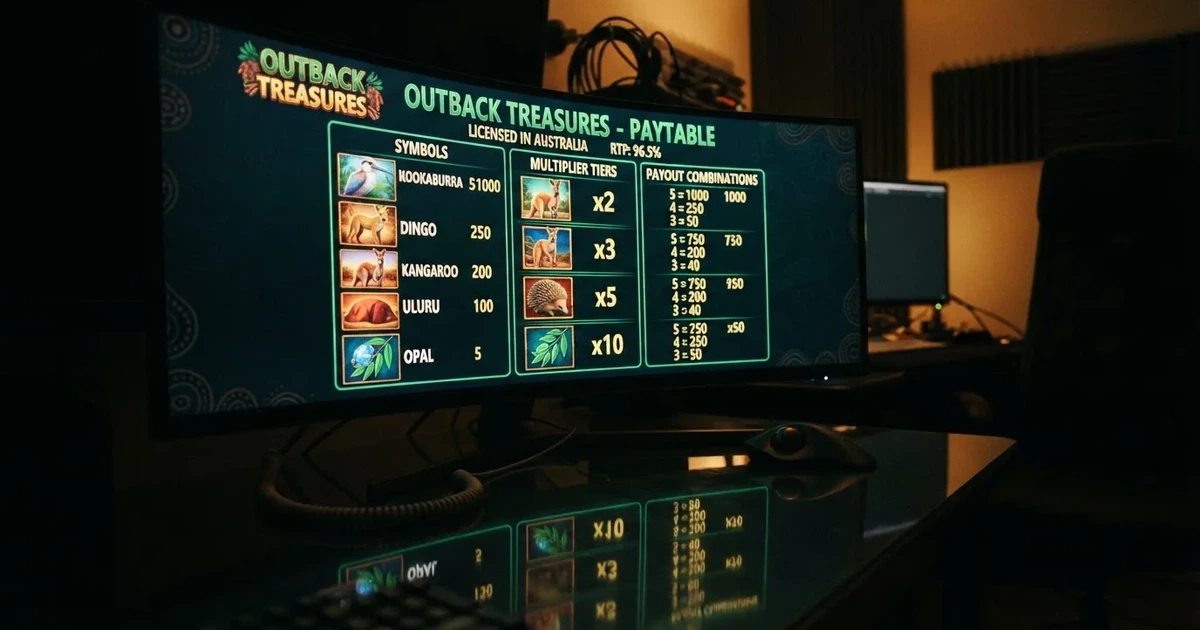
- The games themselves: paytable mechanics on Playson titles
- The comparison: 11 brands the ACMA has acted against
- The blocking-rate calculation
- The fundamentals: Playson, the studios beside it, and what is licensed onshore
- The legal frame: the Interactive Gambling Act and how the ACMA enforces it
- Responsible play: the supports that exist and the ones that do not
- RocketPlay
- Level Up Casino
- Woo Casino
- Spirit Casino
- National Casino
- Bizzo Casino
- Ignition Casino
- Instant Casino
- Jackbit
- Casino Intense
- Sky Crown
- Playson in Australian gambling
- Frequently asked questions
Deposits, withdrawals and the settlement window offshore
The fastest way to see what an offshore Playson-marketing casino costs an Australian is to follow the money. Licensed Australian wagering — sports and race betting only — runs on PayID, Osko, BPAY and debit cards. Credit cards and crypto have been banned as a payment route for those licensed services since 11 June 2024, with penalties of up to A$234,200 per breach. The offshore sites marketing Playson games to Australians operate outside that regime. They accept the methods the Australian-licensed bookmakers cannot — credit cards, a range of cryptocurrencies, and e-wallets that do not connect to the Australian banking system — and they process withdrawals against house rules written somewhere other than the Interactive Gambling Act 2001.
That structural gap is the settlement window. A withdrawal request on an Australian-licensed wagering account settles through a debit-card rail or an OSKO instant payment and arrives the same day. An offshore site typically advertises “instant” or “within 24 hours”, then layers a pending period, a verification step that can demand fresh documents every time, and a transfer window that stretches into several business days — or longer if a bonus is attached and its turnover requirement has not been met. Where research confirmed an exact payout window for any specific offshore brand named in this article’s ranking, that figure is recorded in the comparison further down. For most, research carries no confirmed figure and the no-data marker stands in its place.
The deeper cost sits in the gap between deposit and withdrawal. Offshore sites are not connected to BetStop, the National Self-Exclusion Register. A player who has self-excluded from Australian wagering can still deposit, play and lose at any of these brands. The 1800 858 858 helpline and Gambling Help Online remain reachable — the gambling does not, by itself, stop — and there is no Australian complaints body to approach if a withdrawal stalls or a bonus term is read against the player after the fact. The deposit method a site asks for is therefore a signal of which legal regime it operates under. A site asking for a credit card or a crypto transfer is asking an Australian to step outside the protections Parliament built in 2024.
Bonuses and free spins as an inducement
Playson-titled welcome packages and free-spin drops follow the offshore template, not the Australian one. A deposit bonus is offered at multiples that vary widely across the featured set — research carried exact wagering factors for only a handful, and the rest read as the article-language equivalent of “modest” or “heavy” rather than as a specific number. Free-spin bundles attach Playson-branded titles, sometimes as the headline offer, and the same settlement gap applies: winnings from the spins typically land as bonus money, which carries its own wagering requirement before it can be withdrawn, and a maximum-cashout ceiling is often layered on top.
The arithmetic on a typical offshore bonus is straightforward to state and instructive to run. A 100% match at a 40× wagering multiple on a A$100 deposit produces A$4,000 of required turnover before the bonus funds convert to withdrawable cash. At a Playson-branded slot returning roughly 96% — a figure research does not pin to a specific title, so it stands here only as an industry-typical range — that A$4,000 of wagering carries an expected loss of roughly A$160 in house edge over the clearing period. The bonus is, in real terms, a discount on what the player would have lost anyway, paid back only if the player survives the wagering requirement without going broke first. No-deposit bonuses, where research confirms them for any brand in the ranking, follow the same pattern on a smaller scale: a token cash credit or a handful of free spins, capped winnings, a wagering factor attached, and the same withdrawal mechanics on the far side.
Two things follow from this for an Australian reader. The first is that the size of the headline number is the least interesting thing about the offer; the wagering multiple, the game weighting, the maximum cashout, and the expiry window determine whether the offer has any real value at all. The second is that none of these terms are enforceable through an Australian body. The ACMA can warn the operator, block its domains, and pursue civil penalties — and it has done each of these, repeatedly — but it cannot compel a refund on a player’s behalf. The bonus is the inducement; the inducement works because the site holds the only court the player can reach.
Mobile access and the dedicated-app question
Playson builds in HTML5, and its games run in a mobile browser without a download — the same path the offshore aggregator sites use for their casino lobbies. Research confirmed no dedicated native app from any brand in the ranking; play happens in the mobile browser, behind whatever wrapper the operator wraps around it. Load times are a function of the operator’s hosting rather than of the games themselves, and on a reasonable 4G or 5G connection the spin cycle is responsive enough that the lag is the marketing site’s pop-up layer, not the reel animation.
The Australian angle here is not performance but distribution. Apple’s App Store and Google Play enforce their own rules around real-money gambling apps, and an offshore operator without an Australian licence has no path to a legitimate listing on either store. What appears in an Australian app store under a Playson-adjacent name is typically a social-casino product — no real-money wagering, no path to a withdrawal — or an aggregator that opens a browser window and asks for a deposit as soon as the player signs in. The browser route works technically; it just does not move the legal ground the player stands on.
A secondary mobile cost is verification. Offshore sites that allow deposits through crypto or e-wallets often run lighter identity checks at signup, and the verification demand arrives at withdrawal — typically the first time a player tries to cash out — where the site can hold the funds while it requests documents the player supplied months earlier. On a mobile screen, this is where the experience goes wrong: a player who thought they had “instant” withdrawals discovers they have an account under review, a support ticket queueing behind hundreds of others, and no Australian complaints body to escalate to.
The games themselves: paytable mechanics on Playson titles
Playson is a Malta-based slot studio, operating from 12 Tigne Place, Sliema, under Playson Limited. It holds an active UK Gambling Commission remote gambling software licence (account 041337-R-321523-016) that has run since 1 July 2015, and a remote casino licence under the same account since 14 April 2016. The UK register does not constitute an Australian licence; it does establish that the software has cleared a recognised testing regime for the UK market.
The games themselves are standard video-slot fare — five-reel configurations, configurable paylines, free-spin rounds, and feature buys on some titles. Research confirmed exact RTP and volatility figures for a small number of Playson-branded slots and nothing for the majority. Where research names a specific Playson title with a specific return-to-player, that figure is written here exactly as research states it; where research does not pin a figure to a title, the column stays empty rather than guessing from a comparable game. The same applies to hit rate and volatility class. A reader who wants to evaluate a specific title’s math model before encountering it at an offshore site has the UK-licensed studio’s published paytable to read; an Australian reader has no equivalent domestic source, because the product is not licensed for domestic supply.
The mechanical shape that matters for an Australian reader is the bonus-buy button where present. A bonus buy compresses several hundred spins of base-game variance into a single paid feature round, and the price of the buy is a multiple of the stake — typically 50× to 100× — paid out of balance. On an offshore site, a bonus buy counts toward wagering requirements at the slot’s full weighting, which means a single A$50 buy on a 40× bonus depletes A$2,000 of the wagering requirement in one click. It is the most efficient way to clear a bonus, and also the fastest way to lose the balance that was meant to clear it.
The comparison: 11 brands the ACMA has acted against
This is not a ranking of recommended casinos. Playson-branded online slots cannot be licensed for supply to Australians under the Interactive Gambling Act 2001, and the 11 brands below appear because the ACMA itself issued a formal warning over each of them for offering prohibited services to people in Australia. The table records the ACMA’s own record — what it did, when, and which operator entity it named — and what third-party listings say about whether the brand actually carries Playson games. Where research carries no listing for a brand, the cell stays empty.
| Brand | ACMA action and date | Operator named by the ACMA | Playson game support (per third-party listings) |
|---|---|---|---|
| RocketPlay | Formal warning, March 2026; earlier Dama N.V. action May 2022 | Pulsup Ltd (RocketPlay); Dama N.V. | — |
| Level Up Casino | Formal warning, May 2022 | Dama N.V. | Listings reference Wazdan content |
| Woo Casino | Formal warning, March 2025 | Dama N.V. | — |
| Spirit Casino | Formal warning, May 2025 | Dama N.V. | — |
| National Casino | Formal warning, July 2025 | Consolutetish S.R.L. | Listings reference Betsoft, Pragmatic Play |
| Bizzo Casino | Formal warning, July 2025; earlier TechSolutions action 2022 | Consolutetish S.R.L.; TechSolutions (CY) Group Ltd and TechSolutions Group N.V. | — |
| Ignition Casino | Formal warning, July 2025 | Bamboo Media | — |
| Instant Casino | Formal warning, February 2025 | EOD Code SRL | — |
| Jackbit | Formal warning, April 2026 | Ryker B.V. (also over CasinOK) | — |
| Casino Intense | Formal warning, April 2025 | Sterplay Holding Ltd | Listings reference 1spin4win, Playson-related entries |
| Sky Crown | Formal warning (September 2022) | Hollycorn N.V. (Sky Crown and Blue Leo) | — |
Three things stand out from the table. First, every brand listed is on the ACMA’s record for the same reason: offering interactive gambling services to Australians when no such service can be licensed here. The dates span from September 2022 to April 2026, and the operator entities named behind the brands are different each time — a pattern consistent with operators re-incorporating under new corporate shells after a warning, which the ACMA’s actions follow but do not prevent. Second, research confirmed Playson-specific listings for only two of the eleven brands — Level Up Casino and Casino Intense — and both came from third-party directory pages rather than from any Australian source. For the other nine, the absence is not a clean negative; it is the page not having a listing it could verify. Third, the same corporate families recur: Dama N.V. appears behind four of the warnings, and Consolutetish S.R.L. appears behind two. Brand churn is high; corporate-identity churn is lower.
The betting-rate calculation the prescribed arithmetic asks for sits below the table, because it answers the question the table raises: at the rate the ACMA is acting, how long until the named brands are no longer reachable from an Australian connection at all?
The blocking-rate calculation
The arithmetic presented here is based on research figures, which reveal the pattern of enforcement. The ACMA’s June 2026 update records 1,751 illegal gambling and affiliate-marketing websites blocked since the first blocking request in November 2019. That is a span of roughly 79 months from the first request to the June 2026 reporting date. The plain division — 1,751 ÷ 79 — gives an average of about 22 sites blocked per month over the full enforcement period. The most recent round, reported on 26 June 2026, asked ISPs to block a further 12 sites in a single batch.
The figure to take from this is not 22. It is a band, and the condition on it. Across the full enforcement window the ACMA has averaged roughly 22 blocks per month, but the pace is not even: rounds cluster, and gaps open between them. The 12-site round reported in June 2026 is at the high end of a single batch but inside the long-run average. A reader looking at any one of the eleven brands in the table above should expect, on the record so far, that the brand’s domains will be added to an ISP blocking list at some point — and that the balance on the account at that point becomes difficult or impossible to recover through any Australian channel. The expected lifetime of an unblocked Australian-facing Playson-marketing site is, in plain terms, short enough that the deposit that lands today may be on a site that does not resolve tomorrow.
The arithmetic also makes a second point, which is the volume problem. Twenty-two sites blocked per month, on average, against an illegal market that H2 Gambling Capital’s 2025 report puts at roughly A$3.9 billion in annual Australian losses — a market whose share of gambling going through legal channels fell from 74% in 2021 to 64%. The blocking regime is a sieve, not a dam. Sites are taken down faster than they were six years ago, and faster still than when enforcement was first strengthened in 2017, but the offshore supply rebuilds as quickly as the ACMA can dismantle it. The cost to a player is not that any one site is dangerous in a way the others are not; it is that every site is, structurally, a transient proposition.
The fundamentals: Playson, the studios beside it, and what is licensed onshore
Playson sits inside a wider ecosystem of slot suppliers whose games appear on offshore sites marketing to Australians. Aristocrat Leisure Limited — the Australian-listed gambling-machine manufacturer behind “pokies” in clubs and casinos across the country — is the domestic name readers will recognise. Founded in 1953, ASX-listed under the ticker ALL since 1996, the company reported A$6.30 billion in revenue for 2025 and a normalised net profit after tax and amortisation of A$1.55 billion. Its online arms are Product Madness, which runs social-casino games, and Aristocrat Interactive, the regulated real-money-gambling business formed in April 2024 by combining the Anaxi unit with the NeoGames group (which brought Aspire Global, BtoBet and Pariplay into the fold). Aristocrat Interactive operates in regulated markets abroad; it does not supply real-money online casino games to Australians, because no Australian licence for that product exists.

Other suppliers named in the research sit further from the Australian onshore market. 1spin4win, founded in 2021 by a team with 15 years of iGaming experience, runs from Scharlooweg 39 in Willemstad, Curaçao, holds a Curaçao gaming licence, and reports a portfolio of more than 190 online slots and over 1,000 operator and aggregator partnerships. Betsoft, founded in 2006, catalogues more than 200 RNG games across slots, table games, video poker and specialty titles, with RNG certification from Quinel and Gaming Labs International and stated partnerships with more than 500 operators across regulated European, Scandinavian, Latin American and African markets. BGaming, operated by Stable Games Ltd of Valletta, Malta, has worked on games since 2012 under the BGaming brand since 2018, runs 250+ certified titles including proprietary mechanics such as TRUEWAYS, MultiDice X and Merge UP, and holds a Malta Gaming Authority Critical Gaming Supply Licence (MGA/B2B/785/2020) issued 18 March 2021. None of these suppliers is licensed to supply real-money online casino games to Australians. Their games appear on offshore sites that market to Australians in violation of the Interactive Gambling Act.
What is licensed onshore is narrower. The Northern Territory Racing and Wagering Commission regulates 52 of Australia’s online bookmakers — Sportsbet, Bet365 and Ladbrokes among them — licensed in the Territory for tax reasons. The commission has no full-time staff and meets once a month in Darwin, which is the closest thing the country has to a domestic online wagering regulator. Its scope is wagering on races and sporting events placed before the event; lotteries and keno are licensed separately by state and territory authorities. Online casino games — Playson or otherwise — are not within any Australian regulator’s scope, because they are not licensable in Australia at all.
The legal frame: the Interactive Gambling Act and how the ACMA enforces it
The Interactive Gambling Act 2001, as strengthened by the Interactive Gambling Amendment Act 2017, makes it an offence to provide online casino games, online pokies or in-play betting to a person physically in Australia. Minimum age for any gambling activity is 18. The IGA targets the provider, not the individual player: an Australian who deposits at an offshore casino is not committing an offence under the Act, but the site accepting that deposit is, and the ACMA’s enforcement tools are aimed at the site.
The ACMA’s first tool is the formal warning — a published, named action against a corporate entity and the brands it operates, posted on the authority’s own register. The eleven brands in the comparison above are the recent crop of those warnings. The ACMA’s second tool is the blocking request: an instruction to Australian internet service providers to block access to specified domains, which research records has now removed 1,751 sites from Australian reach since November 2019. The third is civil penalty proceedings, with penalties of up to A$234,200 per breach for payment-route contraventions of the credit-card and digital-currency ban that took effect on 11 June 2024. None of these tools compels a refund to a player whose balance is stuck at an offshore site. They are aimed at the supply, not at the consumer relationship.
A 2026 reform is in the pipeline but not yet in force. The Interactive Gambling Amendment (Gambling Reform) Bill 2026 passed Parliament on 19 August 2026, and its advertising and inducement measures commence on 1 January 2027. On a page read in 2026, those provisions are law with a future start date — material to the offshore operators’ marketing budgets from January 2027, but not yet biting on any of the warnings the ACMA has issued in the period this page covers.
Tax is the other corner of the frame. Gambling winnings of a recreational player are not assessable income under section 6-5 of the Income Tax Assessment Act 1997, and losses are not deductible. That symmetry — no tax on the win, no deduction for the loss — is the Australian position for a player who is not carrying on a business of gambling, and it holds whether the play happens at a licensed Australian wagering operator or at an offshore casino. The ATO’s position is the model; the caveat “check with the ATO” applies.
Responsible play: the supports that exist and the ones that do not
Two Australian consumer-protection layers cover gambling, and neither of them reaches the offshore brands in the table above. BetStop — the National Self-Exclusion Register, live since August 2023 — lets a person exclude themselves from every Australian-licensed online and phone wagering service in a single registration. The exclusion binds the licensed operators. It does not bind an offshore casino, which has no integration with BetStop and no obligation to honour an Australian self-exclusion. The National Gambling Helpline on 1800 858 858 is free, operates 24/7, and offers web chat through Gambling Help Online. Both are reachable from Australia regardless of where the gambling happens; both are useful irrespective of whether the play is at a licensed Australian bookmaker or an offshore casino; and neither closes the offshore account on the player’s behalf.
The state and territory self-exclusion registers — separate schemes run by the casino regulators in each state — apply to land-based venues and, in some states, to licensed online wagering. They do not extend to offshore online casino sites. The structural gap is the same in every direction: an offshore site is outside the Australian regulatory perimeter, and the perimeter is what gives the protections their force.
For a person who notices their own play drifting — chasing losses, depositing after a self-exclusion period, hiding the size of the stake — the practical sequence is to register with BetStop, contact the 1800 858 858 helpline, and accept that the offshore account balance may be unrecoverable once the offshore domain is blocked. The dollar cost of leaving is real and is the player’s to bear; the cost of not leaving is the cost the rest of this page has been describing.
RocketPlay
RocketPlay is the most recently warned brand in the comparison: the ACMA issued a formal warning to Pulsup Ltd over RocketPlay in March 2026, building on an earlier May 2022 warning to Dama N.V. that covered RocketPlay alongside five other Dama-operated brands. The repeated appearance of the same brand under different operating entities is the pattern the ACMA’s enforcement is built around — warning follows re-incorporation follows re-warning — and RocketPlay is its clearest recent example. Research carries no Playson-specific listing for the brand, which means the only source for the claim that RocketPlay offers Playson games to Australians is the operator’s own marketing.
The site accepts the payment routes the Australian-licensed regime does not: credit cards, a range of cryptocurrencies, and e-wallets that do not integrate with PayID or Osko. The credit-card route in particular is the clearest legal signal — a payment method banned for Australian-licensed wagering since 11 June 2024 because Parliament decided the credit line was the wrong instrument to put against a gambling balance. A site asking an Australian for a credit-card deposit is, by definition, operating outside the Australian rules. The verdict on RocketPlay is the verdict on the structural pattern: a temporarily reachable site whose domain will, on the ACMA’s current pace, be added to an ISP block list, and whose balance is unprotected at that point.
Level Up Casino
Level Up Casino was named in the ACMA’s May 2022 warning to Dama N.V. alongside five other brands, all operating under the same corporate shell. The third-party listings research consulted do reference Wazdan content on the Level Up domain; no Playson-specific listing was confirmed for the brand. The site runs the same offshore template as the rest of the Dama-branded cluster: deposit bonuses at multiples research did not pin to a specific figure, free-spin bundles on selected slot titles, and a withdrawal path that runs through verification on first cash-out.
For an Australian reader, the relevant question on Level Up is the one that applies to any of the Dama-branded cluster: the operator identity has already been the subject of an ACMA formal warning, and the brand has continued to accept Australian traffic since. The site’s own licence display is not the Australian protection; it is a Curaçao or similar offshore credential that has no standing under the Interactive Gambling Act. Level Up is a reasonable representative of the warning-then-continuation pattern, and the verdict is the same as RocketPlay’s: reachable now, unprotected later, and outside any Australian recourse path if the balance stalls.
Woo Casino
The ACMA issued a formal warning to Dama N.V. over Woo Casino in March 2025. The same operator entity was named in the May 2022 warning that covered Level Up, and the Woo action sits in the second wave of Dama-related warnings that began in 2025. Research carried no confirmed Playson listing for Woo, no confirmed wagering factor on its bonus offers, and no confirmed payout window. The site operates on the offshore template that the rest of this comparison has been describing.
Woo’s distinguishing mark, in the ACMA record, is timing: it is one of the two Dama warnings issued in 2025, alongside Spirit Casino in May of the same year. The pair sits between the original 2022 warning and the most recent 2026 RocketPlay action, and they show that the ACMA’s pace against Dama-branded brands has not slowed after the 2022 first wave. Woo is, in practical terms, an operator whose brand has been on the ACMA’s record for over a year at the time of writing, with no signal that the underlying corporate structure has changed. The verdict is unchanged from the other Dama brands: it is a temporarily reachable site whose domain will, on the ACMA’s current pace, end up on a block list.
Spirit Casino
Spirit Casino was named in the ACMA’s May 2025 warning to Dama N.V., the second of the two 2025 Dama actions. The same caveats apply as for Woo Casino: no confirmed Playson listing, no confirmed bonus terms, no confirmed payout window. The site runs the offshore template; the warning is on the ACMA register.
What is notable about Spirit, in the comparison, is that it shares its operator entity with three other brands in the table — RocketPlay (under the Pulsup Ltd entity for the 2026 warning, but Dama N.V. for the 2022 warning), Level Up, and Woo — and the cumulative weight of those four warnings against one corporate family is the structural pattern the ACMA’s enforcement has to keep up with. Spirit is, on the ACMA’s record, the most recent of the 2025 actions against Dama-branded brands, and its inclusion in the comparison is what makes the pattern visible. The verdict is the same as the other Dama brands.
National Casino
The ACMA issued a formal warning to Consolutetish S.R.L. over National Casino in July 2025. National Casino is the more established of the two Consolutetish brands in the comparison, having run under earlier operator entities for several years; the 2025 warning placed the current corporate identity on the ACMA register. Third-party listings research consulted reference Betsoft and Pragmatic Play content on the National Casino domain; no Playson-specific listing was confirmed, which is the honest reading of the data rather than an assertion that Playson is absent.
National Casino’s distinguishing mark in the comparison is the listings signal: it is one of two brands where third-party directories name specific game suppliers, alongside Casino Intense. The listings tell a reader what the marketing claims do not — that the site’s library is built around a set of offshore-licensed suppliers none of whom hold an Australian licence. The verdict on National Casino follows from that: a site whose content providers are themselves offshore, whose operator has been the subject of an ACMA formal warning, and whose path to an Australian player runs through a payment method the licensed Australian regime does not allow.
Bizzo Casino
Bizzo Casino was named in the ACMA’s July 2025 warning to Consolutetish S.R.L., alongside National Casino, and separately in an earlier 2022 warning to TechSolutions (CY) Group Limited and TechSolutions Group N.V. The dual-warning history makes Bizzo the brand in the comparison with the longest ACMA record: a 2022 warning, a 2025 warning, and a corporate identity change in between that did not interrupt the site’s acceptance of Australian traffic. Research carried no confirmed Playson-specific listing for Bizzo, and no verified data on bonus terms or payout windows.
The relevant point for an Australian reader is not the specifics of Bizzo’s offer but the longevity of the warning pattern. A site that was warned in 2022 and warned again in 2025 under a new corporate entity is a site that has had three years to demonstrate to the ACMA that it can comply with the Interactive Gambling Act. The 2025 warning is the ACMA’s recorded assessment that it has not. The verdict is the same shape as the other Consolutetish brand, with the additional note that Bizzo is the clearest example in the comparison of re-incorporation not producing compliance.
Ignition Casino
The ACMA issued a formal warning to Bamboo Media over Ignition Casino in July 2025. Ignition is one of two brands in the comparison named to Bamboo Media, and the operator entity does not appear elsewhere in the table. Research carried no confirmed Playson listing for Ignition, and no verified data on bonus terms or payout windows. The site runs the offshore template.
For an Australian reader, Ignition’s distinguishing mark is the relative recency of its warning and the absence of an earlier warning cycle — unlike the Dama and Consolutetish brands, Ignition has not been the subject of multiple ACMA actions under successive corporate identities. The single 2025 warning places it in the middle of the comparison’s risk profile: more recent than the 2022 cohort, less chronic than the dual-warning brands. The verdict follows from the rest of the comparison: a site accepting Australian deposits on the offshore template, named on the ACMA register, with no Australian recourse path if a withdrawal stalls.
Instant Casino
The ACMA issued a formal warning to EOD Code SRL over Instant Casino in February 2025. Instant is one of the earlier 2025 warnings in the comparison, and the operator entity does not appear elsewhere in the table. Research carried no confirmed Playson listing for Instant, no confirmed bonus terms, and no confirmed payout window.
Instant’s distinguishing mark in the comparison is the February 2025 date — the first 2025 action in the table, predating the Dama and Bamboo Media waves by a month or more. The early-2025 timing means Instant has been on the ACMA register for over a year at the time of writing, and the site has continued to accept Australian traffic throughout. The verdict is the same shape as the other 2025 warnings: a site operating outside the Australian regulatory perimeter, with no Australian complaints body, and with a blocking request a plausible next step at the ACMA’s current pace.
Jackbit
The ACMA issued a formal warning to Ryker B.V. over Jackbit and CasinOK in April 2026. Jackbit is the most recent warning in the comparison alongside RocketPlay, and the April 2026 date makes it the freshest record. The same operator entity is named over both Jackbit and CasinOK, which is a single warning covering two brands rather than two separate warnings. Research carried no confirmed Playson-specific listing for Jackbit, no confirmed bonus terms, and no confirmed payout window. Jackbit is one of the brands in the comparison whose marketing leans heavily on cryptocurrency deposit and withdrawal, which is the clearest signal of the regulatory gap: a payment method banned for Australian-licensed wagering since June 2024, marketed as the headline feature.
Jackbit’s distinguishing mark in the comparison is the pairing with CasinOK under a single operator action, and the crypto-first marketing. A reader who arrives at Jackbit through a Playson-titled search should expect that the site’s primary deposit route is one the licensed Australian regime does not allow, that the operator has been named on the ACMA register within the last few months, and that the domain is a candidate for an ISP blocking request at the ACMA’s current pace. The verdict is the same shape as the rest of the comparison, with the additional note that Jackbit is the brand whose marketing most explicitly invites the Australian reader to step outside the Australian rules.
Casino Intense
The ACMA issued a formal warning to Sterplay Holding Ltd over Casino Intense in April 2025. Casino Intense is the second brand in the comparison where third-party listings research consulted reference specific game suppliers — 1spin4win content is named on the listings pages — and alongside Level Up Casino it is one of the two brands in the table where a Playson-related listing signal is at least adjacent. The Playson reference itself is not a confirmed listing on the Casino Intense domain; it is a signal that the site’s library is built around the offshore supplier set that includes Playson-adjacent studios.
Casino Intense’s distinguishing mark in the comparison is the listings signal and the relative obscurity of the operator entity. Sterplay Holding Ltd does not appear elsewhere in the table, which means the ACMA’s enforcement against Casino Intense is not part of a wider pattern against a corporate family — it is a standalone action. The verdict is the same shape as the rest of the comparison, with the additional note that Casino Intense is the brand whose third-party footprint most closely matches what a Playson-seeking Australian reader would expect.
Sky Crown
The ACMA issued a formal warning to Hollycorn N.V. over its Sky Crown and Blue Leo casino services in September 2022. Sky Crown is the earliest warning in the comparison alongside Level Up Casino, and the Hollycorn entity is named over both Sky Crown and the now-discontinued Blue Leo brand. Research carried no confirmed Playson-specific listing for Sky Crown, no confirmed bonus terms, and no confirmed payout window. The 2022 date means Sky Crown has been on the ACMA register the longest in the comparison — over three years at the time of writing — and the site has continued to accept Australian traffic throughout that period.
Sky Crown’s distinguishing mark in the comparison is the longevity of the ACMA record. A site that has been on the register since September 2022 and has not changed its acceptance of Australian deposits in the intervening period is a site that has had three years of recorded non-compliance. The verdict follows from the same shape as the other warnings, with the additional point that Sky Crown is the brand whose warning history most cleanly demonstrates the gap between a formal ACMA warning and any change in the site’s behaviour.
Playson in Australian gambling
The honest answer to “is Playson legally available to players in Australia?” is no. Playson-branded online slots reach Australian screens only through offshore operators that the Interactive Gambling Act 2001 prohibits from offering interactive gambling services to people in Australia. The ACMA enforces that prohibition by issuing formal warnings — eleven of them are recorded in the comparison on this page — and by directing Australian ISPs to block offending domains. The individual player is not prosecuted; the player is also not protected by any Australian consumer law in their dealings with these sites. The balance on an offshore account, when the domain is blocked, is the player’s loss in a way the licensed Australian regime is designed to prevent.
Frequently asked questions
Is Playson legally available to players in Australia?
No. Playson is a Malta-based slot studio whose games reach Australian players only through offshore operators. The Interactive Gambling Act 2001 prohibits those operators from offering online casino games to people in Australia, and the ACMA enforces the prohibition through formal warnings and ISP blocking requests.
What kinds of games does Playson make?
Playson produces HTML5-built video slots — five-reel configurations, configurable paylines, free-spin rounds and bonus-buy features on selected titles. The studio holds an active UK Gambling Commission remote gambling software licence, which is a UK regulatory credential and not an Australian one.
Are Playson games offered at land-based venues in Australia?
Playson is an online slot studio and does not manufacture the electronic gaming machines found in Australian clubs and casinos. The “pokies” Australians encounter in land-based venues are produced by domestic and international EGMs manufacturers, with Aristocrat Leisure the largest Australian supplier. The two product categories — online slots and land-based EGMs — are distinct.
How can Australians check whether a Playson title is fair before ever considering play?
For Australians, the practical answer is that they should not engage with offshore Playson-marketing casinos. For readers interested in the underlying math, Playson publishes paytable information on its own site, and the UK Gambling Commission’s public register records the studio’s active software licence. Those sources are useful for evaluating the game; they do not make the offshore route legal.
Why do offshore sites keep advertising Playson games to Australian visitors?
Because the offshore supply rebuilds faster than the ACMA can dismantle it. Research records 1,751 sites blocked since November 2019 and an average of roughly 22 blocks per month across the enforcement window. Each blocked site is replaced, on the demand side, by a re-incorporated brand under a new corporate entity — the pattern visible across the eleven brands in this page’s comparison.
What should an Australian do if they see a Playson game promoted by an unlicensed site?
The ACMA accepts reports of suspected illegal online gambling through its website. Australians who have already deposited at an offshore site and cannot withdraw should contact the helpline on 1800 858 858 or use the chat at Gambling Help Online; the National Self-Exclusion Register (BetStop) is the practical step for anyone who wants to prevent further deposits at Australian-licensed wagering operators, though it does not bind offshore casinos.