


Platipus online casinos in Australia: a market the ACMA has spent 2026 shutting down
Current as of 8 November 2026, against the ACMA’s public register of formal warnings and blocking requests.
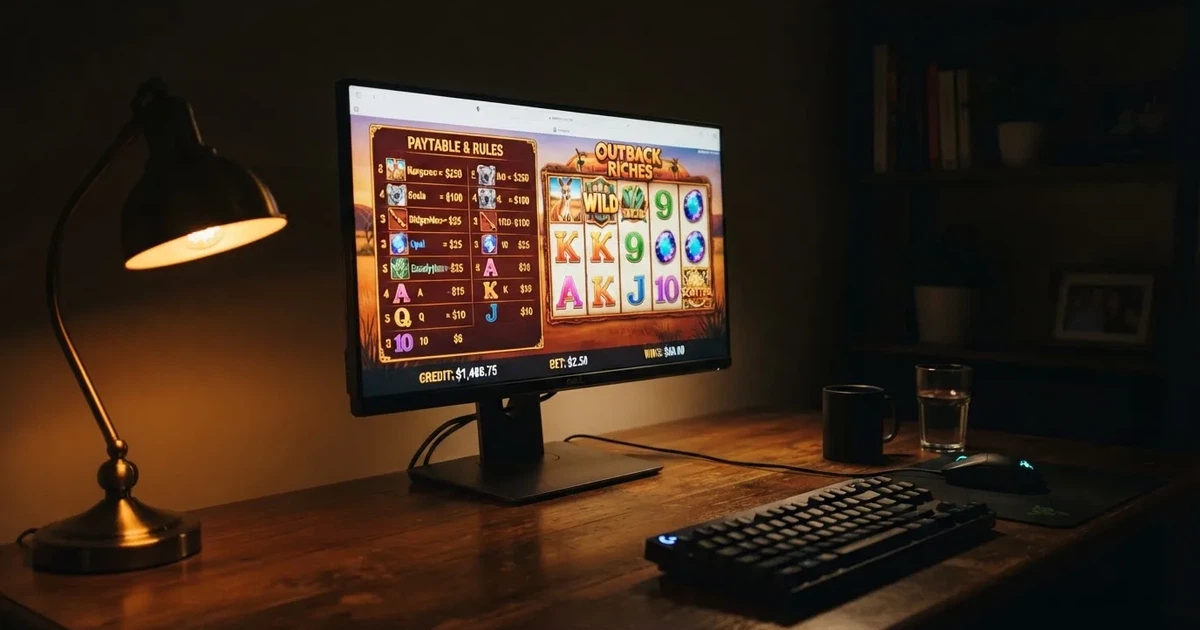
A person searching for a Platipus-branded online casino in Australia usually lands on a shortlist of offshore sites that market the studio’s slots to Australian visitors. Every one of those shortlists has the same problem in 2026, and it is not the slots themselves. No online casino — Platipus-branded or otherwise — may lawfully be offered to a person in Australia under the Interactive Gambling Act 2001, and the ACMA has been naming and blocking operators that try. A reader who already knows that is looking for a guide to the offshore end of the market; a reader who does not is being told, by the marketing on those sites, that the law is softer than it is. This page works from the law first and the offshore product second, in that order, because the order changes what any of the rest of it means.
Table of Contents
- What a Platipus-branded slot actually is
- How payments run on sites that carry Platipus slots
- What a bonus tied to a Platipus slot actually costs
- How Platipus slots run on a phone
- Paytable and mechanics: the maths underneath the reels
- How the ACMA has been treating offshore sites in 2026
- The top eleven brands the ACMA has named, and what each one means
- How the comparison of offshore sites is structured
- Where the law sits on this in 2026
- What a player can actually do if the offshore route does not fit
- The blocking rate: a band, not a single figure
- How the cost of clearing a Platipus bonus actually works
- Reading the ACMA register without misreading it
- The shape of the offshore shortlist in 2026
- What to do if a reader has already deposited
- Responsible gambling, briefly
- Frequently asked questions
What a Platipus-branded slot actually is
Platipus is a B2B slot studio, not a casino. Its own site describes it as an EU-based studio with more than 174 HTML5 slots and table games, available in all major fiat and crypto currencies and twenty languages, with eleven years of industry experience and more than five hundred operator customers. Its games are RNG-certified by iTech Labs for regulated markets including the UK, Italy, the AGCC, Denmark, the Isle of Man, Malta, Gibraltar, Sweden and Romania. The studio’s recent development has skewed toward Asian-oriented titles.

That profile matters because it sets what a reader can and cannot check. The studio’s own marketing tells a player that the maths underneath its reels is independently tested, and that the company has supplied games to operators in jurisdictions where the test certificate is the difference between legal and illegal operation. Neither of those claims, taken on their own, has any force in Australia. The studio has no Australian licence, and the operators that carry its games and target Australian customers have none either. The certification exists for the markets the studio actually serves.
The broader slot space around Platipus includes several studios an Australian reader will run into on the same offshore sites. Betsoft, founded in 2006, lists more than two hundred RNG titles — slots, table games, video poker and specialty — with RNG certification from Quinel and GLI and partnerships with more than five hundred operators across regulated markets in Europe, Scandinavia, Latin America and Africa. BGaming’s team has worked on games since 2012, the brand launched in 2018, and the catalogue now includes more than two hundred and fifty certified titles across video slots, video poker, lottery, card, scratch, crash and casual games. 1spin4win was founded in 2021 by a team with fifteen years of iGaming experience, holds a Curaçao licence and offers more than one hundred and ninety online slots built in HTML5 for low-bandwidth connections. The Australian context is the same for all of them.
Aristocrat is the local counterpoint. Aristocrat Leisure Limited is the largest gambling-machine manufacturer in Australia and the second-largest slot-maker worldwide behind International Game Technology, with administrative and research headquarters in the Sydney suburb of North Ryde. The company was founded in 1953 and listed on the ASX in 1996 under the ticker ALL; it reported 2026 revenue of A$6.30 billion and 7,400 employees. Its online real-money-gambling business was consolidated in April 2024 as Aristocrat Interactive, and its games appear in licensed Australian venues and in offshore sites that target Australians alike. The presence of an Australian-listed manufacturer in the offshore catalogue is not a sign the offshore product is legal; it is a sign the manufacturer sells its content on a global B2B basis.
How payments run on sites that carry Platipus slots
The deposit and withdrawal page on an offshore casino is the second thing a reader runs into after the bonus, and it is the place where the offshore end of the market stops sounding like a normal online product. Australian-licensed wagering has a defined set of allowed deposit methods: debit card, bank transfer, PayID and Osko, and BPAY. Credit cards, credit-related products and digital currency have been banned as payment for licensed online wagering since 11 June 2024, with penalties of up to A$247,500 for operators that breach the rule.

An offshore casino running Platipus slots to Australian customers accepts none of those restrictions. Crypto deposits and credit-card deposits are exactly the routes the licensed market has been closed off, and the offshore product is built around them. The withdrawal side is more important. Offshore sites do not connect to BetStop, the National Self-Exclusion Register that binds Australian-licensed online and phone wagering, so a self-exclusion registered in Australia does not stop an offshore account from being opened. There is no Australian complaints body, and no Australian recourse if a withdrawal is refused or a balance sits in an account after a blocking request has gone through. H2 Gambling Capital’s 2025 report estimates Australians lose about A$3.9 billion a year to illegal gambling sites, and that the share of gambling going through legal channels fell from 74% in 2021 to 64%.
That number is the closest thing to a price tag for the offshore product. The licensed bookmakers and lotteries are not perfectly frictionless, but they sit inside a complaint and recourse regime; the offshore sites are estimated to be taking roughly A$3.9 billion from Australians with none of that regime behind them.
What a bonus tied to a Platipus slot actually costs
The bonus market around Platipus slots is built on three structures, and the structures are the same on every offshore site that carries the studio. A deposit-gated welcome package ties free play to the size of the first deposit, with a wagering multiple that has to be cleared before any winnings withdraw. A no-deposit bonus gives a smaller amount of free play in exchange for an account opening, almost always with a higher multiple and a maximum cashout cap. A free-spin bundle attaches a fixed number of spins to a specific Platipus title, with the spin value set low and any win rolled into a bonus balance that has its own clearance condition.
Each of those structures sits on top of a slot with a house edge. A Platipus slot’s published RTP, where the studio publishes it, will typically sit in the mid-90s; the house keeps the rest. The expected cost of clearing a bonus is the required turnover times one minus the RTP of the game being played. That is an average over many spins under stated assumptions, not a forecast for any single session. What it does is put a number on the bonus: the offer is not “free money” minus the friction of clearing it, it is a turnover requirement against an underlying negative-expectancy game. The bigger the multiple and the lower the RTP of the title the spins land on, the larger that number is, and the more the bonus is worth to the house than to the player.
A reader who has only ever seen the marketing will not have met that arithmetic. The bonus page of an offshore site does the opposite work — it presents the headline number and hides the clearance cost behind a link to the terms. A reader who wants the real comparison has to put the multiple, the eligible games and the RTP of the game they would actually play side by side, and the result rarely matches the page that sold the offer.
How Platipus slots run on a phone
The technical question a mobile reader asks is whether the same game behaves the same way in a phone browser as on a desktop. Platipus is HTML5-native — that is the studio’s own stack — and the slots run in a mobile browser without a download step on most modern devices. The honest limitation is not the software but the connection: on a low-bandwidth mobile network, the load time before the first spin can stretch, and a session interrupted by a dropped connection mid-bonus is a session that has to restart the wagering clock at the operator’s discretion.
No Australian-licensed online casino app exists for casino games, because the games are not licensable. The browser route is the only route the law allows — and again, the law does not allow it. The mobile experience of Platipus-branded slots exists in practice on the offshore sites that carry them, with the caveats above, and that is the whole story on that side.
Paytable and mechanics: the maths underneath the reels
Platipus’s catalogue is more than 174 titles across slots and table games. The studio’s published RTPs sit in the ordinary range for modern HTML5 video slots; the studio itself does not publish a single aggregate figure across the catalogue. A reader who picks a specific title — for instance, a slot by a sister studio with a published RTP — gets a real number; a reader who treats “Platipus slots” as a single product gets a marketing line.
The comparison is useful on a sister title. Betsoft’s slot Good Girl Bad Girl 2 has a published RTP of 96.22%, “Very High” volatility and a 15.59% hit rate, played on five reels and twenty paylines. Betsoft’s The Slotfather, live since 13 December 2012, has a published RTP of 95.69%, “Medium” volatility and an 8.17% hit rate on five reels and thirty paylines. Those are not Platipus numbers, but they sit on the same offshore sites and under the same bonus structures, and they show the kind of spread a reader should expect: RTP in the mid-90s, volatility classes that change the experience of clearing a wagering requirement, and hit rates that say how often a spin lands any return at all.
The practical point is that the bonus clearing arithmetic depends on the specific game. A high-volatility title with the same RTP clears slower in expected time because the variance is higher; a low-volatility title with a slightly lower RTP clears faster. The bonus page does not usually disclose which.
How the ACMA has been treating offshore sites in 2026
The ACMA is the Australian Communications and Media Authority, and its job under the Interactive Gambling Act 2001 is to investigate, formally warn and direct Australian internet service providers to block illegal online gambling services. As of June 2026, the ACMA reports that 1,751 illegal gambling and affiliate marketing websites have been blocked since the first blocking request in November 2019, and that more than 230 unlicensed gambling services have left the Australian market since enforcement was strengthened in 2017. In the round reported on 26 June 2026, the ACMA asked Australian ISPs to block twelve more illegal gambling websites: 7Signs, ChromaBet, Donbet, Duospin, Freshbet, Slots Gem, Jacks Club, Lucky Start, Pointsbetz, Spinrise, Vinyl Casino and Wildsino.
The blocking number is the long arc; the formal warnings are the per-brand trail. The ACMA’s published register lists operator names, the date the warning was issued and the brand the warning covered, and the same operator often surfaces more than once as it rebrands. That trail is the closest thing the Australian public has to a current list of offshore sites targeting Australians with Platipus and other slots, and it grows by the month. The blocking rate is the rate at which the ACMA asks ISPs to take a site offline, and it is the only arithmetic the page can do without inventing a figure: it is the count of blocked sites divided by the number of months since the first blocking request in November 2019, and the result is a band rather than a single figure because the cadence has not been even.
The Northern Territory Racing and Wagering Commission regulates fifty-two of Australia’s online bookmakers, including Sportsbet, Bet365 and Ladbrokes, which are licensed in the Territory for tax reasons; the commission has no full-time staff and meets once a month in Darwin. That is the body that does the licensing on the licensed side, and its thinness is part of the context for why the offshore market has kept growing.
The top eleven brands the ACMA has named, and what each one means
Eleven brands surface repeatedly on shortlists of offshore casinos that market Platipus-branded slots to Australian visitors. None of them is licensable in Australia; all of them have been the subject of a formal ACMA warning. They are not a ranking and not a recommendation — they are the brands the ACMA itself has named. The order below is the order they appear in the ACMA’s published register.
RocketPlay
The ACMA issued a formal warning to Pulsup Ltd over RocketPlay in March 2026. RocketPlay had already been the subject of an earlier formal warning to Dama N.V. in May 2022, which covered six casino brands including Rocketplay. The operator reappears under a different corporate name on the same kind of product. A reader who sees the brand on an offshore shortlist in 2026 is seeing a brand the ACMA has warned twice.
Level Up Casino
The ACMA issued a formal warning to Dama N.V. in May 2022 covering six casino brands, including Level Up. Level Up appears in Wazdan’s own catalogue listings as a partner site. The brand surfaces under a Dama N.V. wrapper, which is the same corporate group that has surfaced under other names across the ACMA’s register.
Woo Casino
The ACMA issued a formal warning to Dama N.V. over Woo Casino in March 2025. Woo sits inside the same Dama N.V. group as RocketPlay and Level Up, and the pattern across the register is that one warning tends to cover several brands at once. The ACMA’s separate warning over Spirit Casino followed in May 2025.
Spirit Casino
The ACMA issued a formal warning to Dama N.V. over Spirit Casino in May 2025. Spirit’s product offering and the bonus structures around it follow the same offshore template as the other Dama brands, and there is no Australian licence behind any of it.
National Casino
The ACMA issued a formal warning to Consolutetish S.R.L. in July 2025 covering National Casino and Bizzo Casino. National Casino’s slot catalogue includes titles from Betsoft, Pragmatic Play and other studios that publish their own RTPs on a per-title basis. The studio pages are the cleanest source of RTP data on the games National Casino carries — not the casino’s own product page.
Bizzo Casino
Bizzo Casino was the subject of the Consolutetish S.R.L. warning in July 2025, and had earlier been the subject of a 2022 formal warning to TechSolutions (CY) Group Limited and TechSolutions Group N.V. Two warnings from two different corporate parents, on the same brand, are the ACMA’s clearest signal that rebranding the operator does not reset the underlying problem.
Ignition Casino
The ACMA issued a formal warning to Bamboo Media over Ignition Casino in July 2025. Ignition is the brand Australian-facing affiliate pages most often pair with Bovada in the same shortlist, and the pairing is a sign the underlying operator group has multiple brands in the market at once.
Instant Casino
The ACMA issued a formal warning to EOD Code SRL over Instant Casino in February 2025. The “instant” in the brand name refers to the advertised payout speed, which is the figure the affiliate pages tend to lead with. The actual settlement speed depends on the payment route the player uses, and there is no Australian regulator behind it if it does not arrive.
Jackbit
The ACMA issued a formal warning to Ryker B.V. over Jackbit and CasinOK in April 2026. Jackbit is a crypto-led brand; the crypto deposit route is exactly the payment method the licensed Australian wagering market closed off in June 2024.
Casino Intense
The ACMA issued a formal warning to Sterplay Holding Ltd over Casino Intense in April 2025. Casino Intense surfaces on the 1spin4win partner page alongside other brands; the UK Gambling Commission’s public register and other regulator listings show that the underlying operator has licensed operations elsewhere, but none of them is an Australian online casino licence.
Sky Crown
The ACMA issued a formal warning to Hollycorn N.V. over Sky Crown and Blue Leo casino services in September 2022. Sky Crown has been a long-running fixture of offshore shortlists, and the Hollycorn warning is the older end of the ACMA’s current register.
| Brand | ACMA action and date | Operator named by the ACMA | Subject support |
|---|---|---|---|
| RocketPlay | Formal warning, March 2026 (earlier May 2022) | Pulsup Ltd (2026); Dama N.V. (2022) | No data |
| Level Up Casino | Formal warning, May 2022 | Dama N.V. | Wazdan partner listings only |
| Woo Casino | Formal warning, March 2025 | Dama N.V. | No data |
| Spirit Casino | Formal warning, May 2025 | Dama N.V. | No data |
| National Casino | Formal warning, July 2025 | Consolutetish S.R.L. | Betsoft, Pragmatic Play and other studio listings only |
| Bizzo Casino | Formal warning, July 2025 (earlier 2022) | Consolutetish S.R.L. (2025); TechSolutions (2022) | No data |
| Ignition Casino | Formal warning, July 2025 | Bamboo Media | No data |
| Instant Casino | Formal warning, February 2025 | EOD Code SRL | No data |
| Jackbit | Formal warning, April 2026 | Ryker B.V. | No data |
| Casino Intense | Formal warning, April 2025 | Sterplay Holding Ltd | 1spin4win, UK Gambling Commission and other regulator listings only |
| Sky Crown | Formal warning, September 2022 | Hollycorn N.V. | No data |
The table is the ACMA’s own list; it is not a ranking. A reader using it to choose where to play is using it as a guide to the brands the regulator has acted against, not a guide to where the games are safe.
How the comparison of offshore sites is structured
A shortlist that compares offshore casinos carrying Platipus-branded slots has to make a choice the licensed Australian market never has to. The licensed market has one filter that does almost all of the work: is the operator licensed in Australia, yes or no. For an offshore site targeting Australians the answer is always no, and the shortlist has to fall back on secondary criteria.
The criteria that do show up on these shortlists, in the order they tend to appear, are: bonus size, number of free spins, wagering multiple, deposit and withdrawal methods including crypto support, advertised payout speed, and the size of the game catalogue. None of those criteria is a substitute for the licence filter. A bonus headline of A$5,000 plus 200 free spins against a 50x wagering multiple on a slot with a 95% RTP is, in expected-loss terms, a price tag the player is paying rather than a benefit the player is receiving; an advertised payout of “instant” through a payment route that requires three extra verification steps before the first withdrawal is “instant” only against the verification clock.
The shortlist’s honest version puts the ACMA warning at the top, not the bonus size, and the offshore comparison becomes mostly a comparison of how many warnings each brand has had, how recently, and whether the same operator has surfaced under more than one corporate name. A shortlist that orders by bonus size is reading the marketing.
Where the law sits on this in 2026
The Interactive Gambling Act 2001, strengthened by the Interactive Gambling Amendment Act 2017, makes it an offence to provide online casino games, online pokies and in-play betting to a person in Australia. No state or territory licences them. What is licensable is wagering on races and sport placed before the event, lotteries and keno — in practice licensed by the Northern Territory.
The ACMA is the regulator that enforces the prohibition. Its three main tools are formal warnings to the operator, blocking requests to Australian ISPs, and referrals that lead services to leave the Australian market entirely. As of June 2026, 1,751 websites have been blocked since November 2019, and more than 230 unlicensed services have left the market since 2017. The individual player is not prosecuted — the IGA targets the provider — but an offshore site gives no Australian consumer protection, no complaints body and no recourse if a withdrawal is refused, and the site can be blocked with a balance still on it.
The Interactive Gambling Amendment (Gambling Reform) Bill 2026 passed Parliament on 19 August 2026. Its advertising and inducement measures commence 1 January 2027 — law with a start date, not yet in force on a 2026 page. The change is real and it is close, but the law a reader meets today is the 2001 Act plus the 2017 amendments, and the offshore product is illegal under that law today.
Minimum age is 18.
What a player can actually do if the offshore route does not fit
The legal alternatives in Australia are not a Platipus product, because Platipus is not a licensable Australian online casino game. The licensed alternatives are: wagering on races and sport with the NT-licensed bookmakers, lotteries and keno in the relevant state or territory, and licensed land-based pokies and table games in clubs, pubs and casinos. None of those is the same product as a Platipus slot.
Player protection sits on top of those alternatives. BetStop, the National Self-Exclusion Register, has been live since August 2023 and binds Australian-licensed online and phone wagering services. An offshore casino is not connected to it, which is why a self-exclusion registered in Australia does not stop an offshore account from being opened. The National Gambling Helpline is 1800 858 858, free and 24/7, with chat at Gambling Help Online. State and territory gambling support services sit alongside the national line.
Payments: for licensed Australian wagering, the legal deposit routes are debit card, bank transfer, PayID and Osko, and BPAY. Credit cards, credit-related products and digital currency have been banned since 11 June 2024, with penalties up to A$247,500 for operators. A site that asks an Australian for a credit card or a crypto deposit is, by that fact alone, operating outside the Australian rules.
Tax: gambling winnings of a recreational player are not assessable income under section 6-5 of the ITAA 1997, and losses are not deductible, unless the person carries on a business of gambling. The tax position of a recreational player on the licensed or the offshore side is the same; the difference is that the licensed side has a regulator behind it and the offshore side does not.
The blocking rate: a band, not a single figure
The blocking rate is the ACMA’s published count of blocked sites, divided by the months since the first blocking request in November 2019. The result is a band rather than one number, because the ACMA does not block sites on a calendar — it asks ISPs to block them in rounds, and the rounds have varied in size and frequency.
The headline totals are fixed: 1,751 websites blocked since November 2019, twelve added in the round reported on 26 June 2026 alone. The arithmetic yields an average that is informative without being precise: across roughly eighty months from November 2019 to June 2026, the average is in the low twenties of sites per month. That is the band the page can state without inventing a number. The actual monthly figure has been much higher in some months and much lower in others. A reader who wants the current month’s count has to check the ACMA’s published register; the long-run average is the only number the page can carry honestly.
How the cost of clearing a Platipus bonus actually works
A worked example keeps the arithmetic honest. Suppose an offshore site offers a 100% deposit match up to A$500 with a 40x wagering multiple on the bonus amount, and the player deposits A$500, claims A$500 in bonus funds, and plays a Platipus slot with a published RTP of 96%. The required turnover is the bonus amount times the wagering multiple: A$500 × 40 = A$20,000 of bets that have to be placed before any winnings can be withdrawn. The expected loss on that turnover, at the slot’s stated RTP, is A$20,000 × (1 − 0.96) = A$800. The bonus’s headline value of A$500 is, in expected-loss terms, an A$800 price tag against the player’s bankroll, before any variance runs in the player’s favour.
That number is an average over many spins, not a forecast. The same offer on a 95% RTP slot produces a higher expected loss; the same offer on a high-volatility slot produces a wider range of outcomes with the same average. A reader who treats the headline as the value and the multiple as a footnote has the comparison the wrong way round: the multiple is the price, and the headline is the number being priced.
Free spins work the same way, with the bonus amount replaced by the spin value times the number of spins. The wagering multiple on the winnings is the variable; the underlying game and its RTP are the rest of the arithmetic.
Reading the ACMA register without misreading it
The ACMA’s register of formal warnings is the closest thing to a public list of offshore operators that have crossed the line in Australia. It has three quirks a reader should know before treating it as a ranking.
First, a formal warning is not a prosecution. The ACMA issues warnings as part of its enforcement toolkit; a brand on the register has been named, not necessarily convicted in any other forum.
Second, the register records the operator the ACMA believes is behind the brand, not always the corporate group that ends up in court if the matter escalates. The Dama N.V. warnings cover six brands at a time; the Hollycorn N.V. warning covers two. The pattern is one operator, many brands.
Third, the register does not include every site that targets Australians. It includes the ones the ACMA has investigated and warned, and it grows when the ACMA’s investigations close. A brand not on the register today may be on it next month; a brand on the register has already been named.
A reader using the register to make a decision is using it as a source of names, not a source of safety. The register does not certify any offshore site as safe to play; the law does not permit any offshore site to be offered to a person in Australia at all.
The shape of the offshore shortlist in 2026
Eleven brands are the ones the ACMA has named. A reader who sees any of them on a 2026 shortlist is seeing a brand the regulator has already acted against. A reader who sees a brand not on the list is seeing a brand the regulator has not yet named, and that is the whole difference.
The decision the page is built around is not “which of these eleven is the best”. None of them is licensable in Australia, and the comparison the page can honestly run is the comparison the ACMA’s register supports: which operator has been named how many times, by which corporate parent, on what dates. That comparison has a single useful answer, which is that the ACMA’s register is the authoritative source for what is and is not currently being targeted, and any shortlist that does not start from the register is reading the marketing rather than the law.
What to do if a reader has already deposited
For a reader who has already deposited with one of the brands above, the practical sequence is the same as for any offshore account where the regulator has moved to block the operator. The block can come with a balance still on it; the operator has no Australian obligation to return it; the player has no Australian complaints body to escalate to. The licensed alternatives are the same ones above: NT-licensed bookmakers for wagering, lotteries and keno in the relevant jurisdiction, and licensed land-based venues for casino-style play. Self-exclusion through BetStop covers the licensed side and not the offshore side; the National Gambling Helpline at 1800 858 858 is the place to start if the offshore side has become the larger part of the gambling.
Responsible gambling, briefly
Gambling Help Online is the national chat and counselling service, free and 24/7. The phone number is 1800 858 858. BetStop, the National Self-Exclusion Register, has been live since August 2023 and binds Australian-licensed online and phone wagering. State and territory services sit alongside the national line. The licensed alternatives are the only ones these services connect to; an offshore account is not covered, and that is part of the cost.
Frequently asked questions
Is Platipus legally available to players in Australia?
No online casino may lawfully be offered to a person in Australia under the Interactive Gambling Act 2001, and that includes any site carrying Platipus-branded slots. The studio itself is licensed for other markets, not Australia, and the operators that target Australian customers with its games do so offshore and outside the Australian regime. The ACMA enforces this by issuing formal warnings and directing Australian ISPs to block sites.
What kinds of games does Platipus make?
Platipus is a B2B slot studio with more than 174 HTML5 slots and table games, RNG-certified by iTech Labs for markets including the UK, Italy, the AGCC, Denmark, the Isle of Man, Malta, Gibraltar, Sweden and Romania. The studio’s recent development has skewed toward Asian-oriented titles. Its games are not licensed for the Australian online casino market.
Are Platipus games offered at land-based venues in Australia?
Platipus is an online slot studio, not a land-based machine manufacturer, and its titles do not appear on the floor of Australian clubs, pubs or casinos. The Australian land-based market is supplied by manufacturers with state and territory approvals, including Aristocrat Leisure, the largest gambling-machine manufacturer in Australia and the second-largest slot-maker worldwide. The licensed Australian online casino market does not exist; the offshore market that carries Platipus slots is not a licensed alternative to it.
How can Australians check whether a Platipus title is fair before ever considering play?
The studio’s own site states that its games are RNG-certified by iTech Labs for a list of overseas regulated markets, and sister studios such as Betsoft publish per-title RTPs and volatility classes that a reader can check directly on the studio’s game pages. Neither of those checks converts an offshore site into a legal one for an Australian player. The Australian consumer-protection regime does not extend to offshore operators, and there is no Australian complaints body that will act on a refused withdrawal from an offshore site.
Why do offshore sites keep advertising Platipus games to Australian visitors?
Because the offshore market is large and the ACMA’s enforcement is real but not instantaneous. H2 Gambling Capital’s 2025 report estimates Australians lose about A$3.9 billion a year to illegal gambling sites, and the share of gambling going through legal channels fell from 74% in 2021 to 64%. The ACMA blocks sites in rounds and warns operators, and the operators rebrand and resurface. The advertising spend reflects the size of the offshore market, not the legality of the product.
What should an Australian do if they see a Platipus game promoted by an unlicensed site?
The legal alternatives in Australia are wagering with NT-licensed bookmakers, lotteries and keno in the relevant jurisdiction, and licensed land-based venues for casino-style play. Gambling Help Online is the national chat service, free and 24/7; the phone number is 1800 858 858. BetStop, the National Self-Exclusion Register, binds Australian-licensed online and phone wagering. None of those services connect to an offshore casino account, which is part of what makes the offshore product different from the licensed one.