

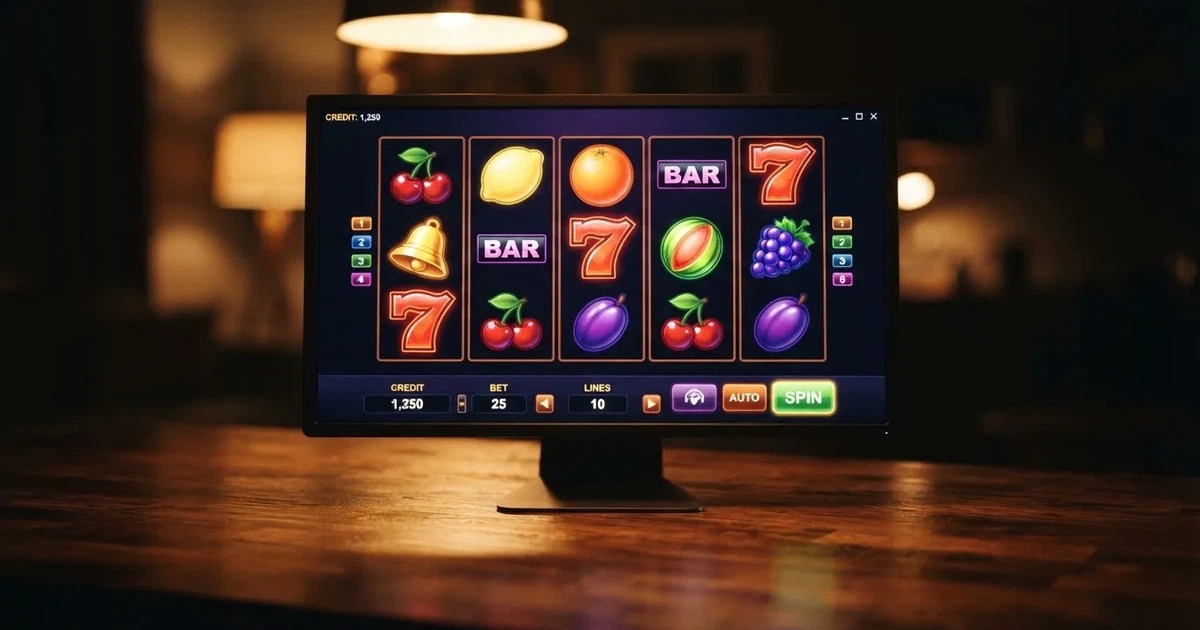
Pokies tips and tricks: what changes the outcome and what doesn’t
The phrase “pokies tips and tricks” promises something the machine never delivers: a way to tilt a random game in the player’s favour. This page goes through what genuinely happens inside an Australian pokie, why almost every “trick” listed on the open web is either a description of paytable features or a path to an offshore site that the ACMA has formally warned about, and where the only real choices a player has — bet size, volatility, machine selection, session length — actually sit. The aim is to replace the marketing words with the arithmetic the marketing words leave out.

Current as of 31 October 2026 · verified against the Australian Communications and Media Authority register and the Interactive Gambling Act 2001.
Table of Contents
- How an Australian pokie actually decides what you see
- Why “tips to win pokies” articles keep selling the same few ideas
- Dragon Link, and why it gets named more than any other title
- The legal situation for Australians who want to play pokies
- What BetStop does, and what it does not
- The mechanics most people get wrong
- How to read a paytable, and what it actually tells you
- What about bet-sizing and bankroll?
- What offshore pokies tips pages actually sell you
- The blocking rate, in plain numbers
- Operators the ACMA has acted against
- Responsible play in Australia
- Where the math leaves a player
- The three things a “tip” can change, honestly
- Where the noise ends
- Frequently asked questions
How an Australian pokie actually decides what you see
Every modern pokie, land-based or online, runs on a random number generator (RNG) — a piece of software that produces a fresh string of numbers thousands of times a second, even when nobody is playing. The reels, the symbols and the paylines are a visual rendering of those numbers, drawn the instant you press spin. Each spin is independent: the machine has no memory of the last result, the time of day, how long you’ve been sitting there, or whether you almost hit the bonus on the previous round. The combination of symbols on the screen for any one spin is one random sample out of every combination the game’s maths allows, weighted by the symbol distribution the developer chose. That is the entire mechanism.
Where Australian law adds a layer is in the return-to-player, or RTP. Each state and territory sets a legal floor: 85% in New South Wales, the Northern Territory and Queensland, 87% in the Australian Capital Territory and Tasmania (87.5% in South Australia, 87% at Crown Melbourne in Victoria, and 90% in Western Australia). Those figures mean the machine is required to return, on average across its full design life, at least that many cents of every dollar it takes in. Anything above 85% is the developer’s choice; the regulator only sets the floor. Across 2020–21 Australians bet almost A$150 billion through these machines and lost A$12.18 billion on them — a realised margin well above any individual machine’s theoretical house edge, because the realised margin includes the developer margin, the operator margin and the GST.

A “tip” that tells a reader to wait for a “hot” machine, or to switch machines after a loss, treats the RNG as if it were a streak. The RNG has no streaks. The only thing that changes between one machine and the next is the game design — its volatility, its bonus-feature frequency, and the symbol weighting that produces the long-run RTP.
Why “tips to win pokies” articles keep selling the same few ideas
A reader who spends ten minutes on a search results page about pokies strategy meets the same handful of patterns recycled across dozens of pages. They are worth naming in plain language, because each one is either a description of paytable facts or a market mechanism the marketing does not name as such.
The first is “bet max to unlock all paylines.” On some titles, betting below maximum does reduce the number of lines that count a winning combination, but the line configuration is part of the game’s published math. The number printed on the help screen is the number that pays; what betting max changes is the size of the prize on those already-winning lines, not the probability of hitting one.
The second is “play volatile games for bigger wins.” That sentence is describing two real things — the hit frequency and the prize distribution — but it does not give the reader any way to tell which game sits where. Volatility ratings are not printed on the cabinet in a form the player can verify. They live in the developer’s math sheet and are usually described as low, medium or high without a number attached. Picking a high-volatility title does raise the variance of the session: longer losing runs, larger occasional prizes. It does not raise the long-run RTP.
The third is “look for machines in busy areas.” That claim has a long history in land-based marketing. It is not supported by the random number generator; the cabinet in the corner has the same RNG as the cabinet by the bar. What busy areas do affect is how often each machine is played, and a higher play rate produces more small random outcomes, both wins and losses, per hour.
The fourth — the one most worth naming — is “play at offshore sites for better RTPs.” That sentence moves the reader out of a regulated market and onto a server that the ACMA has, across the brands discussed below, formally warned for offering prohibited services to Australians. The RTP claim attached to that advice is a marketing figure from a game developer’s portfolio page, not a measured outcome on that specific site, and the player has no Australian complaints body to go to if it isn’t honoured. The rest of this page treats that move for what it is.
Dragon Link, and why it gets named more than any other title
Dragon Link comes up disproportionately often in tips pages because it is a real and unusually successful land-based series. It is developed by Aristocrat, released first to Australian venues, and it runs the “hold-and-spin” mechanic — a feature round where the player locks symbols on the reels and respins the rest to fill the bonus meter, with the four jackpots (Mini, Minor, Major, Grand) paid out for full meter collections. That mechanic produces the kind of session-level drama tips pages describe: long quiet stretches, then a feature round where the visible prize can climb quickly. The volatility is high.
The tips attached to Dragon Link specifically — bet per line, line count, denomination — are paytable facts dressed up as advice. The hit frequency of the hold-and-spin feature, the four jackpot tiers and the per-line cost of each denomination are all on the machine’s help screen. What does not change with a “trick” is the long-run RTP, the symbol weighting, or the probability of hitting the Grand jackpot on any individual spin.
A second reason the title gets named so often is the offshore market. The Dragon Link brand is widely described on offshore casino sites that the ACMA has formally warned. Those pages borrow Aristocrat’s game imagery, repeat the four-jackpot mechanic in familiar language and route the reader to a deposit page. Tips pages that lift this content without naming it for what it is — marketing copy on a brand the ACMA has acted on — are how the misleading “tricks” find their readers.
The legal situation for Australians who want to play pokies
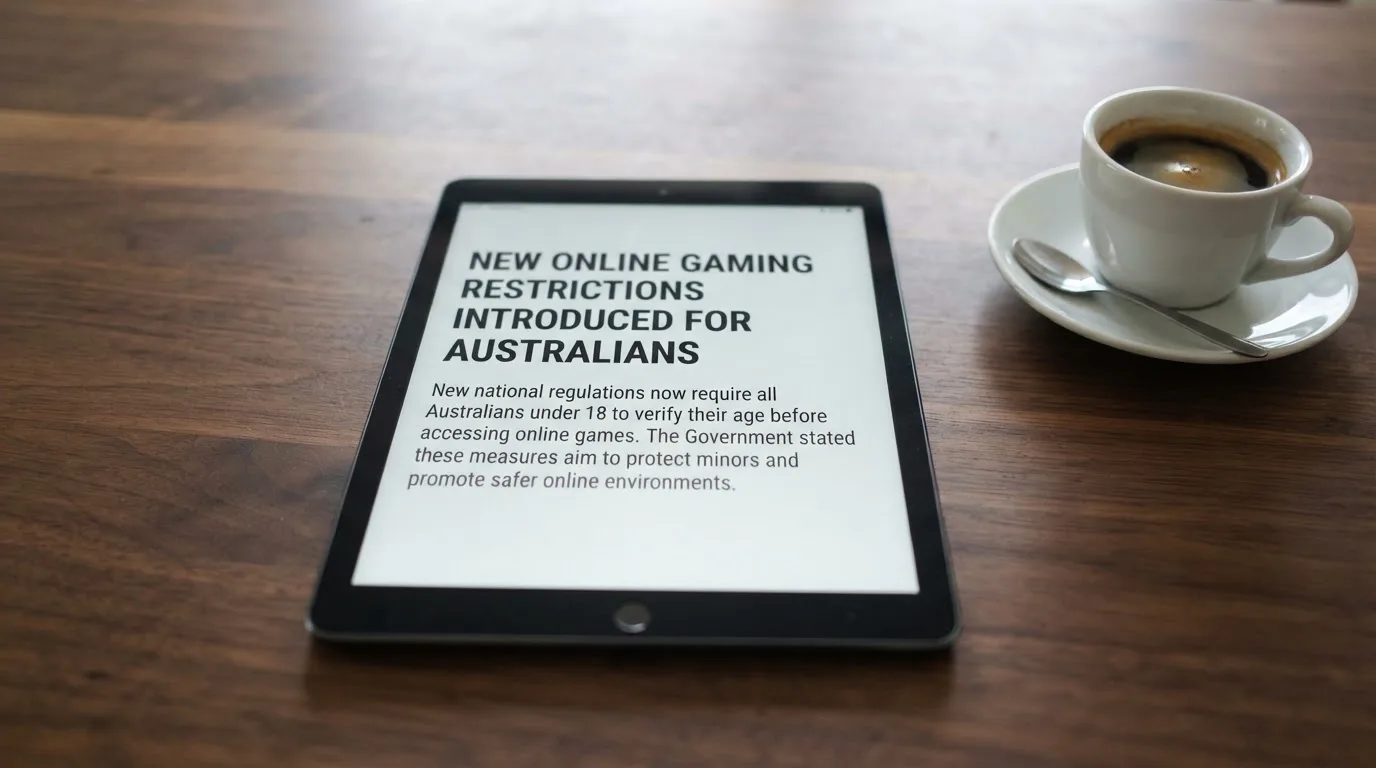
The Interactive Gambling Act 2001, strengthened by the Interactive Gambling Amendment Act 2017, makes it an offence to provide online casino games, online pokies or in-play betting to a person physically in Australia. No state or territory licenses online casinos. Lotteries and keno are licensed state by state; wagering on races and sport placed before the event is licensed, in practice, by the Northern Territory Racing and Wagering Commission, which the ABC reported in April 2026 has no full-time staff and meets once a month in Darwin, but which nonetheless regulates 52 of Australia’s online bookmakers, including Sportsbet, Bet365 and Ladbrokes. That licence covers wagering, not casino games. No equivalent licence exists for online pokies.
Enforcement is the ACMA’s job. The regulator can investigate, issue formal warnings and direct internet service providers to block illegal sites. By June 2026, a total of 1,751 illegal gambling and affiliate marketing websites had been blocked since the first blocking request in November 2019, and more than 230 unlicensed services had left the Australian market since 2017. A round reported on 26 June 2026 added 12 more names to the block list — 7Signs, ChromaBet, Donbet, Duospin, Freshbet, Slots Gem, Jacks Club, Lucky Start, Pointsbetz, Spinrise, Vinyl Casino and Wildsino. The individual player is not prosecuted — the IGA targets the provider — but a blocked site takes the player’s balance with it, and the operator is under no Australian consumer-protection duty to return it.
The Interactive Gambling Amendment (Gambling Reform) Bill 2026 passed Parliament on 19 August 2026. Its advertising and inducement measures commence on 1 January 2027, which means a page like this one is written under the law as it stands before that start date. The prohibitions above are not affected by the new bill; its bite is in how Australian-licensed operators may advertise and the inducements they may offer.
What BetStop does, and what it does not
BetStop, the National Self-Exclusion Register, has been live since August 2023. It binds Australian-licensed online and phone wagering services — every operator that holds a wagering licence under the Interactive Gambling Act is required to honour an exclusion. An offshore casino is not connected to it, which is the practical side of the law: registering for BetStop closes no door on a site the ACMA has formally warned about.
For readers who want a backstop, the National Gambling Helpline on 1800 858 858 is free, available 24/7 and connects to Gambling Help Online for chat support. Those services are independent of any operator and exist in part because the offshore market offers nothing equivalent. Self-exclusion from venues is a separate mechanism run by each state’s gaming authority.
The mechanics most people get wrong
Three points come up often enough to be worth covering in their own right.
Random number generator ≠ streak detection. A “machine is due” is the most common misreading on tips pages. Each spin samples a fresh number from the RNG; the previous spin’s outcome provides no information about the next. The exception — and it is a real one, though it does not let the player win — is that progressive jackpots can only be hit at a certain bet level, and a player playing below that bet is excluded by design. That is not the machine being “cold”; it is a game rule printed in the help screen.
Bet size changes prizes, not odds. Doubling the bet doubles the size of any line win, because the prize is denominated in multiples of the line bet. What doubling the bet does not do is double the probability of hitting a line. The hit rate per spin, the bonus frequency and the long-run RTP are unchanged. The exception again is on machines where a max bet is required to qualify for the top jackpot; on those, dropping below max bet forfeits access to one prize tier, not the others.
Return-to-player is a long-run average, not a session outcome. The RTP figures in the preceding section are theoretical averages over tens of millions of spins. No single session will land on 85%, 87% or 90%. A 30-minute session of high-volatility Dragon Link can finish anywhere from well above the long-run number to substantially below it, and the long-run number is what the house edge is calculated against. The house always has an edge.
How to read a paytable, and what it actually tells you
The paytable — the help screen accessible from the game — is the only document on a pokie that says anything factual about the game. Three numbers on it matter.
The first is line count and minimum bet. The screen will tell you how many lines the game runs, what each line costs, and what the minimum total bet is to cover all lines. On games that gate the top prize behind a max bet, the screen will state this. Believing the screen on this point costs the reader nothing.
The second is the symbol distribution. Paytables publish a list of how each symbol pays at one coin, two coins, three coins, and so on. They do not publish the symbol weighting — the number of high-paying symbols versus low-paying symbols on each reel — and that weighting is what actually drives hit frequency. Without it, the published prize table is informative about prize sizes and silent about prize frequency.
The third is the RTP, where it is published. Some machines display it on the help screen; others do not, and the floor RTP for the jurisdiction is the lower bound. Above the floor, the actual figure is the designer’s choice and is not necessarily disclosed to the player. A reader who sees a high RTP claimed on a third-party page — and the offshore sites carry claims well above the Australian regulatory range — should treat the claim as marketing until the regulator or the designer publishes it.
What about bet-sizing and bankroll?
For a player who has decided to play, three numbers are worth working out before sitting down.
Total bankroll. Decide the loss a single session can absorb before it ends. AA regardless of what the reels show.
Bet size. A common rule of thumb is one to two per cent of bankroll per spin, on the assumption that the player wants to see roughly 100 spins at minimum bet before deciding to stop. On a high-volatility title that produces long losing runs, the bankroll needs to be larger; on a low-volatility title, smaller. No bet-size combination changes the house edge.
Session length. Set a clock. The longer the session, the closer the realised loss approaches the house edge. Two hours of low-volatility play and two hours of high-volatility play at the same bet size will produce different prizes; over a long session, both approach the same average loss per spin times the number of spins. The clock is the player’s tool.
None of this changes the long-run expectation. What it does is replace “win more” advice with “lose slowly” advice, which is the only form of advice the math actually supports.
What offshore pokies tips pages actually sell you
The advice on an offshore tips page usually starts the same way: a paragraph about RNG, a paragraph about volatility, then a recommendation to “play at” a specific operator with a deposit match attached. The recommendation is the product. The two paragraphs above it are recruitment copy.
Three facts are worth carrying about this pattern. First, the game developer whose math is being cited — Aristocrat for Dragon Link, for example — does not authorise offshore use of the title and has no relationship with the casino being recommended. The math being quoted is from the developer’s specification sheet; the casino is borrowing it. Second, the operator is typically registered offshore — Curaçao, the Seychelles, Costa Rica — and holds no Australian licence, which is why the ACMA can issue a formal warning without negotiating with a local counterpart. Third, any deposit method the operator offers will, by design, route around Australian payment controls. Credit cards, credit-related products and digital currency have been banned as payment for licensed online wagering in Australia since 11 June 2024, with penalties up to $247,500 for operators; an offshore site is unaffected, because it is not licensed. The legal deposit routes for licensed Australian wagering are debit card, bank transfer, PayID/Osko and BPAY, and a site asking an Australian for a credit card or crypto is operating outside the rules.
The Australian market share data makes the scale legible. H2 Gambling Capital’s 2025 report estimates that Australians lose about A$3.9 billion a year to illegal gambling sites, and that the share of gambling going through legal channels fell from 74% in 2021 to 64%. That is the size of the offshore market the tips pages serve.
The blocking rate, in plain numbers
Since the first ACMA blocking request in November 2019 to the round reported on 26 June 2026, a total of 1,751 illegal gambling and affiliate marketing websites had been blocked. That is the cumulative total the regulator publishes. The arithmetic behind it helps a player understand how fast the ACMA is catching up on illegal sites.
Across the roughly six years and seven months between November 2019 and June 2026, 1,751 sites were placed on the block list — an average rate of somewhere between 250 and 260 sites per year, with the figure varying band-to-band and round-to-round. The June 2026 round alone added 12 names. The pace per individual round has been lower than the long-run average across most months, because most enforcement effort is absorbed by formal warnings and by services leaving voluntarily; more than 230 unlicensed services had exited the Australian market since enforcement was strengthened in 2017.
The condition attached to the rate matters. The figure describes the number of distinct sites and affiliates added to the block list, not the number of offshore companies, and one company can run several brands on the same cashier. A consumer using a VPN can still reach a blocked site; the block applies to Australian ISP routing. A site blocked with a balance on it does not refund. The blocking rate is a measure of how often the regulator publishes a new round, not a measure of how many Australians are still placing bets offshore.
Operators the ACMA has acted against
What follows is not a ranking and not a recommendation. Each of these brands is named because the ACMA itself issued a formal warning over it under the Interactive Gambling Act 2001. The only purpose of naming them is to give a reader who has met one of them on a tips page the regulator-side fact that establishes what it is.
| Brand | ACMA action | Operator named by the ACMA | Subject support |
|---|---|---|---|
| RocketPlay | Formal warning under the IGA | Pulsup Ltd, RocketPlay, March 2026; earlier Dama N.V., May 2022 | — |
| Level Up Casino | Formal warning under the IGA | Dama N.V., May 2022 | Listings: BGaming |
| Woo Casino | Formal warning under the IGA | Dama N.V., March 2025 | — |
| Spirit Casino | Formal warning under the IGA | Dama N.V., May 2025 | — |
| National Casino | Formal warning under the IGA | Consolutetish S.R.L., July 2025 | Listings: en.wikipedia.org |
| Bizzo Casino | Formal warning under the IGA | Consolutetish S.R.L., July 2025; earlier TechSolutions (CY) Group Limited and TechSolutions Group N.V., 2022 | — |
| Ignition Casino | Formal warning under the IGA | Bamboo Media, July 2025 | — |
| Instant Casino | Formal warning under the IGA | EOD Code SRL, February 2025 | — |
| Jackbit | Formal warning under the IGA | Ryker B.V., April 2026 | — |
| Casino Intense | Formal warning under the IGA | Sterplay Holding Ltd, April 2025 | Listings: the ABC · the ACMA · Crown Melbourne |
| Sky Crown | Formal warning under the IGA | Hollycorn N.V., September 2022 | — |
Online casino games and online pokies cannot be licensed anywhere in Australia. Whatever licence any of these operators displays offshore — Curaçao, Anjouan, the Kahnawake territory, the Autonomous Island of Anjouan — it gives the operator no right to accept Australian players, and it gives the player no Australian consumer protection, no local complaints body and no recourse if a withdrawal is refused. The marketing pages that recommend these brands in tips articles are doing so under the marketing claim that a higher RTP sits behind the curtain; the ACMA’s case file is the regulator’s answer.
RocketPlay
The ACMA’s most recent action against this brand is the March 2026 formal warning to Pulsup Ltd over RocketPlay. The same brand was previously the subject of a May 2022 formal warning to Dama N.V. as part of a six-brand group that also covered Bambet, Dazard, Level Up, Wild Tornado and Cobra Casinos. The conclusion to draw is the one this page reaches for all eleven brands: an offshore licence is not an Australian licence, and a formal warning is what an offshore operator’s Australian business looks like from the regulator’s side.
Level Up Casino
Level Up appears in the May 2022 Dama N.V. warning alongside the other five brands in that group. Game-developer listings carry the title because it runs on licensed studio backends; that fact does not translate into an Australian right to play, and the formal warning is the explicit reason it sits on this list rather than elsewhere.
Woo Casino
Woo Casino was the subject of a fresh Dama N.V. formal warning in March 2025. It is the first of two post-2022 Dama N.V. warnings on this page; Spirit Casino is the second, four months later. Together they illustrate the ACMA’s pattern: the operator changes the brand name, the regulator names the underlying company.
Spirit Casino
Spirit Casino’s formal warning came in May 2025, against Dama N.V., and it confirms that the Dama N.V. portfolio is the ACMA’s repeat target. There is no Australian right being conferred by any offshore certification Spirit Casino holds.
National Casino
The July 2025 formal warning against Consolutetish S.R.L. over National Casino sits in the same regulatory file as Bizzo Casino. A 2024 prior action is what most readers will find when searching the brand name, and the 2025 file is what they should weigh.
Bizzo Casino
Bizzo Casino was previously the subject of a 2022 formal warning to TechSolutions (CY) Group Limited and TechSolutions Group N.V.; the July 2025 warning to Consolutetish S.R.L. is the second regulatory strike on the same brand name. The standard offshore argument that “it is a different entity” is what the 2025 warning names as untrue.
Ignition Casino
Ignition Casino was named in the July 2025 formal warning to Bamboo Media. The brand has offshore users; it does not have a regulator that protects them.
Instant Casino
EOD Code SRL received a formal warning over Instant Casino in February 2025. The brand surfaces in tips articles via the same marketing pipeline as the rest of the list, and the same regulatory answer applies.
Jackbit
Ryker B.V. received a formal warning over Jackbit in April 2026. The operator currently named by the ACMA has been on the regulator’s file for under a year at the time of writing; the underlying company is the lawful address for compliance with the IGA.
Casino Intense
Sterplay Holding Ltd received a formal warning over Casino Intense in April 2025. The brand is the same one that markets Australian-friendly tips articles; the regulator’s name for it is the same one above.
Sky Crown
Hollycorn N.V. is the company named by the ACMA in its formal warning over Sky Crown (alongside Blue Leo casino) — the record is the September 2022 publication. Hollycorn has been one of the ACMA’s repeat targets on this side of the regulator’s pipeline, and the marketing pages its brands support are not a substitute for the warning.
Responsible play in Australia
The two pieces of infrastructure that work for Australians are BetStop and the support lines. BetStop binds every Australian-licensed wagering operator. The National Gambling Helpline on 1800 858 858 is free and 24/7, with chat at Gambling Help Online; both routes are independent of any operator. Self-exclusion from physical venues is a separate mechanism run by each state’s gaming authority and is independent of the offshore market. State-by-state counselling services are listed on the Gambling Help Online site and route into the same helpline.
For readers whose bankroll math, above, has produced a figure they are uncomfortable with, the next move is the helpline, not a “better” tips article. There is no better tips article.
Where the math leaves a player
A session on a pokie is a sequence of independent random events whose expected loss per spin equals the bet times one minus the long-run RTP. On an 87% machine, a A$1 bet is expected to cost about A$0.13 per spin across enough spins to converge. In a 30-spin minute, that is about A$3.90 of expected loss per minute on the average; realised loss in any specific minute will sit somewhere around that figure, sometimes well above and sometimes below. Across a two-hour session, the realised loss will be much closer to the theoretical one. The longer the session, the closer the realised loss converges on the house edge; that is the math the tips pages don’t print.
What this means in practice is that bet sizing, game selection and clock-watching affect how fast the loss accumulates, not whether the loss accumulates. They make a session cheaper per minute, or longer per bankroll, or both — and they do not change the average. The house always has an edge.
The three things a “tip” can change, honestly
Three levers on a pokie session genuinely work; none of them changes the odds.
Lever one: the number of lines covered. On games with adjustable lines, betting below maximum excludes line configurations from the payoff calculation. This is a game-design rule, not a tip, and the help screen describes it.
Lever two: the volatility tier. A reader can choose a lower-volatility game to see more frequent small wins, or a higher-volatility game to see rarer larger wins. The long-run RTP is the same across a wide range of volatility titles; the session feel is the thing that changes.
Lever three: the clock and the wallet. A reader can pre-commit to a time limit, a loss limit and a stake size before sitting down. This is the only lever that genuinely changes the outcome — because it stops the session before the long-run average has time to converge. It is also the only lever the marketing copy never sells, which is a tell about what the marketing copy is selling.
Where the noise ends
A tips page that promises “secrets” or “tricks” is selling one of two things: a description of paytable facts dressed up as advice, or a route to an offshore operator. The first is harmless and the reader can get the same facts from the help screen on any machine. The second is the ACMA’s formal-warning list, which is what the second half of this page is built from.
For a reader who wants to play pokies in Australia, the only playing field the regulators recognise is in person at a licensed venue — clubs and pubs in NSW, casinos in each capital city, the licensed clubs in WA’s casino, the state-by-state licensed machines in every other jurisdiction. Outside that, the pages that look like advice are a sales channel. The math on the screen is a marketing budget. The math at the regulator is a formal warning.
Frequently asked questions
Do any genuine tips or tricks change the odds on a pokies machine?
No. Every spin on a modern pokie is sampled independently from a random number generator; the machine has no memory of previous outcomes. What a player can change is the bet size, the number of lines covered and the game volatility — and what those change is the size and spread of possible prizes, not the long-run return the regulator sets.
What’s different about tips for a specific title like Dragon Link compared with pokies generally?
Dragon Link’s hold-and-spin feature and four-tier jackpot structure are paytable facts, not strategy. The hit frequency of the bonus round, the symbol weighting and the long-run RTP are fixed by Aristocrat’s game design. Tips articles that name a specific bet sizing for Dragon Link are describing denominational rules on the help screen, not a way to win more often.
Is there a legal way for an Australian to try out pokies strategies using licensed land-based venues?
Yes. Each state’s licensed venues — clubs and pubs in NSW, hotels and clubs in Victoria, the casino in each capital city — operate gaming machines under state-by-state regulation, with a legal minimum RTP between 85% and 90% depending on the jurisdiction. There is no equivalent Australian-licensed online channel; the Interactive Gambling Act 2001 prohibits online casino games.
How does bet size actually affect the odds on a typical pokies machine, if at all?
Doubling the bet doubles the size of any line win because prizes are denominated in multiples of the line bet. It does not change the probability of hitting a winning combination, and it does not change the long-run RTP. On machines where a max bet is required to qualify for a progressive, dropping below the maximum excludes one prize tier.
What do ‘tips to win pokies’ articles usually get wrong about how random number generators work?
The most common error is treating the RNG as if it had a memory — that a machine “is due” a win, that switching cabinets helps, or that the time of day affects outcomes. The RNG produces a fresh string of numbers with each spin, independent of every previous result. Tips articles that suggest otherwise are wrong; tips articles that use that wrongness to send a reader to an offshore site are doing something worse.