


What a spin at an offshore casino really costs an Australian in 2026
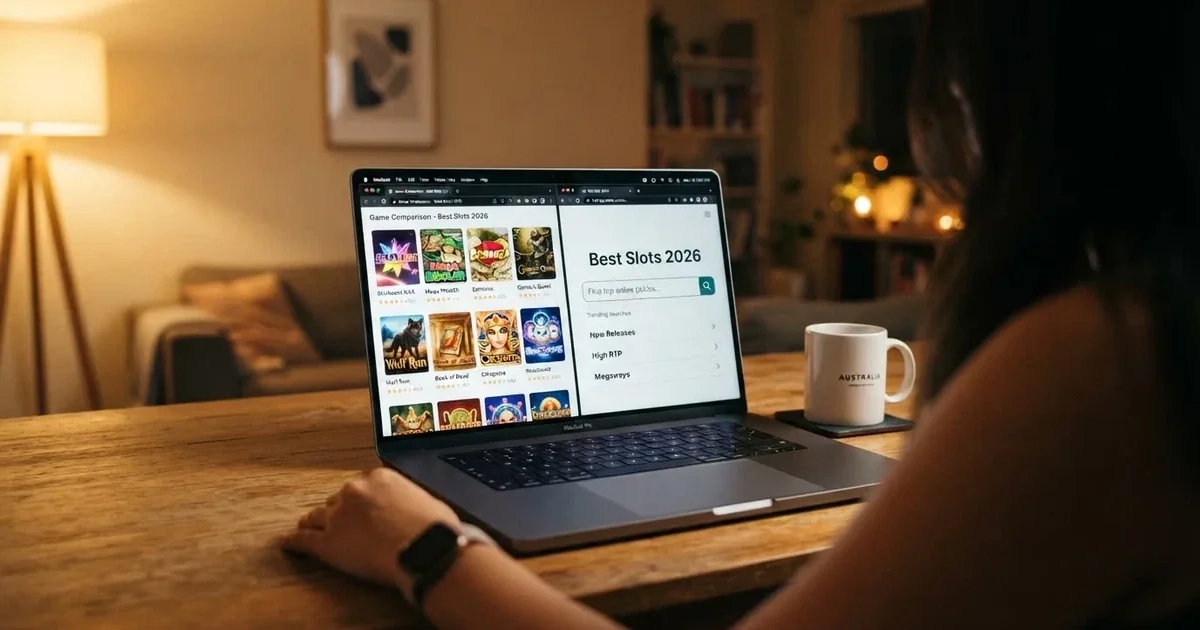
A player in Sydney searching for gambling casino sites and slots is looking for two things at once: somewhere to play online pokies for real money, and an honest read on whether any of it stands up in Australian law. The honest read is short. Every offshore site on this page operates under a formal warning from the ACMA, the Interactive Gambling Act 2001 makes their core product illegal to supply, and the only consumer protection standing between a player and a refused withdrawal is the brand’s own word. That is the spine of what follows — not an apology for the market, but an itemised look at what each offer costs the punter who takes it.
Current as of 8 November 2026; operator and licence claims checked against the ACMA’s formal warning register.
Table of Contents
- The cost of a slot spin — and what the marketing page never says
- Why a Bitcoin deposit does not turn an illegal site into a legal one
- What the ACMA has actually done to offshore slot sites
- What is actually licensed in Australia, and what that licence covers
- Consumer protection a player at an offshore site does not have
- Pricing it for the punter — the calculation the page is built around
- How an offshore slot site actually presents — brand by brand
- What the next year brings — the 2026 reform package
- Responsible gambling — what an Australian player can actually do
- Side games and live tables — what offshore slots do not offer an Australian
- Top picks for an Australian looking at offshore slot sites in 2026
- Frequently asked questions about online slots and gambling sites in Australia
The cost of a slot spin — and what the marketing page never says
Online slots look free at the doorway. The maths that follows the click is anything but.
A modern video slot uses five or more reels with fifty-plus symbols each. Press a button and the math is already done: the random number generator has produced a number, the reels stop on the symbols that number maps to, and the outcome for that spin is sealed before the first reel finishes its spin. Three bells in a row still pays the top prize — that part of Charles Fey’s late-19th-century machine is unchanged — but the odds of hitting it can run as high as 300 million to one, against roughly one thousand possible combinations on the old three-reel, ten-symbol design.
Two numbers determine what a session costs a player: the return-to-player set by the game’s designer (the slice of wagered money the machine returns over millions of spins), and the volatility class that decides how those returns get distributed across individual sessions. A 96% RTP slot keeps, on average, 4¢ of every A$1 wagered. Multiply that 4% by the number of spins in a session and the house edge is what the player pays for the entertainment. The figure is an average, not a guarantee — a single session can return more or less, and the maths only resolves across a long enough run.
Pub pokies and online slots share the same maths underneath. The NSW machine count outside casinos reached 87,298 in June 2023, with Victoria’s 26,380, Queensland’s 21,122, South Australia’s 11,672 and the ACT’s 3,587 rounding out the published jurisdictions. Online, the screen replaces the cabinet, the player replaces the venue, and the random number generator replaces the physical reels. The line items change; the house edge does not.
Why a Bitcoin deposit does not turn an illegal site into a legal one
Crypto gambling casinos accept what the IGA forbids the licensed bookmakers to take: digital currency, deposited from a wallet the player controls, settled on a blockchain the brand never has to reconcile through an Australian bank.
The gamble it is selling is the same product. The same slot titles run, often through the same studios (BGaming’s listings page names Level Up Casino among its partners, for instance), and the same random number generator decides each spin. What changes is the payment rail and the anonymity that comes with it — useful for a player who dislikes a bank statement line, irrelevant for the legality of the bet being placed.
The Interactive Gambling Act 2001 is written around the activity, not the funding method. The 2024 amendments that banned credit cards, credit-related products and digital currency for online wagering were not tightening a grey zone — they were closing the last funding route through which Australians had been moving money into licensed betting accounts. An offshore site asking for a Bitcoin or USDT deposit is not using crypto to slip past the rule. It is operating outside the rule altogether, on its own licence in Curaçao or Anjouan or nowhere the player can enforce.
That distinction matters at withdrawal. A licensed wagering outlet binds itself to Australian dispute resolution; an offshore operator binds itself to its own terms, its own licensing authority and its own jurisdiction. When the brand declines a payout, the punter’s only recourse is the same offshore dispute channel — which is one of the reasons the IGA does not bother prosecuting individual players. There is no Australian body to complain to, by design.
What the ACMA has actually done to offshore slot sites
Enforcement action against offshore slot sites in Australia runs through a single agency: the Australian Communications and Media Authority, the ACMA. The agency’s two main tools are the formal warning (a written notice that the operator is in breach of the IGA) and the blocking request (a direction to Australian ISPs to cut access to a named domain).
The numbers add up quickly. As of June 2026, the ACMA had asked ISPs to block 1,751 illegal gambling and affiliate marketing websites since the first blocking request in November 2019, and more than 230 unlicensed operators had left the Australian market entirely since enforcement was strengthened in 2017. The most recent round reported on 26 June 2026 added another twelve domains — 7Signs, ChromaBet, Donbet, Duospin, Freshbet, Slots Gem, Jacks Club, Lucky Start, Pointsbetz.com, Spinrise, Vinyl Casino and Wildsino — bringing the running total to that figure. The blocking rate, set against the six-and-a-half-year span since November 2019, works out to a long-run average between roughly 250 and 270 sites per year, with the actual annual count stepping up sharply after the 2017 amendments came into force.
| Brand | ACMA action and date | Operator named by the ACMA | Subject support |
|---|---|---|---|
| RocketPlay | Formal warning, March 2026; earlier warning May 2022 | Pulsup Ltd (2026); Dama N.V. (2022) | — |
| Level Up Casino | Formal warning, May 2022 | Dama N.V. | BGaming listings name the brand among integrated casino partners |
| Woo Casino | Formal warning, March 2025 | Dama N.V. | — |
| Spirit Casino | Formal warning, May 2025 | Dama N.V. | — |
| National Casino | Formal warning, July 2025 | Consolutetish S.R.L. | Wikipedia mentions the brand among operators running BGaming content |
| Bizzo Casino | Formal warning, July 2025 (Consolutetish); 2022 (TechSolutions) | Consolutetish S.R.L.; TechSolutions (CY) Group Limited and TechSolutions Group N.V. | — |
| Ignition Casino | Formal warning, July 2025 | Bamboo Media | — |
| Instant Casino | Formal warning, February 2025 | EOD Code SRL | — |
| Jackbit | Formal warning, April 2026 | Ryker B.V. | — |
| Casino Intense | Formal warning, April 2025 | Sterplay Holding Ltd | ABC News, ACMA and Crown Melbourne coverage reference the same enforcement chain |
| Sky Crown | Formal warning, September 2022 | Hollycorn N.V. | — |
The same Dama N.V. vehicle shows up across RocketPlay, Level Up, Woo Casino and Spirit Casino. Consolutetish S.R.L. surfaces twice — under National Casino and Bizzo Casino — and Bizzo itself was warned a third time over a different operator (TechSolutions) back in 2022. That is one operator re-entering under a fresh domain, which the ACMA’s blocking list catches in the next round but which the player can only verify after the warning lands.
For the punter, a table like this one is the only consumer protection the system offers. The formal warning does not refund a stuck withdrawal or void a T&Cs clause; it tells a player that the regulator has formally notified the operator it is offering prohibited services to Australians. Combined with the IGA’s prohibition on online casino games, it tells the same player that no licence displayed on the site was ever issued by an Australian authority.
What is actually licensed in Australia, and what that licence covers
Australian-licensed gambling is narrower than the offshore marketing pages make it look.
The Northern Territory Racing and Wagering Commission (NTRWC) regulates the bulk of the country’s online wagering market — 52 online bookmakers, including Sportsbet, Bet365 and Ladbrokes. That number is the whole basis for the Territory’s status as the country’s de facto wagering regulator: licences are issued there for tax reasons, the commission has no full-time staff, and the body meets once a month in Darwin. Sports and racing bets placed before the event are licensable; lotteries and keno are licensable; online casino games and online pokies are not. The T&Cs in the footer of any licensed wagering site in Australia will say so plainly.
The credit-card and crypto ban on licensed online wagering took effect on 11 June 2024. Operators accepting prohibited payment methods now face penalties up to A$247,500 per breach. Legal deposit routes through a licensed bookmaker are debit card, bank transfer, PayID, Osko and BPAY. The ban is one of the strongest pieces of consumer protection in the Australian gambling frame: any site that asks for a credit card or a crypto wallet deposit is, by definition, not operating under an Australian wagering licence.
This explains why offshore slot sites are not licensed and why no Australian licence is the gap. The product is prohibited before the licence question arises.
Consumer protection a player at an offshore site does not have
Three Australian-licensed safeguards simply do not apply offshore.
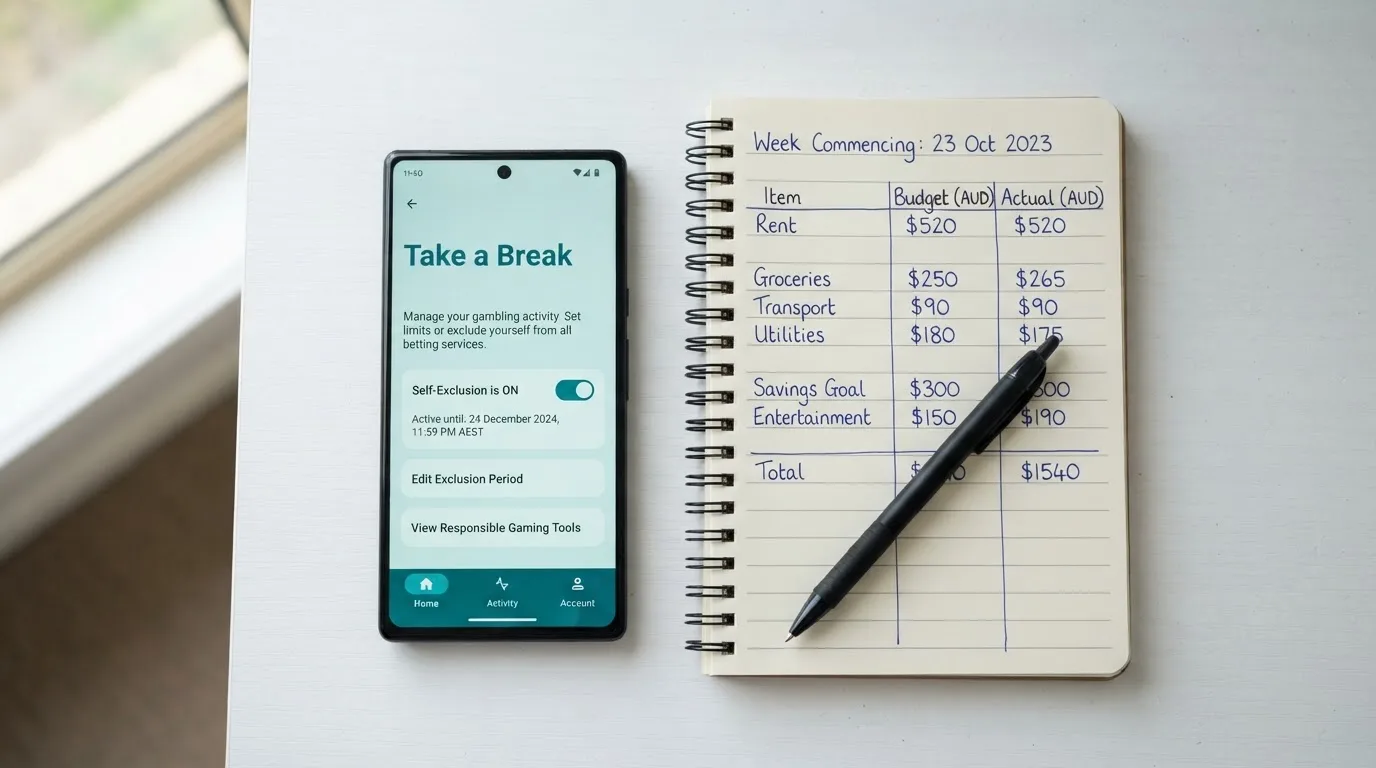
BetStop, the National Self-Exclusion Register, went live in August 2023. It binds every Australian-licensed online and phone wagering service: a punter registers once and the operator is required to close the account, refuse new account openings and block marketing. An offshore casino on a Curaçao or Anjouan licence is not connected to BetStop at all. Self-exclusion at the brand is a brand promise, not a binding exclusion — exactly the kind of promise the ACMA’s operator register documents being broken.
The National Gambling Helpline (1800 858 858) is free, runs 24/7 and chats through Gambling Help Online. This one reaches the punter regardless of where they play, and it is the single most useful line on the page for anyone who feels their play has moved out of their control.
Account-level safeguards from licensed wagering — deposit limits, time-out windows, mandatory reality checks — exist on offshore slot sites too, but as a feature set, not a regulation. They are advertised in a footer and can be harder to find once an account is funded. The contrast with licensed wagering, where deposit limits are part of the operator’s licence conditions, is one the punter is paying for by playing offshore.
Player protection in the dispute sense — the body that forces a payout if a withdrawal is refused — is the gap that drives most of the harm in offshore slot play. A licensed Australian bookmaker answers to the Northern Territory regulator or its state equivalent. An offshore casino answers to itself, on its own terms, in its own jurisdiction.
Pricing it for the punter — the calculation the page is built around
A “free spins” promotion looks like the casino’s gift; the IGA’s prohibition keeps any Australian-licensed site from offering it in the first place, so the promotion is always handed out by an offshore operator under the ACMA’s notice board.
The arithmetic that decides whether the promotion costs the player or rewards them runs through three fixed inputs: the bonus amount, the wagering multiplier stated in the terms, and the stake per spin the player chooses. Required turnover is the bonus multiplied by the multiplier. Spins needed to clear the bonus is that turnover divided by stake per spin. Playing time in hours is total spins multiplied by an average five-second spin interval, divided by 3,600.
The expected loss on that turnover uses the slot’s RTP: expected loss equals required turnover multiplied by one minus the return-to-player. Where the RTP sits in the mid-90s — a typical online slot range — the bonus’s real cost to the player is a small slice of the bonus amount, and the playing time runs into single-digit hours. Where the RTP sits lower, the cost climbs and the time stretches. Where the wagering multiplier runs above 40×, the time to clear the bonus can stretch past a working week of dedicated play.
A $500 promotional credit with a 40× wagering requirement at a 96% RTP slot, staked at A$1 per spin, needs A$20,000 of total bets and approximately 20,000 spins to clear. At five seconds per spin that is roughly 28 hours of continuous play, and the expected loss on the playthrough sits at A$800. The promotion is real money the player is paying to access; the only question is whether the brand’s RTP and terms stay where the welcome page says they do.
That last sentence is the calculation’s real output. The arithmetic assumes only the bonus amount is wagered (no deposits mixed in), the stated RTP holds across all 20,000 spins, and the spin interval does not stretch with bonus rounds or autoplay pauses. Every one of those is an assumption the casino’s own features can break.
How an offshore slot site actually presents — brand by brand
The eleven brands that follow have all been the subject of a formal warning from the ACMA. What they offer a player is the same product the marketing pages everywhere advertise; what they cannot offer is Australian consumer protection. The descriptions below name what each brand does, where the ACMA’s record catches it, and what kind of punter — if any — the offer still fits.
RocketPlay — same operator, two formal warnings, one still-pending domain
The ACMA named Pulsup Ltd as the operator behind Rocketplay.com.au in a formal warning in March 2026. The same brand was already on the warning register, under Dama N.V., in May 2022. Two operators, both formally warned, both running the same product line for Australian players — the re-entry under a fresh corporate vehicle is a pattern the ACMA’s blocking list has documented across several of the brands in this round.
Level Up Casino — Dama N.V.’s first warning, with a BGaming connection
Dama N.V. absorbed its first Rocketplay-era warning in May 2022 over Level Up Casino, alongside five other brands. Software listings on BGaming’s partner page list Level Up among the integrated casino partners, which is a confirmation of which studio is supplying the games underneath the brand’s wrapper.
Woo Casino — Dama N.V.’s March 2025 warning
A March 2025 ACMA formal warning caught Dama N.V. over Woo Casino. Less than three months later, the same operator was warned again under Spirit Casino — the consecutive cadence is the regulator’s pattern when a single vehicle keeps launching brands.
Spirit Casino — Dama N.V.’s May 2025 warning
A May 2025 formal warning to Dama N.V. over Spirit Casino followed the Woo Casino warning by two months. The repeated warnings against the same operator are why Dama’s brand count keeps climbing on the table above while the regulator’s action count stays focused on one corporate vehicle.
National Casino — Consolutetish S.R.L.’s 2025 warning
Consolutetish S.R.L. drew a July 2025 formal warning from the ACMA over National Casino. The same corporate vehicle would be warned again over Bizzo Casino in the same month, two brands under one corporate shell.
Bizzo Casino — three ACMA actions across two operators and four years
No brand on this list has the ACMA’s attention more often. A formal warning in 2022 named TechSolutions (CY) Group Limited and TechSolutions Group N.V. as the operators behind Bizzo Casino. The 2025 formal warning moved the action to Consolutetish S.R.L. — a different corporate vehicle, the same brand, and the confirmation that re-branding did not move Bizzo outside the regulator’s notice.
Ignition Casino — Bamboo Media’s July 2025 warning
A July 2025 formal warning named Bamboo Media as the operator behind Ignition Casino. The brand sits in the same enforcement batch as Consolutetish S.R.L.’s warnings — two operators, two warnings, one round.
Instant Casino — EOD Code SRL’s February 2025 warning
A formal warning in February 2025 caught EOD Code SRL over Instant Casino. EOD Code is a separate corporate vehicle from the Dama and Consolutetish lines that drive the rest of the ACMA’s 2025 register, suggesting Instant Casino was a parallel re-entry attempt by an unrelated operator.
Jackbit — Ryker B.V.’s April 2026 warning
A formal warning in April 2026 caught Ryker B.V. over Jackbit and CasinOK. Two brands under one corporate shell, both named in the same warning notice.
Casino Intense — Sterplay Holding Ltd’s April 2025 warning
A formal warning in April 2025 named Sterplay Holding Ltd over Casino Intense. The brand is referenced across ABC News, the ACMA’s own publications and Crown Melbourne’s coverage — a wider set of secondary mentions than most of the brands in this list.
Sky Crown — Hollycorn N.V.’s September 2022 warning
The oldest brand in the table. Hollycorn N.V. was the target of an ACMA formal warning in September 2022 over Sky Crown and Blue Leo (a paired warning, naming two brands under one operator on the same notice). The Sky Crown entry alone is what survives in this list of eleven.
What the next year brings — the 2026 reform package
The Interactive Gambling Amendment (Gambling Reform) Bill 2026 passed Parliament on 19 August 2026. Its advertising and inducement measures commence on 1 January 2027. The headline change is a tightening of how licensed wagering operators market to Australians — bonus bet restrictions, micro-betting limits and clearer consumer warnings on advertising — but the package does not change what is and is not a prohibited interactive gambling service. Online casino games and online pokies remain outside the licensable frame in 2027 just as they were in 2026.
For a player at one of the brands on the table above, the 2026 reform package does nothing. The brands are outside the frame the package is rewriting. What changes for licensed wagering — and what does not change for an offshore slot site — is the cleanest way to read what the package actually does.
Responsible gambling — what an Australian player can actually do
Australia’s responsible gambling frame does not extend offshore, which is why the practical steps below sit outside the slot brand entirely.
Register with BetStop. The National Self-Exclusion Register is free, takes a few minutes, and binds every Australian-licensed wagering service to refuse your account. It does not bind an offshore slot site, which is why registration is most useful as a way to keep the licensed part of a punt closed off while the offshore portion stays open.
Set a hard budget at the bank level. A bank transfer with a daily cap, a separate account for entertainment spend, or a wallet whose balance is fixed at the start of the week — the technical safeguard is the one no offshore T&Cs can reach.
Use the free helpline. 1800 858 858 is the National Gambling Helpline, free 24/7, with chat at Gambling Help Online. The line is for any Australian whose play is moving out of their control, at any brand, in any jurisdiction.
Know the takeaway. A player who chooses to play at one of the offshore brands above is choosing to do so without Australian consumer protection, on a product prohibited under Australian law. The decision is theirs to make; the frame around it is theirs to read.
Side games and live tables — what offshore slots do not offer an Australian
The marketing sites around offshore slots will talk up live baccarat and blackjack alongside the slot lobby, so the maths under those tables belongs here too.
Baccarat, punto banco in the form most often played, sees the house edge sit at 1.06% on the Banker bet, 1.24% on the Player bet and 14.36% on the Tie — a price spread wide enough that the punter’s choice of bet decides their evening’s house edge almost by itself. Three cards per hand, dealt from a six- or eight-deck shoe, with the casino bank on both sides: the rules are set, the strategy is mechanical, and Crown Melbourne runs three approved variants (Traditional Baccarat, Crown Baccarat and 2 to 1 Baccarat) under the Victorian Gambling and Casino Control Commission’s oversight. That is what an Australian-licensed baccarat floor looks like; an offshore version is the same game under the same maths, run from a different jurisdiction.
Blackjack sharpens the spread. Optimal strategy against a Las Vegas Strip-style ruleset drops the house edge to about 0.28%; Atlantic City rules sit at 0.43%. Spanish 21, Double Exposure, Blackjack Switch and Super Fun 21 are the established variants the marketing pages will name. The Crown Melbourne blackjack product, regulated by the VGCCC, has its own variant history — “Perfect Pairs” renamed to “Crown Pairs” in December 2024, a “Free Bet” option with a new “Pot of Gold” side bet introduced in March 2024. Offshore blackjack carries the same games, the same bonuses, and the same gap in consumer protection the rest of this page is built around.
Craps rounds out the table trio. Pass/Come at 1.41%, Don’t Pass/Don’t Come at 1.36%, Any Craps at 11.11%. The maths at every other table game on this page is the same shape the operator chooses to publish: a thin edge on the safe bet, a wide edge on the fun one.
Poker — the one casino table game with a different Australian frame
Online poker, unlike online casino games and online pokies, occupies a different patch of Australian law. Peer-to-peer wagering on a card game — where the house takes a rake rather than playing the hand — has been argued in and out of the IGA’s scope over the years, and the relevant determinations sit closer to wagering than to casino gaming. An Australian-licensed poker product is rarer than an Australian-licensed casino one; most of what the offshore marketing pages call “poker” is video poker (RNG-driven, against the house) rather than peer poker (against other players, with a rake). The distinction decides which IGA frame applies and which offshore product is actually being sold.
The offshore brands on this page are slot brands, not poker brands. None of them market themselves on the poker product the way a peer-poker brand would.
Top picks for an Australian looking at offshore slot sites in 2026
There is no clean way to rank eleven brands that all operate under an ACMA formal warning, all offer a product prohibited under the IGA, and all lack Australian consumer protection. What follows is the alphabetical frame a punter might use, not a recommendation.
- Bizzo Casino
- Casino Intense
- Ignition Casino
- Instant Casino
- Jackbit
- Level Up Casino
- National Casino
- RocketPlay
- Sky Crown
- Spirit Casino
- Woo Casino
The ordering is not a verdict. Every one of these brands is on the ACMA’s warning register. The only ranking that matters at an offshore slot site is the player’s own willingness to pay for entertainment the regulator has formally asked ISPs to block.
Frequently asked questions about online slots and gambling sites in Australia
Are real-money online casino games actually legal for someone in Australia?
No. The Interactive Gambling Act 2001 makes it an offence for an operator to supply online casino games — slots, table games, live dealer — to a person in Australia. No state or territory licence covers them. Sports and racing bets placed before the event, lotteries and keno are the licensable Australian-licensed gambling products. The offshore sites offering online slots to Australian residents are operating outside Australian law.
How does an online slot’s random number generator decide a spin?
The random number generator produces a number the moment the spin button is pressed. The reels stop on the symbols that number maps to, and the outcome for that spin is sealed before the first reel finishes its spin. The result is independent of every previous spin. The return-to-player the game’s designer publishes — the slice of wagered money the slot returns across millions of spins — is the only reliable number for predicting what a long run of play will cost. A single session can return more or less than that figure; the average only emerges across a long enough sample.
Do crypto slot sites use the same game software as card-funded sites?
Yes. Bitcoin and other crypto deposits do not change the slot product underneath. The same studios (BGaming is named in the partner listings of several of the brands above) supply the games, and the same random number generator decides each spin. The payment rail is what changes, and so is the consumer protection: an Australian-licensed bookmaker cannot legally accept crypto (since 11 June 2024), so a crypto-accepting site is operating outside Australian rules by definition. The player is paying for the same game with less recourse if the operator declines a withdrawal.
What is the difference between an online slot and a pub pokies machine?
The maths is the same underneath, and the random number generator replaces the physical reels. The line items differ: a pub pokies session takes cash tokens at a venue with a regulated machine count by state (87,298 outside casinos in NSW in June 2023, 26,380 in Victoria, 21,122 in Queensland, 11,672 in South Australia and 3,587 in the ACT); an online slot session runs through a browser or app and accepts payment methods the venue cannot (including crypto). The pub pokies machine sits inside Australian gambling law; an online slot site with an ACMA formal warning does not.
Does a site calling itself “trusted” or “safe” actually mean it has been independently checked?
No. “Trusted” and “safe” on a gambling site’s footer are marketing descriptions of itself, not certifications by an independent body. The Australian certifications that exist — BetStop registration, an ACMA-traceable licence, an Australian-licensed wagering status — are not credentials an offshore slot site can hold by definition. A player reading “trusted” on a site’s footer is reading the brand’s own claim about itself, on a product the regulator has formally noticed. The word is the brand’s; the protection is not.
What tools can someone use to track and limit time spent on online slots?
BetStop, the National Self-Exclusion Register, binds every Australian-licensed wagering service to refuse the punter’s accounts once they register. It does not bind an offshore slot site. The National Gambling Helpline (1800 858 858) is free, 24/7, with chat at Gambling Help Online. Bank-level controls — a separate account with a hard weekly cap, a debit card with a low daily ceiling, a wallet held by someone else — are the technical safeguards no offshore brand can reach. The strongest single move a punter worried about their play can make is to keep the licensed wagering accounts closed (via BetStop) and the offshore accounts unfunded at the bank.