


Understanding the Real Cost of Video Slots in Australia
Current as of 8 November 2026. Verified against ACMA formal-warning publications and the Australian Communications and Media Authority blocking register.
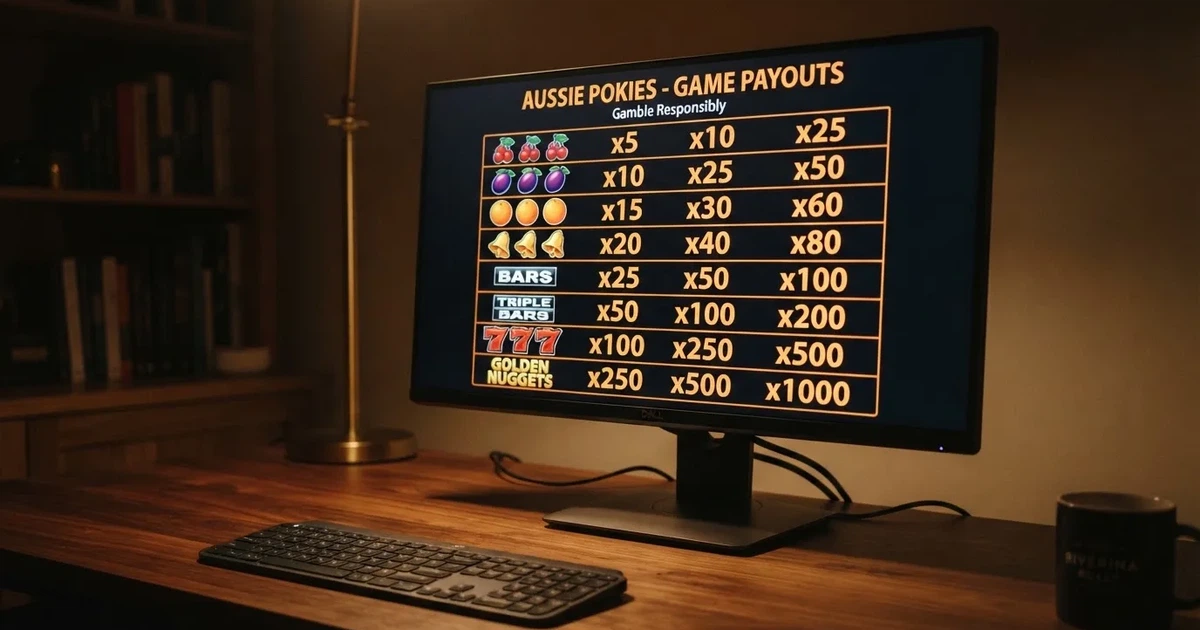
A video slot looks like a game. It also looks like a product on a storefront page with a bonus number glowing next to it, and that second framing is the one worth interrogating. Modern video slots — five reels, fifty-plus paylines, free-spin rounds, scatter symbols, a soundbed that ramps on every near-miss — are the dominant format at every offshore casino that takes Australian customers. They are also, as a category, a prohibited interactive gambling service under Australian law. The product cannot be licensed onshore. Every site that sells it to Australians is operating outside the regime, and the Australian Communications and Media Authority has been acting on that for years.
This page works through what that means in practice. It starts with the bonus and free-spin layer, because that is where the inducement sits. It then moves through mobile and app delivery, the paytable mechanics inside individual titles, how any comparison list is actually put together, the onshore landscape of licensed gaming machines, the prohibition and the enforcement record, and where a player who is struggling can turn. Eleven offshore brands the ACMA has formally warned appear in their own right; they are not recommendations, and none of them is a lawful option.
Table of Contents
- Bonus and Free-Spin Offers: The Inducement Layer
- Mobile and Browser Play: What Actually Changes on a Phone
- Specific Games, Providers and the Paytable Mechanics
- How This List Is Put Together — And Why It Is Short
- The Onshore Landscape: Licensed Machines in Pubs, Clubs and Casinos
- The Prohibition and the Enforcement Record
- Player Protection and Where Help Is Available
- The Blocking Rate, and What the Enforcement Record Actually Shows
- The Eleven Brands: ACMA Formal Warnings
- Comparison Block: ACMA Action Across the Featured Set
- Frequently Asked Questions
Bonus and Free-Spin Offers: The Inducement Layer
A bonus on an offshore casino page is built the same way almost everywhere: deposit a set amount, the site matches a percentage, the combined balance comes with a wagering requirement that has to be cleared before anything can be withdrawn. Free spins ride alongside it — usually on one named title, with the winnings loaded as bonus money subject to the same requirement. The headline number on the page is the deposit match. The number that decides what the offer is actually worth sits three lines lower, in the small print.

A wagering requirement of 40 times the bonus amount is now close to the market median. Read against a bonus of A$200, that is A$8,000 of required turnover before withdrawal opens. On a slot at roughly 96% return to player, the expected loss from running that turnover through is A$320. The bonus pays A$200 in nominal value; the cost of clearing it is, in expectation, more than the bonus itself. That is the mechanic. It is not a glitch in one bad offer; it is how the product is priced.
Free-spin packages look lighter. A typical allocation is 50 or 100 spins on a single named title, often a high-volatility game with a long dry spell between features. The spin value is fixed low — A$0.10 to A$0.20 — which caps the upside regardless of what the reels do. Winnings from those spins usually load as bonus money, not as cash, so they too flow into the same wagering requirement. A free-spin package that “looks like” A$50 in value may carry the same clearing cost as a cash bonus once the playthrough is applied.
Maximum cashout caps are the third leg. Many offers write a ceiling on what can be withdrawn from bonus-derived winnings — A$1,000 is a common figure, sometimes lower. A player who hits a large feature win during the clearing window can find the bulk of it forfeit at withdrawal. None of this is hidden in a regulatory sense; offshore sites publish their terms. The terms are simply written in the language of compliance rather than the language of cost, and a reader who does not read past the bonus number walks away with a misleading impression of value.
The inducement layer matters more in this market than in most, because there is no locally licensed alternative for the same product. A punter in New South Wales who wants a video slot on a screen has, on the offshore route, a wall of bonuses competing for the deposit. On the onshore route, there is no bonus; there is a gaming machine in a pub or club with a printed return-to-player percentage and a state-level cap. Both routes are real. Only one of them is offering the inducement.
Mobile and Browser Play: What Actually Changes on a Phone
The same video slot, loaded on the same offshore site, behaves almost identically on a phone browser and on a desktop. The reels scale to the screen, the spin button moves to a thumb-reachable position, the soundbed drops a layer to compensate for the speaker, and the math model does not change. The RTP the desktop version returns is the RTP the mobile version returns. The bonus round triggers the same way, pays the same way, and the free-spin allocation from a promotion does not differentiate between the two.
What does change is the delivery surface. Most modern offshore casinos run their games inside an HTML5 wrapper rather than a downloaded app, which means there is no store listing, no install, and no review trail. A player who searches the App Store or Google Play for a named casino will often find no result, because the apps those stores allow are limited and the products they restrict include real-money casino games in most jurisdictions. What gets loaded is a mobile-optimised website, sometimes with a “Add to Home Screen” prompt that mimics an app icon.
Load times have improved to the point where the gap is no longer the issue it once was. A modern phone on a reasonable connection opens a five-reel video slot in well under five seconds. The animation runs at 60 frames a second without dropping. Touch input registers one-tap, which sounds minor until one plays a desktop version with a click lag and notices the difference.
The legitimate complaint about mobile play is not performance; it is consent. A phone browser does not show the same visual cues that a desktop session does — there is no second monitor with the terms, no full URL bar in view. The cookie layer is denser. Geolocation checks are sometimes done by IP rather than by active prompting, which means an Australian player on a domestic connection can be served the offshore site without being asked a single confirmation question. The product is the same; the friction that a desktop player encounters on the way to the cashier is mostly absent on mobile.
Specific Games, Providers and the Paytable Mechanics
A video slot is not a single object. The category covers a range of mechanics — five reels and a scatter, six reels with Megaways-style variable paylines, cluster-pay grids where wins form by adjacency rather than line, and the “ways” format where every left-to-right combination counts. The title on the page and the maths model under it are two different things, and the second is what decides what the game costs the player.
Return to player is the headline figure. It is the percentage of wagered money a game returns over a very large number of spins — usually millions, often tens of millions. A 96% RTP means A$4 is kept, on average, from every A$100 wagered. The figure is published in the game’s information panel; it is set by the provider and does not change between casinos. The volatility, less often stated plainly, describes the shape of the payout distribution. A low-volatility slot pays small amounts often; a high-volatility slot pays rarely and in larger bursts. Two games with the same RTP can feel entirely different to play, and that feeling is what a player is actually buying.
The most-played video slots at offshore casinos serving Australian players — Gates of Olympus, Sweet Bonanza, Sugar Rush, the various “Book of” games, Big Bass Bonanza, the Jammin’ series — are not Australian products. They come from a handful of international studios: Pragmatic Play, BGaming, Hacksaw Gaming, Nolimit City, Push Gaming, ELK, and a few others. None of those studios holds an Australian licence, because there is no Australian licence for the product. They hold licences in Malta, Curaçao, the Isle of Man, occasionally the UK. The licence the offshore casino displays on its footer is, in regulatory terms, not relevant to an Australian customer.
The cluster that an Australian player most often encounters in practice is the Pragmatic Play “Drops & Wins” network — a promotional layer running across multiple titles with shared prize pools and timed tournaments. It is the closest thing to a loyalty mechanic in this market. From the player’s perspective, it looks like extra value; from the maths perspective, it does not change the underlying RTP, only the variance around it. The promotional prize pool is funded out of the game’s theoretical margin, not out of the operator’s pocket, and the player’s expected return does not rise with participation.
Live tables sit adjacent to the video-slot lobby at the same offshore casinos but operate under a different regulatory logic and a different house edge. A baccarat Punto Banco table banks the game and applies a 1.06% edge on the Banker bet. Blackjack under favourable rules sits around 0.28%. Craps on the Pass line is 1.41%. Those edges are tighter than any video slot, which is the reason table games exist on the same sites — they bleed less. From the cost perspective this page works from, that is the comparison that actually matters: video slots are not the cheapest way to play on these sites; they are the most heavily promoted because the margin is widest.
How This List Is Put Together — And Why It Is Short
The comparison block later in this page is eleven brands long. That number is not a market figure; it is the number of operators the ACMA has formally warned over the period research covers. Every brand on it is there because the regulator itself named it, not because an affiliate page rated it well. There is no editorial ranking of “best casino” here because the entire category is, in Australian terms, a prohibited service. Ranking prohibited services by quality is a question the page is not equipped to answer.
The criterion that decided the inclusion is the ACMA formal warning. A formal warning is a step the regulator takes before further action: it names the operator, the brand, the prohibited service and the date, and it puts the operator on notice that further non-compliance will trigger civil penalties, blocking requests, or referral to the AFP. It is published on the ACMA’s website and is a public record. A site can be operating in Australia without yet being on that list; the list reflects enforcement that has happened, not the universe of sites that ought to be on it.
The secondary criterion is operating company. Several operators run more than one brand from the same corporate group — Dama N.V. alone accounts for six warnings over the period, across Bambet, Dazard, Level Up, Rocketplay, Wild Tornado and Cobra Casinos in May 2022, and then Woo Casino and Spirit Casino in 2025. The page lists one brand per warning, not one brand per company. That is a different decision from a list that aggregates by operator, and the comparison table later makes the operating company visible so a reader can see the overlap.
The third criterion is the absence of consumer protection. None of these brands is connected to BetStop, the National Self-Exclusion Register. None is subject to the credit-card and crypto ban that binds licensed Australian wagering services. None offers recourse through an Australian complaints body if a withdrawal is refused. The reasons a brand might or might not be on this list are about enforcement, not about consumer quality, and a reader weighing one brand against another is not in a position where the choice matters — none of them is lawful.
The criteria that did NOT decide inclusion: payout speed (no Australian-verified data exists), game library size (marketing claims, not audited), bonus generosity (the inducement layer above applies to all of them equally), and licence jurisdiction (every brand listed holds an offshore licence, and that fact does not differentiate them in Australian terms).
The Onshore Landscape: Licensed Machines in Pubs, Clubs and Casinos
The lawful way to play a slot-style machine in Australia is on a licensed electronic gaming machine in a pub, club or casino. These are not video slots in the offshore sense — most do not carry the multi-feature bonus round structure, and they do not run as an online product — but they are the machines Australian players actually sit in front of.
| State | Machines |
|---|---|
| New South Wales | 87,298 |
| Victoria | 26,380 |
| Queensland | 21,122 |
| South Australia | 11,672 |
| ACT | 3,587 |
The machines themselves differ from product to product and from state to state. NSW legalised slot machines in 1956; the modern EGM, with its multiple reels and digital paylines, took over the floor through the 1990s and 2000s. The first automatic payout mechanism — Bally’s “Money Honey” in 1963 — predates the digital format entirely. The first true video slot, in the sense of a screen replacing physical reels, was developed in 1976 by Fortune Coin Co. in Kearny Mesa, California. The Australian onshore product sits downstream of those developments and is regulated at the state level, not federally.
Crown Melbourne, the largest Australian casino operation, runs an EGMs floor and a separate table-games floor under the Victorian Gambling and Casino Control Commission, which replaced the Victorian Commission for Gambling and Liquor Regulation on 1 July 2022. Crown’s blackjack and baccarat variants are approved by the VGCCC, with rule changes logged publicly — recent ones include the renaming of “Perfect Pairs” to “Crown Pairs” in December 2024 and the introduction of a “Free Bet” option in March 2024. The relevant statute in Victoria is the Casino Control Act 1991; in NSW, it is the Casino Control Act 1992, which under section 66 requires casino operators not to permit a game unless its rules are approved and available on request.
For a player who wants the format without the offshore route, the pub or club EGM is the only fully lawful option. The product is narrower — bonus rounds are rarer, free-spin mechanics are absent, the game does not adapt to the player’s session — and the inducement layer is gone. There is no deposit match. There is no wagering requirement. There is, however, a published return-to-player percentage on the machine, a state-level cap on stakes, and a complaints body if a payout is refused.
The Prohibition and the Enforcement Record
The Interactive Gambling Act 2001, strengthened by the Interactive Gambling Amendment Act 2017, makes it an offence to provide online casino games, online pokies or in-play betting to a person physically in Australia. No state or territory issues a licence for those products. What is licensable is wagering on races and sport placed before the event, lotteries and keno — in practice, the bulk of that licensing is done by the Northern Territory Racing and Wagering Commission, which regulates 52 of Australia’s online bookmakers, including Sportsbet, Bet365 and Ladbrokes, and operates with no full-time staff out of a once-a-month meeting in Darwin.
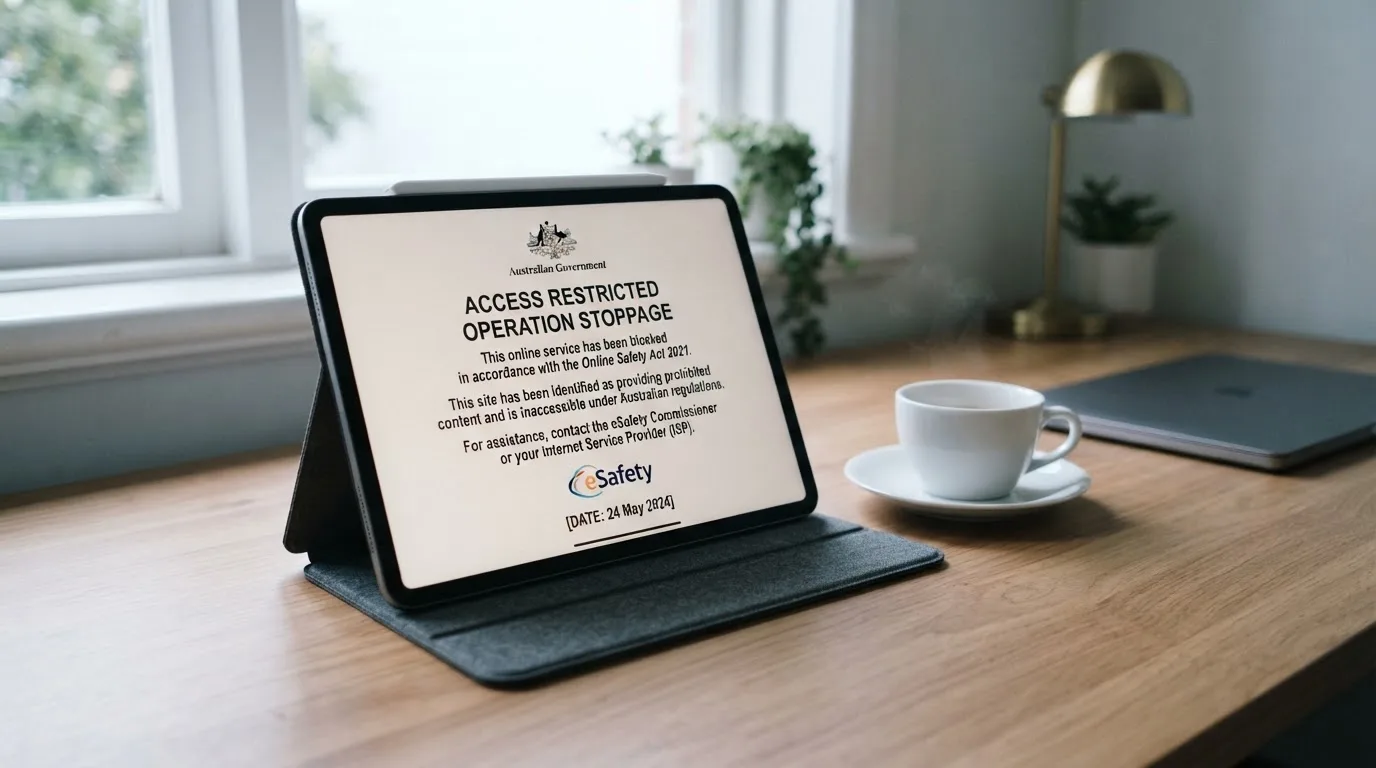
The ACMA investigates, issues formal warnings, and directs Australian internet service providers to block illegal sites. As of June 2026, a total of 1,751 illegal gambling and affiliate marketing websites had been blocked since the first blocking request in November 2019, and more than 230 unlicensed gambling services had left the Australian market since enforcement was strengthened in 2017. In a single round reported on 26 June 2026, the ACMA asked ISPs to block 12 more sites: 7Signs, ChromaBet, Donbet, Duospin, Freshbet, Slots Gem, Jacks Club, Lucky Start, Pointsbetz, Spinrise, Vinyl Casino and Wildsino.
The individual player is not prosecuted — the IGA targets the provider, not the customer — but the offshore route carries no Australian consumer protection. A withdrawal can be refused. A balance can be held. A complaint has no Australian body to receive it. The site can be blocked with money still on the account, and the player has no recourse. None of the brands in the comparison block below is connected to BetStop, and none is bound by the credit-card and crypto ban that applies to licensed Australian wagering services.
The cost side of the prohibition lands on the player in a way that is rarely stated plainly. H2 Gambling Capital’s 2025 report estimates that Australians lose about A$3.9 billion a year to illegal gambling sites, and the share of gambling going through legal channels fell from 74% in 2021 to 64%. Those two numbers together describe a market that has moved offshore not because players prefer offshore product but because the onshore product is narrower and the offshore marketing is louder.
The 2026 reform — the Interactive Gambling Amendment (Gambling Reform) Bill 2026 — passed Parliament on 19 August 2026. Its advertising and inducement measures commence on 1 January 2027. It is law with a start date, not yet in force. It will tighten the inducement layer further when it comes into effect, and the comparison below should be read against that as the next step, not as the present frame.
Player Protection and Where Help Is Available
The first-line protection for an Australian who plays online is BetStop, the National Self-Exclusion Register, live since August 2023. Registration excludes the person from every Australian-licensed online and phone wagering service. It does not exclude them from offshore casinos — those operators are not connected to BetStop and have no obligation to honour an Australian self-exclusion. A person who registers with BetStop and then plays at an offshore site is, from the regulator’s perspective, on their own.
State-level barring schemes — Victoria’s, NSW’s, the other states’ — work similarly: they bind the licensed pubs, clubs and casinos in the relevant jurisdiction and do not extend offshore. The mechanism exists; the offshore gap is structural.
For a person whose gambling has moved from entertainment to a problem, the National Gambling Helpline is 1800 858 858 — free, 24/7, with a chat option at Gambling Help Online. The helpline is the first call. Financial counselling is available through the National Debt Helpline on 1800 007 007. The advice is independent of any operator.
The structural fact that the offshore product has no consumer-protection layer means the question of “where to play” in this market is, for a reader who is not in trouble, a question of which inducement is least costly to walk past. For a reader who is in trouble, the question is which channel offers the fastest route to help, and the answer is the helpline, not the offshore cashier.
The Blocking Rate, and What the Enforcement Record Actually Shows
Between the first blocking request in November 2019 and the report of 26 June 2026, the ACMA asked Australian ISPs to block 1,751 illegal gambling and affiliate marketing websites. Spread across that window — roughly 79 months — the rate works out to about 22 blocked sites per month on average. The rate is not constant. It accelerated after the 2017 enforcement strengthening and again after each formal-warning cluster, with the highest-volume months following the largest warning rounds.
The condition matters. The 1,751 figure includes affiliate marketing sites — click-throughs, SEO doorway pages, redirects — not just the casino brands themselves. The number of operator sites blocked is a smaller subset, and the ACMA’s published counts do not always break the two apart. What the running total does show, read plainly, is that the list of sites to be blocked is not diminishing. Each round adds names. Few are removed. The blocking regime functions as a permanent tax on the offshore operators’ reach into the Australian market, not as a solution that closes the door.
Read alongside the 230-plus unlicensed services that have left the Australian market since 2017, the picture is one of attrition rather than defeat. Operators rotate brands; affiliate pages regenerate; the same corporate group appears under a new name. The enforcement is real and it is expensive for the operators it touches. It is not, on the published numbers, a regime that has stopped the underlying traffic.
The Eleven Brands: ACMA Formal Warnings
Each brand below appears because the ACMA issued a formal warning naming it for offering prohibited interactive gambling services to Australians. The product — online casino games, online pokies — cannot be licensed anywhere in Australia. None of these brands is a lawful option, and the page does not recommend any of them as a place to play. The block is a record of the enforcement action and a brief description of what the brand offers offshore. Where the page judges any of them more or less harshly, that judgement is about the gap between what they market and what they can deliver to an Australian customer, not about whether they ought to be played at.
RocketPlay
Pulsup Ltd received a formal warning in March 2026 over RocketPlay; the brand had already been the subject of a 2022 warning to Dama N.V. along with five sister brands. The site markets itself as a multi-thousand-title casino with a deposit-match welcome package and a tiered loyalty scheme. From an Australian customer’s position, the welcome package carries the standard 40-times wagering requirement, the free-spin allocation is fixed-value on a high-volatility title, and the loyalty tiers reset on inactivity. The brand sits behind two rounds of regulator action in four years, which is itself the most informative thing the record carries.
Level Up Casino
Dama N.V. received a formal warning in May 2022 covering six casino brands, including Level Up. The site is positioned in the same Pragmatic-heavy catalogue as the rest of the Dama group. Its distinguishing surface feature is the gamified loyalty layer — missions, level-ups, an in-site currency. The missions layer adds engagement without changing the underlying RTP, and a reader who treats level progress as value is reading the wrong column.
Woo Casino
Dama N.V. received a further formal warning in March 2025 over Woo Casino, three years after the 2022 cluster. The site markets a deposit match plus a free-spin allocation on a single named title. As an Australian customer option, the product is functionally indistinguishable from the 2022 cohort the same operator was warned over — same catalogue, same bonus structure, same offshore licence. The intervening three years did not change what the brand offers, and the regulator’s continued attention is the clearest signal the record carries.
Spirit Casino
Dama N.V. received a formal warning in May 2025 over Spirit Casino, two months after the Woo Casino action. The site carries a similar deposit-match structure and free-spin allocation, with the same catalogue backbone. From an Australian customer’s position, the relevant fact is that the same corporate operator has now been warned twice in 2025 alone, on two distinct brands. The warning pattern across the group is the clearest single piece of information the ACMA record carries about Dama N.V.’s posture toward the Australian market.
National Casino
Consolutetish S.R.L. received a formal warning in July 2025 over National Casino. The brand runs a multi-provider catalogue with the usual deposit-match and free-spin welcome package. The relevant marker is the operator name: Consolutetish S.R.L. was also warned the same month over Bizzo Casino, which makes the July 2025 round a two-brand action in one letter. The pattern matches the Dama N.V. multi-brand cluster on the warning side, with the same implication for the Australian customer.
Bizzo Casino
Consolutetish S.R.L. received a formal warning in July 2025 over Bizzo Casino, alongside the National Casino action. The brand had earlier been the subject of a 2022 formal warning to TechSolutions (CY) Group Limited and TechSolutions Group N.V., which makes Bizzo one of the brands on the ACMA’s list twice — once under its original operator and once under its current one. The intervening rebrand did not move the brand out of the regulator’s view.
Ignition Casino
Bamboo Media received a formal warning in July 2025 over Ignition Casino. The brand is positioned toward the poker-and-casino crossover segment, with a smaller slot catalogue than the deposit-match-led brands elsewhere on this list. The relevant fact for an Australian customer is the same as for every other brand on this page — the product is prohibited — but the narrower catalogue and the poker emphasis give the brand a slightly different surface. The licence it displays is not an Australian licence.
Instant Casino
EOD Code SRL received a formal warning in February 2025 over Instant Casino. The brand markets a fast-payout framing and a crypto-friendly deposit layer. The crypto-friendly framing is, from an Australian customer’s position, the most expensive feature on the page: the credit-card and crypto ban that applies to licensed Australian wagering does not bind this operator, and a player using crypto to deposit here is operating outside every protection layer the Australian regime offers. The payout-speed marketing does not survive a regulator block.
Jackbit
Ryker B.V. received a formal warning in April 2026 over Jackbit, alongside CasinOK. The brand positions itself as a crypto-native casino-and-sportsbook, with a slot catalogue that includes both the major international studios and a longer tail of smaller providers. The Australian customer profile is the same as for Instant Casino above, and the same caution applies — the crypto layer is the structural exposure, not the inducement.
Casino Intense
Sterplay Holding Ltd received a formal warning in April 2025 over Casino Intense. The brand’s distinguishing feature on the page is the “intense” framing — heavier volatility, fewer bonus rounds, a smaller catalogue. The smaller catalogue means the player has fewer options to spread a session across; the heavier volatility means longer dry spells between features. Both characteristics increase the variance of a session without changing the expected loss in RTP terms.
Sky Crown
Hollycorn N.V. received a formal warning over its Sky Crown and Blue Leo casino services, as published in a formal-warning PDF dated September 2022. Sky Crown is the older of the two brands and is the one this page routes to. The brand runs a deposit-match structure with a free-spin allocation and the standard offshore catalogue. Hollycorn N.V. is one of the more visible offshore operators in the Australian market, and the warning record shows the regulator has treated it the same way it has treated the rest of this list.
Comparison Block: ACMA Action Across the Featured Set
The table below summarises the enforcement record across the eleven brands. The columns are the matters the page needs to compare; the cells are what research carries.
| Brand | ACMA Action and Date | Operator | Subject Support |
|---|---|---|---|
| RocketPlay | March 2026 formal warning | Pulsup Ltd | — |
| Level Up Casino | May 2022 formal warning | Dama N.V. | BGaming site |
| Woo Casino | March 2025 formal warning | Dama N.V. | — |
| Spirit Casino | May 2025 formal warning | Dama N.V. | — |
| National Casino | July 2025 formal warning | Consolutetish S.R.L. | Wikipedia entry |
| Bizzo Casino | July 2025 formal warning | Consolutetish S.R.L. | — |
| Ignition Casino | July 2025 formal warning | Bamboo Media | — |
| Instant Casino | February 2025 formal warning | EOD Code SRL | — |
| Jackbit | April 2026 formal warning | Ryker B.V. | — |
| Casino Intense | April 2025 formal warning | Sterplay Holding Ltd | ACMA and Crown reports |
| Sky Crown | September 2022 formal warning | Hollycorn N.V. | — |
Read across the rows, the table shows a regulatory pattern rather than a competitive comparison. Three operators — Dama N.V., Consolutetish S.R.L., and Hollycorn N.V. — appear multiple times, on multiple brands, sometimes across multiple years. The repeated appearance is the relevant fact; a single warning is a single event, a repeated warning is an operator posture. None of the brands on this list has been removed from the regulator’s view by the act of rebranding or by the lapse of time.
Frequently Asked Questions
What makes a video slot different from a classic three-reel pokies machine?
A classic three-reel mechanical slot machine uses physical reels with around ten symbols each, producing roughly a thousand possible combinations for the player. A modern video slot uses five or more digital reels with fifty or more symbols per reel, producing odds against a top combination as high as 300 million to one.
Do video slots typically include bonus rounds that classic machines don’t have?
Yes, the bonus round is a primary feature of the modern video slot, usually triggered by scatter symbols to take the player into a separate game mode. These rounds offer free spins, multipliers or pick-style prizes that classic three-reel machines simply do not offer, as their outcomes happen on the base reels.
Are video slots on a mobile browser the same game as the desktop version?
Yes, the game engine and its underlying maths model are identical across desktop and mobile platforms. While the interface scales to the device, the return-to-player percentage, the volatility and the bonus-round structure remain consistent. The game underneath is the same software engine, returning the same expected percentage over the long term.
How many paylines does a typical modern video slot use?
There is no single standard, as the range is quite wide. A standard five-reel video slot with fixed paylines typically has between 20 and 50 lines. Megaways-format games vary on every spin and offer tens of thousands of ways, while cluster-pay games use adjacency on a grid rather than fixed paylines.
Why do video slots vary in volatility even within the same provider’s catalogue?
Volatility is set by the game designer independently of the return-to-player percentage. Two games can return 96% to the player over the long run but feel different to play: one pays small amounts often, while the other pays rarely but in larger bursts, providing variety in the player’s experience and design.