


Best RTP Slots Australia 2026: The Numbers, the Sites, and What It Costs a Punter
The pitch is seductive: a slot returning 98% to the player sounds like a sure thing. The reality is quieter and uglier. A return-to-player figure is a long-run average across millions of spins, and the player who sits down for an hour is not running that long. Meanwhile, the offshore sites that splash these numbers around cannot legally offer online casino games to anyone in Australia in the first place — and the regulator has been saying so, repeatedly, since well before 2026.
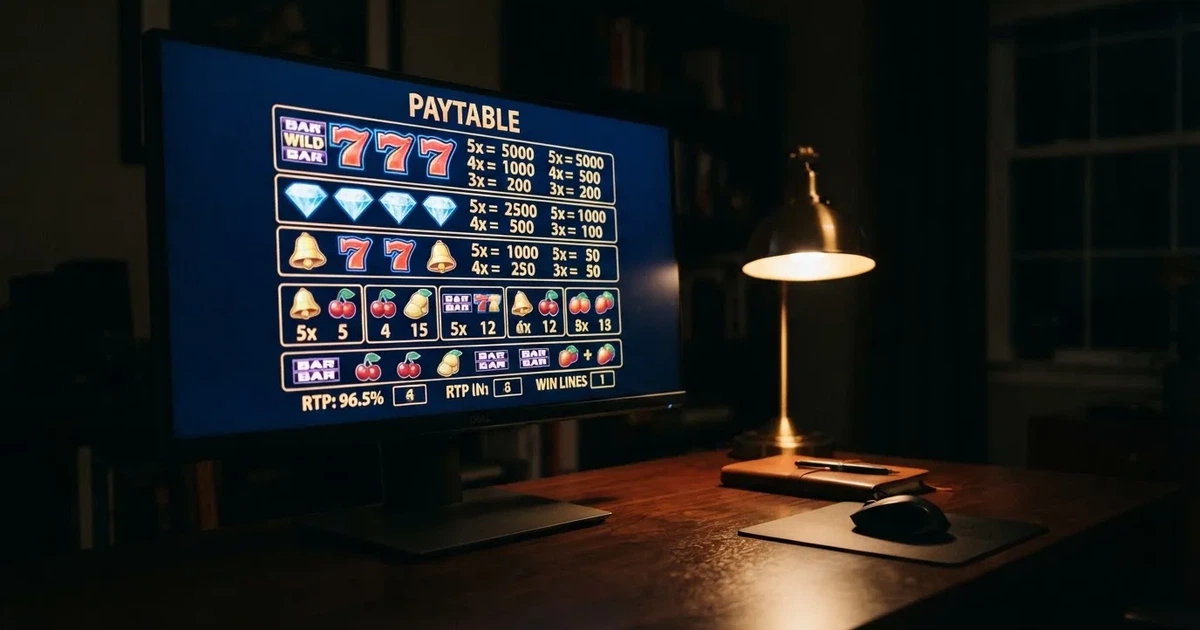
This guide walks through what an RTP figure is, how it gets calculated, where it gets disclosed (and where it doesn’t), and why the comparison tables that rank “best RTP slots Australia” mostly describe marketing rather than mathematics. It covers the licensed electronic gaming machines in Australian venues as well, since those are the only slots a person in Australia can actually play without the site being on the wrong side of the Interactive Gambling Act. The featured operators at the end are listed because the Australian Communications and Media Authority (ACMA) issued formal warnings to their parent companies — the operator names, dates and subject support below are taken from the ACMA’s own publications.
Data is current as of 8 November 2026 and was checked against the ACMA’s formal warning register and the regulator’s blocking notices.
Table of Contents
- What an RTP figure actually is
- Standard house edges for comparison
- The legal picture for online slots in Australia
- Harm-minimisation and the offshore gap
- How a “best RTP slots” shortlist is put together
- The ACMA action landscape: a reference table
- Operator write-ups
- Tax and the recreational player
- Responsible gambling supports
- Frequently asked questions
What an RTP figure actually is
Return-to-player (RTP) is the percentage of all wagered money that a slot is programmed to return to players across its lifetime. A slot with a 96% RTP will, over millions of spins, return A$96 for every A$100 wagered. The remaining A$4 is the house edge, and on any single session it can swing violently: a 96% slot is still a negative-expectation game, because the 4% the house keeps is collected spin by spin.

This is not a sleight of hand — it is just how averages work. A coin flipped ten times might land heads seven times. A slot with 96% RTP played for an hour might return 60% or 130%. The percentage is the steady-state behaviour of the machine, not a guarantee for the next spin, and certainly not for the next hour. Volatility, a separate setting, determines how clustered the wins and losses are within that average: high volatility concentrates payouts into rare large hits, low volatility spreads smaller wins across more frequent events.
Three things follow from this:
- The number is not negotiable. A licensed venue cannot quietly change the RTP of a machine mid-shift without regulator approval, and any reputable provider tests the figure against millions of simulated spins before release.
- The number is not personal. Sessions run shorter than the “lifetime” the figure describes. A player who walks in, plays 200 spins and walks out has a sample too small for the average to assert itself.
- The number is the wrong question for a single session. The right question is what the figure is, what the volatility is, and whether the bet size makes the variance survivable for the bankroll being risked.
How a slot’s RTP gets calculated
The arithmetic is straightforward in principle. Each symbol on each reel carries a weight, and the combination of those weights defines every possible outcome. The slot’s software runs through the symbol map, builds a payout table, multiplies each outcome by its probability, sums the results and divides by the total wagered across one simulated cycle of all outcomes. That ratio is the RTP.
The number is rarely a round figure because reels carry weighted distributions rather than uniform ones, and bonus features, free-spin rounds and progressive jackpots each add another layer. A five-reel video slot with 50 symbols per reel can produce combinations against odds as high as 300 million to one for a top payout, which is why the mathematics is run by simulation rather than by hand. Modern video slots emerged in 1976 when Fortune Coin Co. in Kearny Mesa, California developed the first video reel mechanism, replacing the purely mechanical three-reel machines of the late 19th century, which Charles Fey of San Francisco had built with five symbols — horseshoes, diamonds, spades, hearts and the Liberty Bell — paying ten nickels for three bells in a row.
What changed between the 19th century and now is not the underlying math but the surface area for it: more reels, more symbols, more bonus rounds, more side games. Every layer of complexity is another place a weighted probability sits, and every one of them feeds the final RTP calculation. Which is why the only honest place to read the figure is the provider’s published paytable — and why a paytable that won’t show one is, by itself, a piece of information about the game.
Where RTP figures are disclosed in Australia
This is where the picture forks sharply. Inside Australia, electronic gaming machines in licensed clubs, hotels and casinos are governed by state and territory regulators, and the gaming-machine standards require published return-to-player figures. The machines themselves are licensed, the venues are licensed, and the figures are auditable. The player knows what the machine is set to return because the venue is required to publish it.
Online, the story inverts. Online casino games — and online pokies specifically — cannot be licensed for Australian players under the Interactive Gambling Act 2001. No offshore operator offering “high RTP slots” to an Australian player is doing so under an Australian licence. The RTP figure those sites publish is whatever the operator chooses to display, certified by whatever testing lab the operator chose, and there is no Australian consumer-protection body that will hear a complaint about a withdrawn payout. The data current as of 8 November 2026 above applies to that landscape: it is checked against the ACMA’s own enforcement record.
What the offshore sites can do, and routinely do, is borrow the math from legitimate providers. A game built by a recognised studio and released under a recognised testing certificate carries a real RTP — the certificate’s number applies to the game wherever it is hosted. The hosting is the problem, not the game. A player at an ACMA-flagged site is still playing the same underlying mathematics as a player at a regulated venue; the difference is that the surrounding contract (deposit handling, withdrawal handling, dispute resolution, the operator’s accountability to any authority at all) is unprotected.
Standard house edges for comparison
| Game | House Edge | Note |
|---|---|---|
| Blackjack (optimal) | 0.28% | With liberal rules |
| Baccarat (Banker) | 1.06% | Best odds |
| Baccarat (Player) | 1.24% | Fixed odds |
| Craps (Pass/Come) | 1.41% | Base wager |
Australia’s licensed slot machines sit in clubs, hotels and casinos under state-by-state regulation. The 2010 estimate put the country at 97,103 gaming machines outside casinos — a per-capita density roughly five times that of the United States, where state minimum payout percentages vary by jurisdiction: Nevada at least 75%, Mississippi at least 80%, New Jersey at least 83%.
The most recent state-level counts the published records give (New South Wales: 87,298 machines as of June 2023; Victoria: 26,380 across 2021–22; Queensland: 21,122 as of October 2023; South Australia: 11,672 as of September 2023; the ACT: 3,587 as of November 2023) show that NSW alone accounts for the largest share by a wide margin, with the state legalising slot machines in 1956. Queensland and NSW together hold more than 100,000 machines outside casinos — a venue stock that dwarfs the licensed online wagering market.
These figures matter for the reader because they define what an Australian “pokie” actually is. The gaming machine a person sees in a licensed club is not a metaphor for an offshore slot; it is the slot, set to a regulator-approved return percentage, audited against a published standard, and operated in a venue bound by harm-minimisation rules. Comparing it to an offshore “98% RTP” online slot is comparing two different objects: one is a piece of regulated equipment, the other is a game on a website the regulator has repeatedly tried to take offline.
The legal picture for online slots in Australia
The Interactive Gambling Act 2001, strengthened by the Interactive Gambling Amendment Act 2017, makes it an offence to provide online casino games — including online pokies — to a person physically in Australia. No state or territory licenses online casino products. What is licensable online in Australia is wagering on races and sporting events placed before the event, lotteries and keno.
The Northern Territory Racing and Wagering Commission (NTRWC) regulates 52 of Australia’s online bookmakers — including Sportsbet, Bet365 and Ladbrokes — through Territory licences held for tax reasons. The commission has no full-time staff and meets once a month in Darwin, a fact that has prompted repeated calls for reform. That structure is what underpins licensed Australian online wagering, and it is why a reader searching for “best RTP slots Australia” finds almost no licensed Australian sites in the results: the product they are searching for is not licensed here, and the sites that offer it are not licensed here.
The player is not the target of the law. The Interactive Gambling Act 2001 targets the provider. There is no Australian offence in sitting down at an offshore site and pressing spin. The cost sits elsewhere: an offshore site gives no Australian consumer protection, no complaints body, no enforceable guarantee that a withdrawal will be processed, and no connection to Australian harm-minimisation infrastructure. The site can be blocked while a balance remains on it, and the balance stays stuck.
The enforcement numbers underline how actively the ACMA pursues this. A total of 1,751 illegal gambling and affiliate marketing websites had been blocked since the first blocking request in November 2019, and more than 230 unlicensed gambling services had left the Australian market since enforcement was strengthened in 2017. In a single round reported on 26 June 2026, the ACMA asked Australian internet service providers to block 12 more illegal gambling websites: 7Signs, ChromaBet, Donbet, Duospin, Freshbet, Slots Gem, Jacks Club, Lucky Start, Pointsbetz, Spinrise, Vinyl Casino and Wildsino. These are not warnings — these are blocks.
Formal warnings: what the ACMA has actually said
A formal warning is the step before a block, and the ACMA’s register of them is the closest thing to a public ledger of which offshore operators have been on the regulator’s radar. The warnings run under section 35 of the Interactive Gambling Act 2001 and require the recipient to stop offering prohibited services to Australian customers; the operator names below are taken from the ACMA’s own publications.
The timeline is dense. In March 2026 the ACMA issued a formal warning to Pulsup Ltd over Rocketplay. In April 2026 the regulator issued a formal warning to Ryker B.V. over Jackbit and CasinOK. Earlier, in July 2025, formal warnings went to Bamboo Media over Ignition Casino and to Consolutetish S.R.L. over National Casino and Bizzo Casino — and Bizzo Casino had already been the subject of a 2022 formal warning to TechSolutions (CY) Group Limited and TechSolutions Group N.V. In May 2025 Dama N.V. received a formal warning over Spirit Casino; in March 2025 the same operator was warned over Woo Casino; in May 2022 it had been warned over six casino brands including Bambet, Dazard, Level Up, Rocketplay, Wild Tornado and Cobra Casinos. In February 2025 EOD Code SRL was warned over Instant Casino, and in April 2025 Sterplay Holding Ltd was warned over Casino Intense. Hollycorn N.V. was warned over Sky Crown and Blue Leo in September 2022.
The pattern is not subtle. Several operators have been warned multiple times, often under different parent-company names that nonetheless point at the same product portfolio. The operator name on a casino banner is rarely the company the regulator has had to write to.
Harm-minimisation and the offshore gap
The harm-minimisation infrastructure Australia has built does not reach an offshore casino. BetStop, the National Self-Exclusion Register, has been live since August 2023 — but it binds only Australian-licensed online and phone wagering services. A person who self-excludes through BetStop and then plays at an offshore casino is not protected by that exclusion; the offshore site has no integration with the register, no obligation to honour it, and no Australian complaint mechanism if it does not.
The National Gambling Helpline — 1800 858 858 — is free, 24/7, and offers chat through Gambling Help Online. It is the right number for a person whose gambling has moved past recreational, and it operates independent of any casino licence. State-level help exists as well: each state runs its own counselling and support services, often funded by a hypothecated share of venue gambling revenue.
The offshore gap matters because harm-minimisation is part of what an Australian licence buys. Venue-level rules — clock visibility, mandatory breaks, intervention by staff when play extends beyond a set period, self-exclusion enforceable on entry — apply at the licensed machine in the licensed club. They do not follow the player home to an offshore site. A reader comparing “best RTP slots Australia” should weigh that absence against any advertised return percentage: the highest figure on the page might be at the site that offers the least protection when the session goes badly.
Payments, advertising and what the next twelve months bring
Credit cards, credit-related products and digital currency have been banned as payment methods for licensed online wagering since 11 June 2024. Penalties for operators accepting them reach A$247,500. The legal deposit routes for licensed wagering are debit card, bank transfer, PayID/Osko and BPAY. A site asking an Australian player for a credit card number or a crypto deposit is operating outside the Australian framework; that, by itself, is a usable signal.
The Interactive Gambling Amendment (Gambling Reform) Bill 2026 passed Parliament on 19 August 2026, with its advertising and inducement measures commencing 1 January 2027. It is law with a start date, not yet in force on a 2026 page. The reforms target the inducements — sign-up bonuses, “free” spins offered for depositing, and the like — that have drawn Australian players onto offshore sites. Until the commencement date, the inducements remain the operators’ loudest sales tool. After it, the operators have a year of adjustments to make and the reader has a louder signal to read.
The H2 Gambling Capital 2025 report estimates Australians lose about A$3.9 billion a year to illegal gambling sites, and that the share of gambling going through legal channels fell from 74% in 2021 to 64%. The combination — losses growing, legal share shrinking, more sites being blocked — describes a market where the offshore sites are working harder to reach Australian players, not less.
How a “best RTP slots” shortlist is put together
Any comparison table ranking high-RTP slot games is making three choices the reader rarely sees stated: which games to include, which figures to trust, and which figures to exclude when the publisher cannot verify them. The honest version of each choice is harder than the marketing version.
Which games: a serious comparison selects titles that are independently tested and that carry a published return-to-player figure the publisher can cite. A comparison that ranks “the top 20 high-RTP slots of 2026” without listing the source of each figure is selling a list, not a measurement.
Which figures: a slot may carry multiple RTP variants — the same title at 94%, 96% and 91% depending on the operator’s configuration. The publisher’s job is to state which configuration is being ranked, because a 98% version of a game is not the same product as a 91% version of it. Two slots with identical themes can carry different RTP figures because one is set to the operator-favourable configuration and the other to the player-favourable one. This is also why a reader who sees the same theme at two different sites is not necessarily seeing the same game.
Which figures to exclude: there are games for which no independently verified RTP exists in the public record. The honest move is to leave them out of a numerical ranking. The dishonest move is to estimate. A ranking padded with estimated figures is not a ranking — it is a guess presented as a measurement, and the reader cannot tell the difference from the page alone.
What separates one slot from another at the top end
A 97% slot and a 98% slot sound close. They are not. The 98% slot returns 1% more of every dollar wagered; over 10,000 spins at A$1 per spin, the difference is A$100 in expected return — A$9,800 versus A$9,700 — and that A$100 is not negligible against a session bankroll of A$200 or A$300. The percentage-point differences at the top of the RTP band are where the comparison actually does work for the player.
Below that band, the comparisons dissolve. A 94% slot and a 90% slot are both clearly worse than a 97% slot, but the difference between them is small compared with the difference between any of them and the volatility setting. A low-volatility 94% slot will produce a more even session than a high-volatility 97% slot, and the player who values session stability over long-run return has a real choice to make. The RTP figure alone does not settle it.
Two further variables finish the picture. Hit frequency — how often any winning combination lands — is published by some providers and not others, and it interacts with volatility in ways the RTP figure does not capture. Maximum exposure — the largest payout the game can produce relative to the bet — defines what a single spin can do. A slot with a 96.5% RTP and a 5,000x maximum exposure is a different proposition from a 96.5% slot with a 500x maximum exposure, even though the average return is identical.
Why the ACMA’s blocking rate matters for the reader
The arithmetic here is simple and the result is a band rather than a single figure. Between the first ACMA blocking request in November 2019 and the most recent published total in June 2026 — roughly 79 months — the ACMA’s blocking register accumulated 1,751 blocked sites and affiliate pages. That works out to an average of roughly 22 blocked domains per month across that window, or about one every 34 hours. The reader can treat that as a floor, not a ceiling: enforcement has intensified over time, and the more recent rounds (twelve sites in a single June 2026 round) sit well above the long-run average. A reader who arrives at a “best RTP slots Australia” comparison and sees an unfamiliar domain on the list should expect that site to be on the ACMA’s near-term blocking roster, not safely off it. The blocking rate is the regulator’s working pace, and the reader can read it as a measure of how fast the long tail of new offshore operators is being pruned.
The ACMA action landscape: a reference table
The table below lists the brands the ACMA has acted against under the Interactive Gambling Act 2001 — the ones with the operator name and the date the regulator has published. Subject support — whether the brand appears as a game provider, a payment method or a covered product on any reputable listings page — is taken from the sources cited and reflects what those listings report, not what the operator claims about itself.
| Brand | ACMA action and date | Operator named by the ACMA | Subject support |
|---|---|---|---|
| RocketPlay | Formal warning, March 2026 (Pulsup Ltd); earlier warning, May 2022 (Dama N.V.) | Pulsup Ltd (Rocketplay); Dama N.V. | — |
| Level Up Casino | Formal warning, May 2022 | Dama N.V. | Listed by BGaming |
| Woo Casino | Formal warning, March 2025 | Dama N.V. | — |
| Spirit Casino | Formal warning, May 2025 | Dama N.V. | — |
| National Casino | Formal warning, July 2025 | Consolutetish S.R.L. | Listed by Wikipedia |
| Bizzo Casino | Formal warning, July 2025 (Consolutetish S.R.L.); earlier warning, 2022 (TechSolutions) | Consolutetish S.R.L.; TechSolutions (CY) Group Limited; TechSolutions Group N.V. | — |
| Ignition Casino | Formal warning, July 2025 | Bamboo Media | — |
| Instant Casino | Formal warning, February 2025 | EOD Code SRL | — |
| Jackbit | Formal warning, April 2026 | Ryker B.V. | — |
| Casino Intense | Formal warning, April 2025 | Sterplay Holding Ltd | Listed by ABC, the ACMA and Crown Melbourne |
| Sky Crown | Formal warning, September 2022 | Hollycorn N.V. | — |
The table is not a ranking, and the order is not a recommendation. Every brand on it was the subject of a formal ACMA warning for offering prohibited services to Australians, and online casino games cannot be licensed anywhere in Australia, whatever licence the site displays. The reader is meant to use the table to identify the brand names that have already drawn regulatory attention, not to choose one.
Operator write-ups
RocketPlay
RocketPlay operates under two separate ACMA actions: a May 2022 warning to Dama N.V. and a March 2026 warning to Pulsup Ltd over Rocketplay. The same product has been the subject of regulator correspondence across two parent-company names, which is a useful signal in itself — the brand has been on the ACMA’s radar for the better part of four years, and the most recent action sits within the last twelve months. As with every entry on this list, online casino games cannot be licensed in Australia, whatever licence the operator’s footer displays. The page’s verdict: the brand sits at the top of the ACMA’s recent enforcement activity, which is not the place a reader who wants to avoid that activity should be looking.
Level Up Casino
Level Up Casino carries the May 2022 Dama N.V. warning — one of six brands covered in that round — and is listed on BGaming’s site as a host of the provider’s games. The listing confirms a game catalogue but does not speak to the operator’s standing with the ACMA. The two facts are independent: a legitimate provider can host its games at an operator the regulator has warned. The verdict: the game catalogue is real, the licence on the operator’s footer is not an Australian one, and the same warning has been on file for four years.
Woo Casino
Woo Casino drew an ACMA formal warning to Dama N.V. in March 2025, and the operator sits within the same Dama N.V. portfolio that has drawn repeated warnings across multiple brands. The repetition is the point — Dama N.V. has been the most-warned parent company in the ACMA’s recent record. Woo Casino is the most recent of the Dama N.V. warnings as of 2026, which means it sits at the front of the regulator’s active file rather than the back. The verdict: same parent, same pattern, more recent action.
Spirit Casino
Spirit Casino drew the May 2025 ACMA warning to Dama N.V., one month after the Woo Casino warning and over three years after the original May 2022 round. The interval between Dama N.V. warnings has been narrowing, not lengthening, and Spirit Casino is one of the reasons. The verdict: a brand whose parent has been on the ACMA’s repeat-offender list across the full warning window.
National Casino
National Casino drew an ACMA formal warning to Consolutetish S.R.L. in July 2025, alongside Bizzo Casino in the same round. The brand appears on Wikipedia’s coverage of online gambling, which is the closest thing to a neutral listing the available sources offer. The verdict: a brand that shares an operator with another warned brand in the same month — a structural signal that the ACMA’s correspondence is operator-driven, not brand-by-brand.
Bizzo Casino
Bizzo Casino carries two ACMA actions: the July 2025 warning to Consolutetish S.R.L. and the 2022 warning to TechSolutions (CY) Group Limited and TechSolutions Group N.V. Two separate parent companies, two separate warning rounds, three intervening years. That is the clearest repetition signal on the table. The verdict: the same product has drawn regulator attention under two different operating-company names, and the ACMA’s enforcement record reflects that.
Ignition Casino
Ignition Casino drew an ACMA formal warning to Bamboo Media in July 2025. Bamboo Media does not appear elsewhere on the table, which makes Ignition the cleanest single-warning entry among the post-2024 actions. The verdict: a single formal warning rather than a pattern, but the single warning is recent and the brand is not licensed for Australian players.
Instant Casino
Instant Casino drew an ACMA formal warning to EOD Code SRL in February 2025 — the earliest of the post-2024 actions on the table. The brand has been on the regulator’s active file longer than any other entry below it, which is not the same as being the most-warned. The verdict: a brand the ACMA has had on file for the longest continuous stretch in this cohort.
Jackbit
Jackbit drew an ACMA formal warning to Ryker B.V. in April 2026, alongside CasinOK in the same round. The action is among the most recent on the table, and the operator — Ryker B.V. — does not appear elsewhere in the ACMA’s published warnings. The verdict: a fresh entry on the ACMA’s file, in the same round as CasinOK, which puts both brands at the front of the regulator’s current activity.
Casino Intense
Casino Intense drew an ACMA formal warning to Sterplay Holding Ltd in April 2025. The brand appears on listings from the ABC, the ACMA’s own material, and Crown Melbourne’s coverage of gaming in Australia — a wider and more diverse set of listings than most entries on the table. The verdict: the only brand on the list whose presence in mainstream Australian reporting is documented by name.
Sky Crown
Sky Crown carries the September 2022 ACMA warning to Hollycorn N.V., which also covered Blue Leo. It is the earliest single warning on the table that has not been superseded by a more recent action against the same operator. The verdict: the brand has been on the ACMA’s file since 2022 and remains there without a follow-up action in the published record — which can mean the regulator moved on, or can mean the brand simply changed names. The reader cannot tell from the page alone.
Tax and the recreational player
Gambling winnings of a recreational player in Australia are not assessable income under section 6-5 of the Income Tax Assessment Act 1997. Losses are not deductible. The position changes if a person carries on a business of gambling — a professional punter, a card counter making a living from blackjack, a sports bettor running a model — at which point the ATO treats the activity as a business and the income and losses are assessable. The casual player chasing a high-RTP slot is firmly in the recreational bracket, and the tax treatment is accordingly simple: no reporting, no deduction, no paperwork.
The tax point matters because some offshore sites advertise their product to Australian players with the implication that winnings are “tax-free” as a benefit. They are tax-free because the ATO does not treat recreational gambling as income, not because the offshore operator has done anything to make them so. The reader should not read an offshore marketing claim about tax advantages as a feature of the operator.
Responsible gambling supports
If play has moved past recreational — chasing losses, spending beyond a planned budget, hiding the activity from family or colleagues, or feeling anxious when not playing — the right first call is the National Gambling Helpline on 1800 858 858, free and 24/7. Chat support is available through Gambling Help Online, and state-level services sit behind the national number. BetStop, the National Self-Exclusion Register, covers Australian-licensed online and phone wagering services; it does not cover offshore casinos, and a self-exclusion through BetStop does not bind an ACMA-flagged operator. For venue-level play, each state and territory runs its own exclusion scheme, applied at the venue rather than the register.
The supports exist, and they work. They are also bound to the licensed Australian market, which is the structural gap behind every brand on the table above. The reader who plays at an offshore casino does not lose access to the helpline — the helpline is available to anyone in Australia — but does lose the venue-side and register-side protections that sit behind a licence.
Frequently asked questions
How is a slot’s RTP percentage calculated over the long run?
Each symbol on each reel is weighted, the weighted outcomes are mapped against the payout table, and the resulting expected return is summed and divided by the total wagered across a full cycle of outcomes. The ratio is the RTP. Modern video slots use weighted reels with bonus features layered on, so the calculation runs by simulation across millions of spins rather than by hand.
Does a slot’s RTP figure guarantee any result over a single session?
No. The figure is an average across the slot’s full spin history — millions or billions of simulated outcomes — and a single session of a few hundred or a few thousand spins is a sample far too small for the average to assert itself. A 96% slot can return 60% or 130% over an hour. The RTP is a long-run property, not a session promise.
Are RTP figures independently tested before a slot is released?
Reputable providers submit their games to independent testing laboratories, which run their own simulations and certify the published figure before release. A licensed venue cannot change the figure without regulator approval. An offshore site that does not publish a testing certificate is offering the figure without independent verification, and the reader has no way to confirm it.
How many licensed gaming machines operate outside casinos in Queensland compared with New South Wales?
New South Wales holds the largest share by a wide margin, with 87,298 machines outside casinos as of June 2023. Queensland held 21,122 machines outside casinos as of October 2023 — roughly a quarter of the NSW count. The two states together account for the bulk of Australia’s non-casino machine stock.
Why do two slots with the same theme sometimes carry different RTP figures?
The same title can be released in multiple RTP configurations — 94%, 96% and 91% are common — and the operator chooses which configuration to host. A player-favourable configuration is not the same product as an operator-favourable one, even when the artwork and the bonus rounds look identical.
Can a player request the RTP figure for a specific licensed pokies machine in Australia?
At a licensed venue — a club, hotel or casino — the RTP and any volatility information for the gaming machines on the floor are published by the operator and available on request. Online, the licensed Australian market does not offer casino games at all; the offshore sites that do may or may not publish the figure, and there is no Australian regulator to enforce disclosure.