


What Real Money Online Pokies Cost an Australian Reader in 2026
8 November 2026 · Verified against the ACMA’s published enforcement record and state-level gaming-machine data.
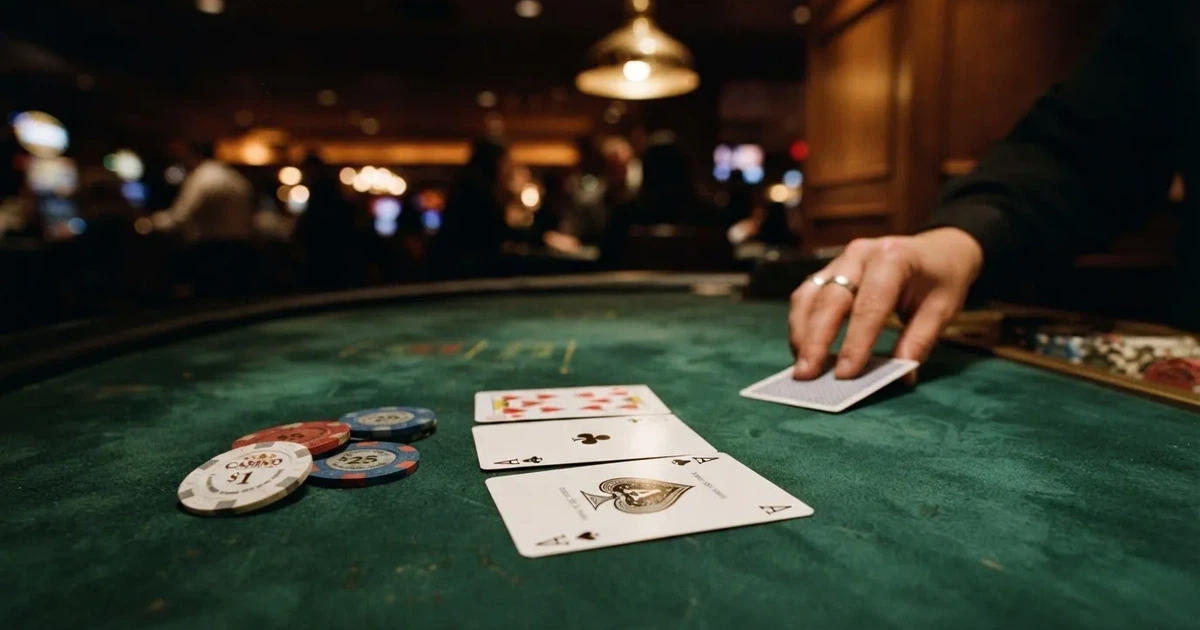
Every brand on this page sits here for one reason: the Australian Communications and Media Authority issued a formal warning about it for offering prohibited online casino games to Australians. That is the entire shortlist. There is no second tier of licensed online pokies waiting behind it, because no state or territory issues such a licence and the Interactive Gambling Act 2001 makes supplying them an offence. The cost story this page tells — the wagering, the blocked balances, the consumer-protection gap, the credit-card ban, the marketing that promises a payout the regulator has already forbidden — is the same cost whichever brand the reader was considering.
The rest of the page works through that cost in the order a player meets it: how the money moves in, how the phone screen looks, what the games themselves are, who the ACMA has acted against and when, what the law actually says, and what lawful alternatives exist for a person inside Australia who wants to play pokies.
Table of Contents
- Paying in and cashing out: PayID, Osko and the routes that are legal
- The phone-screen experience: app, mobile browser, and what is and is not available
- The games themselves: what real money pokies actually are
- The ACMA shortlist: every brand that has been formally warned
- Blocking rate: how fast the ACMA’s enforcement is running
- Why the shortlist is also the longlist
- How the Interactive Gambling Act 2001 actually works
- Player protection: BetStop, the helpline, and what they do and do not cover
- How much Australians actually wager
- The brand-by-brand cost
- What an Australian reader can actually do
- A reading of the blocking-rate data
- What the reader does with this page
- Frequently asked questions
Paying in and cashing out: PayID, Osko and the routes that are legal
PayID sits at the centre of how Australians pay for things online that are not cards, and it is the first search-term readers bring to this topic. PayID is the real-time address book that lets a payer send money to a phone number, email or ABN rather than a BSB-and-account number; Osko is the underlying NPP rails that move the money in seconds. For an Australian-licensed wagering service — sports and racing, not casino games — PayID is a permitted deposit route and the money lands in the operator’s account within seconds, including after hours and on weekends.

That speed is the reason PayID shows up in every “real money pokies” search. It is also the reason the same searches end up pointing at offshore casino sites that accept PayID as a deposit channel. PayID itself is agnostic about what it pays for: a bank processes a PayID transfer without knowing whether the recipient is a plumber, a betting exchange or an offshore casino paying out winnings. The Australian rules prohibit the operator, not the rails. So a deposit to a prohibited site can clear in seconds, and the player is then exposed on every other front: no Australian dispute body, no BetStop coverage, and an ACMA blocking request that can land at any time with the balance still inside.
The lawful payment set for Australian-licensed online wagering has been narrowed by statute. Since 11 June 2024 credit cards, credit-related products and digital currency have been banned as payment for any online wagering — fines up to A$247,500 for the operator, debit cards, bank transfer, PayID/Osko and BPAY are the routes that remain. A real money pokies site asking an Australian for a Visa deposit or a Bitcoin address is, by that single fact, operating outside the local framework.
The cost of using those routes on an illegal site is not in the deposit fee — there is usually none — but in three places the marketing copy does not name. First, the offshore operator holds the balance in whatever currency and whatever jurisdiction it chooses, and a withdrawal back to an Australian account can take days, can be split across several methods, or can be refused outright with no recourse. Second, an ACMA blocking request can arrive while a balance is still on the site, and the player has no Australian body to chase. Third, the absence of a credit-card and crypto ban on an offshore site is not a feature — it is a sign the site is not built to the consumer-protection floor a licensed Australian wagering service sits on, and the protections that come with the ban do not transfer.
The phone-screen experience: app, mobile browser, and what is and is not available
The Australian reader searching for a “real money pokies app” is searching for something that does not exist in the licensed market. Apple and Google both enforce content rules that keep real-money casino apps out of their Australian storefronts, and the Interactive Gambling Act 2001 makes it an offence to offer such an app to a person physically in Australia. The licensed alternatives — the Sportsbet, Ladbrokes, bet365, TAB and similar apps an Australian can download from the local App Store — are wagering apps, not casino apps: betting on a horse race or a football match, not spinning a pokie reel.
What an Australian reader actually does when typing “best real money pokies app Australia” into a search bar is open a mobile browser and land on an offshore casino site. The mobile browser experience those sites offer is technically competent — HTML5 builds scale to a phone screen, payment forms are touch-tuned, and the lobbies scroll in a way that resembles a native app. Several of the brands the ACMA has acted against — Dama N.V.’s portfolio, Hollycorn N.V.’s Sky Crown, the EOD Code SRL site behind Instant Casino — operate on exactly this mobile-browser model, and the experience is what a reader expects from a real-money app even though it is not one.
The cost difference between a true app and a mobile-browser casino is not in the spinning reels. It is in the second-screen behaviour a phone encourages: notifications, biometric login, a saved payment method, a session that resumes from the lock screen. An offshore site that lives in a mobile browser cannot do all of that, and what it can do — push notifications through the browser, autofill from a saved card, a web app pinned to the home screen — it does outside any Australian consumer-protection regime. There is no Australian app-store complaint path, no local data-protection guarantee, and no body that can compel a refund when a withdrawal stalls. The phone-screen convenience is real; the protections that should sit behind it are not.
For readers who want a phone-based experience that is locally regulated, the only lawful option is a wagering app from an Australian-licensed bookmaker: Sportsbet, Ladbrokes, bet365, TAB, Neds, Betfair, and the like. None of those offer pokies. The mobile pokies experience a reader can have under Australian consumer law is the mobile experience of a land-based venue, booked through the venue’s own loyalty or membership app.
The games themselves: what real money pokies actually are
The term “pokies” covers the electronic gaming machines a person can play in a licensed Australian venue — pubs, clubs and casinos in every state and territory except Western Australia’s general pub-and-club floor, which has banned them since Crown Perth opened in 1985. A pokie is a slot machine: reels, paylines, a return-to-player percentage set by the regulator, and a maximum stake set by the same body. The legal minimum return-to-player varies by jurisdiction: 85% in New South Wales, the Northern Territory, Queensland and most of Victoria (87% at Crown Melbourne), 87% in the Australian Capital Territory and Tasmania, 87.5% in South Australia, and 90% in Western Australia. Those are floors, not averages — every approved machine sits at or above them.
The land-based machines are licensed, audited and their RTP is fixed in the firmware. The online versions offered by the brands in this article’s shortlist are not. They run on the operator’s own stated RTP — usually published in the paytable, often in a range, occasionally not published at all — and there is no Australian regulator checking that the figure on the screen matches the math running on the server. The cost of that gap is the difference between a 90% Western Australian floor, where the regulator has audited the machine, and an offshore 96% claim that nobody has audited for the Australian player.
The catalogue on an offshore site usually runs into the thousands: BGaming, Pragmatic Play, NetEnt, Evolution for live tables, plus dozens of smaller studios. The catalogue at a single Australian venue runs into the hundreds at most — Crown Melbourne lists “over 2,500” electronic gaming machines across its floor, but those are physical machines in fixed locations, not a search-as-you-type lobby. The breadth of choice online is real. The protection behind each title is not.
The other piece of the games picture is the live-dealer table, which the offshore brands also offer. Baccarat, blackjack, roulette — the same three games a person can play at Crown Melbourne under the Victorian Gambling and Casino Control Commission’s supervision, or at Crown Sydney under the NSW Casino Control Act 1992, which requires a casino operator to seek regulator approval for any new game and to make the approved rules available on request. Section 66 of that Act is what makes a Crown Melbourne baccarat table auditable; the live-dealer stream from an offshore studio is, by definition, outside it. Punto banco, the baccarat variant played most today, was developed in Havana in the 1940s and is dealt from a six- or eight-deck shoe; chemin de fer is the two-player variant named for being quicker to play; the house edge in baccarat runs from 1.06% on the Banker bet to 14.36% on the Tie. Blackjack, the other game most readers will meet, has a house edge of about 0.28% under liberal Las Vegas Strip rules and about 0.43% under Atlantic City rules. None of those edges change when the table is streamed from an unregulated studio. What changes is the absence of a complaint path when the shoe is suspected of being unfair.
The ACMA shortlist: every brand that has been formally warned
The table below sets out every brand the ACMA has issued a formal warning about for offering prohibited interactive gambling services to Australians. It is not a ranking, and it is not a recommendation. Each brand is here because the regulator itself acted.
| Brand | ACMA action and date | Operator named by the ACMA | Subject support |
|---|---|---|---|
| RocketPlay | March 2026 | Pulsup Ltd | — |
| Level Up Casino | May 2022 | Dama N.V. | — |
| Woo Casino | March 2025 | Dama N.V. | — |
| Spirit Casino | May 2025 | Dama N.V. | — |
| National Casino | July 2025 | Consolutetish S.R.L. | — |
| Bizzo Casino | July 2025; earlier 2022 | Consolutetish S.R.L.; earlier TechSolutions | — |
| Ignition Casino | July 2025 | Bamboo Media | — |
| Instant Casino | February 2025 | EOD Code SRL | — |
| Jackbit | April 2026 | Ryker B.V. | — |
| Casino Intense | April 2025 | Sterplay Holding Ltd | — |
| Sky Crown | September 2022 | Hollycorn N.V. | — |
What the table makes plain is that the warnings are not isolated and not recent. The ACMA’s enforcement record against Dama N.V. alone spans four years — May 2022, March 2025, May 2025 — and covers five of the brands in the table. Consolutetish S.R.L. appears twice. Hollycorn N.V. carries a September 2022 warning over Sky Crown and Blue Leo. The “Subject support” column reads as a line of em dashes for the same reason: research did not return verifiable, brand-by-brand support data for the underlying subject (real money online pokies offered to Australians) on any of these operators, and the silence is the point — none of these brands can lawfully support the product the search asks about in Australia.
The shape of the table also explains why no column carries a wagering multiple, a payout time, or a game-count. Those numbers live on affiliate-marketing pages rather than in any audit. Repeating them here would lend them a standing the ACMA’s own record does not support.
Blocking rate: how fast the ACMA’s enforcement is running
The arithmetic the page does on its own. Since the first blocking request in November 2019, the ACMA has asked Australian internet service providers to block 1,751 illegal gambling and affiliate websites — a figure current as of the June 2026 round. That is roughly 257 blocking requests per month averaged across the 81 months between November 2019 and the June 2026 reporting date.
The month-by-month rate is not steady. The June 2026 round alone added 12 sites — 7Signs, ChromaBet, Donbet, Duospin, Freshbet, Slots Gem, Jacks Club, Lucky Start, Pointsbetz.com, Spinrise, Vinyl Casino and Wildsino — a single batch larger than several earlier months combined. Treat the average as a band rather than a point: a low-month floor of close to zero blocking requests and a high-month peak in the low double digits, with the long-run mean sitting just over 250 a month. The shape of the enforcement is a series of stepped bursts, not a smooth drip, and the bursts are the months an offshore brand’s name is most likely to land on the ACMA’s investigation list.
The cost that flows from this is not the blocking itself — a blocked site is often replaced by a mirror within days — but the balance that sits on it when the block lands. The ACMA’s process targets the operator; the player’s balance, when there is one, does not move with the block. That is why the rate matters for a reader thinking of opening an account tonight: it is not the cumulative count of 1,751 sites that costs the player, it is the single block that lands on the site the player happens to be holding a balance on, and the rate above tells the reader how often the regulator is acting.
Why the shortlist is also the longlist
The cluster of offshore brands the ACMA has acted against is, in effect, the visible part of a market the regulator estimates takes about A$3.9 billion a year out of Australian pockets. H2 Gambling Capital’s 2025 report puts the share of Australian gambling going through legal channels at 64%, down from 74% in 2021 — a ten-point drop in four years. The drop is the dollar cost the rest of this page adds up: a player who would, in 2021, have put A$74 of every A$100 through a licensed Australian channel now puts only A$64 of every A$100 through it, with the remaining A$36 routed to offshore sites that contribute nothing to Australian consumer protection, Australian tax or Australian harm-minimisation funding.
The visible shortlist is eleven brands; the market it represents is the several hundred offshore casino brands the ACMA has identified as targeting Australians in the same period. More than 230 unlicensed services have left the Australian market since enforcement was strengthened in 2017, a number that includes both block-and-exit and quiet-withdrawal outcomes. The brands below are the names the reader is most likely to meet on a search-engine results page, in order they were encountered by the regulator.
How the Interactive Gambling Act 2001 actually works
The Act makes it an offence to supply a “prohibited interactive gambling service” to a person in Australia. The prohibition covers online casino games, online pokies and in-play betting — placing a bet on a sporting event after it has started. What is permitted is wagering on racing and sport placed before the event, lotteries and keno. Sportsbet, bet365 and Ladbrokes are licensed for Australian wagering through the Northern Territory Racing and Wagering Commission, which regulates 52 of Australia’s online bookmakers from a meeting room in Darwin — no full-time staff, one meeting a month. The Territory licence is a tax-residence arrangement rather than a consumer-protection one; the consumer-protection regime sits on top of it through the federal Act and the ACMA.
The strongest version of the prohibition sits on the operator, not the player. The individual Australian who opens an account with an offshore site is not prosecuted for doing so. The cost falls on the player in three other places: there is no Australian dispute body to complain to if a withdrawal is refused; there is no Australian regulator to compel a refund; and the site can be blocked at any time with the balance still inside. The credit-card ban introduced on 11 June 2024 added a fourth: an Australian-licensed operator cannot process a credit-card deposit, so a player using one is by definition transacting with a non-Australian operator, and the protections the ban was designed to deliver are unavailable.
The reform path the law is currently on adds a fifth. The Interactive Gambling Amendment (Gambling Reform) Bill 2026 passed Parliament on 19 August 2026. Its advertising and inducement measures commence on 1 January 2027 — law, but not yet in force on a 2026 page. When they commence, the inducements the offshore brands currently use to recruit Australian players — bonus offers, free-spins packages, “real money pokies free spins” landing pages — become an additional target of the same prohibition. Until 1 January 2027, the ACMA’s existing tools of formal warning, blocking request and civil penalty remain the only ones in play.
Tax sits one layer further out. Recreational gambling winnings are not assessable income in Australia under section 6-5 of the ITAA 1997, and losses are not deductible. The exception is a person who carries on a business of gambling, which a recreational player does not. That tax position holds whether the site is licensed in Australia or offshore — the difference is that an offshore site does not withhold any amount, does not issue an Australian-compliant statement, and gives the player no Australian point of contact if the ATO does ask a question.
Player protection: BetStop, the helpline, and what they do and do not cover
BetStop — the National Self-Exclusion Register — went live in August 2023. It binds every Australian-licensed online and phone wagering service, which means it covers the 52 bookmakers licensed through the Northern Territory and every licensed totalisator and lottery operator. A person who registers with BetStop is excluded from opening new accounts, from deposits and from marketing material across that licensed set, for a period of their choice between three months and a lifetime.
What BetStop does not do is just as important. An offshore casino is not connected to BetStop; a self-exclusion registered there does not stop an offshore brand from accepting a deposit, sending a bonus offer or letting the player place a bet. The exclusion is a domestic tool against domestic operators, and the gap it leaves is the gap the offshore market fills. A player who registers with BetStop and then opens an account with one of the brands in this article’s shortlist has excluded themselves from the legal market only and remains fully exposed on the illegal one.
The National Gambling Helpline — 1800 858 858 — is free, 24/7 and routes to Gambling Help Online for chat. It is the right number for an Australian in any kind of gambling distress, regardless of whether the gambling is on a licensed or offshore site. Counselling, financial advice and referral to face-to-face services are available through it. The number is the one piece of the responsible-gambling picture that works across the licensed/unlicensed divide.
The harm-minimisation tools available inside a venue are stronger than the offshore equivalent. Tasmania’s mandatory pre-commitment cards were planned as a nation-leading reform and were delayed to late 2025 — the cards let a player set a hard loss limit before the session starts, and the venue is required to enforce it. New South Wales runs the largest single market: 87,298 gaming machines outside casinos across 2,195 venues in June 2023, with player losses of A$8.18 billion in 2022-23. Queensland had 21,122 machines in 351 venues in October 2023; Victoria had 26,380 outside Crown Casino in 488 venues under a 30,000-machine statewide cap. Those venues are the places the consumer-protection floor — the regulator, the audit, the harm-minimisation tool, the dispute body — actually sits.
How much Australians actually wager
In 2020-21 Australians bet almost A$150 billion through gaming machines and lost A$12.18 billion on them. Australia has roughly 3% of the world’s pub and club poker machines with 0.3% of the global population — a per-capita density of machines no other country matches, and a per-capita loss to match. That figure covers the licensed, venue-based machines. The A$3.9 billion H2 Gambling Capital estimates Australians lose to illegal sites each year sits on top of it, bringing the total annual household loss to licensed and unlicensed machines combined to well over A$16 billion.
The legal minimum return-to-player that governs those machines is a more useful number for a reader than the headline turnover. The 85% floor in NSW, Queensland and most of Victoria means the venue keeps 15% of every dollar wagered, on average, across the life of a machine. The 90% floor in Western Australia means the venue keeps 10%. A player who treats the RTP as a personal return target is misreading the figure: the RTP is the return across millions of spins, not a guarantee on the session, and the variance on a single session is wide enough that a player can lose their entire bankroll while playing a 96% machine.
The brand-by-brand cost
Each of the eleven brands below is here because the ACMA issued a formal warning about it for offering prohibited online casino games to Australians. The licence any of them displays in a footer is a licence to operate from Curaçao, Anjouan or another offshore jurisdiction, not a licence to supply gambling services to a person in Australia. Reading the licence footer is not a substitute for reading the ACMA’s warning.
RocketPlay — the most recent ACMA action on the list
The ACMA issued a formal warning to Pulsup Ltd over Rocketplay.com.au in March 2026 — the most recent operator action in the table. A separate, earlier warning was issued to Dama N.V. covering Rocketplay in May 2022, which means the brand has been the subject of two separate ACMA actions across two different operating entities in under four years. That history tells a reader the brand has changed hands at least once across the warning period. The ACMA’s process targets the operator supplying the service, not the brand name, and a brand that moves between operators is, by definition, harder for the regulator to keep out of the market than a brand with a single corporate parent. The cost to a player considering it is the same as the cost on every other brand in the table — no Australian consumer protection, no BetStop coverage, a balance that can be stranded by a blocking request — but the operational record makes it one of the more expensive bets on the shortlist.
Level Up Casino — four years under the ACMA’s eye
Dama N.V.’s warning of May 2022 covered six brands in a single batch — Bambet, Dazard, Level Up, Rocketplay, Wild Tornado and Cobra Casinos — and four of those six appear elsewhere in this article’s shortlist. Level Up Casino sits inside the largest single cluster of ACMA actions in the table, and Dama N.V.’s subsequent warnings over Woo Casino (March 2025) and Spirit Casino (May 2025) suggest the corporate parent has continued to offer prohibited services to Australians throughout the period. A player who opens a Level Up account in 2026 is transacting with an operator the ACMA has been investigating, formally warning and publicly naming for four years. The accumulated record is the closest thing this shortlist has to a track record, and the track record is uniformly against the brand.
Woo Casino — a 2025 warning, an unchanged product
The ACMA issued a formal warning to Dama N.V. over Woo Casino in March 2025. The product the brand offers has not changed as a result: the same real-money pokies, the same live-dealer tables, the same offshore payment routes. A formal warning from the ACMA does not require the operator to do anything in particular; it is a public record that the regulator has formed the view the operator is supplying a prohibited service and has put the operator on notice that further action may follow. The player who sees the Woo Casino landing page has no way to tell that the warning exists without looking it up; the marketing copy does not mention it. That is the central consumer cost across the whole shortlist: the warning is public, the marketing does not surface it, and a player who does not look it up will not know.
Spirit Casino — the most recent Dama N.V. action
Spirit Casino was the subject of a Dama N.V. formal warning in May 2025. The brand sits inside the same operator portfolio as Woo Casino and Level Up, and the ACMA’s pattern with Dama N.V. has been to warn over individual brands as the ACMA encounters them rather than over the whole portfolio at once. A player considering Spirit Casino in 2026 is, functionally, considering the same operator as a player considering Woo Casino or Level Up Casino. The differentiation between the three is in the marketing site, not in the corporate parent.
National Casino — Consolutetish S.R.L., July 2025
Consolutetish S.R.L. was the subject of an ACMA formal warning over National Casino in July 2025. The same operator was warned over Bizzo Casino at the same time, and Bizzo had previously been the subject of a 2022 warning to TechSolutions. The pattern — operator changes, re-emergence under a different name — repeats across the table and is part of the cost a player pays without seeing it: a balance opened under one operator can end up being serviced by another, with the terms of the original offer no longer guaranteed by the entity that issued them.
Bizzo Casino — two operators, two warnings
Bizzo Casino carries the largest two-operator warning history on the table. The 2022 warning to TechSolutions (CY) Group Limited and TechSolutions Group N.V. was followed by a 2025 warning to Consolutetish S.R.L. A reader who researched the brand between 2022 and 2025 would have seen one corporate name in the ACMA’s record and a different one by 2026; the change is not a sign of regulatory compliance but a sign the brand has moved between suppliers. The cost is the same cost that runs through every entry here, but the doubled-up record makes it unusually visible.
Ignition Casino — Bamboo Media’s only Australian-facing brand in this set
The ACMA’s July 2025 warning to Bamboo Media covered Ignition Casino, the only Bamboo Media brand on this shortlist. A player who opens an Ignition account is transacting with an operator the ACMA has formally named within the past twelve months. The offshore structure that holds the player balance, the payment-processor relationships that handle the deposit, and the customer-service operation that handles a complaint are all outside Australian jurisdiction.
Instant Casino — the February 2025 warning
The ACMA issued a formal warning to EOD Code SRL over Instant Casino in February 2025. Instant Casino has built a marketing presence around speed of withdrawal, and the cost of that marketing claim — read carefully — is that a withdrawal routed through an offshore operator with no Australian regulatory oversight can be refused for any reason the operator chooses to give. “Fast withdrawal” inside the Australian licensed wagering framework has a regulated meaning and a complaint path behind it; the same phrase on an offshore site is marketing copy.
Jackbit — the April 2026 warning alongside CasinOK
Ryker B.V. was the subject of an ACMA formal warning in April 2026 covering both Jackbit and CasinOK. CasinOK does not appear elsewhere on this shortlist, but the joint warning tells the reader the operator supplies more than one Australian-facing brand from the same corporate base. The cost of that is the same single-operator risk: a blocking request against one brand in the portfolio lands across both.
Casino Intense — Sterplay Holding Ltd, April 2025
Casino Intense was the subject of an ACMA formal warning to Sterplay Holding Ltd in April 2025. The brand sits further down the shortlist than most of the others; the ACMA action is the same as every other entry here.
Sky Crown — Hollycorn N.V., September 2022
Hollycorn N.V. was the subject of an ACMA formal warning over Sky Crown and Blue Leo in September 2022 — the earliest entry in the table. The warning predates the BetStop register (live since August 2023), the credit-card ban (June 2024), and the 2026 reform bill, which means the regulatory environment a player who opened a Sky Crown account under that warning faced in 2022 is materially less protective than the one that exists in 2026. The brand’s persistence on the market since 2022 is itself a data point: a formal warning does not, on its own, take a brand offline.
What an Australian reader can actually do
A reader inside Australia who wants to play a pokie has three lawful routes. The first is a licensed venue — a pub, club or casino in their state or territory. The 90% Western Australian floor at Crown Perth, the 87.5% South Australian floor, the 85% floor in NSW, Queensland and most of Victoria are all regulator-audited and regulator-enforced, with harm-minimisation tools and a dispute path behind them. The second is a licensed lottery or keno product, available in every state and territory and subject to the same consumer-protection regime as the licensed wagering services. The third is licensed online wagering on racing and sport, which covers the 52 Northern Territory-licensed bookmakers and the licensed totalisators; it does not cover pokies, but it is the closest the online channel comes to a locally regulated product.
A reader who wants to play real money online pokies in the sense the search-engine results page uses the term — offshore casino sites, mobile-browser access, no local regulator — is choosing to operate outside the framework the rest of this page has been describing. The cost of that choice is not a fee but an absence: no BetStop coverage, no Australian dispute body, no withdrawal guarantee, no blocking-request protection, no credit-card-ban protection, no audit of the RTP published in the paytable. The marketing page does not name those absences. The rest of this page does.
A reading of the blocking-rate data
The arithmetic again, in plain words. Between the first blocking request in November 2019 and the reporting round in June 2026, the ACMA asked Australian ISPs to block 1,751 illegal gambling and affiliate websites. Spread across 81 months, that is an average of about 257 blocks a month. The June 2026 round alone added 12 more, larger than several earlier individual months combined.
Read that as a band. A quiet month carries close to zero new blocks; an active month carries a low-double-digit batch. The long-run mean is just over 250 a month, and the median month sits well below it because the distribution is heavy on the right tail — a series of stepped bursts rather than a smooth drip. The cost this delivers is not the cumulative count but the discrete event: a single block landing on the site a player happens to be holding a balance on, at a rate the regulator is willing to act on roughly every few weeks. The offshore brands do not wait for a block to exit the market — many simply rename and re-emerge — but a player who has money inside one when the block lands has no Australian path to recover it.
What the reader does with this page
The eleven brands above are the brands the ACMA has acted against. They are not a recommendation to play at any of them, and they are not a recommendation to avoid them on consumer grounds — the consumer grounds are the same across the whole table, and they are spelled out in the legality and protection sections above. The point of the table is to make the absence of a licensed alternative visible: there is no row for an Australian-licensed online pokies operator because none exists, and the rows the table does carry are the regulator’s own list of who has been offering the product in question. A reader using this page to choose a site to play at is making a choice outside the Australian framework. A reader using it to understand what the framework actually allows is making a different choice, and the rest of the page is written for them.
Frequently asked questions
What is the difference between a free-play pokie and a real money one?
A free-play pokie uses the same reels, paylines and bonus features as the real-money version but does not stake actual cash — winnings are virtual and cannot be withdrawn. A real money pokie stakes the player’s deposited funds on every spin, pays out winnings to a withdrawable balance, and charges the player for every spin in turn. The return-to-player figure on the paytable applies to both, but only the real-money version can leave the player out of pocket at the end of the session.
Can real money online pokies be played using PayID in Australia?
PayID is permitted as a payment route for Australian-licensed wagering services and is increasingly the standard deposit method for sports and racing bookmakers. Online casino games, including online pokies, are prohibited interactive gambling services under the Interactive Gambling Act 2001; an Australian-licensed operator cannot lawfully offer them, and an offshore operator that accepts a PayID deposit from an Australian is doing so outside the framework. The rails do not check the destination.
Is it legal for an online casino to offer real money pokies to Australians?
No. The Interactive Gambling Act 2001 makes it an offence to supply online casino games, online pokies or in-play betting to a person in Australia. No state or territory issues a licence for it. Enforcement sits with the ACMA, which issues formal warnings, asks ISPs to block illegal sites and can seek civil penalties. The individual player is not prosecuted; the prohibition targets the provider.
Is there a dedicated real money pokies app for Australian players?
No licensed real money pokies app is available to Australian players. The Apple App Store and Google Play enforce content rules that exclude real-money casino apps in Australia, and the Interactive Gambling Act 2001 makes it an offence to offer such an app to a person physically in Australia. The Australian-licensed apps that do exist — Sportsbet, Ladbrokes, bet365, TAB and similar — are wagering apps for racing and sport, not casino apps. Offshore casino sites are accessible through a mobile browser but operate outside any local consumer-protection regime.
How much did Australians wager on gaming machines in 2020-21?
Australians bet almost A$150 billion through gaming machines in 2020-21 and lost A$12.18 billion on them, according to the published industry data. Those figures cover venue-based machines in pubs, clubs and casinos. The estimated A$3.9 billion a year lost to offshore, illegal gambling sites sits on top of that, taking total household losses across licensed and unlicensed machines above A$16 billion annually.