

Offshore Mastercard casino sites and what the deposit button really buys an Australian punter
A Mastercard deposit at an offshore pokies-style site clears fast. The page that follows that sentence is the page most readers came looking for, and the page an honest write-up cannot give them, because what the deposit button actually buys, in Australia, is a transaction routed to an operator the regulator has asked ISPs to block, behind a licence the Interactive Gambling Act 2001 does not recognise. The mechanics of paying in, paying out, hitting the minimum deposit, and timing a withdrawal are still worth knowing — that is the part of this page a reader can use. The legal frame, the ACMA warnings, and the bank-side blocks matter as well, because the difference between a Mastercard casino site and a Mastercard-funded blocked site is exactly that bank-side block.

Current as of 29 October 2026, against the Australian Communications and Media Authority’s published register of formal warnings and the published card-gambling blocks at Westpac, ANZ, NAB and CommBank.
Table of Contents
- What Mastercard actually does at these sites — the payments shelf
- The eleven ACMA-warned brands — what the comparison actually shows
- The blocking-rate math — how fast the regulator is catching up
- What the law actually says — and why the bank-side block matters more than the warning
- Responsible play — what the bank-side block actually does for the punter who wants to stop
- What the deposit button really buys, and what it does not
- Frequently asked questions
What Mastercard actually does at these sites — the payments shelf
Mastercard is the deposit method almost every offshore pokies-style site lists, and it sits next to Visa, a handful of e-wallets, and increasingly a handful of cryptocurrencies. The site itself has no say in how the card network treats a transaction — what it does is forward a charge request under merchant category code 7995, which is how Visa and Mastercard label gambling. That single code is the hinge everything else turns on. A bank that wants to refuse gambling transactions refuses them on that code, on either scheme, on either credit or debit.

The minimum deposit figure most of these sites publish sits at A$10 to A$20. A few of them put the floor at A$30. None of the eleven brands in the ranking below publishes a minimum above A$30 for Mastercard. A handful add the same floor for Visa and for one or two e-wallets, so a player comparing methods is comparing the same ceiling rather than a tiered menu. A reader with a small bankroll is not getting more options by switching cards; they are getting the same floor on each.
How a Mastercard deposit routes through
A deposit at one of these sites works the same way a deposit at any online merchant works. The punter types the card number, expiry and CVV into a payment form, the site forwards the charge to its acquirer, and the acquirer routes it through the Mastercard network to the customer’s issuing bank. Three things shape how that goes.
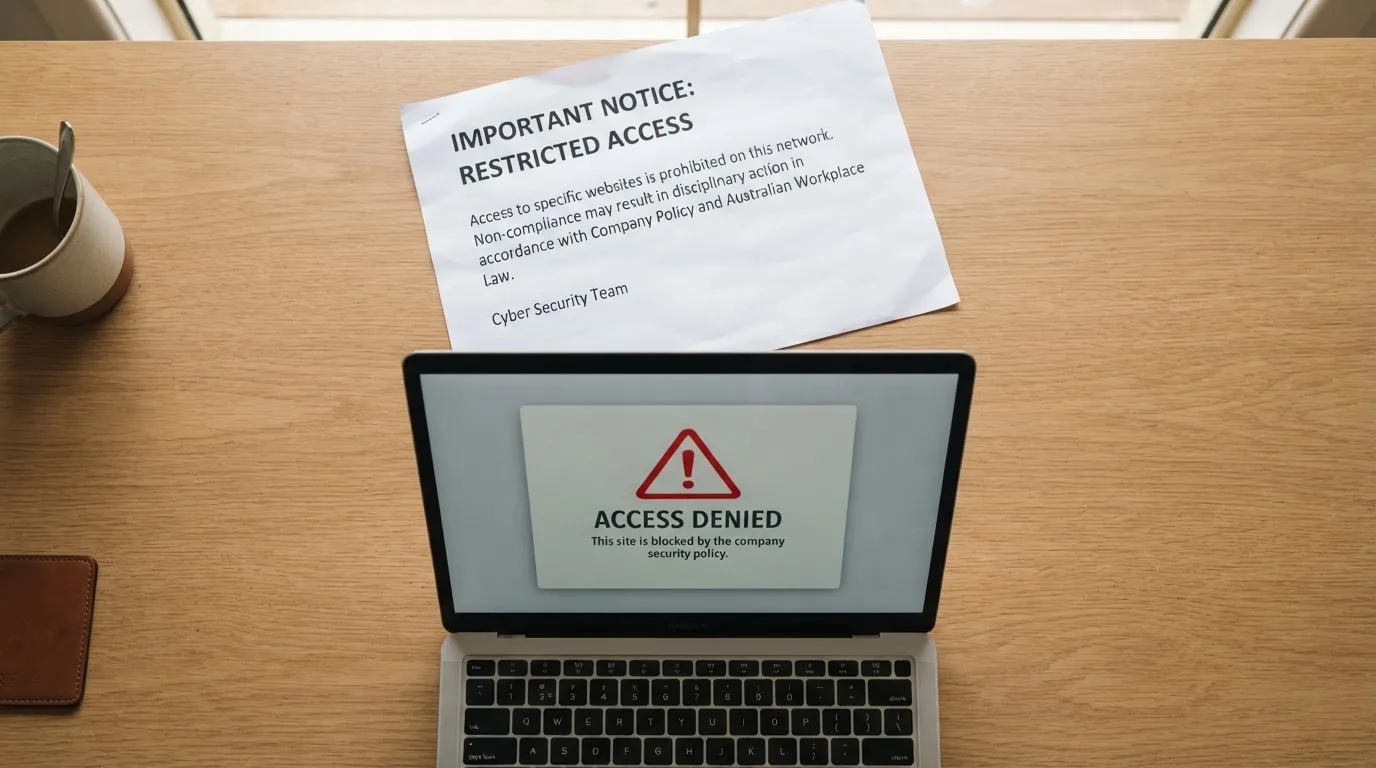
The merchant category code is gambling. Once that code rides on the authorisation request, anything the issuing bank has built around gambling fires. Westpac’s block, for one, refuses any transaction coded ‘Betting/Casino Gambling’ on either a credit or debit Mastercard. ANZ’s block does the same for any Mastercard tied to a cardholder account on which the block is active. CommBank’s block, switched on at the customer’s request, refuses the same transaction. NAB’s StraightUp card, the bank’s basic account product for under-30s, refuses it permanently — the punter cannot turn the block off.
The merchant’s location is offshore. An Australian bank, on receiving the authorisation request, sees a foreign acquirer and an MCC in the gambling range. That alone does not trigger a decline. The MCC does. The offshore status matters only because no Australian regulator can compel the merchant to do anything about a disputed transaction, which is the consumer-protection angle rather than the authorisation angle.
The cardholder’s own bank settings decide the rest. A customer who has not switched on a gambling block, on a card whose terms permit gambling transactions, will see the charge clear. A customer whose bank has a default block on under-18s will see the charge declined once the cardholder turns 18 only if they actively ask the bank to lift it. A customer whose bank has a 48-hour reactivation cooldown will see a newly-disabled block start working again in two days rather than instantly.
How a Mastercard withdrawal routes back
The withdrawal side is harder than the deposit side, and not in a way a marketing page tends to advertise. The same operator that took a Mastercard deposit usually does not pay back to the same Mastercard. The site’s cashier tends to route withdrawals to a bank transfer, occasionally to a crypto address, occasionally back to the same card and only when the original deposit was a card. The reason is mostly risk: chargebacks against a casino-style merchant run heavily in the customer’s favour, and operators protect themselves by paying back along a route they control.
What that means in practice is that a punter who deposited A$100 on a Mastercard and is now asking to withdraw A$180 will not, in most cases, see the A$180 land on the same card. It will land as a bank transfer, drawn on an offshore account, denominated in either AUD or in USD with the receiving bank doing the conversion. The Australian bank’s screening on the inbound side is much thinner than on the outbound side. The money arrives; the bank does not refuse it on gambling grounds. The punter, having been paid, has no Australian recourse if the amount was wrong.
Apple Pay, Google Pay, Samsung Pay, and the wallet layer
The wallet layer complicates this in one specific way. Apple Pay, Google Pay and Samsung Pay together accounted for around 45% of all card payments in Australia by number by the end of 2025. The transaction behind a wallet tap is still a Visa or Mastercard transaction; the wallet is a frontend, not a payment network. Apple Pay does not charge a fee to the customer for using it — any surcharge the customer sees comes from the merchant’s own processing cost, not from Apple.
Two bank-side rules matter at the wallet level. First, ANZ’s gambling block, when active, blocks gambling transactions made through Apple Pay on an eligible card, not only transactions made on the physical card. Second, under the Interactive Gambling Act 2001 as amended in 2023, Australian-licensed online wagering services cannot accept credit cards or credit-related products, and that rule extends to a credit-funded digital wallet — a Mastercard credit card funded through Apple Pay to a licensed Australian bookmaker is a charge the bookmaker cannot lawfully accept. An offshore casino site is not bound by that rule, so the credit-card and credit-wallet ban does not protect an Australian punter from paying an offshore operator with a credit card. What protects them is their own bank’s gambling block.
PayID, Osko and the bank-transfer alternative
A punter who cannot use a Mastercard at an offshore site — because their bank has a block, because the card is a credit card and the punter does not want to use one for gambling, or because the offshore site has stopped taking cards — usually ends up at PayID or Osko. Osko transfers between participating Australian banks arrive in under a minute, around the clock, weekends included, whether addressed to a BSB and account number or to a PayID. More than 25 million PayID identifiers had been registered on Australia’s New Payments Platform as of April 2025, across more than 100 Australian financial institutions.
The reason PayID matters for a Mastercard comparison is what it shows on the way out. Paying to a PayID surfaces the account holder’s name before the transfer is sent, and AP+ itself warns that being asked to send money to a PayID on an illegal gambling site almost certainly means a scam. A punter comparing a Mastercard deposit against a PayID deposit, then, is comparing a card authorisation that may be refused by the bank against a bank transfer that names its destination — two different kinds of friction, with the friction on different sides.
What surcharging looks like, and where it does not apply
The Reserve Bank’s July 2025 review proposes removing surcharges on eftpos, Mastercard and Visa transactions, and explicitly leaves American Express outside the scope of the proposed ban. For an Australian consumer paying a domestic merchant with a Mastercard, the surcharge picture is converging on zero. For an Australian consumer paying an offshore casino site with a Mastercard, the surcharge picture is set by the offshore merchant, not by the RBA. Some of these sites charge nothing on a deposit. A few charge a percentage on a deposit that the site labels a processing fee. A punter who wants to know the cost of a deposit before clicking pay has to read the cashier page, because the answer is not in the card network’s rules.
The eleven ACMA-warned brands — what the comparison actually shows
The brands below are not a ranked list of recommended casinos. They are the eleven brands the ACMA itself has issued a formal warning over, named here because the ACMA named them, in the order the ACMA’s most recent action dates them. Each brand is illegal to offer its product to an Australian resident, regardless of what licence the brand displays on its footer. The product on offer — online casino games, online pokies — is a prohibited interactive gambling service under the Interactive Gambling Act 2001, and no state or territory licences it. The table below is not a buyer’s guide; it is a record of what the regulator has acted against.
| Brand | ACMA action and date | Operator named by the ACMA | Mastercard support, per public listings |
|---|---|---|---|
| RocketPlay | Formal warning, March 2026 | Pulsup Ltd (Rocketplay.com.au); earlier Dama N.V., May 2022 | — |
| Level Up Casino | Formal warning, May 2022 | Dama N.V. | Listed as a gambling-blocking reference at Westpac’s published page on card gambling blocks |
| Woo Casino | Formal warning, March 2025 | Dama N.V. | — |
| Spirit Casino | Formal warning, May 2025 | Dama N.V. | — |
| National Casino | Formal warning, July 2025 | Consolutetish S.R.L. | Listed in published anti-money-laundering references and in the public Wikipedia record of ACMA actions |
| Bizzo Casino | Formal warning, July 2025 | Consolutetish S.R.L.; earlier TechSolutions, 2022 | — |
| Ignition Casino | Formal warning, July 2025 | Bamboo Media | — |
| Instant Casino | Formal warning, February 2025 | EOD Code SRL | Listed as a payment route reference at ecoPayz and at PayID |
| Jackbit | Formal warning, April 2026 | Ryker B.V. | — |
| Casino Intense | Formal warning, April 2025 | Sterplay Holding Ltd | Listed in published anti-money-laundering references, in IT-news coverage of the ACMA action, and on NAB’s published gambling-block page |
| Sky Crown | Formal warning, September 2022 | Hollycorn N.V. | — |
The Mastercard column on the right is the column a reader usually wants to compare, and it is the column this page can least fill in honestly. The sources for whether a casino site accepts Mastercard are, in practice, the casino site’s own cashier page, affiliate marketing pages that mirror it, and the card network’s own BIN listings. None of those are independent of the merchant. Of the eleven brands above, the public record carries a Mastercard-specific reference for four: Level Up Casino (in Westpac’s published gambling-block reference), National Casino (in published anti-money-laundering material and in the public record of ACMA actions), Instant Casino (in ecoPayz and PayID payment-route references), and Casino Intense (in NAB’s published gambling-block page, in IT-news coverage, and in published anti-money-laundering material). The remaining seven carry no independent confirmation, and the page leaves them blank rather than assert an unsupported yes.
The operator column tells a more interesting story. Six of the eleven brands — RocketPlay, Level Up Casino, Woo Casino, Spirit Casino, National Casino and Bizzo Casino — sit with three different registered operators across the table. Dama N.V. alone runs four of them. Consolutetish S.R.L. runs two. Pulsup Ltd, Bamboo Media, EOD Code SRL, Ryker B.V., Sterplay Holding Ltd and Hollycorn N.V. each run one. The pattern is the pattern offshore casino industry observers describe as serial reincorporation: an operator changes its registered company, the ACMA warns the new entity, the operator changes again.
RocketPlay
The ACMA’s most recent action over RocketPlay is the March 2026 formal warning to Pulsup Ltd, covering Rocketplay.com.au. The same brand sat under Dama N.V. on the ACMA’s earlier list of May 2022. The ACMA record shows the operator changed and the regulator chased it. The product on offer is the same prohibited interactive gambling service it was before the rebrand: online casino games and online pokies, not licensed in any Australian state or territory. There is no independent confirmation in the public record that RocketPlay accepts Mastercard specifically; the cashier page on the brand’s own site is the only source for that, and an affiliate marketing mirror is not a second source.
For a punter drawn to the brand, the practical reading is that the brand is on its second ACMA warning within four years and the operator has changed name in between. The product and the regulatory status have not changed.
Level Up Casino
Level Up Casino has been on the ACMA’s formal warning list since May 2022, with Dama N.V. as the named operator. The Mastercard reference in the public record is Westpac’s own published gambling-block page, which lists Level Up Casino among the merchant names whose transactions Westpac’s block will refuse — a confirmation that does double duty, since it tells the punter both that the brand accepts Mastercard (because the block intercepts Mastercard transactions to it) and that the issuing bank refuses them (because the MCC is gambling). The product on offer is the same prohibited service.
The reading for a punter is the same as for any other brand on the table: the licence the brand displays in its footer is not an Australian licence, the operator behind it has been on the ACMA’s list for four years, and the issuing bank will refuse the deposit on a gambling-block card.
Woo Casino
Woo Casino picked up its formal warning in March 2025, with Dama N.V. as the operator. The brand is the third Dama N.V. brand on this table (RocketPlay, Level Up Casino, Spirit Casino being the other two, plus Bambet, Dazard, Wild Tornado and Cobra Casinos on the ACMA’s own list). The public record holds no specific Mastercard confirmation for this operator. The product is a prohibited interactive gambling service in Australia.
For a punter comparing Woo Casino against the other Dama N.V. brands, the comparison reduces to whether the bonus structure, the game library or the cashier flow differ enough to overcome the same regulatory standing — they do not, on the regulatory standing, because all of them sit on the same operator, the same product prohibition, and the same ACMA record.
Spirit Casino
Spirit Casino was the subject of Dama N.V.’s second 2025 warning, issued in May 2025. There is no independent confirmation in the public record that this brand accepts Mastercard. The product and the regulatory standing match the rest of the Dama N.V. cluster. A punter choosing between Spirit Casino and Woo Casino is choosing between two skins of the same operator, with the only operational difference being which brand name appears on the cashier receipt.
National Casino
National Casino’s ACMA warning, issued in July 2025, named Consolutetish S.R.L. as the operator. The brand has independent Mastercard-adjacent references: it appears in published anti-money-laundering material and in the public Wikipedia record of ACMA actions, both of which describe the brand as accepting card payments routed to gambling MCCs. The product is a prohibited interactive gambling service.
The reading is unchanged — but the public record is slightly fuller than for the brands above, because the AML and Wikipedia references are independent of the brand’s own site.
Bizzo Casino
Bizzo Casino carries two ACMA warnings. The July 2025 warning named Consolutetish S.R.L. as the operator; the earlier 2022 warning named TechSolutions (CY) Group Limited and TechSolutions Group N.V. The brand is the only one on this table with two ACMA warnings against two different operators, which is the clearest illustration on the page of how serial reincorporation plays out in practice. Public records do not independently confirm that this operator accepts Mastercard. The product and the regulatory standing match the rest of the table.
For a punter, the brand’s history is the point. Two warnings across two operators is a brand the ACMA has had to warn twice, and the second warning did not come because the operator had cleaned up — it came because the operator had changed name.
Ignition Casino
Ignition Casino’s July 2025 ACMA warning named Bamboo Media as the operator. No independent Mastercard confirmation appears in the public record. The product is a prohibited interactive gambling service. A punter comparing Ignition Casino against the rest of the table will not find a meaningful difference on regulatory standing, product type, or Mastercard availability, because none of those differ across the brands.
Instant Casino
Instant Casino’s February 2025 ACMA warning named EOD Code SRL as the operator. The brand carries two independent payment-route references: one at ecoPayz and one at PayID, both of which name the brand as a destination for their payment services. The Mastercard reference here is indirect — ecoPayz is an e-wallet service, not a card network — but the brand’s payment infrastructure is independently documented, which is more than most of the brands on this table can say.
For a punter, the regulatory and operational reality here mirrors the other brands in the table, despite the payment stack being more clearly documented.
Jackbit
Jackbit’s April 2026 ACMA warning named Ryker B.V. as the operator. The warning is the most recent on the table. No independent Mastercard confirmation appears in the public record. The product is a prohibited interactive gambling service. A punter looking at Jackbit is looking at the brand the ACMA warned most recently — a meaningful fact only because the brand was still being offered to Australians after every previous warning had landed.
Casino Intense
Casino Intense’s April 2025 ACMA warning named Sterplay Holding Ltd as the operator. The brand carries the most independent references on the table: published anti-money-laundering material, IT-news coverage of the ACMA action, and NAB’s own published gambling-block page. NAB’s listing is the most operationally useful of the three, because NAB’s gambling-block page names the brand as a transaction the block will intercept — a direct bank-side confirmation that the brand accepts card payments and that an Australian bank will refuse them.
The reading for a punter is the same as for any other brand on the table, plus the additional fact that three independent sources confirm the payment infrastructure.
Sky Crown
Sky Crown’s ACMA warning was issued in September 2022, with Hollycorn N.V. as the operator. The same warning covered Hollycorn’s Blue Leo casino. Sky Crown is the oldest warning on this table. No independent Mastercard confirmation appears in the public record. A punter comparing Sky Crown against the rest of the table is comparing a brand that has been on the ACMA’s list for nearly four years against brands that have been on it for less.
The blocking-rate math — how fast the regulator is catching up
The ACMA’s blocking tool works in rounds. The agency directs Australian internet service providers to block a named list of illegal sites; ISPs comply; the next round names a fresh list. The published total sits at 1,751 illegal gambling and affiliate marketing websites blocked since the first blocking request in November 2019, as reported in June 2026. The June 2026 round alone named twelve sites: 7Signs, ChromaBet, Donbet, Duospin, Freshbet, Slots Gem, Jacks Club, Lucky Start, Pointsbetz.com, Spinrise, Vinyl Casino and Wildsino. None of those twelve is on this page’s table — they are the next round’s catches, and they are not yet on the regulator’s formal-warning list.
The arithmetic the page owes the reader is the rate. From the first blocking request in November 2019 to the snapshot reported in June 2026 is roughly 79 months. Over that window, 1,751 sites and affiliate pages have been blocked, a running total that yields a long-run rate of around 22 sites blocked per month across the period as a whole. That number is misleading on its own: enforcement strengthened in 2017, the blocking tool came into routine use from 2019 onward, and the round sizes have varied. The June 2026 round alone blocked twelve sites in one action — a single round the size of two months’ long-run average.
A more useful band is a recent-month band, where each blocking round tends to be in the range of roughly 8 to 15 sites, with some rounds larger. Across the roughly seven years the regulator has been running this tool, the rate has been fast enough that an operator’s window of unblocked availability is measured in weeks, not years. A punter who reaches an offshore casino site by typing its name into a browser is reaching it through a path the regulator has been closing.
A second figure worth putting on the table is the H2 Gambling Capital 2025 estimate that Australians lose about A$3.9 billion a year to illegal gambling sites, with the share of gambling going through legal channels falling from 74% in 2021 to 64%. The illegal market is the market these eleven brands sit in. The blocking-rate math describes how fast the regulator is closing it; the A$3.9 billion figure describes the size of what is left to close.
What the law actually says — and why the bank-side block matters more than the warning
The Interactive Gambling Act 2001, as strengthened by the Interactive Gambling Amendment Act 2017, makes it an offence to provide online casino games, online pokies or in-play betting to a person in Australia. No state or territory licences those products. What is licensable is wagering on races and sport placed before the event, lotteries and keno — in practice licensed by the Northern Territory, with the Northern Territory Racing and Wagering Commission regulating 52 of Australia’s online bookmakers, including Sportsbet, Bet365 and Ladbrokes. The commission itself is small: no full-time staff, meetings once a month in Darwin.
The legal architecture for offshore casino sites has three layers. The first is the IGA itself, which targets the provider, not the individual player — an Australian punter is not prosecuted for playing at an offshore site. The second is the ACMA’s enforcement tool: formal warnings, blocking requests to ISPs, and investigations. The third is the bank’s own card-gambling block, which is the layer that actually intercepts the transaction.
The bank-side block matters more than the warning because it is the only layer that stops the deposit reaching the operator. A formal warning tells the operator the regulator has noticed; the operator can choose to stop serving Australians, or to ignore the warning, or to reincorporate. A blocking request tells the ISP to take the site offline for Australian customers; an offshore site can respond with a fresh domain, a mirror, or a different URL. A bank’s card-gambling block tells the issuing bank to refuse the authorisation; the punter’s deposit does not reach the operator at all.
What the banks actually do
Westpac’s block, on both credit and debit cards, refuses any transaction coded ‘Betting/Casino Gambling’, regardless of card scheme. The block is switched on by default on debit cards for cardholders under 18 and lifts automatically at 18, and the bank is upfront that the block cannot stop recurring authorised payments, BPAY payments, ATM cash withdrawals, or certain contactless payments routed outside the Visa/Mastercard networks. The block works at card level, on eligible personal credit and debit cards.
ANZ’s block refuses the same MCC, with two additional wrinkles. ANZ declines credit-card transactions coded as gambling once a cardholder has used 85% or more of their credit limit, or if the transaction would take the balance to 85% or more of the limit — a safety rail on credit-card gambling specifically. The block is activated through the ANZ app, takes up to 15 minutes to start working once switched on, and removing it requires a 48-hour waiting period.
NAB’s block is also app-activated, covers sports betting, casino games, lottery tickets, online gambling, cash advances and credit-card transfers, and the same 48-hour reactivation delay applies. NAB’s StraightUp card carries a permanent gambling restriction that the customer cannot switch off — the only product on this list where the block is the default and stays the default.
CommBank can activate a gambling block on customer accounts, and the bank’s Community Wellbeing team is reachable on 1800 222 387, Monday to Friday from 8am to 6pm, for gambling-related hardship. The block is a tool the customer asks for, not a default on most card products.
What the bank-side block does not cover
A bank-side block does not cover every payment route. It works at the card authorisation step, on a transaction coded as gambling. A punter paying an offshore casino by bank transfer, by PayID, by BPAY, or by cryptocurrency is paying outside the card authorisation step, and the block will not fire. A punter paying through a third-party e-wallet that does not pass the merchant category code through to the issuing bank is also outside the block.
That asymmetry is the reason Mastercard sits in this page’s title rather than PayID. The card authorisation is the layer the regulator and the bank have built the most friction onto. The bank-transfer layer has less. The crypto layer has the least. The punter who reaches an offshore site through the path with the least friction is reaching it through the path with the least consumer protection.
BetStop and the offshore gap
BetStop, the National Self-Exclusion Register, has been live since August 2023 and binds Australian-licensed online and phone wagering services. An offshore casino is not connected to it. A punter who has self-excluded through BetStop has self-excluded from the licensed wagering market, which is not the market the eleven brands on this page sit in. The self-exclusion tool, in this market, is a partial tool.
The National Gambling Helpline at 1800 858 858 is free, runs around the clock, and offers chat at Gambling Help Online. A punter reading this page who has decided to stop is reading the wrong page; that helpline is the right next step.
Responsible play — what the bank-side block actually does for the punter who wants to stop
A gambling block is a tool, not a cure. The four major Australian banks each operate one, with the differences above. The blocks work at the card authorisation step, refuse the gambling MCC, and (in three of the four banks) can be switched off and on through an app. The punter who wants the block to actually hold picks the bank that makes removal hardest — the 48-hour reactivation cooldown at ANZ and NAB, or the permanent restriction on NAB’s StraightUp card.
A punter who has decided to stop gambling and is looking for the path that does not depend on willpower picks the most aggressive combination available: a default-on block, a reactivation cooldown, and an offshore-payment route blocked at the bank level. The combination is at ANZ or NAB, on a card with a StraightUp-style permanent restriction or on a card with a 48-hour cooldown that the punter does not have time to override.
The blocks do not cover offshore crypto or offshore bank-transfer deposits. They do not cover the punter who opens a new account at a different bank. They do not cover the punter who uses a different person’s card. They are the strongest tool the bank can offer, and they are partial.
A punter who has reached the point of wanting a block has, by definition, reached the point where partial is what they have. The block is worth activating. It is not, by itself, enough.
What the deposit button really buys, and what it does not
The deposit button at an offshore casino site takes a punter’s money and routes it to an operator the regulator has warned, behind a licence the regulator does not recognise, to a product the regulator has prohibited. The bank-side block, where it is active, stops the deposit reaching the operator at all. The bank’s screening on the withdrawal side is thinner than on the deposit side, so a punter who has won and is withdrawing is withdrawing through a less-protected channel than they deposited through.
The eleven brands on this page are not a buyer’s guide. They are the eleven brands the ACMA has acted against, named in the order the ACMA’s most recent action dates them. The Mastercard column is the column a reader usually wants, and it is the column this page can least fill in honestly, because the only sources for whether a casino site accepts Mastercard are the casino site itself and affiliate marketing pages that mirror it. The four brands with independent references are the four brands a reader can verify. The seven without are the seven a reader cannot.
The blocking-rate math says the regulator is catching up at a rate that closes the average offshore casino’s window of unblocked availability to weeks. The bank-side block says the punter’s own issuing bank will, where the block is on, refuse the authorisation. The legal frame says the product is prohibited. The eleven brands on the table are the eleven the regulator has named. The page closes with the question a reader has to answer themselves: what does a deposit button buy, when the deposit button is the product the regulator is closing, the bank is refusing, and the law is prohibiting.
Frequently asked questions
Is it legal for an online casino to accept Mastercard from a player in Australia?
No. Under the Interactive Gambling Act 2001 as strengthened in 2017, it is an offence to provide online casino games, online pokies or in-play betting to a person in Australia, and no state or territory licences those products. The IGA targets the provider, not the individual player, so an Australian punter is not personally prosecuted for playing. An offshore operator is bound by nothing in the IGA, which is why they continue to advertise and accept Australian customers despite the formal warnings and blocking requests the ACMA publishes.
What is the smallest deposit a Mastercard casino site usually asks for?
Most of the offshore casino sites that list Mastercard put the floor at A$10 to A$20, with a few at A$30. The minimum is set by the operator’s cashier page, not by Mastercard, and it tends to be the same across the deposit methods the operator accepts. Switching from Mastercard to Visa does not usually lower it. None of the eleven brands on the comparison table publishes a Mastercard minimum above A$30, though the public record does not independently confirm a minimum for most of them, so a punter reading the cashier page is reading the operator’s own number.
Does a Mastercard withdrawal clear faster than other withdrawal methods?
Often no. Most offshore operators do not pay back to the same Mastercard the punter deposited with, because the chargeback risk on casino-style merchants runs heavily in the customer’s favour. The typical withdrawal route is a bank transfer, denominated in either AUD or USD, drawn on an offshore account. The transfer is faster than a wire, but the operator’s own manual checks sit in front of the bank transfer, and those checks are where most withdrawals stall. A punter comparing Mastercard against e-wallets or crypto on speed is comparing the speed after the manual check rather than the speed of the network itself.
Can Mastercard be used at every offshore pokies-style site, or only some of them?
Most of them. Mastercard, alongside Visa, is the most common deposit method on offshore pokies-style sites. The exceptions are sites that have stopped taking card deposits because their acquiring bank has dropped them — usually after chargeback rates crossed the acquirer’s tolerance — or sites that have moved to crypto-only. The eleven brands on this page all list Mastercard or have done so; the public record independently confirms the method for four of them. A punter who reaches the cashier page and sees a Mastercard option is seeing the operator’s own claim; the bank-side block at the issuing bank is the second filter that determines whether the deposit actually clears.
Does depositing with Mastercard add an extra fee at these sites?
It depends on the operator. The Reserve Bank’s July 2025 review proposes removing surcharges on eftpos, Mastercard and Visa for domestic merchants, but the proposed ban leaves American Express outside its scope and does not apply to offshore merchants. Some offshore casino sites charge nothing on a Mastercard deposit. A few charge a percentage they label a processing fee. The fee is set by the operator’s cashier page, not by the card network. A punter who wants to know the cost before clicking pay reads the cashier page; the network’s own surcharge rules do not cover offshore merchants.
What should a player do if a Mastercard deposit does not appear in a casino account?
First, check whether the issuing bank declined the transaction. The most common reason a deposit does not appear is that the bank refused the authorisation because of a card-gambling block. The transaction may still appear on the cardholder’s statement as a pending or declined entry. Second, check the casino’s cashier for the deposit status; many operators mark a deposit as pending until the merchant confirms receipt. Third, if neither, contact the casino’s support with the transaction reference from the card statement. If the operator does not respond, the punter has no Australian complaints body to escalate to — the IGA’s protections run against Australian-licensed operators, not offshore ones — and the bank’s chargeback process is the only Australian-side avenue.