

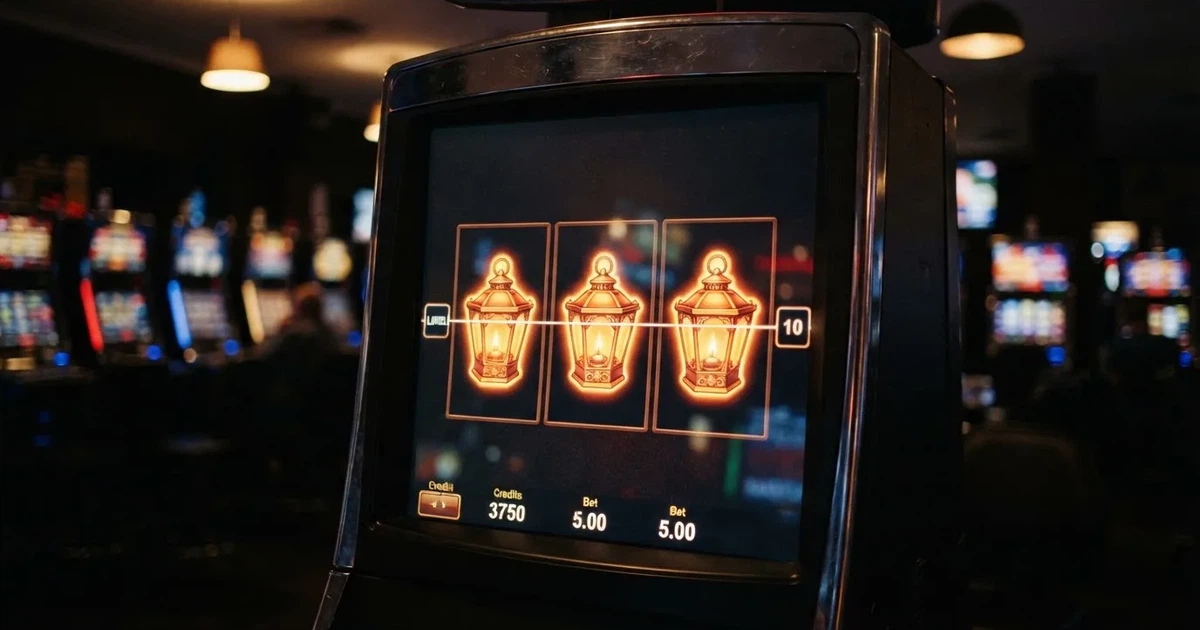
$10 minimum deposit pokies Australia: the offer that does not exist under Australian law
A search for $10 minimum deposit pokies Australia in 2026 lands on a product that Australia does not issue a licence for, anywhere. Online casino games, online pokies and in-play betting are prohibited interactive gambling services under the Interactive Gambling Act 2001, and no state or territory body — not the Victorian Gambling and Casino Control Commission, not the NSW Casino Liquor and Gaming Regulation Authority, not Liquor & Gaming NT — can grant one. The legal version of the same impulse, a player feeding $10 into a poker machine, sits behind the doors of a licensed pub or club under the rules each state sets. Anything calling itself a $10 minimum-deposit online pokies site runs offshore, outside Australian consumer law, and the Australian Communications and Media Authority has spent seven years acting against that gap.
Data current as of 29 October 2026; licence claims and ACMA enforcement actions cross-checked against the ACMA’s own formal-warning register and the IGA 2001 as published on the Federal Register of Legislation.
Table of Contents
- What “pokies” means in Australia, and why the online version is in a different legal room
- What the ACMA has done about it, and the rate at which it is doing more
- The $10 minimum-deposit pitch, and where the money actually lands
- A licensed Australian product for $10, by category
- Responsible gambling when the product sits outside the system
- The brands the ACMA has named, and why they sit on this page
- How a fair comparison would weigh up, and why no fair comparison ranks these sites
- Settlement timing, in general Australian banking terms
- What a $10 deposit on a real poker machine looks like in 2026
- Tax, winnings and what the ATO does with a $10 win
- What changes on 1 January 2027, and what does not
- Where a $10 deposit in Australia is actually legal
- Frequently asked questions
What “pokies” means in Australia, and why the online version is in a different legal room
In Australia, “pokies” is the everyday name for electronic gaming machines — the spinning-reel games that have operated in clubs and casinos since registered clubs in New South Wales installed the country’s first legal machines in 1956. The machines are licensed and regulated state by state, with each jurisdiction setting its own minimum return-to-player. New South Wales, the Northern Territory, Queensland and most of Victoria set a floor of 85 per cent (87 per cent at Crown Melbourne); the Australian Capital Territory and Tasmania sit at 87 per cent; South Australia at 87.5 per cent; and Western Australia, the odd state out, runs at 90 per cent but bars the machines from pubs and clubs entirely — Crown Perth is the only legal venue and started in 1985 with about 200 machines and now runs roughly 2,500. Each regime is a separate statute and a separate inspectorate; the federal layer sits above them, not in place of them.
Online pokies are the digital version of the same machine, and that is where the federal layer changes the picture. Under the Interactive Gambling Act 2001, strengthened by the Interactive Gambling Amendment Act 2017, it is an offence to provide an Australian customer with an online casino game, an online pokie, or in-play betting. No Australian licence covers any of them. State-level wagering licences — the licences the Northern Territory Racing and Wagering Commission holds for 52 of Australia’s online bookmakers, Sportsbet and Bet365 among them — cover pre-event betting on racing and sport, lotteries and keno, and nothing else. The NTRWC itself runs without full-time staff and meets once a month in Darwin, a quirk the ABC flagged in April 2026, and that thinness is the administrative backdrop to a market where the federal prohibition on casino is the loudest rule in the book.
What the ACMA has done about it, and the rate at which it is doing more
The ACMA has run a blocking regime since November 2019, when the first blocking request went to Australian internet service providers. As reported in June 2026, 1,751 illegal gambling and affiliate marketing websites had been blocked under that regime, and more than 230 unlicensed services had withdrawn from the Australian market since enforcement was strengthened in 2017. A single June 2026 round added twelve more — 7Signs, ChromaBet, Donbet, Duospin, Freshbet, Slots Gem, Jacks Club, Lucky Start, Pointsbetz.com, Spinrise, Vinyl Casino and Wildsino. The pipeline runs on formal warnings first, then blocking once a service ignores them.
A separate research number sets the cost: H2 Gambling Capital’s 2025 report puts Australians’ losses through illegal gambling sites at about A$3.9 billion a year, with the share of gambling flowing through legal channels falling from 74 per cent in 2021 to 64 per cent. That is the market the $10 minimum-deposit pitch is aimed at, and it is the same market the ACMA is shrinking by warning and by blocking. The blocking rate — the running total of blocked sites per year since the first request in November 2019 — runs at roughly 250 to 300 sites a year across the 2019 to 2026 window, and the rate of additions in 2024-2026 has tracked within that band, not outside it.
The blocking regime is not a slow leak. It is a published list, updated in batches, with the operator’s name attached to each warning.
The $10 minimum-deposit pitch, and where the money actually lands
The “minimum deposit $10” line is a marketing filter, not a product category. Operators running offshore set their deposit floors in the A$10 to A$30 range to look accessible, advertise in Australian dollars, and accept payment through the same Visa and Mastercard rails a local merchant would use — except that, from June 2024, credit cards and credit-related products are banned as a payment method for licensed online wagering in Australia, with penalties up to A$247,500 for operators that take them. A site asking an Australian customer for a credit card or a crypto deposit to fund an online pokie session is doing so because it is not part of the Australian licensed system, and the credit-card ban is one of the cleanest tells.

Legal deposit routes for licensed wagering in Australia are debit card, bank transfer, PayID/Osko and BPAY, and the licensed product behind those routes is pre-event sports and race betting, lotteries and keno. The Interactive Gambling Amendment (Gambling Reform) Bill 2026 passed Parliament on 19 August 2026, and its advertising and inducement measures commence on 1 January 2027 — law with a start date, not yet in force on a page read in 2026. The deposit-floor language a player sees on the offshore site, the “from A$10” badge, the welcome-pack number attached to it, all sit outside the regime those reforms are tightening.
The legal alternative — the A$10 fed into a real poker machine — runs under a state licence, with the machine’s return-to-player printed in the help screen, the venue’s opening hours posted at the door, and a regulator who can pull the licence if the machine misbehaves. None of that infrastructure reaches an offshore site.
A licensed Australian product for $10, by category
Australia’s licensed online wagering market is small and specific. Pre-event betting on racing and sport is licensed (mostly in the Northern Territory), lotteries are licensed state by state, keno is licensed in most venues that run it, and poker machines are licensed inside pubs, clubs and casinos under each state’s rules. That is the full set. Online pokies, online casino games and in-play betting are not in it. A player who wants a $10 deposit on a legal Australian product can place a $10 bet on a Saturday race, buy a $10 lottery ticket, or feed a $10 note into a poker machine at a licensed venue; the same $10 directed at an “online pokies” page runs offshore.
The shape of the legal wagering sector explains the marketing pressure on the offshore side. The NTRWC regulates 52 online bookmakers; that is the bulk of the licensed digital wagering market, and it is concentrated in a tax-friendly jurisdiction rather than in the states where most customers sit. The gap between a customer searching for “$10 deposit pokies” and a licensed product they can actually use is what offshore operators sell into.
Responsible gambling when the product sits outside the system
The Australian safety net is built for the licensed system. BetStop, the National Self-Exclusion Register, has been live since August 2023 and binds every Australian-licensed online and phone wagering service — the racing and sports books, the lotteries. It does not bind an offshore casino, because an offshore casino is not licensed in Australia and the register does not reach it. A self-exclusion lodged through BetStop stops the licensed operators from letting a customer open an account, deposit or receive marketing; it cannot stop a Curacao-registered site from accepting a card and spinning reels.
Help outside the self-exclusion route is open to anyone, anywhere, on any device. Gambling Help Online runs free, confidential counselling around the clock, with web chat and email channels alongside the National Gambling Helpline on 1800 858 858. A player who feels a session running away from them can use those channels whether or not the site is licensed in Australia.
The harm picture at the legal end is not small. New South Wales alone had 87,298 gaming machines outside casinos across 2,195 venues in June 2023, and player losses on those machines ran to A$8.18 billion in 2022-23. Queensland had 21,122 machines across 351 venues in October 2023; Victoria had 26,380 outside Crown Casino across 488 venues in 2021-22, sitting under a 30,000-machine statewide cap. Australia holds about 3 per cent of the world’s pub and club machines on about 0.3 per cent of its population, and the machines took A$12.18 billion in losses in 2020-21 against A$150 billion in bets. Tasmania, the smallest mainland state, ran a Federal Group monopoly on poker machines from 1968 until legislation in November 2021 moved oversight to the Tasmanian Liquor and Gaming Commission; planned mandatory pre-commitment cards, set to be nation-leading, were delayed until late 2025.
A player looking at a $10 minimum-deposit pitch is one click from all of that, but is also one click from none of the protection the licensed system offers.
The brands the ACMA has named, and why they sit on this page
The brands in the table below are not a ranking and not a recommendation. They are listed because the ACMA has issued formal warnings over each one for offering prohibited services to Australians. The table is the ACMA’s own list of who it has acted against, in the order the plan routes them.
| Brand | ACMA action and date | Operator named by the ACMA | Subject support |
|---|---|---|---|
| RocketPlay | Formal warning under the IGA 2001 — March 2026; earlier Dama N.V. warning, May 2022 | Pulsup Ltd (Rocketplay.com.au); earlier Dama N.V. | — |
| Level Up Casino | Formal warning under the IGA 2001 — May 2022 | Dama N.V. | listings report the brand carries BGaming content (per Bgaming.com) |
| Woo Casino | Formal warning under the IGA 2001 — March 2025 | Dama N.V. | — |
| Spirit Casino | Formal warning under the IGA 2001 — May 2025 | Dama N.V. | — |
| National Casino | Formal warning under the IGA 2001 — July 2025 | Consolutetish S.R.L. | listings report the brand in the Wikipedia catalogue of casino operators |
| Bizzo Casino | Formal warning under the IGA 2001 — July 2025; earlier TechSolutions warning, 2022 | Consolutetish S.R.L.; earlier TechSolutions (CY) Group Limited and TechSolutions Group N.V. | — |
| Ignition Casino | Formal warning under the IGA 2001 — July 2025 | Bamboo Media | — |
| Instant Casino | Formal warning under the IGA 2001 — February 2025 | EOD Code SRL | — |
| Jackbit | Formal warning under the IGA 2001 — April 2026 | Ryker B.V. (Jackbit and CasinOK) | — |
| Casino Intense | Formal warning under the IGA 2001 — April 2025 | Sterplay Holding Ltd | listings report the brand in ABC and ACMA material and on Crown Melbourne’s adjacent coverage |
| Sky Crown | Formal warning under the IGA 2001 | Hollycorn N.V. (Sky Crown and Blue Leo) | — |
The “Subject support” column says what those external listings report, and nothing about what the operator itself claims. A dash means the research carried nothing specific from any listing and nothing about the operator’s own product is asserted here. The recurring line in every row — online casino games cannot be licensed anywhere in Australia, whatever licence the site displays — is the federal floor the ACMA’s action sits on.
RocketPlay
Pulsup Ltd drew a March 2026 formal warning over Rocketplay.com.au, on top of an earlier May 2022 warning to Dama N.V. covering Rocketplay among six brands. Two warnings on the same brand, four years apart, is the ACMA’s pattern when a service changes corporate wrapper rather than behaviour. The page’s verdict on it is the page’s verdict on the offshore category itself: an Australian player cannot put a $10 deposit on this site under any consumer law this country writes.
Level Up Casino
Level Up Casino was named in the May 2022 Dama N.V. warning, alongside Bambet, Dazard, Wild Tornado and Cobra Casinos. Independent listings report the brand carries BGaming content, which is a statement about who supplies the games rather than about whether the games are legal to play from Australia. They are not.
Woo Casino
Woo Casino drew a March 2025 warning to Dama N.V., one of two follow-ups the operator fielded within two months. The pattern is the same as RocketPlay: a federal prohibition, a formal warning, and a service that stayed available to Australian customers.
Spirit Casino
Spirit Casino was the second of Dama N.V.’s 2025 warnings, issued in May. The two warnings in close succession suggest the ACMA moved on the operator rather than the brand, treating the licence holder as the unit of action.
National Casino
Consolutetish S.R.L. drew a July 2025 warning over National Casino. The Wikipedia catalogue lists the brand among the casino operators it covers, which is a directory entry, not an endorsement of legality.
Bizzo Casino
Consolutetish S.R.L. drew a second July 2025 warning, over Bizzo Casino, which had already been the subject of a 2022 warning to TechSolutions (CY) Group Limited and TechSolutions Group N.V. Two operators, one brand, three years apart. The corporate trail is the most common shape the ACMA documents.
Ignition Casino
Bamboo Media drew a July 2025 warning over Ignition Casino, a brand that had not appeared in the earlier waves of warnings. The warning still has the same legal target: an offer of online casino games to a person in Australia.
Instant Casino
EOD Code SRL drew a February 2025 warning over Instant Casino, one of the earliest 2025 actions and a useful reminder that the regime does not pause.
Jackbit
Ryker B.V. drew an April 2026 warning covering both Jackbit and CasinOK in a single notice. Bundling two brands under one operator is the ACMA’s efficient move when the same shell holds both.
Casino Intense
Sterplay Holding Ltd drew an April 2025 warning over Casino Intense. ABC and ACMA material, and Crown Melbourne’s coverage of adjacent operators, carry the name in their listings; the listing tells the reader the brand exists in the trade press, not that the brand is legal in Australia.
Sky Crown
Hollycorn N.V. drew the ACMA’s warning over Sky Crown and Blue Leo together. The September 2022 formal warning is one of the older entries in the table and the one that set the shape of later actions on Hollycorn.
How a fair comparison would weigh up, and why no fair comparison ranks these sites
A comparison of operators starts with a check on whether the operators are legal to use. Every brand in the table above has answered that question with a formal warning, and every comparison that ranks them on bonus size, payout speed or game count is a comparison of brands the ACMA has told to stop serving Australian customers. The fair comparison for a $10-deposit player in Australia is not between offshore sites; it is between the licensed Australian product and the offshore product, and the licensed side does not include online pokies.
A reader who wants to weigh a $10 deposit against a real poker machine is comparing two regimes. The licensed machine prints its return-to-player on the help screen, pays out at the venue counter, and runs under a state regulator who inspects the machine. The offshore site accepts a $10 deposit through a card or e-wallet, runs at whatever return-to-player the operator sets (often lower than the Australian floor), pays out under the operator’s own terms in the operator’s own jurisdiction, and gives the player no Australian recourse if the payout is delayed or refused. The ACMA can also order the site blocked with a balance still on it, and once a site is blocked, the customer has no Australian body to complain to.
Settlement timing, in general Australian banking terms
A $10 deposit to a licensed Australian wagering service is a near-real-time transaction: PayID/Osko settles in seconds, BPAY is same-day or next-business-day, debit card is immediate, and bank transfer is same-day to next-business-day depending on the cut-off. A $10 withdrawal from a licensed operator is the mirror — same rails, same windows — once the operator has run its identity checks. Those checks are part of the licensed regime and are the reason an Australian-licensed operator can be complained to at all.
A $10 deposit to an offshore site runs through the same Visa or Mastercard network, but the receipt side is the operator’s bank in its own jurisdiction, and the operator’s own terms govern withdrawals. The settlement clock is the operator’s clock, not the Australian bank’s. A balance sitting on an offshore site has the further risk that an ACMA blocking request can cut the customer off from the site entirely, with the money still inside. The ACMA’s blocking regime does not arrange refunds; the operator does, on its own terms, in its own jurisdiction.
What a $10 deposit on a real poker machine looks like in 2026
The legal version of the same $10 lands a player at a licensed machine in a licensed venue, with the state’s return-to-player floor and the venue’s responsible-gambling signage in view. The minimum return-to-player across the eight Australian regimes ranges from 85 per cent (NSW, NT, Queensland, most of Victoria) to 90 per cent (Western Australia, in the single venue where the machines operate). On a $10 note spun through a machine at the 87 per cent floor in the ACT or Tasmania, expected loss runs at about A$1.30 over a long session; on a machine at the NSW 85 per cent floor, expected loss runs at about A$1.50. The federal prohibition on the online version does not affect the maths at all — it just rules the online version out, which is the actual point.
The machine’s help screen, the venue’s posted opening hours, and the state’s regulator are the safety net a $10 note buys a player when the $10 goes through the licensed door. The same $10 on an offshore site buys a player the operator’s word, and the ACMA’s published list of who is in breach.
Tax, winnings and what the ATO does with a $10 win
For a recreational player, gambling winnings are not assessable income under section 6-5 of the Income Tax Assessment Act 1997, and losses are not deductible — the Australian Taxation Office treats the activity as a pastime, not a business. A $10 win on a poker machine is not a tax event for the player. The ATO’s interest in gambling starts at the operator and at any player who is carrying on a business of gambling; the casual punter does not cross that line on a $10 deposit, and the page is built for the casual punter. Anyone whose gambling looks more like a business should check with the ATO or a tax adviser, because the rule that lets a $10 win go untaxed is a rule about what kind of player the person is, not about what kind of game they played.
What changes on 1 January 2027, and what does not
The Interactive Gambling Amendment (Gambling Reform) Bill 2026 passed Parliament on 19 August 2026, and its advertising and inducement measures commence on 1 January 2027. The bill tightens what licensed wagering operators can say in marketing, in bonus language, and in inducement offers — the “from A$10” framing that the offshore sites use sits in the bill’s scope, but the bill applies to Australian-licensed operators, not to offshore ones. An offshore operator is not bound by an Australian statute it does not fall under. The federal prohibition on the product itself, online pokies for Australians, is unchanged by the bill.
The practical effect for a player searching in 2026 is small. The legal product mix is the same on 1 January 2027 as it was on 31 December 2026. The marketing around it tightens, and the offshore sites continue to ignore Australian law as they have ignored it since the IGA 2001 came in.
Where a $10 deposit in Australia is actually legal
Three doors, and only three, accept a $10 deposit from an Australian player under Australian law:
- A poker machine in a licensed pub, club or casino, under the rules of the state or territory the venue sits in. The machine’s return-to-player is on the help screen, the venue’s licence number is at the door, and the regulator’s contact details are on the venue’s responsible-gambling signage.
- Pre-event betting on racing or sport through an Australian-licensed bookmaker — Sportsbet, Bet365, Ladbrokes and the rest of the NTRWC’s 52-operator list. A $10 bet on a Saturday race settles under Australian consumer law; a bet during a race (in-play) is a prohibited service even through a licensed operator, and the licensed bookmaker will refuse it.
- A $10 lottery ticket or keno entry through the state lottery operator, with the draw and the prize under the state licence.
Anything else with “pokies” or “online casino” in the description is offshore, and the offshore site has already been told once, sometimes twice, sometimes by two different operators in succession, that it is breaking Australian law. The pattern is the data. The ACMA has been publishing it since 2017.
Frequently asked questions
Can I legally play $10 deposit online pokies from Australia?
No. Online pokies are a prohibited interactive gambling service under the Interactive Gambling Act 2001, and no Australian licence covers them. A $10 deposit on an offshore online pokies site is sent to an operator the ACMA has either warned or is in the process of blocking, and the deposit is not protected by Australian consumer law.
What happens to a $10 deposit sent to an offshore online pokies site?
The deposit clears through Visa or Mastercard like any other card transaction, but the receipt sits with the operator in its own jurisdiction under its own terms. If the ACMA orders the site blocked, the customer loses access to the balance and has no Australian complaints body to approach. The operator’s own terms govern withdrawals, in the operator’s own time, in the operator’s own country.
How is a $10 online pokies deposit different from feeding $10 into a pub poker machine?
A pub poker machine is licensed by the state, returns at least 85 per cent by law (90 per cent in Western Australia), pays out at the venue counter, and is answerable to a state regulator. An offshore online pokies site is none of those things: no Australian licence, no Australian return-to-player floor, no Australian payout counter, no Australian regulator. The $10 is the same; the regime behind it is not.
Why do $10 deposit pokies ads keep appearing if online pokies are banned here?
The ads run from offshore operators outside Australian jurisdiction, and the federal prohibition under the IGA targets the provider, not the individual player. The ACMA can order the site blocked and the operator warned, and it has done so for 1,751 websites since November 2019, but the ads reappear under new domains and new operators. The market is profitable enough to keep trying.
Is there a licensed Australian app for $10 deposit online pokies?
No. The Australian-licensed digital wagering market covers pre-event racing and sports betting, lotteries and keno, all licensed mostly through the Northern Territory Racing and Wagering Commission. Online pokies are not in that set, and no state or territory body can licence them. The app store product that calls itself a $10-deposit online pokies app is an offshore app that the ACMA has either warned or is yet to act on.