


Casinos that accept Tether (USDT) from Australian players in 2026: the cost behind the coin
A Tether deposit is the same legal problem as a credit-card deposit: the Interactive Gambling Act 2001 bans the activity, not the token used to fund it. The coin is a wrapper, not a permission. The page below walks through what a USDT casino actually offers an Australian player in 2026, why that offer sits outside Australian law, and what the practical cost looks like once the marketing is set aside.
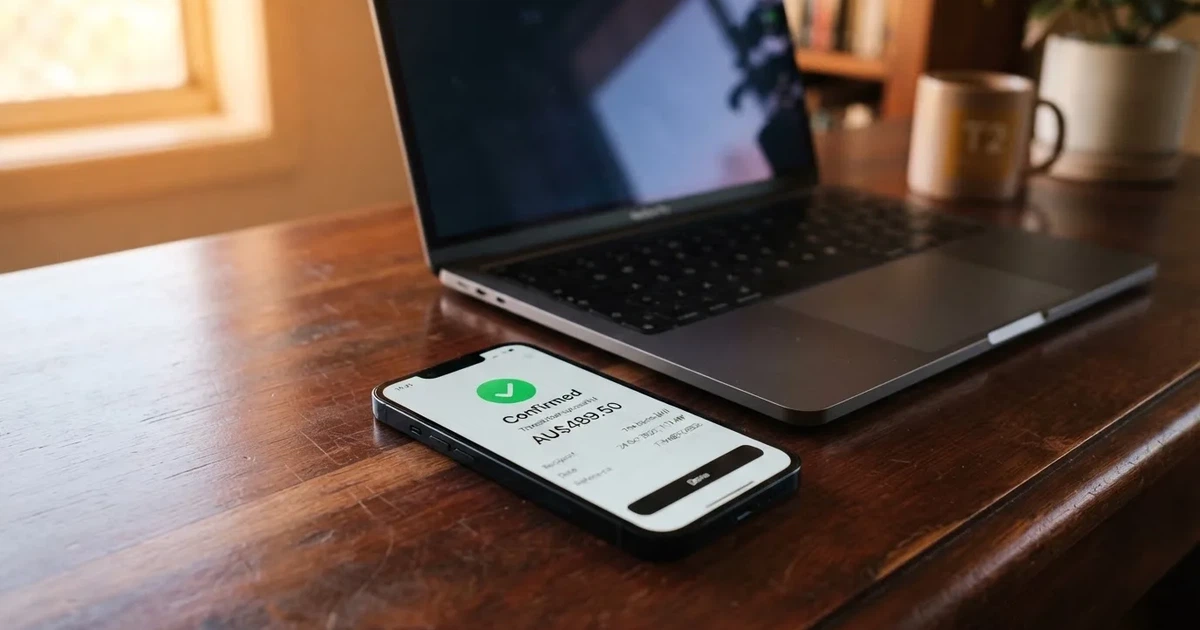
Currency snapshot: figures current as of 8 November 2026, verified against the Australian Communications and Media Authority (ACMA) register of formal warnings and blocking requests.
Table of Contents
- Why a casino that takes USDT costs an Australian player more than the deposit
- How a USDT deposit actually works on a casino site
- What the ACMA has done about offshore Tether casinos
- Responsible play on a Tether casino — and the parts that do not transfer
- The eleven operators the ACMA has named in formal warnings
- What the legal frame means in practice
- Tether itself — what a reader needs to know before sending USDT to any site
- The Australian payments picture, and where the offshore casino sits in it
- Where the cost really sits — the calculation
- A note on the format
- Frequently asked questions
Why a casino that takes USDT costs an Australian player more than the deposit
The offshore site pitching Tether to an Australian punter is selling two things at once. The first is the technical feature: a stable-value token that does not move with the market while it sits in the wallet, and a deposit that confirms on a public ledger rather than through a card processor. The second is what the technical feature is meant to obscure — that the site has no Australian licence and no Australian consumer protection, because no such licence exists for online casino games.
A Tether casino is not “the legal one, because it uses crypto”. The Interactive Gambling Act 2001, strengthened by the Interactive Gambling Amendment Act 2017, makes it an offence to provide online casino games, online pokies or in-play betting to a person physically in Australia. No state or territory issues a licence for those products. What can be licensed is wagering on sport or racing placed before the event, lotteries and keno, and that licensing happens at the Commonwealth level through state and territory regimes — the Northern Territory Racing and Wagering Commission (NTRWC) regulates 52 of Australia’s online bookmakers, including Sportsbet, Bet365 and Ladbrokes, and even that body runs on a part-time model with no full-time staff, meeting once a month in Darwin. The licensable product is not the casino product.
A USDT deposit changes nothing about that. The token is a payment rail, not a regulatory category. From 11 June 2024 the credit-ban rules extended that principle to the licensed wagering side: licensed online wagering service providers are barred by law from accepting cryptocurrency such as Tether, credit cards or credit-linked digital wallets, with penalties of up to A$247,500 for non-compliance. The same law was written so that the prohibition covers the legal market. The offshore market was already outside it.
The cost the reader pays for using Tether is therefore not the gas fee and not the spread between USDT and the Australian dollar at withdrawal. It is the loss of every protection that an Australian-licensed wagering account carries — a working complaints route, a real identity check tied to the operator’s own KYC, a payout that does not depend on the site staying reachable through an Australian internet service provider, and an account that connects to BetStop, the National Self-Exclusion Register. None of that transfers across to a casino licensed in Curaçao or Costa Rica. The offshore balance sits behind the same provider as the marketing page; if the regulator moves against the brand, the brand can be blocked with money still in it.
That framing is what this page runs on. The shelves below it set out the Tether mechanism, the legality, the responsible-gambling position, and the eleven operators the ACMA itself has named in formal warnings over the last four years. Each of those operators is listed because the regulator acted against it, not because it offers a better deal than the one next to it.
How a USDT deposit actually works on a casino site
Tether tokens are digital tokens pegged to fiat currencies and issued across several public blockchains — a structure the issuer markets as avoiding the volatility of other cryptocurrencies. The first tokens were issued on 6 October 2014 on the Bitcoin blockchain via the Omni/Mastercoin protocol, and the project was renamed Tether in November 2014 after a brief launch under the name Realcoin. As of January 2024, Tether operates across fourteen blockchain protocols, including Bitcoin, Ethereum, Tron, Solana, Polygon, Avalanche, Algorand, EOS, Celo, Near, Liquid Network, Bitcoin Cash, Statemint and Tezos.
The mechanism the reader sees is straightforward in shape and unforgiving in detail. The casino generates a deposit address, normally a long alphanumeric string, often labelled with a per-account memo or tag for chains that re-use addresses. The player sends USDT from their own wallet to that address, paying a network fee that depends on which blockchain they picked. The casino’s deposit page watches that address; once the transaction is confirmed by the receiving network the credit lands in the playing account. The casino does not see the player’s name at that point — the wallet is an opaque string on the ledger — but the deposit’s path across the chain is permanent and public.
Two practical points sit underneath that mechanism and most players miss them. First, the chain matters. Sending USDT on Tron when the casino’s deposit page asked for ERC-20 will usually lose the funds outright, because the tokens are not interchangeable across chains even when the ticker is the same. The Omni USDT on Bitcoin, the ERC-20 USDT on Ethereum, the TRC-20 USDT on Tron and the SPL USDT on Solana are distinct contracts with distinct addresses, and the receiver cannot move them between networks. Second, “confirmation” is not the same thing on every chain. Bitcoin blocks arrive on average every ten minutes, but the discovery is probabilistic — a confirmation can come much sooner or much later, with no guaranteed minimum or maximum. A casino will often credit after a small number of confirmations and reserve the right to wait for more on a large deposit. Bitcoin Cash targets the same ten-minute average and uses the same SHA-256 proof-of-work, but its 32-megabyte block size cap (raised from 8 megabytes in 2018) lets it absorb a heavier confirmation load at once. Tron and Solana run on different consensus models with much shorter nominal block times.
A withdrawal reverses the process. The player enters a destination wallet address, the casino’s cashier signs a transaction on the chain the casino holds the funds in, and the funds arrive after the network’s confirmation cycle. The address does not need to be a KYC-verified wallet, and the casino generally does not run on-chain identity checks itself — but an Australian player funding a casino in USDT is also, separately, a person transacting with a Digital Currency Exchange (DCE) provider at the on-ramp and off-ramp, and AUSTRAC registration has applied to those businesses for years; from 31 March 2026, that registration regime extended beyond crypto-to-fiat exchange to crypto-to-crypto exchange platforms, digital asset transferors, digital asset custody providers and stablecoin issuers and distributors. A wallet is anonymous in the same way a bank account is anonymous when no one has looked: the privacy comes from nobody asking, and that posture does not survive an audit.
The reader who uses Tether for the privacy is buying a thin form of it. The blockchain is pseudonymous, not anonymous — the address and the balance are public, the link to a real name lives at the exchange where the AUD was first turned into USDT.
What the ACMA has done about offshore Tether casinos
The Australian Communications and Media Authority does not, in practice, license offshore Tether casinos because none can lawfully accept Australian players in the first place. What it does is investigate, publish formal warnings, and ask Australian internet service providers to block sites. The pattern is consistent: a warning is published, then a blocking request follows when the site does not move.
According to the ACMA as reported in June 2026, a total of 1,751 illegal gambling and affiliate marketing websites had been blocked since the first blocking request in November 2019, and more than 230 unlicensed gambling services had left the Australian market since enforcement was strengthened in 2017. In the round reported on 26 June 2026 alone, the ACMA asked ISPs to block 12 more sites: 7Signs, ChromaBet, Donbet, Duospin, Freshbet, Slots Gem, Jacks Club, Lucky Start, Pointsbetz.com, Spinrise, Vinyl Casino and Wildsino.
The blocking rate — the running share of the cumulative site total that a single blocking round removes — provides a clearer picture of how enforcement keeps pace. At 12 sites added in the 26 June 2026 round against a cumulative 1,751, that round alone represents roughly 0.7 per cent of the running blocklist. Each individual blocking round has historically removed a single-digit-percentage slice of the cumulative blocklist, with the size of the slice depending on how many sites the regulator chooses to package into a single notice. A 0.7-per-cent round assumes a flat rounding policy of roughly one round per reporting period; the share rises sharply when the regulator groups many sites into one notice and falls when it works through them singly. The reader should treat the cumulative total as the live figure and the round-by-round share as a noisier reading of enforcement tempo.
The formal-warning register adds a second tier. The regulator publishes the name of the operator behind the site and the legal basis on which the warning was issued, and that record stays on the ACMA’s site long after the blocking round has moved on. The eleven brands reviewed in detail later on this page are all drawn from that register. A warning is not a prosecution and does not, by itself, take a site offline; it is a published statement that the regulator has assessed the offering and considers it to breach the Interactive Gambling Act 2001. A second warning to the same operator — as happened with Dama N.V., named in March 2025 over Woo Casino and again in May 2025 over Spirit Casino — signals that the first one was not answered by withdrawal from the market.
The offshore casino market responds to this in two ways. Some operators move on to fresh domains when a domain is blocked, which is why the cumulative count keeps climbing. Some operators quietly leave the Australian market after a warning, which is why the “more than 230 unlicensed gambling services had left the Australian market” figure exists. Both are the regulator’s leverage working — slowly, and without ever touching the player on the other end of the deposit.
The Tether piece of the prohibition
The token is not the offence. The activity is. From 11 June 2024, the law as enforced by the ACMA bars licensed online wagering service providers from accepting cryptocurrency such as Tether, credit cards or credit-linked digital wallets, with penalties up to A$247,500 for non-compliance. The rules were written for the licensed side; the offshore side was already outside them. The interesting consequence of that ban is what it does to a player’s legal options on the licensed side: a credit card is not a working deposit method either, the debit card and PayID route are the standard ones, and a player who wants to use crypto is, by definition, choosing a different market from the one the regulator covers.
What this means for the Tether casino set is that the activity is prohibited on both sides of the fence. A licensed Australian bookmaker cannot take USDT and an offshore casino taking USDT is operating on a regulatory footing that is already prohibited by statute. The token is the channel; the channel does not authorise the destination.
Responsible play on a Tether casino — and the parts that do not transfer
The standard responsible-gambling architecture that an Australian punter takes for granted on a Sportsbet or a Ladbrokes account is built around BetStop, the National Self-Exclusion Register (live since August 2023), the National Gambling Helpline on 1800 858 858, and Gambling Help Online’s chat service. None of these bind the offshore Tether casino.
BetStop only registers a person against Australian-licensed online and phone wagering services. A casino licensed in Curaçao or operating without a verifiable licence is not connected to the register; an exclusion request made to BetStop will not stop the offshore account from accepting deposits, and the offshore account will not flag a self-excluded punter on its own. The same gap applies to deposit limits, time-out tools and reality-check prompts: the most reputable of the offshore brands carry their own versions, but the regulator that audits them is not the ACMA, and the audit is not part of any Australian framework. A punter who has registered with BetStop and then opens a USDT account at an offshore brand is using a self-exclusion tool that does not reach the new account.
The punter’s bankroll considerations do not change because the deposit is in stablecoins. A USDT balance does not depreciate against the dollar while it sits in the wallet, and that is the genuine technical benefit the marketing leans on — but a USDT balance that gets turned into slot spins depreciates at the house edge, which is the same on a stablecoin deposit as on a card deposit. The “stable” part of stablecoin is a description of the token against fiat, not a description of the bankroll against the casino. A player who treats the USDT balance as a fixed budget for the session is making the right call; a player who treats it as a way to “lock in” winnings in dollar terms is reading the marketing rather than the math.
The Australian Taxation Office treats crypto assets such as bitcoin and Tether as property, not as money or foreign currency — so most disposals (selling for AUD, swapping for another crypto, or spending the tokens at a casino) are capital gains tax events. The ATO currently allows a 50 per cent CGT discount on crypto assets held longer than 12 months; from 1 July 2027 that flat discount is replaced by CPI indexation of the cost base plus a 30 per cent minimum tax rate on net capital gains. Gambling winnings of a recreational player are not assessable income and losses are not deductible — that is the model, with the standard caveat that a person carrying on a business of gambling falls under different rules. The tax framing is part of the cost even though it sits outside the casino’s terms.
The pathway to help is unchanged by the choice of deposit rail. National Gambling Helpline 1800 858 858 is free, 24/7, with chat at Gambling Help Online. The help is the same regardless of which coin funded the deposit that became a problem.
The eleven operators the ACMA has named in formal warnings
The operators below are listed because the ACMA has issued a formal warning over each of them for offering prohibited interactive gambling services to Australians. They are not ranked. They are not recommended. The list is the regulator’s own register, in the order the plan assigns.
A reader comparing these names needs to know what the regulator said, when it said it, and which operator behind the brand the warning named. The table below pairs each brand with the date of the ACMA action and the operator company that the warning named. The right-hand column records whether research found a publicly verifiable link between the brand and Tether support — a “listings-only” mark means a third-party listing reports it, not that the operator has confirmed it; “no data” means research found no listing at all and the brand is presented here on its other fields.
| Brand | ACMA action and date | Operator named by the ACMA | Tether support (as listings report) |
|---|---|---|---|
| RocketPlay | March 2026 | Pulsup Ltd | — |
| Level Up Casino | May 2022 | Dama N.V. | — |
| Woo Casino | March 2025 | Dama N.V. | listings report Tether support (en.wikipedia.org) |
| Spirit Casino | May 2025 | Dama N.V. | — |
| National Casino | July 2025 | Consolutetish S.R.L. | listings report Tether support (Nab.com.au) |
| Bizzo Casino | July 2025 (earlier 2022 to TechSolutions) | Consolutetish S.R.L. | — |
| Ignition Casino | July 2025 | Bamboo Media | — |
| Instant Casino | February 2025 | EOD Code SRL | — |
| Jackbit | April 2026 | Ryker B.V. | — |
| Casino Intense | April 2025 | Sterplay Holding Ltd | — |
| Sky Crown | September 2022 | Hollycorn N.V. | — |
The “earlier” entries on the table matter for the reader. Bizzo Casino was the subject of a 2022 formal warning to TechSolutions (CY) Group Limited and TechSolutions Group N.V., and then a separate 2025 warning to Consolutetish S.R.L. The shift in operator company between warnings is the regulatory equivalent of a rebrand: the same brand surfaces under a different parent without the player necessarily seeing the change. Woo Casino and Spirit Casino share the same parent operator — Dama N.V. — which is the same operator the ACMA warned in May 2022 over a six-brand group that included Level Up Casino. A reader who recognises one brand from that group is looking at siblings.
RocketPlay
The ACMA’s March 2026 formal warning named Pulsup Ltd as the operator behind Rocketplay.com.au. The same brand had earlier surfaced in the May 2022 warning to Dama N.V., which points to a reorganisation rather than a clean exit. The current operator entity is the one the regulator now publishes, and that entity’s name is what a reader should hold against any future blocking round. RocketPlay’s reviewed position here is the warning itself, and the fact that the brand’s earlier operator has been named in two further warnings over other Dama N.V. brands since. The reader’s takeaway is that the regulator has reached this name twice, in two different corporate envelopes, in four years.
Level Up Casino
The May 2022 warning to Dama N.V. covered Level Up Casino alongside five other brands — Bambet, Dazard, Rocketplay, Wild Tornado and Cobra Casinos. That made Level Up part of a six-brand cohort the regulator treated together. Research found no verifiable link between Level Up and Tether support, so the brand is reviewed here on the strength of the warning and its parent cohort. The reader’s takeaway is that the warning is one of six — a batch — rather than a targeted action against this name alone.
Woo Casino
Dama N.V. was warned over Woo Casino in March 2025 and again over Spirit Casino in May 2025, with the May 2022 batch sitting behind both. Woo Casino is the only brand in this set for which research found a third-party listing that mentions Tether support; the listing is from a general-purpose reference source and is reported here as the listing reports it, not as the operator’s own statement. The Dama N.V. recurrence is the regulator’s pattern: a warning in 2022, then two more in 2025, with the parent unchanged.
Spirit Casino
The May 2025 warning over Spirit Casino is the second of Dama N.V.’s 2025 warnings after Woo Casino. The parent operator’s name is the link back to the 2022 batch. Research found no verifiable link to Tether, so the brand remains under scrutiny as part of a parent company that the regulator has now named three times in four years.
National Casino
The July 2025 warning named Consolutetish S.R.L. over National Casino and Bizzo Casino together. Research found a third-party listing that mentions Tether support for National Casino, again reported as the listing reports it. The paired warning structure is informative — two brands, one operator, one warning — and it lets the reader see the regulator’s batching pattern at the operator level rather than the brand level.
Bizzo Casino
Bizzo Casino sits inside the same July 2025 warning as National Casino, with Consolutetish S.R.L. as the named operator. The 2022 warning to TechSolutions (CY) Group Limited and TechSolutions Group N.V. is the earlier marker on the same brand. The reviewed position is the rebrand pattern: a brand has cycled through two parent companies, with the regulator naming each in turn. Research found no verifiable link to Tether for the current corporate envelope.
Ignition Casino
Bamboo Media was named in the July 2025 warning over Ignition Casino. The brand is distinct from the Dama N.V. and Consolutetish S.R.L. cohorts, and research found no verifiable Tether link. The brand surfaces under a parent company that had not previously appeared in this list, making the warning the primary takeaway for the reader.
Instant Casino
The February 2025 warning named EOD Code SRL over Instant Casino. The reviewed position is the warning and the operator’s identity; research found no verifiable Tether link. The early-2025 timing is the data point — Instant Casino joins the cohort before the ACMA’s main 2025 batches.
Jackbit
Ryker B.V. was named in the April 2026 warning over Jackbit and CasinOK. The two-brand warning structure mirrors the National/Bizzo pairing from a year earlier. Research found no verifiable Tether link. The brand’s inclusion in a dual-brand warning reflects the regulator’s practice of grouping related sites in single enforcement actions.
Casino Intense
Sterplay Holding Ltd was named in the April 2025 warning over Casino Intense. Research found no verifiable Tether link. The warning stands as the key event for the brand, which operates under a parent company that is not linked to any other site in this overview.
Sky Crown
Hollycorn N.V. was named in a September 2022 warning over Sky Crown and Blue Leo. The Hollycorn cohort is the earliest named-operator entry in this list by parent. Research found no verifiable Tether link. Given the September 2022 warning, this entry has remained on the register longer than any other operator parent in this set, signalling a long-term presence on the regulator’s watch list.
What the legal frame means in practice
The offshore Tether casino sits inside three concentric circles of prohibition, and the reader pays for all three even when only one of them is named in the marketing. The first circle is the Interactive Gambling Act 2001 itself: no licence exists for online casino games in Australia, and a site offering them to an Australian player is offering a prohibited interactive gambling service. The second circle is the payments ban of 11 June 2024, which makes cryptocurrency such as Tether an unacceptable deposit method for licensed wagering — the consequence being that a punter who wants to use crypto is necessarily on the unlicensed side of the line. The third circle is AUSTRAC’s registration regime for digital currency exchange providers, which has covered crypto-to-fiat exchange for years and, from 31 March 2026, extended to crypto-to-crypto exchange platforms, digital asset transferors, digital asset custody providers, and stablecoin issuers and distributors — meaning the on-ramp and off-ramp for the USDT balance is regulated even when the casino is not.
What does not transfer across any of those circles is the player protection. An Australian-licensed wagering account sits inside a complaints structure with a real operator on the other end and a regulator that audits marketing, identity checks, segregation of player funds and anti-money-laundering controls. The offshore Tether casino has none of those by virtue of being offshore; the only enforcement it faces from Australia is the ACMA’s blocking round and formal warning, both of which move at the regulator’s pace rather than the player’s. If a withdrawal stalls, there is no Australian complaints body to escalate to. If the brand is blocked with a balance still on it, there is no Australian compensation scheme. If the marketing terms are read differently by the player and by the operator, there is no Australian court with a straightforward path to a remedy.
The other cost is the ledger itself. A Tether casino deposit is a public transaction tied to the player’s wallet. The wallet is pseudonymous, but the on-ramp that turned the AUD into USDT was a Digital Currency Exchange transaction, which AUSTRAC sees; the off-ramp at withdrawal will be the same. The “anonymity” that is sometimes advertised for crypto casinos is the anonymity of an envelope that anyone can open if they ask the right body. It is not the anonymity of cash.
H2 Gambling Capital’s 2025 report estimates that Australians lose about A$3.9 billion a year to illegal gambling sites, and that the share of gambling going through legal channels fell from 74 per cent in 2021 to 64 per cent. That is the market the offshore Tether casinos are picking up. The reader’s share of that A$3.9 billion is the relevant cost — not the gas fee, not the spread, not the bonus. The token is the rail. The rail leads to the same destination.
Tether itself — what a reader needs to know before sending USDT to any site
Tether was announced in July 2014 under the name “Realcoin” by co-founders Brock Pierce, Reeve Collins and Craig Sellars, with the first tokens issued on 6 October 2014 on the Bitcoin blockchain via the Omni/Mastercoin protocol; the project was renamed Tether in November 2014. The issuer markets the tokens as pegged to fiat currencies, marketed as avoiding the volatility of other cryptocurrencies. As of January 2024, Tether operates across fourteen blockchain protocols, including Bitcoin, Ethereum, Tron, Solana, Polygon, Avalanche, Algorand, EOS, Celo, Near, Liquid Network, Bitcoin Cash, Statemint and Tezos.
Two points in that history belong on this page. In October 2021 the US Commodity Futures Trading Commission fined Tether $41.6 million for falsely claiming that its USDT stablecoin was fully backed by fiat currency reserves at all times, when in fact only 74 per cent was cash-backed. In February 2021 Tether and Bitfinex settled an investigation by the New York Attorney General for $18.5 million, without admitting wrongdoing. Both are part of the public record on what “fully backed” has meant for USDT. A reader who treats the token as a literal dollar is reading the marketing, not the regulator’s findings.
The token’s volatility against the dollar is small over short windows but not zero. A Tether deposit of 1,000 USDT credits 1,000 USDT at the casino’s exchange rate, which is usually 1:1 with the dollar for the duration of the session. A Tether withdrawal paid out days later is paid in the same nominal unit, so the dollar value the player sees when they first deposit is roughly the dollar value they see when they withdraw — modulo the casino’s house edge, which is independent of the token. That is the genuine benefit of using a stablecoin for casino play over using bitcoin or ether: the bankroll does not move against the player between deposit and withdrawal.
The “stable” part is not the “safe” part. A USDT balance of 1,000 is worth about A$1,500 at current rates (research does not carry a current AUD/USD rate and none is added here), and that balance depreciates at the same house edge whether the unit is a token or a dollar. The token does not protect the bankroll; it preserves its unit of account.
The chain choice is the second decision the reader makes, and it has a real cost. ERC-20 USDT on Ethereum carries gas fees that can run into tens of dollars on a busy network. TRC-20 USDT on Tron carries much lower fees. SPL USDT on Solana is fast and cheap. The casino’s deposit page will specify a chain, and the player who picks a different chain sends tokens the casino cannot credit. Some casinos list multiple chains and let the player choose; others do not. Sending USDT on the wrong network is the commonest way a crypto deposit is lost, and the casino’s customer support is generally not in a position to recover the funds because the network does not allow a token issued on one chain to be moved to another without a bridge — and the bridge, if one exists, is a third service the player has to find and use.
The Australian payments picture, and where the offshore casino sits in it
From 11 June 2024, Australian online wagering service providers have been banned by law from accepting cryptocurrency such as Tether, credit cards, or credit-linked digital wallets as payment. The licensed wagering side therefore runs on debit cards, bank transfers, PayID/Osko and BPAY. From 18 July 2023, National Australia Bank began declining some card and digital payments, including PayID transfers, to accounts it assessed as high-risk cryptocurrency exchanges, citing rising cryptocurrency scam losses — a separate constraint on the player’s banking rails, independent of the casino side.
The picture this draws is that a Tether casino is the path the Australian player walks precisely because the licensed path is closed. A punter who could deposit at Sportsbet with PayID does not need to find an offshore Tether casino. The market for offshore Tether casinos is the gap left by the credit-and-crypto ban on the licensed side. The reader’s choice is between a regulated market that does not take Tether and an unregulated market that does. There is no Australian market that takes Tether for casino play.
The “no Australian market” finding has a sharper consequence for the licensed wagering on sport and racing. A punter who places a Sportsbet or a Ladbrokes account deposit in Tether is paying through a wallet that is not licensed to receive Australian wagering funds in that currency. The wallet’s exchange is licensed as a Digital Currency Exchange; the wagering operator is licensed by the NTRWC; the two licences are not bridged by any Australian framework. The punter’s USDT is going through AUSTRAC-supervised rails to land at a destination that is not allowed to accept it under ACMA rules. The legal weight of that mismatch sits on the punter’s side of the deposit.
Mining, blocks and confirmations — the part that decides when the deposit lands
A USDT deposit on a Tron-based casino will credit faster than the same deposit on a Bitcoin-based casino, because the underlying networks are different. Bitcoin blocks are added approximately every ten minutes on average, with discovery probabilistic — a confirmation can arrive much sooner or much later, with no guaranteed minimum or maximum. Bitcoin Cash targets the same ten-minute average and uses the same SHA-256 proof-of-work, but its larger block size lets it absorb more transactions per block. Ethereum’s nominal block time is around twelve seconds; Solan’s is much shorter; Tron’s is around three seconds.
The casino’s deposit page typically waits for a set number of confirmations before crediting. A Bitcoin-based casino might wait for one or two confirmations — between ten minutes and twenty minutes on average, but with no upper bound. A Tron-based casino might wait thirty seconds. A player in a hurry to start playing pays for the faster chain in the gas fee; a player with more patience pays less in fees but more in time.
The block height of Bitcoin, and its 21-million-coin supply cap, are background facts that do not directly affect the deposit but shape the design of the chain that hosts the Omni USDT. Bitcoin Cash forked from Bitcoin on 1 August 2017 at block height 478,558, with Amaury Séchet, a former Facebook software engineer, leading the first implementation through Bitcoin ABC. The 21-million cap and SHA-256 proof-of-work carry over. The point for the reader is that the choice of chain is the choice of how long a “confirmation” actually takes and how much that confirmation costs in fees.
Where the cost really sits — the calculation
The ACMA figures demonstrate the share that a single blocking round removes from the cumulative blocklist. This arithmetic helps the reader understand the scale of enforcement in the context of the overall market.
The running cumulative total of blocked sites, as the ACMA reported in June 2026, is 1,751 — counted from the first blocking request in November 2019. The 26 June 2026 round alone asked ISPs to block 12 more sites. That round represents 12 out of 1,751, which is 0.6857 per cent of the running cumulative total.
Stated as a band with its condition: each individual blocking round has historically removed a single-digit-percentage slice of the cumulative blocklist. The slice in the June 2026 round sat at roughly 0.7 per cent of the cumulative total. The condition is that the regulator packages multiple sites into a single notice; a single-site round would sit further down the band, and a multi-site batch of the size the regulator issued in June 2026 sits where this one did. The cumulative total itself is the live figure — it moves up with every round and the percentage slice moves down as the base grows.
The reading for a punter is that enforcement is incremental rather than sweeping. The regulator’s blocking round by itself does not take a brand off the market; it takes the brand’s current domain off Australian ISPs. The brand reappears on a fresh domain, and the next round catches up. The 0.7-per-cent share is the pace of that catch-up, not the pace of the market shrinking.
The total figure of 1,751 blocked sites, with more than 230 unlicensed gambling services having left the Australian market since 2017, is the regulator’s running scoreboard. The reader’s takeaway is that the blocklist is climbing faster than the exit list, which means the offshore market is still expanding into the gap — including, in principle, with Tether acceptance.
A note on the format
This page is built from the ACMA’s published formal-warning register, the AUSTRAC DCE guidance, the ATO’s crypto-asset treatment, and the public technical record on Tether. It does not draw on affiliate marketing or operator bonus pages, because those sources were not the source of any fact on this page and the product itself is prohibited. No figure here is an estimate of what the reader might win. Every figure here is a figure that a regulator, a court, an exchange filing or a published reference has placed on the public record.
Frequently asked questions
Is it legal for a casino site to accept Tether (USDT) from a player in Australia?
No. The Interactive Gambling Act 2001 prohibits the provision of online casino games and online pokies to a person in Australia; no state or territory licences those products. The token used to fund the deposit does not change that — credit, debit or USDT, the activity is the same.
Why would someone deposit Tether instead of Bitcoin at an offshore casino?
Stable value. Bitcoin’s price moves while the funds sit in the wallet; USDT is pegged to the dollar, so the bankroll does not lose purchasing power between deposit and withdrawal. The trade-off is that the same bankroll still depreciates against the casino’s house edge once it is converted into spins.
Does Tether’s value change the way a casino calculates deposits and withdrawals?
No. The casino credits and debits in the token unit and applies its own house edge in the same way it would on a card deposit. The token’s stability against the dollar is the player’s convenience, not the casino’s accounting basis.
Which blockchain does a casino usually expect a Tether deposit to arrive on?
It varies. The casino’s deposit page names the chain, and the player must send on that chain — ERC-20 USDT on Ethereum, TRC-20 USDT on Tron, SPL USDT on Solana, Omni USDT on Bitcoin, or one of the other supported networks. Sending USDT on the wrong network usually loses the funds outright.
Are Tether withdrawals subject to the same identity checks as a card withdrawal?
At the casino, not necessarily — the wallet address is what matters and a casino does not always verify the wallet’s owner. At the Australian off-ramp, however, the exchange that turns USDT back into AUD is a Digital Currency Exchange provider registered with AUSTRAC, and the on-ramp and off-ramp transactions are part of the player’s ATO record as capital gains events. The “anonymity” is at the casino boundary, not at the exchange boundary.
Can a Tether deposit sent on the wrong network still be credited to a casino account?
Almost never. Tokens issued on one chain are not interchangeable with tokens issued on another even when the ticker matches, and the receiving casino does not run a bridge. The standard outcome of a wrong-network deposit is a permanent loss of the funds, and the casino’s customer support is generally not in a position to recover them.