

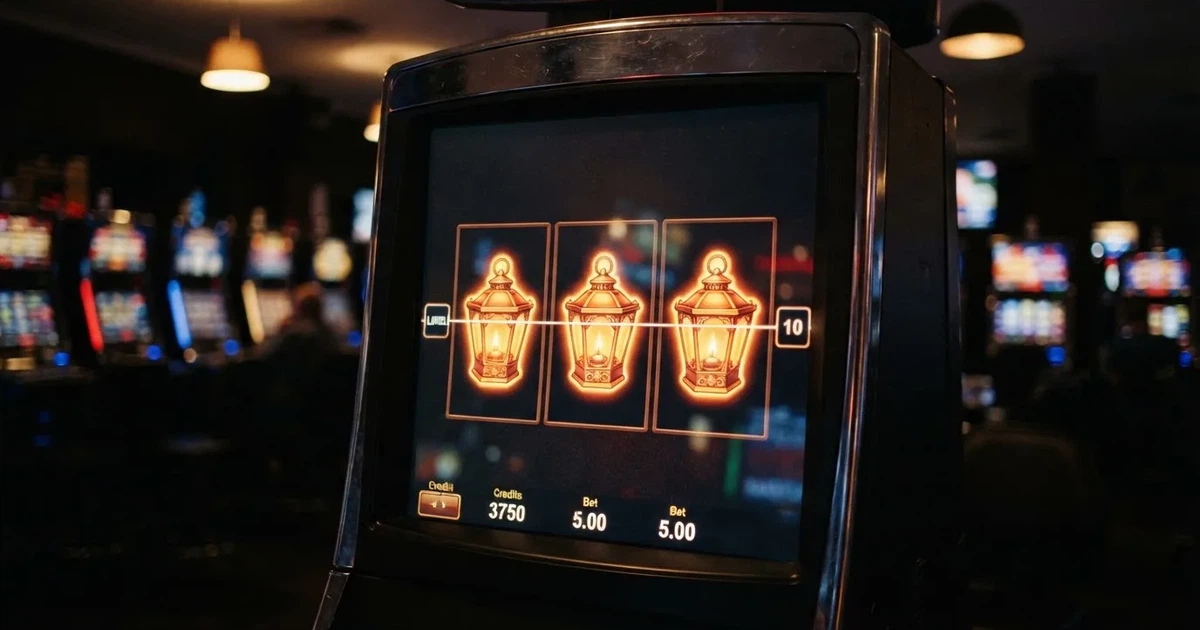
What an online pokies no-deposit free-spins offer really is, and what it costs in Australia in 2026
Spins on the house sound like free money, and a long list of offshore sites selling to Australians is built on that assumption. None of those sites is licensed to offer online casino games or online pokies here, and the Australian Communications and Media Authority has spent the past several years naming them, one warning at a time, before directing Australian internet providers to block their domains. This page sets out what the offers actually consist of, where they sit under Australian law, and what the arithmetic says about the value of the “free” part.

The figures below are current as of 30 October 2026 and were checked against the Australian Communications and Media Authority’s published formal warnings and blocking rounds.
Table of Contents
- How Australians end up on an offshore pokies site in the first place
- The payment routes an offshore pokies site typically asks an Australian for
- How bonus offers on offshore pokies sites are structured around free spins
- Where the ACMA stands in 2026, and what 1,751 blocked sites look like
- The legal status of an offshore pokies offer to an Australian
- Responsible gambling, and what the offshore offer is missing
- The operators the ACMA has formally warned
- Frequently asked questions
How Australians end up on an offshore pokies site in the first place
The product on offer is simple to describe. An offshore casino — registered in Curaçao, Cyprus, Costa Rica or somewhere else — runs a marketing page aimed at Australians promising a set of free spins on a named pokie the moment an email address is confirmed. No deposit is asked for at the claim stage. A win is possible. A withdrawal is not automatic.

The structure of the offer is what makes it worth examining rather than dismissing on sight. Three things sit underneath the headline number of spins, and each one changes what the offer is worth to a person reading the page:
- the size of the spins package — anything from a handful up to several hundred, almost always capped at a low per-spin stake so the casino can price the exposure;
- the wagering requirement — the multiplier applied to anything won from the spins before the balance becomes withdrawable, which is the single biggest determinant of what the offer is actually worth;
- a maximum cashout cap — a hard ceiling on what can be withdrawn from the spins themselves, regardless of what the screen shows after a lucky run.
The arithmetic on these three together determines whether an offer is generous or cosmetic. A site offering 200 spins at A$0.10 each with a 40× wagering requirement and a A$100 cashout cap is a different proposition from a site offering 50 spins at the same stake with no cashout cap, and both are different from a site offering 200 spins with a 60× requirement and a A$50 cap.
What “no deposit” actually means in this market
“No deposit” in the offshore context means the casino does not require a funds transfer to trigger the spins. It does not mean the player is not committing anything. The commitment is the time it takes to clear the wagering requirement, and the commitment to keep playing through the casino’s terms — game restrictions, bet-size caps, time limits on the offer, and clauses on what happens if the player tries to withdraw before the requirement is met.

Most of these offers also reserve the right to void winnings if the player is judged to have “abused” the promotion, a phrase that affiliate marketing pages tend not to define. The offer is not a contract; it is a marketing promotion with a small print section that runs to several pages and that the player is deemed to have accepted by claiming the spins.
The payment routes an offshore pokies site typically asks an Australian for
The marketing pages for these offers often list payment methods next to the spins banner, and the list is informative in its own right — it tells the reader what kind of operation the site runs.
The methods most commonly named on affiliate marketing pages promoting no-deposit pokies spins to Australians include:
- Visa and Mastercard debit cards — the same networks that Australian banks issue under, distinct from credit cards, which were banned as a deposit method for licensed Australian online wagering from 11 June 2024.
- Bank transfer and PayID/Osko — the instant payment rails run by Australian banks, which licensed wagering operators accept and which offshore sites accept as well, though the player has no Australian consumer protection if the transfer is reversed.
- Cryptocurrency (Bitcoin, Ethereum, Litecoin, Tether) — banned as a deposit method for licensed Australian wagering since 11 June 2024; offshore sites that take crypto are operating outside the Australian rules on payment, and the player’s only recourse is the casino’s own complaints process.
- E-wallets (MiFinity, Jeton, eZeeWallet, AstroPay) — third-party wallets popular in offshore gaming, with no Australian regulatory oversight.
- Prepaid vouchers (Paysafecard, Neosurf) — vouchers bought with cash at retail outlets, which is why they appear so often on pages targeting readers who want to keep a gambling transaction off a bank statement.
The list itself is a marker of who the site is. A licensed Australian wagering operator cannot legally accept credit cards, credit-related products or digital currency; an offshore site that offers all of these as deposit methods is not running under Australian rules on payment, even where it holds a licence from elsewhere. The site may still hold a Curaçao or Anjouan licence that is genuine in its own jurisdiction. That licence is not an Australian licence, and it does not give an Australian player an Australian complaints body to take a dispute to.
How bonus offers on offshore pokies sites are structured around free spins
The free-spins headline number is the front of a marketing promotion whose other components matter as much as the spins themselves. Three of those components — wagering requirements, game restrictions and maximum cashout caps — together decide what a win from the spins is actually worth.
Wagering requirements: the multiplier that decides the offer
The standard structure is that anything won from the free spins is treated as a bonus balance, and that balance must be wagered a stated number of times before it converts to a withdrawable cash balance. The industry has converged on a small set of multiples:
- 20× to 35× the bonus amount — a range that an experienced bonus player would consider fair, common at more established offshore operators.
- 40× to 50× the bonus amount — the band the bulk of no-deposit free-spins offers sit in, where the wagering requirement is heavy enough that most players will not clear it on free-spins winnings alone.
- 60× and above — rare on free spins specifically, more common on deposit match bonuses where the bonus amount itself is larger.
The arithmetic on a 50× requirement is worth doing in the abstract. Suppose a player claims 50 free spins at A$0.10 each and wins A$5 in total from the spins. The wagering requirement is 50 × A$5 = A$250 of staking before the A$5 becomes withdrawable. At an average pokie stake of A$0.10 per spin, that is 2,500 additional spins at a house edge of between 3% and 12%, depending on the game. The expected loss on those 2,500 additional spins is somewhere between A$7.50 and A$30. The bonus has become a negative-expected-value proposition before a deposit is made.
This is the calculation an offer’s headline obscures. A player who reads “50 free spins, no deposit required” and reads no further is being told half the story.
Game restrictions: where the spins can be used
Most no-deposit free-spins offers are restricted to a single named pokie, or to a small shortlist of pokies that the casino has selected for marketing reasons. The game matters because the per-spin cost to the casino varies by title:
- High-volatility, branded pokies — typically the headline game in a marketing promotion, with a return-to-player in the 94%-96% band and a top-end payout that justifies the marketing spend.
- Lower-volatility, classic-style pokies — common on smaller offers, with a higher hit frequency but lower peak payouts, where the casino’s exposure on the spins is more predictable.
- Excluded table games and live casino — almost universally excluded from free-spin wagering, because the house edge on baccarat (1.06% on the banker bet, 1.24% on the player bet) and on blackjack with optimal play (about 0.28% under liberal Las Vegas Strip rules, about 0.43% under Atlantic City rules) would let a player grind through the wagering requirement with minimal expected loss.
A player who finds a bonus term that excludes table games from wagering has found the reason: the casino has decided which games the player will lose money on, and the answer is the pokie, where the house edge is several times higher.
Maximum cashout caps: the ceiling on what the spins are worth
The third component is a hard ceiling. A typical no-deposit free-spins offer caps withdrawals from the spins themselves at somewhere between A$50 and A$200, regardless of what the balance shows after a lucky run. A player who wins A$1,000 from 100 free spins at A$0.10 each has, in practice, won A$100 — the maximum cashout — and the rest is forfeited.
The cap exists because the casino is pricing the offer on its worst-case exposure. A 100× cap on a 100-spin offer at A$0.10 is the most generous arrangement the casino can offer without leaving itself open to a player running up a five-figure balance from a free promotion. The cap is the casino’s answer to a problem the player has not been told about.
The arithmetic of a typical no-deposit free-spins offer
Pull the three components together. Suppose a player claims a no-deposit offer of 100 free spins at A$0.10 per spin on a single pokie, with a 40× wagering requirement and a A$100 maximum cashout. Suppose also that the player wins A$8 from the spins on average.
The wagering requirement is A$320 of additional staking at an average stake of A$0.10, which is 3,200 spins at a 5% house edge. The expected loss on those spins is A$16. The player’s expected value is A$8 minus A$16, which is −A$8 — a negative return before any deposit is made, on an offer marketed as free.
The maximum cashout cap changes the picture on a lucky outcome. A player who runs the bonus up to A$500 before the cap is applied has, in practice, made A$100 — the cap — with the remaining A$400 voided. The cap does not raise the expected value. It limits the variance, in the casino’s favour.
Where the ACMA stands in 2026, and what 1,751 blocked sites look like
The Australian Communications and Media Authority is the regulator that enforces the Interactive Gambling Act 2001 against offshore operators selling online casino games and online pokies to Australians. The ACMA’s enforcement has two visible forms: formal warnings issued to operators, and blocking requests to Australian internet service providers.
The cumulative effect, as of the ACMA’s most recent published round in June 2026, is that 1,751 illegal gambling and affiliate marketing websites have been blocked since the first blocking request in November 2019, and more than 230 unlicensed gambling services have left the Australian market since enforcement was strengthened in 2017.
The June 2026 round itself added 12 more sites to the block list: 7Signs, ChromaBet, Donbet, Duospin, Freshbet, Slots Gem, Jacks Club, Lucky Start, Pointsbetz, Spinrise, Vinyl Casino and Wildsino.
The blocking rate, as a band
The arithmetic on this material runs two ways and both are worth stating.
The first way: from the first blocking request in November 2019 to the ACMA’s June 2026 round, 1,751 sites were blocked. Over approximately 79 months, that works out to an average of around 22 blocked sites per month across the full period — though the rate has been far from even, with quieter months and concentrated rounds in which dozens of sites were added in a single announcement.
The second way: the June 2026 round added 12 sites in one announcement. That is a rate of 12 per round, but rounds are not monthly — they are issued when the ACMA completes the underlying investigation and serves the blocking notices on the internet providers.
Stated as a band: somewhere between roughly 22 blocked sites per month on average since November 2019, and 12 sites per published blocking round, with the gap between the two figures explained by the fact that rounds are bundled and the average smooths a noisier underlying series. Neither figure is the rate at which new sites are created. It is the rate at which the ACMA catches up with them.
The Australian market for illegal gambling in 2025
H2 Gambling Capital’s 2025 report estimated that Australians lose about A$3.9 billion a year to illegal gambling sites. The same report noted that the share of gambling going through legal channels fell from 74% in 2021 to 64%.
The two figures together describe the market that the ACMA is operating against. A$3.9 billion is the upper bound on what offshore operators are pulling out of Australia each year. The 10-percentage-point drop in the legal share between 2021 and 2025 is the trend the regulator is trying to reverse. The 1,751 blocked sites are the operational answer; the A$3.9 billion is the size of the problem the answer is up against.
The legal status of an offshore pokies offer to an Australian
The Interactive Gambling Act 2001, strengthened by the Interactive Gambling Amendment Act 2017, makes it an offence to provide online casino games, online pokies or in-play betting to a person physically in Australia. No state or territory issues a licence to offer these products. What is licensable in Australia is wagering on races and sport placed before the event, lotteries, and keno — in practice licensed by the Northern Territory, where the Northern Territory Racing and Wagering Commission oversees 52 of Australia’s online bookmakers (including Sportsbet, Bet365 and Ladbrokes) for tax reasons. The commission has no full-time staff and meets once a month in Darwin.
Three things follow from that legal structure for an Australian considering a no-deposit free-spins offer on an offshore pokies site:
- The individual player is not prosecuted under the IGA. The Act targets the provider, not the customer. There is no record of an Australian player being charged for placing a bet with an offshore site.
- The offshore site has no Australian consumer protection. There is no Australian complaints body to take a dispute to, no Australian regulator to compel a withdrawal, and no Australian court order that can be relied on to recover funds. The site’s own complaints process is the only process, and its own terms are the only terms.
- The offshore site can be blocked with a balance still on it. When the ACMA adds a site to the block list, Australian internet providers stop resolving its domain. A player with a positive balance on the day of blocking has no obvious way to log in to withdraw it, and the casino is under no Australian legal obligation to process the withdrawal. This is a structural risk that no individual player can price.
What “licensed” means on an offshore site
A common feature of the marketing pages for no-deposit pokies spins is a footer noting that the casino is “licensed and regulated” by a named overseas authority — typically the Curaçao Gaming Control Board, the Kahnawake Gaming Commission, the Anjouan Gaming Board or the Government of the Autonomous Island of Anjouan. These are real licences in their own jurisdictions and they do impose standards on the operator that holds them.
They are not Australian licences. An Australian licence to offer online pokies does not exist. A site displaying a Curaçao licence is licensed in Curaçao, which means the player has whatever protection Curaçao offers to players — and Curaçao’s player-protection regime is materially thinner than the regime that applies to a Sportsbet or a Ladbrokes account held with a Northern Territory-licensed Australian bookmaker.
The 2026 reform package
The Interactive Gambling Amendment (Gambling Reform) Bill 2026 passed Parliament on 19 August 2026. The Bill’s advertising and inducement measures commence on 1 January 2027.
The Bill is law with a start date, not yet in force as of 2026. Its advertising and inducement measures are aimed at the marketing practices — free spins, sign-up bonuses and similar offers — that this page describes. The measures do not legalise online pokies, which remain prohibited. They restrict how prohibited products can be advertised to Australians. The detail of what is and is not permitted under the new rules is a question for the 2027 implementation.
Responsible gambling, and what the offshore offer is missing
A licensed Australian wagering operator is bound by the National Consumer Protection Framework, by state and territory responsible-gambling codes, and by BetStop, the National Self-Exclusion Register, which went live in August 2023 and binds every Australian-licensed online and phone wagering service. An offshore casino is bound by none of these.
BetStop and the offshore gap
BetStop lets a person exclude themselves from every Australian-licensed wagering operator in a single registration. The exclusion periods run from three months to a permanent exclusion, and the operator side is enforced: a licensed operator that accepts a deposit or a bet from a registered self-excluded person faces regulatory consequences.
An offshore casino is not connected to BetStop. A person who has registered with BetStop can still open an account with an offshore pokies site, claim a no-deposit free-spins offer, and play through the wagering requirement with no Australian system intervening. The exclusion mechanism the person signed up to does not extend offshore, because the offshore operator has not signed up to receive the list.
The support services that do work from Australia
Two services are available to an Australian reader regardless of where they are playing:
- National Gambling Helpline — 1800 858 858. Free, 24/7, confidential. Run by state and territory counselling services under a national banner.
- Gambling Help Online. Web chat and email counselling, also free and confidential.
These services work for the player of an offshore pokies site exactly as they work for the player of a licensed Australian wagering account. The difference is that the licensed Australian account has a layer of structural protection above the helpline — exclusion registers, deposit limits, activity statements — that the offshore account does not.
The operators the ACMA has formally warned
The brands below are not a ranking and not a recommendation. Each one is listed because the ACMA itself has issued a formal warning over it under the Interactive Gambling Act 2001, for offering prohibited services to Australians. None of them is licensed in Australia to offer online pokies, and none of the offers described on their marketing pages is available under Australian consumer law.
The comparison table covers the formal-warning record the ACMA has published. Where research carries no data on a subject for a brand — for example, the payment methods a particular offshore site lists on its marketing pages — that cell stays blank. The blanks are part of the picture: a brand with no published record is not, on the strength of this page, more or less trustworthy than a brand with one.
| Brand | ACMA action and date | Operator named by the ACMA | Subject support |
|---|---|---|---|
| RocketPlay | Warning over Rocketplay (March 2026); earlier Dama N.V. warning (May 2022) | Pulsup Ltd (2026); Dama N.V. (2022) | — |
| Level Up Casino | Formal warning (May 2022) | Dama N.V. | — |
| Woo Casino | Formal warning (March 2025) | Dama N.V. | — |
| Spirit Casino | Formal warning (May 2025) | Dama N.V. | — |
| National Casino | Formal warning (July 2025) | Consolutetish S.R.L. | — |
| Bizzo Casino | Formal warning (July 2025); earlier warning to TechSolutions (2022) | Consolutetish S.R.L. (2025); TechSolutions (2022) | — |
| Ignition Casino | Formal warning (July 2025) | Bamboo Media | — |
| Instant Casino | Formal warning (February 2025) | EOD Code SRL | — |
| Jackbit | Formal warning (April 2026) | Ryker B.V. | — |
| Casino Intense | Formal warning (April 2025) | Sterplay Holding Ltd | — |
| Sky Crown | Formal warning (September 2022) | Hollycorn N.V. | — |
A pattern visible across the table is the recurrence of certain operator names behind several different brand front-ends. Dama N.V. has been named by the ACMA in connection with four separate brands across the 2022 and 2025 rounds. TechSolutions was named over Bizzo Casino in 2022 and Consolutetish S.R.L. was named over the same brand in 2025 — two operators, one URL, two formal warnings. The corporate vehicle changes; the brand the player sees on the marketing page does not always change with it.
The formal warning is not the end of the story for these brands. The ACMA’s June 2026 round added 12 more URLs to the block list, including Spinrise, Vinyl Casino and Wildsino, none of which appears in the table above. The list is longer than this page; this is the subset that has crossed the formal-warning threshold rather than the block-list threshold alone.
RocketPlay
The ACMA’s most recent action against RocketPlay was a formal warning issued in March 2026 to Pulsup Ltd over Rocketplay. The brand had previously been the subject of a May 2022 warning to Dama N.V. covering six brands, including RocketPlay itself alongside Bambet, Dazard, Level Up, Wild Tornado and Cobra Casinos.
The recurrence is the operative fact. A brand can change its operating company and continue to operate under the same domain, and the ACMA’s enforcement record shows that this has happened. From the player’s perspective, the marketing page is the same; the legal entity behind it is different. A player who looked up RocketPlay in 2022, saw a Dama N.V. footer, and dismissed the brand on that basis would not have noticed a 2026 warning to a different operator over the same URL.
Level Up Casino
Level Up Casino was one of the six brands covered by the Dama N.V. warning in May 2022 and has not been the subject of a published ACMA action since. The 2022 warning remains on the ACMA’s record.
A no-data reading: the absence of a published action after May 2022 does not mean the brand has come into compliance with Australian law, because Australian law does not allow an online pokies operator to come into compliance in the sense that the brand would be offering a permitted product. It means the ACMA has not, in the published record, taken formal action against the brand in the period since.
Woo Casino
The ACMA issued a formal warning to Dama N.V. over Woo Casino in March 2025. The warning sits alongside the May 2022 warning to Dama N.V. over six other brands and the May 2025 warning to the same operator over Spirit Casino — three warnings to one operator in three years, with Woo Casino and Spirit Casino added in consecutive months.
Spirit Casino
The ACMA issued a formal warning to Dama N.V. over Spirit Casino in May 2025. The brand is the most recent of the Dama N.V. cluster on the ACMA’s record. The recurrence of Dama N.V. as the named operator across multiple brands, with action spaced over three years, describes a corporate structure that the ACMA has been working through methodically rather than an operator that has come into compliance and then fallen out of it.
National Casino
National Casino was the subject of a formal warning issued in July 2025 to Consolutetish S.R.L. The brand has not previously appeared in the ACMA’s published warnings. This was the brand’s initial appearance on the ACMA’s formal warning list.
Bizzo Casino
Bizzo Casino’s record has two layers. The ACMA issued a formal warning to TechSolutions (CY) Group Limited and TechSolutions Group N.V. over the brand in 2022, and a separate formal warning to Consolutetish S.R.L. over the brand in July 2025. Two operators, same URL, two warnings three years apart.
The pattern is the same as the Dama N.V. cluster. The brand has continued to operate under successive corporate vehicles. A reader who checked the ACMA’s record in 2022, saw TechSolutions, and concluded the brand was closed would have missed the 2025 action.
Ignition Casino
The ACMA issued a formal warning to Bamboo Media over Ignition Casino in July 2025. The brand has not previously appeared in the ACMA’s published warnings.
Instant Casino
The ACMA issued a formal warning to EOD Code SRL over Instant Casino in February 2025. The 2025 warning is the first published action against the brand.
Jackbit
The ACMA issued a formal warning to Ryker B.V. over Jackbit in April 2026. The 2026 warning is the most recent published action against any of the brands on this list. Jackbit was named alongside CasinOK in the same warning — two brands, one operator.
Casino Intense
The ACMA issued a formal warning to Sterplay Holding Ltd over Casino Intense in April 2025. The 2025 warning is the first published action against the brand.
Sky Crown
The ACMA issued a formal warning to Hollycorn N.V. over Sky Crown and Blue Leo, published in September 2022. Sky Crown is the longest-standing entry on this list — a brand the ACMA warned over three and a half years ago and that remains in operation.
What a reader comparing these brands can and cannot conclude
The table is a record of what the ACMA has done, not a record of how each brand behaves. Two things follow.
The first is that none of the eleven brands is licensed in Australia to offer online pokies. The legal status is identical across the table, regardless of the brand’s size, its marketing budget or the freshness of its most recent warning.
The second is that the ACMA’s enforcement record is a useful but partial filter. A brand with a fresh warning has crossed a regulator’s threshold and the warning is published. A brand with no published warning has not crossed that threshold, on the ACMA’s published record — which is not the same as saying the brand is operating legally, because the IGA makes the offering itself unlawful, and a brand with no published warning is still offering a product the Act prohibits.
A reader who treats the absence of a warning as a clean bill of health has read the regulator’s silence as a clearance, which it is not.
Frequently asked questions
How many free spins does a typical online pokies no-deposit offer include?
Most offers in this market sit between 20 and 100 free spins, with a few outliers above and below that range. The number on its own is the least informative figure on the offer. The wagering multiplier, the per-spin stake and the maximum cashout cap decide what the spins are actually worth, and those three numbers vary far more across offers than the headline spin count does.
Do free spins on pokies with no deposit required usually apply to every game, or only selected titles?
Selected titles only. The vast majority of offers restrict the spins to a single named pokie or to a shortlist chosen by the casino. The casino picks the game because the per-spin cost varies by title, and the offer is priced against a known exposure on that title. A player who wants to use the spins on a different game has usually agreed by claiming the offer that they cannot.
Is accepting free spins from an offshore pokies site something Australians are legally permitted to do?
The Interactive Gambling Act 2001 makes it an offence to provide online casino games and online pokies to a person in Australia. It does not prosecute the individual player. The legal risk sits with the offshore operator. The practical risk for an Australian player is different and is not small: no Australian consumer protection, no Australian complaints body, and the possibility that the site is blocked with a positive balance still on it.
What’s the difference between a sign-up free-spins offer and a later, separate no-deposit spins offer?
A sign-up offer is the headline promotion tied to creating an account and confirming an email address, usually the largest spin package the site runs. A later no-deposit offer is a smaller package sent to existing players — for a birthday, a new game launch, a holiday weekend, or as a retention mechanism when a player has stopped logging in. Both have the same underlying structure of wagering requirements and cashout caps; the difference is the trigger and typically the size.
Why do so many of these offers cap the maximum win from the free spins themselves?
Because the casino is pricing the offer against its worst-case exposure. A 100-spin offer at A$0.10 per spin with no cashout cap leaves the casino open to a player running the bonus up to a four- or five-figure balance from a free promotion. The cap limits that exposure and is part of how the offer is funded. A reader who treats the cap as a marketing choice rather than a structural feature has misunderstood why the offer exists.
How does a no-deposit free-spins claim interact with an Australian pokies player’s actual odds?
The free spins themselves are priced at the return-to-player of the named game — typically in the 94% to 96% band for the high-volatility branded pokies these offers usually name. The wagering requirement that follows is then played at the same return-to-player, with the casino’s house edge in the 4% to 6% range taking the rest. A player who clears the requirement breaks roughly even on the spins themselves and loses the house edge on the wagering volume. A player who does not clear the requirement loses whatever balance was on screen when the wagering window closed. The expected value on most offers in this market is negative before a deposit is made.