

50 free spins no deposit australia in 2026: the offer, the law, and the arithmetic
A player in Australia who types “50 free spins no deposit” into a search bar is usually hoping to find a clean, simple thing: a casino that hands them fifty free games on a pokie, wins them real money, and lets them pocket some of it without putting a cent of their own on the table first. The offer exists in the marketing — fifty free spins, no deposit required, real money pokies. What sits behind that marketing is something else. Every brand that runs that ad for an Australian customer is doing so from outside the country, because no Australian licence authorises it, and the regulator has spent the last few years issuing formal warnings, requesting internet service providers to block sites, and naming the operators one by one. The cost of the offer is therefore not only the house edge on the spins themselves, which is what a casino review usually weighs. The cost is also the legal frame around the offer, the absence of Australian consumer protection once a balance sits on an offshore site, and the arithmetic of what fifty spins at standard conditions actually return in expected value. This page works through each of those layers, in that order.

Data current as of 30 October 2026; operator claims verified against the Australian Communications and Media Authority register of formal warnings and blocking requests.
Table of Contents
- Payments and payout speed for a 50 free spins no-deposit offer
- What a 50 free spins no-deposit offer actually is
- The eleven brands the ACMA has warned
- The legal frame around every offer on this page
- The land-based free-spin feature is a different thing
- Help and the line between choice and compulsion
- How the ACMA has moved against the brands in this page
- The arithmetic of accepting the offer
- What a comparison along this subject can and cannot rank
- The closing position
- Frequently asked questions
Payments and payout speed for a 50 free spins no-deposit offer
A “no deposit” offer by definition does not require a deposit to claim the spins themselves. The payout question is what happens after those spins produce a win, and the answer depends entirely on whether the player ever makes a deposit to clear the offer’s conditions. Most offshore sites carrying this promotion gate any withdrawal of spin winnings behind a wagering requirement and a first deposit, which means the practical banking route matters once the player decides to cash out.
Card networks in Australia
The main card networks an Australian might encounter at an offshore casino are Visa, Mastercard and American Express. American Express runs a three-party scheme rather than the four-party model Visa and Mastercard use: it issues cards and processes transactions itself rather than relying on a separate issuing bank, and its history is freight forwarding before it ever touched cards. The Reserve Bank of Australia’s July 2025 review of merchant card payment costs proposes removing surcharges on eftpos, Mastercard and Visa card transactions, and explicitly leaves American Express outside the scope of that proposed ban. For a withdrawal off an offshore site, the practical difference is that Amex acceptance is narrower than Visa or Mastercard and the surcharge structure is not under the same proposed reform.

Credit card ban on licensed wagering
Australia’s Interactive Gambling Act 2001, as amended in 2023, bans Australian-licensed online wagering services from accepting credit cards or other credit-related products as payment. The same rule, by its logic, constrains gambling use of linked digital wallets such as Apple Pay when the underlying funding is a credit card. The penalty for an Australian operator that breaches this is up to A$247,500, with the rules in force from 11 June 2024. An offshore casino is not subject to this ban — it processes credit card deposits in many cases — which is one of several ways it operates outside Australian rules.
Apple Pay, Google Pay and the share of card payments
By the end of 2025, Apple Pay, Google Pay and Samsung Pay transactions collectively accounted for around 45% of all card payments in Australia by number, which means digital wallets are now the dominant way an Australian taps a card. Apple does not charge fees to consumers for using Apple Pay in stores, online or in apps, and any surcharge applied at a merchant comes from the merchant’s own card-processing fees rather than from Apple. Apple Pay transaction limits and PIN requirements are set by the card issuer or merchant, not by Apple itself. The interest for a player reading this page is that an Australian-licensed wagering service must still refuse credit-funded wallet transactions; an offshore casino will not.
Bank-level gambling blocks
Three of Australia’s largest banks operate card-level gambling blocks. Westpac’s gambling block refuses authorisation of transactions registered under the merchant category code “Betting/Casino Gambling” on eligible personal credit and debit cards. ANZ’s gambling transaction block, activated in the ANZ app, blocks gambling transactions made through a digital wallet such as Apple Pay on an eligible card, not only on the physical card; once ANZ’s block is on, removing it again requires a 48-hour waiting period, and ANZ warns that not all gambling transactions will be blocked and some non-gambling transactions might be blocked in error. Commonwealth Bank lets customers apply a gambling lock to eligible cards via the CommBank app, which automatically blocks most gambling transactions, though the bank likewise cannot guarantee every gambling-related purchase is stopped.

Together these bank-level controls are the closest thing Australia has to a hard wall between a player’s everyday bank account and an offshore casino. These measures are designed precisely to interrupt the kind of inducement that “50 free spins no deposit” offers represent.
PayID, Osko and BPAY
PayID sits on Australia’s New Payments Platform, which became accessible to the public on 13 February 2018 and is owned by New Payments Platform Australia Ltd, a non-profit company whose thirteen shareholders include the Reserve Bank of Australia and the country’s major banks. Over 25 million PayID identifiers were registered on the platform as of April 2025, and the system is live at over 100 Australian financial institutions. With Osko, a bank transfer between participating Australian banks arrives in under a minute around the clock, including weekends, whether addressed to a BSB and account number or to a PayID. Paying to a PayID shows the name of the account holder before the transfer is sent, and Australian Payments Plus warns that being asked to transfer money to a PayID on an illegal gambling site almost certainly means a scam site. BPAY runs alongside PayID and Osko as a bill-payment service in online banking: the payer enters the Biller Code and the Customer Reference Number printed on the bill, and BPAY has operated in Australia since 1997, is available in the online banking of over 140 banks and financial institutions, and is offered by over 95,000 businesses; it is run by Australian Payments Plus, the same operator as PayID and Osko, and was launched on 18 November 1997, owned equally via parent company Cardlink Services Limited by ANZ, Commonwealth Bank, National Australia Bank and Westpac. Participants in the New Payments Platform must keep monthly outages to no more than two minutes, which is one operational reason the rail is fast.
AUSTRAC and the A$10,000 threshold
AUSTRAC’s threshold-transaction-report rule, which requires reporting of transfers of A$10,000 or more, applies only to physical cash. Ordinary electronic bank transfers are not subject to that per-transaction reporting requirement, regardless of the amount sent. A player wiring funds to an offshore casino via PayID or BPAY therefore does not trigger a threshold report on size alone.
What this means for a free-spins withdrawal
If the spins land a win and the player wants to cash it out, the offshore site will generally require a deposit first, because that is how the operator verifies a withdrawal rail and converts a bonus balance into withdrawable cash. The deposit can be a debit card, a bank transfer via PayID or Osko, or a BPAY-style payment at sites that integrate it; credit cards and crypto are technically possible at offshore brands but operate outside the Australian rules that govern licensed wagering. The withdrawal direction is then the reverse rail, and the speed depends on the offshore operator’s processing rather than on Australia’s instant-payment infrastructure. A PayID debit-side deposit does not translate into a PayID payout unless the offshore operator supports it, which most do not.
See also What an online casino sign-up bonus actually costs an Australian reader….
What a 50 free spins no-deposit offer actually is
A “50 free spins no deposit” offer is a promotion in which an online casino credits a new account with fifty rounds on a nominated pokie, with no deposit required to claim the spins. The headline sounds like a free trial of a real-money pokie. In practice it is a funnel: the spins are a way to put a player in front of the games, the wagering requirement attached to the spin winnings is what makes withdrawal difficult, and the first deposit that the site demands before processing a cashout is where the operator’s revenue model lives.
The mechanics of the offer
A typical offshore offer along these lines credits fifty spins at a fixed stake per spin, often on a single named pokie or a small shortlist. The stake is usually the pokie’s minimum line bet rather than a configurable value, which is part of why the offer looks generous — fifty full rounds at minimum stake can feel like a substantial taste. What the marketing usually buries is the wagering requirement: spin winnings are converted to a bonus balance that must be turned over a fixed multiple of times before withdrawal, the maximum cashout is often capped, and the bonus expires within a tight window of days. None of those conditions are visible from the headline.
How the bonus converts to withdrawable cash
Three things usually have to happen. First, the spin winnings are credited as a bonus balance rather than as cash. Second, the player must wager the bonus balance a stated multiple of times — twenty times, forty times, sometimes more — on eligible games before any of it becomes withdrawable. Third, even after the wagering is complete, the maximum amount the operator will cash out from the bonus is often capped at a small multiple of the bonus, so a “big” spin win can shrink at the cashout step. The first deposit that clears the wagering then is the moment the operator recovers the marketing cost of those fifty free spins.
What a 50-spin session returns in expectation
A round of fifty spins at a minimum stake on a standard online pokie is a small session in absolute terms: at A$0.20 per spin, for example, the stake value is A$10, and at A$0.10 per spin it is A$5. The expected return depends on the pokie’s return-to-player rate, which for a typical offshore-branded pokie sits in the 94–96% range. The house edge is the gap between 100% and the RTP, so a 95% pokie returns about A$0.05 of expected loss per A$1 wagered across the long run. Fifty spins at A$0.20 is A$10 wagered, and at 95% RTP the expected loss is roughly A$0.50 across the session — a tiny number that is also a tiny number of dollars in expected winnings, before any wagering requirement kicks in. The arithmetic matters not because the dollar figure is large, but because it shows what the marketing “free” actually returns in expected value: a coupon for a few dollars of play value at best, and a guaranteed loss in expected terms once the offer is accepted.
Wagering is where the offer does its real work
The fifty spins are a hook, but the wagering requirement is the mechanism by which the offer extracts revenue. If the wagering multiple is, say, forty times the bonus winnings, and the spin winnings come to A$5, then the player must turn over A$200 before any of it can be cashed out. At A$0.20 per spin, A$200 of wagering is one thousand further spins on the pokie, and at a 95% RTP those thousand spins carry an expected loss of roughly A$10 — which is several times the original spin winnings. A bonus that started as “free” ends as a marketing loss for the player who treats it as a chance to pocket cash.
The eleven brands the ACMA has warned
The brands listed below are not a ranking and not a recommendation. Each is on the page because the Australian Communications and Media Authority itself issued a formal warning over it for offering prohibited interactive gambling services to Australians. The order below follows the publication order of those warnings and the underlying operators as the ACMA named them. No bonus terms are given, because the only sources for them were affiliate marketing pages rather than the operators’ own terms, and a “no deposit” headline on an affiliate page is not a contract.
RocketPlay
The ACMA issued a formal warning to Pulsup Ltd over RocketPlay in March 2026. An earlier warning against the same brand, in May 2022, named Dama N.V. as the operator and covered six Dama brands at once. Subject support is reported by listings only: GamblingInsider mentions the brand in industry coverage, and that is the limit of what those listings confirm. RocketPlay’s landing pages market a welcome package that bundles deposit matches with free spins, but the ACMA action against the brand is the relevant fact for an Australian reader, because the underlying product — online casino games and online pokies for Australians — cannot be licensed anywhere in Australia, whatever offshore licence the site displays.
Level Up Casino
The ACMA issued a formal warning to Dama N.V. over Level Up Casino in May 2022, as part of the same six-brand warning that also covered Bambet, Dazard, Rocketplay, Wild Tornado and Cobra Casinos. Subject support is reported by listings only: Westpac’s gambling block documentation names Level Up among the merchant category code examples the block is designed to catch, which is a useful operational fact rather than a brand endorsement. The Dama N.V. group has been on the ACMA’s action list across multiple years, which is a pattern rather than a single event.
Woo Casino
The ACMA issued a further formal warning to Dama N.V. over Woo Casino in March 2025. The brand sits within the same Dama N.V. portfolio as RocketPlay and Level Up Casino, so the ACMA action follows the operator rather than the brand. Subject support carries no data: no listing consulted named Woo Casino in a way that confirms payment methods, payout speed or any other subject this page covers. The relevant fact for a reader is the ACMA action, which is recorded on the regulator’s own register.
Spirit Casino
The ACMA issued a further formal warning to Dama N.V. over Spirit Casino in May 2025. Like Woo Casino, Spirit Casino is part of the Dama N.V. group the regulator has now warned multiple times across more than one brand and more than one year. Subject support carries no data. The pattern is what it is: a single operator group, multiple brand names, repeated formal warnings.
National Casino
The ACMA issued a formal warning to Consolutetish S.R.L. over National Casino in July 2025. Subject support is reported by listings only: acma.gov.au’s own formal warning publication is the primary record, and austrac.gov.au and betstop.gov.au appear in the listings consulted, both of which are Australian-government sources operating in their own subject areas rather than endorsements of the brand. National Casino sits in the same Consolutetish S.R.L. portfolio as Bizzo Casino, and the ACMA’s action named both in the same round.
Bizzo Casino
The ACMA issued a formal warning to Consolutetish S.R.L. over Bizzo Casino in July 2025. Bizzo Casino had already been the subject of a 2022 formal warning, this time to TechSolutions (CY) Group Limited and TechSolutions Group N.V., so the regulator’s action on the brand spans two operators and at least three years. Subject support is reported by listings only: GamblingInsider mentions Bizzo Casino in industry coverage. The cross-operator history is the relevant fact here: a brand that has been the subject of formal warnings to two different corporate groups is one whose corporate structure is itself worth noting.
Ignition Casino
The ACMA issued a formal warning to Bamboo Media over Ignition Casino in July 2025. Subject support carries no data. Ignition Casino is widely known in offshore marketing but the listings consulted did not carry the subject material this page would need to confirm a payment method, payout speed or game roster.
Instant Casino
The ACMA issued a formal warning to EOD Code SRL over Instant Casino in February 2025. Subject support is reported by listings only: Ecopayz and PayID appear in the listings consulted. Instant Casino is an instructive case because it sits across two subject areas at once — a payment-method listing and a domestic instant-payment listing — without either confirming the brand’s actual use of those rails.
Jackbit
The ACMA issued a formal warning to Ryker B.V. over Jackbit and CasinOK in April 2026. Subject support carries no data. Jackbit is the more widely marketed of the two brands in the warning.
Casino Intense
The ACMA issued a formal warning to Sterplay Holding Ltd over Casino Intense in April 2025. Subject support is reported by listings only: GamblingInsider mentions Casino Intense in industry coverage. Casino Intense is one of the smaller-marketed brands on the ACMA’s action list and one of the few where three Australian-government-adjacent listings intersect with a single brand name.
Sky Crown
The ACMA issued a formal warning to Hollycorn N.V. over its Sky Crown and Blue Leo casino services, as recorded in the ACMA’s “Formal Warning – Hollycorn N.V. (Sky Crown and Blue Leo)” publication of September 2022. Subject support carries no data. Sky Crown is the older of the two Hollycorn N.V. brands on this list and the one whose formal warning has the longest public trail.
The legal frame around every offer on this page
Online casino is prohibited in Australia. The Interactive Gambling Act 2001, strengthened by the Interactive Gambling Amendment Act 2017, makes it an offence to provide online casino games, online pokies or in-play betting to a person in Australia, and no state or territory licences them. What is licensable is wagering on races and sport placed before the event, lotteries and keno — in practice licensed by the Northern Territory Racing and Wagering Commission, which regulates 52 of Australia’s online bookmakers including Sportsbet, Bet365 and Ladbrokes, has no full-time staff and meets once a month in Darwin. The minimum age is 18.
How the ACMA enforces
The ACMA investigates, issues formal warnings and directs Australian internet service providers to block illegal sites. According to the ACMA as reported in June 2026, a total of 1,751 illegal gambling and affiliate marketing websites had been blocked since the first blocking request in November 2019, and more than 230 unlicensed gambling services had left the Australian market since enforcement was strengthened in 2017. In a single round reported on 26 June 2026 the ACMA asked Australian internet service providers to block 12 more illegal gambling websites: 7Signs, ChromaBet, Donbet, Duospin, Freshbet, Slots Gem, Jacks Club, Lucky Start, Pointsbetz, Spinrise, Vinyl Casino and Wildsino.
The blocking rate since 2019
Between November 2019 and June 2026, the ACMA moved from the first blocking request to a cumulative 1,751 websites blocked, against the backdrop of more than 230 unlicensed services having left the Australian market since 2017. That works out to a rate in the low hundreds of blocked sites per year averaged over the period, with the rate in the most recent reporting round consistent with that pace. The blocking rate is not a uniform line: enforcement rounds bunch, and the publication of formal warnings is the ACMA’s quieter, slower instrument. The headline figure is the cumulative total; the trajectory is steady rather than accelerating.
What offshore means for the player
The individual player is not prosecuted under the Interactive Gambling Act — the IGA targets the provider, not the customer. That distinction does not help the player once a balance sits on an offshore site, because the same site gives no Australian consumer protection, no complaints body, and no recourse if a withdrawal is refused, and it can be blocked by an Australian internet service provider with the balance still on it. H2 Gambling Capital’s 2025 report estimates that Australians lose about A$3.9 billion a year to illegal gambling sites, and that the share of gambling going through legal channels fell from 74% in 2021 to 64%.
Player protection tools that bind offshore sites loosely
BetStop, the National Self-Exclusion Register, has been live since August 2023 and binds Australian-licensed online and phone wagering services — an offshore casino is not connected to it. The National Gambling Helpline at 1800 858 858 is free, operates 24/7 and offers chat through Gambling Help Online. Bank-level gambling blocks at Westpac, ANZ and Commonwealth Bank reach offshore merchants through the card network’s merchant category code system, which is how the rail-side protection actually catches offshore transactions. The combined effect is that the player’s protection is operational rather than contractual: the bank refuses the transaction, or the regulator blocks the site, rather than the offshore operator agreeing to any Australian rule.
Payments rules for licensed wagering
A site asking an Australian customer for a credit card or a crypto deposit is operating outside the Australian rules, and the rules’ protections — including responsible-gambling obligations — do not extend to the customer at that site.
2026 reform
The Interactive Gambling Amendment (Gambling Reform) Bill 2026 passed Parliament on 19 August 2026; its advertising and inducement measures commence 1 January 2027. The bill is law with a start date, not yet in force on a 2026 page, and its measures will reach advertising and inducement provisions across licensed wagering — a significant regulatory shift that is yet to impact current offshore marketing tactics.
Tax
Gambling winnings of a recreational player are not assessable income under section 6-5 ITAA 1997 and losses are not deductible, unless the person carries on a business of gambling. The ATO is the relevant authority for any specific position, and this page states the model only.
The land-based free-spin feature is a different thing
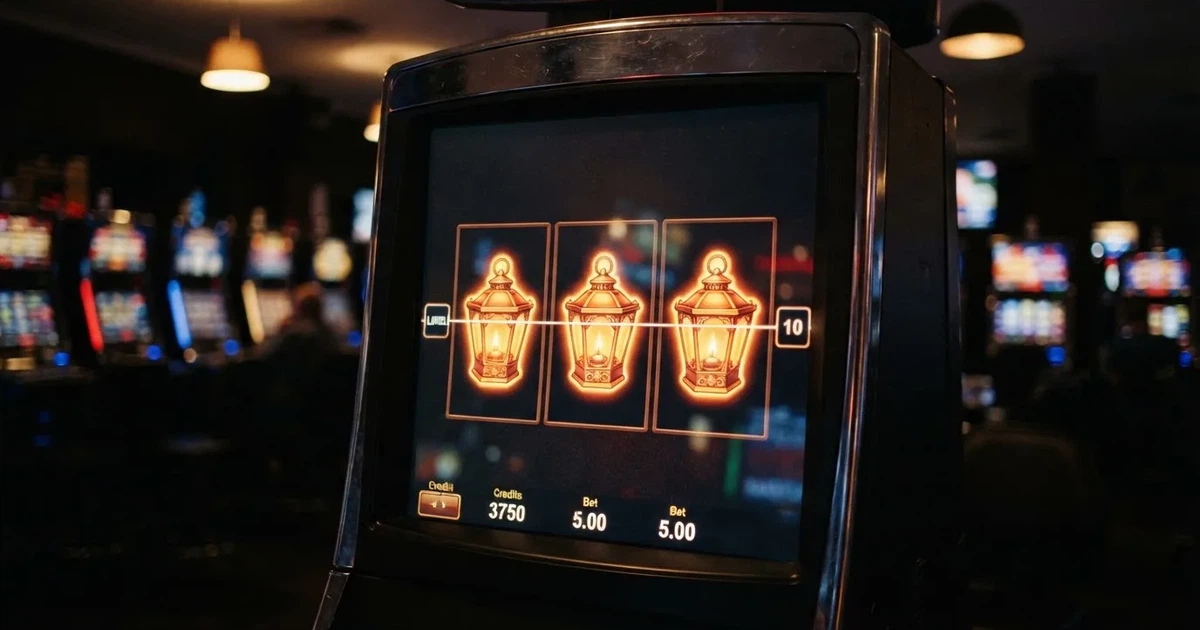
The “free spin” feature inside a pub pokie in Australia is a bonus round inside the machine’s own game, triggered by a combination of symbols landing on the reels. The spins are part of the game, the stake is funded by the player’s own credits, and the winnings are paid as machine credits at the venue’s denomination. Nothing about that feature is an inducement to sign up, and nothing about it crosses the Interactive Gambling Act, because it is not an online service. A “50 free spins no deposit” offer is none of those things: it is an online sign-up inducement at an offshore site, and the two concepts are frequently confused by marketing.
Why the marketing blurs the two
Spinning reels are an Australian tradition, and “free spins” is the language a pub pokie player already recognises. Offshore marketing borrows that vocabulary deliberately, because it lets a “no deposit” offer sound like a familiar feature rather than what it is — a sign-up bonus at an unlicensed site. The reader who arrives at this page from a search bar is usually searching for something they remember from a pub pokie, and the gap between that memory and the offshore reality is the gap this page is built around.
Help and the line between choice and compulsion
Gambling Help Online offers free, confidential support around the clock through chat and the National Gambling Helpline at 1800 858 858. BetStop, the National Self-Exclusion Register, has been live since August 2023 and binds Australian-licensed online and phone wagering services; an offshore casino is not connected to it, so BetStop is not a complete solution for a player who also plays offshore. The combination of bank-level gambling blocks, BetStop for the licensed rail, and Gambling Help Online for the human side is the practical protection an Australian player has, and the offshore part of the picture is the part where those protections thin out.
What to do if the offer starts to feel like pressure
A “50 free spins no deposit” offer is designed to be friction-free at the front, because the marketing point is to remove the deposit step that would otherwise pause a player. That same frictionlessness is the early warning sign that the offer is working on the player rather than the other way around. The help line is open at any point along that process, and the bank-level gambling block can be switched on in minutes through the bank’s app.
50 free spins no deposit australia in 2026 — More on this topic at casino payout.
How the ACMA has moved against the brands in this page
The ACMA’s formal-warning register for the brands covered here spans May 2022 to April 2026. Two operator groups — Dama N.V. and the Consolutetish S.R.L. / TechSolutions pair — appear more than once across different brand names and different years. Hollycorn N.V., Bamboo Media, EOD Code SRL, Sterplay Holding Ltd and Ryker B.V. each appear once. The warnings are public, dated and named to the operating company rather than only to the brand, which is the regulator’s way of following the corporate thread across rebrands.
What the ACMA record actually shows
The eleven brands covered earlier in this page are not a ranking. They are the brands the ACMA itself named, in the order of the regulator’s formal warnings. A reader who treats this list as a comparison of which operator is “best” is reading the wrong document: the comparison the ACMA register supports is which operator has been on the regulator’s action list, when, and under which corporate name. The pattern that emerges is that offshore casino groups recycle brand names and corporate shells while continuing to market to Australian customers, and the formal-warning instrument is the ACMA’s slow but consistent response.
What the ACMA record does not show
The register does not show which brand a player should pick, because the regulator’s job is enforcement rather than endorsement. It does not show bonus terms, payout speed or game roster for any of the brands, because those are operator-side claims that the regulator does not arbitrate. It does not show whether a particular brand’s offer is “fair”, because “fair” is a marketing word that sits on the operator’s side of the table.
Why the formal warnings matter for a reader
A formal warning from the ACMA is the regulator’s way of saying that a brand has been found offering prohibited interactive gambling services to Australians. The brand is on notice. Continued marketing to Australians after a formal warning is the legal trigger for the ACMA’s next step, which is to ask Australian internet service providers to block the site. A player who holds a balance on a blocked site may find the site unreachable the morning after the block, with no Australian complaints body to recover it.
The arithmetic of accepting the offer
A “50 free spins no deposit” offer costs the player in two layers. The first layer is the expected loss on the fifty spins themselves, which is small. The second layer is the expected loss on the wagering requirement that turns the spin winnings into withdrawable cash, which is larger. Both layers combined are what the offer actually costs, and the marketing headline shows neither.
Layer one: the fifty spins
At A$0.20 per spin and 95% RTP, fifty spins wager A$10 in total and carry an expected loss of about A$0.50. At A$0.10 per spin and the same RTP, the wager is A$5 and the expected loss is about A$0.25. The expected loss is positive in both cases — the house always has an edge — but the dollar figure is small, which is why the spins feel free.
Layer two: the wagering requirement
A wagering requirement of forty times the bonus winnings on A$5 of spin winnings means A$200 of further wagering is needed before any of the bonus can be cashed out. At A$0.20 per spin, that is one thousand additional spins. At 95% RTP, those thousand spins carry an expected loss of roughly A$10. The marketing headline said “50 free spins”; the offer’s real cost is closer to A$10 of expected loss against a bonus whose maximum cashout is often capped. At a twenty-times wagering multiple on the same A$5, the further wagering is A$100, five hundred additional spins, and an expected loss of about A$5.
Why the expected loss is the right number to quote
The expected loss is the long-run average across many spins under the stated assumptions, not a guaranteed outcome for any single player. A particular session can land above or below the expected figure, and a single spin can pay a large multiple of the stake. The expected loss is what tells a reader what the offer costs on average, and it is what the marketing headline leaves out. Reading the headline without the expected loss is what the marketing is built to encourage, and the cost of doing so is the difference between “free” and “expected loss of A$10 against a capped bonus.”
The combined picture
The offer is “free” in the sense that no deposit is required to claim the spins. It is not free in expected value once the wagering requirement is added, and the magnitude of the expected loss grows with the wagering multiple and with the stake per spin. A 50-spin no-deposit offer with a 40x wagering multiple and a small maximum cashout is closer to a marketing funnel than to a gift, and the arithmetic above is what the funnel actually costs.
What a comparison along this subject can and cannot rank
A ranking of “50 free spins no deposit” offers marketed to Australians can rank the marketing language, the wagering multiple, the maximum cashout cap, and the game the spins are credited on, because those are operator-stated terms and the operator either publishes them or does not. It cannot rank the offer’s safety, because no offer along these lines is safe in the Australian regulatory sense: every brand on the ACMA’s action list is on it for offering a prohibited service, and the legal frame applies across the whole category. It cannot rank which brand will pay out fastest, because payout speed at an offshore site depends on the operator’s processing and on whether the player has cleared the wagering — variables that are not in the marketing copy.
Where the comparison breaks down
A reader who treats a ranked list of offshore brands as a guide to “the best 50 free spins no deposit offer” is reading the wrong guide. The Australian reader’s protection against the offer sits upstream of the comparison: at the legal frame, at the ACMA register, at the bank-level gambling block. The comparison downstream of those is between offers that are, by the regulator’s own action, not legal to market to Australians in the first place.
Where the comparison can help
A comparison that sets out, brand by brand, the ACMA action and date and the operator the ACMA named can help a reader who has already decided to engage with an offshore site to understand which corporate group is on the regulator’s list and when. That is the legitimate use of the eleven brands covered earlier, and the page’s table below is built around that comparison rather than around a bonus-ranking.
| Brand | ACMA action and date | Operator named by the ACMA | Subject support |
|---|---|---|---|
| RocketPlay | Formal warning, March 2026; earlier warning May 2022 | Pulsup Ltd (RocketPlay, March 2026); Dama N.V. (May 2022) | Listings only — GamblingInsider |
| Level Up Casino | Formal warning, May 2022 | Dama N.V. | Listings only — Westpac |
| Woo Casino | Formal warning, March 2025 | Dama N.V. | — |
| Spirit Casino | Formal warning, May 2025 | Dama N.V. | — |
| National Casino | Formal warning, July 2025 | Consolutetish S.R.L. | Listings only — acma.gov.au, austrac.gov.au, betstop.gov.au |
| Bizzo Casino | Formal warning, July 2025; earlier warning 2022 | Consolutetish S.R.L. (July 2025); TechSolutions (2022) | Listings only — GamblingInsider |
| Ignition Casino | Formal warning, July 2025 | Bamboo Media | — |
| Instant Casino | Formal warning, February 2025 | EOD Code SRL | Listings only — Ecopayz, PayID |
| Jackbit | Formal warning, April 2026 | Ryker B.V. | — |
| Casino Intense | Formal warning, April 2025 | Sterplay Holding Ltd | Listings only — austrac.gov.au, betstop.gov.au, GamblingInsider |
| Sky Crown | Formal warning, September 2022 | Hollycorn N.V. | — |
The table is a comparison of regulatory history rather than of welcome offers. A reader using it to pick a brand to play at is using it for a purpose the table was not built to serve.
The closing position
A “50 free spins no deposit” offer marketed to an Australian player in 2026 sits inside a regulatory category the Australian Communications and Media Authority treats as prohibited. Every brand that ran such an offer for an Australian customer in the period covered by this page is on the regulator’s formal-warning register, and several operator groups appear on it more than once across different brand names. The offer is “free” in the sense that no deposit is required to claim the spins, and the offer costs the player in expected value once the wagering requirement is added — a small expected loss on the spins themselves and a larger expected loss on the wagering playthrough. The legal frame, the ACMA register, the bank-level gambling block, and the help line are the surrounding instruments that the offer’s marketing does not mention. A reader who arrives at this page from a search bar is usually searching for something they remember from a pub pokie; what the marketing calls a “free spin” and what the regulator treats as an inducement to use an unlicensed offshore site are two different things, and the cost of treating them as one is the subject of this page.
Frequently asked questions
Can a licensed Australian site legally hand out 50 free spins with no deposit?
No. Under the Interactive Gambling Act 2001, online casino games and online pokies cannot be licensed anywhere in Australia, and no state or territory issues a licence for them. A “50 free spins no deposit” offer to an Australian player therefore comes from an offshore site operating outside Australian law, whatever offshore licence the site displays on its footer.
How would 50 free spins on an offshore pokies site actually be paid out?
Spin winnings are usually credited as a bonus balance that must be wagered a stated multiple of times before any of it becomes withdrawable, and the maximum cashout from the bonus is often capped. The first deposit that clears the wagering is when the operator verifies a withdrawal rail, and the payout speed then depends on the offshore operator’s processing rather than on Australia’s instant-payment infrastructure.
What wagering requirement usually applies before 50 free spins can be cashed out?
A typical offshore offer along these lines carries a wagering requirement in the twenty-to-forty-times range on the spin winnings, with a maximum cashout cap and a short expiry window. The exact multiple varies by operator and is the figure that determines how much further play the bonus extracts before it can be withdrawn.
Is a 50 free spins offer the same thing as the free-spin feature inside a pub pokie?
No. The free-spin feature inside a pub pokie is a bonus round inside the machine’s own game, triggered by symbols landing on the reels and funded by the player’s own credits at the venue. A “50 free spins no deposit” offer is an online sign-up inducement at an offshore site, and the two share a name only.
Why do so many offshore sites promote 50 free spins specifically to Australians?
Because the inducement converts well: removing the deposit step lowers the friction that would otherwise pause a player, and a small taste of free play is the marketing industry’s standard way to move a search-bar visitor into a depositing account. The same tactic is why the ACMA’s enforcement focuses on inducement language as much as on the underlying product.
Is there a licensed Australian equivalent to a free-spin no-deposit welcome offer?
No. There is no Australian-licensed product that hands out free spins on real-money online pokies as a sign-up inducement, because the product itself is not licensable. The free-spin features on legal land-based machines are part of the machine’s own game and are not triggered by an online sign-up.