


Dragon Link Online Pokies in Australia: A Clear-Eyed Read of the Reels, the Law, and the Sites
Dragon Link is a name Australian players know from pubs, clubs and casino floors — the linked jackpot format with the pearl bonus that can climb to a life-changing number. Searches for it online have grown because the cabinet version is everywhere; the search result, less reliably. This page works through what Dragon Link actually is, why no online version offered to someone in Australia is lawful under the Interactive Gambling Act 2001, and what the Australian Communications and Media Authority’s recent enforcement record tells a player weighing their options.
Currency and licence data current as of 8 November 2026, checked against the ACMA register and the Interactive Gambling Act 2001 as published on the Federal Register of Legislation.
Table of Contents
- Mobile and App Channels for Dragon Link Pokies
- The Game Itself: Dragon Link Reel Sets and How They Work
- Comparing the Brands the ACMA Has Acted Against
- The Australian Online Pokies Landscape
- Responsible Play Around a Linked Jackpot Feature
- The Operators the ACMA Has Warned Over Dragon Link and Similar Content
- Responsible Play: Putting the Practical Pieces Together
- Frequently Asked Questions
Mobile and App Channels for Dragon Link Pokies
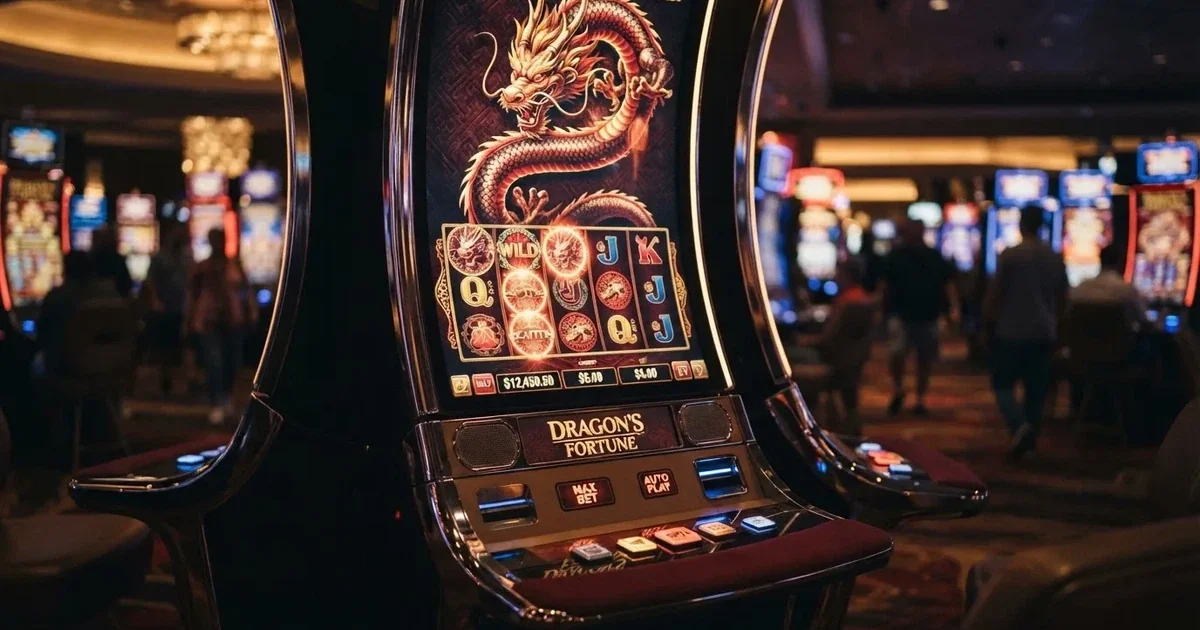
Dragon Link is, first and foremost, a cabinet game. Aristocrat’s linked-progressive format runs across a network of machines in a venue, and the pearl bonus that gives the title its character only triggers on the physical reel set. So when a player searches for a Dragon Link app, a Dragon Link casino app or a Dragon Link slot app, what they are looking at is one of two things: either a legitimate Aristocrat product that simply does not exist for the Australian online market, or an offshore wrapper that places the same reel imagery in a phone-shaped window.

The distinction matters because the second category is not a different version of the game — it is the same unlicensed activity the ACMA has spent the last several years warning against, repackaged for a touch screen. The reel art is freely copied; the linked-progressive jackpot, by definition, is not. A standalone mobile slot borrowing the Dragon Link name cannot share in the network prize, and any figure shown in its “current jackpot” field is, at best, a marketing number with no network behind it.
That mismatch — the look of the cabinet, the absence of its jackpot mechanism — is the central reason an Australian player should read the app store listing carefully. An app promising the pearl bonus feature, the four linked jackpot tiers, or any “real-time” prize pool that grows as a person plays is making a mechanical claim the underlying code cannot keep. The reels spin; the progressive does not.
There is one narrow legitimate channel that occasionally confuses players. Aristocrat has licensed Dragon Link-style titles to specific online aggregators for international markets — outside Australia, outside the Interactive Gambling Act’s reach. Those titles may carry the Dragon Link label legitimately, but they are not distributed to an Australian account, and the operator’s terms will say so. If the app’s permitted-jurisdictions list does not name Australia, the player is looking at the offshore product, and the rest of this page applies.
Why an App Cannot Replicate the Cabinet Jackpot
A linked progressive works because every machine in the network feeds a small percentage of every spin into a shared pool. That pool grows across potentially hundreds of cabinets simultaneously. The bonus round that “drops” the pearls and selects which jackpot tier a player wins is calibrated against that shared meter.
A phone-based slot, by contrast, runs against a single instance of the game on a server. It can display a jackpot figure, and it can flash an animation when the figure is “won,” but no money has been feeding that pool in real time from other players. Aristocrat’s actual Dragon Link cabinets, in venues regulated state by state, run a closed system with regulators able to audit the meter. A mobile clone runs an open number on the developer’s own server, which means the prize pool — and the probability of winning it — are entirely within the developer’s control.
For a player, the practical takeaway is short: an app labelled Dragon Link is at best a thematic imitation, and at worst a wrapper around an entirely different game. Either way, the thing being marketed is not the cabinet experience.
What the App Store Description Will and Will Not Tell You
Most app store listings for offshore slot apps are written to read like the genuine article. They name Dragon Link’s themes — Happy & Prosperous, Pearl Bonus, Golden Century — because those names are not trademark-protected in the way a player might assume. They list a return-to-player percentage, often 95% or 96%, because that is the range most regulatory regimes consider acceptable. They do not, because they cannot, prove the progressive meter is networked, because it is not.
The licence the app displays, if it displays one, will be a Curaçao or Anjouan gaming licence. Those licences exist; they do not make the app lawful in Australia. The IGA makes supplying these services to anyone in Australia an offence, and a Curaçao sub-licence is irrelevant to that prohibition. The ACMA’s enforcement record over the last several years is, in effect, a catalogue of offshore operators that held exactly such licences and were warned or blocked anyway.
The Game Itself: Dragon Link Reel Sets and How They Work
Dragon Link is not a single slot machine. It is a series of related titles — Autumn, Happy & Prosperous, Pearl Bonus, Golden Century, and others — built on a shared engine with a linked-progressive jackpot system layered on top. Each reel set has its own theme and paytable, but they share the mechanic that defines the title: a hold-and-spin bonus triggered by six or more pearl symbols anywhere on the reels, during which the triggering pearls lock in place and three respins begin, with each new pearl resetting the count.
The structure matters for anyone trying to read an offshore “Dragon Link” product, because the bonus round is the marketing draw. Aristocrat’s cabinet version ties the bonus to a network jackpot that grows with every qualifying spin across every connected machine. The respin feature, the pearl symbols, and the four progressive tiers — Mini, Minor, Major, Grand — are the standard equipment.
The Linked Jackpot Across the Network
A standalone progressive jackpot grows from the play on a single machine. A linked progressive grows from play across an entire network of machines in a venue, or in some configurations across multiple venues under the same operator. Dragon Link, in its licensed land-based form, is networked.
This is the difference between a jackpot that resets to a known seed value when won, and one that may have climbed into the tens of thousands of dollars over weeks or months of accumulated play. The Grand tier on a popular Dragon Link cabinet in a major Australian club can reach figures that change the math of a single spin — which is, of course, the design. The player chases the bonus because the bonus chases a number that keeps moving.
An online imitation cannot reproduce that. A single-instance game with no network feed has a jackpot that grows only when a single account plays it, which is to say, it does not really grow. The figure displayed is, in effect, a fixed seed dressed as a progressive.
Reel Sets, Volatility, and What the Bonus Round Looks Like
The Dragon Link series sits at the high-volatility end of Aristocrat’s cabinet range. Base-game hits are modest; the meaningful returns come from the bonus round and the progressive tiers. Each of the main reel sets shares that volatility profile, but the exact symbol distribution, free-spin triggers and the bonus-entry frequency differ. Happy & Prosperous leans into Asian-themed high-card icons and a strong pearl-entry rate; Golden Century runs a Chinese New Year motif with a tighter free-spin structure; Pearl Bonus, as the name suggests, is built around the hold-and-spin mechanic and stacks the entry condition.
For an Australian player reading reviews of an offshore product claiming to be one of these titles, the volatility profile is one of the harder things to verify and one of the more important things to get right. A high-volatility cabinet reel set with a 95% return-to-player pays out infrequently and in bursts. A low-volatility online imitation with the same label pays out more often and in smaller amounts, and the bonus round, if present at all, behaves differently. The reel art is the same; the experience is not.
How a Linked Jackpot Differs from a Standalone
The mechanical difference is simple. A standalone jackpot accumulates on one machine. A linked jackpot accumulates across a network, with a percentage of every qualifying wager on every connected machine feeding the pool. The reset values differ — a standalone might reset to a few hundred dollars; a linked Grand tier resets to whatever the operator has programmed as its seed, typically a four-figure floor.
What this means for a player is that the “expected value” of a single spin is not a fixed number. On a standalone machine with a known seed and a known starting meter, the math is approximately calculable. On a linked progressive with an unknown current meter, the math is not — the player is buying a small chance at a large, uncertain prize, and the rest of the session pays for that chance. The Dragon Link design, with its four tiers and a Grand that can run into five figures, leans hard into that uncertainty. A player walking up to the cabinet is buying a lottery ticket priced like a slot spin.
Comparing the Brands the ACMA Has Acted Against
Any side-by-side of “Dragon Link online pokies sites” runs into the same wall: none of them can lawfully serve an Australian resident. The IGA makes providing these games to Australians unlawful. What follows is therefore not a ranking of where to play but a record of which operators the ACMA has named, and on what dates, in connection with offering exactly that kind of service to Australians.
The brand list below is the set the ACMA itself has published as having received formal warnings. The order here is the order research assigns to it.
| Brand | ACMA action and date | Operator named by the ACMA | Subject support |
|---|---|---|---|
| RocketPlay | Formal warning, March 2026; earlier warning under Dama N.V., May 2022 | Pulsup Ltd | — |
| Level Up Casino | Formal warning, May 2022 | Dama N.V. | Listed as offering Dragon Link-style content on a third-party gaming site |
| Woo Casino | Formal warning, March 2025 | Dama N.V. | — |
| Spirit Casino | Formal warning, May 2025 | Dama N.V. | — |
| National Casino | Formal warning, July 2025 | Consolutetish S.R.L. | Listed as a Dragon Link venue on industry reference sources |
| Bizzo Casino | Formal warning, July 2025; earlier warning under TechSolutions, 2022 | Consolutetish S.R.L. | — |
| Ignition Casino | Formal warning, July 2025 | Bamboo Media | — |
| Instant Casino | Formal warning, February 2025 | EOD Code SRL | — |
| Jackbit | Formal warning, April 2026 | Ryker B.V. | — |
| Casino Intense | Formal warning, April 2025 | Sterplay Holding Ltd | Listed in national media coverage and regulator documentation |
| Sky Crown | Formal warning, September 2022 | Hollycorn N.V. | — |
A pattern emerges at a glance. Dama N.V. shows up across three separate warnings, on three different dates, covering four of the brands on this list. The corporate entity behind an offshore casino rebrands faster than the ACMA can publish a warning, and the same licence holder reappears under a new name with a fresh skin. For a player, the practical read is that the brand on the homepage changes; the operator behind it often does not.
A second pattern sits underneath the first. The dates spread across four years, from 2022 through 2026, and the pace has not slowed. The ACMA’s blocking list passed 1,750 sites earlier this year, and twelve more went on it in a single round reported in June 2026. The enforcement tempo is steady, and the warning publication is the visible part of a process that ends, for the operator, in a block.
What “Subject Support” Means in This Context
The fourth column on the table above records whether research found any listing for Dragon Link specifically, on that brand’s site or in third-party coverage. Where it says “Listed as offering Dragon Link-style content” or similar, the source named is what a third-party listings page reported at the time of research — it is not a confirmation from the operator, and it is not a recommendation to play. The far more common entry is an em dash, meaning no such listing was found: the brand received an ACMA warning for offering prohibited services to Australians, but research did not turn up a specific Dragon Link product on its books.
This is the shape of the offshore market. The same operators are warned over and over because they offer the same prohibited category of service. The specific game they offer is incidental to the prohibition.
How Fast the Blocking Rate Has Run
The ACMA’s first blocking request to Australian ISPs went out in November 2019. By the report dated 26 June 2026, the cumulative count of blocked gambling and affiliate sites had reached 1,751. Between those two dates sit roughly six and a half years, which works out to an average of around 269 blocked sites per year, or about 22 per month. The rate is not constant — some months are quieter, some are busier — but the running total is the easier number to grasp: by mid-2026, more than 1,750 illegal gambling sites have been added to the block list since the regime began.
The rate, in other words, is not a rounding error. It is the steady output of an enforcement process that has not lost momentum. The site a player opens today may be on next quarter’s blocking request. A balance sitting on it when the block lands is a balance the player has no Australian route to recover.
The Australian Online Pokies Landscape
Dragon Link sits inside a wider story. Australia has roughly 3% of the world’s pub and club poker machines with 0.3% of the global population — a share so out of proportion to population that it defines the local gambling conversation. In the 2020–21 financial year, Australians bet close to A$150 billion through gaming machines and lost A$12.18 billion on them. New South Wales alone had 87,298 machines outside casinos across 2,195 venues in June 2023, with player losses of A$8.18 billion in 2022–23. Queensland ran 21,122 machines in 351 venues as of October 2023; Victoria had 26,380 outside Crown Casino across 488 venues in 2021–22, under a hard statewide cap of 30,000.
These figures describe a country where the cabinet game is woven into the social fabric of pubs and clubs in a way it is in few other places. The minimum return-to-player (RTP) requirements vary by jurisdiction:
| Jurisdiction | Minimum RTP |
|---|---|
| New South Wales | 85% |
| Northern Territory | 85% |
| Queensland | 85% |
| Victoria | 85% (87% at Crown Melbourne) |
| ACT | 87% |
| Tasmania | 87% |
| South Australia | 87.5% |
| Western Australia | 90% |
Western Australia banned poker machines in pubs and clubs entirely when Crown Perth opened in 1985; Crown Perth’s own count has since grown from about 200 in 1985 to roughly 2,500 today, all approved by the state’s Gaming and Wagering Commission.
The land-based regime is regulated state by state. Tasmania held a single-operator monopoly on poker machines through the Federal Group from 1968; legislation passed in November 2021 ended that monopoly, and oversight moved to the Tasmanian Liquor and Gaming Commission. Tasmania also planned nation-leading mandatory pre-commitment cards for its machines, though implementation was delayed until late 2025.
What the regime does not include is online pokies. Under the IGA, providing online pokies or casino games to an Australian resident is an offence. No state or territory licenses them. The land-based machines are licensed and regulated; the online version is not, for an Australian resident. That is the legal frame every Dragon Link search runs into.
Why the Prohibition Has Held
The Interactive Gambling Act 2001, strengthened by the Interactive Gambling Amendment Act 2017, makes the supply of online casino games an offence. The Act targets the provider, not the player — an individual Australian who opens an offshore site is not the subject of enforcement. But the operator offering the service is, and the ACMA’s enforcement record is the visible evidence of how that targeting works.

What is licensed, separately, is wagering on races and sport placed before the event, plus lotteries and keno. In practice, online bookmakers are licensed by the Northern Territory — the Northern Territory Racing and Wagering Commission regulates 52 of them, including Sportsbet, Bet365 and Ladbrokes, for tax reasons. The commission has no full-time staff and meets once a month in Darwin. Online casino games and online pokies are not within that scope, and they are not licensed anywhere else.
The Interactive Gambling Amendment (Gambling Reform) Bill 2026 passed Parliament on 19 August 2026. Its advertising and inducement measures commence 1 January 2027 — a law with a start date, not yet in force on a page read in 2026. The point for a player is that the regulatory direction is tightening, not loosening, and the operators being warned today are being warned under a regime that is still being strengthened.
What a Player Loses by Going Offshore
The case against an offshore casino is not really about a single feature being absent. It is about the absence of every feature an Australian-licensed operator is required to provide, taken together.
BetStop, the National Self-Exclusion Register, has been live since August 2023. It binds every Australian-licensed online and phone wagering service. An offshore casino is not connected to it. A player who has registered for self-exclusion because they have decided to stop gambling can, on an Australian-licensed site, be confident the site will not let them open an account or place a bet. An offshore site has no such obligation.
The National Gambling Helpline — 1800 858 858 — is free, available 24/7, with chat at Gambling Help Online. Those services are the front line of harm-minimisation in Australia. They are useful to anyone gambling, regardless of where the gambling happens; they are not a substitute for the protections an Australian licence provides.
Payments carry their own signal. Credit cards, credit-related products and digital currency are banned as payment for licensed online wagering since 11 June 2024, with penalties up to A$247,500 for operators accepting them. Legal deposit routes for licensed wagering are debit card, bank transfer, PayID and Osko, and BPAY. An offshore site asking an Australian for a credit card or a crypto deposit is operating outside the Australian rules from the moment the deposit is requested.
The arithmetic of recourse is the part the marketing never mentions. If an Australian-licensed operator refuses a withdrawal, the player has a complaints body and a regulator to approach. If an offshore operator refuses a withdrawal, the player has a customer-service email address and an entity registered in a jurisdiction whose gambling regulator has no standing to compel an Australian-facing operator. If the site is blocked while the balance sits on it, the player has lost the money in the only sense that matters.
Where the Real Money Goes
H2 Gambling Capital’s 2025 report estimates that Australians lose about A$3.9 billion a year to illegal gambling sites. The share of gambling going through legal channels fell from 74% in 2021 to 64%. Both numbers tell the same story: illegal gambling is not a fringe activity in Australia. It is a multi-billion-dollar flow, and the IGA’s enforcement work is the visible attempt to redirect it.
The same report’s estimate — A$3.9 billion a year in losses to illegal sites — is the scale of what the ACMA’s block list is pushing against. Roughly a thousand operators a year, on average, have been added to the block list since 2019. The math of chasing that flow is the math of an enforcement regime that is moving in the right direction but has not closed the gap.
Responsible Play Around a Linked Jackpot Feature
A linked jackpot feature is engineered to keep a player watching the reels. The four tiers, the rising Grand meter, the pearl bonus that resets the respin counter every time a new pearl lands — every element is built around anticipation. The math behind the design is that the longer a player stays at the cabinet, the closer the jackpot tends to climb toward its reset, and the more attractive the spin becomes.
For that reason, a fixed time limit matters more than any in-game prompt. The game’s own messaging — a “you’ve been playing for a while” notification, a pop-up asking if the player wants to continue — exists because the operator knows the design holds players longer than they planned. A player who decides in advance how long they will sit at the cabinet, and who treats that decision as binding, has done the thing the game’s design does not want them to do.
Why Time, Not Money, Is the Right Anchor
A money limit sounds sensible and often is. But the linked jackpot’s whole appeal is that a single spin at a high meter can change the math of the session. A player who arrived with a dollar limit will, on a high-meter cabinet, be tempted to extend the session for “one more spin” with the argument that the current meter justifies it. The argument is the design working as intended.
A time limit is harder to argue with. The reels do not care how long the player has been there. The progressive meter does not slow down for a tired player or speed up for an alert one. If the player has decided they will spend forty-five minutes at the cabinet, forty-five minutes is what they spend, and the question of whether the meter is at A$8,000 or A$12,000 when they leave is, in practical terms, irrelevant — because the spin they would have made in minute forty-six is no different from the spin they made in minute forty-four.
For an Australian player at a land-based venue, this is the part of the experience where the regulator’s design requirements are doing useful work. The cabinet will display return-to-player information. The venue will display the helpline number. The state’s pre-commitment system, in Tasmania and eventually elsewhere, will cap spending at a level the player sets in advance.
What Help Looks Like in Practice
The National Gambling Helpline — 1800 858 858 — is free, 24/7, and reaches a counsellor trained in gambling harm. Gambling Help Online offers the same service via web chat. These services are useful to anyone, at any stage of involvement, from a player who has noticed they are spending more than they planned to a player who has decided to stop and wants help making that decision stick.
BetStop, the National Self-Exclusion Register, is the structural answer for a player who has decided to stop gambling with Australian-licensed operators. Registration is straightforward and covers every Australian-licensed online and phone wagering service at once. It does not, by design, cover offshore sites — which is one of the reasons the IGA’s prohibition matters in the first place.
A family member or friend who is concerned about someone else’s gambling can contact the same helpline. The services are not gated by the player’s willingness to identify themselves, and a worried third party is as welcome to call as the person gambling is.
The Player Protection Gap on Offshore Sites
An offshore casino has no obligation to connect to BetStop, no obligation to display the helpline number, no obligation to honour a self-exclusion request from an Australian player, no obligation to verify that a player is over 18 in any meaningful way, no obligation to publish return-to-player information for the games it offers, and no obligation to submit its software to any testing regime an Australian regulator would recognise.
The list is long because the protections are stacked in the Australian regime, and every layer is missing offshore. A player who has chosen to use an offshore site is, by definition, gambling outside every protection the Australian system offers — and the IGA’s prohibition is the regulatory expression of why that choice has costs.
The Operators the ACMA Has Warned Over Dragon Link and Similar Content
The eleven brands below are listed because the ACMA has issued a formal warning over each for offering prohibited services to Australians. The order follows research, not a recommendation. No brand on this list is recommended as a place to play; the prohibition applies to every one of them, and the warnings are the public record of that application.
RocketPlay
RocketPlay is the most recently named brand on this list, having received a formal ACMA warning in March 2026 under operator Pulsup Ltd. The same operator carries an earlier warning from May 2022, when the ACMA addressed Dama N.V. over a batch of six casino brands that included RocketPlay. The pattern of rebranding is visible across the whole Dama N.V. cluster, but RocketPlay is the clearest example — a brand that has been warned twice under two different corporate names for the same activity.
Level Up Casino
Level Up Casino was named in the May 2022 warning to Dama N.V. as one of six brands in a single enforcement action. Third-party listings pages have, at various points, listed Level Up as carrying Dragon Link-style content. The site is not connected to BetStop, not licensed by any Australian regulator, and operates outside the Interactive Gambling Act 2001 from the moment it offers online casino games to an Australian resident.
Woo Casino
Woo Casino received an ACMA formal warning in March 2025, again under Dama N.V. By that date Dama N.V. had already been warned once over a six-brand batch in 2022, and the ACMA’s continued action against the same operator across multiple brands speaks to the operational pattern: a licence holder that re-enters the Australian market under fresh skins faster than the warning publication can name each one.
Spirit Casino
Spirit Casino’s ACMA formal warning followed in May 2025, again under Dama N.V. The closeness in date to the Woo Casino warning is not coincidence — the ACMA’s enforcement actions against Dama N.V. span the full set of brands the operator runs, and each new warning is, in practice, the regulator addressing a single licence holder across a portfolio.
National Casino
National Casino was the subject of a July 2025 formal warning to Consolutetish S.R.L. The same operator was warned over Bizzo Casino at the same time. Third-party listings have referenced National Casino in connection with Dragon Link-themed content. The brand has not been connected to any Australian regulator, and the IGA’s prohibition applies in full.
Bizzo Casino
Bizzo Casino carries two ACMA warnings. The earlier one, in 2022, was issued to TechSolutions (CY) Group Limited and TechSolutions Group N.V. The later one, in July 2025, was issued to Consolutetish S.R.L. — a different corporate entity running what appears, on the surface, to be the same product. The rebranding pattern is the same as the Dama N.V. cluster: the brand persists on the player-facing side while the operator behind it changes.
Ignition Casino
Ignition Casino received a formal warning in July 2025 under operator Bamboo Media. The brand is well known in offshore markets, particularly in the United States where state-level regulation creates a different legal frame. For an Australian resident, the IGA’s prohibition applies regardless of where the operator is nominally based, and the ACMA’s warning is the public evidence of that application.
Instant Casino
Instant Casino received a formal warning in February 2025 under operator EOD Code SRL. The brand markets itself aggressively through affiliate channels and has been the subject of significant advertising spend. The warning sits inside the same enforcement tempo as the rest of the list — a steady drumbeat of named operators that the ACMA has acted against, each one named in a publicly available warning publication.
Jackbit
Jackbit received a formal warning in April 2026 under operator Ryker B.V., alongside CasinOK in the same enforcement action. The warning is the most recent on this list alongside RocketPlay, and the closeness of the dates — April and March 2026 — reflects the steady pace at which new brands are entering the ACMA’s enforcement scope.
Casino Intense
Casino Intense received a formal warning in April 2025 under operator Sterplay Holding Ltd. The brand has appeared in national media coverage, has been the subject of ACMA action, and has been mentioned in Crown Melbourne’s own game documentation in unrelated contexts. The pattern is the same as the rest of the list: an offshore operator that has offered prohibited services to Australians and been named in the regulator’s warning publication.
Sky Crown
Sky Crown was named in the ACMA’s September 2022 formal warning to Hollycorn N.V., alongside the operator’s Blue Leo service. Sky Crown is the oldest entry on this list by warning date and one of the most prominent in the Australian-facing affiliate marketing ecosystem, which is the visible reason the regulator has moved against it.
Responsible Play: Putting the Practical Pieces Together
The land-based Dragon Link cabinet is the game as Aristocrat designed it — networked, regulated, with a return-to-player that meets the relevant state minimum. The online version, in every form research has surfaced, is a prohibited product offered under one of several offshore licences that do not authorise supply to an Australian resident. The ACMA’s enforcement record is the public evidence that the regulator has been naming, warning and blocking operators offering that product, and the pace has not slowed.
For an Australian player, the practical decision is straightforward. If the appeal is the cabinet game, the cabinet game is what the player should play — at a venue regulated in their state or territory, with a time limit set in advance, and with the helpline number (1800 858 858) saved in their phone. If the appeal is the convenience of an online spin, no online casino is licensed to offer that to an Australian resident, and the offshore market is built on operators the regulator has named, warned and, in many cases, blocked.
A final note on the consumer protection math. Tax treatment for an Australian recreational player is set out at section 6-5 of the ITAA 1997: gambling winnings are not assessable income, losses are not deductible, unless the player carries on a business of gambling. That is the model only — a player with a question about their own position should check with the ATO. The offshore dimension does not change the tax treatment, but it does change the recourse position: an offshore operator that refuses a withdrawal gives the player no Australian complaints body to approach.
Frequently Asked Questions
Is it legal to play Dragon Link online pokies for real money in Australia?
No. The IGA makes supplying these games to Australians an offence, and no state or territory licenses them. The ACMA has issued formal warnings to offshore operators offering exactly this service, and offshore brands offering Dragon Link-style content to Australian residents are operating outside Australian law regardless of the licence they display.
What triggers the bonus round on a Dragon Link pokies machine?
Six or more pearl symbols landing anywhere on the reels triggers the hold-and-spin bonus. The triggering pearls lock in place and three respins begin; each new pearl that lands resets the respin count to three, and the round continues until the respins run out without a new pearl. The bonus round is also where the four linked jackpot tiers — Mini, Minor, Major and Grand — can be awarded.
Is Dragon Link available at regulated land-based venues in Australia?
Yes. Dragon Link is licensed by Aristocrat for land-based venues and runs across pub, club and casino floors in every Australian state and territory except Western Australia’s pubs and clubs (Crown Perth holds the only WA licence). Each state and territory separately regulates the machines’ design and operation, including minimum return-to-player requirements.
How does the linked jackpot feature on Dragon Link differ from a standalone jackpot?
A standalone jackpot accumulates on a single machine; a linked jackpot accumulates across a network of machines, with a percentage of every qualifying spin on every connected cabinet feeding the shared pool. A linked Grand tier can therefore reach figures a standalone cannot, and the probability of winning it depends on the size of the network as much as on the denomination played.
Does a Dragon Link app on a phone offer a different game to the desktop version?
Functionally, an app and a desktop site run the same software — the distinction is the screen, not the game. The more important distinction is between a licensed cabinet experience and an offshore product. An app claiming to offer Dragon Link to an Australian account is an offshore product by definition; no Australian-licensed operator distributes Dragon Link online.
What separates the different Dragon Link reel sets from each other?
Each reel set — Autumn, Happy & Prosperous, Pearl Bonus, Golden Century, and others — has its own theme, symbol distribution and paytable, but they share the hold-and-spin bonus mechanic and the four linked jackpot tiers. The volatility profile is similar across the series but not identical; bonus-entry frequency and free-spin structure differ by title.