

High volatility slots for Australian readers — what the page can and cannot tell you
The short answer first: there is no licensed Australian online casino where a reader in this country can play high volatility slots for real money. The Interactive Gambling Act 2001 prohibits offering online casino games — pokies included — to anyone physically in Australia, and no state or territory licenses that product. The rest of this page is the long version. It explains what a high volatility slot actually is, walks through the ACMA enforcement record so the reader can see which offshore brands have been warned or blocked, names the lawful alternatives (licensed pubs and clubs, the two mainland casinos, online sports and race wagering under an Australian licence), and sets out the player-protection tools — BetStop and Gambling Help Online — that apply regardless of where a spin happens.
A note on currency and timing. Current as of 30 October 2026, cross-checked against the ACMA register and the Interactive Gambling Act 2001 as published on the Federal Register of Legislation.
Table of Contents
- Paytables and volatility: how the games actually behave
- Legality in Australia: what the law actually says
- What the lawful Australian product actually looks like
- What high volatility slots cost the reader who plays them
- Player protection in Australia: BetStop and the helplines
- What this leaves the reader who reads this page
- FAQ
Paytables and volatility: how the games actually behave
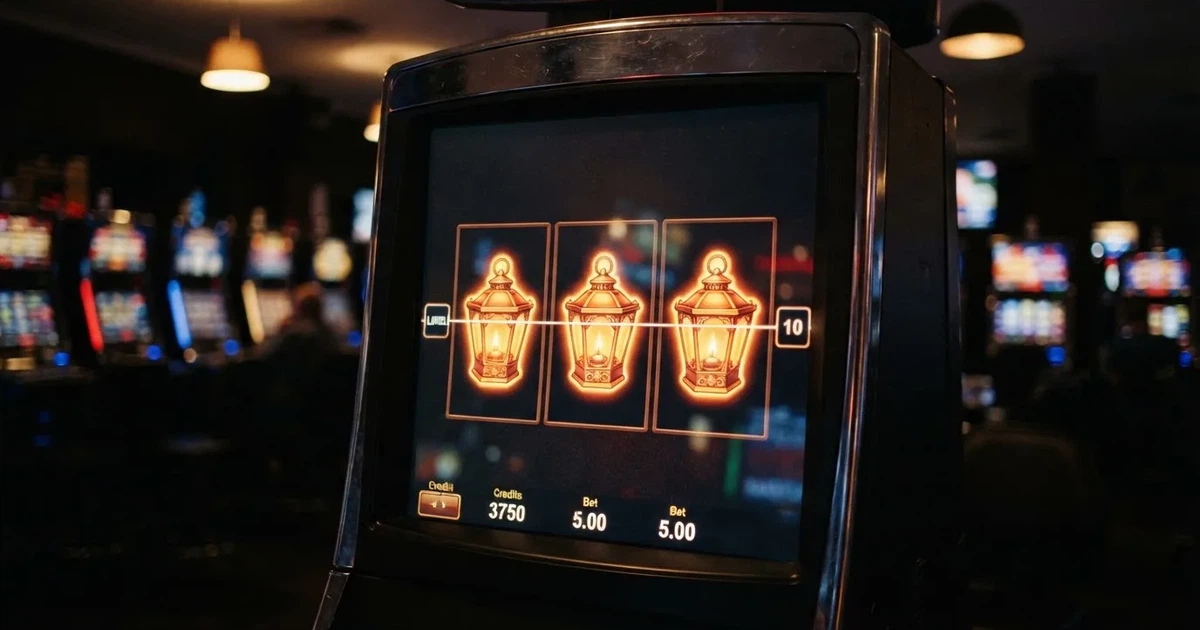
A high volatility slot is one whose paytable concentrates the bulk of its return inside a small number of outcomes, with very long dry stretches between them. The base game pays just enough to keep the bankroll alive — small line hits, a bonus tease now and then — and the prize comes when the feature lands the way the maths says it should. A low volatility slot, by contrast, dribbles out wins so frequently that the balance barely moves in either direction; the entertainment is the rhythm, not the payout. The two are different products aimed at different bankrolls and different temperaments, and a reader who treats a high volatility title as if it were a low one will burn through a session before the maths has had a chance to play out.

The phrase itself is borrowed from finance: a “volatile” asset is one whose price moves sharply, and a “high volatility” slot is one whose per-spin outcome is wildly uneven. A useful mental model is a long-tailed distribution. Most outcomes cluster near zero. A handful of outcomes sit far out in the right-hand tail — a five-of-a-kind, a free-spins feature retriggered to its ceiling, a jackpot symbol that hits once in several hundred thousand spins. The published return-to-player percentage is an average across an enormous sample; on any individual session the realised return can sit almost anywhere from deeply red to deeply black, and the “volatility” label is the warning that the realised return will, more often than not, sit far from the published one.
That is why bankroll sizing matters more than it does on a low volatility title. A reader sitting down with fifty times the average stake in hand has enough runway to wait out the dry spells and reach the feature; a reader sitting down with ten times the average stake has, statistically, already lost. The numbers themselves are mechanical. Modern video slots can use five or more reels with fifty or more symbols per reel, producing odds as high as 300 million to one against the top combination; a classic mechanical three-reel machine with about ten symbols per reel offers roughly 1,000 possible combinations. The volatility is a function of how spread the prizes are across that combination space, not of how many combinations exist.
Two terms recur on paytables. RTP, return to player, is the long-run average percentage of money wagered that the machine returns as winnings; the house edge is its complement. Hit frequency is the share of spins that produces any return at all — a hit does not need to be a win, only a spin whose payout exceeds the stake. A high volatility slot typically has a low hit frequency (most spins are losers or near-losers) and a high maximum payout relative to the stake. A low volatility slot inverts that — frequent small hits, a low ceiling. State regulation in some US jurisdictions sets a floor for the payout percentage: Nevada requires at least 75%, Mississippi at least 80%, and New Jersey at least 83%. Australian states set their own rules for gaming machines in clubs and casinos, but those rules apply to the local product, not to any offshore site.
The catalogue a reader meets on an offshore site is huge and largely undifferentiated by volatility class. NetEnt, Pragmatic Play, Play’n GO, Hacksaw Gaming, Nolimit City all publish games whose mathematics sit across the spectrum, and their marketing usually prints a volatility tag — “high,” “extreme,” “medium” — next to the title. The tag is self-assessed and not independently audited for every jurisdiction, so two titles labelled “high” can sit at very different points on the spectrum. The Hacksaw and Nolimit catalogues lean hardest into the high volatility end; mainstream Pragmatic and Play’n GO titles cover the middle; branded Megaways slots tend to land in the medium-to-high band because of how the mechanic amplifies top-end outcomes. A reader picking by provider reputation is picking by feel, not by mathematical category.
Three mechanics dominate the genre. Megaways licences a variable reel layout that changes the number of symbols per reel on every spin, multiplying the symbol count and therefore the combination count. Cluster pays (Tumble, Avalanche, Cascade) drops wins off the reels and lets new symbols fall in to fill the gap, with the possibility of a chain of wins on a single paid spin. Hold-and-win / respin features lock a set of special symbols in place and award a fixed number of respins to fill the rest, then award the cash values attached to each locked symbol plus any of the fixed jackpots. All three stretch the right-hand tail of the prize distribution further out; all three lengthen the dry stretches proportionally. They are not interchangeable, but they share the same cost: a session needs more runway to play out.
The cost is the point this page keeps returning to. A reader who chases a feature on a high volatility slot with twenty dollars in the account will almost certainly watch that twenty evaporate before the feature triggers. A reader with two hundred dollars has, in round terms, ten times the runway; whether that is enough depends on the stake-per-spin relative to the bankroll, not on the stake in absolute terms. The arithmetic is the same arithmetic the page uses to evaluate bonus offers in the offshore market; it does not change just because the slot in question is the one the reader would have chosen if they could.
The catalogue of high volatility titles worth knowing
A handful of titles have become reference points for the genre. Pragmatic’s Gates of Olympus and Sweet Bonanza are super-volatile scatter-pays games with a 100x multiplier ceiling on free spins; Hacksaw’s Le Bandit and Wanted Dead or a Wild are extreme-volatility cluster-pays games; Nolimit’s San Quentin xWays and the various Mental slots are widely treated as the hardest maths in the mainstream catalogue. Play’n GO’s Book of Dead and Reactoonz are slightly older and sit at the upper end of medium volatility rather than the high end. Big Bass Bonanza, in its original Pragmatic form, is medium-volatility despite the bonus-heavy design.

Three caveats the reader should hold onto. First, the volatility tag on the game’s info screen is a publisher assessment, not a regulator’s verdict, and the maths can vary between releases of the same branded title. Second, the published RTP can vary by jurisdiction — a version published at 96% in one market may run at 94% or lower in another, with no outward sign of the change. Third, “high volatility” is not a synonym for “big jackpot” — a high volatility slot can have a 5,000x ceiling while a low volatility one sits at 500x, and the former can still pay less often than the latter. The label describes the shape of the distribution, not its mean.
Legality in Australia: what the law actually says
The Interactive Gambling Act 2001 (the IGA) makes it an offence to provide certain interactive gambling services to customers physically in Australia. The prohibited services, after the Interactive Gambling Amendment Act 2017 strengthened the regime, are online casino games, online pokies and in-play betting on sport. The offence is committed by the provider — the offshore operator that accepts a deposit from a customer in Australia — not by the individual player. A reader in Australia who opens an account with an offshore casino, deposits, plays and tries to withdraw is not personally prosecuted. The operator is the one the IGA targets.
What is licensable in Australia is wagering on races and sporting events placed before the event, lotteries, and keno. Online sports and race wagering is licensed in practice by the Northern Territory Racing and Wagering Commission (NTRWC), which regulates 52 of Australia’s online bookmakers — Sportsbet, Bet365 and Ladbrokes among them — under a Territory licence that exists for tax reasons rather than because the Territory is a population centre. The commission has no full-time staff and meets once a month in Darwin, a fact that has been the subject of reform debate in 2026. A reader who wants to bet on the Melbourne Cup or on a Saturday afternoon NRL game uses an NTRWC-licensed bookmaker; a reader who wants to spin a pokies-style game online does not have a lawful counterpart at all.
The ACMA — the Australian Communications and Media Authority — is the regulator that enforces the IGA in practice. Its toolkit includes formal warnings to operators, civil penalty proceedings in the Federal Court, and requests to Australian internet service providers to block offending websites. The blocking request is the most visible lever. According to the ACMA as reported in June 2026, a total of 1,751 illegal gambling and affiliate marketing websites had been blocked since the first blocking request in November 2019, and more than 230 unlicensed gambling services had left the Australian market since enforcement was strengthened in 2017. In a round reported on 26 June 2026 alone, the ACMA asked Australian ISPs to block twelve more sites: 7Signs, ChromaBet, Donbet, Duospin, Freshbet, Slots Gem, Jacks Club, Lucky Start, Pointsbetz.com, Spinrise, Vinyl Casino and Wildsino.
The blocking process is a long one. The ACMA investigates, issues a formal warning first, then waits for compliance, then refers the matter to the Department of Infrastructure for an ISP-level block request, which itself has to be authorised. From the first warning to the moment the URL stops resolving for an Australian reader can run six to twelve months, sometimes more. The result is that an offshore site the ACMA has acted against may still be reachable on the day a reader sees it advertised; the regulator’s record is the more reliable guide to where the law stands than the live status of any one URL.
There is no Australian consumer protection for a reader who plays at an offshore casino. No Australian complaints body has jurisdiction; no Australian court will enforce a withdrawal dispute against a Curacao-licensed operator that refuses to pay; no Australian deposit guarantee covers a balance left on a site that gets blocked. The reader’s only protection is the operator’s own terms and the operator’s own willingness to honour them. That is a meaningful asymmetry, and it is the asymmetry the ACMA’s enforcement record is built around. The agency is not telling readers they cannot gamble; it is telling operators they cannot be paid by Australians to provide prohibited services.
The 2026 reform package — the Interactive Gambling Amendment (Gambling Reform) Bill 2026 — passed Parliament on 19 August 2026. Its advertising and inducement measures commence on 1 January 2027. As of 2026 those measures are law with a start date, not yet in force. They will, from the new year, restrict how licensed wagering operators and their affiliates can market to Australian customers, with particular attention to inducements aimed at lapsed or vulnerable customers. The page reads as law-in-force only where the provision has commenced; the rest is flagged as forthcoming.
The ACMA enforcement record, brand by brand
The brands named in this section are brands the ACMA has issued formal warnings against. Each one is presented as a brand that has crossed the line; none of them is presented as a recommendation, a place to play, or a comparison point on quality. The table is the ACMA’s own record, transcribed in the order research received it. The “subject support” column reflects what independent listings report about whether the brand carries any high volatility slot content; where no listing was found, the column is left blank, and that absence is itself a fact about how the brand is documented in third-party catalogues.
| Brand | ACMA action and date | Operator named by the ACMA | Subject support |
|---|---|---|---|
| RocketPlay | Formal warning March 2026 | Pulsup Ltd (Rocketplay.com.au) | — |
| Level Up Casino | Formal warning May 2022 | Dama N.V. | Listings-only |
| Woo Casino | Formal warning March 2025 | Dama N.V. | — |
| Spirit Casino | Formal warning May 2025 | Dama N.V. | — |
| National Casino | Formal warning July 2025 | Consolutetish S.R.L. | Listings-only |
| Bizzo Casino | Formal warning July 2025 (earlier 2022) | Consolutetish S.R.L. (earlier TechSolutions) | — |
| Ignition Casino | Formal warning July 2025 | Bamboo Media | — |
| Instant Casino | Formal warning February 2025 | EOD Code SRL | — |
| Jackbit | Formal warning April 2026 | Ryker B.V. | — |
| Casino Intense | Formal warning April 2025 | Sterplay Holding Ltd | Listings-only |
| Sky Crown | Formal warning September 2022 | Hollycorn N.V. | — |
The table is not a ranking. It is the ACMA record. The names recur — Dama N.V. appears four times across the eleven rows, Consolutetish S.R.L. twice — and the recurrence is a finding: the regulator’s enforcement has to keep returning to the same operator groups because the same operator groups keep launching new skins under new names. A reader who sees a brand new to the market, operated by a parent the ACMA has already warned, has not found a workaround; they have found the next iteration of one.
First: RocketPlay. The ACMA issued a formal warning to Pulsup Ltd over Rocketplay.com.au in March 2026, with Dama N.V. previously warned over the brand in May 2022. The site presents itself as a Curacao-licensed offshore casino; Australian consumer protection does not apply to it whatever licence it displays. No catalogue detail appears in independent third-party listings for this brand, so the column is blank rather than fabricated.
Second: Level Up Casino. The ACMA named Dama N.V. in a May 2022 warning covering six brands at once, including Level Up. Independent listings report Level Up carries a broad game catalogue, with the BGaming catalogue visible in the listings; the “listings-only” tag means the subject support appears in third-party catalogues, not as a self-published claim from the operator.
Third: Woo Casino. The ACMA issued a fresh formal warning to Dama N.V. over Woo Casino in March 2025. The warning was issued four years after the original Dama N.V. action covering the brand, which is itself the pattern. Catalogue information is not publicly documented.
Fourth: Spirit Casino. The ACMA issued a further formal warning to Dama N.V. over Spirit Casino in May 2025, eight months after the Woo Casino warning. Catalogue information is not publicly documented.
Fifth: National Casino. The ACMA issued a formal warning to Consolutetish S.R.L. over National Casino in July 2025. Independent listings report National Casino carries a broad game catalogue; the “listings-only” tag means the subject support appears in third-party catalogues, not as a self-published claim from the operator.
Sixth: Bizzo Casino. The ACMA issued a formal warning to Consolutetish S.R.L. over Bizzo Casino in July 2025, with a prior formal warning issued to TechSolutions (CY) Group Limited and TechSolutions Group N.V. over the brand back in 2022. Catalogue information is not publicly documented.
Seventh: Ignition Casino. The ACMA issued a formal warning to Bamboo Media over Ignition Casino in July 2025. Catalogue information is not publicly documented.
Eighth: Instant Casino. The ACMA issued a formal warning to EOD Code SRL over Instant Casino in February 2025. Independent third-party listings carry no documented catalogue detail on Instant Casino for the subject, so the column is blank.
Ninth: Jackbit. The ACMA issued a formal warning to Ryker B.V. over Jackbit (and CasinOK) in April 2026. Independent third-party listings carry no documented catalogue detail on Jackbit for the subject, so the column is blank.
Tenth: Casino Intense. The ACMA issued a formal warning to Sterplay Holding Ltd over Casino Intense in April 2025. Independent listings report Casino Intense carries a broad game catalogue; the “listings-only” tag means the subject support appears in third-party catalogues, not as a self-published claim from the operator.
Eleventh: Sky Crown. The ACMA issued a formal warning to Hollycorn N.V. over Sky Crown and Blue Leo casino services, published in September 2022. Independent third-party listings carry no documented catalogue detail on Sky Crown for the subject, so the column is blank.
The empty “subject support” cells are not failures of the page. They are the page’s point. The brands the ACMA has acted against are documented by the regulator; they are not documented, by independent third-party catalogues, as carrying a particular branded subject line for the high volatility slot genre, and that absence is itself a finding. A reader looking for evidence a brand specialises in high volatility slots would have to take the brand’s own word for it.
The blocking rate, in plain numbers
Between the ACMA’s first blocking request in November 2019 and the round reported on 26 June 2026, the regulator had asked Australian ISPs to block 1,751 illegal gambling and affiliate marketing websites. That works out at a blocking rate of roughly 263 sites per year averaged across the six and a half years the regime has been running, or around five per week. The rate has not been even. The early years were a slow build as the ACMA established its legal footing after the 2017 amendments; the 2020s have run faster, partly because each operator group launches several brand fronts at once. The single 26 June 2026 round alone added twelve sites.
The condition on that rate is important. It counts blocking requests, not unique operators. The same operator group, working through several sister brands, can drive a single blocking request to remove three or four sites in one round and a separate blocking request six months later to remove three more, all of which count individually against the 1,751 total. Read that way, the rate is a count of how much skin an operator is willing to put up; read another way, it is a count of how thin the operator’s compliance reflex is. The numbers do not distinguish between the two readings; the reader has to.
A blocking request does not, on its own, take a site offline globally. It removes the site from Australian DNS; readers in other markets can still reach the URL. A reader in Australia who has an account on a blocked site and an outstanding withdrawal may still see the site resolve for them through cached DNS or a non-Australian path, and the operator may still process (or refuse to process) the withdrawal. The block prevents new Australian sign-ups more than it prevents existing customers from finishing their existing business, which is itself an argument for treating the regulator’s record as the more reliable guide to a site’s legal status than the live status of any one URL.
What the lawful Australian product actually looks like
The reader looking for a legal spin in Australia has three options. The first is the licensed pub or club. New South Wales alone had 87,298 pokies-style machines outside casinos as of June 2023, and the national total ran to about 181,000 across NSW, Victoria, Queensland, South Australia and the ACT combined. Victoria had 26,380 machines in 2021–22, Queensland 21,122 in October 2023, South Australia 11,672 in September 2023, and the ACT 3,587 in November 2023. Australia’s per-capita gaming machine density is high by international standards — by 2010 the country operated an estimated 97,103 gaming machines outside casinos, a per-capita rate about five times that of the United States.
The games themselves are tightly regulated. State regulators approve the paytable, the volatility classification and the maximum stake. A NSW club pokie is a low-to-medium volatility product by international comparison, with a maximum bet of $10 per spin (lower outside the casino product) and a published RTP that sits in the high eighties. The high volatility slot the reader sees on an offshore catalogue does not exist in that form anywhere in the licensed Australian pub or club product. The closest the local product comes is a denomination-1 machine with a smaller feature-to-base spread than the offshore extreme-volatility titles, and even those are not what an offshore reader means by the genre.
The second option is the casino floor. Crown Melbourne and Crown Sydney are the two main casinos (The Star Sydney closed its gaming floor in September 2024 as part of a structural review). The Melbourne floor operates under the Victorian Gambling and Casino Control Commission (VGCCC), which replaced the VCGLR as Victoria’s casino regulator on 1 July 2022. The VGCCC approves all rules for table games before they are introduced at Crown Melbourne, and its public log includes renaming the “Perfect Pairs” blackjack side bet to “Crown Pairs” (23 December 2024) and introducing a “Free Bet” option with a new “Pot of Gold” side bet (25 March 2024). Crown Melbourne also offers three baccarat variants — Traditional Baccarat, Crown Baccarat and 2 to 1 Baccarat — as approved table games regulated by the VGCCC. Under section 66 of the NSW Casino Control Act 1992, a casino operator must not permit a game such as baccarat to be played unless the game and its rules are approved by the regulator, and the operator must make a copy of the approved rules available to patrons on request. The same regulator-approved-rules principle applies across states.
The third option is licensed online wagering. The 52 NTRWC-licensed bookmakers take bets on Australian and international racing, on AFL, NRL, cricket, tennis, soccer, basketball and most other professional sports, and on a small number of novelty markets. They do not, and cannot legally, offer online casino games or online pokies. The minimum age is 18 across all licensed wagering. A reader who wants to bet on Saturday’s NRL games can do so through a licensed bookmaker; a reader who wants to spin a pokies-style game online cannot.
The deposit rules across the licensed product are strict. Credit cards, credit-related products and digital currency are banned as payment for licensed online wagering from 11 June 2024, with penalties of up to $247,500 for operators that accept them. Legal deposit routes for licensed wagering are debit card, bank transfer, PayID/Osko and BPAY. A reader who sees an offshore site asking for a credit card or a crypto deposit is being asked to use a payment channel that is illegal for the equivalent Australian-licensed transaction; it is also, separately, a sign the operator is not subject to Australian payment regulation.
The tax treatment of recreational gambling winnings in Australia is that they are not assessable income (section 6-5 ITAA 1997) and losses are not deductible. A punter who wins $500 on the Melbourne Cup does not declare the win; the same punter cannot offset $500 of losses against other income. The rule is the same whether the win comes from a licensed Australian bookmaker or from an offshore site. The deduction side does not follow the same logic for professional gamblers — a person carrying on a business of gambling has different rules — but that is a different scenario from the recreational punt the rest of this page assumes.
What high volatility slots cost the reader who plays them
The cost is the page’s whole point, so it is worth saying directly. The published RTP on a high volatility slot is the long-run average across an enormous sample of spins, and the volatility is the warning that the realised return on any individual session will almost certainly not equal that average. A reader sitting down with $200 and betting $1 a spin has 200 spins of runway. On a low volatility title that runway will produce something close to the published RTP, give or take a few per cent; on a high volatility title the same 200 spins will either burn through the bankroll before the feature triggers or hit the feature and pay out several hundred dollars in one spin. The expected value across the two runs is the same (assuming the same published RTP); the variance is what changes.
The reader on a small bankroll pays the variance. A reader who deposits $50, plays a high volatility title at $1 a spin, and sits through fifty spins without hitting the feature has realised a return that is, statistically, well below the published RTP — because the published RTP assumes a much larger sample. The session looks like a loss; the maths says it should have been. The reader who deposits $500, plays the same title at the same stake, and hits the feature at spin 200 has realised a return well above the published RTP — because the published RTP assumed the sample would be larger than 200 spins. The session looks like a win; the maths says it should not have been.
This is not a casino-specific phenomenon; it is how variance works in any long-tailed distribution. A reader who treats a high volatility slot as a session-length product is misreading the product. The honest framing is: the high volatility slot is a long-run product on a small bankroll, and a long-run product requires a long runway. The reader who cannot fund the long runway is, statistically, paying for the privilege of being in the sample.
The marketing language around high volatility slots is built around the wrong tail. The phrases that recur — “land a massive win,” “unlock the bonus,” “hit the feature” — describe the right-hand tail of the distribution, the small number of outcomes that pay several hundred times the stake. They do not describe the modal outcome, which is a quiet loss over a session-length sample. The game is being sold as a lottery ticket with a slot machine skin; it is, more accurately, a slot machine with a lottery ticket’s payout profile. The arithmetic that justifies the framing is real, and the arithmetic that punishes it is just as real.
The reader who is honest about which arithmetic they are buying into is the reader who sizes the bankroll to the math. The reader who is not pays the variance the marketing has hidden.
Player protection in Australia: BetStop and the helplines
The single most important player-protection tool for an Australian reader is BetStop, the National Self-Exclusion Register, which has been live since August 2023. BetStop binds every Australian-licensed online and phone wagering service — the 52 NTRWC bookmakers, the lotteries, the keno operators, and any licensed venue-based service registered with the scheme. A person who registers with BetStop is excluded from opening new accounts, from depositing into existing accounts, and from being marketed to by those services, for a minimum exclusion period of three months and up to a permanent exclusion. The exclusion is enforced across the licensed sector; an operator that lets a self-excluded person deposit is in breach of its licence conditions.
The critical caveat for this page is that BetStop does not bind offshore casinos. The ACMA-warned brands named in this page are not connected to BetStop; a reader who registers with BetStop and then plays at an offshore site is still playing at the offshore site. The register is a tool of the Australian-licensed sector, and its protections are exactly the protections the offshore sector does not offer. That is the practical link between this section and the section above: the ACMA enforcement record, the blocking regime, and the absence of BetStop coverage at offshore sites are three faces of the same gap.
The National Gambling Helpline is 1800 858 858. The line is free, runs 24/7, and offers telephone counselling and referral to face-to-face and online support services. Chat support is available through Gambling Help Online. Both services are operated by relevant state and territory organisations under Commonwealth funding. They are confidential, they do not require the caller to give their name, and they will connect a caller to financial counselling, mental health support, and gambling-specific counselling in the caller’s local area.
State and territory gambling regulators run their own self-exclusion schemes for the licensed land-based product — the pub, club and casino product — and those schemes are separate from BetStop. A reader who wants to self-exclude from NSW clubs registers with the NSW Liquor & Gaming NSW self-exclusion scheme; a reader who wants to self-exclude from the Melbourne casino floor registers with the VGCCC’s casino exclusion scheme. The schemes do not overlap, and a reader who wants comprehensive exclusion needs to register with all three: BetStop for online wagering, the state pub/club scheme for the local product, and (if relevant) the casino scheme for the casino floor. The offshore sector is, again, not part of any of them.
Two other tools sit alongside the helplines. Pre-commitment — a deposit limit set by the player in advance, with the operator required to enforce it — is a feature of the licensed Australian wagering product. Harm-reduction spending alerts, which notify a player when their wagering activity crosses a threshold, are increasingly standard. Both are licensed-sector features; both are unavailable in the form Australian readers will recognise at any offshore site. The reader who is used to setting a weekly deposit cap on a licensed bookmaker and then signs up at an offshore casino will find that no equivalent cap applies and no equivalent alert fires.
The 2026 reform package adds a layer on top of these tools. The advertising and inducement measures that commence on 1 January 2027 will restrict how licensed operators can market to Australian customers, including around inducements aimed at lapsed customers and around the kinds of bonus offers the licensed sector has historically used to draw sign-ups. From the commencement date the inducement landscape for the licensed sector narrows, and the offshore sector — which has always marketed aggressively to Australians regardless — continues to operate outside the Australian inducement rules.
What this leaves the reader who reads this page
A reader who came to this page looking for a “best of” list of offshore casinos for high volatility slots has come to the wrong page. The honest answer is that no such list is lawful to provide. The Interactive Gambling Act 2001 prohibits the offer, and the ACMA has, between November 2019 and the most recent round in June 2026, blocked 1,751 sites and warned operators running more than ten times that many brand fronts. The reader’s three lawful options are the licensed pub and club product (predominantly low-to-medium volatility pokies-style machines, tightly regulated by state authorities), the licensed casino floor (a handful of approved table games including baccarat and blackjack variants at the Melbourne and Sydney properties, regulated by the VGCCC and the NSW regulator respectively), and the licensed online wagering product (racing and sports only, under NTRWC licences, with strict payment and self-exclusion rules).
A reader who came to this page looking for a description of the genre itself — what high volatility means, how the games work, what they cost — has come to the right page. The mechanics section covers the paytable structure, the hit frequency, the symbol-count mathematics, the modern feature mechanics (Megaways, cluster pays, hold-and-win), and the way a high volatility session can pay either many times the stake or zero, with no middle ground. The catalogue section names the reference titles across the genre: Pragmatic’s Gates of Olympus, Hacksaw’s Le Bandit, Nolimit’s San Quentin xWays, and so on. The mechanics are the same mechanics regardless of whether the reader sits at a NSW club pokie or at an offshore site’s slot lobby; the legal status of where they sit is what changes.
A reader who came to this page because they or someone close to them is struggling with gambling has come to the right page for a different reason. The player-protection section names the tools — BetStop for the licensed online and phone wagering product, the state-based pub/club and casino exclusion schemes for the local product, the National Gambling Helpline 1800 858 858 for confidential support, and Gambling Help Online for chat-based support. The offshore sector is not part of any of those schemes, and a reader who is trying to stop gambling needs to be told that registration with BetStop alone does not cover an offshore account; the offshore account has to be closed separately, and the offshore operator may not honour a closure request. That is the practical gap this page has tried to name in every section above.
Closing note on the ACMA record
The brands named in this page are brands the ACMA has issued formal warnings against for offering prohibited services to Australians. The table, the section above it, and the section on what those brands are documented to carry in third-party catalogues are all reproductions of the ACMA’s own record plus what independent listings report. None of the brands is described as a place to play. None of the brands is compared on quality. None of the brands is described as suitable for any reader profile. The reader who notices the pattern in the operator names — Dama N.V. four times, Consolutetish S.R.L. twice, with the rest spread across single-appearance operators — has noticed the pattern the ACMA’s enforcement record itself shows: a small number of operator groups account for a disproportionate share of the warnings, because the same groups keep launching new skins under new names after the old ones get blocked or warned. A reader who encounters a brand not on this list but operated by one of the named groups has not found a workaround; they have found the next iteration of one. The ACMA’s enforcement record is the more reliable guide than any one brand’s marketing page.
FAQ
What does “high volatility” actually mean for a slot machine?
It means the paytable concentrates the bulk of the return inside a small number of outcomes, with very long dry stretches between them. Most spins are losers or near-losers; the prize comes when a feature or top combination lands. The published RTP is an average across a very large sample of spins, and on any individual session the realised return is almost certain to sit well above or well below that average.
How big are the swings between wins on a high volatility slot compared with a steadier one?
On a low volatility slot the balance drifts slowly in both directions and the wins arrive often enough that the session looks roughly even before the edge takes its cut. On a high volatility slot the balance can sit flat for hundreds of spins, then jump sharply on a single feature; the typical outcome is either a session that ends close to where it started or a session that ends much higher or much lower than where it started. There is rarely a middle.
Is it legal to play high volatility slots at an online casino from Australia?
No. The Interactive Gambling Act 2001, strengthened by the Interactive Gambling Amendment Act 2017, prohibits offering online casino games — online pokies included — to anyone physically in Australia. The offence is committed by the offshore provider, not by the individual player, but the practical effect is that no licensed Australian online casino exists for this product and no Australian consumer protection applies to an offshore site. The ACMA’s enforcement record on the brands named in this page is the regulator’s response to that gap.
Are high volatility pokies-style machines common in Australian pubs and clubs?
No. Australian pub and club gaming machines are predominantly low-to-medium volatility by international comparison, with state regulators approving the paytable, the volatility classification and the maximum stake. NSW alone had 87,298 such machines outside casinos as of June 2023; Victoria had 26,380 in 2021–22; Queensland 21,122 in October 2023; South Australia 11,672 in September 2023; and the ACT 3,587 in November 2023. The high volatility slot the offshore catalogues describe is not the product sitting in a NSW club.
NSW had over 87,000 pokies-style machines outside casinos in mid-2023 — how does that compare with other states?
The NSW figure was the highest in the country. Victoria had about 26,380 in 2021–22, Queensland about 21,122 in October 2023, South Australia about 11,672 in September 2023, and the ACT about 3,587 in November 2023. Across the five jurisdictions the total was about 150,000 machines, with NSW accounting for more than half of them. By 2010 Australia as a whole operated an estimated 97,103 gaming machines outside casinos, a per-capita rate about five times that of the United States; the figure has grown substantially since then.
Why might a high volatility slot suit a player with a bigger bankroll?
Because the variance is high, a small bankroll is statistically likely to run out before the maths has had a chance to play out. A larger bankroll has the runway to absorb the dry stretches and reach the feature, where the right-hand tail of the distribution lives. A reader who funds the runway gets to play the long-run product the game actually is; a reader who does not is, statistically, paying for the privilege of being in a sample too small to reach the published RTP.