

What it costs to use CashtoCode at a casino from Australia in 2026
Data current as of 30 October 2026, checked against the Australian Communications and Media Authority’s register of formal warnings and blocking orders.
CashtoCode is real, the eVoucher has worked since 2013, and the brand’s own catalogue openly markets itself to gambling operators. What is also real, and the reason this page exists in the form it does, is that no offshore casino carrying a CashtoCode button may lawfully take a deposit from a person physically in Australia. The Interactive Gambling Act 2001 draws a line through the entire category, and the ACMA has spent the last several years drawing it again, brand by brand, through its formal warning register. The page below is built around that fact. It explains how CashtoCode works, names the operators the ACMA itself has acted against, and lays out what each part of the arrangement costs the reader — in money, in recourse, and in protections that simply do not exist offshore.
Table of Contents
- How a CashtoCode deposit and withdrawal actually settle
- Settlement rails the player can compare
- Settlements landscape
- The brand-by-brand picture, in the order the ACMA has acted
- What “ACMA action” actually means in practice
- The protections that exist, and the ones that don’t
- What the offshore site does not carry
- When the page needs to make a call
- Frequently asked questions
How a CashtoCode deposit and withdrawal actually settle
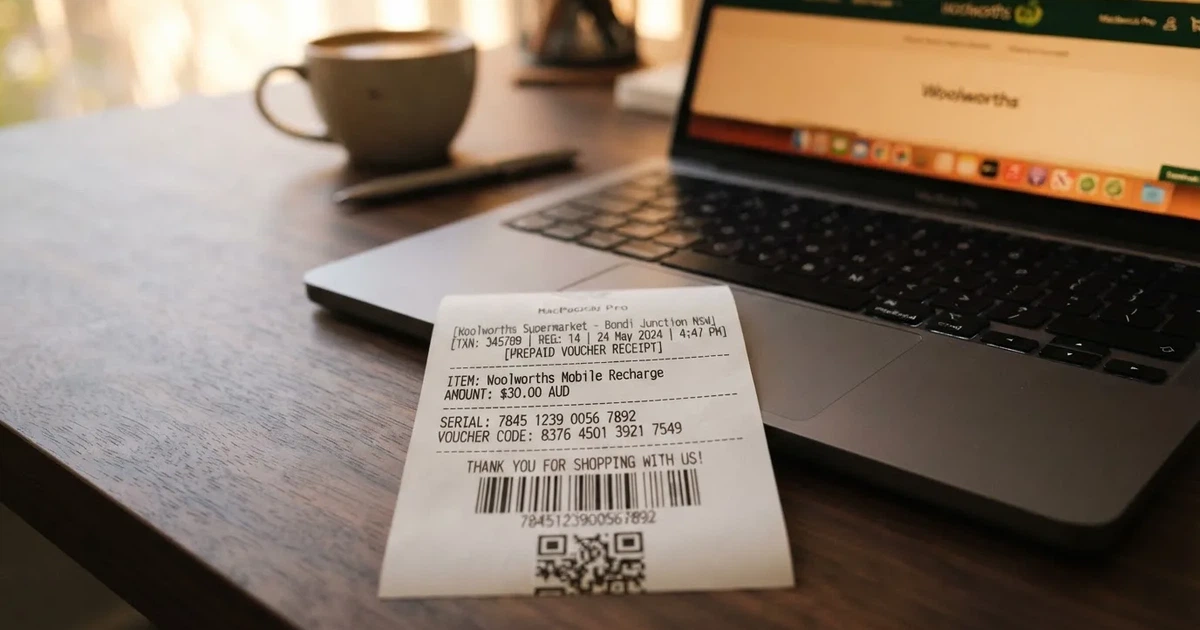
A CashtoCode eVoucher is a 20-digit code purchased from a reseller — convenience store, petrol station kiosk, or online platform — and redeemed at the checkout of any operator that lists CashtoCode as a deposit method. The voucher carries no buyer identity at the point of purchase and asks for none at redemption. It supports more than 25 currencies, the brand states, and any unused balance keeps its full value; the eVoucher itself is free of charge to the customer, with no usage fees on top.

That is the part the marketing tends to lead with. The part the marketing leaves out is that the eVoucher is deposit-only. CashtoCode’s own site offers no withdrawal option, which means the cash-out leg of any session has to travel through a different rail — a bank transfer, an e-wallet, a card refund where the operator permits one — and is governed entirely by the casino’s own terms rather than by anything CashtoCode controls. The settlement depends on the casino’s manual checks completing before the funds move, and on the player having supplied, somewhere along the way, the identification that the deposit route was designed to avoid.
The minimum a casino asks for varies site to site. CashtoCode itself does not set a floor; the operator does. The lowest common entry among offshore sites accepting the voucher sits at roughly A$10, which is the figure that has turned CashtoCode into a recurring answer to “small deposit” queries. That floor is real, and it is the cheapest part of the arrangement. Everything past it — verification, withdrawal processing, blocked access — costs more than it looks.
Settlement rails the player can compare
Casino banking in Australia has a short list of mechanisms the reader can compare, and a much shorter list the ACMA permits licensed operators to accept. Both lists matter, because the comparison the reader actually needs to make is between a CashtoCode deposit at an offshore site and the licensed alternatives they could use instead.
The card rails, and where the law cuts in
Australian banks — NAB, Commonwealth Bank, Westpac, St George, ANZ — let cardholders self-activate a gambling transaction block through their banking app. Once a block is requested, it is usually applied immediately; lifting it again can take up to two business days. Westpac’s block works at card level, refusing authorisation of transactions registered under the merchant category code “Betting/Casino Gambling” on eligible personal credit and debit cards. ANZ’s block, activated in the app, also blocks gambling transactions made through a digital wallet such as Apple Pay on an eligible card — not just the physical card — and removing it requires a 48-hour waiting period. ANZ is upfront that not all gambling transactions will be blocked and some non-gambling transactions might be blocked in error.
The legal layer sits on top. From 11 June 2024, Australian-licensed online wagering service providers have been banned from accepting credit cards, credit-linked digital wallets or digital currencies as payment, with ACMA enforcement and penalties of up to $247,500 for non-compliance. American Express is a useful illustration of the perimeter: it has run as a three-party scheme since its first charge card launched on 1 October 1958, issuing and processing on its own network rather than through the four-party Visa or Mastercard structure. The Reserve Bank of Australia’s July 2025 review proposes removing surcharges on eftpos, Mastercard and Visa transactions, explicitly leaving American Express outside the scope of the proposed surcharge ban — the same perimeter logic that lets a card ban carve credit out without touching debit. Apple Pay is the cleaner case: Apple charges no consumer fee for the wallet, any surcharge is the merchant’s, and transaction limits and PIN requirements are set by the card issuer or merchant rather than by Apple. By the end of 2025, Apple Pay, Google Pay and Samsung Pay transactions collectively accounted for around 45% of all card payments in Australia by number, which is the share of consumer payment traffic the IGA’s credit-linked wallet rule is binding.
For a CashtoCode user the practical reading is short: a debit card at a licensed wagering operator still works, a credit card does not, and a digital wallet linked to a credit card inherits the same ban. CashtoCode sidesteps all of that because it sidesteps the card network entirely — which is the point, and also the entry point to the offshore sites the card network would not route to.
The instant-transfer rails, and what they reveal
PayID and Osko move bank transfers between participating Australian banks in under a minute, 24/7, including weekends, addressed to either a BSB and account number or to a PayID. More than 25 million PayID identifiers were registered on Australia’s New Payments Platform as of April 2025, and PayID-based instant transfers are available at over 100 Australian financial institutions. Paying to a PayID shows the name of the account holder before the transfer is sent, which is the moment of truth the rail exists to provide. Australian Payments Plus warns that being asked to transfer money to a PayID on an illegal gambling site almost certainly means a scam site.
Osko, the underlying instant layer, sits on the New Payments Platform, which became accessible to the public on 13 February 2018 and is owned by New Payments Platform Australia Ltd, a non-profit whose 13 shareholders include the Reserve Bank of Australia and the country’s major banks. The platform’s monthly outage budget is capped at two minutes. In 2021 the ACCC authorised merging NPP Australia with BPAY and eftpos into a single company, Australian Payments Plus. None of that plumbing matters to a CashtoCode deposit, because CashtoCode never touches it. What matters is that the licensed alternative does, and that the licensed alternative carries the consumer protections the offshore one does not.
AUSTRAC’s threshold-transaction-report rule, which requires reporting of transfers of A$10,000 or more, applies only to physical cash. Ordinary electronic bank transfers are not subject to that per-transaction reporting requirement, regardless of the amount sent. A CashtoCode purchase is a cash-equivalent retail transaction at the reseller, which is its own small layer of friction the reader is paying for in time.
Settlements landscape
| Brand | ACMA action and date | Operator named by the ACMA | CashtoCode support |
|---|---|---|---|
| RocketPlay | Formal warning, March 2026; earlier May 2022 | Pulsup Ltd; earlier Dama N.V. | — |
| Level Up Casino | Formal warning, May 2022 | Dama N.V. | listings-only |
| Spirit Casino | Formal warning, May 2025 | Dama N.V. | — |
| Woo Casino | Formal warning, March 2025 | Dama N.V. | — |
| National Casino | Formal warning, July 2025 | Consolutetish S.R.L. | listings-only |
| Bizzo Casino | Formal warning, July 2025; earlier 2022 | Consolutetish S.R.L.; earlier TechSolutions | — |
| Ignition Casino | Formal warning, July 2025 | Bamboo Media | — |
| Instant Casino | Formal warning, February 2025 | EOD Code SRL | listings-only |
| Jackbit | Formal warning, April 2026 | Ryker B.V. | — |
| Casino Intense | Formal warning, April 2025 | Sterplay Holding Ltd | listings-only |
| Sky Crown | Formal warning, September 2022 | Hollycorn N.V. | — |
The “CashtoCode support” column carries what the listed third-party sources report and nothing more; the absence of a confirmed listing for a brand is not a denial, and the entries with a dash are presented on the ACMA action alone. The dates and operators come from the ACMA’s own formal warning publications.
The cluster of Dama N.V. brands is the one to watch. The ACMA warned Dama N.V. over six brands in May 2022 — Bambet, Dazard, Level Up, Rocketplay, Wild Tornado and Cobra Casinos — then came back to the same operator over Woo Casino in March 2025 and Spirit Casino in May 2025. A regulator returning to the same holding company twice in three years is not noise; it is the regulator telling the reader the message did not land the first time.
The brand-by-brand picture, in the order the ACMA has acted
Each entry below names the operator the ACMA acted against, the date of the formal warning, and what the arrangement costs them — verified by what is in the formal warning publication and not by what the brand’s own site claims.
RocketPlay
Two formal warnings on file: Dama N.V. in May 2022, and Pulsup Ltd over RocketPlay in March 2026. The newer operator name suggests a rebrand rather than a fresh operator; the ACMA’s continued attention does not. RocketPlay’s own terms sit behind a verification step CashtoCode was specifically picked to avoid, and any balance on the site sits behind the ACMA’s blocking power. The brand has cost the ACMA two letters and has not yet cost itself access.
Level Up Casino
First warned as part of the May 2022 Dama N.V. action that named six brands at once. No follow-up warning on the Level Up name since, but the parent-level pattern — Dama N.V. returning to the ACMA’s letterhead twice more since — sits in the file as the page’s own footnote. A player who arrived via a CashtoCode deposit would find the verification hurdle waiting at withdrawal regardless of what the landing page advertised.
Spirit Casino
Warned in May 2025, again with Dama N.V. as the named operator. Third action against the same parent in three years, which is the rate at which a regulator escalates when the first letter did not move behaviour. Spirit Casino’s marketing treats the CashtoCode button as a convenience feature; the ACMA treats the underlying service as prohibited.
Woo Casino
The March 2025 Dama N.V. action that preceded Spirit Casino by two months. Same operator, same parent, same statutory basis. A player who treated Woo Casino and Spirit Casino as different options would have arrived at the same parent company’s compliance mailbox.
National Casino
Consolutetish S.R.L., July 2025. The name is a fresh operator on the warning list, not a return visit, and the formal warning site has been the same point on the list since 2022 — the regulator’s first warning over the National Casino brand arrived in 2022, addressed to TechSolutions Group. Five operators over the same brand across three years of warnings is the file the reader is reading.
Bizzo Casino
The second formal warning tied to Bizzo Casino since 2022: the earlier one addressed to TechSolutions (CY) Group Limited and TechSolutions Group N.V., the July 2025 one to Consolutetish S.R.L. A single brand with two formal warnings and two different operator names on file is the clearest signal on this list that the underlying provider is being moved around names while the service continues. That is what the ACMA is warning about.
Ignition Casino
Bamboo Media, July 2025. A first-time operator name on the warning list. The cost of dealing with a brand new to the file is the same as the cost of dealing with a familiar one: the service is prohibited, the warning is on the public record, and the player’s only Australian recourse is none.
Instant Casino
EOD Code SRL, February 2025. The brand advertises speed of withdrawal; the ACMA’s warning pre-dates the speed claim by enough months that any player who checked the register before depositing would have read the letter before clicking the button.
Jackbit
Ryker B.V., April 2026. The most recent operator name on the warning list and a fresh entry, paired in the same formal warning with CasinOK. Jackbit’s own site has had months to address the warning since; the register has not been amended.
Casino Intense
Sterplay Holding Ltd, April 2025. The second formal warning against this brand in the ACMA’s recent file and a clean illustration of the cost question: a player who arrived via a CashtoCode deposit would have paid for the voucher, paid for any losses, and inherited none of the protections the regulator’s letter argues they were entitled to.
Sky Crown
Hollycorn N.V., September 2022. The oldest name on this list and the one the ACMA paired with Blue Leo in the same action. Three years of warning history before a CashtoCode deposit arrives is the file a reader checks before they click.
What “ACMA action” actually means in practice
The Interactive Gambling Act 2001, strengthened by the Interactive Gambling Amendment Act 2017, makes it an offence to provide online casino games, online pokies or in-play betting to a person in Australia. What is licensable is wagering on races and sport placed before the event, lotteries and keno — in practice licensed by the Northern Territory through the NTRWC, which regulates 52 of Australia’s online bookmakers including Sportsbet, Bet365 and Ladbrokes. The commission has no full-time staff and meets once a month in Darwin, which is the thin end of the regulatory wedge for the licensed side and the entire regulatory wedge for the unlicensed side.
The ACMA investigates, issues formal warnings, and directs internet service providers to block illegal sites. As of June 2026, a total of 1,751 illegal gambling and affiliate marketing websites had been blocked since the first blocking request in November 2019, and more than 230 unlicensed gambling services had left the Australian market since enforcement was strengthened in 2017. The June 2026 round alone asked Australian ISPs to block 12 more illegal gambling websites: 7Signs, ChromaBet, Donbet, Duospin, Freshbet, Slots Gem, Jacks Club, Lucky Start, Pointsbetz, Spinrise, Vinyl Casino and Wildsino.
H2 Gambling Capital’s 2025 report estimates that Australians lose about A$3.9 billion a year to illegal gambling sites, and that the share of gambling going through legal channels fell from 74% in 2021 to 64%. The legal-channel figure is the one the page keeps coming back to: every percentage point that left the legal side between 2021 and the current estimate is money that arrived at an unlicensed operator, with no Australian consumer protection, no complaints body, and no recourse if a withdrawal is refused. The site can be blocked with a balance still on it. The individual player is not prosecuted — the IGA targets the provider — which is why the enforcement side reads as distant from the player side until a balance does not clear.
The Interactive Gambling Amendment (Gambling Reform) Bill 2026 passed Parliament on 19 August 2026, with its advertising and inducement measures commencing on 1 January 2027. That is a law with a start date, not yet in force on a 2026 page, and it sits in the file as the next move the ACMA is preparing.
The blocking arithmetic, as a band
The ACMA’s first blocking request was made in November 2019. The running total reported in June 2026 was 1,751 illegal gambling and affiliate marketing websites blocked. From November 2019 to June 2026 is 79 months, which gives a long-run average of roughly 22 blocked sites per month — a figure that swings meaningfully depending on the size of the round. The same window contains the June 2026 round’s 12 sites and several earlier single rounds of comparable size, with quieter months in between where the ACMA was issuing warnings rather than asking ISPs to block. Read as a band rather than a single number, the regulator is blocking somewhere between a few sites a month and several dozen, with no month since 2019 showing a zero. The reader who arrives at the file expecting an enforcement rate that has slowed will not find one.
The protections that exist, and the ones that don’t
BetStop, the National Self-Exclusion Register, has been live since August 2023 and binds every Australian-licensed online and phone wagering service. An offshore casino is not connected to it. A player who registers with BetStop to block themselves out of Australian-licensed wagering is not registered out of any of the brands on this page, which is the practical meaning of “offshore” for a self-excluded player: the protection does not travel. The National Gambling Helpline, 1800 858 858, is free, 24/7, with chat at Gambling Help Online, and those services do not depend on which side of the prohibition the player is on.
On the legal deposit side, credit cards, credit-related products and digital currency are banned as payment for licensed online wagering since 11 June 2024, with penalties up to $247,500 for operators. The legal deposit routes for licensed wagering are debit card, bank transfer, PayID/Osko and BPAY. A site asking an Australian for a credit card or a crypto deposit is operating outside the Australian rules. The minimum age is 18 across the board.
On the tax side, gambling winnings of a recreational player are not assessable income under section 6-5 of the ITAA 1997, and losses are not deductible, unless the person carries on a business of gambling. The honest reading of that for the reader who is not a professional gambler is that the winnings are tax-free and the losses are unrecoverable, and the only conversation to have about them is with the ATO if the circumstances ever shift. None of that changes because the site was offshore.
What the offshore site does not carry
A CashtoCode deposit at an offshore casino arrives without identity verification at the deposit end and inherits the operator’s full verification stack at the withdrawal end. The mismatch is the product. A player who bought in small and won something larger than the operator’s comfort threshold will be asked for the documents the deposit route was chosen to avoid, and will wait for the operator’s manual checks to clear before the settlement lands. A player who won something larger than the operator’s withdrawal cap will be paid up to the cap and credited the rest as a bonus with wagering attached, if the terms allow it at all. A player who wants to complain has no Australian body to complain to, because the operator is not licensed here and the regulator’s brief is to stop the service, not to mediate individual disputes.
| Feature | Offshore Casino | Licensed Wagering Service |
|---|---|---|
| Regulatory oversight | None | NTRWC (Territory) |
| ACMA blocking | Subject to blocks | Licensed/Compliant |
| BetStop access | No | Yes |
| Min. deposit floor | Varies (e.g. A$10) | Standardised |
| Complaints process | None | Official/Regulated |
The ACMA’s enforcement record is the file the reader can check before any of that happens. The 1,751 blocked sites and 230-plus services that have left the market are not an estimate; they are the regulator’s published totals. The reader who treats the warning register as a checklist rather than as a footnote has read the file correctly.
When the page needs to make a call
Every brand on this list carries a formal warning the ACMA has published by name and date, and every one of them is offering a service the Interactive Gambling Act 2001 prohibits. The page’s own conclusion is short. The cheapest part of any CashtoCode arrangement at an offshore casino is the A$10 voucher. The most expensive parts are the withdrawal that does not clear, the verification that arrives only at the cash-out, the blocking order that lands with a balance still on the account, and the absence of any Australian body to complain to when it does. A reader who wants to play casino games in Australia has legal options — licensed venues, clubs and pubs — and a reader who wants to place a wager online has licensed bookmakers, with debit cards, bank transfer, PayID/Osko and BPAY as the deposit rails, and BetStop and the National Gambling Helpline as the protection rails. CashtoCode at an offshore casino is a deposit rail into a service the law does not permit, and the cost of using it is the cost of being outside the protections the licensed side exists to provide.
Frequently asked questions
Is it legal for an online casino to accept CashtoCode from a player in Australia?
No. The Interactive Gambling Act 2001 prohibits the provision of online casino games, online pokies and in-play betting to people in Australia, and no state or territory licenses them. A CashtoCode button does not change the underlying service the operator is offering, which is why the ACMA has issued formal warnings against the brands that accept it.
What is the smallest deposit a CashtoCode casino site usually asks for?
CashtoCode itself does not set a minimum, and operators vary. The smallest entry among offshore sites accepting the voucher sits at roughly A$10, which is the figure that has turned CashtoCode into a recurring answer to small-deposit queries. The minimum is the cheap part; the rest of the arrangement costs more.
Does a CashtoCode withdrawal clear any faster than a card withdrawal at these sites?
CashtoCode is deposit-only. The brand’s own site offers no withdrawal option, which means the cash-out leg has to travel through a different rail and is governed by the operator’s own manual checks, whatever the marketing claims about speed. The fastest advertised timeline is a marketing figure, not a settlement guarantee.
Can CashtoCode be used at every offshore pokies-style site, or only some of them?
Only some. CashtoCode lists gambling providers in its catalogue filters and markets itself to operators, but adoption is per-site. A player should not assume a brand accepts it without checking the cashier page first, and should not assume the absence of a listing on a comparison site is the absence of the brand’s own CashtoCode support.
Does depositing with CashtoCode add an extra fee at these casino sites?
CashtoCode states the voucher is free of charge to the customer with no usage fees, and any unused balance keeps its full value. The reader’s cost is the time to buy the voucher at a retail outlet and the operator’s own terms on the deposit side. The fees the page warns about are at the withdrawal end, where the operator’s terms apply.