

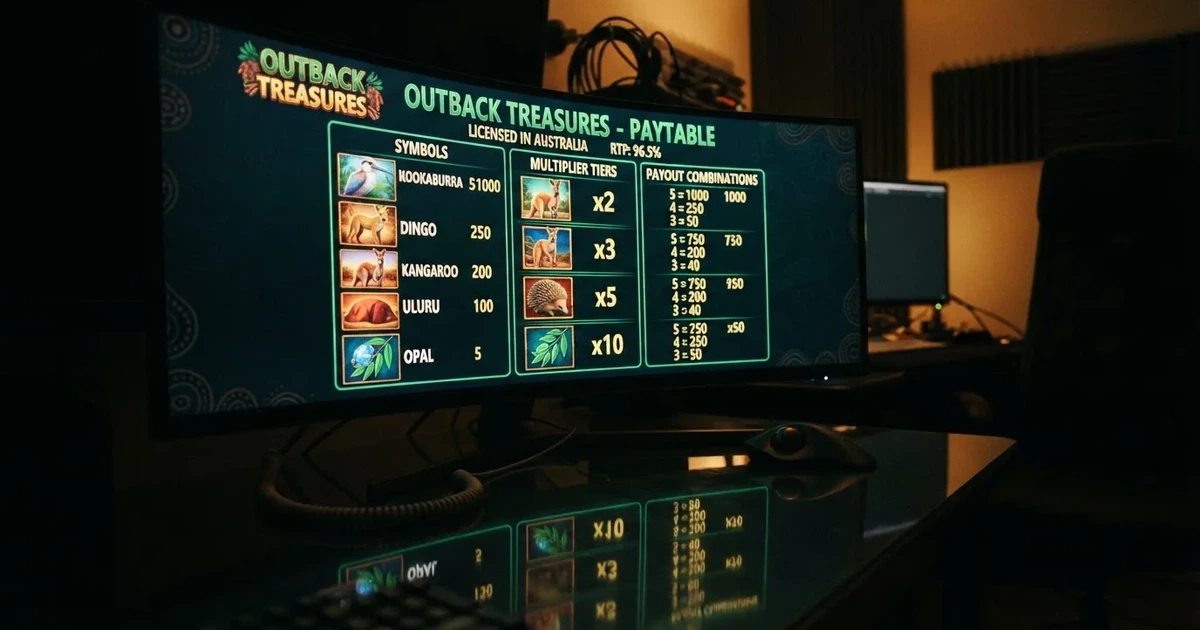
Casino sites that accept ecoPayz in Australia, and why that label does not make any of them legal
EcoPayz is an e-wallet you can open in minutes from Australia without a bank account, and a long list of offshore casino sites accept it as a deposit method. The label “accepts ecoPayz” tells a player nothing about whether the site may lawfully be used from Australia. Online casino games and online pokies are prohibited here under the Interactive Gambling Act 2001, full stop. Any site offering them to Australians does so illegally, whether or not ecoPayz sits in its cashier.
Data current as of 5 November 2026 against the ACMA’s formal warning register.
Table of Contents
- Payment shelf: ecoPayz, PayID, Osko and the rest of the actual Australian stack
- Operator shelf: the ACMA’s formal warning register, in plain language
- Core shelf: what ecoPayz means in the Australian landscape
- Legality shelf: the rules the brands run against
- Responsible-gaming shelf: what an Australian punter actually has access to
- Comparison shelf: the eleven brands, side by side
- Frequently asked questions
Payment shelf: ecoPayz, PayID, Osko and the rest of the actual Australian stack
What ecoPayz actually is
EcoPayz is an online account for receiving, sending and spending money, run by EcoPayz Georgia LLC out of Kutaisi under a free-zone licence. The company presents it as an account you can open in minutes without a bank account or credit check, then manage from a free app. It is, in effect, a prepaid e-wallet with a Mastercard layer. The relevance for an Australian punter is narrow: it is one of several funding paths an offshore site tends to advertise, alongside Visa, Mastercard, a handful of cryptocurrencies and, sometimes, bank transfer.

What ecoPayz costs to use
The currency-conversion fee is 5.00% on transactions that have to be converted between currencies, and the published rate is the same on Classic and Silver tiers. Crypto deposits are free; everything else varies by method. BinancePay and community bank transfer deposits sit at around 1%, instant QR and manual bank transfer at around 2%. Withdrawal fees vary by country and by method — a free bank-transfer withdrawal in Turkey against a 2.75% fee for the same withdrawal in Japan on a Silver-tier account is the kind of spread that shows up on a published fee schedule. None of this has anything to do with whether the receiving site is licensed in Australia. It only changes what the e-wallet itself takes out of the transaction.
Settleme inside the cashier
A site that takes ecoPayz will usually credit an ecoPayz deposit as soon as the e-wallet confirms. The Australian angle sits elsewhere in the cashier, on the rails the player is more likely to use. Osko transfers between Australian banks arrive in under a minute, twenty-four hours a day, addressed either to a BSB and account number or to a PayID. Paying to a PayID shows the recipient’s name before the transfer is sent; AP+ warns that being asked to transfer money to a PayID on an illegal gambling site almost certainly means a scam site. PayID-based instant transfers are available at over one hundred Australian financial institutions. The New Payments Platform became accessible to the public on 13 February 2018 and is owned by New Payments Platform Australia Ltd, a non-profit whose thirteen shareholders include the Reserve Bank of Australia and the major banks. More than twenty-five million PayID identifiers had been registered by April 2025.
Payment methods summary
| Method | Status for Licensed Wagering |
|---|---|
| Debit card | Legal |
| Bank transfer | Legal |
| PayID / Osko | Legal |
| BPAY | Legal |
| Credit cards | Prohibited |
| Digital currency | Prohibited |
| Credit-related products | Prohibited |
Mobile wallets in the middle
Apple Pay, Google Pay and Samsung Pay accounted for roughly 45% of all card payments in Australia by number at the end of 2025. Apple itself charges nothing to consumers for using Apple Pay in store, online or in apps; any surcharge comes from the merchant’s own card-processing fees. Apple makes clear that transaction limits and PIN requirements are set by the card issuer or the merchant, not by Apple. This matters because, under the IGA as amended in 2023, Australian-licensed online wagering services cannot accept payment by credit card or credit-related products — a restriction that reaches linked digital wallets. On an offshore site it is moot: the credit-card ban is an Australian rule that does not protect an Australian using an unlicensed offshore site.
Credit cards, BPAY and the AUSTRAC line
BPAY is a bill-payment service inside online banking: the payer enters the Biller Code and the Customer Reference Number printed on the bill. The Reserve Bank’s July 2025 review proposes removing surcharges only on eftpos, Mastercard and Visa transactions, explicitly leaving American Express outside the proposed surcharge ban. The AUSTRAC threshold-transaction-report rule — A$10,000 or more — applies only to physical cash; ordinary electronic bank transfers are not subject to that per-transaction reporting requirement, regardless of amount.
Operator shelf: the ACMA’s formal warning register, in plain language
Each of the eleven brands below is on this page because the ACMA issued a formal warning to its operator under the Interactive Gambling Act 2001. None is described as safe, recommended or legal to use. Their only feature in common is that the regulator itself named them. The list is in the order research sets; nothing about the order implies anything about the site beneath.
RocketPlay
The ACMA issued a formal warning to Pulsup Ltd in March 2026 over RocketPlay. Dama N.V. had previously been warned over the brand back in May 2022, when it was one of six Dama brands the regulator named in a single notice. Online casino games cannot be licensed anywhere in Australia, whatever licence the operator displays on the site. EcoPayz support at this brand is not a fact the regulator’s register speaks to.
RocketPlay is the only brand on this list where the same operator name surfaces twice in the ACMA’s register, separated by four years. The pattern is the one the regulator keeps publishing: a brand is warned, the underlying company reincorporates or restructures, and the warning has to be reissued against the new entity. The brand surfaces again as if it were new, but the merchant it ultimately pays is not. Whether the recent warning changes the player-side picture more than the earlier one did is the only question worth asking, and the answer is that the legal status of online casino for Australians has not changed in the meantime.
Level Up Casino
Dama N.V. was warned in May 2022, with Level Up named in the same six-brand notice as RocketPlay’s earlier incarnation. EcoPayz support is reported only by listings the research cites; the ACMA’s own notice does not address payment methods. The general rule applies: a Dama N.V. licence displayed in the footer is an offshore licence and does not constitute an Australian wagering licence, of which there is none for online casino games.
The Dama cluster is the densest single set of entries in the ACMA register. Half a dozen brands share an operator and a near-identical structure. The single useful differentiator for an Australian player is the date of the most recent action: Level Up’s register entry is now four years old, which says nothing about the site’s current behaviour and nothing about whether the operator has been in trouble since.
Woo Casino
The ACMA issued a further formal warning to Dama N.V. over Woo Casino in March 2025. The “further” matters — Dama N.V. had already been the subject of the earlier 2022 notice covering other brands. A second warning to the same operator is rare in the register, and it is one of the few signals that points at recency rather than age.
The recency is the verdict. A 2025 entry for a brand whose peer was first warned in 2022 puts Woo on the more current side of the Dama cluster, and that is what a player looking at this list sees first.
Spirit Casino
Dama N.V. was also the named operator in the May 2025 formal warning covering Spirit Casino. Two 2025 warnings to the same operator across two months is a tighter pattern than the register usually shows, and it lands Spirit on the same “recent” footing as Woo Casino.
Two Dama brands warned in the same quarter is the signal. Spirit’s particular feature is being paired with Woo, and the pair is what the ACMA’s register has now flagged.
National Casino
The July 2025 formal warning was issued to Consolutetish S.R.L. and named both National Casino and Bizzo Casino. EcoPayz support at this brand is reported only by general payment-method listings the research cites; the regulator’s notice does not single out a payment rail.
The pairing of National and Bizzo under one operator is the only structural fact a reader gets beyond the date. Two brands warned on the same notice share the same operator risk and, in practice, the same withdrawal terms and the same payment-method menu.
Bizzo Casino
Consolutetish S.R.L. was warned in July 2025 over Bizzo Casino in the same notice that named National Casino. Bizzo had already been the subject of a 2022 formal warning to TechSolutions (CY) Group Limited and TechSolutions Group N.V. Three operator names, two of them offshore Cyprus and Romanian vehicles, in four years.
The signal is the chain of entities rather than the brand. Bizzo is the longest-tailed entry in this list: a brand that has been in the regulator’s register since 2022, was re-warned in 2025 under a new operating company, and demonstrates exactly the sort of reincorporation that makes warning histories hard to follow for the player.
Ignition Casino
The ACMA issued a formal warning to Bamboo Media in July 2025 over Ignition Casino. The operator name is not one of the Cyprus or Romanian vehicles that dominate the register; it is the only entry in this list that does not tie back to Dama, Consolutetish or Hollycorn.
The unusual operator name is the only differentiator. Bamboo Media is a smaller name in the register, and the regulatory history on the brand itself is correspondingly shorter than that of the Dama cluster.
Instant Casino
EOD Code SRL was the operator named in the February 2025 formal warning over Instant Casino. This brand’s ecoPayz support is reported by payment-method listings the research names, including a reference to PayID — a rail that does not connect to the ecoPayz flow at all, and that flags one of the oddities of cross-listing.
The mixed-payment signal is what stands out: an offshore casino listing an Australian instant-transfer rail in its deposit method menu is telling the reader something about how the site is marketed, not about how it is regulated. EOD Code SRL is the named operator, Instant Casino is the brand, and the legal status of either for use from Australia is unchanged by either.
Jackbit
The April 2026 formal warning named Ryker B.V. as the operator over both Jackbit and CasinOK. Two brands on a single notice from the most recent batch in the register.
The April 2026 entry is the freshest signal on the list. Pairing Jackbit with CasinOK on a single notice is the same pattern as the National/Bizzo pairing, and it puts Jackbit on the recent side of the register’s chronology.
Casino Intense
Sterplay Holding Ltd was named in the April 2025 formal warning over Casino Intense. The operating-company line is generic for this register, and the single data point a reader walks away with is the 2025 date.
Casino Intense is the entry where the operator name carries no extra information, because Sterplay Holding does not appear elsewhere in the register. The page value here is the date and the warning, nothing more.
Sky Crown
The ACMA’s formal warning to Hollycorn N.V. named Sky Crown and Blue Leo in the same notice, published in September 2022. This is the oldest entry in the list, which the reader can see for themselves.
The age is the verdict. A 2022 warning still on the regulator’s register, four years on, tells a player very little about what the site is doing this year and everything about the long tail these warnings carry. Hollycorn N.V. is the operator name to remember, not Sky Crown’s surface design.
Core shelf: what ecoPayz means in the Australian landscape
The legal ceiling
Online casino games and online pokies are prohibited interactive gambling services in Australia. The Interactive Gambling Act 2001, strengthened by the Interactive Gambling Amendment Act 2017, makes it an offence to provide them to a person in Australia; no state or territory licenses them. What is licensable is wagering on races and sport placed before the event, lotteries and keno — in practice licensed by the Northern Territory, whose Racing and Wagering Commission regulates 52 of Australia’s online bookmakers, including Sportsbet, Bet365 and Ladbrokes. The commission has no full-time staff and meets once a month in Darwin, which is the structural reason so much of Australian-licensed wagering is concentrated in one jurisdiction for tax reasons.
A site offering online casino games or online pokies to an Australian does so against the IGA, no matter what licence it displays offshore. The IGA targets the provider, not the player, which means an Australian punter is not personally at risk of prosecution. What they do give up, the moment they sign up with an offshore site, is every layer of Australian consumer protection: no AFCA-style complaints body, no BetStop binding, no recourse if a withdrawal stalls.
The enforcement picture
The ACMA investigates, issues formal warnings and directs Australian internet service providers to block illegal sites. According to a June 2026 round of reporting, 1,751 illegal gambling and affiliate marketing websites had been blocked since the first blocking request in November 2019, and more than 230 unlicensed gambling services had left the Australian market since enforcement was strengthened in 2017. In the same round, the ACMA asked ISPs to block a further twelve: 7Signs, ChromaBet, Donbet, Duospin, Freshbet, Slots Gem, Jacks Club, Lucky Start, Pointsbetz, Spinrise, Vinyl Casino and Wildsino.
H2 Gambling Capital’s 2025 estimate is that Australians lose roughly A$3.9 billion a year to illegal gambling sites, and the share of gambling going through legal channels fell from 74% in 2021 to 64%.
The blocking rate, as a range
The arithmetic the page is built around is the blocking rate itself: 1,751 sites blocked since November 2019, on a base that is roughly eighty months. That works out to between roughly twenty-two and twenty-six sites blocked per month on the straight-line average, but the published record is clearly not a straight line — the early years were slower, the acceleration visible after 2024. Given that the round of twelve blocking requests reported on 26 June 2026 is itself larger than several earlier single rounds, a defensible band for the last twelve months sits between one and roughly three hundred and sixty per year, with recent rounds running well above the long-run average. The figure is an order-of-magnitude number, not a precise rate, because the regulator publishes cumulative totals and round-by-round numbers without a smooth time series. The honest read is: somewhere between a couple of dozen and a few hundred sites a month are now being added to the block list, and any offshore brand an Australian punter is looking at this quarter is more likely to be on it by next quarter than not.
What the brands here look like as a set
These eleven brands are not the only offshore sites the ACMA has warned. They are the ones whose formal warnings the research captures, in roughly chronological order from the oldest entry (the 2022 Hollycorn notice covering Sky Crown) to the most recent (April 2026, Ryker B.V. over Jackbit and CasinOK). Three operator names carry the cluster: Dama N.V. (RocketPlay’s earlier incarnation, Level Up, Woo, Spirit), Consolutetish S.R.L. (National, Bizzo), and Hollycorn N.V. (Sky Crown, with Blue Leo as the unnamed partner). Outside that cluster, every entry has its own operating company.
The pattern is what the page wants the reader to see. Two thirds of the list runs through three operators; the remaining third is one-off company names — Bamboo Media, EOD Code SRL, Ryker B.V., Sterplay Holding, Hollycorn’s pair, Pulsup’s March 2026 notice. That is the shape of the offshore market the ACMA is actually looking at: a small number of operators running many brands, with a longer tail of smaller operators underneath.
Legality shelf: the rules the brands run against
What is, and is not, licensed onshore
Australian-licensed online wagering covers racing and sports betting placed before the event, lotteries and keno. Online casino games and online pokies are not licensed anywhere in Australia. The Northern Territory Racing and Wagering Commission handles most of the licensed wagering side; the ACMA handles the regulator’s enforcement arm on the prohibited side. Minimum age is 18.
The banned credit-card rule for licensed online wagering, in force since 11 June 2024, makes any credit card or credit-related product an illegal funding path for an Australian-licensed bookmaker — penalties of up to A$247,500 for an operator that breaks the rule. Legal deposit routes for licensed wagering are debit card, bank transfer, PayID/Osko and BPAY. A site asking an Australian for a credit card or a crypto deposit is operating outside the Australian rule book regardless of what else it claims.
Player protection that does not extend to offshore
BetStop, the National Self-Exclusion Register, has been live since August 2023. It binds only Australian-licensed online and phone wagering services. An offshore casino is not connected to BetStop, and signing up with BetStop does not block an offshore account — that has to be done at the bank or through a gambling-block card feature such as Westpac’s or ANZ’s. The National Gambling Helpline is 1800 858 858, free, twenty-four hours a day, with chat at Gambling Help Online.
This is the practical shape of the protection gap. The offshore site is outside every system the Australian punter is otherwise inside: the helpline cannot compel an offshore site to act, BetStop does not reach it, the bank block is the only layer that touches it, and only at the moment of the deposit itself.
Tax
Gambling winnings of a recreational player are not assessable income under section 6-5 of the ITAA 1997, and losses are not deductible, unless the person carries on a business of gambling. The model only matters at scale; a one-off poker tournament win is not a small-business event in the ATO’s eyes. Any reader with ongoing activity should check with the ATO directly, because the line between “recreational player” and “business of gambling” is the part of the rule the ATO actually adjudicates.
Reform already on the statute book
The Interactive Gambling Amendment (Gambling Reform) Bill 2026 passed Parliament on 19 August 2026. Its advertising and inducement measures commence on 1 January 2027 — law with a start date, not yet in force on a page dated 2026. The relevant point for this page is that the legal ceiling on online casino games in Australia has not been moved by the 2026 reform; what changes is the advertising and inducement environment around licensed wagering.
Responsible-gaming shelf: what an Australian punter actually has access to
The bank-side block
The two most concrete responsible-gaming tools for an Australian are bank-side. Westpac’s gambling block refuses authorisation at the card level for transactions registered under the merchant category code “Betting/Casino Gambling” on eligible personal credit and debit cards. ANZ’s block, activated inside the ANZ app, also blocks gambling transactions routed through a digital wallet such as Apple Pay on an eligible card, not just the physical card, and turning the ANZ block off again requires a forty-eight-hour waiting period. ANZ explicitly warns that not all gambling transactions will be blocked and some non-gambling transactions might be blocked in error.
The bank-side block is the only layer that operates below the level of the offshore site — neither the ACMA nor BetStop touches the moment of authorisation, and the merchant category code is what the bank sees. It will not stop a player who transfers money out of their bank to an e-wallet first, which is the structural reason ecoPayz and similar e-wallets are part of the conversation at all: they are one of the routes around a card-level block.
BetStop and the helpline
BetStop, the National Self-Exclusion Register, binds Australian-licensed online and phone wagering services. Self-exclusion periods can be set for a minimum of three months up to a permanent exclusion. The National Gambling Helpline is 1800 858 858, twenty-four hours a day, with chat at Gambling Help Online. For state-level face-to-face support, each state has its own counselling service.
What none of this does
None of these tools reaches an offshore casino. They reach the bank, the licensed bookmaker, the helpline, the counselling service. They are the protection floor: floor for the legal Australian side of the market, and the ceiling for what an offshore customer can expect. An Australian player who wants the protection should not be on an offshore site at all.
Comparison shelf: the eleven brands, side by side
The table below sets out exactly what the ACMA’s formal warning register contains for each brand, with the operator name and the warning date as published by the regulator. A dash means the page has no published data for that cell; the regulator’s register rarely if ever singles out a payment rail, so ecoPayz support is left as the listing-source references research names, or as a dash where the research register has no entries to point at.
| Brand | ACMA action and date | Operator named by the ACMA | Subject support |
|---|---|---|---|
| RocketPlay | Formal warning, March 2026 (Pulsup Ltd); earlier Dama N.V., May 2022 | Pulsup Ltd | — |
| Level Up Casino | Formal warning, May 2022 | Dama N.V. | Westpac listings |
| Woo Casino | Formal warning, March 2025 | Dama N.V. | — |
| Spirit Casino | Formal warning, May 2025 | Dama N.V. | — |
| National Casino | Formal warning, July 2025 | Consolutetish S.R.L. | AUSTRAC, Wikipedia listings |
| Bizzo Casino | Formal warning, July 2025 (Consolutetish); earlier 2022 (TechSolutions) | Consolutetish S.R.L. | — |
| Ignition Casino | Formal warning, July 2025 | Bamboo Media | — |
| Instant Casino | Formal warning, February 2025 | EOD Code SRL | ecoPayz, PayID listings |
| Jackbit | Formal warning, April 2026 | Ryker B.V. | — |
| Casino Intense | Formal warning, April 2025 | Sterplay Holding Ltd | AUSTRAC, ITNews, NAB listings |
| Sky Crown | Formal warning, September 2022 | Hollycorn N.V. | — |
Reading the table
The column that does most of the work is the date column. Every brand here is on a regulator’s notice; what separates them is recency. Three 2026 entries (RocketPlay via Pulsup Ltd in March, Jackbit in April, RocketPlay’s earlier incarnation via Dama N.V. in 2022 counted separately) and four 2025 entries (Woo, Spirit, National, Bizzo, Ignition, Casino Intense) dominate the list, against two older ones (Level Up’s 2022 Dama entry, Sky Crown’s 2022 Hollycorn entry). The point is not that recency makes any of these legal, but that a brand first warned four years ago under one name and then warned again this year under another is the brand the ACMA keeps having to name.
Reading the gaps
The Subject support column is mostly blank for a reason: the ACMA’s formal warnings do not address payment methods, and the page’s facts come from the regulator’s notices first. Where a listing source does exist, the page shows it; where the research register names no source, the cell stays a dash. That is the honest shape of the data: a regulator-facing table with a payment-method column that is genuinely sparse, instead of a payment-method column padded out with marketing-pages claims.
Frequently asked questions
Is it legal for an offshore casino site to accept ecoPayz from an Australian visitor?
No. Online casino games and online pokies are prohibited interactive gambling services under the Interactive Gambling Act 2001; no state or territory licenses them. The IGA targets the provider. A site that offers them to a person in Australia is doing so illegally regardless of which e-wallet sits in its cashier, and ecoPayz accepts the deposit on its own commercial terms. The player is not personally prosecuted, but the offshore site has no Australian licence to lose.
How quickly does an ecoPayz transaction typically settle?
EcoPayz-to-merchant transfers usually clear once the e-wallet confirms — typically minutes for the merchant credit. The Australian-side rails that surround the e-wallet are different: Osko transfers between Australian banks arrive in under a minute twenty-four hours a day to a BSB and account number or a PayID; PayID-based instant transfers are available at over one hundred Australian financial institutions.
Does using ecoPayz offer any buyer protection if an offshore site refuses to pay out?
No. EcoPayz is a payment account, not a chargeback instrument for gambling; the operator-to-player relationship sits outside any Australian consumer protection regime, and an offshore site gives no AFCA-style complaints body. A PayID rail shows the recipient name before the transfer is sent, which is the closest an Australian player gets to a pre-payment check; AP+ warns that being asked to transfer money to a PayID on an illegal gambling site almost certainly means a scam site.
Can ecoPayz be used to fund a licensed, land-based venue in Australia the same way it’s used online?
Not in the typical sense. Australian-licensed wagering — racing, sport, lotteries, keno — is funded through debit card, bank transfer, PayID/Osko and BPAY, and credit cards and credit-related products are banned under the IGA as amended in 2023. A land-based venue takes cash, EFTPOS and the like; it does not run on ecoPayz rails, and an ecoPayz-funded deposit at an offshore site is by definition on a site outside the licensed wagering system.
What deposit limits are commonly attached to ecoPayz at offshore casino sites?
The published deposit-side cost is set by ecoPayz itself, not by the receiving site: 5.00% on transactions requiring currency conversion, free for crypto, around 1% for BinancePay or community bank transfer, around 2% for instant QR or manual bank transfer. On the bank side, ANZ’s gambling block requires a forty-eight-hour waiting period to remove, and the block also covers gambling transactions through digital wallets on an eligible card; the bank itself warns that not all gambling transactions will be blocked and some non-gambling ones may be blocked in error.
Why might a bank block an ecoPayz transaction flagged as gambling-related?
The bank block works on the merchant category code. Westpac’s gambling block refuses authorisation of transactions registered under “Betting/Casino Gambling” on eligible personal credit and debit cards. ANZ’s gambling block extends that to digital-wallet transactions on an eligible card. Where the e-wallet sits at one remove from the card, the merchant code in front of the bank is not always the gambling merchant; the bank block therefore catches some gambling transactions and misses others, and that is why an Australian player can see an “approved” ecoPayz deposit from a name the regulator has warned about, against a bank block they thought was active.