

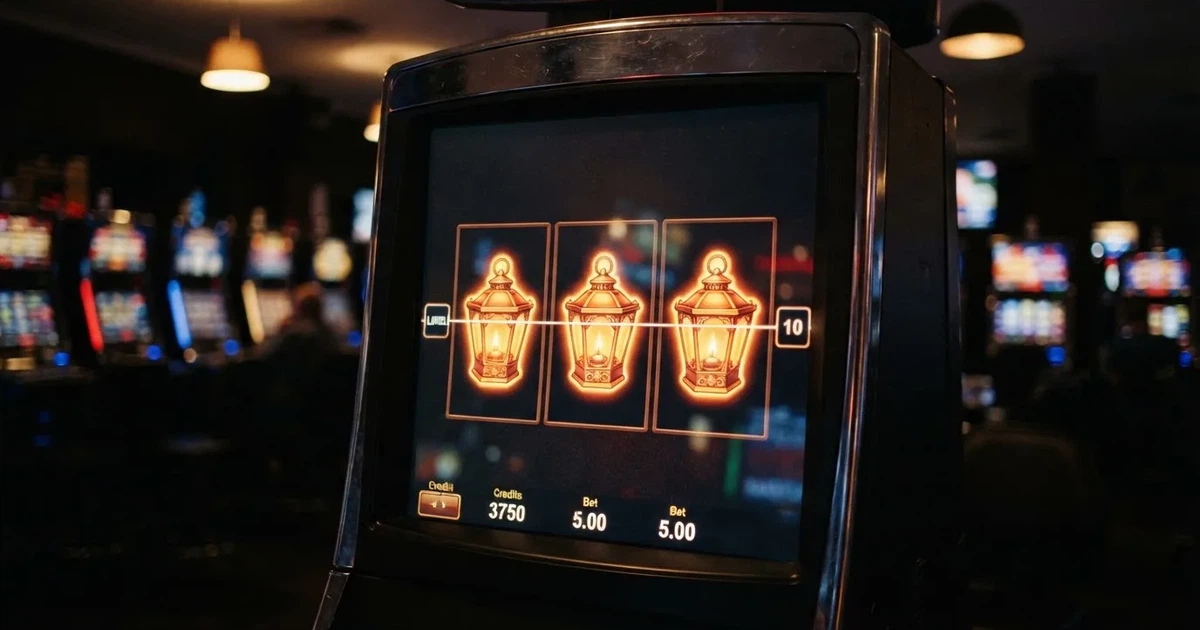
Crypto withdrawals, AUD bank rails and the Australian line on instant-payout casinos
Current as of 30 October 2026 and checked against the ACMA register of formal warnings and blocking orders.
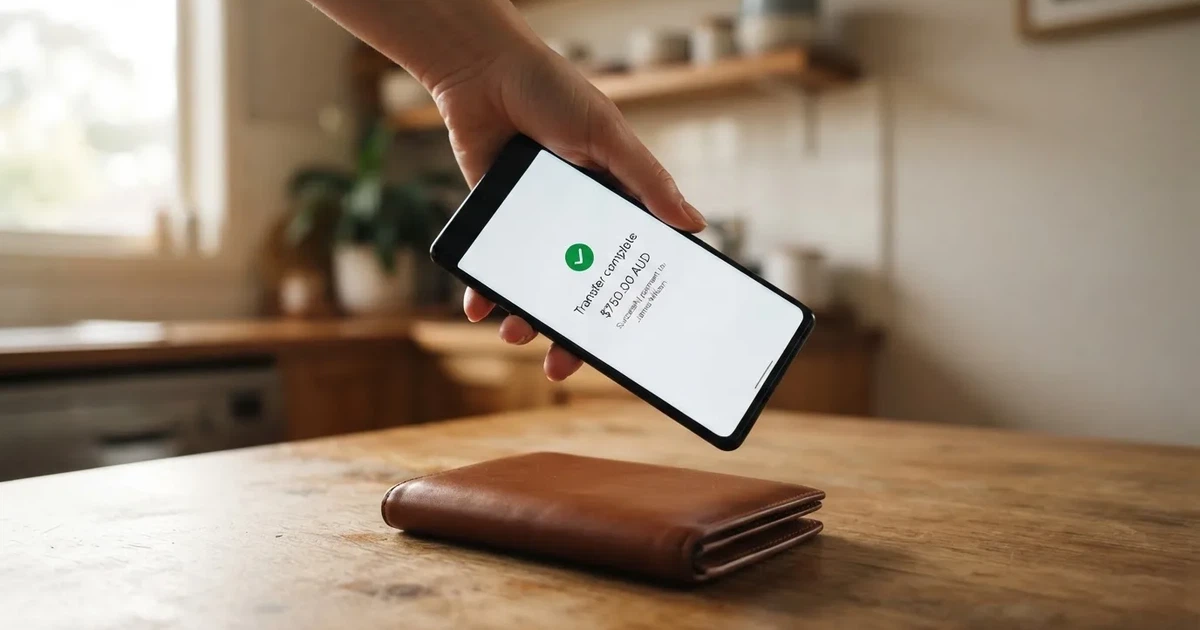
The phrase “instant payout online casino” does a lot of quiet work in the search results. It sells speed. What it quietly skips is the question of whether the operator on the other end is allowed to take Australian customers at all, and what “instant” actually means once an Australian bank, an Australian payment rail or a blockchain confirmation is sitting between the casino’s cashier and the player’s account. This page is written for readers in Australia who typed that phrase and want to know which of its parts they can rely on, and which ones are marketing copy.
A note before anything else. Online casino games — slots, table games, live dealer — cannot be licensed for Australian customers under the Interactive Gambling Act 2001. No state or territory issues that licence. What the ACMA has done, in round after round, is warn and then block the offshore operators that target Australians anyway. The brands reviewed further down this page are not ranked as recommendations. They are listed because the ACMA itself has issued formal warnings over them.
Table of Contents
- Crypto payouts and the illusion of anonymity
- How Australian money actually moves: Osko, PayID, BPAY and the card networks
- Eleven offshore brands the ACMA has warned: what the table is for
- What “instant payout online casino” actually means in Australia
- The ACMA’s blocking record, and how the rate has moved
- What the regulator has named, and what that means for a reader
- Responsible gambling tools that actually reach an Australian player
- What the law changed in 2024 and what changes in 2027
- What an Australian reader is actually choosing between
- RocketPlay
- Level Up Casino
- Woo Casino
- Spirit Casino
- National Casino
- Bizzo Casino
- Ignition Casino
- Instant Casino
- Jackbit
- Casino Intense
- Sky Crown
- How to read the eleven entries together
- A short glossary for the terms that appear above
- Frequently asked questions
Crypto payouts and the illusion of anonymity
A crypto withdrawal looks instant on a casino’s cashier page. A timer starts; a hash appears on a blockchain explorer; the funds move. The marketing line writes itself, and the word the marketing chooses is “anonymous”, which is the word most worth pinning down before any other.

Crypto transactions are pseudonymous, not on-path. The wallet address is a string of letters, but the chain it lives on is public, and any address that has ever touched a KYC’d exchange can be tied back to a name through that exchange’s records. A player who funds a casino account from an exchange they verified against an Australian driver’s licence has not bought anonymity. They have bought a different audit trail, one the operator can read but the AUSTRAC threshold-transaction rule cannot, because that rule applies to physical cash transfers of A$10,000 or more and not to ordinary electronic transfers regardless of size.
Speed is a separate question. Bitcoin blocks settle roughly every ten minutes; Ethereum slots are far tighter than that. “Instant” on a crypto casino’s status bar usually means the casino has broadcast the transfer, not that the network has confirmed it. The casino’s confirmation threshold sits underneath — typically two or three blocks on Bitcoin, twelve on Ethereum before the operator credits the wallet. A player who treats the broadcast as the payout arrives at a smaller number than the marketing copy suggested.
Crypto as a deposit path also costs the Australian player something concrete. The Interactive Gambling Act 2001 as amended in 2023 prohibits Australian-licensed wagering services from accepting payment by credit card or other credit-related products; licensed operators cannot take crypto at all, because the licensing frame is set by the IGA and the licensing frame does not extend to digital currency. An offshore casino that does take it is, by definition, outside that frame, and the protections the frame offers — dispute bodies, segregated player funds, an Australian complaints path — do not travel with the deposit.
What a player can take from the shelf is honest. Crypto payouts are fast against a network confirmation, not against a wish. Anonymity against the operator is a setting on the operator’s side, and an offshore operator has no Australian obligation to honour it. The fastest payout in the world does not recover money an unlicensed operator decides not to pay.
How Australian money actually moves: Osko, PayID, BPAY and the card networks
Australia’s instant-payment story is built on the New Payments Platform, which went live to the public on 13 February 2018. NPP Australia was authorised by the ACCC in 2021 to merge with BPAY and eftpos under a single holding entity, Australian Payments Plus. The platform is now operated by AP+, and AP+ runs three products any Australian reader will meet at a casino cashier: Osko for fast transfers, PayID for addressable identifiers, and BPAY for bill-style payments.

PayID is the addressing layer underneath it: instead of a BSB and account number, the sender types an email address, a phone number or an ABN, and the name of the account holder is shown before the transfer is sent. The wallet-and-account lookup is what makes PayID a safety feature as well as a convenience — AP+ warns that a casino asking an Australian to send money to a PayID that does not match the operator’s stated company is almost certainly a scam site. PayID is now available at more than one hundred Australian financial institutions, and more than twenty-five million PayID identifiers were registered on the New Payments Platform as of April 2025. Osko transfers between participating Australian banks are processed in under a minute.
BPAY is older and slower. It has operated in Australia since 1997, is available in the online banking of more than one hundred and forty banks and financial institutions, and is offered by more than ninety-five thousand businesses. It is a bill-payment service: the payer enters a Biller Code and a Customer Reference Number printed on the bill, and the money moves as a batched overnight transfer rather than as a real-time credit. BPAY was launched on 18 November 1997, is owned equally through parent company Cardlink Services Limited by Australia’s four major banks — ANZ, Commonwealth Bank, National Australia Bank and Westpac — and is now run by AP+ alongside Osko.
The card networks sit on top of this. By the end of 2025, Apple Pay, Google Pay and Samsung Pay transactions collectively accounted for around forty-five per cent of all card payments in Australia by number. Apple does not charge consumers a fee for using Apple Pay in stores, online or in apps; any surcharge on a card transaction is the merchant’s card-processing cost, not Apple’s. Apple states that transaction limits and PIN requirements for Apple Pay purchases are set by the card issuer or the merchant, not by Apple itself.
That last sentence is the one that costs a casino player. Australian banks have built a gambling block directly into the card layer. Westpac’s gambling block works at card level and refuses authorisation of transactions registered under the merchant category code for Betting and Casino Gambling on eligible personal credit and debit cards. ANZ’s gambling block, activated in the ANZ app, also blocks gambling transactions made through a digital wallet such as Apple Pay on an eligible card — the block lives on the card, not on the phone. Once a customer turns on ANZ’s gambling block, removing it again requires a forty-eight-hour waiting period, and the bank warns that not all gambling transactions will be blocked and some non-gambling transactions might be blocked in error. Commonwealth Bank runs a similar lock in the CommBank app, with the same caveat that it cannot guarantee every gambling-related purchase will be stopped. American Express sits outside the Reserve Bank’s proposed surcharge ban, with the RBA’s July 2025 review proposing to remove surcharges only on eftpos, Mastercard and Visa transactions and explicitly leaving Amex outside that scope.
What that means at a casino cashier is that a debit card issued by an Australian bank may be declined at the merchant-category-code gate before the player ever sees the deposit screen. A credit card on an Australian-licensed operator is declined as a matter of statute under the IGA’s 2023 amendments; the same credit card on an offshore operator may go through, because the offshore operator is not subject to the IGA, and the issuer’s gambling block is the only thing standing between the transaction and a hard decline. The instant in “instant payout” is gated by the network the player chose to use, and the player’s bank has more say in that gate than the casino does.
Eleven offshore brands the ACMA has warned: what the table is for
The table below lines up the eleven brands this page covers. Three things to read off it. First, every brand is on the list because the ACMA itself has issued a formal warning over it for offering prohibited interactive gambling services to Australians. Second, online casino games cannot be licensed anywhere in Australia, so whatever licence a brand displays on its footer is not an Australian licence and does not change the IGA analysis. Third, the column on payment-method support is built from public listings the page consulted; the marketing pages themselves were not relied on for any bonus term.
| Brand | ACMA action and date | Operator named by the ACMA | Payment-method coverage | Subject support |
|---|---|---|---|---|
| RocketPlay | Formal warning, March 2026; earlier Dama N.V., May 2022 | Pulsup Ltd | Listings-only | Listings-only |
| Level Up Casino | Formal warning, May 2022 | Dama N.V. | Listings-only | Listings-only |
| Woo Casino | Formal warning, March 2025 | Dama N.V. | — | — |
| Spirit Casino | Formal warning, May 2025 | Dama N.V. | — | — |
| National Casino | Formal warning, July 2025 | Consolutetish S.R.L. | Listings-only | Listings-only |
| Bizzo Casino | Formal warning, July 2025; earlier TechSolutions, 2022 | Consolutetish S.R.L. | Listings-only | Listings-only |
| Ignition Casino | Formal warning, July 2025 | Bamboo Media | — | — |
| Instant Casino | Formal warning, February 2025 | EOD Code SRL | Listings-only | Listings-only |
| Jackbit | Formal warning, April 2026 | Ryker B.V. | — | — |
| Casino Intense | Formal warning, April 2025 | Sterplay Holding Ltd | Listings-only | Listings-only |
| Sky Crown | Formal warning, ACMA publication, September 2022 | Hollycorn N.V. | — | — |
The pattern on the operator column is worth a beat of attention. Of the eleven brands, seven trace back to just three corporate parents. Dama N.V. accounts for four of the entries across two years of warnings — RocketPlay, Level Up, Woo Casino and Spirit Casino. Consolutetish S.R.L. accounts for two in a single July 2025 round — National Casino and Bizzo Casino, the latter of which had already been the subject of a 2022 warning to a different operator, TechSolutions. The same brand under a new corporate wrapper is the most common shape on this list, and it is the shape the ACMA’s formal-warning process is built to chase, because a brand can be renamed faster than a regulator can re-publish.
The dash in any cell is the no-data marker, not a refusal. A brand whose payment-method coverage research could not confirm from non-affiliate sources has been left blank rather than filled with what its own marketing pages say it accepts. The audit follows the same rule: a blank cell is a quieter, more honest sentence than a copied one.
What “instant payout online casino” actually means in Australia
The phrase has three parts, and the parts do not weigh the same. “Online casino” is the part the Australian reader most needs to read carefully. “Instant payout” is the part the marketing spends the most ink on. “Australia” is the part the page is written from.
Online casino, in the IGA’s wording, is a prohibited interactive gambling service when supplied to a person in Australia. The Act was strengthened in 2017, and the prohibitions cover online casino games, online pokies and in-play betting on sport. The licensable alternative is wagering on races and sport placed before the event, lotteries and keno — in practice licensed by the Northern Territory Racing and Wagering Commission, which regulates fifty-two of Australia’s online bookmakers including Sportsbet, Bet365 and Ladbrokes, and which the ABC has reported as a commission with no full-time staff that meets once a month in Darwin. None of that covers a slots or a live-dealer lobby. The minimum age is eighteen.
“Payout” sits on top of two rails. On the bank-transfer rail, an Osko transfer between participating Australian banks arrives in under a minute; PayID addresses it; the player sees the credited balance in their own account before the casino’s cashier has finished refreshing. On the card rail, the path runs through the merchant category code for Betting and Casino Gambling, and the issuing bank’s gambling block can stop a withdrawal at authorisation before the player is told it was attempted. The instant in the casino’s marketing refers to the time between the operator releasing the funds and the network confirming them. It does not refer to the time the player’s bank takes on its end, and it does not refer to the time the casino takes on its end in processing the withdrawal request.
“Australia” is where the comparison ends. A player in a jurisdiction where online casinos are licensed has a complaints body, a dispute path and segregated player funds to fall back on. A player in Australia on an offshore site has none of those. The individual player is not prosecuted — the IGA targets the provider — but the offshore site can be blocked at ISP level with a balance still on it, and the block does not unwind the operator’s terms.
The ACMA’s blocking record, and how the rate has moved
The ACMA’s blocking programme began with a first blocking request to Australian internet service providers in November 2019. As reported in June 2026, a total of 1,751 illegal gambling and affiliate marketing websites had been blocked since that first request, and more than two hundred and thirty unlicensed gambling services had left the Australian market since enforcement was strengthened in 2017. In the round reported on 26 June 2026 alone, the ACMA asked Australian ISPs to block twelve more: 7Signs, ChromaBet, Donbet, Duospin, Freshbet, Slots Gem, Jacks Club, Lucky Start, Pointsbetz.com, Spinrise, Vinyl Casino and Wildsino.
The blocking rate, set against the time since the first request, sits in a band the maths can be drawn out from. 1,751 sites over the roughly six years and seven months between November 2019 and the June 2026 report is an average of around two hundred and sixty sites blocked per year, or just over twenty per calendar month. That average is a band, not a fixed point: the early years were lighter and the 2024 to 2026 rounds have been heavier, with each recent round taking out roughly a dozen sites at a time. The 2017 figure — more than two hundred and thirty services leaving the market since enforcement was strengthened — is a different count, because a service that leaves is not the same as a website that is blocked, and the ACMA tracks them separately. The two figures together describe a regime that runs on accumulated pressure rather than on a single enforcement event.
H2 Gambling Capital’s 2025 report puts the demand side of that regime at roughly A$3.9 billion a year in losses to illegal gambling sites, and notes that the share of gambling going through legal channels fell from seventy-four per cent in 2021 to sixty-four per cent in 2025. The fall is the more pointed number. It says that the blocked-site count has gone up while the legal-channel share has gone down, which is the pattern a reader would expect if offshore operators keep entering the market faster than the ACMA can block them and Australian players keep finding ways to fund them.
What the regulator has named, and what that means for a reader
Formal warnings are the ACMA’s quieter enforcement tool. A blocking request is what the public sees; a formal warning is what the ACMA publishes in a register on its own site, naming the operator behind a brand and the legal basis for the warning. The register is the document a reader can check, and the warnings on it are dated, so the dates matter.
In March 2026 the ACMA issued a formal warning to Pulsup Ltd over Rocketplay.com.au. In May 2022 the same operator name had already attracted a formal warning over six brands — Bambet, Dazard, Level Up, Rocketplay, Wild Tornado and Cobra Casinos — and Dama N.V. was the named operator on that earlier action. The ACMA issued further formal warnings to Dama N.V. in March 2025 over Woo Casino and in May 2025 over Spirit Casino. In July 2025 the ACMA issued formal warnings to Bamboo Media over Ignition Casino and to Consolutetish S.R.L. over National Casino and Bizzo Casino; Bizzo Casino had already been the subject of a 2022 formal warning to TechSolutions (CY) Group Limited and TechSolutions Group N.V. In February 2025 the ACMA issued a formal warning to EOD Code SRL over Instant Casino. In April 2026 the ACMA issued a formal warning to Ryker B.V. over Jackbit and CasinOK. In April 2025 the ACMA issued a formal warning to Sterplay Holding Ltd over Casino Intense. The ACMA also issued a formal warning to Hollycorn N.V. over its Sky Crown and Blue Leo casino services, in a publication dated September 2022.
Read in one pass, that list of dates describes a steady pipeline. The ACMA named an operator, the operator renamed or re-papered the brand, the ACMA named the new wrapper. The gap between the two names is what the reader should pay attention to: a brand on this page that was warned in 2022 under one operator and in 2026 under another is the same brand, and the rename is the move the ACMA’s formal-warning process is designed to catch up with.
Responsible gambling tools that actually reach an Australian player
The player-protection tools that work in Australia work because the operator is licensed in Australia. BetStop, the National Self-Exclusion Register, has been live since August 2023, but it binds only Australian-licensed online and phone wagering services. An offshore casino is not connected to it, which means a self-exclusion registration on BetStop will exclude a player from every Australian-licensed bookmaker and phone betting service at once and will not touch a single offshore site. A player who needs a stronger barrier than willpower should read the BetStop registration as covering exactly the operators it names, and no others.
The National Gambling Helpline is 1800 858 858, free, twenty-four hours a day, with chat at Gambling Help Online. The line is run by the Australian state and territory health departments and is the right destination for any Australian player who feels the gambling has moved past where they wanted it to be, whether the operator is licensed or not.
The bank-side tools matter as well. ANZ’s gambling block, activated in the ANZ app, blocks gambling transactions on an eligible card and also blocks the same transactions made through a digital wallet such as Apple Pay on that card; the bank warns that not all gambling transactions will be blocked and that some non-gambling transactions might be blocked in error, and a forty-eight-hour waiting period applies to removing the block once it is on. Westpac’s gambling block works at card level and refuses authorisation of transactions registered under the merchant category code for Betting and Casino Gambling on eligible personal credit and debit cards. Commonwealth Bank runs a similar lock in the CommBank app. None of these tools is a substitute for a self-exclusion register, but each one removes a deposit path that an offshore site would otherwise rely on.
A site asking an Australian for a credit card or a crypto deposit is operating outside the Australian rules, and the Australian rules’ protections do not travel with that deposit.
What the law changed in 2024 and what changes in 2027
The Interactive Gambling Act 2001 as amended in 2023 prohibited Australian-licensed online wagering services from accepting payment by credit card or other credit-related products. That prohibition took practical effect on 11 June 2024, with penalties up to A$247,500 for operators. The Interactive Gambling Amendment (Gambling Reform) Bill 2026 passed Parliament on 19 August 2026, with its advertising and inducement measures to commence on 1 January 2027. The second measure is a law with a start date and not yet in force at the time of writing; a 2026 page that describes it as live gets ahead of itself.
A point that has not changed. Gambling winnings of a recreational player are not assessable income under section 6-5 of the ITAA 1997, and losses are not deductible, unless the person carries on a business of gambling. The model is “check with the ATO”; the rule is the rule.
What an Australian reader is actually choosing between
A reader looking for a fast-payout casino has, in practice, four paths open, and only one of them is what they are after.
The first path is the offshore casino on the table below. The casino markets an instant payout, takes a deposit in crypto or via a third-party payment processor, and runs on a licence issued by a regulator whose consumer-protection regime does not extend to Australian residents. The ACMA has warned or blocked most of the names a reader would meet in the search results, and the operator’s response has often been to rename or re-paper. The instant payout, when it lands, lands on a path that has no Australian complaints body behind it.
The second path is the Australian-licensed online wagering service. Sportsbet, Bet365 and Ladbrokes sit under the Northern Territory Racing and Wagering Commission’s licences. They offer sports and race wagering and not casino games. The deposit rails are debit card, bank transfer, PayID/Osko and BPAY; credit cards and crypto are out. The payout rails run through the same Australian payment infrastructure, which means an Osko withdrawal arrives in under a minute and a BPAY withdrawal arrives overnight. The instant in “instant payout” is honest on this path.
The third path is the land-based casino or licensed pokies venue. The Australian states and territories license them. The cash is cash. The slot is a slot. None of this is what the reader was searching for, but it is what the law points to.
The fourth path is not playing. The National Gambling Helpline is one call away. BetStop is one registration away. The bank-side gambling blocks are a few taps away in the apps the reader already has on their phone.
RocketPlay
RocketPlay sits on this list because the ACMA issued a formal warning to Pulsup Ltd over Rocketplay.com.au in March 2026. A separate ACMA formal warning in May 2022 had already named Dama N.V. as the operator behind Rocketplay and five other brands — Bambet, Dazard, Level Up, Wild Tornado and Cobra Casinos — over the same prohibited offering to Australians. The two warnings, four years apart, name two different operating companies for what is in practice the same brand, and that is the pattern worth noting rather than the second warning.
The payment-method coverage the public listings record is listings-only — drawn from sources other than the operator’s own marketing — and the operator’s subject support is the same shape, which is to say the record has no figure this page can stand behind. The verdict RocketPlay earns is the one the list itself is for. The brand is on the ACMA’s register of formal warnings; the brand targets Australian players; the brand cannot be licensed in Australia; the brand is not a destination a reader should be weighing as a place to play.
Level Up Casino
Level Up Casino was named in the same May 2022 formal warning to Dama N.V. that covered Bambet, Dazard, Rocketplay, Wild Tornado and Cobra Casinos. The ACMA’s May 2022 action was the round that put the Dama N.V. operator name on the register, and Level Up was one of the six brands it listed. Level Up has not appeared on a subsequent ACMA formal-warning list, which reads, in this register, as the warning standing rather than as the brand having changed.
The page’s own judgement on Level Up is the same shape as RocketPlay’s. The operator name on the ACMA register is Dama N.V.; the brand targets Australian players; the offering is a prohibited interactive gambling service under the IGA; and the published listing coverage is listings-only. A reader looking for a shortlist of instant-payout casinos cannot honestly put Level Up on it.
Woo Casino
Woo Casino drew an ACMA formal warning to Dama N.V. in March 2025, three years after the same operator had been warned in the May 2022 round. Two warnings from the same regulator to the same operator, three years apart, is the register’s way of saying the operator kept offering prohibited services to Australians through the interval. Woo’s payment-method coverage the page could confirm is no-data, while information on its subject support is unavailable. The page records the ACMA action; the page has nothing further to add about the brand’s offering.
The verdict Woo earns is the verdict the ACMA’s register implies. An operator warned twice in three years for the same conduct to the same market is not a brand a reader has any basis for trusting on the speed of its payouts.
Spirit Casino
Spirit Casino drew an ACMA formal warning to Dama N.V. in May 2025. It was the third warning the ACMA issued to Dama N.V. over the four years from 2022, and Spirit was the fifth of the six 2022 brands to draw a fresh warning in the intervening period — only Cobra Casinos has not appeared on a subsequent formal-warning list. Spirit’s coverage on the public listings the page consulted is no-data.
Spirit earns the same verdict as the rest of the Dama cluster, with the same caveat. The pattern that matters is the operator-level pattern, not the brand-level one: an operator warned three times in three years is signalling that the brand is a wrapper and the conduct is at the wrapper’s parent.
National Casino
National Casino drew an ACMA formal warning to Consolutetish S.R.L. in July 2025. The same July 2025 round also named Consolutetish S.R.L. over Bizzo Casino, and the National Casino warning was the regulator’s first appearance against this operator. National Casino’s payment-method coverage on the public listings the page consulted is listings-only, while subject support information is not available from the sources consulted, including the ACMA register and AUSTRAC.
The verdict on National Casino reads slightly differently from the Dama-cluster verdicts. Consolutetish S.R.L. is a first appearance on the ACMA’s register, and a first appearance is closer to the regulator’s first move than to its settled position. The brand is still on the list; the conduct is still prohibited; the offering still cannot be licensed for Australian customers.
Bizzo Casino
Bizzo Casino drew an ACMA formal warning to Consolutetish S.R.L. in July 2025, alongside National Casino. Bizzo had also drawn an earlier formal warning, in 2022, to TechSolutions (CY) Group Limited and TechSolutions Group N.V. Two warnings to two different operators across three years is the most pointed example on the page of the rename-and-re-paper move the ACMA’s register is built to track. The operator-level continuity is the regulator’s argument that the brand-level discontinuity is a tactic.
Bizzo’s coverage is listings-only, drawn from the ACMA register and from public listings other than the brand’s own marketing. The verdict the page reaches is the same one the register reaches: a brand on the ACMA’s list twice, under two different operator names, for the same conduct, is not a destination a reader should be weighing as a place to play.
Ignition Casino
Ignition Casino drew an ACMA formal warning to Bamboo Media in July 2025. It was the only brand named in that warning; Bamboo Media has not appeared on any subsequent ACMA formal-warning list. The page’s coverage of Ignition Casino on the public listings it consulted is no-data, with no available information on its subject support.
The verdict on Ignition Casino is the verdict the warning itself states. The ACMA has named Bamboo Media once; the brand targets Australian players; the offering is prohibited under the IGA; the brand is not a destination this page can place a reader at.
Instant Casino
Instant Casino drew an ACMA formal warning to EOD Code SRL in February 2025. EOD Code SRL has not appeared on a subsequent ACMA formal-warning list. The page’s coverage of Instant Casino’s payment methods is listings-only, drawn from public listings including ecoPayz’s documentation and PayID’s guidance on how a PayID transfer surfaces the account-holder name before the money is sent. The page’s coverage of Instant Casino’s subject support is the same shape.
The verdict on Instant Casino is the one the brand’s name implies but does not earn. “Instant” on the casino’s marketing sits on top of a payment rail whose speed is set by the network and by the player’s bank, not by the operator, and sits on top of an ACMA formal warning that names the offering’s operator. The two facts do not contradict; they are not the same fact.
Jackbit
Jackbit drew an ACMA formal warning to Ryker B.V. in April 2026, alongside CasinOK. It was the first ACMA formal warning to name Ryker B.V. Jackbit’s coverage on the public listings the page consulted is no-data, as is information regarding its subject support.
Jackbit earns the verdict its first appearance on the register implies. The operator is on the register; the offering is prohibited; the page has no figure on Jackbit’s payment-method coverage that would change the read.
Casino Intense
Casino Intense drew an ACMA formal warning to Sterplay Holding Ltd in April 2025. This operator has not been named in any subsequent ACMA formal-warning list. The page’s coverage of Casino Intense on the public listings it consulted is listings-only, drawn from the ACMA register, from AUSTRAC’s threshold-transaction-report guidance, from BetStop’s documentation on what the National Self-Exclusion Register binds, and from public listings of the brand other than the operator’s own marketing.
The verdict on Casino Intense is the verdict the warning itself states. Sterplay Holding Ltd is on the ACMA’s register; Casino Intense targets Australian players; the offering is prohibited under the IGA.
Sky Crown
Sky Crown drew an ACMA formal warning to Hollycorn N.V., in a publication dated September 2022, alongside Blue Leo. Hollycorn N.V. has not appeared on a subsequent ACMA formal-warning list under either brand. The page’s coverage of Sky Crown’s payment methods and subject support is no-data on both columns.
The verdict on Sky Crown reads slightly differently from the others. The warning is the oldest on the page, and the ACMA register carries no further entries against the operator under this brand. The conduct the warning names is still prohibited; the brand still targets Australian players; the page’s read is the same shape as the others, with the difference that the regulator has not had to repeat itself under this name.
How to read the eleven entries together
The pattern across the eleven brands is what makes the table worth the space. Seven of the eleven trace to three operator parents. Three of those parents — Dama N.V., Consolutetish S.R.L. and TechSolutions — account for seven of the warnings. Two of the eleven brands had drawn a previous warning under a different operator name. The remaining four — Ignition, Instant Casino, Casino Intense and Sky Crown — are single-warning entries to single operators the ACMA has not had to repeat itself against.
None of the eleven is on this page as a recommendation. Each is on this page because the ACMA’s own register says the operator has been warned for offering a prohibited interactive gambling service to Australians, and because a reader searching for an instant-payout online casino in Australia will meet most of these names in the search results. The reader’s task is to know which side of the IGA each name sits on. The ACMA’s register does that work; this page lists what the register has said.
A short glossary for the terms that appear above
ACMA — Australian Communications and Media Authority. The Commonwealth regulator that investigates complaints about prohibited interactive gambling services, issues formal warnings and directs Australian internet service providers to block illegal sites.
IGA — Interactive Gambling Act 2001. The Commonwealth statute that prohibits the supply of online casino games, online pokies and in-play betting to a person in Australia. Strengthened by the Interactive Gambling Amendment Act 2017.
NTRWC — Northern Territory Racing and Wagering Commission. The Territory regulator that licences fifty-two of Australia’s online bookmakers, including Sportsbet, Bet365 and Ladbrokes. The Commission has no full-time staff and meets once a month in Darwin.
BetStop — National Self-Exclusion Register. Live since August 2023. Binds Australian-licensed online and phone wagering services; an offshore casino is not connected to it.
PayID — An addressing layer on the New Payments Platform. The sender types an email, a phone number or an ABN, and the name of the account holder is shown before the transfer is sent.
Osko — The fast-transfer service on the New Payments Platform. Real-time bank transfers using this service arrive in under a minute, twenty-four hours a day.
BPAY — A bill-payment service in online banking. The payer enters a Biller Code and a Customer Reference Number. Operated by Australian Payments Plus.
AP+ — Australian Payments Plus. The operator of PayID, Osko and BPAY, formed in 2021 from the merger of NPP Australia, BPAY Group and eftpos.
AUSTRAC — Australian Transaction Reports and Analysis Centre. The Commonwealth agency that sets the threshold-transaction-report rule for cash transfers of A$10,000 or more.
Frequently asked questions
Does “instant payout” mean the money is truly available immediately?
No, not as the marketing uses the word. The instant in an instant payout refers to the time between the operator releasing the funds and the payment network confirming them. On the Australian Osko rail a transfer between participating banks does arrive in under a minute. On a card rail, the issuing bank’s gambling block can stop the transaction at authorisation before the player is told it was attempted. On a crypto rail, the operator’s confirmation threshold sits underneath — typically two or three blocks on Bitcoin — and the broadcast is not the settlement.
Which Australian payment rail is built for near-instant transfers?
Osko. A transfer between participating Australian banks arrives in under a minute, twenty-four hours a day including weekends, addressed either to a BSB and account number or to a PayID. PayID is the addressing layer underneath it; more than one hundred Australian financial institutions support PayID-based instant transfers and more than twenty-five million PayID identifiers were registered on the New Payments Platform as of April 2025.
Is it legal for an online casino to advertise instant payouts to Australians?
The IGA prohibits the supply of online casino games to a person in Australia. The casino cannot be licensed for that supply. The advertising of an offer the operator is not licensed to make is part of what the ACMA acts against; the formal warnings and blocking requests listed on this page are the regulator’s response to that advertising.
Can a cryptocurrency withdrawal really be instant?
Against the casino’s cashier, yes. Against the network, no. Bitcoin blocks settle roughly every ten minutes; the casino’s confirmation threshold sits underneath that. A player who treats the broadcast as the payout arrives at a smaller number than the marketing copy suggested, and any claim of zero-confirmation payout is a claim about the casino’s own risk policy, not about the network’s.
What verification steps can delay an otherwise instant payout?
KYC checks at the casino’s end. The operator may require identity documents, proof of address and source-of-funds documentation before processing a first withdrawal. The instant in the marketing sits on top of a verification queue that is set by the operator and that can be set wide enough to swallow the marketing’s claim entirely. The page’s read is that a payout which depends on a verification step the operator has not completed is not yet a payout at all.
Should a claimed instant payout change how much someone trusts a site?
No. The speed of a payout is one input into a trust decision, not a substitute for one. In Australia the deeper question is whether the operator is licensed in Australia at all — and for online casino games the answer, as a matter of statute, is that none is.