

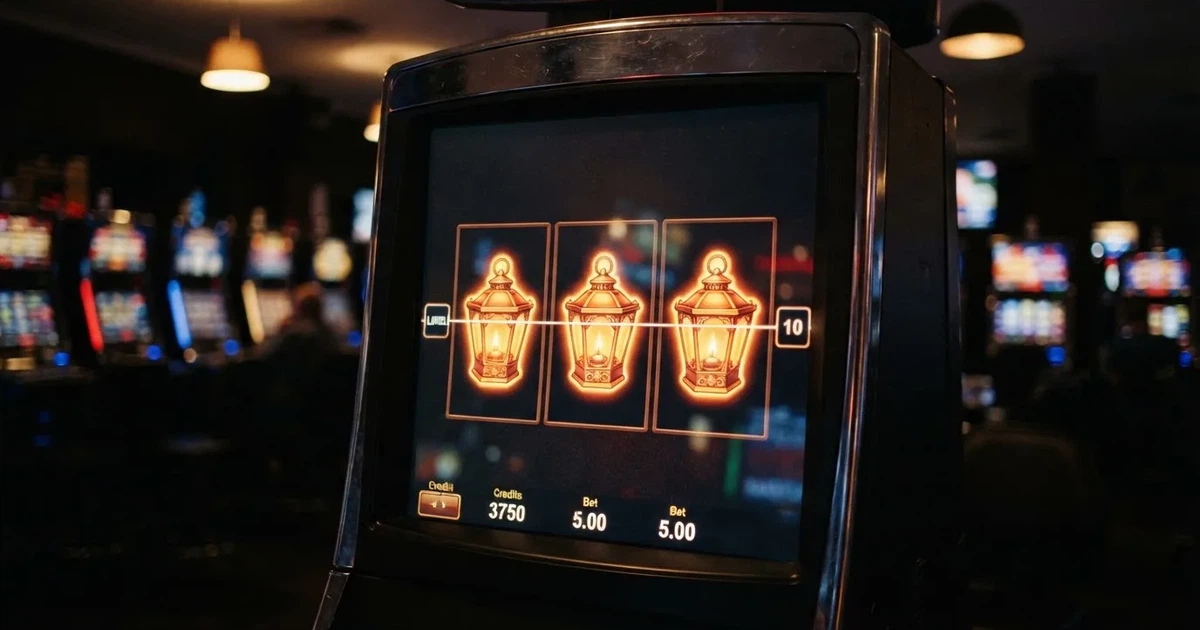
Casinos that accept Ethereum from Australia in 2026: the deposit, the warnings, and the real cost
An Ethereum deposit at an online casino settles on a public blockchain, but the activity the casino offers is unlawful for an Australian resident regardless of which coin funds it. That gap — a technically elegant rail wrapped around a prohibited service — is the whole shape of this market, and it is what the rest of this page works through. Current as of 30 October 2026; verified against the ACMA’s published register of formal warnings and blocking requests.
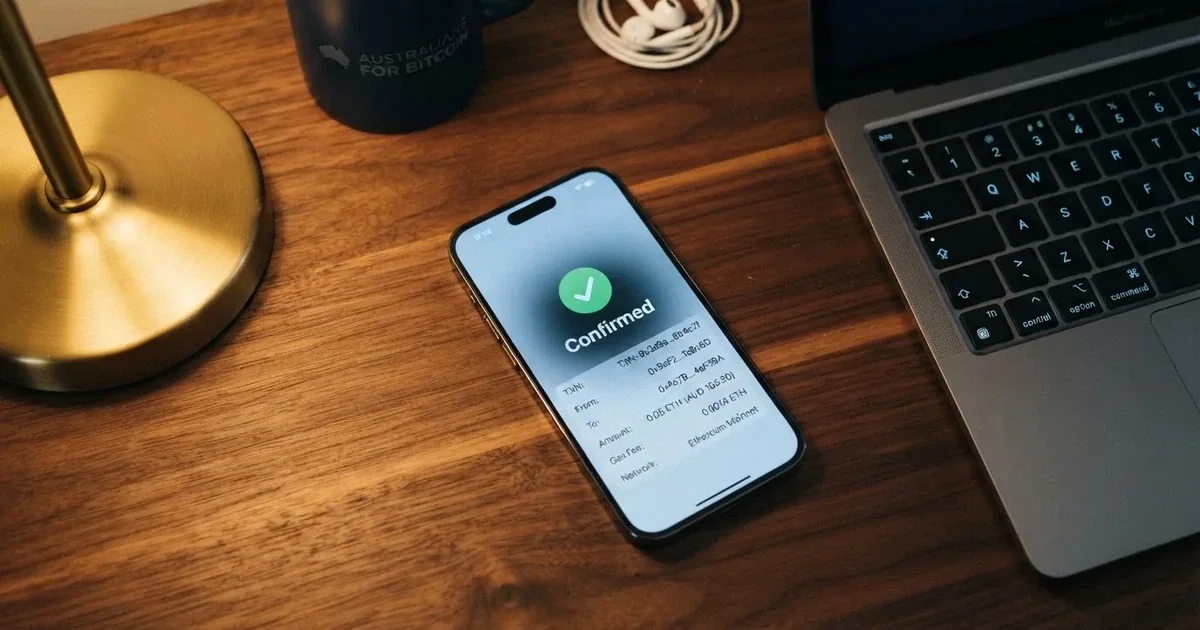
Table of Contents
- What “Ethereum casino” actually means in Australia
- How an Ethereum deposit gets confirmed before it credits an account
- Network fees, the second cost a punter pays
- The licence question: there is no such thing as a licensed Ethereum casino for Australians
- Why so many Ethereum-accepting casinos end up on the ACMA’s list
- The blocking rate, the one calculation on this page
- The ACMA’s published register of formal warnings
- The cluster of Ethereum-accepting games
- Anonymous play, pseudonymity, and what an ETH wallet actually reveals
- Payment rails around the cashier: exchanges, DCE registration, and the AUD on-ramp
- Responsible play with an Ethereum wallet in the loop
- The four things this market costs an Australian who uses it
- What an Australian punter looking at this market should walk away with
- Frequently asked questions
What “Ethereum casino” actually means in Australia
An Ethereum casino is simply an offshore gambling site that accepts ETH at the cashier. The casino software, the games and the licence behind it look the same as on any other payment rail. The only thing the coin changes is the deposit and withdrawal mechanism. Crypto-accepting brands lean on a familiar pitch: faster payouts, lower friction, no card data handed over. Some of that is real, and some of it is marketing dressed up as a feature. The straight facts first.
Ethereum is a public blockchain and software platform powered by the cryptocurrency ether, launched in July 2015 by Vitalik Buterin and a small founding team that included Gavin Wood, Charles Hoskinson, Anthony Di Iorio and Joseph Lubin. On 15 September 2022 the network switched from proof-of-work to proof-of-stake in an upgrade known as the Merge, which cut energy consumption by more than 99%. A new block has appeared roughly every 12 seconds since. Unlike Bitcoin, ether has no fixed maximum supply cap; total supply sat near 120,520,000 ETH at the time of the Merge.

So far, so technical. The reader question is different: what does using that network to fund a casino account look like in practice, and what does it cost?
How an Ethereum deposit gets confirmed before it credits an account
The flow is the same as for any on-chain payment. The punter copies a deposit address from the casino cashier (or scans a QR code), sends ETH from a self-custody wallet such as MetaMask or a hardware wallet, and waits for the network to include the transaction in a block. Once a block is mined — about every 12 seconds on Ethereum — the casino’s wallet service sees the transfer and credits the account. In practice most operators wait a small number of confirmations rather than one, to reduce the chance of an uncle block being reorganised out.
Two things follow from this that an Australian punter should know up front. The first is that confirmed ETH transfers cannot be reversed by the sender. There is no chargeback, no cardholder dispute, no consumer protection body to call. The second is that the on-chain record is permanent. Every deposit and every withdrawal is written into a ledger anyone can read, even if no name is attached to the wallet address that signed it.
That second point is worth pausing on, because the marketing line about anonymity is the one most often glossed past. An Ethereum wallet is pseudonymous, not anonymous. The address is a string of hex characters; the person’s name is not stored on chain. But once an address is linked to a person — through a KYC check at an exchange, a publicly posted donation, or a withdrawal back to a regulated Australian exchange — every past and future transaction becomes traceable from that anchor. Chain-analysis firms do exactly this for a living.
Network fees, the second cost a punter pays
Every on-chain Ethereum transaction pays a gas fee, denominated in gwei and settled in ETH. The fee varies with congestion: cheap on a quiet Sunday morning, eye-watering during an NFT mint or a token launch. Two practical consequences for a casino deposit.
The fee is deducted from the sender’s wallet, not from the deposit amount credited to the casino. A punter sending exactly 0.1 ETH will have slightly less than 0.1 ETH arrive, because the gas comes off the top. The cashier shows a minimum deposit for a reason: it must exceed the gas cost by enough that a meaningful balance credits. Micro-deposits under a few dollars’ worth of ETH routinely fail because the gas eats the whole transfer.
On the withdrawal side, the same rule applies in reverse. A casino paying out 0.1 ETH sends 0.1 ETH; the punter receives 0.1 ETH minus the gas needed to move it onward. If the punter then sweeps that ETH through several wallets, each hop takes another fee. Holding ETH at the casino and withdrawing in larger, less frequent lumps is materially cheaper than many small cashouts.
None of this is unique to gambling. It is the price of using a public blockchain. What is unique to gambling is that the fee is paid into a rail that funds an unlawful service in Australia, and the loss from the wager itself has no Australian recourse.
The licence question: there is no such thing as a licensed Ethereum casino for Australians
The Interactive Gambling Act 2001, strengthened by the Interactive Gambling Amendment Act 2017, makes it an offence to provide online casino games, online pokies or in-play betting to a person physically in Australia. No state or territory issues a licence for those products. What is licensable is wagering on races and sport placed before the event, lotteries and keno — and in practice licensed online bookmakers sit with the Northern Territory Racing and Wagering Commission. The NTRWC regulates 52 of Australia’s online bookmakers, including Sportsbet, Bet365 and Ladbrokes; it has no full-time staff and meets once a month in Darwin. The activity, not the coin, is what the IGA targets.
Since a 2023 amendment that took effect on 11 June 2024, Australian-licensed online wagering services are also prohibited from accepting digital currency, alongside credit cards and other credit-related products, as a payment method. The point of the rule is to cut off a flow of funds into the licensed market from credit and from volatile assets; an operator taking ETH on the licensed side is breaking two rules at once.
The offshore brand that markets itself as a “licensed Ethereum casino” is licensed somewhere else — Curaçao, Anjouan, Costa Rica, occasionally the Kahnawake or Malta. Those licences cover the operator’s relationship with its home regulator; they do not make the service lawful in Australia. The word “licensed” on a landing page answers a question about the operator, not a question about the punter.
This is the only factual reading of the term, and it is the reading that frames everything below.
Why so many Ethereum-accepting casinos end up on the ACMA’s list
The Australian Communications and Media Authority investigates offshore sites offering prohibited services to Australians and uses three published levers: a formal warning naming the operator, a request to Australian internet service providers to block the site, and referral for civil penalties. Two figures put the size of the market on the page.
As reported in June 2026, the ACMA had asked Australian ISPs to block 1,751 illegal gambling and affiliate marketing websites since the first blocking request in November 2019. More than 230 unlicensed gambling services had left the Australian market since enforcement was strengthened in 2017. A single round reported on 26 June 2026 added twelve more domains to the blocking list: 7Signs, ChromaBet, Donbet, Duospin, Freshbet, Slots Gem, Jacks Club, Lucky Start, Pointsbetz, Spinrise, Vinyl Casino and Wildsino.
H2 Gambling Capital’s 2025 report estimates that Australians lose about A$3.9 billion a year to illegal gambling sites, and that the share of gambling going through legal channels fell from 74% in 2021 to 64%. The market exists, it is large, and the regulator has not caught up with it on a one-by-one basis. Some operators that exit do so quietly; others rack up multiple formal warnings across multiple brand names.
The blocking rate, the one calculation on this page
The blocking request figure of 1,751 sites since November 2019 is the headline number most pages open with. The number that tells a punter more is the rate at which sites accumulate on the list, because that is the rate at which any single offshore site becomes unreachable from an Australian connection.
The calculation is straightforward. From November 2019 to June 2026 is roughly 79 months. 1,751 blocked sites over 79 months gives a long-run average of around 22 sites blocked per month, or one roughly every 34 hours. That is the long-run average; the actual round-by-round distribution is uneven. Some months the ACMA publishes a round of ten or twelve sites; some quarters pass with nothing new. A punter reading this page in 2026 should treat the 22-a-month figure as a band, not a guarantee, and treat any specific site as one blocking round away from disappearing mid-session.
The qualifier matters because the cost of being on the wrong end of a blocking round is paid by the punter, not the operator. An Australian player whose casino domain is added to an ISP block can lose access to a balance they cannot withdraw. There is no Australian consumer protection body to call. There is no chargeback on a credit card that was never used. The withdrawal, if it ever arrives, must arrive before the block lands.
The ACMA’s published register of formal warnings
The ACMA’s formal warnings make the names public. Each one names an operator company and the brand or domain the warning covers. The following table summarises the warnings relevant to this page’s set of offshore brands. The column order is editorial: brand first, then regulator action, then the entity named by the regulator, then the subject support the page can claim from research.
| Brand | ACMA action and date | Operator named by the ACMA | Subject support |
|---|---|---|---|
| RocketPlay | Formal warning, March 2026 (Pulsup Ltd); earlier Dama N.V., May 2022 | Pulsup Ltd | — |
| Level Up Casino | Formal warning, May 2022 | Dama N.V. | — |
| Woo Casino | Formal warning, March 2025 | Dama N.V. | listings-only |
| Spirit Casino | Formal warning, May 2025 | Dama N.V. | — |
| National Casino | Formal warning, July 2025 | Consolutetish S.R.L. | listings-only |
| Bizzo Casino | Formal warning, July 2025 (Consolutetish); earlier 2022 (TechSolutions) | Consolutetish S.R.L. | — |
| Ignition Casino | Formal warning, July 2025 | Bamboo Media | — |
| Instant Casino | Formal warning, February 2025 | EOD Code SRL | — |
| Jackbit | Formal warning, April 2026 | Ryker B.V. | — |
| Casino Intense | Formal warning, April 2025 | Sterplay Holding Ltd | — |
| Sky Crown | Formal warning, September 2022 | Hollycorn N.V. | — |
Two things the table makes plain. The first is that Dama N.V. is a repeat: it has been warned under four different brand names, in 2022 and again in 2025, for the same underlying conduct. The second is that no operator on the list holds an Australian licence, because none can — online casino games cannot be licensed anywhere in Australia. Any licence displayed by these brands sits in a different jurisdiction and is irrelevant to Australian legality.
The “subject support” column reflects what the research could verify from independent sources about each brand’s relationship with Ethereum specifically. Most cells are empty; that is the honest reading. A row marked “listings-only” means the only sources that tied the brand to ETH were affiliate marketing pages, which research flagged as unverified.
The cluster of Ethereum-accepting games
Crypto-accepting brands run the same games as any other online casino. The slot catalogue is the standard Pragmatic Play, NetEnt, Play’n GO, Nolimit City and Hacksaw Gaming mix; the live lobby is Evolution and Pragmatic Live; the crash and dice games are the same proprietary titles. ETH is a cashier option, not a game mode.
That is the part the marketing glosses past, and it is the part that costs the punter if missed. Slot titles listed as accepting Ethereum run the same reels, paylines and rules as any other version of the same game. The random number generator does not know which currency funded the spin. The published return-to-player percentage is the same. The volatility rating is the same. The bonus rounds, free-spin triggers and progressive jackpots are the same. An ETH-funded spin on a 96% RTP slot returns, on average, 96 cents per dollar wagered — exactly as a fiat-funded spin does.
Where the coin does change the experience is at the cashier. The deposit is faster than a card once the wallet is set up; the withdrawal is faster than a bank wire once the operator releases it; and the on-chain record is permanent. The punter pays for that speed in gas and in the absence of any consumer protection when things go wrong.
Anonymous play, pseudonymity, and what an ETH wallet actually reveals
The marketing line about anonymous gambling is the one that needs the most deflation. An Ethereum wallet is a string of characters; nothing on chain says “John Smith from Sydney”. But the wallet is not a sealed envelope. Every transaction — deposit, wager, withdrawal, the change going back to a sender address — is publicly visible. Chain-analysis companies cluster addresses, follow funds across hops, and attribute clusters to known services.
The attribution usually lands when the punter moves funds back to a regulated Australian exchange to cash out for AUD. That exchange is a Digital Currency Exchange registered with AUSTRAC, and it carries know-your-customer obligations. From that on-ramp or off-ramp, every past address the punter has touched is traceable. The address itself remains a string; the name attached to it does not.
Two practical consequences. First, “anonymous” gambling on ETH is privacy from the casino, not from the chain or from Australian authorities if a query is opened. Second, the deposit address the casino generates is itself an attribution point — the punter can see it, the casino can see it, and any third party who pays for that data feed can see it too. There is no closed loop.
This matters for one further reason. The ATO classifies crypto assets such as ether as property, not as money or foreign currency. Most disposals — selling for AUD, swapping for another crypto, or spending ether on a casino deposit — are capital gains tax events. The current 50% CGT discount for assets held longer than 12 months is replaced from 1 July 2027 by CPI indexation of the cost base plus a 30% minimum tax rate on net capital gains. An Australian punter using ETH at an offshore casino is creating a CGT record whether they intended to or not. The record sits on a public chain.
Payment rails around the cashier: exchanges, DCE registration, and the AUD on-ramp
An Australian punter funding an offshore ETH casino almost always starts by buying ether on a local exchange, then withdrawing to a self-custody wallet, then depositing from that wallet to the casino. The exchange step is regulated in its own right.
Cryptocurrency exchanges that let customers exchange Ether or Bitcoin for Australian dollars have been required to register with AUSTRAC as a Digital Currency Exchange provider since 3 April 2018. Operating an unregistered exchange is a criminal offence. AUSTRAC requires DCE providers to renew every three years, or the registration automatically expires under the AML/CTF Act. From 31 March 2026, AUSTRAC’s DCE registration requirement was expanded beyond crypto-to-fiat exchange to also cover crypto-to-crypto exchange platforms, digital asset transferors, digital asset custody providers, and stablecoin issuers and distributors. The registration regime sits behind the on-ramp, not behind the casino.
What that regime does for the punter is establish a paper trail from their bank account into ETH and into the casino deposit address. AUSTRAC’s job is anti-money-laundering and counter-terrorism-financing, not consumer protection; it does not stand between an Australian and an offshore casino that refuses to pay out. The exchange step does, however, mean the punter cannot plausibly argue they were unaware of where the funds were going — the exchange has the identity, the chain has the wallet, and the casino has the deposit.
Responsible play with an Ethereum wallet in the loop
The Australian responsible-gambling infrastructure is built around Australian-licensed operators. BetStop, the National Self-Exclusion Register, has been live since August 2023; it binds only Australian-licensed online and phone wagering services. An offshore casino is not connected to it. Self-excluding through BetStop does nothing to a Curacao-licensed ETH casino’s acceptance of the punter’s deposits.
The National Gambling Helpline is 1800 858 858, free, 24/7, with chat at Gambling Help Online. The helpline is funded for Australian residents regardless of where they play. The punter funding an account with ETH has to do the budget work themselves, because the regulator’s exclusion register does not reach the venue and the venue’s own tools sit behind a customer account that is itself a question of access.
Three practical points follow. First, treat the crypto wallet as a budget device: hold only what is being wagered in the next session, not the monthly bankroll. Second, set a firm session limit in ETH before opening the cashier, because on-chain transfers cannot be undone mid-session. Third, accept that the same irreversible rail applies to winnings — a withdrawal that lands cannot be recalled, which is a feature when the punter wants to cash out and a hazard when a refund is owed.
The four things this market costs an Australian who uses it
Putting the pieces together, an ETH-accepting casino charges an Australian punter four distinct costs, and only one of them is the house edge. The first is the gas fee on every deposit and every withdrawal, paid in ETH to the network. The second is the volatility of the asset between deposit and withdrawal — ether priced in AUD can move several percent in a session, and a winning wager can become a losing one when the coin is cashed back. The third is the absence of recourse: an offshore site refusing a withdrawal, delaying a withdrawal, or vanishing between sessions leaves no Australian body to appeal to. The fourth is the legal exposure of funding a prohibited service, which sits with the operator under the IGA and which an Australian punter should not mistake for a sign of personal safety.
The marketing line about faster payouts and lower friction is true at the cashier. The marketing line about anonymity is mostly false. The marketing line about being licensed refers to a jurisdiction other than Australia. Reading any landing page for what it actually says, rather than what it implies, is the only filter that holds up.
What an Australian punter looking at this market should walk away with
The honest version of the picture is short. Online casino games and online pokies cannot be licensed in Australia, regardless of which cryptocurrency the cashier accepts. The regulator has issued formal warnings against every brand in this page’s reviewed set, and has been blocking illegal sites at a long-run rate of about 22 a month since November 2019. The ETH rail does not change that; it just makes the deposit faster and the record more permanent. A punter who decides to play anyway has priced in the gas, the volatility, the lack of recourse and the legal position. A punter who decides not to play has avoided all four.
There is no Ethereum casino that fixes this. There is only an Ethereum casino at the cashier of a site that should not, under Australian law, be accepting Australians at all.
Frequently asked questions
Is it legal for a casino site to accept Ethereum from a player in Australia?
No. The Interactive Gambling Act 2001 prohibits the supply of online casino games and online pokies to a person in Australia; the coin used to fund the account does not change that. The 2023 amendment that took effect on 11 June 2024 separately bans licensed Australian wagering services from accepting digital currency, so the licensed side cannot run an ETH cashier either. Any offshore site accepting ETH from an Australian is offering an unlawful service.
How does an Ethereum deposit get confirmed before it is credited to a casino account?
The punter copies a deposit address from the cashier and sends ETH from a self-custody wallet. The transaction is included in a block roughly every 12 seconds on Ethereum since the Merge. Most operators wait for several confirmations before crediting the account, to reduce the chance of a block reorganisation. The credit happens automatically once the operator’s wallet service sees the confirmations, without any bank or card network in the loop.
Are network fees deducted from an Ethereum deposit before it reaches a casino balance?
Yes. Gas is paid by the sender in ETH and comes off the top of the transfer. The punter sending exactly 0.1 ETH will have slightly less than 0.1 ETH land at the casino, with the difference being the gas. That is also why minimum deposits are set well above a few dollars’ worth of ETH — micro-deposits are routinely eaten by gas. The same fee applies on the withdrawal, deducted from what arrives in the punter’s wallet.
Do Ethereum slot titles pay out any differently from the same game funded with cash?
No. The slot’s random number generator does not know which currency funded the spin. A 96% RTP slot returns, on average, 96 cents per dollar wagered whether the dollar was a fiat debit or a fraction of an ETH. Volatility, bonus rounds, free-spin triggers and progressive jackpots are the same across cashier rails. The only difference is the rail itself: deposit speed, withdrawal speed, and the absence of chargeback.
Is an Ethereum wallet address linked to a person’s identity by the casino?
Not by the casino directly, but it is linked by the chain’s permanent record and by the Australian on-ramp. Most Australian punters buy ETH on a local exchange registered with AUSTRAC, then withdraw to a self-custody wallet. That exchange has the identity and the wallet address. Once an address is linked to a person — through an exchange KYC check, a public post, or a withdrawal back to a regulated exchange — every past and future transaction on that address becomes traceable. The wallet is pseudonymous, not anonymous.