

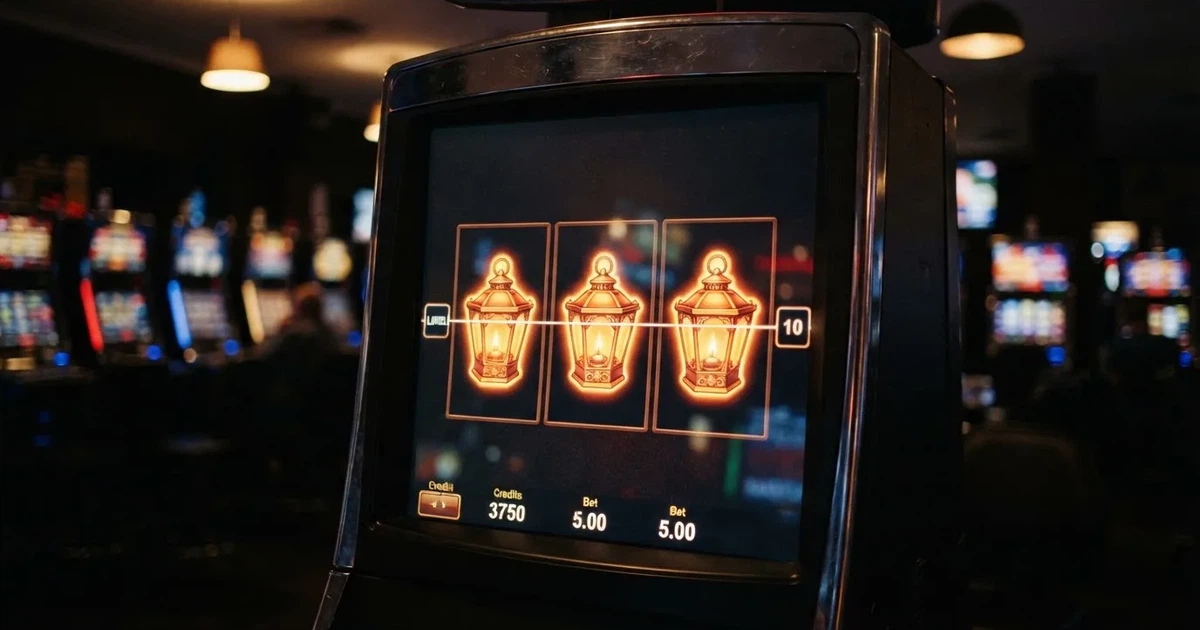
What a high cashback bonus really costs an Australian reader in 2026
Cashback is sold as the friendly bonus. The marketing line runs that you get a slice of your losses back, which sounds like a soft landing rather than a stake. The arithmetic underneath is less forgiving. A cashback offer is a percentage of net losses over a defined window, usually credited as bonus funds with their own wagering multiple, their own cap and their own time limit. Read it carefully and most of the time the headline figure stops mattering, because the conditions sitting beside it decide whether any of it ever reaches a bank account. This page works through what cashback promotions in fact are, what Australian law does to the offshore sites that sell them, and what the reader’s actual options are.
This guide is current as of 29 October 2026 and was checked against the Australian Communications and Media Authority register of formal warnings and blocking orders.
Table of Contents
- Crypto cashback and the anonymity angle
- The mechanics of a cashback bonus on the page
- Why no Australian licence exists for these offers
- The ACMA’s enforcement record in 2025 and 2026
- What the ACMA warnings mean in practice
- The blocking rate as a measure of the market
- Cashback bonuses under Australian consumer law
- Responsible gambling for a reader who is comparing offers
- The 2026 reform horizon
- Tax position for an Australian player
- Frequently asked questions about cashback bonuses for Australian readers
Crypto cashback and the anonymity angle
Crypto cashback is pitched to a reader who wants two things at once: a percentage back on losses, and a payment trail that does not read like a gambling deposit on a bank statement. The reality is that Australian law does not care how the deposit moves. Under the Interactive Gambling Act 2001, the prohibition sits on the service offered, not on the rail it arrives on. A bitcoin casino running from Curaçao and offering twenty percent cashback on weekly net losses is doing exactly what an Australian-dollar fiat casino running from the same jurisdiction is doing: offering an unlicensed interactive gambling service to someone physically in Australia. The rail changes the receipt, nothing else.

The structural problem is that cashback paid in cryptocurrency inherits every wagering condition a fiat offer carries, and adds the volatility of the asset. A 15% cashback credited in BTC at the Tuesday close, then held until Saturday under a 3x wagering requirement, has been marked to market five times by the time it clears. A 3% swing in bitcoin over that window is larger than the bonus itself. The bonus has not changed in headline terms; what changed is the unit of account, and the reader is now exposed to it.
What follows is what the offshore crypto-cashback segment looks like from an Australian vantage point, where the IGA puts it, and what the reader actually holds at the end of a bonus period. The facts here come from the ACMA’s own register of formal warnings, not from the marketing pages of the brands themselves, because the only verifiable record of these operators is the regulator’s enforcement file.
The legal position on crypto deposits
The 2017 amendments to the Interactive Gambling Act, reinforced through 2023 and the 2024 credit-card ban that took effect on 11 June 2024, prohibit an Australian-licensed wagering provider from accepting digital currency. That ban is part of the Australian-licensed framework, and an offshore casino is not within it. The offshore site will happily accept bitcoin, ethereum or USDT; the legal position of the Australian reader using one of those rails is unchanged from using a Visa card. The transaction is not criminal on the player’s side, but the player is also outside every Australian protection the rails would have triggered at a licensed venue.

How an offshore crypto-cashback offer is built
The mechanics are conventional. A reader registers, deposits in BTC, plays slots or live tables, and over a weekly or monthly window the site calculates net losses (bets minus wins, sometimes minus bonus credits). A percentage — 10%, 15%, 20%, occasionally 25% — is then credited back. The credit is rarely withdrawable cash. It is usually bonus money with a wagering multiple (3x to 10x is the common range across the offshore market), a maximum cashout cap expressed as a multiple of the cashback amount, and a window of seven to fourteen days to clear. The percentage at the top of the page does not survive the trip through those three filters.
See also Welcome Bonuses at Online Casinos in Australia.
The mechanics of a cashback bonus on the page
A cashback bonus is a refund, in form. In substance it is a marketing rebate with the same structural parts as any other deposit bonus. What follows is what each of those parts costs the reader, and where the offer’s headline stops mattering.
Cashback versus a deposit match
A deposit match adds a percentage of the deposit as bonus money up to a cap, on the first deposit (or the first three). A cashback offer adds a percentage of net losses over a defined window. The deposit match rewards depositing; the cashback rewards losing. They look like opposites and they are not — both end in the same place, a balance of bonus funds with a wagering multiple, a cap and a clock. The reader’s exposure profile is different — cashback arrives only if the reader has lost, which is a built-in negative selection — but the clearing mechanics are identical.
Bonus money versus withdrawable cash
The credit is almost never cash. It is bonus balance with conditions attached. The relevant distinction is whether the wagering requirement applies to the cashback alone (a 3x cashback multiple is friendly) or to deposit plus cashback (a 35x combined multiple is hostile). Some sites structure the offer so a single bonus has to be cleared twice if the reader deposits again before the first one is finished. The terms matter more than the percentage.
Caps, time limits and game weighting
Three clauses cut the offer’s headline by more than any other:
- a maximum cashout expressed as a multiple of the cashback (capping a 20% return at, say, 5x the credited amount);
- a window of seven to fourteen days in which to clear the wagering, with the bonus voided if missed;
- game weighting, where wagers on slots count 100% toward clearing, but table games and live dealer count 10% or are excluded entirely.
The percentage at the top of the page is the smallest factor in what the reader actually walks away with.
Why no Australian licence exists for these offers
Online casino games and online pokies cannot be licensed anywhere in Australia. The Interactive Gambling Act 2001, as amended in 2017 and tightened through 2023, makes it an offence for an operator to provide such a service to a person who is physically in Australia. What is licensable is wagering on sport and racing placed before the event, lotteries and keno — in practice licensed by the Northern Territory, where 52 of Australia’s online bookmakers sit for tax reasons under the NTRWC, a body that has no full-time staff and meets once a month in Darwin. The reason that body exists in that shape is that licensed wagering and casino games are different products under the IGA, and the latter has no Australian licensing channel.
Minimum age is 18. The ACMA investigates, issues formal warnings and can direct Australian ISPs to block sites. The individual player is not prosecuted; the Act targets the provider. An offshore casino gives no Australian consumer protection, no complaints body and no recourse if a withdrawal is refused, and it can be blocked by an ISP order while the balance is still on it.
The ACMA’s enforcement record in 2025 and 2026
The Australian Communications and Media Authority has been steadily issuing formal warnings and pushing ISPs to block offshore casino brands that target Australian residents. By June 2026 the ACMA reported a total of 1,751 illegal gambling and affiliate marketing websites blocked since the first blocking request in November 2019, with more than 230 unlicensed gambling services having left the Australian market since enforcement was strengthened in 2017. In a single round reported on 26 June 2026, the ACMA asked ISPs to block twelve further sites: 7Signs, ChromaBet, Donbet, Duospin, Freshbet, Slots Gem, Jacks Club, Lucky Start, Pointsbetz, Spinrise, Vinyl Casino and Wildsino. The blocking total keeps moving because the offshore supply keeps arriving.
What follows is the record against operators relevant to a cashback reader. The table is what it is — a regulator’s own list, names and dates — and not a recommendation. Where research flagged an operator as listings-only, what the table reports is what those third-party listings said; where it was no-data, the operator does not appear on that axis. None of these brands are licensed in Australia. Online casino games cannot be licensed anywhere in Australia, whatever overseas licence the site displays.
Operator warnings from the ACMA register
| Brand | ACMA action and date | Operator named by the ACMA | Subject support |
|---|---|---|---|
| RocketPlay | Formal warning, March 2026 | Pulsup Ltd (Rocketplay); earlier Dama N.V. warning, May 2022 | Listings on Gamblinginsider.com |
| Level Up Casino | Formal warning, May 2022 | Dama N.V. | Listings on Westpac.com.au |
| Woo Casino | Formal warning, March 2025 | Dama N.V. | — |
| Spirit Casino | Formal warning, May 2025 | Dama N.V. | — |
| National Casino | Formal warning, July 2025 | Consolutetish S.R.L. | Listings on acma.gov.au, austrac.gov.au, betstop.gov.au |
| Bizzo Casino | Formal warning, July 2025; earlier 2022 warning | Consolutetish S.R.L.; earlier TechSolutions | Listings on Gamblinginsider.com |
| Ignition Casino | Formal warning, July 2025 | Bamboo Media | — |
| Instant Casino | Formal warning, February 2025 | EOD Code SRL | Listings on Ecopayz.com, Payid.com.au |
| Jackbit | Formal warning, April 2026 | Ryker B.V. | — |
| Casino Intense | Formal warning, April 2025 | Sterplay Holding Ltd | Listings on austrac.gov.au, betstop.gov.au, Gamblinginsider.com |
| Sky Crown | Formal warning, September 2022 | Hollycorn N.V. | — |
The pattern is what matters. Dama N.V. alone has been warned four times across May 2022, March 2025, May 2025 and again for a March 2026 Rocketplay.com.au mirror. Consolutetish S.R.L. picked up the National Casino and Bizzo Casino warnings in July 2025; Bizzo had already been warned in 2022 under TechSolutions. The corporate shells move around; the offshore supply does not.
What the ACMA warnings mean in practice
A formal warning under the Interactive Gambling Act is a written direction from the regulator to the operator, naming the prohibited service and giving the operator an opportunity to comply. The warning is published. Continued provision after a warning is the trigger for the next step, an infringement notice, and then a blocking request to Australian ISPs. The warning itself is not a fine. It is a documented step on the way to a block, and the brand names above are all on that path.
The structural point for a reader comparing offers is that a brand displaying a Curaçao or Anjouan licence is regulated for that jurisdiction, not for Australia. Australian consumer law does not apply because no Australian licence was issued; the offshore regulator’s complaint process applies, if it exists at all, and it does not extend to the rights an Australian player would have at a licensed venue. H2 Gambling Capital’s 2025 estimate put Australian losses to illegal gambling sites at around A$3.9 billion per year, with the share of gambling going through legal channels falling from 74% in 2021 to 64%. The flow of money toward offshore operators is not a fringe of the market; it is a third of it.
The blocking rate as a measure of the market
The calculation behind these figures is straightforward. By the ACMA’s own June 2026 figure, 1,751 sites had been blocked since the first blocking request in November 2019. That is roughly 79 months of enforcement, which puts the long-run blocking rate at about 22 sites per month, or one every 33 hours, over the period since blocking began. The early years were slower. The June 2026 round alone added twelve sites in a single day. The cadence has accelerated as the ACMA’s enforcement tools have matured and as offshore operators have rebuilt after each block.
The block rate is not a measure of how big the illegal market is — it is a measure of how often the regulator has to act. The two are correlated but not identical. What the rate does tell a reader is that the supply of offshore cashback casinos is not a static list of brands to memorise; it is a moving target that gets refreshed faster than any single regulator round can suppress. A site that is blocked this quarter is replaced by a new domain next quarter, and the marketing pages follow the new domain.
What a high cashback bonus really costs an Australian reader in 2026 — More on this topic at casino payout.
Cashback bonuses under Australian consumer law
A licensed venue can offer a cashback promotion because it is licensed. The promotion is then subject to Australian consumer law — the Australian Consumer Law, the responsible gambling provisions of the relevant state or territory, and the venue’s own self-exclusion obligations. An offshore casino offering the same promotion is operating outside every one of those frameworks.
What that means in a dispute:
- A blocked site can refuse a withdrawal citing a “bonus abuse” clause written into its own terms, with the reader having no Australian complaints body to appeal to.
- The Australian Consumer Law’s guarantees do not apply to goods or services supplied from outside Australia to a person in Australia, in the consumer-law sense, when the supplier is not an Australian entity.
- The bank may decline the transaction outright. Westpac’s gambling block refuses authorisation of transactions registered under the merchant category code “Betting/Casino Gambling” on eligible personal credit and debit cards, and ANZ’s gambling transaction block, activated in the ANZ app, also blocks gambling transactions made through a digital wallet such as Apple Pay on an eligible card, not just the physical card. Turning ANZ’s block off again requires a 48-hour waiting period, and the bank warns that not all gambling transactions will be blocked and that some non-gambling transactions may be blocked in error.
Banking rails that the offshore site can and cannot use
The credit-card ban that took effect on 11 June 2024 makes it unlawful for an Australian-licensed online wagering service to accept credit cards, credit-related products and digital currency. An offshore casino is not within that ban. It will accept whatever the reader sends. The reader’s bank is the constraint, not the casino. The Reserve Bank of Australia’s July 2025 review proposes removing surcharges only on eftpos, Mastercard and Visa, explicitly leaving American Express outside the proposed surcharge ban — a niche detail, but one that becomes material if the reader is paying a 1.5% surcharge on an Amex charge at an offshore site that uses an Amex-issued three-party scheme. Apple Pay does not charge fees to consumers; any surcharge comes from the merchant’s own card-processing fees, not from Apple. Apple states that transaction limits and PIN requirements are set by the card issuer or merchant, not by Apple itself. By the end of 2025, Apple Pay, Google Pay and Samsung Pay collectively accounted for around 45% of all card payments in Australia by number, which means a meaningful share of “card” transactions at an offshore site are wallet-mediated, and a gambling block activated at the card level (as with Westpac and ANZ) covers those too.
PayID, Osko and BPAY
PayID, Osko and BPAY are the rails that licensed Australian wagering uses and that an offshore site typically does not. With Osko, a bank transfer between participating Australian banks arrives in under a minute, 24/7, addressed either to a BSB and account number or to a PayID. Paying to a PayID shows the name of the account holder before the transfer is sent; Australian Payments Plus warns that being asked to transfer money to a PayID on an illegal gambling site almost certainly means a scam site. PayID-based instant transfers are available at over 100 Australian financial institutions, and more than 25 million PayID identifiers had been registered on the New Payments Platform as of April 2025. BPAY is a bill-payment service used in online banking, available at over 140 banks and offered by over 95,000 businesses, and is owned equally by Australia’s four major banks under Cardlink Services Limited. The presence of a PayID, Osko or BPAY rail at an Australian-facing casino site is, in practice, a positive signal that the site is connected to the Australian licensed framework; the absence is one of the simpler tests for whether it is not.
Responsible gambling for a reader who is comparing offers
BetStop, the National Self-Exclusion Register, has been live since August 2023. It binds Australian-licensed online and phone wagering services. An offshore casino is not connected to it. The minimum age is 18. The National Gambling Helpline is 1800 858 858, free, 24/7, with chat at Gambling Help Online.
What a reader comparing offshore cashback offers should know is that the responsible-gambling toolkit they would use at a licensed venue is, by design, not available at an unlicensed one. A self-exclusion registered with BetStop does not propagate to a Curaçao-licensed brand. A dispute over a refused withdrawal does not reach an Australian complaints body. The only Australian-side protections that survive the move offshore are the bank’s own gambling blocks and the reader’s own discipline.
For a reader who wants to stay inside the Australian framework and still take advantage of cashback-style promotions, the lawful options are:
- Licensed pubs and clubs with pokies, which operate under state and territory gambling laws and run loyalty and rewards programs that look and feel like a cashback rebate.
- Land-based casinos in each state and territory, which run their own rewards clubs and member-only offers, and which are subject to Australian consumer law and the relevant state regulator.
- Licensed online wagering on sport and racing, which is subject to the IGA, the credit-card ban, BetStop and the responsible-gambling obligations of the licensed provider, and which is the only channel for online bonus offers that connect to an Australian complaint body.
The 2026 reform horizon
The Interactive Gambling Amendment (Gambling Reform) Bill 2026 passed Parliament on 19 August 2026. Its advertising and inducement measures commence on 1 January 2027. That is a law with a start date, not a law in force on a 2026 page. What the Bill will do, once it commences, is tighten what licensed Australian wagering services can offer as an inducement to open an account or to keep playing. The licensed side will lose some of its promotional levers. The offshore side is unaffected by the Bill, because the offshore side is not within the Australian framework to begin with. The likely effect is a wider gap between the offers visible on licensed Australian sites and the offers visible on offshore sites — a gap that already exists, and that the Bill will not close.
Tax position for an Australian player
Gambling winnings of a recreational player are not assessable income under section 6-5 of the ITAA 1997, and losses are not deductible, unless the person carries on a business of gambling. That is the ATO’s general position and the only position this page states. It applies equally to winnings at a licensed Australian venue and at an offshore site; it does not turn an offshore site into a licensed venue. Anyone whose circumstances cross the line into professional play should check with the ATO directly; this page is not a tax ruling.
Frequently asked questions about cashback bonuses for Australian readers
How is a cashback bonus different from a deposit match bonus?
A deposit match adds a percentage of the deposit as bonus money up to a cap, and rewards depositing. A cashback offer adds a percentage of net losses over a defined window, and rewards losing. Both end as bonus balance with a wagering multiple, a cap and a clock; the reader’s exposure profile is different but the clearing mechanics are the same.
Is cashback usually paid as real money or as bonus funds?
Almost always as bonus funds. Withdrawable cash credit is the exception, and where it exists it tends to come with a smaller percentage and a tighter cap. The credit is then subject to a wagering multiple, a maximum cashout expressed as a multiple of the cashback, and a window of seven to fourteen days.
Is it legal for an online casino to offer cashback to players in Australia?
No. Online casino games cannot be licensed in Australia. The Interactive Gambling Act 2001 prohibits offering such games to anyone in Australia, and no state or territory licenses them. An offshore casino offering cashback to Australian readers is operating outside the Australian framework; the operator is the target of the prohibition, not the player.
Can a crypto casino offer cashback in the same way as a fiat casino?
Yes, and it does. The percentage, the wagering multiple, the cap and the time window are all the same. The difference is that the cashback credit, if held in BTC or USDT, is exposed to the volatility of the asset over the clearing period. A 3% move in bitcoin over a week is larger than a 10% cashback on a modest weekly net loss.
What terms typically cap how much cashback can be earned?
Three clauses do most of the work. A maximum cashout expressed as a multiple of the credited cashback, a short clearing window, and game weighting that counts slots at 100% but tables and live dealer at 10% or excludes them entirely. The percentage at the top of the page is the smallest factor in what the reader actually walks away with.
Does a high cashback percentage make up for other unfavourable bonus terms?
Rarely. A 25% cashback credit with a 10x wagering multiple and a 3x maximum cashout is, in practice, a smaller offer than a 10% cashback credit with a 1x multiple and no cap. The headline percentage is the cheapest clause to set; the conditions are where the cost of the offer lives, and they are the part of the terms a reader should read first.