

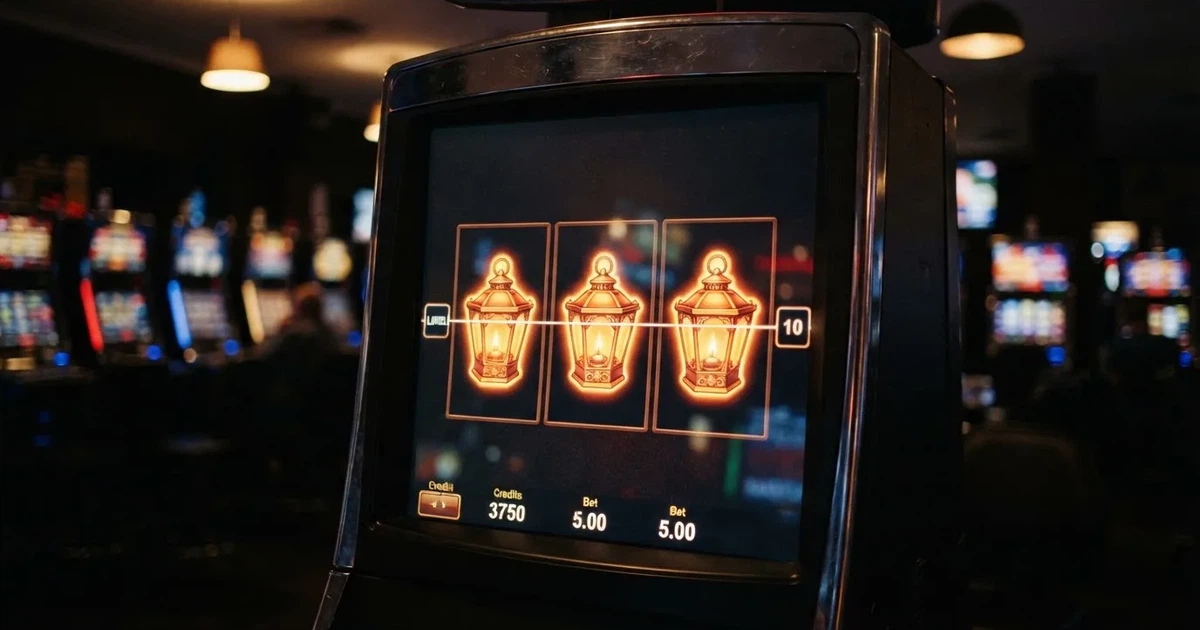
Best high-roller casino with bonus in Australia — what the offer is actually costing you
The short version of this page has to come first, because every operator comparison that follows leans on it. Online casino games — slots, table games, live dealer, the works — cannot lawfully be offered to anyone in Australia under the Interactive Gambling Act 2001. No state or territory licenses them. The Northern Territory Racing and Wagering Commission, which most people assume is the national gambling regulator, runs a meeting a month in Darwin with no full-time staff and oversees 52 online bookmakers (Sportsbet, Bet365, Ladbrokes among them) licensed in the Territory for tax reasons — bookmakers, not casinos. Anything reading “high roller casino” in Australia is reading a product the law has been quietly shutting down since 2017 and openly naming since 2023.

So when a search turns up a list of the “best high-roller casinos with bonus” for an Australian reader, the honest answer is that the list cannot exist as advertised. What this page does instead is walk through what the offer actually is, what it costs the player, what the Australian Communications and Media Authority has been doing to the brands that run it, and where the lawful alternatives — licensed pokies venues, land-based casinos, BetStop — actually sit.
Currency and compliance note: figures current as of 29 October 2026 and verified against the ACMA’s formal-warning register and the Reserve Bank and AUSTRAC public guidance.
Table of Contents
- How money moves at a high-roller casino — and where it stalls
- What a “high-roller bonus” really is
- Playing on a phone — what changes at the screen
- The games, the providers and the live tables
- The brands — a different kind of ranking
- The bigger picture — what the ACMA has actually done
- What the law actually says — and where the gaps are
- Responsible play — what actually works for an Australian reader
- Where a high-roller player actually plays in Australia
- What an Australian reader actually does with this
- FAQ
How money moves at a high-roller casino — and where it stalls
A high-roller offer is marketed by the size of the deposit it wants, not by the speed at which the winnings come back. That order matters, because the deposit leg in Australia has its own friction that most offshore marketing pages never mention.
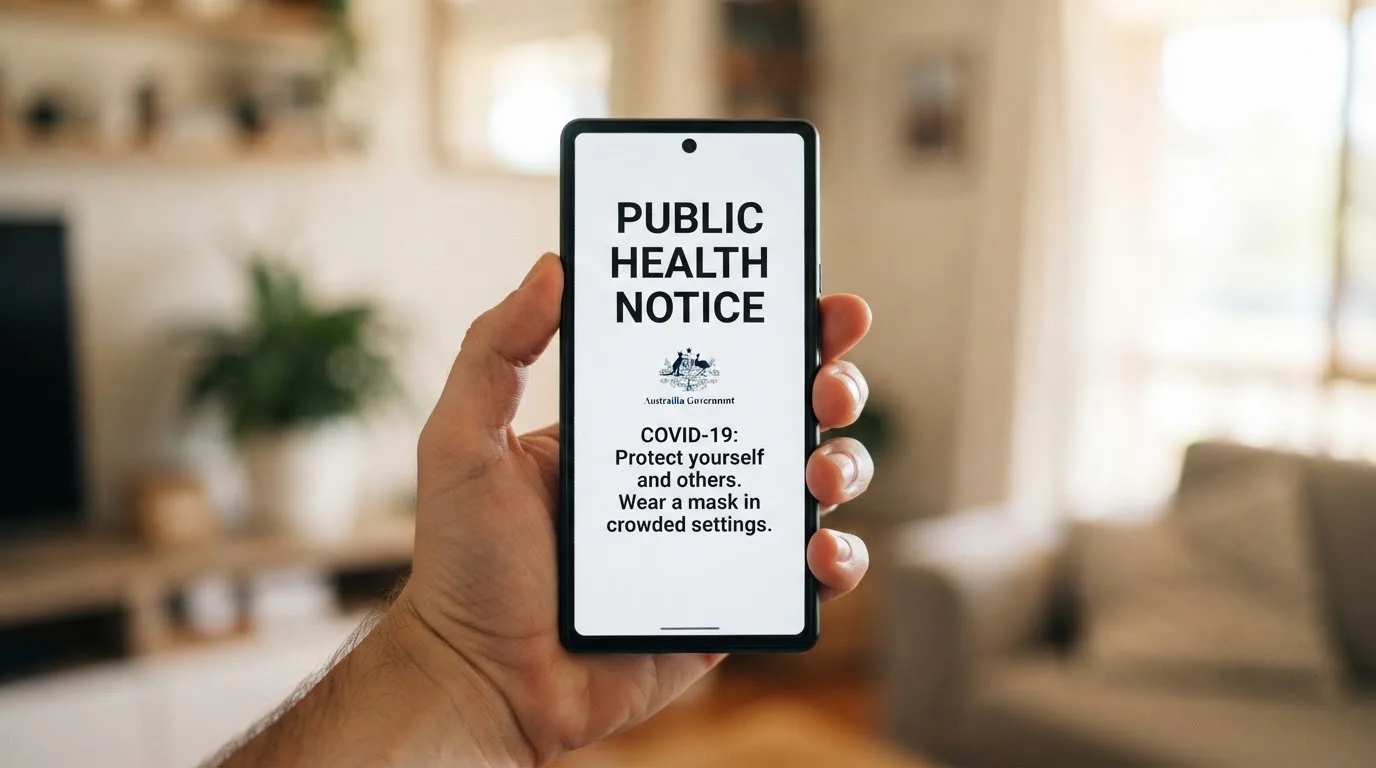
PayID, Osko and the New Payments Platform
PayID sits on top of Osko, which sits on top of the New Payments Platform — the real-time settlement layer that went live on 13 February 2018 and is owned by a non-profit company whose thirteen shareholders include the Reserve Bank of Australia and the four major banks. Transfers between participating banks arrive in under a minute, 24/7, addressed either to a BSB and account number or to a PayID. Over 100 Australian financial institutions offer PayID-based instant transfers, and more than 25 million PayID identifiers had been registered by April 2025. That is the rail an Australian deposit leg would run on, if the brand on the other end were a licensed Australian wagering service.
The PayID rail has a feature no offshore casino wants to talk about. When a customer pays to a PayID, the name of the account holder is shown before the transfer is sent. AP+, the operator of PayID, warns outright that being asked to transfer money to a PayID on an illegal gambling site almost certainly means a scam site. The mechanism is built so the player can read who is on the receiving end before they authorise the transfer. An Australian reader looking at a high-roller sign-up page and being asked to “deposit via PayID to start playing now” is being asked to send real-time, irrevocable, name-attributed bank transfers to an entity the ACMA has already warned, blocked or both.
Cards, wallets and the bank-side blocks
The banks have not waited for the law. Westpac’s gambling block works at card level and refuses authorisation on transactions registered under the merchant category code for betting and casino gambling, on eligible personal credit and debit cards. ANZ’s block, activated in the ANZ app, blocks gambling transactions made through a digital wallet such as Apple Pay on an eligible card — not just the physical card — though ANZ warns that not all gambling transactions will be blocked and some non-gambling transactions might be blocked in error. Commonwealth Bank lets customers apply a gambling lock to eligible cards via the CommBank app, with the same caveat that the bank cannot guarantee all gambling-related purchases will be stopped.

On top of those bank-level blocks sits a statutory one. Under the Interactive Gambling Act 2001 as amended in 2023, Australian-licensed online wagering services cannot accept payment by credit card or other credit-related products. The restriction was always going to constrain digital wallets too, because a credit-funded Apple Pay transaction is still a credit transaction. Apple Pay’s own product page is plain that Apple charges no consumer fee — any surcharge is the merchant’s card-processing cost, not Apple’s — and that transaction limits and PIN requirements are set by the card issuer or merchant, not by Apple. None of which changes the fact that, by the end of 2025, Apple Pay, Google Pay and Samsung Pay collectively accounted for around 45% of all card payments in Australia by number. The bank blocks are biting on the rail that almost half of Australian card spending now runs through.
The result is a payment landscape in which the high-roller casino’s “instant deposit” pitch is, for an Australian customer of the major banks, often not instant at all. The card declines. The wallet is blocked. The PayID goes through, and the customer has just paid an identifiable name on the ACMA’s warning list.
American Express, the outlier
American Express sits outside the surcharging framework the Reserve Bank proposed in its July 2025 review. That review proposes removing surcharges on eftpos, Mastercard and Visa transactions, and explicitly leaves American Express outside the proposed ban. American Express has been around since 1850, originally as a freight-forwarding company, and ran its first charge card from 1 October 1958; unlike the four-party Visa and Mastercard networks, Amex is a three-party scheme that issues cards and processes transactions itself. For an Australian reader, what that means in practice is that an Amex deposit is the most likely of the card rails to be accepted by a casino processor — and the least likely to be repriced by the RBA’s surcharge reform.
BPAY, AUSTRAC and the A$10,000 reporting threshold
BPAY has been running since 18 November 1997, is available in the online banking of over 140 banks and financial institutions, and is owned equally, via Cardlink Services Limited, by ANZ, Commonwealth Bank, National Australia Bank and Westpac. It is a bill-payment service: the payer enters the Biller Code and the Customer Reference Number printed on the bill. After the 2021 ACCC merger authorisation, BPAY Group, eftpos and NPP Australia now sit under Australian Payments Plus, the same parent that runs PayID and Osko.
AUSTRAC’s threshold-transaction-report rule requires reporting of transfers of A$10,000 or more — but only of physical cash. Ordinary electronic bank transfers are not subject to that per-transaction reporting requirement, regardless of amount. That is the rule an Australian high-roller would most plausibly hear about at the cashier, and it does not actually bite on a normal deposit. The deposit leg moves through PayID, Osko, BPAY or a card. The reporting threshold does not.
See also What a high cashback bonus really costs an Australian reader in 2026.
What a “high-roller bonus” really is
The bonus is the easiest part of the offer to read and the hardest part to read accurately. The headline figure is what the casino gives. The wagering multiple, the game-weighting table, the maximum cash-out and the time limit are what it costs.
The shape of the offer
A high-roller bonus is, almost without exception, a deposit match — the casino matches a percentage of a large deposit, often 50% or 100%, on deposits that start at figures well above the casual player’s comfort zone. The marketing sells the ceiling. The terms sell the floor. A 100% match up to A$5,000 sounds generous until the wagering requirement is read; a 40x multiple on the bonus means the player has to turn over A$200,000 before any of it is withdrawable, and a game-weighting table that counts slots at 100% but table games at 10% means the same turnover takes ten times as long at the tables.
A high-roller no-deposit bonus — the free-chip offer that asks for no deposit at all — is rarer, smaller, and carries the same kind of turnover requirement attached to a smaller base. The “no deposit” language refers to the deposit leg, not to the wagering leg. The player is still being asked to turn a number over many times before any winnings become cash.
What the wagering requirement actually costs
Take an offer that research describes in the abstract, because no offer terms in the research carry an Australian-licensed brand. A bonus of A$1,000 at a 35x wagering multiple on the bonus amount gives a required turnover of A$35,000. At a slot stake of A$1 per spin, that is 35,000 spins. At a 5-second interval between spins — the rough tempo of a real autoplay session — that is 175,000 seconds, or about 48.6 hours of continuous play. A 40x multiple pushes it to A$40,000, 40,000 spins, and roughly 55.6 hours.
The expected loss over that turnover is the wagering figure multiplied by the house edge. At a 96% return-to-player — a typical slot figure — the house edge is 4%. On A$35,000 of turnover that is an expected loss of A$1,400; on A$40,000 it is A$1,600. The bonus looks free; the maths is that the player is paying A$1,400 to A$1,600, in expectation, for the privilege of clearing A$1,000 of bonus money.
That is the offer in its cleanest form, with no max-cashout cap and no game-weighting trap. In practice the cap is usually there. A max-cashout rule that limits withdrawable winnings from a bonus to, say, 5x the bonus amount — a common shape — caps the player’s upside at A$5,000 on a A$1,000 bonus, regardless of what the slot did. The expected loss has not changed. The ceiling on what can be kept has.
The “free spins” subgenre
Free-spin offers are slot-bundled bonuses: the casino gives a number of spins at a fixed stake, the winnings are credited as bonus money, and the wagering requirement applies to the credited winnings rather than to the spin cost. A 50-free-spin offer at A$1 per spin on a 96% slot has a face value of A$50 in stakes and an expected return of A$48; the variance is high enough that most players will see something between A$20 and A$80 credited, and the wagering requirement is applied to whatever was credited. The free spins are not the gift. The credited money, turned over many times, is what is being given.
The high-roller variant multiplies the spin count, not the stake. A 200-free-spin offer at A$1 per spin is a 200x rerun of the same calculation, and the variance smooths out a little as the spin count rises. The expected loss, however, rises with it: at a 4% house edge on A$200 of stakes, the player is paying A$8 in expectation for the spin bundle alone, before the wagering requirement is even applied to the credited winnings.
Why these numbers are not on the marketing page
A high-roller offer is sold on the upside — match percentage, maximum bonus, number of free spins. The wagering multiple, the max-cashout cap, the game-weighting exclusions and the time limit are the terms, and they live a click or two below the headline. A player who treats the offer as a chance to win rather than a transaction to clear will pay the cost without ever naming it. The cost is real, and the offer page is built so that the reader does not see it first.
Playing on a phone — what changes at the screen
The “high-roller casino app” pitch is one of the more carefully worded ones in the category, because there is no such thing as a high-roller casino app on a legitimate Australian app store. Apple’s App Store and Google’s Play Store do not host real-money casino apps in Australia; the brands that market mobile play do so through the mobile browser, often dressed up with a “web app” install flow that lands on the same offshore URL the desktop browser reaches.
The wallet-versus-app distinction
On an Android device, an offshore casino can sometimes be loaded as an APK — an application package installed outside the Play Store. That is not the same thing as a published app, and the security review that a Play Store or App Store listing implies does not apply. On an iPhone, the path is the browser, plus a “Add to Home Screen” shortcut that puts the bookmark on the home grid and behaves like an app shell without ever being one. The cash, the deposit, the bonus, the wagering and the support contact all live on the offshore site that the icon opens.
What the phone does better
The phone’s contribution is speed, not legitimacy. A mobile browser loads a slot lobby in two taps, the PayID flow runs in the bank app next to it, and the deposit-and-play loop is shorter than the desktop equivalent. The screen’s geometry favours portrait slots, which is why most high-roller-flavoured mobile lobbies lean heavily on portrait-oriented titles. None of that changes the legal posture. The screen is small; the law is not.
What the phone does worse
Phone play is also where bank-side friction becomes most visible. The card-on-file flow that lets a desktop browser deposit in two clicks is harder to manage on a phone once a gambling block is on the card; the wallet flow runs through Apple Pay or Google Pay and inherits the bank block; and the PayID flow puts the receiving party’s name on screen before the transfer is confirmed. On a phone, the friction is in the same place the marketing claims to remove it.
The games, the providers and the live tables
A high-roller lobby, when one is loaded, leans on three things: high-stakes slots, high-limit table games and live dealer studios with VIP tables.
High-stakes slots
The “high roller slots” pitch is built around maximum-stake titles — slots where the per-spin ceiling is high enough that a single spin can cost A$50, A$100 or more. The actual RTP and the actual house edge do not change at high stakes; a 96% slot returns 96% whether the player bets A$1 or A$100 a spin. What changes is the variance per spin and the speed at which a bankroll is consumed at the top of the bet range. A player who bets A$100 a spin on a 96% slot has an expected loss of A$4 per spin, which is A$240 a minute at a 5-second interval and A$14,400 an hour. The slot does not know the player is a high roller; the spin cost is just higher.
Live dealer VIP tables
Live dealer studios run the standard blackjack, roulette and baccarat tables plus a smaller set of VIP or Salon Privé tables with higher minimums, higher maximums and a private room feel. The RTP is the same as the standard table. The minimum bet, the maximum bet, and the bet spread are the only meaningful differences. A high-roller VIP table at A$500 minimum and A$50,000 maximum is the same blackjack game as the A$5 minimum public table, with the same 0.5% house edge on a basic-strategy player, with a bigger variance envelope on either side.
Provider branding
The studios and game suppliers — Evolution, Pragmatic Play Live, Playtech Live and the rest — are licensed in their own jurisdictions, mostly Malta, the UK and Curaçao. Their Australian status is the same as the casino’s: none of them are licensed to provide real-money online casino games to anyone in Australia, because that licence does not exist. A live dealer studio’s branding on a casino page does not make the offering any more or less lawful in Australia. The site is still operating outside the Australian regime.
The brands — a different kind of ranking
The eleven brands that follow are not ranked. They are not recommended. They are the brands the Australian Communications and Media Authority has issued formal warnings to for offering prohibited online casino services to people in Australia. The fact that they appear here at all is the ACMA’s doing, not this page’s.
| Brand | ACMA action and date | Operator named by the ACMA | Subject support |
|---|---|---|---|
| RocketPlay | Formal warning — March 2026; earlier warning May 2022 | Pulsup Ltd; earlier Dama N.V. | Listings-only |
| Level Up Casino | Formal warning — May 2022 | Dama N.V. | Listings-only — Westpac.com.au |
| Woo Casino | Formal warning — March 2025 | Dama N.V. | — |
| Spirit Casino | Formal warning — May 2025 | Dama N.V. | — |
| National Casino | Formal warning — July 2025 | Consolutetish S.R.L. | Listings-only — acma.gov.au, austrac.gov.au, betstop.gov.au |
| Bizzo Casino | Formal warning — July 2025; earlier warning 2022 | Consolutetish S.R.L.; earlier TechSolutions | Listings-only |
| Ignition Casino | Formal warning — July 2025 | Bamboo Media | — |
| Instant Casino | Formal warning — February 2025 | EOD Code SRL | Listings-only — Ecopayz.com, Payid.com.au |
| Jackbit | Formal warning — April 2026 | Ryker B.V. | — |
| Casino Intense | Formal warning — April 2025 | Sterplay Holding Ltd | Listings-only — austrac.gov.au, betstop.gov.au |
| Sky Crown | Formal warning — September 2022 | Hollycorn N.V. | — |
Several of these warnings cluster around operators that run multiple brands — Dama N.V. alone has had warnings for RocketPlay (May 2022), Level Up Casino (May 2022), Woo Casino (March 2025) and Spirit Casino (May 2025). Consolutetish S.R.L. has been warned for both National Casino and Bizzo Casino, the latter of which had already been warned in 2022 under TechSolutions. The pattern matters more than any individual entry: the ACMA’s list of brands it has had to warn is, in several places, a list of subsidiaries under the same holding companies.
RocketPlay
RocketPlay has been warned twice. The May 2022 warning went to Dama N.V. and named six brands: Bambet, Dazard, Level Up, Rocketplay, Wild Tornado and Cobra Casinos. The March 2026 warning went to Pulsup Ltd over Rocketplay.com.au specifically. The brand is still listed by gambling-industry directories. The fact that an offshore industry directory lists a brand the ACMA has warned twice is, on its own, not a recommendation; it is a marker of how long the gap between the regulator’s view and the directory’s view stays open.
Level Up Casino
Level Up Casino was named in the May 2022 Dama N.V. warning, one of six brands covered by the same formal action. The brand’s listing on gambling-information pages continued afterwards. A brand that has been on the ACMA’s warning list for four years and is still being indexed by industry directories is not a “new” offering. It is an old one.
Woo Casino
Woo Casino was the subject of the March 2025 Dama N.V. warning. The brand is not covered by listings in the research. The research carried no subject support entries for it; the warning is the only documented fact. A reader who arrives at Woo Casino through a search for high-roller offers has been routed to a brand the ACMA warned less than a year ago.
Spirit Casino
Spirit Casino was the subject of the May 2025 Dama N.V. warning. Same operator history as Woo Casino — same Dama N.V. parent, same gap between warning and continued operation. The research carries no subject-support data for Spirit Casino. The warning stands alone in the record.
National Casino
National Casino was the subject of the July 2025 warning to Consolutetish S.R.L. The research carries subject-support listings on Australian regulator pages — acma.gov.au, austrac.gov.au and betstop.gov.au. That is what an Australian-context listing looks like: the brand appears because the regulator, the financial-intelligence agency and the self-exclusion register all have it on file. None of those listings is a recommendation; all three are reasons the brand has a documented Australian footprint.
Bizzo Casino
Bizzo Casino has been warned twice. The July 2025 warning to Consolutetish S.R.L. is the second; the 2022 warning went to TechSolutions (CY) Group Limited and TechSolutions Group N.V. That is two distinct corporate parents over three years, which is itself a story about how easily a brand moves between offshore licence holders. The research carries subject-support listings on Gamblinginsider.com. The brand has been warned, rewarned, and continues to operate under a new parent.
Ignition Casino
Ignition Casino was the subject of the July 2025 warning to Bamboo Media. The research carries no subject-support listings for it. The brand is named here because the ACMA has named it; the listings trail is empty because the marketing trail is thin.
Instant Casino
Instant Casino was the subject of the February 2025 warning to EOD Code SRL. The research carries subject-support listings on Ecopayz.com and Payid.com.au — one an e-wallet, one the PayID operator’s own page. A PayID operator listing for a brand the ACMA has warned is, again, the operator’s flag that the brand is on the wrong side of the rail, not a directory endorsement.
Jackbit
Jackbit was the subject of the April 2026 warning to Ryker B.V. The research carries no subject-support listings. Ryker B.V. was also warned in the same round over CasinOK — same operator, two brands.
Casino Intense
Casino Intense was the subject of the April 2025 warning to Sterplay Holding Ltd. The research carries subject-support listings on austrac.gov.au, betstop.gov.au and Gamblinginsider.com. Same Australian-context listing shape as National Casino.
Sky Crown
Sky Crown was the subject of the warning to Hollycorn N.V. over its Sky Crown and Blue Leo casino services, formal-warning PDF dated September 2022. The research carries no subject-support listings. The Hollycorn N.V. warning was an early one — the brand has been on the ACMA’s list for four years.
Best high-roller casino with bonus in Australia — More on this topic at casino payout.
The bigger picture — what the ACMA has actually done
Eleven brands on a warning list is a thin slice of a much larger enforcement picture.
The blocking tally, and how fast it has grown
According to the ACMA, as reported in June 2026, a total of 1,751 illegal gambling and affiliate marketing websites had been blocked since the first blocking request in November 2019. The first blocking request was made in November 2019; the count six and a half years later is 1,751. That is an average of roughly 269 sites blocked a year, or about 22 to 23 a month, over the period. The blocking pace is uneven — the count jumped sharply in 2020 and 2021 after the IGA amendments strengthened the regime, and has settled since — but the headline is that the ACMA’s enforcement machinery has been running for over six years, and the number of blocked sites is the running total.
In a single round reported on 26 June 2026, the ACMA asked Australian internet service providers to block 12 more sites: 7Signs, ChromaBet, Donbet, Duospin, Freshbet, Slots Gem, Jacks Club, Lucky Start, Pointsbetz, Spinrise, Vinyl Casino and Wildsino. The single-round count of 12 is small against the lifetime total of 1,751, but the lifetime total is itself a small slice of the brands the ACMA has identified — most of which never appear in a blocking round at all, because they redirect, rebrand, or move to a new domain before the round closes.
The market-shift evidence
H2 Gambling Capital’s 2025 report estimates that Australians lose about A$3.9 billion a year to illegal gambling sites, and that the share of gambling going through legal channels fell from 74% in 2021 to 64%. The headline is the A$3.9 billion figure; the trend is the legal-channel share. The legal share fell by ten percentage points in four years — 2021 to 2025 — which is faster than the ACMA’s enforcement programme can be credited for reversing. Offshore brands have been growing faster than the regulator has been blocking.
The NTRWC and the de facto regulator problem
The Northern Territory Racing and Wagering Commission regulates 52 of Australia’s online bookmakers — including Sportsbet, Bet365 and Ladbrokes — which are licensed in the Territory for tax reasons. The commission has no full-time staff and meets once a month in Darwin. The ABC’s April 2026 reporting on the NT bill to reform the de facto gambling regulator is the most direct public description of how thin the licensing layer actually is. Online wagering on races and sport is licensed in the Northern Territory. Online casino games are not licensed anywhere in Australia.
What the law actually says — and where the gaps are
The Interactive Gambling Act 2001, in plain language
The Interactive Gambling Act 2001, strengthened by the Interactive Gambling Amendment Act 2017, makes it an offence to provide online casino games, online pokies or in-play betting to a person in Australia. No state or territory issues a licence for any of those activities. The IGA targets the provider — the offshore operator — not the individual player. An Australian reader who opens an account at one of the eleven brands above is not committing an offence under the IGA; the operator is. But the reader is also outside the Australian consumer-protection regime entirely.
What the law does license is wagering on races and sport placed before the event, lotteries and keno. The minimum age, in every Australian jurisdiction, is 18.
What enforcement looks like from the player’s side
The ACMA investigates, issues formal warnings and directs internet service providers to block illegal sites. The blocking is at the DNS level — the site’s hostname does not resolve inside Australian ISPs — which is why an Australian reader with a default home internet connection finds the blocked site does not load, and a reader using a VPN finds it loads but with no Australian recourse if anything goes wrong. The site’s balance, if any, sits on the wrong side of the block. The Australian Payments Plus platform has its own role: the PayID rail is built to surface the receiving party’s name, and the AP+ page warns outright that paying to a PayID associated with an illegal gambling site is almost certainly a scam. The infrastructure of Australian payments is, at multiple layers, pointed in the same direction as the ACMA’s enforcement list.
Where the player has no protection
An offshore site gives no Australian consumer protection, no complaints body and no recourse if a withdrawal is refused. The Australian Competition and Consumer Commission does not have jurisdiction over an operator licensed in Curaçao. The Australian Financial Complaints Authority does not have jurisdiction over a casino’s payments processor. The state and territory gaming regulators do not have jurisdiction because there is no licence. The operator’s own complaint process is the only process, and the operator’s own anti-money-laundering team is the only team. That is what “outside the Australian regime” means in practice.
The 2026 reform — passed, not yet commenced
The Interactive Gambling Amendment (Gambling Reform) Bill 2026 passed Parliament on 19 August 2026; its advertising and inducement measures commence 1 January 2027. The law is on the books; the inducement provisions are not yet in force on a 2026 page. The bill tightens what is and is not allowed in marketing around prohibited services; the gap between passage and commencement is six months.
Responsible play — what actually works for an Australian reader
BetStop and the National Self-Exclusion Register
BetStop, the National Self-Exclusion Register, has been live since August 2023. The register binds Australian-licensed online and phone wagering services — which, in practice, means the 52 NTRWC bookmakers, the lotteries and keno operators, and the licensed racing and sports wagering services. A person who registers with BetStop is excluded, for a chosen period, from those services.
BetStop does not bind an offshore casino. The register was built to exclude people from licensed Australian wagering services, and it works because those services check the register. An offshore casino is not connected to the register and has no way to check it; a self-excluded Australian who opens an offshore account has not been excluded from it. That is the gap between “self-exclusion” as the Australian system implements it and “self-exclusion” as marketing language tends to describe it.
The National Gambling Helpline
The National Gambling Helpline, 1800 858 858, is free, 24/7, with chat available at Gambling Help Online. The helpline is staffed by counsellors, not by the casino industry; the service is funded through the Australian Government’s arrangements with the state and territory health departments. For a reader who is reading this page because the search led here, the helpline is the single most useful contact on it.
Bank-side tools as a backstop
The bank-side gambling blocks described above — Westpac’s card-level merchant category block, ANZ’s app-activated block on cards and linked digital wallets, Commonwealth Bank’s gambling lock — are not BetStop and not a substitute for BetStop. They are friction at the deposit leg. A player who turns them on is choosing to make every future gambling deposit a deliberate act, which is the right shape for a backstop and the wrong shape for a self-exclusion. A 48-hour waiting period applies to ANZ before the block can be removed, which gives the friction some stickiness; the banks warn, in different words, that the blocks are not perfect and that some non-gambling transactions might be blocked in error. A bank block is a useful guardrail and not a treatment.
Tax and what it does and does not say
Gambling winnings of a recreational player are not assessable income under section 6-5 of the ITAA 1997, and losses are not deductible. The rule has two halves and both matter: a recreational win is not taxed, and a recreational loss does not reduce other taxable income. The exception — the only exception in ordinary language — is a person who carries on a business of gambling, which is a different fact pattern and a different conversation with the ATO. For a player who reads this page because of the high-roller angle, the rule means the bonus and the win and the loss are all between the player and the operator; the ATO is not in the loop.
Where a high-roller player actually plays in Australia
The lawful alternatives to the brands above are not online. They are the licensed pokies venues (clubs, hotels, casinos) in each state and territory, the land-based casinos themselves (Crown Melbourne, The Star Sydney, The Star Gold Coast, Crown Perth and the smaller venues), and — for the wagering side — the 52 NTRWC bookmakers and the state and territory TABs. High-roller tables exist at the major casinos; the limits and the Salon Privé rooms are well-documented in each venue’s own marketing. None of this is “online”, and none of it carries the offshore bonus offer.
That is the offering the IGA leaves open: a regulated floor, a known operator, a known complaints body and a known regulator. The high-roller bonus, in the form the marketing sells it, is not part of it.
What an Australian reader actually does with this
If a search has led an Australian reader to this page, three pieces of information sit on top of everything else.
The first is that the brands named above are not a shortlist. They are the ACMA’s warning list, and the ACMA has warned them for a reason. The fact that the brand is still listed by gambling-information directories does not change the regulator’s view. The directory and the regulator do not agree, and the reader has to choose which side to be on.
The second is that the payment rails an Australian reader would use — PayID, a bank card, Apple Pay, Google Pay — are not neutral. The PayID rail is built to show the receiving party’s name; the bank cards are blocked by merchant category at three of the four major banks; the wallet flows inherit the card’s block; the credit card ban under the IGA has been in force since 11 June 2024 with penalties up to $247,500 for operators. A reader who tries to deposit will, depending on the bank, either be declined outright or be shown a name before the transfer is authorised. The rail is pointed the right way.
The third is that the lawful path exists. BetStop for self-exclusion, the National Gambling Helpline at 1800 858 858 for support, the licensed venues for the gameplay itself. None of these is “the bonus” the search was looking for. The bonus is, in the honest reading of what it is, the most expensive way to play.
FAQ
What deposit level typically qualifies a player as a high roller at a casino?
There is no industry-wide threshold; the qualifier varies by operator and game. In practice a “high roller” is a player the casino’s VIP team identifies as someone wagering meaningfully more than the median — deposits in the low thousands per session and stakes per spin or per hand well above casual levels. A bonus aimed at that tier scales the match ceiling upward, but the qualifying deposit is set by the operator’s own segmentation, not by a published number.
Do high-roller bonuses usually come with higher wagering requirements?
Yes — the higher the match ceiling, the steeper the terms tend to be. Wagering requirements on high-roller offers commonly run from 35x to 50x the bonus, with game-weighting tables that count slots fully and table games at a fraction. A larger bonus ceiling multiplies both the upside and the turnover required to clear it, so the player’s expected loss on the bonus scales roughly with the bonus size.
Is it legal for an online casino to offer high-roller bonuses to Australians?
No. The Interactive Gambling Act 2001 prohibits offering online casino games to anyone in Australia, and no state or territory issues a licence for them. The operator is the target of the law, not the individual player, but the offer itself is unlawful and the brand is operating outside the Australian regime. Any licence the site displays is issued by a foreign regulator and has no Australian effect.
Can high-roller status be reached through a PayID deposit?
A PayID deposit moves the money but does not confer any status. PayID is a payment rail — it identifies the receiving party before the transfer is sent, which is exactly why AP+ warns that paying to a PayID associated with an illegal gambling site is almost certainly a scam. The rail does not decide who is and is not a high roller; the operator’s own VIP team does, on the operator’s own criteria.
Are high-roller tables or limits offered at licensed Australian land-based casinos?
Yes. The major Australian land-based casinos — Crown Melbourne, The Star Sydney, The Star Gold Coast and Crown Perth — run VIP and Salon Privé tables with higher minimums, higher maximums and a private-room environment. Limits are set by each venue and are documented in the venue’s own marketing. This is the lawful high-roller setting in Australia: a regulated floor, a known operator and a known regulator, not an offshore site.
What should a high-spending player check before trusting a casino site?
The first check is whether the operator is licensed in any Australian jurisdiction at all. Online casino games cannot be licensed in Australia, so the honest answer is “no” for any offshore brand. Beyond that, a player should read the bonus terms in full — the wagering multiple, the game-weighting table, the max-cashout cap and the time limit — and should expect bank-side friction, including card blocks and the PayID name check, to apply at the deposit leg.