


Big Jackpot Slots in Australia: Why the Shortlist Doesn’t Exist
A reader who lands on this page is, most likely, looking for a working list of online casinos where the progressive jackpots run into the millions. The honest answer is that no such list exists for Australia, and the reason is not editorial caution. The Interactive Gambling Act 2001 prohibits offering online casino games to anyone in Australia, no state or territory licenses it, and the Australian Communications and Media Authority has spent the past several years issuing formal warnings and directing internet service providers to block the offshore sites that keep trying to serve Australian customers anyway.
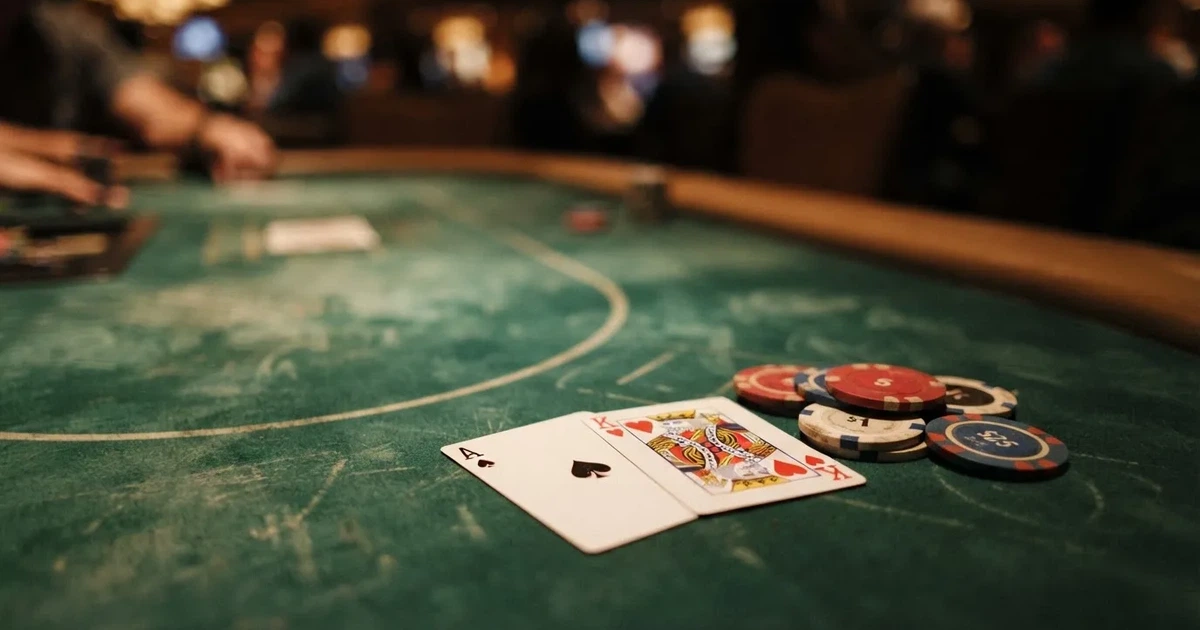
This page works through that gap rather than around it. It covers the mechanics of big jackpot slots, the catalogue of titles the offshore market pushes hardest, and the legal frame that makes those titles unavailable to Australians through any licensed channel. It also documents what the ACMA has actually done, naming the brands and the operators behind them, because the page that does not show the enforcement record leaves a reader thinking they are choosing between offers when they are actually choosing between a lawful product and a prohibited one. Currency data current as of 30 October 2026, cross-checked against the ACMA’s published formal warning register.
Table of Contents
How Progressive Jackpots Actually Work
A progressive jackpot is a prize pool that grows with every wager placed on the game, funded from a portion of the casino’s margin rather than from a fixed prize schedule. Each losing bet adds a small increment; the pool climbs until someone wins it, then resets to a predetermined minimum and begins accumulating again. That is the whole mechanism, and it is older than the internet: progressive slots were first installed in large casinos in 1986, and the inaugural Megabucks jackpot, built by International Game Technology, paid out $4,988,842.17 on 1 February 1987.

Two design choices shape how a progressive behaves. The first is scope. Machines can be linked locally within a single venue, so the pool grows at the pace of that venue’s play, or across a wide-area network spanning many venues and operators, so the pool grows at the pace of an entire network. Wide-area progressives are the ones that reach eight figures; the €19.4 million Mega Moolah win in 2021 is a wide-area jackpot, fed by every Microgaming (now Games Global) casino connected to the network.
The second design choice is the trigger. A classic progressive requires a specific combination of reel symbols, usually on a max-coin wager, which is why the paytable lists the qualifying bet. A “must-hit-by” progressive works differently. A random number generator sets the exact payout amount within a preset range, such as $1,000 to $3,000, the moment the previous jackpot is won, and the game is required to award that amount before the pool passes the upper bound. Winning one does not depend on landing symbols; it depends on the pool crossing its threshold.
The mathematics are not in the player’s favour on the routine spins. Every dollar that goes into the progressive is a dollar that does not return through the base game’s paytable, so the effective return on a non-jackpot spin is lower than on a non-progressive slot of the same denomination. That is why progressive slots typically pay out less often between big wins: the small wins are smaller, and more of each wager is being siphoned into the pool. The trade is real, and the only way it reverses is when the pool climbs high enough that the theoretical return crosses 100%. That break-even point exists in some progressive video poker and Caribbean Stud variants, but it is genuinely difficult to calculate for slot machines because reel layouts are not published.
Paytables, Max Bets and Why the Qualifying Wager Matters
Every progressive slot ships with a paytable that states the jackpot-trigger combination and the wager required to qualify for it. On most Megabucks-style games, the trigger requires a max-coin bet, which is why the published RTP for the game is split into two figures: one for wagers that qualify for the progressive, one for wagers that do not. Playing below the qualifying wager is not a cheaper way to chase the same prize. It is a different game, paying out of a smaller pool, with no chance at the headline number. This is the single mechanical detail that decides whether a player is actually in the progressive or just spinning a slot with a banner on it.
The Catalogue the Offshore Market Pushes Hardest
The brands the ACMA has named in its formal warnings carry substantially the same catalogue: the Mega Moolah series, a long tail of Games Global and Microgaming-derived titles, BGaming pokies, and the broader aggregator feeds from providers like Pragmatic Play, Evolution and the live-dealer studios. A reader who has spent time on these sites will recognise the lobby structure, and a reader who hasn’t will find it repeated across every brand in the warnings register.
Mega Moolah itself is the spine. The record win on the network stands at €19,430,723.60, won on 27 April 2021 by a player in Belgium at Napoleon Sports & Casino on “Absolootly Mad: Mega Moolah.” Games Global, the business formerly known as Microgaming, now distributes the series and has announced later Mega Moolah wins of £11.5 million and £13.5 million. That is the lineage the offshore market borrows when it sells the dream: a real jackpot, a real winner, and a network still paying out eight-figure prizes. The fact that the network is reachable from Australia only through unlicensed operators is the part that does not appear in the marketing.
The supporting cast runs wider. BGaming distributes a portfolio that appears across multiple ACMA-named brands. Live-dealer tables from Evolution and its competitors sit beside the slots lobby. Side games like blackjack and baccarat carry their own house edges, and the published figures are tight enough to be worth quoting: blackjack under liberal Las Vegas Strip rules has a house edge of about 0.28%, Atlantic City rules about 0.43%. Baccarat’s house edge is 1.06% on the Banker bet, 1.24% on the Player bet, 14.36% on the Tie. Those figures are not progressive-jackpot material, but they show what the rest of the catalogue returns, and they are the return a player is actually collecting on most spins.
Blackjack, Baccarat and the Table-Game Floor That Travels With the Slots
Blackjack and baccarat both appear in the lobbies of every brand in the ACMA’s warnings register. The rule sets on offer offshore are typically the liberal variants: Spanish 21, played without 10s but with player-favourable rules; Double Exposure, where both dealer cards are dealt face-up; Blackjack Switch, where the player can swap cards between two hands; Super Fun 21, which allows up to four splits. Punto banco, the baccarat variant most played today, was developed in Havana during the 1940s and is the version almost every offshore lobby offers.
In Australia, those games exist at land-based venues under regulator-approved rule sets. Under section 66 of the NSW Casino Control Act 1992, a casino operator must not permit a game such as baccarat to be played unless the game and its rules are approved by the regulator, and the operator must make a copy of the approved rules available to patrons on request. Victoria’s Casino Control Act 1991 requires the Victorian Gambling and Casino Control Commission to approve any rules for table games, including blackjack, and any change to those rules, before they are introduced at the Melbourne casino. The VGCCC’s public log of approved changes to Crown Melbourne’s blackjack variants includes renaming the “Perfect Pairs” side bet to “Crown Pairs” in December 2024 and introducing a “Free Bet” option with a new “Pot of Gold” side bet in March 2024. Crown Melbourne offers three baccarat variants — Traditional Baccarat, Crown Baccarat and 2 to 1 Baccarat — as approved table games.
The point of running through the rule sets is not to compare the offshore and onshore products. It is to show that the games themselves are not the problem. The problem is the channel. A blackjack hand at Crown Melbourne is a regulator-approved game played under approved rules; a blackjack hand at an offshore site serving Australia is a game offered by an operator the ACMA has warned, in a jurisdiction where no licence for the product exists.
The Australian Legal Frame
The Interactive Gambling Act 2001, strengthened by the Interactive Gambling Amendment Act 2017, makes it an offence to provide online casino games, online pokies or in-play betting to a person in Australia. No state or territory licenses those products. What is licensable is wagering on races and sport placed before the event, lotteries and keno. The Northern Territory Racing and Wagering Commission regulates 52 of Australia’s online bookmakers — including Sportsbet, Bet365 and Ladbrokes — which are licensed in the Territory for tax reasons; the commission has no full-time staff and meets once a month in Darwin.
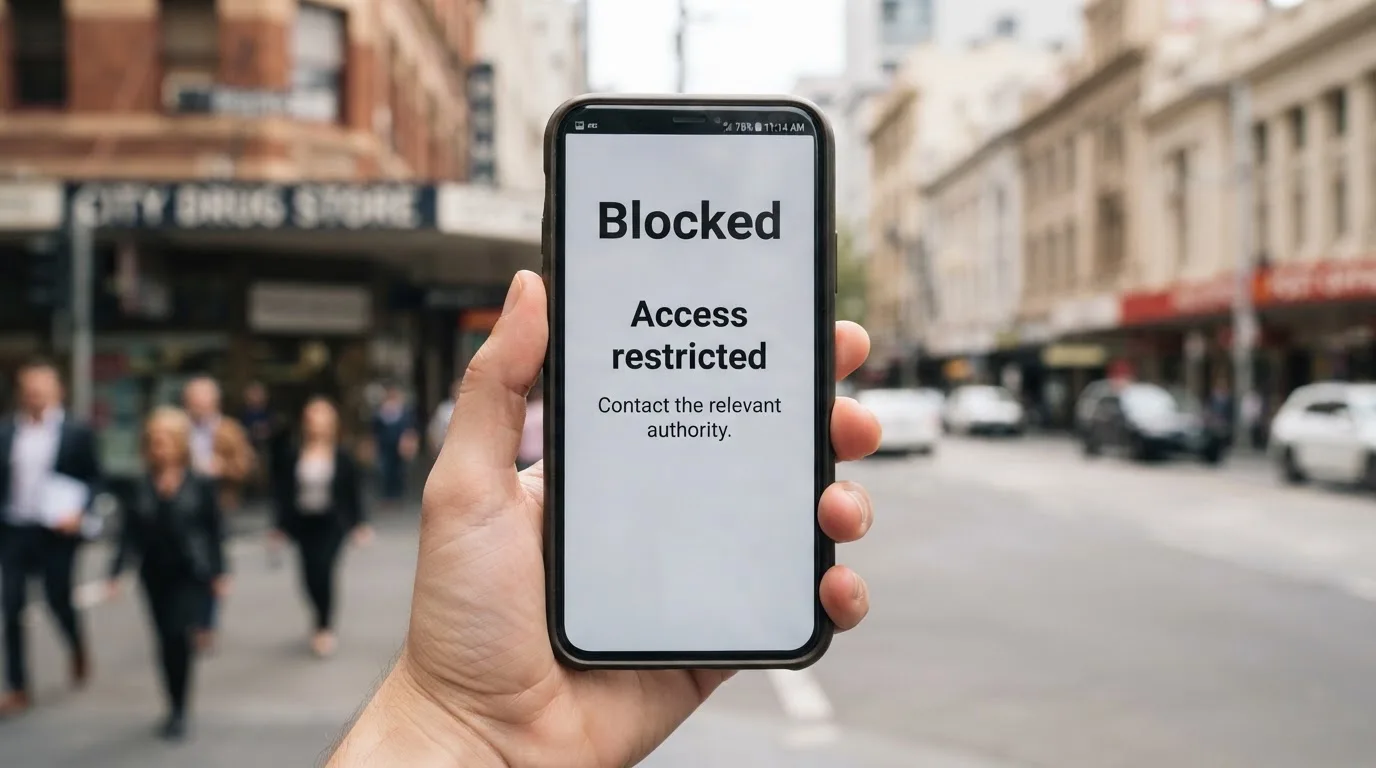
Minimum age is 18. The IGA targets the provider, not the individual player; Australians are not prosecuted for playing on offshore sites. What an offshore site does not provide is the rest of the legal frame. There is no Australian consumer protection, no complaints body, no recourse if a withdrawal is refused, and the site can be blocked by the ACMA with a balance still sitting on it.
The Payment Side
Credit cards, credit-related products and digital currency are banned as payment for licensed online wagering since 11 June 2024, with penalties of up to $247,500 for operators. The legal deposit routes for licensed wagering are debit card, bank transfer, PayID/Osko and BPAY. A site asking an Australian for a credit card or a crypto deposit is operating outside the Australian rules. That detail matters more than it sounds, because the offshore market leans hard on crypto deposits as a workaround for Australian payment blocks, and the workaround itself is a marker that the operator is not running to Australian standards.
The Interactive Gambling Amendment (Gambling Reform) Bill 2026 passed Parliament on 19 August 2026; its advertising and inducement measures commence 1 January 2027. That is a law with a start date, not yet in force on a 2026 page, and the page is careful to flag it as such.
What the ACMA Has Actually Done
The ACMA’s enforcement record is the part of the page a reader can act on, because the formal warnings are public and the blocking requests are public, and both name operators.
As of the round reported on 26 June 2026, a total of 1,751 illegal gambling and affiliate marketing websites had been blocked since the first blocking request in November 2019, and more than 230 unlicensed gambling services had left the Australian market since enforcement was strengthened in 2017. In that same June 2026 round, the ACMA asked Australian internet service providers to block 12 more illegal gambling websites: 7Signs, ChromaBet, Donbet, Duospin, Freshbet, Slots Gem, Jacks Club, Lucky Start, Pointsbetz, Spinrise, Vinyl Casino and Wildsino.
The blocking rate is a key metric for understanding the scope of enforcement. The first blocking request went out in November 2019. The running total reached 1,751 blocked sites by the June 2026 round, which gives a band of roughly 260 to 290 sites blocked per year over the period, with the rate accelerating in the most recent rounds as the ACMA has moved from one-off actions to multi-site batches. The point is not the precise figure — the ACMA’s published totals are cumulative and the early rounds ran at a different pace — but the shape: a prohibition enforced at scale, against an industry that keeps replacing the blocked sites with new domains.
Estimated Losses to Illegal Sites
H2 Gambling Capital’s 2025 report estimates that Australians lose about A$3.9 billion a year to illegal gambling sites, and that the share of gambling going through legal channels fell from 74% in 2021 to 64%. The drop in legal-channel share is the part that policy makers watch: it suggests that the prohibition is not stopping play, it is pushing it offshore, and the player-protection regime that comes with a domestic licence does not travel with the player.
The Brands the ACMA Has Named
The brands below are not a ranking and not a recommendation. Each is listed because the ACMA itself issued a formal warning over it for offering prohibited services to Australians. No bonus terms are given, because the only sources for them were affiliate marketing pages, and a bonus described from an affiliate page is a bonus whose terms the affiliate has an interest in shaping. The relevant fact is the warning, the operator behind it, and the date.
| Brand | ACMA action and date | Operator named by the ACMA | Subject support |
|---|---|---|---|
| RocketPlay | Formal warning, March 2026; earlier warning May 2022 | Pulsup Ltd; earlier Dama N.V. | — |
| Level Up Casino | Formal warning, May 2022 | Dama N.V. | Listed by BGaming among BGaming-powered brands |
| Woo Casino | Formal warning, March 2025 | Dama N.V. | — |
| Spirit Casino | Formal warning, May 2025 | Dama N.V. | — |
| National Casino | Formal warning, July 2025 | Consolutetish S.R.L. | Listed on the Wikipedia Mega Moolah winners page |
| Bizzo Casino | Formal warning, July 2025; earlier warning 2022 | Consolutetish S.R.L.; earlier TechSolutions | — |
| Ignition Casino | Formal warning, July 2025 | Bamboo Media | — |
| Instant Casino | Formal warning, February 2025 | EOD Code SRL | — |
| Jackbit | Formal warning, April 2026 | Ryker B.V. | — |
| Casino Intense | Formal warning, April 2025 | Sterplay Holding Ltd | Listed in coverage of ACMA actions and at Crown Melbourne’s responsible-gaming references |
| Sky Crown | Formal warning, September 2022 | Hollycorn N.V. | — |
Each row above is a brand the ACMA has named, an operator the ACMA has named behind it, and the date the warning was published. The dashes in the fourth column do not mean the ACMA cleared the brand on the merits; they mean no data was available for this page on whether the brand’s catalogue explicitly covers the subject.
A reader scanning this table can see the pattern in two looks. Eight of the eleven warnings sit on a handful of operators: Dama N.V. accounts for four warnings across four different brand names, Consolutetish S.R.L. accounts for two, and the rest sit on a long tail of single-brand operators. That is what a prohibited-product industry looks like under enforcement: the operator changes its name, the warnings follow.
RocketPlay
The ACMA issued a formal warning to Pulsup Ltd over RocketPlay in March 2026, and an earlier warning to Dama N.V. over the same brand in May 2022. Two warnings, four years apart, against the same consumer-facing brand, trace the lifecycle the offshore industry runs when enforcement catches up: the operator changes, the brand stays, and the player sees the same lobby they saw before. Online casino games cannot be licensed anywhere in Australia, whatever licence the site displays, and RocketPlay is on the ACMA’s register.
Level Up Casino
Level Up Casino was the subject of a Dama N.V. formal warning in May 2022. The brand surfaces in BGaming’s listings of operators running its games, which is consistent with the catalogue a Dama N.V. property typically carries. There is no Australian licence to point to, and the warning is the relevant public fact.
Woo Casino
The ACMA warned Dama N.V. over Woo Casino in March 2025. The brand is one of four Dama N.V. properties named across the warning register, and the pattern is the same: no Australian licence exists, and the ACMA has formally recorded that Woo Casino has been offered to Australians.
Spirit Casino
The ACMA warned Dama N.V. over Spirit Casino in May 2025. Two months after the Woo Casino warning, same operator, different brand. This is the operational reality the table above compresses: the offshore market runs many brands through one operator, and the warnings tend to follow the operator.
National Casino
National Casino was the subject of a Consolutetish S.R.L. formal warning in July 2025. The brand appears on the Wikipedia Mega Moolah winners page, which is a catalogue-side data point and not an endorsement. There is no Australian channel for the product.
Bizzo Casino
Bizzo Casino carries two warnings: a 2022 warning to TechSolutions (CY) Group Limited and TechSolutions Group N.V., and a 2025 warning to Consolutetish S.R.L. A repeat warning, three years apart, against an operator that changed its corporate name in between, is one of the clearest signals in the register that the brand has continued to operate against Australians across the intervening period.
Ignition Casino
The ACMA warned Bamboo Media over Ignition Casino in July 2025. Ignition has been a long-running brand in the offshore market, and the warning places it on the Australian register for the first time on this page’s record.
Instant Casino
The ACMA warned EOD Code SRL over Instant Casino in February 2025. The brand’s name is the marketing pitch — “instant” deposits, “instant” play — and the ACMA’s warning places it on the register of operators serving Australians without a licence.
Jackbit
The ACMA warned Ryker B.V. over Jackbit and CasinOK in April 2026. Jackbit is one of the brands the offshore market has positioned around crypto deposits, which is a marker that the site is operating outside the Australian payments frame as well as outside the licensing frame.
Casino Intense
The ACMA warned Sterplay Holding Ltd over Casino Intense in April 2025. The brand surfaces in coverage of ACMA actions and at Crown Melbourne’s responsible-gaming references, which is consistent with a site the regulator has named without offering a lawful Australian channel.
Sky Crown
The ACMA warned Hollycorn N.V. over Sky Crown and Blue Leo in September 2022. Sky Crown is the older warning in the table, and it shows what a brand looks like when the warning is older than the enforcement cycle around it: still operating under the same consumer-facing name, still offshore, still without an Australian licence.
Player Protection Tools That Do and Do Not Travel
The Australian player-protection regime is built around three pieces: BetStop, the National Gambling Helpline, and Gambling Help Online. BetStop, the National Self-Exclusion Register, has been live since August 2023 and binds Australian-licensed online and phone wagering services. The phrase that does the work here is “Australian-licensed.” An offshore casino is not connected to BetStop, and a self-exclusion lodged with an Australian bookmaker does not extend to an offshore casino. The exclusion lives where the licence lives.
The National Gambling Helpline is 1800 858 858, free, 24/7, with chat at Gambling Help Online. The Helpline is the part of the regime that does travel: it is reachable from anywhere in Australia, regardless of which site a person has been playing on. The Helpline does not care whether the offshore casino’s withdrawal was honoured.
The practical gap is the one a player falls into when they realise the exclusion they set up at a licensed bookmaker does not cover the offshore site they were also using. The offshore site has no obligation to honour an Australian self-exclusion, has no complaints body a player can escalate to, and is exactly the operator the ACMA has been warning.
What a Reader in Australia Can Actually Do
The lawful options for someone in Australia who wants to play casino-style games or chase a jackpot are limited, and they are limited by statute rather than by what is available offshore. They are: licensed land-based casinos (Crown Melbourne in Victoria, The Star in Sydney, The Star Gold Coast in Queensland, Crown Perth in Western Australia, SkyCity Adelaide in South Australia, and the SkyCity property in Darwin), licensed clubs and hotels with pokies, and licensed online wagering on races and sport before the event.
For a reader whose interest is specifically in the progressive-jackpot experience, the land-based casino is the only Australian channel that offers it. Crown Melbourne, The Star Sydney, and the other venues carry progressive slots on their floors, with the same Megabucks-style mechanics the offshore market sells, under regulator-approved rule sets. The progressive pools at a single venue are smaller than the wide-area networks the offshore market plugs into, because fewer machines are feeding them, but the games are licensed, the payouts are regulated, and a complaint has somewhere to go.
For a reader whose interest is in restricting their own play, BetStop is the binding tool. For a reader whose interest is in the smaller-stakes pokie experience, licensed clubs and hotels are the channel. The offshore shortlist the reader came to this page looking for does not exist in Australia, and the rest of this page is the record of why.
Frequently Asked Questions
Which single online slot holds the record for the largest jackpot win?
The record online slot jackpot stands at €19,430,723.60, won on 27 April 2021 by a player in Belgium at Napoleon Sports & Casino on Microgaming’s “Absolootly Mad: Mega Moolah.” Games Global, the successor to Microgaming, has since announced later Mega Moolah wins of £11.5 million and £13.5 million, but the 2021 prize remains the largest on record.
Can a jackpot slot be funded with a cryptocurrency deposit?
Offshore operators that offer progressive jackpot slots commonly accept crypto deposits, and several of the brands the ACMA has warned (including Jackbit) market themselves around that channel. Under Australian law, digital currency has been banned as a payment method for licensed online wagering since 11 June 2024, so a site asking an Australian for a crypto deposit is operating outside the Australian payments frame as well as outside the licensing frame.
Is it legal for an online casino to offer jackpot slots to Australians?
No. The Interactive Gambling Act 2001, strengthened by the Interactive Gambling Amendment Act 2017, prohibits offering online casino games and online pokies to anyone in Australia, and no state or territory licenses those products. The IGA targets the provider rather than the individual player, but an offshore site gives no Australian consumer protection, no complaints body, and no recourse if a withdrawal is refused, and the ACMA can direct Australian ISPs to block it with a balance still on it.
Why do jackpot slots typically pay out less often between big wins?
A portion of every wager goes into the progressive pool rather than returning through the base game’s paytable, which makes the routine return on a non-jackpot spin lower than on a non-progressive slot of the same denomination. That is why the small wins are smaller and the game pays out less often between big wins; the trade reverses only when the pool climbs high enough that the theoretical return crosses 100%, a break-even point that is genuinely difficult to calculate for slot machines because reel layouts are not published.
What happened to the record jackpot won on Mega Moolah in 2021?
The €19,430,723.60 jackpot was won on 27 April 2021 by a player in Belgium playing “Absolootly Mad: Mega Moolah” at Napoleon Sports & Casino, a licensed Belgian operator. The Mega Moolah progressive network, now distributed by Games Global after Microgaming’s exit, has continued to award eight-figure prizes, including £11.5 million and £13.5 million, but the Belgian win remains the largest on record. None of this matters to a reader in Australia, because the network is reachable from Australia only through unlicensed operators the ACMA has been warning and blocking since 2019.