


The new-pokies shortlist an Australian reader can actually use
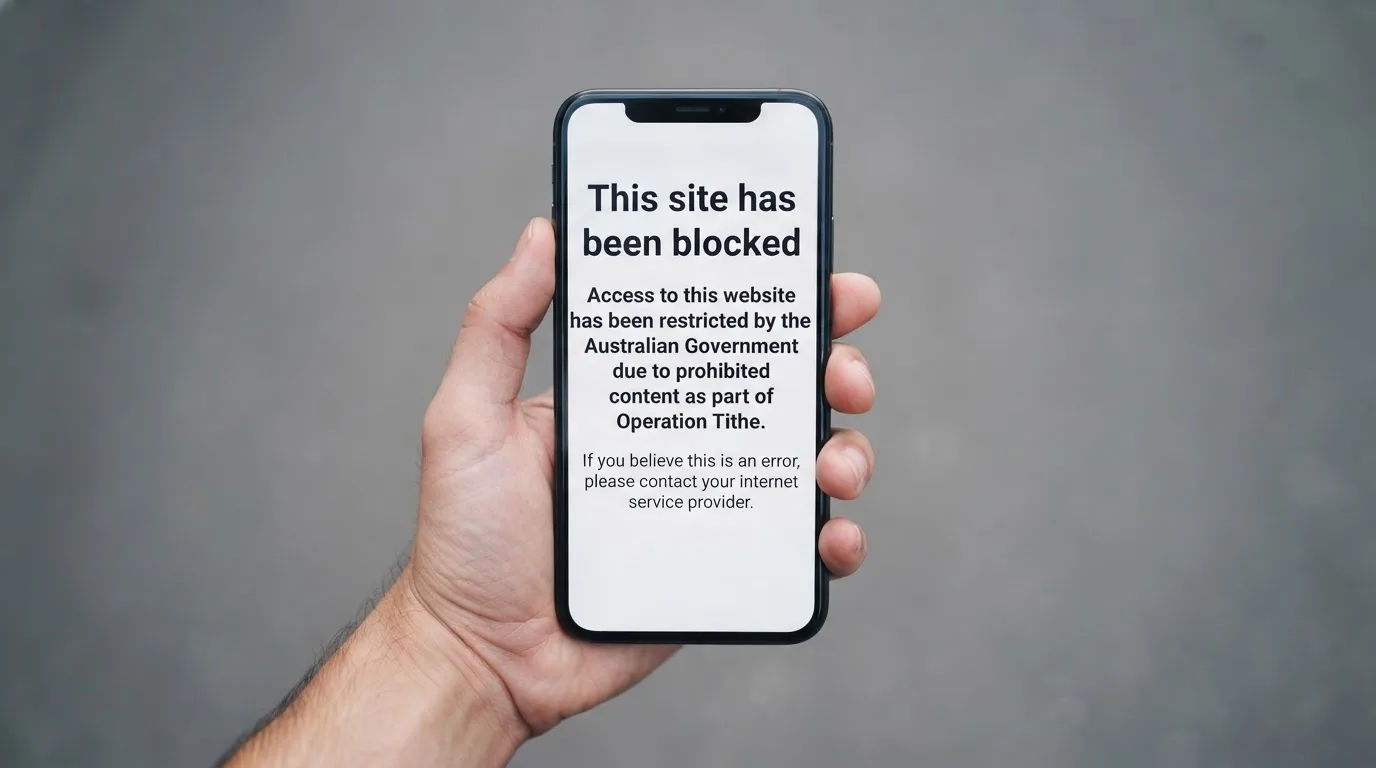
A reader who searches for “best new online pokies” is usually after three things at once: a recent title they have not seen before, a fast way to put money in and take it out, and a casino that is going to still be around next week. For an Australian reader, all three of those wants run straight into the Interactive Gambling Act 2001. No Australian state or territory issues a licence for online casino games or online pokies. The Australian Communications and Media Authority enforces that line, and as of the round reported on 26 June 2026 it has asked Australian internet service providers to block 1,751 illegal gambling and affiliate marketing websites in total, with 12 more sites named in that single round: 7Signs, ChromaBet, Donbet, Duospin, Freshbet, Slots Gem, Jacks Club, Lucky Start, Pointsbetz, Spinrise, Vinyl Casino and Wildsino. More than 230 unlicensed services have left the Australian market since the regime was tightened in 2017. That is not the back story for a recommendation — it is the subject of this page, and the reason no honest shortlist of “best new online pokies” for an Australian reader exists to be given.
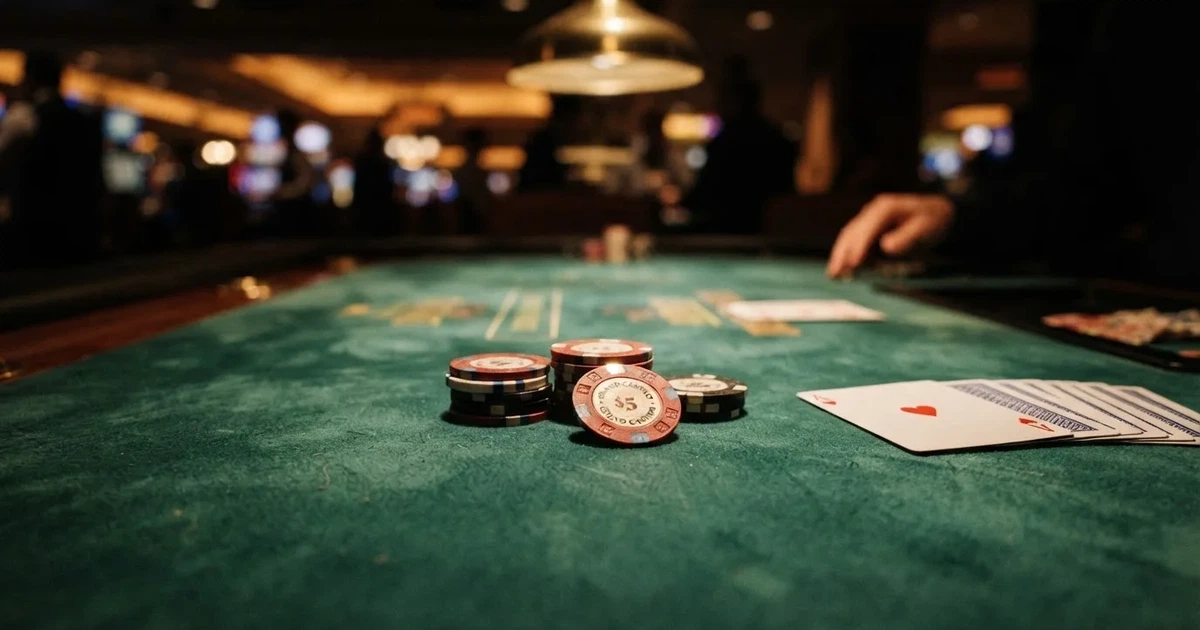
Currency snapshot: data current as of 1 November 2026, verified against the ACMA’s published formal-warning register and the blocking-round figures the regulator has confirmed.
Table of Contents
- What “new online pokies” really means for the reader
- Paying in and cashing out: the PayID question
- How new titles reach an Australian player
- The eleven brands the ACMA has named
- The shape of the ACMA’s enforcement record
- What the law actually says
- What the licensed Australian pokie market actually looks like
- Why Australia carries the share it does
- Where BetStop fits
- Tax and winnings
- The arithmetic behind “how often” the ACMA blocks
- What an Australian reader is actually choosing
- The shortlist the page can honestly give
- The cost the marketing words do not advertise
- Where this page ends
- What it costs to keep blocking the offshore market
- The reading order that makes the picture hold together
- Frequently asked questions
What “new online pokies” really means for the reader
The phrase “new online pokies Australia” sits at the intersection of two markets that look similar and behave nothing like each other. The licensed Australian market is the roughly 200,000 poker machines in clubs, pubs and casinos across the country — 87,298 of them outside casinos in New South Wales alone as of June 2023, in 2,195 venues. The unlicensed market is the offshore casino site that takes a deposit from an Australian customer, plays out an online version of the same game, and pays out through a method the operator chose. The first is heavily regulated, taxed and inspected. The second is the subject of every ACMA blocking request on the public register.

The mechanics of a “new pokies” release are the same in both markets: a new title arrives, gets a return-to-player number attached to it, sits on a paytable and offers some combination of free spins, hold-and-spin features, jackpots and bonus buys. The difference is what sits around the title. A licensed Australian pokie machine has its minimum return-to-player set by the state — 85 per cent in New South Wales, the Northern Territory, Queensland and (generally) Victoria, 87 per cent at Crown Melbourne, 87 per cent in the Australian Capital Territory and Tasmania, 87.5 per cent in South Australia, and 90 per cent in Western Australia. The numbers do not move much from one new release to the next, because the regulator pins them. An offshore online pokie has whatever RTP its developer filed, sits on a site with no Australian licence and pays out under the operator’s own terms.
So when the question is “best new Australian online pokies”, the honest answer is that the licensed product is a physical machine in a club or pub that the reader can drive to, and the unlicensed product is something the ACMA has been blocking in batches for years. The rest of this page is about both, and about what an Australian reader is actually choosing between.
Paying in and cashing out: the PayID question
A PayID transfer is the fastest way an Australian bank account moves money into a licensed wagering account, and it is one of four methods an Australian-licensed operator is permitted to take. The others are debit card, bank transfer and BPAY. Since 11 June 2024 credit cards, credit-related products and digital currency are banned as payment for licensed online wagering in Australia, with penalties of up to $247,500 for an operator that takes them anyway. PayID runs on the Osko real-time payments rail operated by BPAY, which means a deposit at a licensed Australian bookmaker clears in seconds and an account holder can stop it before it commits if they change their mind.
The PayID question runs differently for an offshore casino. Most of them will happily quote a PayID deposit at the cashier — Australian-facing affiliate sites lean heavily on “PayID pokies” as a search term — but a PayID transfer to a non-bank account identifier, or to an account in the operator’s name at a bank the customer has no relationship with, does not give the customer any of the PayID speed once the money is sitting in the operator’s wallet. Withdrawal back through PayID depends on the operator having an Australian-facing PayID to send from, and most do not. The deposit is instant; the withdrawal runs at whatever speed the operator’s payments team chooses to run it. Where research carries a PayID payout window for an offshore brand, that window is the operator’s own, not the rail’s.
A reader who wants PayID for both directions is, in practice, looking at the licensed Australian bookmaker market — Sportsbet, Bet365, Ladbrokes and the other 49 names regulated by the Northern Territory Racing and Wagering Commission for tax purposes — and accepting that the games on offer are races, sport and fixed-odds events, not pokies. For pokies, the licensed product is the machine in the venue. There is no PayID path that runs from an Australian bank account through an offshore online pokie and back again under the consumer protections an Australian reader expects.
How new titles reach an Australian player
A new pokie release follows a path that is almost entirely invisible to the person who eventually plays it. At the developer end, a studio — the names that recur are Pragmatic Play, BGaming, Hacksaw Gaming, Nolimit City and a handful of others — files the title with a return-to-player percentage, a volatility class, a maximum exposure and a feature list. At the operator end, the title sits in a lobby until a marketing slot opens. In between sits a certification step: an independent test lab signs off on the maths, and the regulator in the relevant jurisdiction either accepts that sign-off or runs its own check.
The licensed Australian path is the most rigorous. A new title does not appear on a club or pub floor in New South Wales, Victoria or Queensland without the state regulator approving it, and the approved title sits on a machine whose own RTP cannot fall below the state minimum. The minimum is the floor; most new licensed releases sit close to it. Tasmania had planned nation-leading mandatory pre-commitment cards for its machines, with implementation delayed until late 2025 — a reform that would have changed how a new title interacted with a player on the day it launched, not just how it sat on the paytable.
The offshore path is shorter and less visible. The title gets a developer-side certification and goes live on whatever operator sites the studio has signed. The site itself has no Australian regulator looking over its shoulder, so the title’s RTP is whatever the developer filed and the operator chose to publish. For the Australian reader, the difference matters because the same game on two different sites can have two different RTPs, and the site with the higher number on its paytable page is not necessarily the one paying it out.
A “new” pokies release is therefore a title whose marketing is new rather than a title whose mechanic is new. Studios recycle maths models across a long series of releases, with a new theme, a new bonus feature or a new maximum exposure laid over the same engine. A punter who has been playing online pokies for a few years has almost certainly played a near-cousin of any “new” title on the lobby page.
The eleven brands the ACMA has named
The table below is not a ranking. Each brand appears here because the ACMA itself published a formal warning over it for offering prohibited interactive gambling services to Australians. The order follows the dates the regulator published those warnings, earliest first within the listed set, with the most recent on top. No brand in this table holds an Australian licence for online casino games, and the “ACMA action and date” column is the only authoritative fact in the row — every licence claim a brand makes elsewhere is from a jurisdiction that does not cover Australian customers.
| Brand | ACMA action and date | Operator named by the ACMA | Subject support |
|---|---|---|---|
| RocketPlay | Formal warning March 2026; earlier Dama N.V. warning May 2022 | Pulsup Ltd | — |
| Level Up Casino | Formal warning May 2022 | Dama N.V. | listings report BGaming titles |
| Woo Casino | Formal warning March 2025 | Dama N.V. | — |
| Spirit Casino | Formal warning May 2025 | Dama N.V. | — |
| National Casino | Formal warning July 2025 | Consolutetish S.R.L. | listings report the brand on industry sites |
| Bizzo Casino | Formal warning July 2025; earlier TechSolutions warning 2022 | Consolutetish S.R.L. | — |
| Ignition Casino | Formal warning July 2025 | Bamboo Media | — |
| Instant Casino | Formal warning February 2025 | EOD Code SRL | — |
| Jackbit | Formal warning April 2026 | Ryker B.V. | — |
| Casino Intense | Formal warning April 2025 | Sterplay Holding Ltd | listings report the brand; ACMA register and Crown Melbourne coverage referenced |
| Sky Crown | Formal warning September 2022 | Hollycorn N.V. | — |
The action dates do not move. A brand that received a warning in May 2022 has had four years to leave the Australian market or change its offering, and the ACMA’s enforcement record is the place to look for whether it did either. Sky Crown and Level Up Casino are the oldest names on this list, both tied to the May 2022 round. RocketPlay appears twice — once against Dama N.V. in 2022 and again against Pulsup Ltd in March 2026 — which is the regulator coming back to the same product through a different corporate wrapper. That is the pattern to watch for in this market: a brand is sold, the operator name on the ACMA warning changes, the lobby does not.
RocketPlay
RocketPlay is the freshest name on the ACMA’s published register: a formal warning went to Pulsup Ltd over RocketPlay in March 2026, on top of an earlier warning to Dama N.V. in May 2022 that named the same product among six others. Two warnings against the same brand, four years apart, with a different corporate entity named each time, is the cleanest example on this list of an operator being re-skinned rather than re-licensed. No Australian licence covers online casino games, and the regulator’s view is that the product on the site is the same product it warned about in 2022 under a different parent company. A reader looking at RocketPlay’s licence page in 2026 is looking at a Curaçao or Kahnawake registration that does not extend to Australian customers.
Level Up Casino
Level Up Casino sat on the May 2022 ACMA warning that went to Dama N.V., one of six brands named in that single notice alongside Bambet, Dazard, Rocketplay, Wild Tornado and Cobra Casinos. Industry listings report BGaming among the studios whose titles appear on Level Up’s lobby. That is a listings report, not a verified fact about what each spin on the site pays out — the studio’s presence on a brand page tells a reader what games are available, not what each one returns. Four years on from the warning, the brand’s status with the regulator is unchanged.
Woo Casino
Woo Casino is a Dama N.V. brand, and the ACMA issued a further formal warning to Dama N.V. over Woo Casino in March 2025 — three years after the original 2022 warning that already named the same parent company. The pattern here is the same as RocketPlay’s: an operator stays on the regulator’s list while the corporate paperwork around it changes. A reader who saw the 2022 warning and assumed Woo Casino had left the Australian market would have been wrong, and the March 2025 notice is the regulator saying so.
Spirit Casino
Spirit Casino was named in the May 2025 ACMA warning to Dama N.V., the third Dama brand on this list alongside RocketPlay and Woo Casino. By 2025 Dama N.V. is the most frequently warned operator in this set, with three of its brands appearing on the ACMA’s published register across three separate enforcement rounds. The brand itself does not change the underlying picture: an offshore site offering online casino games to Australians is what the Interactive Gambling Act 2001 prohibits, and the operator name on the warning is the regulator’s way of saying which corporate entity is currently behind it.
National Casino
National Casino was named in the July 2025 ACMA warning to Consolutetish S.R.L., alongside Bizzo Casino. Industry listings report the brand. Consolutetish S.R.L. is a different operator entity from any of the Dama N.V. brands on this list, which is the ACMA’s enforcement net catching more than one parent company at a time. The July 2025 warning is the more recent of the two, and the regulator has not yet published a separate enforcement action against the brand in 2026.
Bizzo Casino
Bizzo Casino carries two entries on the ACMA’s register: the July 2025 warning to Consolutetish S.R.L., and an earlier 2022 formal warning to TechSolutions (CY) Group Limited and TechSolutions Group N.V. The 2022 warning was the first time Bizzo was named on the regulator’s published list, and the 2025 warning is the regulator coming back to the same brand through a different corporate wrapper. The pattern is familiar: the lobby survives the operator name change. Industry coverage referenced by the regulator’s own page treats Bizzo as a continuing presence in the offshore Australian-facing market across both corporate iterations.
Ignition Casino
Ignition Casino was named in the July 2025 ACMA warning to Bamboo Media. Bamboo Media does not appear elsewhere on this list, which makes Ignition the only brand on the table tied to that operator entity in the published register. The 2025 warning is the regulator’s first formal action against the brand on its public record.
Instant Casino
Instant Casino was named in the February 2025 ACMA warning to EOD Code SRL, the earliest action date on this list apart from the 2022 warnings. A reader who searched for Instant Casino in early 2025 would have found affiliate pages ranking it among “new online pokies Australia” sites; the ACMA’s February 2025 notice is the regulator’s view that those pages were describing an unlicensed product.
Jackbit
Jackbit was named in the April 2026 ACMA warning to Ryker B.V. alongside CasinOK. The April 2026 action is one of the more recent entries on the regulator’s published register, and a reader who came across Jackbit in the months before the warning would have seen the brand described as a crypto-friendly casino — a deposit method the Australian rules explicitly ban for any licensed Australian wagering service, and a method the ACMA treats as a marker that an operator is not playing by Australian rules.
Casino Intense
Casino Intense was named in the April 2025 ACMA warning to Sterplay Holding Ltd. The brand is reported on industry listings, and the ACMA’s own register and coverage by mainstream outlets form the documented record. Casino Intense is one of the longer-standing names on this list, having been on the offshore Australian-facing market for several years before the April 2025 action.
Sky Crown
Sky Crown was named in the September 2022 ACMA warning to Hollycorn N.V., alongside Blue Leo. The September 2022 warning is the earliest formal action on this list apart from the May 2022 Dama N.V. round. Hollycorn N.V. is a different operator entity from any other brand on the table, and the 2022 warning is the regulator’s first formal action against it on the published register.
The shape of the ACMA’s enforcement record
A reader who follows the ACMA’s published formal-warning register over time sees a familiar pattern repeat. A brand appears on the offshore Australian-facing market. Affiliate sites pick it up and rank it. The ACMA names the brand’s operator in a formal warning. Sometimes the brand re-appears under a new parent company and the regulator names the new entity a year or two later. Sometimes the brand disappears from the affiliate rankings without changing its lobby. The total count of blocked sites — 1,751 as of the round reported on 26 June 2026 — is the cumulative result of that pattern since the first blocking request in November 2019.
The blocking mechanism itself is the most concrete part of the regime. Once the ACMA has investigated a site and issued a formal warning, it can ask Australian internet service providers to block the domain at the network level. A customer trying to reach the site from an Australian IP address gets a stop page. The site can spin up a new domain and start again, which is why the count keeps rising: a single enforcement round in June 2026 named 12 more. The round is routine now, not exceptional.
The estimated cost to Australians of playing on those sites is A$3.9 billion a year, according to H2 Gambling Capital’s 2025 report. The same report estimates that the share of Australian gambling going through legal channels fell from 74 per cent in 2021 to 64 per cent — the legal share shrank while the illegal share grew, in dollar terms, by more than the legal share lost. The figure is an estimate rather than a regulator-published total, but it is the only number available that puts the offshore market’s scale next to the licensed market’s.
What the law actually says
The Interactive Gambling Act 2001 makes it an offence to provide certain interactive gambling services to a person physically present in Australia. The Interactive Gambling Amendment Act 2017 strengthened the regime and is what gives the ACMA its current enforcement tools. The prohibited services are online casino games, online pokies and in-play betting on sporting events. What is licensable, in practice, is wagering on races and sport placed before the event, lotteries and keno. Those services are licensed by the states and territories, and the largest single bloc of them — 52 online bookmakers including Sportsbet, Bet365 and Ladbrokes — is licensed by the Northern Territory Racing and Wagering Commission for tax reasons. The commission has no full-time staff and meets once a month in Darwin.
The minimum age for any licensed Australian gambling service is 18. The individual player is not prosecuted under the IGA — the Act targets the provider, not the customer. That distinction is part of why offshore sites continue to find Australian customers: there is no personal penalty on the customer side. The cost is on the consumer-protection side instead, where an offshore site gives no Australian complaints body, no recourse if a withdrawal is refused, and no guarantee the site will still be reachable next week. A site can be blocked with a balance still sitting in the customer’s account, and the regulator’s enforcement tool is the block, not a refund.
The Interactive Gambling Amendment (Gambling Reform) Bill 2026 passed Parliament on 19 August 2026. Its advertising and inducement measures commence on 1 January 2027 — law with a start date that has not yet arrived on a 2026 page. The bill does not legalise online casino games; it tightens the rules around licensed wagering advertising. The legal picture for online pokies in 2026 is the same as it was before the bill: prohibited for Australians, enforced by the ACMA, with no Australian licence available.
What the licensed Australian pokie market actually looks like
The licensed product is the physical machine. Across Australia in 2020–21, players bet almost A$150 billion through gaming machines and lost A$12.18 billion on them. New South Wales is the largest state by machine count and player loss: 87,298 machines outside casinos across 2,195 venues as of June 2023, with player losses of A$8.18 billion in 2022–23. Queensland had 21,122 gaming machines operating in 351 venues in October 2023. Victoria had 26,380 machines outside Crown Casino in 488 venues in 2021–22, under a 30,000-machine statewide cap.
Each jurisdiction sets its own minimum return-to-player for poker machines. The floor sits between 85 and 90 per cent depending on the state, with Crown Melbourne required to run at 87 per cent and Western Australia — which has banned poker machines in pubs and clubs since Crown Perth opened in 1985 — at 90 per cent. Crown Perth’s own machine count has grown from about 200 in 1985 to roughly 2,500, all approved by the state’s Gaming and Wagering Commission. Tasmania ran a single-operator monopoly on its machines through Federal Group from 1968 until legislation passed in November 2021 ended that monopoly and moved oversight to the Tasmanian Liquor and Gaming Commission.
A reader who wants a “new” pokies experience under Australian licence is, in practice, looking at what is new on the floor of a club, pub or casino in their state. The licensed market’s “new release” is a title that has been approved by the state regulator and rolled out to venues, and the rollout is slower than an offshore lobby refresh because each venue needs the machine on-site. The same title often appears across multiple venues in the same state once it is approved.
Why Australia carries the share it does
Australia has about 3 per cent of the world’s pub and club poker machines with 0.3 per cent of the global population, and the country’s gaming-machine losses per adult are among the highest in the world. The licensed machine has been a feature of Australian club life since 1956, when registered clubs in New South Wales introduced the first legal poker machines. The cultural embedding matters because it is the reason the licensed product is so heavily regulated — the same embedding that makes the offshore market’s Australian-facing advertising land with the audience it does.
The offshore market is a different mechanism with a similar product. The same game mechanics, the same bonus features, the same five-reel layouts — but no state regulator setting a minimum RTP, no Australian complaints body to appeal to, and a deposit method that is either a banned Australian credit-card or crypto route or a PayID transfer to an account the operator controls. The Interactive Gambling Act 2001 is the line between the two, and the ACMA’s blocking register is the most visible part of how that line is held.
Where BetStop fits
BetStop is the National Self-Exclusion Register, live since August 2023, and it binds Australian-licensed online and phone wagering services. A player who registers with BetStop is excluded from every Australian-licensed wagering operator and every Australian licensed phone betting service. The exclusion periods run from a minimum of three months up to a permanent exclusion, and the operator side of the system is what gives the register its teeth: a licensed operator that lets a registered player bet is in breach of its Australian licence conditions.
BetStop does not cover offshore casinos. An Australian reader who registers with BetStop is excluded from licensed Australian wagering, but the same reader can still reach an unlicensed offshore site and deposit into it. That is the limit of what the register can do, and it is one of the reasons the ACMA’s blocking work matters: the consumer-protection tools that exist for the licensed market stop at the licensed market’s edge.
Alongside BetStop, the National Gambling Helpline at 1800 858 858 is free, 24/7 and operates with chat support at Gambling Help Online. Both services are run for Australian residents and are the right first call for a reader who feels their own play, or someone else’s, has moved past a number they were comfortable with. Neither service requires the caller to have played with a licensed operator; the helpline takes calls from anyone in Australia, including those whose play has been on offshore sites.
Tax and winnings
For a recreational player, gambling winnings are not assessable income in Australia and losses are not deductible. The relevant provision is section 6-5 of the ITAA 1997, which sets out what counts as assessable income; gambling winnings of a non-professional player fall outside it. The exception is a person who carries on a business of gambling — a professional poker player, for example — whose winnings and losses are treated as business income and expenses. The “model only” caveat the ATO attaches to its guidance is worth taking seriously: the line between recreational and professional play is a fact-specific test, and a reader whose play has moved from occasional to regular should check with the ATO or a tax adviser rather than rely on the general rule.
The rule applies equally to a win on a licensed Australian pokie machine and a win on an offshore site. The site itself does not change the tax outcome for the player; the regulator’s view of the site does not change the player’s tax position.
The arithmetic behind “how often” the ACMA blocks
The regulator’s own cumulative figure — 1,751 illegal gambling and affiliate marketing websites blocked since the first blocking request in November 2019 — covers roughly six and a half years of enforcement, with the round reported on 26 June 2026 as the most recent data point in this set. The arithmetic is straightforward: divide the cumulative block count by the number of months from the first blocking request to the most recent reporting date, and the resulting band describes the ACMA’s published blocking pace. That pace is not a fixed number — the regulator runs in rounds, and a single round can name a dozen sites or more, so the monthly rate varies — but a band expressed as the average across the period and the typical single-round size gives a reader a workable sense of the enforcement tempo.
The block count is the ACMA’s own published cumulative figure, current as of the June 2026 round. The first-blocking-request date is fixed by the regulator at November 2019. The band these two numbers set is the only honest answer to “how often does the ACMA block” — anything more precise claims a regularity the regulator’s own pattern of irregular round sizes does not support.
What an Australian reader is actually choosing
Three options sit in front of an Australian reader who wants a new pokies experience. The first is the licensed machine in a club, pub or casino in their state, with a regulator-approved RTP floor, a state-licensed operator and the full set of Australian consumer protections including BetStop and the gambling helpline. The second is the offshore online casino, with no Australian licence, a PayID or crypto deposit at the cashier and a withdrawal that depends on the operator’s payments team, on a site the ACMA has probably already considered for blocking. The third is not playing.
The first option is what the law is set up to support. The second is what the ACMA’s enforcement record is set up to interrupt. The third is the option the responsible-gambling frame is built around, and it is the only one of the three that does not cost the player anything. None of the three is what a reader might expect from an “online pokies” search, and that is the point of the page: that search does not match the market a reader in Australia is in.
The shortlist the page can honestly give
For an Australian reader, the shortlist of options that hold up under the law is short. The licensed wagering market — 52 online bookmakers regulated by the Northern Territory Racing and Wagering Commission — covers racing and sport but not pokies. The licensed gaming machine market — roughly 200,000 machines across clubs, pubs and casinos — covers pokies but only at the venue. The offshore market covers both product and channel, and the ACMA’s enforcement record is the answer to whether any one brand in it is safe to use.
For a reader outside Australia, the same offshore brands operate against a different regulatory backdrop, and a shortlist in that context is a different exercise — one the ACMA’s register does not speak to, and one this page is not written for. The brands named in the table above are described here because the ACMA named them, and the description stops where the regulator’s record stops.
The cost the marketing words do not advertise
The marketing language around an offshore online pokie leans on three words: “new”, “real money” and “Australia”. The first is a release schedule, not a mechanic. The second is a deposit method, not a withdrawal guarantee. The third is a target market, not a licence. A reader who weighs those three words against the ACMA’s register ends up looking at a product that has been warned about by the regulator, paid for through a method that bypasses Australian rules, and marketed as if the warning did not exist.
The licensed product does not need those three words. A new title on a club floor in New South Wales is a regulator-approved release on a machine whose RTP is pinned by the state. A real-money spin on that machine is paid out by the venue, in cash, at the counter. The “Australia” is in the licence. The marketing words do less work because the licence does more.
Where this page ends
The idea of “best new Australian online pokies” sounds like a buyer’s guide. Under Australian law it is not. The page is the part of a buyer’s guide that says so, and the rest of it — the part a reader can act on — is the licensed alternatives and the responsible-gambling frame around them. The eleven brands in the table above are described because the ACMA described them, not because they are a buyer’s shortlist. The buyer’s shortlist, in Australia, is the licensed machine in the venue.
What it costs to keep blocking the offshore market
The ACMA’s blocking work is paid for out of the regulator’s communications-and-media budget, which is the public-facing side of the agency’s work and the part of it most visible to an Australian reader who has ever hit a blocked-site page. The cost of enforcement to the regulator is real, but it is the cost on the other side of the page — the A$3.9 billion a year H2 Gambling Capital estimates Australians lose to illegal sites — that matters to a reader weighing the two options. The blocking register’s growth from the first request in November 2019 to the 1,751-site cumulative figure as of June 2026 is the regulator’s response to that figure, and the response is what an Australian reader sees when they try to reach one of the named sites from an Australian IP address.
The cost to the offshore operator of being blocked is the cost of spinning up a new domain and starting the warning cycle again. The cost to the Australian reader is the consumer-protection gap that the block does not close — the lost balance, the absent complaints body, the unregulated RTP. The arithmetic the regulator publishes is the enforcement tempo; the arithmetic an Australian reader carries is the gap between what was deposited and what can be recovered if anything goes wrong.
The reading order that makes the picture hold together
The legal frame is the floor of the page. The Interactive Gambling Act 2001 is what makes the offshore market unlicensed, the ACMA is what enforces that line, and BetStop is what the licensed side of the market offers a reader who wants the consumer protections the offshore side does not. The eleven brands in the table are the regulator’s enforcement record, not a recommendation. The licensed machine is what an Australian reader can use. The arithmetic on the ACMA’s blocking pace is the page’s summary of the enforcement tempo. The FAQ that follows is the part of the page a reader skims first and returns to last.
Frequently asked questions
How much do Australians lose on gaming machines in an average year?
Australian players lost A$12.18 billion on gaming machines in 2020–21, betting almost A$150 billion through them across the same period. New South Wales alone recorded A$8.18 billion in machine losses in 2022–23 across 87,298 machines outside casinos. Those are the licensed-machine figures; H2 Gambling Capital’s 2025 report estimates an additional A$3.9 billion a year goes to illegal offshore sites.
What counts as a new pokies release versus an established one?
A “new” release in the licensed Australian market is a title approved by a state regulator and rolled out to club, pub or casino floors. In the offshore market it is a fresh lobby listing from a studio, often built on a maths model the same studio has used across earlier releases. The marketing is new in both cases; the mechanic is rarely as new as the theme suggests.
Is it legal for an online casino to offer new pokies titles to Australians?
No. The Interactive Gambling Act 2001, strengthened by the Interactive Gambling Amendment Act 2017, prohibits offering online casino games and online pokies to a person in Australia. No state or territory issues a licence for online casino games. The ACMA enforces the prohibition through formal warnings and by directing Australian ISPs to block offending sites.
Can a new pokies bonus be claimed through a PayID deposit?
PayID is one of four permitted deposit methods for licensed Australian wagering — alongside debit card, bank transfer and BPAY. Credit cards and crypto have been banned for licensed Australian wagering since 11 June 2024. An offshore casino quoting PayID at the cashier takes the deposit instantly, but the withdrawal path runs at the operator’s own speed rather than the PayID rail’s.
Are new pokies titles tested before they appear on licensed club or pub floors?
Yes, in the licensed market. A new title needs state-regulator approval before it appears on a club or pub floor, and the machines themselves sit on a state-set minimum return-to-player. Offshore sites accept titles on the basis of developer-side certification, and the same game on two different offshore sites can carry two different published RTPs.
Why does Australia have such a large share of the world’s poker machines?
Australia has about 3 per cent of the world’s pub and club poker machines with 0.3 per cent of the global population. The licensed machine has been part of Australian club life since 1956, when registered clubs in New South Wales introduced the first legal poker machines. The cultural embedding of the product over seven decades is what gives Australia its share, and the regulatory density that has grown up around it.