


Online Pokies PayID Australia: How the Transfer Works, What the Law Allows, and What the ACMA Has Done About It
Data current as of 4 November 2026; cross-checked against the Australian Communications and Media Authority register, the Interactive Gambling Act 2001 and Australian Payments Plus.
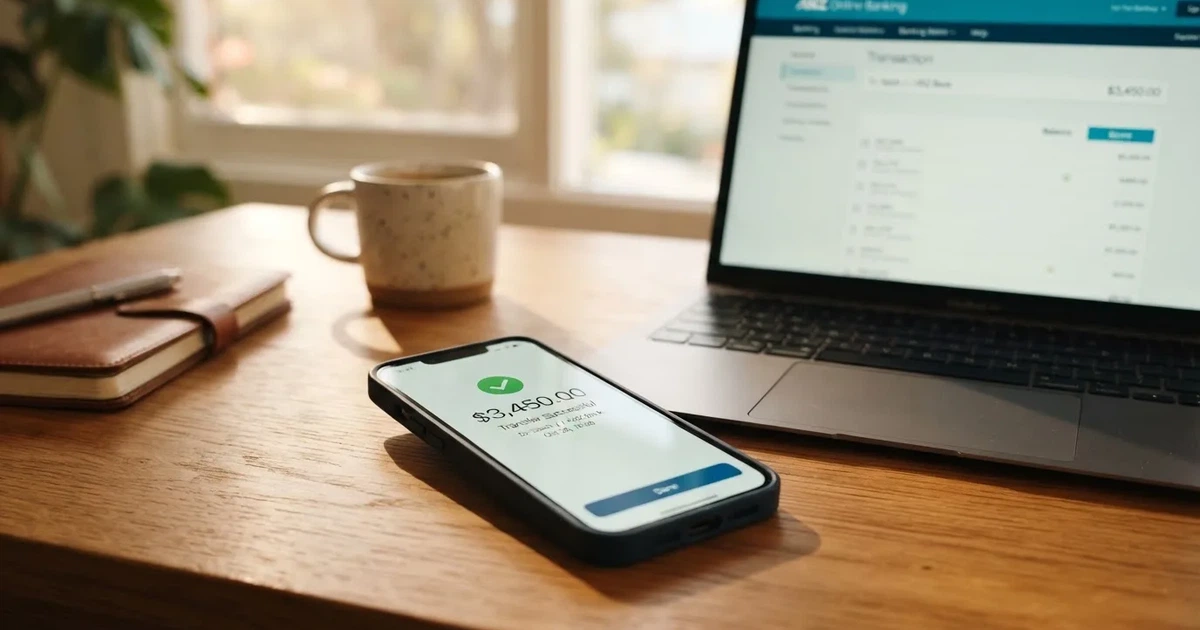
A PayID settles a transfer in seconds. It does not settle the legal question behind it. For Australians typing “online pokies PayID” into a search box, the payments half is well documented by Australian Payments Plus and the Reserve Bank of Australia. The other half — whether anyone can lawfully offer online pokies to a person in Australia — is closed by the Interactive Gambling Act 2001, and every site that markets itself as a PayID pokies destination to Australians sits outside that law. This page separates those two halves plainly. It explains how PayID moves money, what it costs the user, and what the Australian Communications and Media Authority has formally warned about for the brands most commonly named in those searches.
Table of Contents
- Why PayID gets named at all — and why that is its own warning
- How the page is structured — and what it does not do
- The legal frame Australians actually face
- The blocking rate, calculated
- Where the marketing word meets the regulator’s record
- The eleven brands the ACMA has warned — what each one costs the reader
- What a reader comparing these options should actually weigh
- Responsible play and where an Australian actually has cover
- Frequently asked questions
Why PayID gets named at all — and why that is its own warning
The pitch around “PayID pokies” almost always leans on three words: instant, Australian, no fees. The mechanism behind two of those is real. The mechanism behind the third is what the operator cannot control, and what AP+ and the user’s own bank already do.

What a PayID actually is
A PayID is an easy-to-remember identifier — a mobile number, an email address, an ABN or an Organisation Identifier — linked to a chosen bank account. It is operated by Australian Payments Plus, the country’s domestic payments provider, and is already built into the online banking of more than 100 Australian financial institutions. As of April 2025 more than 25 million PayIDs were registered in Australia, against a population of roughly 27 million.
The identifier is not the money. It is the address label for a transfer that runs on the New Payments Platform, which the Reserve Bank of Australia oversees and which has been live since February 2018. The RBA also owns and operates the Fast Settlement Service that lets NPP transactions clear individually in close to real time, around the clock. So when a PayID pokies site advertises “instant” deposits, it is leaning on infrastructure that sits one layer above its own cashier — and that one layer is the part the bank’s own block can refuse.
The name-check before the transfer goes out
Paying to a PayID shows the name of the account holder before the money is sent. That confirmation step is the only thing standing between the user and a mistaken payment or a scam. AP+ is direct about the gambling context: if a site asks the user to transfer funds to a PayID on an illegal gambling site, “it is almost certainly a scambling website”. AP+ defines “scambling” as slang for illegal online gambling platforms advertised on social media and messaging apps that trick people into gambling on a scam site, and points anyone who suspects they have been scambled to their own financial institution. PayID itself never contacts a customer directly; any email or text claiming to be from PayID is a scam, and PayID never asks anyone to send money in order to receive money, or to “upgrade” an account.
What “instant” actually means on the bank side
With Osko — the NPP product that delivers near-real-time transfers between participating banks — a bank transfer arrives in under a minute, twenty-four hours a day, including weekends, whether addressed to a BSB and account number or to a PayID. That is the settlement promise the marketing copy borrows. It is what the participating banks describe. The operator cannot speed it up, and the user’s bank can slow it down.
Where the bank sits between the user and the cashier
Several Australian banks refuse gambling transactions at card level, and a PayID debit still has to leave a real bank account. Westpac’s gambling block refuses authorisation on transactions registered under the merchant category code “Betting/Casino Gambling” on eligible personal credit and debit cards. ANZ’s gambling block, set in the ANZ app, blocks gambling transactions made through a digital wallet such as Apple Pay on an eligible card, not only the physical card; once activated, removal requires a 48-hour waiting period, and ANZ warns that not all gambling transactions will be caught and some non-gambling transactions might be blocked in error. These blocks are blunt instruments: they work because the merchant category code matches, they fail because the merchant may not code as gambling, and the user gets whatever the bank’s filter decides.
The credit-card ban the marketing rarely mentions
Under the Interactive Gambling Act 2001 as amended in 2023, Australian-licensed online wagering services cannot accept credit cards or other credit-related products as payment — a restriction that also shapes how PayID-linked bank transfers can be used for wagering. A site that asks an Australian for a credit card to deposit into an online pokies account is asking for payment the Australian side cannot lawfully accept. That is one of the cheaper tells of an offshore operation.
Digital wallets and the surcharge question
By the end of 2025, Apple Pay, Google Pay and Samsung Pay transactions collectively accounted for around 45 per cent of all card payments in Australia by number. Apple itself does not charge consumers for using Apple Pay in stores, online or in apps; any surcharge comes from the merchant’s own card-processing fees. The Reserve Bank of Australia’s July 2025 review proposes removing surcharges only on eftpos, Mastercard and Visa transactions, explicitly leaving American Express outside the proposed ban — which matters because Amex runs as a three-party scheme that issues cards and processes transactions itself, unlike the four-party Visa and Mastercard networks. Transaction limits and PIN requirements on Apple Pay are set by the card issuer or the merchant, not by Apple.
How the page is structured — and what it does not do
What follows is not a recommendation. It is a record. The brand list is not a ranking and not a shortlist of places to play. Every brand named is a brand the ACMA itself has formally warned about, in the years stated, for offering prohibited services to Australians. No bonus terms are quoted — the only sources for them were affiliate marketing pages. No casino is endorsed. Where the legal frame and a brand’s offer contradict each other, the contradiction is named once and the brand is shown on its other fields.
The angle is cost — what an offshore pokies site actually costs the Australian who uses it, in fees the marketing omits, in protections the marketing cannot offer, and in the regulator’s record against the brand.
The legal frame Australians actually face
Online casino games, online pokies and in-play betting cannot be licensed anywhere in Australia. The Interactive Gambling Act 2001, tightened by the Interactive Gambling Amendment Act 2017, makes it an offence to provide them to a person physically in Australia, and no state or territory issues such a licence. What is licensable is wagering on races and sport placed before the event, lotteries and keno — in practice licensed by the Northern Territory, where the Northern Territory Racing and Wagering Commission regulates 52 of Australia’s online bookmakers, including Sportsbet, Bet365 and Ladbrokes. The commission has no full-time staff and meets once a month in Darwin.
Enforcement sits with the ACMA
The Australian Communications and Media Authority investigates, issues formal warnings and directs internet service providers to block illegal sites. According to the ACMA as reported in June 2026, a total of 1,751 illegal gambling and affiliate marketing websites had been blocked since the first blocking request in November 2019, and more than 230 unlicensed gambling services had left the Australian market since enforcement was strengthened in 2017. In a round reported on 26 June 2026 the ACMA asked Australian ISPs to block a further 12: 7Signs, ChromaBet, Donbet, Duospin, Freshbet, Slots Gem, Jacks Club, Lucky Start, Pointsbetz, Spinrise, Vinyl Casino and Wildsino.
The individual player is not prosecuted — the IGA targets the provider. The cost the player pays is the other side of that arrangement: no Australian consumer protection, no complaints body, no recourse if a withdrawal is refused, and a balance that can be stranded when an ISP block lands on the URL.
BetStop does not bind offshore brands
BetStop, the National Self-Exclusion Register, has been live since August 2023, but it binds only Australian-licensed online and phone wagering services. An offshore casino is not connected to it. Registering on BetStop stops an Australian-licensed wagering account from being opened or used; it does nothing to a Curacao- or Costa Rica-licensed brand the user finds through social media. The support services that sit behind BetStop — the National Gambling Helpline on 1800 858 858, free and 24/7, with chat at Gambling Help Online — are the part of the Australian system that does work for anyone, regardless of where they were playing.
The credit and crypto carve-out
Credit cards, credit-related products and digital currency have been banned as payment for licensed online wagering since 11 June 2024, with penalties up to A$247,500 for operators. The lawful deposit routes for licensed wagering are debit card, bank transfer, PayID or Osko, and BPAY. A site asking an Australian for a credit card or a crypto deposit is operating outside the Australian rules — not necessarily illegally under its own jurisdiction, but outside the regime the user is being told the site sits in.
Reform passed but not yet in force
The Interactive Gambling Amendment (Gambling Reform) Bill 2026 passed Parliament on 19 August 2026. Its advertising and inducement measures commence 1 January 2027 — law with a start date, not yet in force on this page. It tightens what an operator can say to an Australian; it does not change what an Australian is being offered today.
Tax position
Gambling winnings of a recreational player are not assessable income under section 6-5 of the ITAA 1997, and losses are not deductible, unless the person carries on a business of gambling. That is the ATO model, not personal advice, and the only safe reading of it for a reader with anything unusual in their situation is “check with the ATO”.
The blocking rate, calculated
Two numbers do the work. The first blocking request was issued in November 2019. By the ACMA’s own June 2026 figure, 1,751 illegal gambling and affiliate marketing websites had been blocked across the years between. That works out, at the time of writing, to a range in the low hundreds of sites per year cleared from Australian reach through ISP blocking alone — between roughly 250 and 275 a year across the roughly six-and-a-half-year span — and the rate has been climbing, not flattening. The condition matters: this is the blocking rate, not the entry rate, and the ACMA has also reported that more than 230 unlicensed gambling services have left the Australian market voluntarily since enforcement was strengthened in 2017, which sits on top of these figures. The arithmetic tells a reader how fast the regulator is shrinking the shelf of names they will meet in a search, not how fast new names are arriving.
Where the marketing word meets the regulator’s record
What follows is every brand the page names, in the order research names them, with the ACMA’s own record against each one and nothing else added. The columns are the ACMA’s action and date, the operator the ACMA named in the warning, and the support the brand shows for PayID as far as public listings record it.
| Brand | ACMA action and date | Operator named by the ACMA | Subject support (PayID, where public listings record it) |
|---|---|---|---|
| RocketPlay | Formal warning under the IGA — March 2026 (Pulsup Ltd over RocketPlay); earlier Dama N.V., May 2022 | Pulsup Ltd (2026); Dama N.V. (2022) | — |
| Level Up Casino | Formal warning under the IGA — May 2022 (Dama N.V.) | Dama N.V. | Listings report PayID among deposit methods |
| Woo Casino | Formal warning under the IGA — March 2025 (Dama N.V.) | Dama N.V. | — |
| Spirit Casino | Formal warning under the IGA — May 2025 (Dama N.V.) | Dama N.V. | — |
| National Casino | Formal warning under the IGA — July 2025 (Consolutetish S.R.L.) | Consolutetish S.R.L. | Listings report PayID among deposit methods |
| Bizzo Casino | Formal warning under the IGA — July 2025 (Consolutetish S.R.L.); earlier TechSolutions, 2022 | Consolutetish S.R.L. (2026); TechSolutions (2022) | — |
| Ignition Casino | Formal warning under the IGA — July 2025 (Bamboo Media) | Bamboo Media | — |
| Instant Casino | Formal warning under the IGA — February 2025 (EOD Code SRL) | EOD Code SRL | Listings report PayID among deposit methods |
| Jackbit | Formal warning under the IGA — April 2026 (Ryker B.V.) | Ryker B.V. | — |
| Casino Intense | Formal warning under the IGA — April 2025 (Sterplay Holding Ltd) | Sterplay Holding Ltd | Listings report PayID among deposit methods |
| Sky Crown | Formal warning under the IGA (Hollycorn N.V.) | Hollycorn N.V. | — |
Three of those warnings sit within the last twelve months. Two of them — RocketPlay and Bizzo Casino — name operators the ACMA has had cause to warn before. That pattern is the part of the regulator’s record a reader looking at a brand name should weigh against whatever the brand itself says.
The column on subject support is what public listings report. It is not a confirmation from any brand, and the brands the ACMA has named are not the same set the listings pages treat as PayID-friendly. The brands with no listing record for PayID are not brands the page has cleared of taking PayID — they are brands the public record does not mention it for. The honest reading of the column is that the ACMA record and the listing record overlap on some names, do not overlap on others, and never combine into a recommendation.
The eleven brands the ACMA has warned — what each one costs the reader
The block below carries each brand the ACMA has named, the operator the ACMA identified, and the verdict the record supports. It does not carry a working bonus, a promotional code or a payout promise. Each write-up closes on the judgement the public record supports, not on whether the reader should sign up.
RocketPlay — warned twice, under two operators
The ACMA issued a formal warning to Pulsup Ltd over RocketPlay in March 2026, and an earlier warning to Dama N.V. covered Rocketplay in May 2022 alongside Bambet, Dazard, Level Up, Wild Tornado and Cobra Casinos. That is two regulators’ letters under two different company names, six years apart, for the same product offered to the same country. Public listings do not record PayID support for the current RocketPlay brand, which makes it harder for a reader to confirm the deposit method even before the legality question is reached.
Level Up Casino — the warning the page cannot outrun
Dama N.V. was the operator the ACMA named in the May 2022 warning that covered Level Up alongside five other brands. Dama N.V. has since been named again, in March 2025 over Woo Casino and in May 2025 over Spirit Casino — a track record the brand sits inside whether or not the cashier at Level Up has changed. Public listings report PayID among the deposit methods available; the ACMA record says the offering is to Australians regardless. The cost of Level Up to the reader is the same cost every entry on this list carries: the regulator’s letter, no Australian protection, no BetStop coverage, and a withdrawal dispute with no Australian forum to hear it.
Woo Casino — same operator, fresh letter
The ACMA’s March 2025 warning to Dama N.V. over Woo Casino is the third Dama N.V. action on this list. Public listings do not record PayID support for Woo. The brand’s legal exposure to the ACMA is not the same number as the brand’s deposit methods, but both are part of what an Australian reader is weighing.
Spirit Casino — most recent Dama N.V. action on the list
The ACMA named Dama N.V. over Spirit Casino in May 2025, three years after the original Dama N.V. warning. Public listings do not record PayID support for Spirit. The Dama N.V. name carries more weight on this list than on any single brand: four of the eleven entries sit under it.
National Casino — formal warning, July 2025
The ACMA named Consolutetish S.R.L. over National Casino in July 2025. Public listings report PayID among the deposit methods. AUSTRAC and Wikipedia both record the brand. The deposit option does not undo the regulator’s letter; the regulator’s letter does not undo the deposit option. Both sit on the brand at once.
Bizzo Casino — warned twice, the second time this year
The ACMA named Consolutetish S.R.L. over Bizzo Casino in July 2025; Bizzo had already been the subject of a 2022 formal warning to TechSolutions (CY) Group Limited and TechSolutions Group N.V. Public listings do not record PayID support for the current brand. Two warnings, two operators, eight years apart, the same product, the same country. That is the record the brand carries.
Ignition Casino — the warning from last July
The ACMA named Bamboo Media over Ignition Casino in July 2025. Public listings do not record PayID support for Ignition. The brand’s main exposure in the search market is to US-facing traffic, where the legal frame is different; the Australian exposure is the warning the regulator has already issued.
Instant Casino — PayID by listing, prohibition by letter
The ACMA named EOD Code SRL over Instant Casino in February 2025. Public listings report PayID among the deposit methods, alongside EcoPayz. The combination is what the page has to put side by side: a deposit rail the listings say is available, and a regulator’s letter that says the offering is prohibited to Australians. The reader is the one choosing between them.
Jackbit — April 2026 action against Ryker B.V.
The ACMA named Ryker B.V. over Jackbit in April 2026, the same warning that covered CasinOK. Public listings do not record PayID support for Jackbit. The recent date on the warning is what makes the brand a useful inclusion here: the ACMA is still adding names in 2026, and Jackbit is one of them.
Casino Intense — Sterplay Holding Ltd, April 2025
The ACMA named Sterplay Holding Ltd over Casino Intense in April 2025. Public listings record AUSTRAC, ITnews and NAB references. PayID support is recorded by the listings pages. The pattern is the same as National Casino’s: the deposit method and the regulator’s letter both sit on the brand at once.
Sky Crown — the Hollycorn N.V. warning
The ACMA issued a formal warning to Hollycorn N.V. over its Sky Crown and Blue Leo casino services, published in September 2022. Public listings do not record PayID support for Sky Crown. The warning is older than most on the list, but it has not been replaced by a clearance — the ACMA does not publish “no longer a concern” notices, and absence of further action is not the same as a clean record.
What a reader comparing these options should actually weigh
The angle is cost, and the cost has three layers. The first is the cost of the deposit itself — PayID transfers in Osko settle in under a minute, 24/7, with no fee from PayID or from the user’s bank for the transfer. The second is the cost of the protection that does not sit behind the deposit: no BetStop binding, no Australian complaints body, no Australian recourse if a withdrawal is refused, and a brand that can be ISP-blocked while a balance is still on it. The third is the cost named in the regulator’s record — the ACMA’s formal warning sits on every brand on this list, and on three of them within the last twelve months. The marketing word for that combination is “instant Australian deposit”. The cost the page is pointing at is the part of the deal that is not a deposit at all.
Responsible play and where an Australian actually has cover
An offshore pokies site accepts PayID. BetStop does not. BetStop is the National Self-Exclusion Register, live since August 2023, and it binds Australian-licensed online and phone wagering services only — the offshore brand on this page is not connected to it. What does work, regardless of where someone has been playing, is the support system behind it.
The National Gambling Helpline on 1800 858 858 is free, 24/7, and runs alongside chat at Gambling Help Online. The two are the part of the Australian system that treats the person, not the transaction. Anyone who has registered on BetStop and then opened an account with a brand on this list is using a side-channel the register cannot see; anyone who has not registered and is worried about their own play has a single number to call. The page is not the place for clinical advice, and it is not the place to gloss over the cost an offshore operator carries. It is the place to put the helpline on the same page as the brand list.
A bank-side block is a halfway measure, and it is worth naming what it does and does not do. Westpac’s gambling block works at card level: it refuses authorisation of transactions registered under the merchant category code “Betting/Casino Gambling” on eligible personal credit and debit cards. ANZ’s block, set in the ANZ app, also covers gambling transactions made through a digital wallet such as Apple Pay on an eligible card; once on, it takes 48 hours to switch off. Both banks warn that not every gambling transaction is caught, and some non-gambling transactions may be blocked in error. The block is blunt, but it is the user’s own bank’s blunt instrument, and the user’s own bank is one of the few parties on the page that is actually on the user’s side.
The credit-card ban sits on the Australian-licensed side only. It does not stop an Australian from putting a PayID-linked debit transfer into an offshore account; it stops the Australian-licensed side from taking the credit card in the first place. That is the scope of the rule, and the scope of the rule is what a reader comparing options is working with.
Frequently asked questions
Why do so many pokies sites specifically advertise PayID rather than a regular bank transfer?
Because PayID lets them borrow the words “instant”, “Australian” and “no fees” without paying for them — the speed comes from the New Payments Platform that AP+ and the RBA run, the “Australian” part is the bank the user already uses, and PayID itself charges no fee for the transfer. The marketing word is free because the infrastructure it leans on is built into more than 100 Australian financial institutions, and the operator does not own any of it. What the marketing does not mention is that the same infrastructure is the layer the user’s bank can block, and the same AP+ that runs PayID publishes a scam warning directly against being asked to send money to a PayID on an illegal gambling site.
Is a PayID pokies site described as “trusted” actually any safer than one that isn’t?
“Trusted” is a marketing word. The check that actually does work in Australia is the regulator’s record, and the regulator’s record is the ACMA’s list of formal warnings. Every brand on this page carries one. Three of them were named within the last twelve months. Two of them — RocketPlay and Bizzo Casino — were named twice, under different operators, years apart. A trust claim on the homepage cannot outrun a regulator’s letter on the ACMA’s own site, and the user’s own bank can refuse the transfer regardless of what the cashier page says.
Can an Australian legally use PayID to fund an offshore pokies account?
The IGA targets the provider, not the player. The player is not prosecuted for sending the money. What the player gives up is the protection that an Australian-licensed wagering service carries — no BetStop coverage, no Australian complaints body, no Australian recourse if a withdrawal is refused, and a balance that can be stranded when an ISP block lands on the URL. PayID is a payment method, not a licence, and the name-check that pops up before a PayID transfer is the only safety net on the Australian side.
How does an “instant PayID pokies” claim compare with the real Osko settlement times banks describe?
Osko, the NPP product that delivers near-real-time transfers between participating banks, lands a transfer in under a minute, 24/7, including weekends — and that is the speed the operator’s marketing borrows. The user’s bank can refuse the transaction at the merchant category code, and several Australian banks do exactly that for gambling. The settlement time on a successful transfer is real; the settlement time on a refused transfer is zero, with no fee paid but no deposit made either.
What’s the difference between “PayID pokies” and “online pokies PayID” as search terms — is it the same content?
The terms pull the same shelf of sites, and the brands at the top of both are the same brands the ACMA has been warning about since at least 2022. The page covers them in the order research names them, with the regulator’s record against each one. The two phrasings are the same search seen from two angles, and both angles arrive at the same wall.