


What it really costs to play real money casino table games in Australia
Real money casino table games are easy to find offshore and illegal to offer online in Australia. Every state and territory sits under the same federal prohibition, so any site a search engine pushes toward an Australian player is doing so without an Australian licence. The honest version of the topic has three moving parts: the maths of the games themselves, the legal frame that decides where they can lawfully be played, and the licensed pubs, clubs and casinos that actually run them. This page walks through each, in the order an Australian punter would meet them.
Current as of 3 November 2026 against the ACMA’s published formal warnings and blocking actions.
Table of Contents
- The maths underneath the felt
- Where a punter can actually play in Australia
- What crypto and offshore sites actually change
- Game-by-game: what a punter is actually sitting down to
- The ACMA’s running blocking rate
- How the ACMA’s enforcement stack works
- Offshore brands the ACMA has acted against
- What the law changes for a punter
- What responsible play looks like
- Looking ahead: the 2026 reform bill
- The verdict for an Australian punter
- Frequently asked questions
The maths underneath the felt
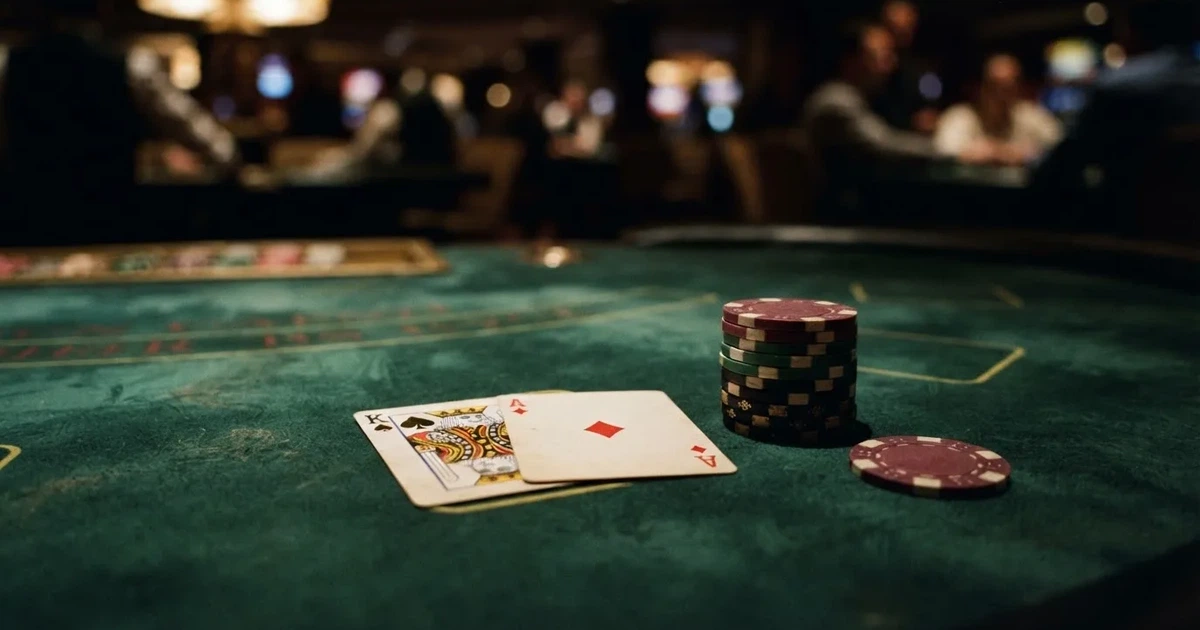
A “table game” is whatever a casino runs on green baize rather than a machine: blackjack, roulette, baccarat, craps and a long tail of regional variants. They share one feature that distinguishes them from pokies or keno. A punter can read the rules, learn a basic strategy, and move the house edge toward its mathematical floor. That floor is set by the rules, not by anything the casino chooses to advertise. A loose-rules blackjack table and a tight-rules one sit metres apart on the same floor, and the difference shows up in cents per dollar wagered.

House edges, side by side
The Wizard of Odds house-edge reference puts the main table games in a tight band when played correctly, with a long tail of side bets that does most of the damage. Under liberal Las Vegas Strip rules, basic-strategy blackjack runs about 0.28%. Atlantic City rules push that to roughly 0.43%. Baccarat’s Banker bet sits at 1.06%, its Player bet at 1.24%, and the Tie bet at 14.36%. The craps Pass line carries 1.41%. Single-zero roulette carries 2.70%; double-zero roulette carries 5.26%. Keno runs 25% to 29%.
The gap between the best and the worst bet on the same table is what catches out beginners. Baccarat has a 1.06% Banker bet and a 14.36% Tie bet, both on the same layout. Craps has a 1.41% Pass line and a 16.67% Any 7. Roulette has a 2.70% single-zero wheel and a 5.26% double-zero one, and the two wheels look identical until a punter reads the felt. The order of magnitude is the same as the gap between a well-run savings account and a payday loan, and it sits on the same betting slip.
Where the numbers come from
The house edge figures quoted above are long-run averages over many decisions, assuming optimal play and the rule set named. They are not promises for a single session. A punter who sits down at a blackjack table with a basic strategy card and plays 200 hands will, on average, lose about 56 cents per A$100 wagered under liberal Vegas rules. The same punter on a Tie bet at baccarat will, on average, lose about A$14.36 per A$100. The arithmetic compounds over a night, and it stops compounding the moment the punter walks away.

The Wizard of Odds numbers are widely cited because they are public, derivable and refreshed as rules change. The Australian state regulators — the VGCCC in Victoria, Liquor & Gaming NSW in New South Wales — approve rules at the licensed casinos they supervise, so the figures for an Australian casino floor come from the same mathematical sources applied to the rules those regulators have signed off on.
Why blackjack looks different
Blackjack is the table game Australians recognise most easily, and it is also the one with the most rule variation. Liberal-rules blackjack, with the dealer standing on soft 17, doubling on any two cards, doubling after a split, resplitting aces and late surrender, gets close to the 0.28% floor. Tighten any one of those rules and the edge creeps up. Most Australian casino floors run rule sets that are closer to the liberal end than the tight end, but the published paytable is what tells a punter which version they are sitting at.
The dealer’s actions are also fixed by rule: hit or stand on 17, take insurance, peek for blackjack. A punter who knows the rule set before sitting down can choose the table that gives them the lowest edge. A punter who learns the rules from the dealer on the first hand is already behind.
Where roulette’s edge hides
Roulette’s house edge looks tidy in print and less tidy on the felt. Single-zero wheels give the casino 2.70%; double-zero wheels give it 5.26%. The difference is the green zero, sometimes two. Australian casino floors in recent years have moved toward single-zero or “no zero” promotional wheels, but the layout on the felt is the only thing a punter can trust. American-style double-zero wheels appear in some online products and in some imported table games, and the 5.26% edge is roughly double the European version for the same bet.
Roulette also carries a long tail of announced bets and side combinations that pay more but carry a heavier edge. The felt is no place to guess. Reading the minimums, the wheel type and the announcement rules is fifteen seconds of work that compounds for the rest of the session.
Baccarat and the banker bet
Baccarat’s reputation as a high-roller game is older than its mathematics. The Banker bet, despite the 5% commission charged on a win, carries the lowest edge on the table at 1.06% under standard eight-deck Punto Banco rules. The Player bet runs 1.24%. The Tie bet runs 14.36% at an 8-to-1 payout, dropping to 4.85% at a 9-to-1 payout if the table offers it. A punter who avoids the Tie bet and sticks with Banker is, on average, losing about A$1.06 per A$100 wagered. A punter who chases the Tie is, on average, losing about A$14.36 per A$100. That is not a matter of taste; it is a matter of arithmetic.
Punto Banco, the variant most Australian floors run, banks the game at the house at all times and plays both hands by fixed drawing rules. The punter does not draw cards, does not bank the game and does not make a strategic decision beyond the bet. The edge comes from the commission and from the third-card rules the casino applies on behalf of both sides.
Craps and its side bets
Craps is rare on Australian floors compared with blackjack and roulette, but its mathematics carry the same lesson. The Pass line runs 1.41%; the Don’t Pass line runs 1.36%. The side bets — Field at 5.56%, Any 7 at 16.67%, Hard 4 and Hard 10 at 11.11% — are where a casual punter’s stake drifts. Craps rewards knowing which bets to make and which to leave on the layout for the next shooter.
The pass line is the simplest bet on the table. A come-out roll of 7 or 11 wins; 2, 3 or 12 loses. Any other number becomes the point, and the shooter keeps rolling until they hit the point again (Pass line wins) or roll a 7 (Pass line loses). The 1.41% edge is the price of that simplicity, and most of the rest of the craps layout is more expensive.
Where a punter can actually play in Australia
The Interactive Gambling Act 2001, strengthened by the Interactive Gambling Amendment Act 2017, makes it an offence to provide online casino games, online pokies or in-play betting to a person in Australia. No state or territory licenses those services. What is licensed is wagering on races and sport placed before the event, lotteries and keno. In practice the Northern Territory Racing and Wagering Commission regulates 52 online bookmakers — including Sportsbet, Bet365 and Ladbrokes — for tax reasons, even though the commission has no full-time staff and meets once a month in Darwin. None of those bookmakers offers an online casino table game.
The lawful place to play real money casino table games in Australia is the licensed casino floor or the licensed club and pub that holds a gaming permit for table games. The state regulators — the VGCCC in Victoria, Liquor & Gaming NSW in New South Wales, the Queensland Office of Liquor and Gaming Regulation, the South Australian Consumer and Business Services, the Western Australian Department of Local Government, Sport and Cultural Industries, the Tasmanian Liquor and Gaming Commission and the ACT Gambling and Racing Commission — supervise those venues and approve the rules of every table game they offer.
Crown Melbourne
Crown Melbourne runs three baccarat variants — Traditional Baccarat, Crown Baccarat and 2 to 1 Baccarat — as approved table games under the VGCCC, which replaced the VCGLR as Victoria’s casino regulator on 1 July 2022. The casino’s full table-game floor covers blackjack, roulette, baccarat and craps variants, with rules approved by the VGCCC under the Casino Control Act 1991. Any change to a rule or a side bet is signed off by the regulator before it is introduced, and a patron can ask for a copy of the approved rules.
The Star Sydney
The Star Sydney, in Pyrmont, runs a comparable table-game floor under the NSW Independent Casino Commission, with approvals delegated to Liquor & Gaming NSW since 5 September 2022. Section 66 of the Casino Control Act 1992 requires the operator to keep approved rules on file and to provide a copy on request. The Star’s blackjack, roulette and baccarat tables all sit under that requirement, and the regulator’s published approvals cover the side bets the casino markets.
State and territory casinos
Beyond the two flagship properties, every state and territory with a casino licence runs a table-game floor under its own regulator. Crown Perth in Western Australia runs blackjack, roulette and baccarat under the Department of Local Government, Sport and Cultural Industries. The Treasury Casino in Brisbane and Jupiters on the Gold Coast run table games under the Queensland Office of Liquor and Gaming Regulation. The Wrest Point and Country Club Tasmania properties in Hobart and Launceston run tables under the Tasmanian Liquor and Gaming Commission. The Skycity Adelaide property runs under Consumer and Business Services in South Australia. Lasseters in the Northern Territory and Casino Canberra in the ACT round out the licensed casino floor.
Licensed clubs and pubs
A smaller number of licensed clubs and pubs hold table-game permits under their state or territory gaming laws, most commonly for smaller-scale blackjack and poker rooms. These venues are supervised by the same regulators that supervise the casino floors and operate under a different scale of rules. They are a useful option where the nearest licensed casino is hours away, but they are not the same product as a casino floor and the rules differ accordingly.
What crypto and offshore sites actually change
Crypto casinos advertise table games alongside their slots and live-dealer products, and the marketing leans hard on three claims: faster deposits, faster withdrawals and a degree of anonymity the bank-based system cannot offer. None of those claims changes what the ACMA already decided. Online casino games are prohibited in Australia, whether the deposit is in Australian dollars, in bitcoin or in tether. The crypto rail moves the money; it does not move the licence.
The same ACMA actions apply regardless of the payment method. RocketPlay, which the ACMA warned over in March 2026, accepts both fiat and crypto deposits. Jackbit, warned over in April 2026, runs a crypto-native product. Woo Casino and Spirit Casino, warned over in March and May 2025, accept a mix. The currency on the deposit form is the last thing that matters; the operator’s Australian legal status is the first.
What the rail does change
For a punter who already plays on an offshore site, the crypto rail does make three things measurably different. Deposits settle in minutes rather than days. Withdrawals can clear in under an hour on a network that is not congested. Identity checks at the deposit stage are looser than at a bank-routed deposit. None of those features is a substitute for an Australian licence, and none of them gives a punter any recourse if the operator refuses a withdrawal.
The credit-card ban that came into force on 11 June 2024 covers licensed Australian wagering services only. An offshore casino is not bound by it, which is why so many of them still accept Visa and Mastercard at the deposit form. A punter who funds an offshore casino account with a credit card is doing something the licensed Australian market is explicitly designed to prevent, and the consumer protection that comes with a licensed wagering service is not part of the transaction.
Anonymity is not licence
The “no KYC” pitch is the closest thing to a marketing word that earns a puncture on this page. An offshore operator that does not run identity checks at sign-up is not conferring anonymity in any legal sense. The blockchain ledger is public, the wallet addresses are traceable, and the exchange on and off the rail keeps a record. What the operator is actually offering is the absence of an internal compliance step, which makes the account easier to open and harder to recover if the operator disappears. The legal prohibition sits underneath that, untouched.
Game-by-game: what a punter is actually sitting down to
The promotional pages for an offshore table-game product tend to treat blackjack, roulette, baccarat, craps and a long tail of variants as interchangeable. They are not. The rule sets carry the edge, and the rule sets vary across the games. A punter who knows the maths of one game does not automatically know the maths of the next.
Blackjack
Blackjack developed out of the English game vingt-un, with a Spanish predecessor documented in Miguel de Cervantes’ work around 1601-1602 and the modern American name emerging around 1899 during the Klondike Gold Rush. Cards count at face value, with the ace counting as 1 or 11 and the jack, queen and king counting as 10. A two-card 21 is a “blackjack” or “natural” and pays the strongest return; the dealer must keep drawing until reaching 17 or higher, with some rule sets requiring a hit on a soft 17.
The game’s lower edge comes from a combination of punter decisions and dealer rules. A basic strategy chart — which is freely available — collapses the punter’s choices to the mathematically correct one for every hand against every dealer up-card. A punter who plays basic strategy against a liberal-rules dealer is, on average, losing less than 1% of action over the long run. A punter who plays “by feel” is, on average, losing several times that. Established variants — Spanish 21, Double Exposure, Blackjack Switch, Super Fun 21 — each carry their own rule sets and their own edges.
Roulette
Roulette originated in 18th-century France and has been played in close to its present form since about 1796 in Paris, with the wheel often traced to a gaming wheel invented in 1720 combined with the Italian game Biribi. The wheel is the only mechanical difference that matters to the punter: one green zero gives the house 2.70%, two green zeros give it 5.26%. Bets on individual numbers, colours, dozens and columns pay out at fixed odds that do not change between the two wheels; the edge is in the zeros.
Australian casino floors tend toward single-zero wheels, and some promotional layouts use a “no zero” wheel during quieter periods. The felt and the wheel are the only sources of truth; a promotional leaflet that says “European rules” is no substitute for reading the layout before placing the first chip.
Baccarat
Baccarat’s history is disputed — some accounts place it in 19th-century France, others in 15th-century Italy at the end of Charles VIII’s reign. The Punto Banco variant, where the casino banks the game permanently under fixed drawing rules, developed in Havana in the 1940s and is now the dominant baccarat form worldwide, including in Australia. Cards count at face value with the 10, jack, queen and king counting as zero and the ace counting as one, with hand totals taken modulo 10. The shoe runs six or eight decks.
The bet that looks the most exciting — the Tie, paying 8 to 1 — is the bet that loses the punter the most money. The bet that looks the dullest — the Banker, with a 5% commission — is the bet that loses the punter the least. Chemin de fer, French for “railway,” is a two-player variant that emerged from baccarat banque in the late 19th century and is quicker to play than the original game, but it is rarely offered on Australian floors.
Craps
Craps developed in the United States as a simplification of the European game Hazard, which Bernard de Marigny brought from London to New Orleans around 1805. The simplified American version had spread throughout the country by the 1910s. The dice determine the outcome; the punter bets on what the shooter rolls. The Pass line and Don’t Pass line sit at the bottom of the layout with the lowest edges; the centre of the layout is a thicket of side bets that the long tail of craps players tends to ignore once they have read the edges.
The long tail
Beyond the four main games, Australian floors run a long tail of variants and side bets. Crown Melbourne’s three baccarat variants are an example. The VGCCC has ruled on amendments to baccarat, blackjack and roulette including new side bets, and a punter can ask for the approved rules on the floor. Side bets exist to give the casino a thicker edge than the base game, and a punter who treats them as the main game is treating the casino’s marketing as the casino’s mathematics.
The ACMA’s running blocking rate
The ACMA’s enforcement work is not a single event. It is a running total of formal warnings and blocking requests that stretches from 2017 to the current year. The arithmetic on this page is the rate at which the total has grown over the time the authority has been acting.
| Inputs | Value |
|---|---|
| Total blocked sites as of June 2026 | 1,751 |
| First blocking request | November 2019 |
| Time elapsed from first blocking request to June 2026 | approximately 6.6 years |
Using the running total of blocked sites as the numerator and the elapsed time since the first blocking request as the denominator gives a blocking rate of about 265 sites per year over the period the authority has been acting, with the figure stated as a band because the actual elapsed time between November 2019 and June 2026 sits between 6.5 and 6.7 years depending on the day of the month. The rate has not been constant: earlier years saw fewer blocking requests as the ACMA built its case law, and the June 2026 round alone added twelve more sites — 7Signs, ChromaBet, Donbet, Duospin, Freshbet, Slots Gem, Jacks Club, Lucky Start, Pointsbetz.com, Spinrise, Vinyl Casino and Wildsino. The headline figure is best read as a long-run average rather than a forecast of what the next twelve months will add.
The blocking rate matters because it tells a punter how stable the offshore market is. A site that was reachable last month may be on a blocking list this month. A balance on that site at the time of the block is unrecoverable through any Australian complaints body. The arithmetic is the floor under that risk.
How the ACMA’s enforcement stack works
The ACMA’s enforcement against offshore casinos runs through three named mechanisms, each of which has a different effect on the punter and on the operator.
Formal warnings
A formal warning is a published notice naming the operator and the breach of the Interactive Gambling Act 2001. The warning is not a prosecution; it is a precondition to further action. Once a warning is published, the ACMA can move to a civil penalty proceeding or to a blocking request. The warnings are public on the ACMA website and are the primary record of which operators have been acted against.
The warnings named on this page cover Dama N.V. over Bambet, Dazard, Level Up, Rocketplay, Wild Tornado and Cobra Casinos in May 2022; Hollycorn N.V. over Sky Crown and Blue Leo in September 2022; TechSolutions over Bizzo Casino in 2022; Sterplay Holding Ltd over Casino Intense in April 2025; EOD Code SRL over Instant Casino in February 2025; Dama N.V. over Woo Casino in March 2025; Dama N.V. over Spirit Casino in May 2025; Bamboo Media over Ignition Casino in July 2025; Consolutetish S.R.L. over National Casino and Bizzo Casino in July 2025; Ryker B.V. over Jackbit and CasinOK in April 2026; and Pulsup Ltd over Rocketplay.com.au in March 2026. Each warning names the parent company rather than the brand, which is why a single operator can sit behind several brand names.
Blocking requests
Once a warning is published and the operator has not brought its offering into compliance, the ACMA can ask Australian internet service providers to block the site at the DNS level. The blocking is what stops an Australian customer reaching the site from a typical home connection. The blocking does not affect the operator’s business in other jurisdictions; it affects Australian reach specifically. The June 2026 blocking round took the running total to 1,751 sites since November 2019.
Civil penalty proceedings
For the most serious or persistent breaches, the ACMA can apply to the Federal Court for civil penalties under the Interactive Gambling Act. The penalties are designed to make the Australian market unattractive to operators who would otherwise treat a warning as a cost of doing business. The proceedings are public and add a further layer of consequences beyond the blocking request.
Offshore brands the ACMA has acted against
The eleven brands below are not a recommendation and not a ranking. They are the brands the ACMA itself has named in formal warnings, and they appear here because a punter comparing the offshore market should be able to see, in one place, the operators the regulator has moved against. Each one is named for the warning record. None of them is licensed for online casino games in Australia, whatever licence the site displays.
| Brand | ACMA action and date | Operator named by the ACMA | Subject support |
|---|---|---|---|
| RocketPlay | formal warning, March 2026 | Pulsup Ltd | — |
| Level Up Casino | formal warning, May 2022 | Dama N.V. | listings (BGaming) |
| Woo Casino | formal warning, March 2025 | Dama N.V. | — |
| Spirit Casino | formal warning, May 2025 | Dama N.V. | — |
| National Casino | formal warning, July 2025 | Consolutetish S.R.L. | listings (Wikipedia) |
| Bizzo Casino | formal warning, July 2025; earlier warning, 2022 | Consolutetish S.R.L.; TechSolutions | — |
| Ignition Casino | formal warning, July 2025 | Bamboo Media | — |
| Instant Casino | formal warning, February 2025 | EOD Code SRL | — |
| Jackbit | formal warning, April 2026 | Ryker B.V. | — |
| Casino Intense | formal warning, April 2025 | Sterplay Holding Ltd | listings (multiple) |
| Sky Crown | formal warning, September 2022 | Hollycorn N.V. | — |
The table reads as a record of the regulator’s work rather than a guide to where to play. The same operator name can sit behind several brands — Dama N.V. alone runs six of the eleven brand names — which is the structural feature that makes the offshore market hard to navigate for a punter who has only ever seen the brand.
RocketPlay
RocketPlay sits behind two formal warnings: the May 2022 warning to Dama N.V. and the March 2026 warning to Pulsup Ltd over the .com.au mirror. The brand has been on the ACMA’s radar across multiple operator entities, which makes it a useful case study in how the offshore market rebrands under fresh corporate wrappers to keep operating. A punter looking at this brand should know that the parent company named in 2026 is not the parent company named in 2022.
Level Up Casino
Level Up Casino was named in the May 2022 Dama N.V. warning alongside five other Dama brands. The casino’s table-game offering is supported through a third-party games library rather than its own studio, which is why the listing record on BGaming names the brand rather than the ACMA record. The combination of a multi-brand warning and a third-party library is typical of the Dama N.V. cluster.
Woo Casino
Woo Casino was named in a March 2025 warning to Dama N.V., the second Dama warning after the 2022 cluster. The pattern of repeated warnings against the same operator entity is the ACMA’s way of signalling that the underlying breach is continuing, and a punter looking at a Dama brand should know that the warning count is part of the brand’s history rather than a one-off event.
Spirit Casino
Spirit Casino was named in a May 2025 warning to Dama N.V., three months after Woo Casino. The two warnings, taken together, are a record of the ACMA’s view that the operator entity has not brought its offering into compliance. A punter who has been on either brand should not assume that the latest brand name is a fresh start; the parent entity is the same.
National Casino
National Casino was named in a July 2025 warning to Consolutetish S.R.L., alongside Bizzo Casino. The Wikipedia listing of the brand is a record of how the offshore market catalogues itself for search engines rather than a recommendation, and the listing does not change the ACMA’s view.
Bizzo Casino
Bizzo Casino sits behind two warnings: a 2022 warning to TechSolutions and a July 2025 warning to Consolutetish S.R.L. The repeated warning against the same brand under different parent entities is the ACMA’s clearest signal that rebranding does not reset the regulatory record.
Ignition Casino
Ignition Casino was named in a July 2025 warning to Bamboo Media. The brand is one of the longer-running offshore casinos targeting Australian players, and the warning sits within the same enforcement round as the Consolutetish warnings.
Instant Casino
Instant Casino was named in a February 2025 warning to EOD Code SRL. The brand’s “instant” naming is a marketing claim about withdrawal speed, and it does not change the legal status of the operator under Australian law.
Jackbit
Jackbit was named in an April 2026 warning to Ryker B.V., alongside CasinOK. Jackbit runs a crypto-native product, which is the rail the ACMA’s prohibition applies to regardless of currency.
Casino Intense
Casino Intense was named in an April 2025 warning to Sterplay Holding Ltd. The brand’s listings on multiple Australian outlets are a record of how it markets itself domestically rather than a sign of any Australian licence.
Sky Crown
Sky Crown was named in a September 2022 warning to Hollycorn N.V., alongside Blue Leo. The 2022 warning is one of the earlier entries on this page and a useful reminder that the ACMA’s enforcement has been running for years rather than months.
What the law changes for a punter
The Interactive Gambling Act 2001 targets the provider, not the individual player. An Australian punter who opens an account with an offshore casino is not prosecuted. The provider is. The consequence for the punter is the absence of protection, not the presence of a penalty.
No Australian consumer protection
A licensed Australian wagering service is supervised by a state or territory regulator and is subject to the Australian consumer law. An offshore casino is not. If the operator refuses a withdrawal, closes the account or disappears, the punter has no Australian complaints body to approach. The dispute sits in whatever jurisdiction the operator is registered in, and the practical outcome is that the punter bears the loss.
BetStop does not cover offshore sites
BetStop, the National Self-Exclusion Register, has been live since August 2023. It binds Australian-licensed online and phone wagering services. An offshore casino is not connected to it. A punter who has self-excluded through BetStop and then opens an offshore account is doing so outside the exclusion they registered for, and the offshore operator has no obligation to honour the exclusion.
Payment rules stop at the border
Credit cards, credit-related products and digital currency are banned as payment for licensed online wagering since 11 June 2024, with penalties of up to A$247,500 for operators. The ban covers licensed wagering only. An offshore casino can still accept a credit card or a crypto deposit at the deposit form, and a punter who funds the account through those routes is on a transaction the Australian licensed market was explicitly redesigned to prevent.
Tax
Gambling winnings of a recreational player are not assessable income under section 6-5 of the ITAA 1997, and losses are not deductible, unless the person carries on a business of gambling. The tax treatment is the same regardless of whether the punter plays at Crown Melbourne or at an offshore casino. The ATO is the right body to confirm a specific situation.
What responsible play looks like
The state and territory regulators, the ACMA and the support lines exist because real money gambling carries real costs. The numbers on this page — 0.28% on liberal-rules blackjack, 5.26% on double-zero roulette, 14.36% on the baccarat Tie bet — are long-run averages, and the long run is built out of individual sessions. A punter who recognises the difference between the long-run average and a single session is in a better position to walk away from the table at the right time.
BetStop and self-exclusion
BetStop lets a punter register a self-exclusion that binds every Australian-licensed online and phone wagering service. The registration is free, takes effect immediately and can run for a minimum period set by the punter. The exclusion does not cover land-based venues, which carry their own state-based exclusion registers, and it does not cover offshore casinos, which are not connected to the Australian framework.
National Gambling Helpline
The National Gambling Helpline on 1800 858 858 is free, runs 24/7 and connects to Gambling Help Online, which offers web chat. The helpline is for punter, for family and for anyone concerned about someone else’s gambling. The service is funded by the Australian state and territory governments and is independent of any operator.
Limits and the venue
Australian licensed casinos and clubs operate under state-based responsible-gambling rules that include mandatory display of helpline numbers, mandatory offer of pre-commitment tools and mandatory intervention by staff when a punter shows signs of distress. An offshore site offers none of those protections as a matter of course, and a punter who relies on the venue to enforce a break is relying on something the venue has no obligation to provide.
Looking ahead: the 2026 reform bill
The Interactive Gambling Amendment (Gambling Reform) Bill 2026 passed Parliament on 19 August 2026. Its advertising and inducement measures commence on 1 January 2027, which means the law is in place but not yet in force on a page read in the current year. The measures are aimed at the licensed wagering market rather than at offshore casinos, which sit outside the Australian framework regardless of what the bill does. A punter watching the reform should expect the licensed market’s advertising to tighten from January 2027, and should not expect the offshore market’s reach to change as a result.
The verdict for an Australian punter
Real money casino table games are lawful at licensed Australian casinos, clubs and pubs, and unlawful at every offshore site that offers them online to an Australian customer. The mathematics of the games is the same in both settings, and the house edge on a liberal-rules blackjack table is 0.28% under optimal play regardless of who runs the table. The licensed venue adds the consumer protection, the regulator oversight and the responsible-gambling framework that the offshore site does not. The unlicensed site adds nothing the licensed venue cannot match, and subtracts the protections a punter most needs when a session turns against them.
For a punter who wants to play real money casino table games in Australia, the choice is between a licensed venue that the regulator can supervise and an offshore site that the regulator has already moved against. The arithmetic on the felt is the same in both. The arithmetic off the felt is not.
Frequently asked questions
How does the house edge on blackjack compare with roulette or craps at a typical casino?
Under liberal Las Vegas Strip rules, blackjack’s house edge with optimal play is about 0.28%. Single-zero roulette runs 2.70%, double-zero roulette 5.26%. Craps’ Pass line carries 1.41%. Blackjack’s edge is the lowest of the three, and the gap to roulette depends almost entirely on whether the wheel has one zero or two.
Are live-dealer table games treated any differently under Australian law compared with RNG-based ones?
No. The Interactive Gambling Act 2001 prohibits the provision of online casino games to a person in Australia, and the prohibition covers both RNG-based products and live-dealer products streamed from a studio. The medium does not change the legal status; the provision of the game to an Australian customer does.
What’s the difference between American and European roulette in terms of odds for the player?
European roulette has a single green zero and a house edge of 2.70%. American roulette has both a single zero and a double zero, and the house edge rises to 5.26%. The bets and the payouts are otherwise identical, so the difference is the extra zero and the extra edge it creates.
Do crypto casino table games use the same rules as a standard online table game, just with a different currency?
The rules are the same. The blackjack, roulette and baccarat games on a crypto casino run on the same mathematical rules as their fiat-funded equivalents, and the house edges are the same. What the crypto rail changes is the deposit and withdrawal speed and the absence of an Australian banking intermediary, not the edge on the game.
Where can someone actually play real-money table games legally near them in Australia?
A punter in or near a capital city can play at the licensed casino in their state or territory — Crown Melbourne, The Star Sydney, Crown Perth, Treasury Brisbane, Jupiters Gold Coast, Wrest Point or Country Club Tasmania, Skycity Adelaide, Lasseters or Casino Canberra. A punter outside those catchments can check their state or territory’s licensed clubs and pubs that hold table-game permits, which run smaller-scale blackjack and poker rooms under the same regulators.
What should a beginner know about baccarat’s banker bet before sitting down at a table?
The Banker bet is the lowest-edge wager on the baccarat table at 1.06% under standard eight-deck Punto Banco rules, even after the 5% commission on a winning bet. The Player bet runs 1.24%, and the Tie bet runs 14.36% at the standard 8-to-1 payout. A beginner who avoids the Tie bet and sticks with Banker is giving up the least amount per A$100 wagered, and the commission is the cost of that lower edge.