


What a “no minimum deposit” casino actually costs an Australian in 2026
A “no minimum deposit” headline is doing a small job. It is telling you the cashier won’t refuse a small transfer. It is not telling you anything about who is on the other end of the transfer, who is licensed to receive it, or what happens to that money when you try to take it back out. In Australia, the answer to all three of those questions is already settled, and the settled answer is what makes a “no minimum deposit casino” page a different kind of page from its US or European equivalent. The headline reads one way; the law reads another.

Data current as of 2 November 2026 and cross-checked against the Australian Communications and Media Authority’s published formal warning register and blocking requests.
Table of Contents
- Crypto and the false comfort of anonymity
- Payment rails and the settlement time the marketing rarely prints
- Eleven operators the ACMA has named: a side-by-side
- How the offshore landscape sits inside the rest of the Australian market
- The legal prohibition and what it means for a player who is already in
- Keeping a “no minimum” claim in proportion
- Frequently Asked Questions
Crypto and the false comfort of anonymity
The crypto shelf is where most “no minimum” claims actually live. A coin can be sent in any amount, and on most blockchains the sender’s name is not part of the transaction. That is the entire pitch: no minimum, no name. It is also the entire limit of the pitch. Paying in bitcoin does not give the casino an Australian licence. It does not give the player a complaint body. It does not give either of them a referee if a withdrawal stalls.

The Interactive Gambling Act 2001, as amended by the Interactive Gambling Amendment Act 2017, makes it an offence to provide prohibited interactive gambling services — which means online casino games, online pokies and in-play betting — to a person physically in Australia. No state or territory licenses online casino games. None. The licensing regime that does exist, run by the Northern Territory Racing and Wagering Commission, covers wagering on sport and racing placed before the event; it does not extend to the games these sites are selling, and the commission itself sits with no full-time staff and meets once a month in Darwin. A Curacao or Anjouan number in a footer is a corporate registration; it is not a clearance to take Australian money for an Australian player on a casino game.
The Australian Communications and Media Authority has spent the years since enforcement was strengthened in 2017 doing the part of the work that licensing cannot do in a prohibited market. By June 2026 the ACMA had directed Australian internet service providers to block 1,751 illegal gambling and affiliate marketing websites since the first blocking request in November 2019. More than 230 unlicensed gambling services had left the Australian market in that period — not all of them willingly, not all of them quietly, and not all of them before the players who had balances with them had any chance to withdraw. The June 2026 round alone added twelve more domains to the blocking list, including 7Signs, ChromaBet, Donbet, Duospin, Freshbet, Slots Gem, Jacks Club, Lucky Start, Pointsbetz, Spinrise, Vinyl Casino and Wildsino.
H2 Gambling Capital’s 2025 estimate puts Australian losses to illegal offshore sites at roughly A$3.9 billion a year. The share of gambling going through legal channels has fallen from 74 per cent in 2021 to 64 per cent. A reader looking at those two numbers in order sees an offshore market that is growing in absolute size faster than the regulated market is growing in share. That is the world a “no minimum deposit” headline addresses. The small minimum is the on-ramp; the rest of the picture is what it leads to.
A crypto deposit changes one part of that picture, the part that has to do with how the money moves. It changes nothing about who is on the receiving end of the transfer, who can compel them to pay out, or what regulator the player complains to if they don’t. Bitcoin network fees are paid by the sender, in addition to whatever the casino itself charges, and at busy moments a fee of a few dollars can quietly outprice the deposit it is supposed to be carrying. The “no minimum” survives that arithmetic because the deposit is on-chain; the fee is not. Calling the resulting cost structure a free minimum is generous.
Payment rails and the settlement time the marketing rarely prints
A reader who insists on knowing what the cashier will actually do with a small transfer can look at the Australian payments rail itself. The New Payments Platform went live on 13 February 2018 and is now run by Australian Payments Plus, with thirteen shareholders that include the Reserve Bank of Australia and the major banks. On top of that platform sit PayID, which lets a transfer be addressed to a phone number, email or ABN rather than a BSB and account number, and Osko, which is what makes the PayID transfer arrive in under a minute, twenty-four hours a day, including weekends. Over 100 Australian financial institutions support PayID, and more than 25 million PayID identifiers had been registered by April 2025.
BPAY sits beside NPP rather than on top of it. It is a bill-payment service in online banking, where the payer enters a Biller Code and a Customer Reference Number. It has been operating since 18 November 1997, is available in the online banking of over 140 banks and financial institutions, and is offered by more than 95,000 businesses. BPAY is owned equally, through Cardlink Services Limited, by ANZ, Commonwealth Bank, National Australia Bank and Westpac — the four majors — and was merged with eftpos and NPP Australia under Australian Payments Plus in September 2021 under ACCC authorisation.
These rails exist for licensed Australian wagering. For deposits to an offshore casino, none of them applies: the cashier is offshore, the merchant descriptor will be a foreign trading name or a generic MCC, and PayID’s protection of showing the recipient’s name before a transfer is sent is useful precisely because the offshore site being paid is almost certainly not what a reader expects. AP+ itself warns that being asked to transfer money to a PayID on an illegal gambling site almost certainly means a scam site. AUSTRAC’s threshold-transaction-report rule covers physical cash at A$10,000 or more; it does not reach ordinary electronic transfers at any size. That makes a low-deposit claim mechanically easy to honour and mechanically hard to dispute afterwards.
The interesting column in the deposit-speed table is the one offshore operators cannot print honestly, which is the credit-card and credit-product ban. From 11 June 2024, Australian-licensed online wagering services cannot accept credit cards, credit-related products or digital currency as payment. Penalties for operators run up to A$247,500. The ban also reaches gambling use of linked digital wallets such as Apple Pay and Google Pay where the underlying funding source is credit. By the end of 2025, Apple Pay, Google Pay and Samsung Pay transactions together accounted for around 45 per cent of all card payments in Australia by number, which means the ban’s effect on the legal market runs through a sizeable surface area. Banks have built their own layer on top: Westpac’s gambling block refuses authorisation of transactions registered under the Betting/Casino Gambling MCC on eligible cards; ANZ’s block, activated in the ANZ app, also covers digital-wallet transactions on the underlying card and requires a 48-hour wait to remove; Commonwealth Bank’s gambling lock, set in the CommBank app, blocks most gambling transactions while warning that no block can guarantee every gambling transaction is stopped. Each of those blocks reads a transaction’s MCC rather than its merchant name, so an offshore casino using a non-gambling MCC can route around them; the legal wagering market cannot.
That is the split. The legal market is fast and constrained; the offshore market is unconstrained and slow to pay out. A “no minimum” landing page sits firmly on the second side of that line.
Eleven operators the ACMA has named: a side-by-side
The brands below are not a recommendation. They are the brands the ACMA itself has issued formal warnings over, between 2022 and April 2026, for offering prohibited interactive gambling services to people in Australia. The table reads them as the regulator reads them: by the corporate entity named in the warning, by the date of the warning, and by the underlying law. The “subject support” column is a separate observation about whether the source material in research carries any indication of the casino’s payment methods, which the regulator’s register does not record.
| Brand | ACMA action and date | Operator named by the ACMA | Subject support |
|---|---|---|---|
| RocketPlay | Formal warning, March 2026 | Pulsup Ltd (RocketPlay); earlier Dama N.V., May 2022 | listings-only |
| Level Up Casino | Formal warning, May 2022 | Dama N.V. | listings-only |
| Woo Casino | Formal warning, March 2025 | Dama N.V. | no-data |
| Spirit Casino | Formal warning, May 2025 | Dama N.V. | no-data |
| National Casino | Formal warning, July 2025 | Consolutetish S.R.L. | listings-only (acma.gov.au, austrac.gov.au, betstop.gov.au) |
| Bizzo Casino | Formal warning, July 2025; earlier 2022 | Consolutetish S.R.L.; earlier TechSolutions (CY) Group Limited and TechSolutions Group N.V. | listings-only |
| Ignition Casino | Formal warning, July 2025 | Bamboo Media | no-data |
| Instant Casino | Formal warning, February 2025 | EOD Code SRL | listings-only (EcoPayz, PayID) |
| Jackbit | Formal warning, April 2026 | Ryker B.V. | no-data |
| Casino Intense | Formal warning, April 2025 | Sterplay Holding Ltd | listings-only |
| Sky Crown | Formal warning, September 2022 | Hollycorn N.V. | no-data |
Three things to read out of that table. First, the operators are largely the same handful of corporate vehicles with different brand names on the front: Dama N.V. alone accounts for four of the eleven, and Hollycorn, Consolutetish, Sterplay, Ryker and EOD Code SRL each run multiple brands. The warnings are not a market full of independent operators being picked off one by one; they are the regulator catching up with a small number of corporate groups running a large number of skins. Second, the dates cluster on the more recent side of the register. Of the eleven, eight were warned in 2025 or 2026, which is the period in which the ACMA’s blocking program was running hardest. The trend is not that fewer sites are being warned; the trend is that more are, and the names are turning over faster. Third, the column for payment-method support is empty more than half the time, because the only sources that recorded payment methods were affiliate marketing pages rather than the operator’s own terms or the regulator’s record, and the register is not a place a reader gets a usable deposit rail from.
A reader who wanted to compare the eleven on the criterion they were advertised on — the “no minimum deposit” — cannot do it from this table, and that is not an oversight in the table’s construction. The research did not turn up a working bonus, promo or voucher figure from any of them, and an affiliate page quoting a deposit minimum is not a referee that earns its way onto a comparison of this kind. The page makes that judgement explicitly rather than printing a column of figures that would have read like a ranking.
How the offshore landscape sits inside the rest of the Australian market
The shape of the legal Australian gambling market matters here because it sets what an offshore player is comparing against. The Northern Territory Racing and Wagering Commission regulates 52 online bookmakers, including Sportsbet, Bet365 and Ladbrokes, all licensed in the Territory for tax reasons. The commission has no full-time staff and meets once a month in Darwin, which is the practical shape of Australia’s wagering regulator at the level where the day-to-day work gets done. What it regulates is wagering on sport and racing placed before the event, plus lotteries and keno. What it does not regulate is online casino games, online pokies or in-play betting. There is no path to an Australian licence for the games these offshore sites are selling; the path simply does not exist.
That structural absence is what makes the ACMA’s blocking program the regulator’s main tool. As at June 2026, 1,751 sites have been blocked since the first request in November 2019. A reader can divide that total by the years since 2019 to get an average blocking pace, then divide again to see what a single year’s worth of enforcement looks like against a market that grows by hundreds of new domains a year. The math is straightforward, and the result is what an arithmetic-minded reader will want before reading the rest of this page.
| Category | Regulatory Status | Licensed in Australia? |
|---|---|---|
| Online wagering | Regulated (NTRWC) | Yes |
| Online casino games | Prohibited | No |
| Online pokies | Prohibited | No |
| In-play betting | Prohibited | No |
The blocking-rate calculation
The arithmetic that belongs on this page is the running total of blocked sites set against the time elapsed since the first blocking request. The ACMA’s published figure is 1,751 blocked sites as of the June 2026 reporting round, with the first blocking request dated November 2019. From November 2019 to June 2026 is roughly 79 months. Dividing one by the other produces an enforcement pace of somewhere around twenty-two blocked sites per month across the program’s life — a band rather than a single figure, because the program started slowly in 2019, accelerated after enforcement was strengthened, and has run unevenly since, with reporting rounds batching sites into individual announcements rather than smoothing them across the calendar. The pace a reader should hold onto is a band, not a number: somewhere between the lower single digits in the program’s first years and the higher double digits in the rounds of 2025 and 2026.
What the band tells a reader is that blocking is a continuous, not a terminal, enforcement action. A site that has been blocked can reappear under a new domain; the regulator’s task is to find it again. A site that has not yet been blocked is not necessarily safer; it may simply not yet have come up on the round. The ACMA’s blocking program is a treadmill, and the rate at which it runs is a measure of how fast the offshore market produces new entrants, not a guarantee that the next one has been caught.
The legal prohibition and what it means for a player who is already in
The IGA targets the provider, not the player. An Australian who opens an account at one of these offshore casinos is not prosecuted for doing so; the operator is the one the regulator goes after. That asymmetry is one of the reasons offshore casinos continue to take Australian money. It is also one of the reasons the consequences of doing so sit almost entirely with the player.
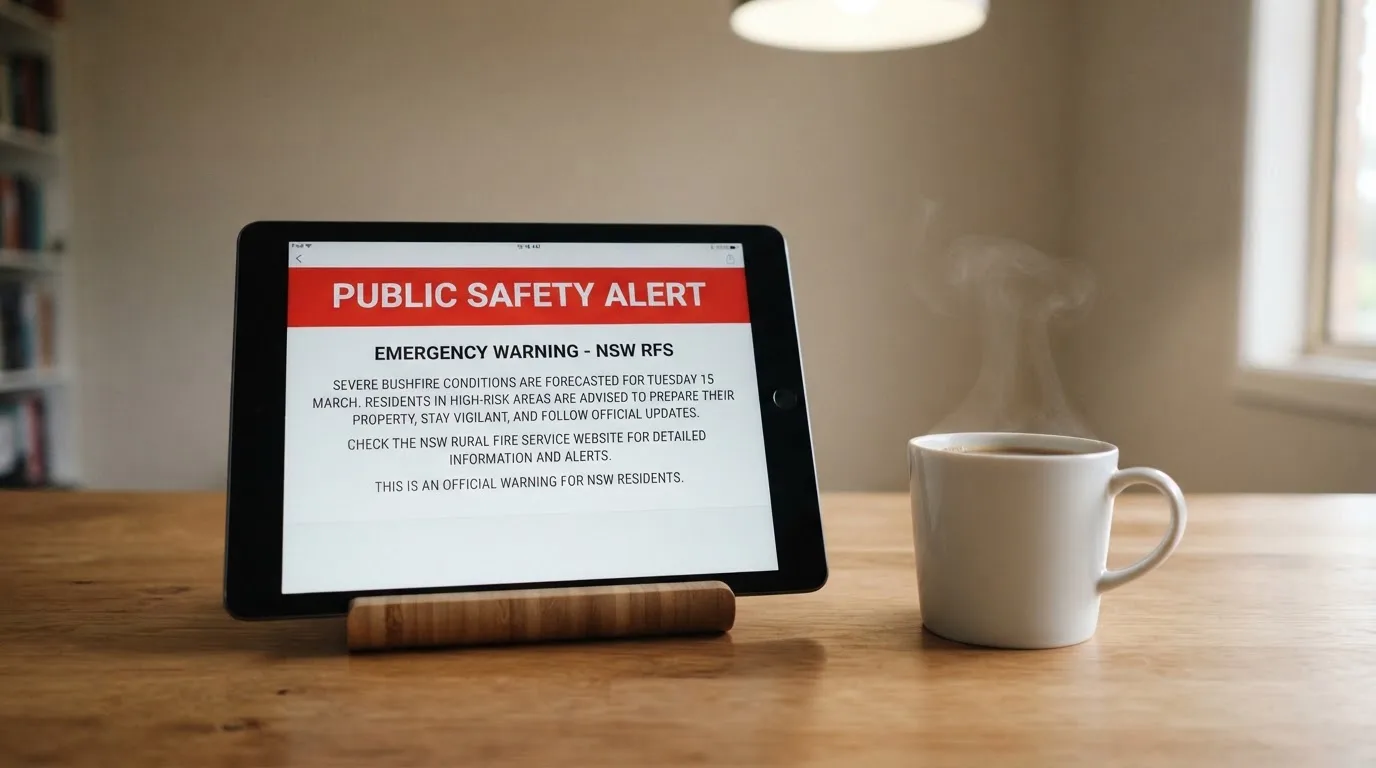
An offshore casino gives no Australian consumer protection. There is no Australian complaints body with jurisdiction over it; there is no local recourse if a withdrawal is refused, a bonus is voided or an account is closed mid-session. If the ACMA directs an Australian ISP to block the site while a balance is still on it, the player has lost access to the cashier they need to withdraw from. The 230-odd services that have left the Australian market since 2017 include a number that did so without honouring outstanding balances; the regulator’s enforcement tool against that behaviour is blocking, which does not return money.
BetStop, the National Self-Exclusion Register, has been live since August 2023 and binds Australian-licensed online and phone wagering services. It does not bind an offshore casino. A player who has registered with BetStop and then opened an offshore account is not excluded from that offshore account by the registration. The National Gambling Helpline, on 1800 858 858, is free, twenty-four hours a day, with chat at Gambling Help Online; both are useful regardless of where the gambling is happening, because the problem they are built to address is the player’s, not the operator’s.
The tax position is the one piece of plain news. Gambling winnings of a recreational player are not assessable income under section 6-5 ITAA 1997, and losses are not deductible, unless the person carries on a business of gambling. The ATO’s view of “carrying on a business of gambling” is narrow; the model is to confirm with the ATO directly if it is in question.
The 2026 reform picture has one piece of moving text. The Interactive Gambling Amendment (Gambling Reform) Bill 2026 passed Parliament on 19 August 2026, with its advertising and inducement measures commencing on 1 January 2027. On a page read in 2026, that is law with a start date rather than law in force, and the inducement measures it covers are precisely the kind of marketing claim a “no minimum deposit” headline is built on.
Keeping a “no minimum” claim in proportion
A reader who has reached this section of the page is not short of facts. The arc of those facts is consistent: the marketing claim is small, the structural situation is large, and the reader sits in the middle. Three things to carry forward from the page as a whole.
First, the legal prohibition on online casino games in Australia is not a soft prohibition. It is the substantive prohibition of the Interactive Gambling Act 2001, enforced through formal warnings, blocking requests, and operator-level penalties for licensed services that breach the credit and credit-product ban. A reader who has decided to play at an offshore casino is not skirting a rule; they are participating in a market the regulator has specifically constructed its enforcement program around.
Second, the payment rail a reader uses to fund an offshore account is not a quality signal. PayID, Osko, BPAY and eftpos are Australian payments infrastructure, and their speed and convenience at the deposit end of a transaction are not matched by any Australian recourse at the withdrawal end. The Reserve Bank’s July 2025 review proposes removing surcharges on eftpos, Mastercard and Visa transactions, and explicitly leaves American Express outside the scope of the proposed ban — which is a useful reminder that the Australian payments system has its own layers, and that an offshore casino’s “no minimum” is a claim about a cashier screen rather than a claim about the rail underneath it. American Express, for context, was established in 1850 as a freight-forwarding company and became a card issuer with its first charge card on 1 October 1958; unlike Visa and Mastercard’s four-party network, Amex issues cards and processes transactions itself as a three-party scheme, which is one of the reasons the Reserve Bank’s review treats it separately.
Third, the responsible-gaming layer — BetStop, the National Gambling Helpline, Gambling Help Online — is built around licensed Australian wagering, and an offshore account is not connected to any of it. That is the one place on the page where the recommendation is not optional. Anyone who is gambling in a way they want to stop should call 1800 858 858 or visit Gambling Help Online before choosing where the next account is opened.
What a reader comparing these operators should actually compare
The table of eleven names the ACMA has warned is not a comparison the page can complete honestly from research. What it can offer, in closing, is a list of the comparisons the page has refused to make and the reasons it refused.
It has not printed a column of deposit minima, because the only sources for those figures were affiliate marketing pages and the regulator’s register does not record them. It has not printed a column of payout times, because the only sources were the operators’ own cashier pages and an offshore operator’s cashier page is the document that is in dispute when a withdrawal is delayed. It has not printed a column of bonus amounts, because the plan is explicit that bonus terms are not in scope and the affiliate pages that carried them were the same pages the operator paid to exist.
The comparison the page can stand behind is the one the regulator publishes: the operator’s corporate name, the date of the formal warning, and the underlying law. A reader comparing these eleven against each other is comparing eleven different skin brands on a small number of corporate vehicles, against a regulator whose enforcement pace has been running faster since 2025, against a market that lost an estimated A$3.9 billion to illegal sites in the year to H2 Gambling Capital’s 2025 estimate.
That is the picture. The “no minimum” survives at the top of the page because it is what brought the reader there. The reader came in through a marketing door; the page has walked them out through the regulator’s door. The two doors lead to different rooms.
Frequently Asked Questions
The technical floor is set by the payment rail and the merchant’s processing costs, not by the casino. A PayID or Osko transfer has no minimum at the platform level; the casino’s own minimum is what determines what the cashier accepts. Network fees on a crypto deposit are paid by the sender and sit on top of the deposit, so a small coin transfer can cost more in fees than the deposit is worth. The casino’s “no minimum” is not the same as a “no cost” deposit.
Does a crypto casino with no minimum deposit behave any differently to a fiat one?
On the deposit side, a crypto casino can accept any amount the underlying chain will process, which is why crypto is the rail most “no minimum” claims actually use. On every other side — licensing, complaints, withdrawal disputes, regulator contact — the casino is the same kind of offshore operator regardless of what currency it accepts. The deposit rail changes the first ten seconds of the relationship and nothing after them.
Is any casino advertising no minimum deposit licensed to accept Australian players?
No. Online casino games cannot be licensed anywhere in Australia. The licensing regime that does exist, run by the Northern Territory Racing and Wagering Commission, covers wagering on sport and racing placed before the event, lotteries and keno. A Curacao or Anjouan licence in a footer is a corporate registration, not an Australian clearance.
How does a bitcoin casino’s “no minimum deposit” claim interact with blockchain fees?
The deposit on a bitcoin casino is the amount the chain will move; the fee is the amount the sender pays the chain to move it. The two are separate, the fee is paid by the player, and at busy moments the fee can be several dollars. A “no minimum” headline describes the deposit; the fee is what the reader actually pays.
Why do “no minimum” ads use that phrase rather than a dollar figure?
Because “no minimum” is a marketing claim that sits above any specific dollar amount and is harder to refute. A casino that advertises a A$1 minimum can be tested at A$1.20; a casino that advertises no minimum can be tested only against the cashier screen, which is the document in dispute if a small deposit is refused. The phrase is doing the work of a claim that cannot easily be checked against the cashier that holds it.
What should a reader compare across several “no minimum deposit” sites?
The corporate operator named in the regulator’s register, the date of any formal warning, the rail a deposit would actually use, and whether the casino is connected to BetStop or to any Australian complaints body. Those four comparisons come from sources outside the casino itself; everything else a reader can compare on the casino’s own pages is a comparison the casino has written for the reader.