

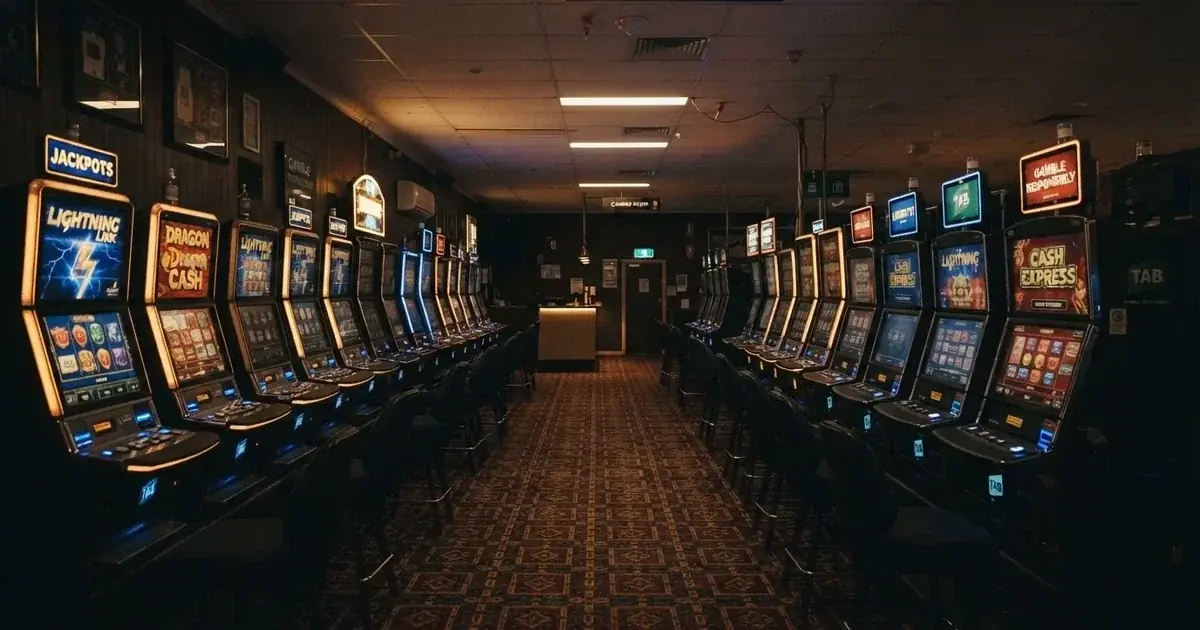
Adelaide pokies in 2026: the licensed floor, the cashless line, and the offshore sites the ACMA keeps warning
Anyone typing “best pokies in Adelaide” into a search engine is not short of options. They are short of the right option, which is a venue that actually holds a South Australian licence to run electronic gaming machines, takes bets in Australian dollars, and answers to a complaints body the player can reach. Most of what a search returns is not that. It is an offshore casino styled to look like a corner pub, complete with a “pokies” tab and a deposit bonus — a product the Interactive Gambling Act 2001 does not let anyone in Australia offer lawfully, and one the Australian Communications and Media Authority has spent the better part of a decade blocking and warning.
Data current as of 22 November 2026 and checked against the ACMA register, the South Australian Independent Gambling Authority, and the Liquor and Gambling Commissioner.
What follows walks the licensed floor first: Adelaide Casino on North Terrace, the suburban pubs and clubs that hold the other 11,672 gaming machines in the state, the South Australian rules that govern them, and the cashless card scheme that changes how a player moves money on and off a machine. It then walks what is not licensed — the eleven offshore brands the ACMA has put on its formal-warning list — and finishes with the responsible-gambling supports that actually reach an Adelaide player, as distinct from the ones that only reach someone playing with an Australian-licensed bookmaker.
The angle is what it costs a reader to treat these two layers as interchangeable. They are not.
Table of Contents
- Adelaide’s licensed pokies floor starts at the railway station
- What the state actually sets on return-to-player and stake size
- Cashless gaming and the new way money moves on a machine
- 24-hour pokies in Adelaide: which venues actually run through the night
- Adelaide Casino versus the suburban pub floor
- How a shortlist of “best pokies in Adelaide” is actually built
- Adelaide’s pokies payout percentage versus other Australian cities
- The offshore sites that advertise “pokies Adelaide” and what the ACMA has done about them
- What an ACMA formal warning actually does
- The legal frame these eleven brands sit inside
- How quickly the ACMA has moved against offshore brands
- What an Adelaide player can actually do if the offshore site won’t pay out
- The responsible-gaming supports an Adelaide player can actually reach
- What the next twelve months look like for the licensed floor
- The cost, named plainly
- The eleven ACMA-warned brands at a glance
- Frequently asked questions about Adelaide pokies
Adelaide’s licensed pokies floor starts at the railway station
Adelaide Casino sits inside the heritage-listed Adelaide railway station on North Terrace. It has held South Australia’s sole casino licence since the building opened as a gaming venue on 12 December 1985, originally under the state-owned Lotteries Commission. The state sold it to SkyCity Entertainment Group in June 2000, ran it as SkyCity Adelaide for several years, and reverted to the Adelaide Casino name in 2009. The licence that authorises the floor was extended to 30 June 2035 under a 2013 deed that also lets the operator expand, subject to redevelopment, to up to 200 gaming tables and 1,500 gaming machines. As it stands, the floor runs 90 tables and 950 machines inside the railway-station building and the EOS by SkyCity tower that opened in 2021.
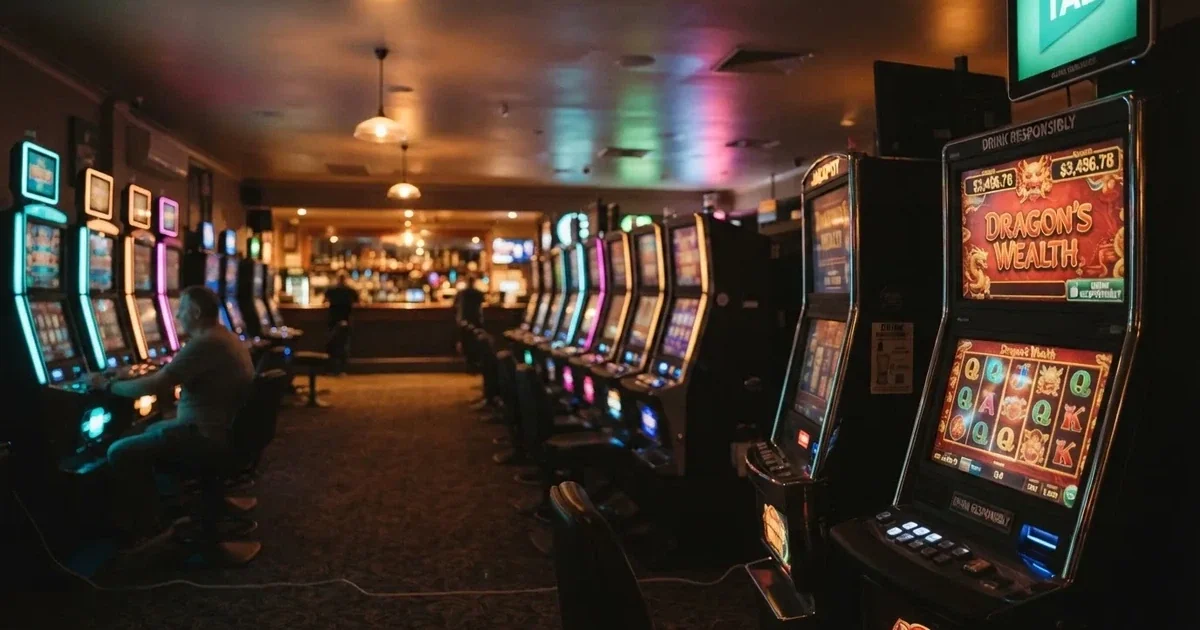
The rest of the state’s pokies live outside that building. In September 2023 South Australia had 11,672 gaming machines outside Adelaide Casino, spread across 471 pubs, clubs and hotels. That is the figure the state government reports and the figure the Independent Gambling Authority regulates against. Adelaide Casino is regulated separately, by the Authority and by the Liquor and Gambling Commissioner, and on its own terms pays more than A$41 million a year into state coffers.
A reader who hears “Adelaide pokies” and pictures a single casino is missing the bulk of the floor. The bulk sits in suburban pubs, with a couple of hundred in the city’s clubs, and is governed by rules the casino does not share.
What the state actually sets on return-to-player and stake size
South Australia sets a minimum gaming-machine return-to-player rate of 87.5% and a general maximum bet of A$5.00 outside the casino. Adelaide Casino itself has no maximum-bet limit. The two numbers are doing different jobs.
The 87.5% floor is the lowest return a venue can configure a machine to pay back over its full cycle. A machine set at 87.5% keeps, on average, A$12.50 of every A$100 a player feeds through it. Most machines on a modern pub floor sit a little above that floor — venue managers set their own rate within the regulatory minimum — but the floor is the legal baseline, and the regulator publishes venue-level return data because venues are required to disclose it. The A$5.00 cap on maximum bets is a stake ceiling per spin on any machine outside the casino. Inside Adelaide Casino, on the table-game side, the ceiling disappears; on the machine side the casino’s own house rules apply.
Player losses outside Adelaide Casino totalled about A$0.92 billion in 2022-23, equivalent to roughly A$497 per adult in the state. That is what 11,672 machines, an 87.5% floor, and a five-dollar cap actually produce in a year.
A reader comparing Adelaide with Brisbane or Canberra will notice the numbers move. Queensland had 21,122 gaming machines in 351 venues in October 2023, nearly double South Australia’s venue count, and a different return-to-player floor. The ACT had 3,587 machines in 46 venues on 1 November 2023, with losses of A$0.19 billion. Casino Canberra, the ACT’s only casino, does not run poker machines at all — its 39 gaming tables cover blackjack, roulette, baccarat and similar games, and a poker lounge sits beside them. The reader looking for a “pokies” experience in Canberra will not find one on the casino floor; the pub and club machines are the only pokies in the territory.
Cashless gaming and the new way money moves on a machine
South Australia’s cashless card scheme, brought in under the state’s gambling reforms, requires gaming machines to be played through a card-linked account rather than with banknotes fed directly into the machine. The reform targets the kind of problem gambling that builds around sitting at a machine with a wallet of notes and pulling them in one at a time. A card account caps how much can be loaded, tracks how it is spent, and lets a venue or a self-exclusion register turn the card off without the player having to do anything else.
The change has shifted what a player actually does at a venue. The old sequence — cash out at the bar, walk to the machine, feed notes in, repeat — is gone for venues that have completed the rollout. The new sequence is: register a card at the venue, load it from a debit card or PayID transfer at a kiosk, take it to the machine, and tap. Withdrawals run the same direction in reverse, back to a linked bank account rather than as a pocketful of coins. That is what “adelaide cashless pokies” means in practice, and it is the default across most of the state’s larger venues by now.
Payout times for cashless wins are short. A win above the machine’s ticket limit credits back to the player’s card account, not to a hand-collected ticket, and from there to a bank account in the same way a deposit arrived. The settlement runs through PayID or Osko for most Australian banks, which is real-time inside business hours and same-day after hours. The reader who wants to know “how long until the money is mine” has the answer sitting in the same rails they already use to pay a bill.
24-hour pokies in Adelaide: which venues actually run through the night
“24-hour pokies Adelaide” is one of the most common ways a player searches for a machine to walk up to after midnight. The honest answer is short. Adelaide Casino runs gaming machines 24 hours a day, every day, and that is the only licensed venue in the metropolitan area that does so on a continuous basis. Pubs and clubs operate within their liquor-licence trading hours, which for most suburban venues means the gaming floor closes between midnight and 3 a.m., with a handful of late-trading licences that push that out to 5 a.m.
A player looking at “24 hour pokies Adelaide open now” at 2 a.m. has, in practice, one option inside the city and a small number of late-trading pubs in surrounding suburbs. The rest of the licensed floor is closed. The reason this matters is that the search result a player sees does not always reflect this — offshore sites that advertise a “pokies Adelaide 24/7” tab are not running machines in Adelaide at any hour; they are running a website that a player in Adelaide can open at any hour, and that is a different product.
Adelaide Casino versus the suburban pub floor
A reader choosing between Adelaide Casino and a suburban pub or club is choosing between two different regulatory regimes.
Inside Adelaide Casino, the state sets the floor: there is no maximum-bet limit on the gaming machines, the casino holds the only table-game licence in South Australia, and the casino’s own responsible-gambling staff run the venue’s self-exclusion process. The casino’s loyalty programme and its hotel tower (120 rooms in EOS by SkyCity) are anchored to the casino floor, and the redevelopment that opened in 2021 expanded the gaming space within the heritage building.
Inside a suburban pub or club, the venue runs under a liquor and gaming licence issued by Consumer and Business Services South Australia, and is bound by the A$5.00 maximum bet and the 87.5% return-to-player minimum. The pub floor has more machines per venue than the casino on a per-square-metre basis, but each machine has a lower stake ceiling. The pub’s self-exclusion scheme sits within Consumer and Business Services’ framework rather than within the casino’s own process.
A player with a small bankroll and a preference for stake control will, in most cases, find the pub or club floor the closer match for what they actually want to do. A player who wants the table-game side, the higher stake ceiling, or the 24-hour continuous trading of a casino floor will, in most cases, find Adelaide Casino the closer match.
How a shortlist of “best pokies in Adelaide” is actually built
A shortlist of venues has to be built on something the reader can check. Three criteria do most of the work.
The first is the licence. The venue has to hold a current South Australian gaming-machine licence, issued by Consumer and Business Services, with no current suspension or condition that prevents the venue from operating machines. A venue whose licence is under suspension is not on the shortlist regardless of how well the rest of its profile reads.
The second is the return-to-player profile. South Australia publishes venue-level return data. A venue whose machines sit close to the 87.5% floor is paying back less than a venue whose machines sit higher. The data is published, and a reader who wants to compare can compare. The casino does not appear in this dataset because its licence regime is separate.
The third is the trading-hour profile. A venue that closes at midnight is a different proposition for a player who works late than one with a 3 a.m. close. The cashless card scheme applies equally across both.
What a shortlist should not lean on is the marketing claim. “Best paying pokies Adelaide” is a phrase that turns up on affiliate pages, and the affiliate pages do not publish the data the regulator does. The data the regulator publishes is the one the shortlist is built on.
Adelaide’s pokies payout percentage versus other Australian cities
Adelaide sits inside the Australian pub-and-club range rather than at its edge. The 87.5% minimum is in line with what other states set for hotel and club floors. The casino floor is regulated separately and publishes its own return data.
Brisbane’s Treasury Casino closed on 25 August 2024 to make way for The Star Brisbane at Queen’s Wharf, which opened on 29 August 2024. Queensland had 21,122 machines in 351 venues in October 2023. The Star Brisbane is being developed jointly with Hong Kong-based Chow Tai Fook Enterprises, and the project’s licence position has not been straightforward: in late 2022 the Queensland Government, acting on a review by former Court of Appeal judge Robert Gotterson, found Star Entertainment unsuitable to hold its Queensland casino licences, fined it A$100 million on 9 December 2022, and deferred a 90-day suspension of the Treasury Brisbane and Star Gold Coast licences to 1 December 2023 to allow remediation. The reader comparing payout percentages across cities is comparing a regulatory environment that is, in the largest Queensland venue, under active remediation.
The ACT’s Casino Canberra has no poker machines at all, which means the ACT comparison is between Adelaide’s pub floor and Casino Canberra’s table-only floor plus the territory’s 46 venues and 3,587 machines. Different shape, different ceiling.
The payout-percentage question the reader actually has is: how does Adelaide’s floor stack up? The honest answer is that Adelaide sits inside the Australian pub-and-club range on its minimum, has a separate casino regime for the high-stake side, and has fewer machines per venue than Brisbane but a higher per-venue trading-hour profile than the ACT’s casino-only floor.
The offshore sites that advertise “pokies Adelaide” and what the ACMA has done about them
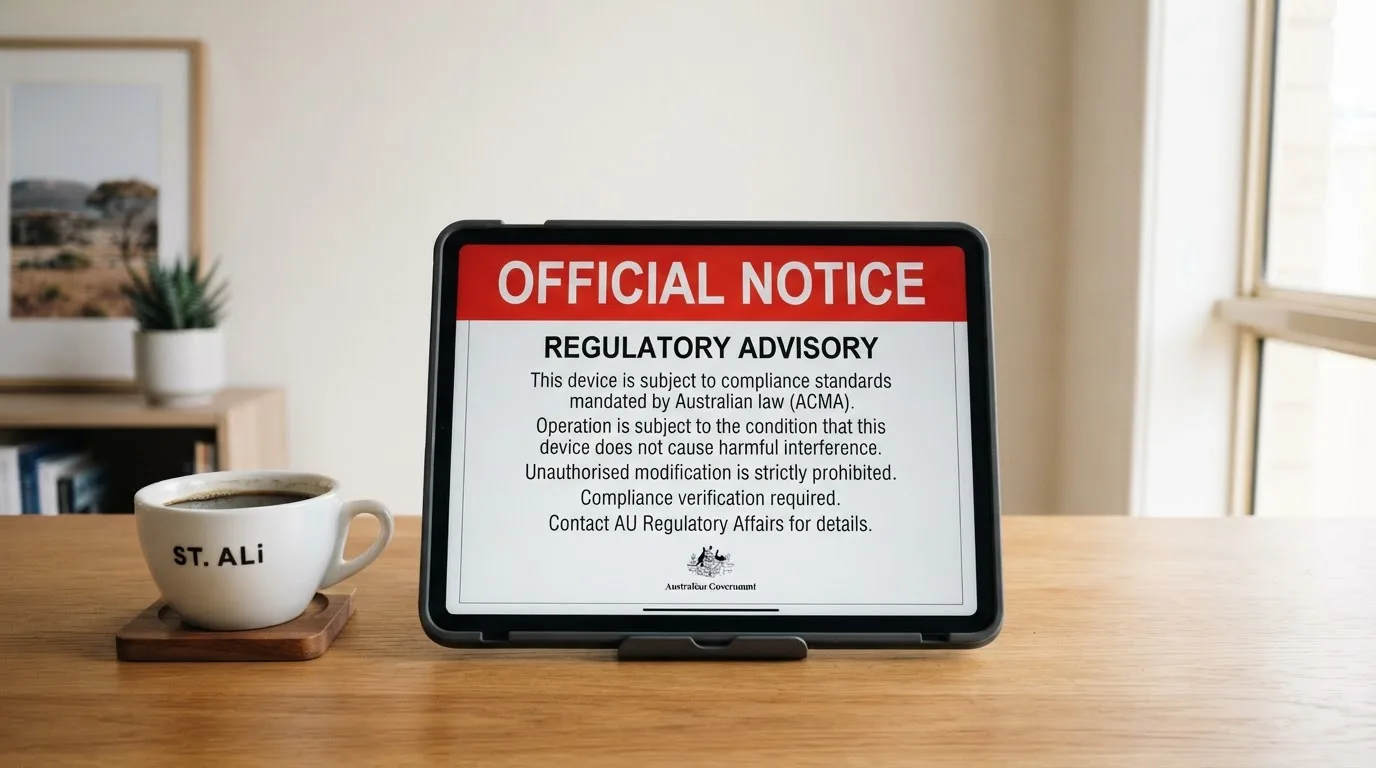
Eleven brands have drawn formal warnings from the ACMA for offering online casino games — including any product labelled “pokies” — to people in Australia. The Interactive Gambling Act 2001 does not let anyone in Australia offer that product lawfully, whatever licence a Curaçao or Costa Rica register lists for the operator. The ACMA’s formal-warning register is the only public record a player has of which brands have crossed that line and when.
RocketPlay
The ACMA issued a formal warning to Pulsup Ltd over RocketPlay in March 2026. The same brand had been the subject of an earlier formal warning to Dama N.V. in May 2022, when the ACMA warned Dama N.V. over six brands including Rocketplay. A reader seeing RocketPlay advertised for Australian play is being shown a product the regulator has put on its formal-warning list twice in four years.
Level Up Casino
The ACMA issued a formal warning to Dama N.V. over Level Up Casino in May 2022. The warning sits on the ACMA register alongside five other Dama N.V. brands named in the same notice.
Woo Casino
The ACMA issued a further formal warning to Dama N.V. over Woo Casino in March 2025. This sits separately from the May 2022 warning and shows the ACMA acting on Dama N.V. brands more than once across the calendar.
Spirit Casino
The ACMA issued a formal warning to Dama N.V. over Spirit Casino in May 2025. Same operator as Woo Casino, separate brand, separate warning.
National Casino
The ACMA issued a formal warning to Consolutetish S.R.L. over National Casino in July 2025.
Bizzo Casino
The ACMA issued a formal warning to Consolutetish S.R.L. over Bizzo Casino in July 2025. Bizzo had already been the subject of a 2022 formal warning to TechSolutions (CY) Group Limited and TechSolutions Group N.V., so the brand sits on the ACMA register across two operators and two calendar years.
Ignition Casino
Bamboo Media received a formal ACMA warning over Ignition Casino in July 2025.
Instant Casino
In February 2025, the ACMA published a formal warning covering Instant Casino, which is operated by EOD Code SRL.
Jackbit
The ACMA issued a formal warning to Ryker B.V. over Jackbit in April 2026. The same notice covered CasinOK.
Casino Intense
The ACMA issued a formal warning to Sterplay Holding Ltd over Casino Intense in April 2025.
Sky Crown
The ACMA issued a formal warning to Hollycorn N.V. over Sky Crown (and its sister brand Blue Leo) under a formal-warning notice published in September 2022.
What an ACMA formal warning actually does
A formal warning is the ACMA’s documented step before an internet-service-provider block. It does not, by itself, take the site offline. What it does is put the brand on a public register, and it gives the ACMA the basis to ask Australian ISPs to block the site under section 313 of the Telecommunications Act 1997 if the operator continues to offer prohibited services to Australians after the warning.
As of the June 2026 blocking round, the ACMA had asked ISPs to block 1,751 illegal gambling and affiliate marketing websites since the first blocking request in November 2019, and more than 230 unlicensed gambling services had left the Australian market since enforcement was strengthened in 2017. The June 2026 round itself added twelve sites to the block list: 7Signs, ChromaBet, Donbet, Duospin, Freshbet, Slots Gem, Jacks Club, Lucky Start, Pointsbetz, Spinrise, Vinyl Casino and Wildsino. That is the pipeline a reader should picture: a warning, then — if the operator keeps offering the product to Australians — a block.
H2 Gambling Capital’s 2025 estimate is that Australians lose about A$3.9 billion a year to illegal gambling sites, and that the share of gambling going through legal channels fell from 74% in 2021 to 64%. The two figures describe the same gap: a market the regulator is closing by the block list, while the dollar volume on the other side grows.
The legal frame these eleven brands sit inside
The Interactive Gambling Act 2001, strengthened by the Interactive Gambling Amendment Act 2017, makes it an offence to provide online casino games, online pokies or in-play betting to a person physically in Australia. No state or territory licences these products. What is licensable is wagering on races and sport placed before the event, lotteries, and keno — in practice licensed by the Northern Territory Racing and Wagering Commission, which regulates 52 of Australia’s online bookmakers including Sportsbet, Bet365 and Ladbrokes. The NTRWC has no full-time staff and meets once a month in Darwin. The reader hearing “Australian-licensed” applied to an online casino has been told a falsehood.
The minimum age is 18. The individual player is not prosecuted under the IGA — it targets the provider — but an offshore site gives the player no Australian consumer protection, no complaints body, and no recourse if a withdrawal is refused. The site can also be blocked with a balance still on it.
Credit cards, credit-related products and digital currency have been banned as payment for licensed online wagering since 11 June 2024, with penalties up to A$247,500 for operators that take them. Legal deposit routes for licensed wagering are debit card, bank transfer, PayID/Osko and BPAY. A site that asks an Australian player for a credit card or a crypto deposit is operating outside the Australian rules.
The Interactive Gambling Amendment (Gambling Reform) Bill 2026 passed Parliament on 19 August 2026. Its advertising and inducement measures commence 1 January 2027. The bill is law with a start date — not yet in force on a page written for 2026. A reader comparing what is and is not allowed today reads a different picture from a reader comparing what will be allowed next year.
How quickly the ACMA has moved against offshore brands
The blocking-rate calculation sits at the heart of the case for treating the licensed floor and the offshore sites as different products. The ACMA has been issuing blocking requests since November 2019 and has, in roughly six and a half years, asked ISPs to block 1,751 illegal gambling and affiliate marketing websites. That is the running total at June 2026.
| Period | Blocking requests filed | Notes |
|---|---|---|
| November 2019 to June 2026 | 1,751 illegal gambling and affiliate marketing websites blocked | First blocking request was November 2019. |
| June 2026 round alone | 12 additional websites blocked | 7Signs, ChromaBet, Donbet, Duospin, Freshbet, Slots Gem, Jacks Club, Lucky Start, Pointsbetz.com, Spinrise, Vinyl Casino and Wildsino. |
The blocking rate over the period sits in a band of roughly 250 to 280 websites per year, with the annual rate varying as the ACMA runs multi-site rounds rather than steady-state blocking. The June 2026 round’s twelve additions are one of those multi-site events. The pattern is not a flat line of enforcement; it is a series of rounds, with the cumulative total sitting at 1,751 by mid-2026.
A reader who sees a brand still advertised for Australian play after a blocking round should read that as either a rebrand (the same operator under a new name), a mirror site, or a site that has not yet appeared in the block list. The block list is the ACMA’s working list, not a complete index of every offshore brand.
What an Adelaide player can actually do if the offshore site won’t pay out
This is the cost the offshore sites will not surface. An Adelaide player who wins on an offshore casino and is refused a withdrawal has, in practice, no Australian complaints body to approach. The Australian Financial Complaints Authority does not bind offshore operators. The ACMA’s role is to investigate and warn, not to arbitrate individual disputes. The state gambling regulators (South Australia’s Independent Gambling Authority and Consumer and Business Services) regulate licensed venues and licensed wagering operators, not offshore sites.
A player who holds an account balance on an offshore site that gets blocked has, again in practice, no recovery path. The balance sits on a server outside Australian jurisdiction and the operator has no Australian licence that an Australian court can enforce. This is the consumer-protection cost of choosing the offshore product over the licensed one.
A player who plays at Adelaide Casino or a licensed South Australian pub or club has the Liquor and Gambling Commissioner, the Independent Gambling Authority, Consumer and Business Services, and the state tribunal system. Those bodies are reachable, and their decisions bind the venue.
The responsible-gaming supports an Adelaide player can actually reach
BetStop, the National Self-Exclusion Register, went live on 21 August 2023 and is run by the ACMA. It binds Australian-licensed online and telephone wagering services — that is, the licensed bookmakers and the licensed racing and sports operators. It does not bind the offshore casino sites, because those sites do not hold an Australian licence to begin with, and it does not bind in-venue gambling such as the machines in an Adelaide pub or at Adelaide Casino.
An Adelaide player who wants to self-exclude from a venue has to use the venue’s own process — or, for Casino Canberra, the ACT Gambling Harm Prevention team’s own self-exclusion process, available for 6-month to 3-year periods. South Australian venues run their own venue-level self-exclusion schemes through the regulator’s framework.
The ACT Gambling Support Service runs a free, 24/7 Gambling Helpline on 1800 858 858, offering telephone, online and face-to-face gambling and financial counselling. The helpline is funded by the ACT Gambling Harm Prevention and Mitigation Fund. The national Gambling Help Online service sits alongside it and is reachable for South Australian residents. Both routes are free, both are 24/7, and both are funded outside the gambling industry.
A player who has been playing offshore and wants to step back has fewer tools than a player who has been playing on the licensed floor. The licensed floor has the regulator and the venue; the offshore product has neither. That is what the responsible-gaming support landscape looks like for an Adelaide resident in 2026.
What the next twelve months look like for the licensed floor
The casino’s licence runs to 30 June 2035, with the redevelopment cap sitting at 200 tables and 1,500 machines. The state has set the 87.5% return-to-player minimum, the A$5.00 stake cap outside the casino, and the cashless card scheme. The 2026 reform bill’s advertising and inducement measures commence on 1 January 2027. The ACMA’s block list sits at 1,751 sites at the June 2026 snapshot, with twelve added in the most recent round. The Treasury Casino closed in August 2024 and The Star Brisbane opened at Queen’s Wharf in the same month, with Star Entertainment’s Queensland licence still under remediation following the December 2022 finding of unsuitability and the A$100 million fine.
A reader deciding what to do in Adelaide in 2026 has, on the licensed side, a stable regulatory regime, a state with a venue-level return dataset, a cashless card scheme that tracks the player’s spend, and a regulator that answers the phone. On the offshore side, a block list that grows by roughly 250 to 280 sites a year, a regulator that issues formal warnings before it blocks, and a product the Interactive Gambling Act 2001 does not let anyone in Australia offer lawfully. The decision between the two is not a question of where the higher payout percentage is. It is a question of where the player can be paid, can complain, and can step back.
The cost, named plainly
The licensed floor costs the player the published return-to-player rate, the stake ceiling, and the venue’s own self-exclusion framework if the player wants to step away. The player knows what they are paying, who is collecting it, and who to call.
The offshore product costs the player a return-to-player figure the operator sets and rarely publishes, the operator’s own withdrawal terms (which can include maximum-cashout clauses that turn a jackpot into a fraction of a jackpot), and the absence of any Australian complaints body if the operator declines to pay. The block list is the regulator’s way of saying what it costs the country — A$3.9 billion a year, per the H2 Gambling Capital 2025 estimate — and the cost to the individual player is what is left in an account that no Australian court can reach.
That is the comparison a player searching “best pokies in Adelaide” in 2026 is actually making. The licensed floor and the offshore sites are not interchangeable, and the search results that put them on the same page are doing the reader a disservice.
The eleven ACMA-warned brands at a glance
| Brand | ACMA action and date | Operator named by the ACMA | Subject support |
|---|---|---|---|
| RocketPlay | Formal warning under the Interactive Gambling Act 2001, March 2026; earlier warning May 2022 | Pulsup Ltd (March 2026); Dama N.V. (May 2022) | — |
| Level Up Casino | Formal warning under the Interactive Gambling Act 2001, May 2022 | Dama N.V. | Listings only (en.wikipedia.org; vgccc.vic.gov.au) |
| Woo Casino | Formal warning under the Interactive Gambling Act 2001, March 2025 | Dama N.V. | Listings only (en.wikipedia.org) |
| Spirit Casino | Formal warning under the Interactive Gambling Act 2001, May 2025 | Dama N.V. | — |
| National Casino | Formal warning under the Interactive Gambling Act 2001, July 2025 | Consolutetish S.R.L. | Listings only (Abc.net.au; infrastructure.gov.au) |
| Bizzo Casino | Formal warning under the Interactive Gambling Act 2001, July 2025; earlier warning 2022 | Consolutetish S.R.L. (July 2025); TechSolutions (CY) Group Limited and TechSolutions Group N.V. (2022) | — |
| Ignition Casino | Formal warning under the Interactive Gambling Act 2001, July 2025 | Bamboo Media | — |
| Instant Casino | Formal warning under the Interactive Gambling Act 2001, February 2025 | EOD Code SRL | — |
| Jackbit | Formal warning under the Interactive Gambling Act 2001, April 2026 | Ryker B.V. | — |
| Casino Intense | Formal warning under the Interactive Gambling Act 2001, April 2025 | Sterplay Holding Ltd | Listings only (Abc.net.au; Asgam.com; cbs.sa.gov.au) |
| Sky Crown | Formal warning under the Interactive Gambling Act 2001, September 2022 | Hollycorn N.V. | Listings only (en.wikipedia.org) |
The “listings only” entries reflect what the major directory sites report about these brands and do not, on their own, constitute an Australian licence. The em-dash entries are brands for which the consulted sources carry no separate directory profile beyond the ACMA warning.
Frequently asked questions about Adelaide pokies
Which venues in Adelaide are licensed to operate pokies?
Adelaide Casino on North Terrace holds the sole South Australian casino licence and runs 950 gaming machines inside the heritage railway-station building, with the licence extended to 30 June 2035. Outside the casino, South Australia had 11,672 gaming machines across 471 pubs, clubs and hotels in September 2023. Both sets of venues are licensed by Consumer and Business Services South Australia and the Independent Gambling Authority; the casino is regulated separately.
Are pokies in Adelaide available around the clock?
Adelaide Casino runs gaming machines 24 hours a day, every day. Pub and club machines operate inside the venue’s liquor-licence trading hours, which for most suburban venues means the gaming floor closes between midnight and 3 a.m., with a small number of late-trading licences that extend that window to 5 a.m. A player looking for a machine at 2 a.m. has, in practice, one option inside the city.
What identification do venues in Adelaide require before letting someone play pokies?
South Australian gaming venues require proof of age before entry to the gaming floor — minimum age is 18 — and the cashless card scheme links a player’s gaming activity to a registered card account. A player who cannot produce identification cannot register a card and cannot play a machine. Adelaide Casino runs its own enrolment process for the loyalty and cashless card scheme.
Can visitors to Adelaide use self-exclusion schemes at local pokies venues?
A visitor to Adelaide can use the venue’s own self-exclusion process at any licensed venue that runs one. BetStop, the National Self-Exclusion Register, does not bind in-venue gambling such as pub or casino machines — it binds Australian-licensed online and telephone wagering services. A visitor wanting to self-exclude from Adelaide Casino uses the casino’s own process; a visitor wanting to self-exclude from a suburban pub uses the venue’s own process through the Consumer and Business Services framework.
How does the payout percentage on Adelaide pokies compare with other Australian cities?
South Australia sets a minimum gaming-machine return-to-player rate of 87.5%, with a general maximum bet of A$5.00 outside the casino. Adelaide Casino has no maximum-bet limit on its machines. Queensland runs 21,122 machines across 351 venues; the ACT runs 3,587 machines across 46 venues, with Casino Canberra offering table games only and no poker machines. Adelaide’s per-venue machine count sits below Brisbane’s and well above Canberra’s, with a separate casino regime for the high-stake side.
Is it legal for an online casino to advertise ‘pokies’ in Adelaide the same way a pub or club does?
No. The Interactive Gambling Act 2001 makes it an offence to provide online casino games or online pokies to a person in Australia, and no state or territory licences these products. The eleven brands listed in the comparison above have all received formal warnings from the ACMA under the IGA. The 2026 reform bill’s advertising and inducement measures commence on 1 January 2027, which tightens what licensed wagering operators can advertise; the prohibition on online casino products sits in the 2001 Act and applies today.