

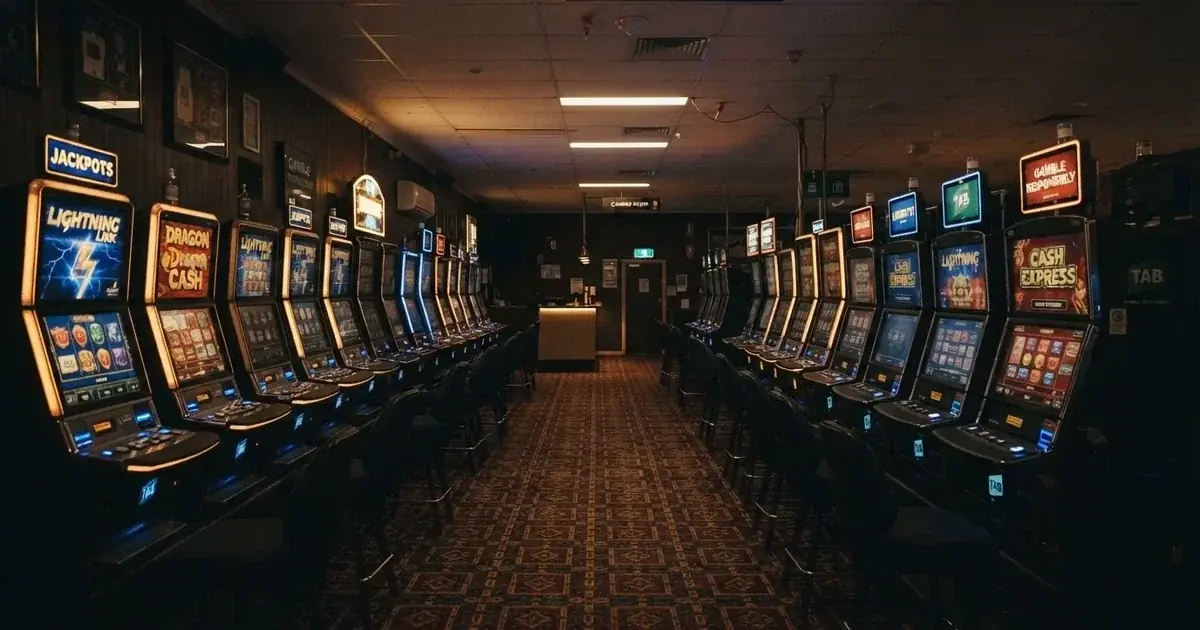
Best Casino in Sydney 2026: Two Licensed Floors, A$23 Million in Fines, and 1,751 Offshore Sites Blocked
The honest answer to the search for the best casino in Sydney is shorter than the marketing wants it to be. There are two casino licences in New South Wales, both held in the harbour-side precinct around Pyrmont and Barangaroo. One is under external management and A$100 million in the red with the regulator. The other opened in 2020 at the top of Sydney’s tallest tower. Everything else that turns up under this search — the comparison tables, the offshore reviews, the bonus codes — is for sites the Australian Communications and Media Authority has already acted against, because offering online casino games to anyone in Australia is prohibited under the Interactive Gambling Act 2001.

This page lays out what is actually on the floor at The Star Sydney and Crown Sydney, what the law around them looks like in 2026, what the ACMA has been blocking since November 2019, and which offshore brands the regulator has warned out of the Australian market. The angle is the cost — to the punter, to the operator, to the regulator — because the marketing rarely frames it that way.
Data current as of 22 November 2026, verified against the Australian Communications and Media Authority register and Liquor and Gaming NSW.
Table of Contents
- Sydney’s Two Licensed Casino Floors
- What Is Actually on the Floor: Games, Tables, and Stakes
- The Law Around Sydney Casinos in 2026
- The ACMA’s Enforcement Record: 1,751 Sites and Counting
- The Cost: What the Player, the Operator, and the State Pay
- Player Protection in New South Wales
- Offshore Brands the ACMA Has Warned Out
- Adjacent Land-Based Venues Worth Knowing
- Choosing Between The Star Sydney and Crown Sydney
- What the 2026 Reform Package Changes
- What Remains Uncertain
- Frequently Asked Questions
Sydney’s Two Licensed Casino Floors
The legal map of casino play in Sydney fits on one hand. New South Wales has issued two casino licences since the state’s first gambling rooms opened in the 1950s: one in Pyrmont on the western edge of Darling Harbour, and one at Barangaroo on the harbour’s northwestern shore. Both sit within about two kilometres of each other, both are attached to hotels and entertainment venues, and one of them currently operates under a government-appointed manager because the regulator found it unsuitable to hold its own licence.

The two are not interchangeable. Crown Sydney is the newer property, taller, smaller in gaming footprint, and the only one whose licence is unencumbered by external supervision. The Star Sydney is the older, larger gaming operation, with 351 hotel rooms, two gaming floors, the 2,000-seat Sydney Lyric theatre, and a 3,000-seat Event Centre attached, and is also the property the NSW Independent Casino Commission found unsuitable to hold its licence on 13 September 2022 over money-laundering concerns.
The Star Sydney
The Star sits on Pirrama Road, Pyrmont, overlooking Darling Harbour, and is owned by Star Entertainment Group. It is Australia’s second-largest casino by gaming floor after Crown Melbourne, a distinction it carries for historical reasons rather than present ones; the regulator’s findings in 2022 were severe enough that the property now operates under a special manager appointed by the state, Nicholas Weeks, with supervision expected to continue through at least September 2025. The general manager, in other words, does not run the casino the regulator does.
The site’s gaming footprint is split across two floors. Its hotel uses 351 rooms split across two towers, the Darling and the Astral, and the wider complex includes the Sydney Lyric theatre and the Event Centre, both used for concerts and conferences rather than gaming. Outside the property, Pyrmont’s restaurant and bar strip runs along Harris Street and the promenades on either side of Darling Harbour, with the nearby Novotel Sydney Darling Harbour, the ibis Sydney Darling Harbour and the Hyatt Regency Sydney all within walking distance.
The practical result of the regulator’s intervention in 2022 is that a punter walking into The Star today is playing under restrictions not in place elsewhere in Sydney: enhanced reporting on cash buy-ins above the threshold the AML/CTF Act sets, mandatory exclusion checks against the venue’s own internal exclusion register, and visible signage of the responsible-gambling support services the venue is obliged to provide. None of those are unusual for a licensed venue, but the volume of regulatory signage at The Star is the volume of a venue under scrutiny.
Crown Sydney
Crown Sydney opened in December 2020 as the gaming component of the Barangaroo tower at 1 Barangaroo Avenue. The tower is the tallest building in Sydney at 271.3 metres across 75 floors, and it holds a hotel, residences, and the casino on its lower levels. Unlike The Star, it was built in the post-Silverdome period of Australian casino regulation, and the licence was granted under tighter conditions than the original 1990s regime.
The gaming floor is markedly smaller than The Star’s: the property was licensed as a “restricted gaming” venue in its first phase, focused on table games for VIP and premium mass customers, and the gaming-machine footprint is capped under conditions the regulator imposed in 2013 and renewed through the property’s development. Surrounding it is a six-star hotel, three of Sydney’s higher-end restaurants, and the waterfront promenade that runs north from Barangaroo Reserve.
Walking into Crown Sydney today is the cleaner of the two experiences. The regulator’s issues sit at The Star, not here, and the management of the property was the subject of a separate Victorian Royal Commission that closed in 2021, with the operator’s Victorian licence now held by a different entity after restructuring. For a punter comparing the two, the practical distinction is that one venue is operating at full licence and the other is operating under a special manager who answers to the NSW Independent Casino Commission.
What Is Actually on the Floor: Games, Tables, and Stakes
Sydney’s casino floors run the games a player would expect from a sizeable Australian venue, with the usual mix of table games and electronic gaming machines, and a handful of formats specific to the house rules on each floor.
Table games
Both venues offer the Australian floor mix: baccarat, blackjack, roulette, and craps. Baccarat dominates the VIP rooms at Crown Sydney and the premium mass area at The Star, partly because baccarat’s house edge on a banker bet sits at about 1.06 per cent — lower than the player-bet edge of 1.24 per cent and the tie edge above 14 per cent — and partly because it is the format the high-roller segment expects. The blackjack rules vary by table; the dominant format in both venues pays 3:2 on a natural, dealer stands on all 17s, and double-down is permitted on the first two cards only.
Roulette on both floors runs the American double-zero wheel in some sections and the European single-zero wheel in others. The American wheel carries a house edge of 5.26 per cent against the player on every outside bet; the European wheel carries 2.7 per cent. The venue does not put an asterisk on the wheel to tell one from the other; the player must look. Craps is offered at The Star’s main gaming floor and limited to certain sessions at Crown Sydney because the table requires a dedicated dealer crew to run at minimum wage costs the venue can absorb only in the busier shifts.
Electronic gaming machines — pokies
The term “pokies” is what an Australian calls the slot machines and EGMs that the American market calls slots. Both venues run EGMs as the larger portion of their floor. The Star has historically published a count of gaming machines on the floor around 1,500, including the gaming-machine areas adjoining its gaming-floor restaurants; Crown Sydney runs a smaller EGM footprint under the restricted-gaming conditions its licence imposes.
Return-to-player on Australian casino EGMs varies by venue and machine class. The Star’s EGM rebate settings and Crown Sydney’s sit in the 87-90 per cent band that the NSW and other state regulators consider sufficient return; the precise figure for any individual machine is published on the machine’s help screen, and the player who hits the help button before the first spin sees the RTP and the volatility class right there. Australian venue EGMs do not carry the volatility labels that UK and European markets publish, and the reel-strip RTP difference between two machines of the same theme can be several percentage points.
Limits and dress code
Minimum bets at the table games vary by the section of the floor. The main gaming floor at The Star runs blackjack from A$25 a hand and roulette from A$5 a chip; the premium rooms start higher. Crown Sydney’s tables start higher across the board because the floor is set up for the premium mass segment.
Dress code is the polite-biz-casual standard that Australian venues have converged on: collared shirt for men, no activewear or beachwear, jackets optional but worn at the higher-end tables at Crown. Both venues enforce ID at the door and run the player’s card against the venue’s own exclusion register as part of entry; ID is also required to claim any winnings over the threshold the venue’s reporting obligations set.
Outside the casino floor
The Star’s entertainment complex — the Sydney Lyric, the Event Centre — is open to the public regardless of whether the entrant plays on the floor. Crown Sydney’s restaurants and bars run the same way; the rooftop bar on the tower’s western face is open to hotel guests and to walk-ins subject to the venue’s dress and capacity rules. The rooftop bar specifically answers one narrow question a reader comparing the two properties often asks: yes, Crown Sydney has a rooftop bar and The Star does not, because the tower has a roof and the Pyrmont complex has a flat-top podium.
The Law Around Sydney Casinos in 2026
Australian casino law runs on a prohibition of online play layered over state-level licensing of physical venues. Online casino games cannot be licensed anywhere in Australia because the Interactive Gambling Act 2001, as amended in 2017, prohibits offering them to anyone physically in Australia, and no state or territory issues a licence that would cover them. What is licensable is racing and sports wagering, lotteries and keno — in practice licensed by the Northern Territory for tax reasons, with the Northern Territory Racing and Wagering Commission overseeing 52 of Australia’s online bookmakers despite having no full-time staff and meeting once a month in Darwin.
State licensing in New South Wales
Sydney’s casino licences are issued under the Casino Control Act 1992 (NSW) and regulated by the NSW Independent Casino Commission, with Liquor and Gaming NSW handling the broader gambling and liquor framework across the state. The minimum age for entry is 18, and entry to the gaming floor requires photo ID; the broader casino complex — hotels, restaurants, performance venues, public bars — has its own entry rules separate from the gaming floor.
The Star’s licence drama opened in 2022. The Independent Casino Commission found the operator unsuitable to hold its licence on 13 September 2022 over conduct relating to money laundering risks, fined Star Entertainment A$100 million in October 2022, suspended the licence, and placed operations under a special manager. ASIC sued members of Star’s former board on 10 February 2025 over failures to track those money-laundering risks, and parallel proceedings against the same operator in Queensland led to a separate A$100 million fine on 9 December 2022, with a 90-day suspension of the Treasury Brisbane and Star Gold Coast licences deferred to 1 December 2023 to allow remediation.
Crown Sydney is regulated under a separate licence issued in 2013 and renewed through the Barangaroo development, with the operator’s own licence history in Victoria resolved through a separate restructuring process during 2021-23.
Online prohibition and the ACMA
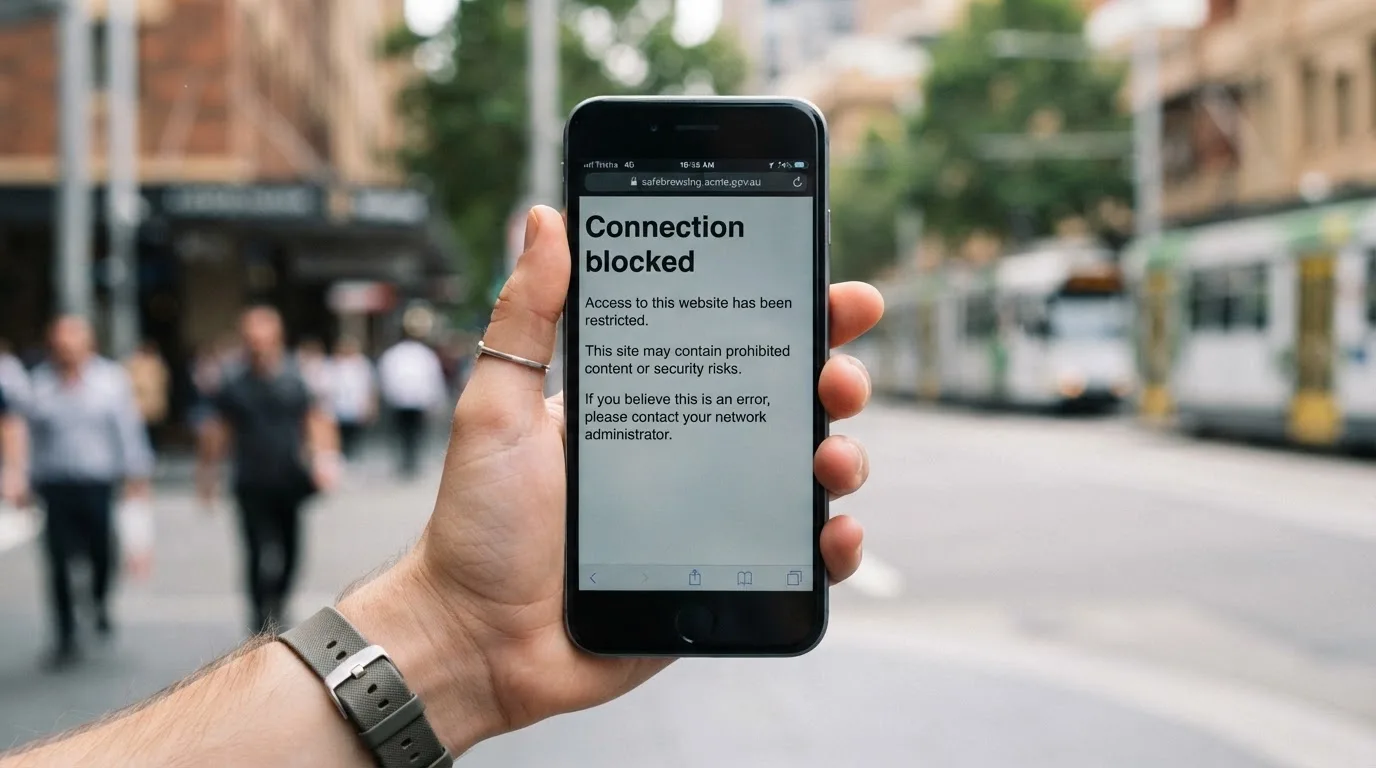
Offering online casino games to someone in Australia is an offence under the Interactive Gambling Act 2001, not a regulatory grey zone. The Australian Communications and Media Authority investigates, issues formal warnings, and directs Australian internet service providers to block offending sites. The blocking mechanism is operational — the first blocking request went to ISPs in November 2019 — and has run since then without a major policy reversal, despite multiple bills in Parliament to expand or contract the regime.
A 2025 reform package, the Interactive Gambling Amendment (Gambling Reform) Bill 2026, passed Parliament on 19 August 2026. Its advertising and inducement measures commence 1 January 2027, which means the law is in force but the conduct rules it adds do not apply until that date. A 2026 page reads this as law with a start date, not yet in force.
What the player is and is not liable for
The IGA targets the provider, not the customer. An Australian who plays at an offshore site commits no offence and is not prosecuted. What the customer loses by going offshore is the entire Australian consumer protection framework: no Australian complaints body, no Australian Gambling Commission recourse, no assurance the operator will pay out winnings if a dispute arises, no coverage under BetStop, and a real prospect that the site will be blocked with a balance still sitting in the account. The operator is the wrong target for a complaint.
The ACMA’s Enforcement Record: 1,751 Sites and Counting
The ACMA’s enforcement record is the concrete measure of the prohibition. The first blocking request went to Australian ISPs in November 2019, and as of June 2026 a cumulative 1,751 illegal gambling and affiliate marketing websites had been blocked, with more than 230 unlicensed gambling services having left the Australian market since enforcement was strengthened in 2017. The blocking rate over the roughly six-and-a-half-year period runs at an average of about 269 sites per year, with the back end of that period showing the steeper rate: the rounds have grown in size, and a single round can ask for twelve or more sites at once.
The arithmetic the page closes on is exactly this blocking rate. From a baseline of 0 in November 2019, the regulator’s total of 1,751 blocks as reported in June 2026 works out to a rolling average of roughly 269 sites blocked per year across approximately six years and six months — a figure that sits well above the per-year rate of the earlier rounds and tracks the steady broadening of the formal-warning programme from 2017 onward. The condition on that figure is that the count includes both gambling sites and affiliate marketing pages that route traffic to them, so the rate against pure-play casino brands is lower; a reader using the headline number as a measure of “casino enforcement” is double-counting the affiliate layer.
A typical blocking round asks ISPs to block twelve sites in one direction; the round reported on 26 June 2026 named 7Signs, ChromaBet, Donbet, Duospin, Freshbet, Slots Gem, Jacks Club, Lucky Start, Pointsbetz, Spinrise, Vinyl Casino and Wildsino. The pattern across rounds is that the names change quickly — operators rotate brands, transfer licences between jurisdictions, and relaunch under fresh domains when the previous brand is blocked — so a single enforcement action takes a name out of the market for the moment without shrinking the underlying demand that brought it in.
The formal-warning programme runs in parallel. The ACMA issues a formal warning when an operator’s conduct meets the IGA’s threshold but the regulator judges that a warning — rather than a referral to ISPs for blocking — is the proportionate first step. A warning is published on the ACMA’s website, names the operator and the date, and forms the basis for a later blocking request if the conduct continues.
The warnings accumulated across the period covered by this page illustrate the breadth of the offshore market the regulator is contending with. March 2026 saw a warning to Pulsup Ltd over Rocketplay. May 2022 brought a warning to Dama N.V. covering six casino brands: Bambet, Dazard, Level Up, Rocketplay, Wild Tornado and Cobra Casinos. The ACMA issued further warnings to Dama N.V. in March 2025 over Woo Casino and in May 2025 over Spirit Casino. July 2025 brought warnings to Bamboo Media over Ignition Casino and to Consolutetish S.R.L. over National Casino and Bizzo Casino — Bizzo had also been the subject of a 2022 formal warning to TechSolutions (CY) Group Limited and TechSolutions Group N.V. February 2025 saw a warning to EOD Code SRL over Instant Casino. April 2026 brought a warning to Ryker B.V. over Jackbit and CasinOK. April 2025 named Sterplay Holding Ltd over Casino Intense. The ACMA also issued a formal warning to Hollycorn N.V. over its Sky Crown and Blue Leo casino services in 2022.
The combined message of those warnings is simple: the operator behind the brand changes when an enforcement action lands. Dama N.V. is named in three different warnings across 2022 and 2025; Consolutetish S.R.L. fronts two of the brands in 2025 that had earlier been run by TechSolutions in 2022. The pattern is the offshore industry’s churn against the regulator’s pressure, and a reader who recognises one brand name in this list should treat any sister brand from the same operator as part of the same enforcement frame.
The Cost: What the Player, the Operator, and the State Pay
The angle the page takes is what the prohibition costs each side, because the marketing material almost never does.
What it costs the player who stays offshore
The price of an offshore account is not the bonus terms, which are not comparable to anything the licensed market offers because the licensed market does not offer them. The cost is the absent protection: no Australian complaints body if the operator refuses a withdrawal, no recourse if the game audit cannot be produced, no assurance that the offshore regulator’s licence carries any weight in an Australian court. H2 Gambling Capital’s 2025 report estimates Australians lose about A$3.9 billion a year to illegal gambling sites, and the share of gambling going through legal channels fell from 74 per cent in 2021 to 64 per cent. That is the headline cost of the offshore market, and the share of legal-channel gambling falling by ten percentage points in four years is the trend the figure hides.
What it costs the operator who runs a Sydney casino
The cost of holding a Sydney casino licence in 2026 is the regulatory regime the licence commits to. The Star’s A$100 million fine and external management are the most visible; the underlying cost is the AML/CTF compliance regime, the responsible-gambling staffing, the player-card data, the venue-level reporting, and the constant supervision the regulator applies. Crown Sydney’s licence does not carry that supervision today, but the operator came out of its own Victorian process with the structural changes the regulator there imposed, and it carries those forward.
What it costs the state
New South Wales recorded A$8.18 billion in annual player losses from poker machines outside casinos in FY22-23, at A$986 per capita. South Australia runs the comparison: A$0.92 billion in gaming-machine losses outside Adelaide Casino in 2022-23, equivalent to about A$497 per adult. Queensland had 21,122 gaming machines operating in 351 venues in October 2023, a count that includes the period just before Treasury Casino’s closure for the Queen’s Wharf relaunch. The dollar figures are large, and they fund the state budgets that fund the regulator that closes venues that break the rules — a circular logic that the casino sector and the state both depend on.
Player Protection in New South Wales
Player protection in Sydney runs through three layers, and only two of them apply to a player at The Star or Crown Sydney. The third — BetStop — covers online wagering but not casino play because casino play is not licensable online.
At the venue
Both venues run their own exclusion registers under the conditions their licences impose, with staff trained to direct a self-excluded player away from the gaming floor and to provide information on support services. Cash buy-ins above the AML/CTF reporting threshold trigger enhanced due diligence; the venue is required to file a report and may decline the transaction. Signage for the National Gambling Helpline is visible across both venues.
ID and entry
Photo ID is checked at the door of both venues, and entry to the gaming floor is recorded against the player’s card where one exists. The minimum age is 18; minors can enter the hotel and restaurant portions of both venues but cannot enter the gaming floor under any condition.
BetStop and the National Self-Exclusion Register
BetStop, the National Self-Exclusion Register, has been live since August 2023 and binds Australian-licensed online and phone wagering services. A punter who registers with BetStop cannot open new accounts with Australian-licensed bookmakers for the exclusion period they select. The register does not cover the casino venue floor because the floor is regulated under state law with its own venue-level exclusion scheme, and it does not cover offshore operators because the offshore operators are not connected to the Australian system.
Where to get help
National Gambling Helpline 1800 858 858, free, 24/7, with chat at Gambling Help Online. The service is run by the state and territory health departments under a federal funding framework and is the support line a player should call if a problem has begun to surface.
Offshore Brands the ACMA Has Warned Out
The brands that follow are not a ranking and not a recommendation. Each is listed because the ACMA itself issued a formal warning over it for offering prohibited online casino services to Australians. The product — online casino games and online pokies — is not licensable in Australia under the Interactive Gambling Act 2001, so any “Australian licence” displayed on the operator’s site either refers to a different product (wagering, lottery) or is held by an entity not entitled to offer what the site offers. The reader comparing one of these to a Sydney venue is comparing two products the law treats very differently, and the comparison is the reason this section exists.
The table below lays the brands side by side on the matters the regulator’s record makes comparable: which operator the ACMA warned, when, and what the operator’s Australian-facing product was. Dates are stated as the regulator published them.
| Brand | ACMA action and date | Operator named by the ACMA | Subject support |
|---|---|---|---|
| RocketPlay | Formal warning, March 2026 (Pulsup Ltd); earlier Dama N.V. warning, May 2022 | Pulsup Ltd (March 2026); Dama N.V. (May 2022) | — |
| Level Up Casino | Formal warning, May 2022 | Dama N.V. | Listed on third-party directories only |
| Woo Casino | Formal warning, March 2025 | Dama N.V. | Listed on third-party directories only |
| Spirit Casino | Formal warning, May 2025 | Dama N.V. | — |
| National Casino | Formal warning, July 2025 | Consolutetish S.R.L. | Listed on third-party directories only |
| Bizzo Casino | Formal warning, July 2025 (Consolutetish S.R.L.); earlier 2022 (TechSolutions) | Consolutetish S.R.L. (July 2025); TechSolutions (2022) | — |
| Ignition Casino | Formal warning, July 2025 | Bamboo Media | — |
| Instant Casino | Formal warning, February 2025 | EOD Code SRL | — |
| Jackbit | Formal warning, April 2026 | Ryker B.V. | — |
| Casino Intense | Formal warning, April 2025 | Sterplay Holding Ltd | Listed on third-party directories only |
| Sky Crown | Formal warning, 2022 | Hollycorn N.V. | Listed on third-party directories only |
The pattern across the table is that the offshore operator behind the brand changes when the previous operator was warned out — Dama N.V. fronts three of the brands, Consolutetish S.R.L. fronts two of the brands, and the older TechSolutions entities are present in earlier warnings. None of the rows are a recommendation; all of them are an entry in the ACMA register.
Adjacent Land-Based Venues Worth Knowing
Sydney has more gambling-adjacent entertainment than its two casino floors, in the same way every Australian capital does. The broader New South Wales market includes 87,298 gaming machines outside casinos across 2,195 venues as of June 2023 — pubs and clubs running poker machines — and a player looking at the Sydney map may have walked past hundreds of pokies without realising the venue held them. Crown’s Sydney rooftop bar answered earlier is the venue’s stand-alone amenity.
Adelaide Casino
Adelaide Casino, known commercially as SkyCity Adelaide, sits in the heritage-listed Adelaide railway station building on North Terrace, with 90 gaming tables and 950 gaming machines, and is the sole licensed casino in South Australia under the Casino Act 1997. The property’s table-game monopoly in South Australia was extended to 30 June 2035 under a licence formalised on 11 October 2013, which also allows the casino to expand to up to 200 gaming tables and 1,500 gaming machines subject to redevelopment. South Australia sets a minimum gaming-machine return-to-player rate of 87.5 per cent and a general maximum bet of A$5.00 outside the casino; Adelaide Casino itself has no maximum-bet limit. The casino’s regulator is South Australia’s Independent Gambling Authority and Liquor and Gambling Commissioner; in 2007-08 it paid more than A$41 million in taxes and charges to the state.
The point of including Adelaide in a Sydney page is comparator-scale: a smaller capital city, a single casino licence, an operator (SkyCity Entertainment Group) with an Australian footprint distinct from Sydney’s incumbents. The 2015-2021 Riverbank precinct redevelopment, worth about A$330 million, added the EOS by SkyCity tower with 120 hotel rooms and expanded gaming space.
Treasury Casino and The Star Brisbane
Brisbane’s Treasury Casino closed on 25 August 2024 to make way for the new Star casino at Queen’s Wharf, which began a staged opening at the A$3.6 billion Queen’s Wharf Brisbane precinct on 29 August 2024. The closure ended Treasury’s run as a three-level gaming emporium of 80 gaming tables and over 1,300 gaming machines, plus a hotel, six restaurants, five bars and a nightclub. The new Star Brisbane at Queen’s Wharf was developed jointly by Star Entertainment Group and Chow Tai Fook Enterprises, and Queensland carried 21,122 gaming machines in 351 venues in October 2023.
Star Entertainment’s Queensland licence is the parallel of its NSW licence drama. In late 2022 the Queensland Government, acting on an independent review by former Court of Appeal judge Robert Gotterson, found Star Entertainment unsuitable to hold its Queensland casino licences after concluding it had misled regulators and failed its anti-money-laundering duties. Star was fined A$100 million on 9 December 2022, with a 90-day suspension of the Treasury Brisbane and Star Gold Coast licences deferred to 1 December 2023 to allow remediation.
Comparing the venues
Crown Sydney is the only venue of the three Sydney-adjacent properties whose licence today carries no external supervision. The Star Sydney carries supervision until at least September 2025; The Star Brisbane carries the parallel Queensland licence under remediation since 2022. Adelaide Casino is the only property here held by a different operator (SkyCity Entertainment Group) and regulated by a single-state authority with no overlapping Royal Commission history.
For a player weighing where to play on a Sydney trip, the table-games product is similar across all three; the EGM product at Crown Sydney runs smaller; the dining and entertainment amenity is a step above the older Australian competition at The Star Sydney and Crown Sydney both.
Choosing Between The Star Sydney and Crown Sydney
For a player trying to pick between the two, the decision mostly turns on which constraint matters more.
When Crown Sydney fits
Crown Sydney fits the player who prefers a venue operating at full licence without external management, who is comfortable with the smaller gaming footprint the restricted-gaming licence imposes, and who values the rooftop bar and the Barangaroo waterfront context. The property is also the only one of the two that runs a quiet high-roller room explicitly.
When The Star Sydney fits
The Star Sydney fits the player who wants the larger gaming-floor selection, the connection to the surrounding Darling Harbour entertainment district, and the option of attending the Sydney Lyric or the Event Centre without leaving the complex. The Star also fits the player who does not need to ask which manager the venue currently operates under; the external manager is there for regulatory reasons, and the floor itself runs as a casino floor under those reasons.
The price both venues share
Both venues apply the same entry conditions — photo ID, age 18, recorded entry against any venue-level exclusion — and both run their AML/CTF reporting the same way. The base-point cost of a blackjack hand runs from A$25 at The Star’s main floor and higher at the premium rooms, with Crown Sydney’s tables starting higher across the board. A player comparing the price per hand at the two venues is comparing the same product at different minimum bets, and the venue that fits the player’s bankroll is the one to pick.
What the 2026 Reform Package Changes
The Interactive Gambling Amendment (Gambling Reform) Bill 2026 passed Parliament on 19 August 2026. Its advertising and inducement measures commence 1 January 2027. For the rest of 2026, the existing regime — the IGA 2001 as amended in 2017, the ACMA’s blocking and warning programme, the state-level casino licensing — continues to be the law the regulator enforces.
For a punter in 2026 the practical change at the start of 2027 will be tighter advertising rules around inducements to open new accounts, which lands hardest on the licensed wagering sector rather than on the unlicensed offshore sector, because the offshore sector cannot lawfully advertise anyway. The credit-card and digital-currency ban on licensed online wagering has been in force since 11 June 2024 (penalties up to A$247,500 for operators), so the 2027 advertising measures sit on top of an already-constrained payment landscape for the licensed bookmaker side.
For a venue punter at The Star or Crown Sydney, none of this changes the floor; the venue-level regime is state-based and was not affected by the federal bill. The reforms are an online and inducement package, not a venue-level one.
What Remains Uncertain
The Star Sydney’s external management is supervision expected to continue through at least September 2025; the present arrangement as of 2026 depends on the regulator’s next decision. Crown Sydney’s restricted-gaming licence was the condition the original 2013 licence imposed; whether the conditions have been varied since the 2020 opening is not in the inputs this page draws on, and a reader who needs the current setting should confirm against Liquor and Gaming NSW. The 2027 commencement date on the advertising reforms is the law as of the August 2026 passage; the implementable conduct rules are not yet in force on a 2026 page.
The offshore enforcement picture rolls forward. The ACMA’s blocking rounds continue at a pace of about one per month as of the regulator’s 2026 reporting, and the volume of names covered by formal warnings has expanded across the period the page covers. A reader treating the table above as exhaustive of the regulator’s actions is treating a moving target as a fixed one; the next round will add names.
Frequently Asked Questions
What is the name of the main casino in Sydney?
Sydney has two licensed casinos. The Star Sydney sits in Pyrmont overlooking Darling Harbour, and Crown Sydney sits at Barangaroo on the harbour’s northwestern shore, inside the city’s tallest tower. Both venues run the standard Australian casino mix of table games and gaming machines.
Where is the casino in Sydney located?
The Star Sydney is on Pirrama Road, Pyrmont, about fifteen minutes’ walk from the Sydney CBD via the Darling Harbour promenade. Crown Sydney is at 1 Barangaroo Avenue, on the harbour’s northwestern shore, also within walking distance of the CBD via the Barangaroo Reserve waterfront.
What is the minimum age to enter the casino in Sydney?
The minimum age is 18 at both venues. Photo ID is checked at the door, and entry to the gaming floor is recorded against the player’s card where one exists. Minors can enter the hotel and restaurant portions of both venues but cannot enter the gaming floor.
Does the casino in Sydney offer table games such as blackjack and baccarat?
Yes. Both venues offer blackjack, baccarat, roulette, and craps, with baccarat the dominant game in the VIP and premium rooms at Crown Sydney and the premium mass area at The Star. Roulette runs on American double-zero and European single-zero wheels; the player must look at the wheel to tell which.
Are there hotels within walking distance of the casino in Sydney?
The Star Sydney itself includes 351 hotel rooms split across the Darling and Astral towers, with several Pyrmont hotels walking distance including Novotel Sydney Darling Harbour, ibis Sydney Darling Harbour, and the Hyatt Regency Sydney. Crown Sydney runs its own six-star hotel at the base of the Barangaroo tower, with additional Sydney CBD hotels within walking distance along the waterfront.
Can Australians legally play at an online casino instead of visiting the casino in Sydney?
No. Offering online casino games to anyone in Australia is prohibited under the Interactive Gambling Act 2001, and no state or territory licenses them. The Australian player is not prosecuted, but the offshore site gives no Australian consumer protection, no Australian complaints body, and no assurance of payout if a dispute arises. BetStop, the National Self-Exclusion Register, does not cover offshore operators.