

What it actually costs to play at the best casino in Melbourne in 2026
When Australians search for the best casino in Melbourne, the legal answer is short: there is only one, and it sits on the south bank of the Yarra. The interesting question is not which one to walk into — Crown Melbourne holds the state’s only casino licence — but what the visit costs in money and in time, and what the offshore “alternatives” pitched at Australian players actually cost once the Australian Communications and Media Authority gets involved.

The data behind this page was checked against the ACMA’s public register and the ACMA’s blocking requests as of 22 November 2026.
Table of Contents
- What the best casino in Melbourne is, physically
- How Crown got its licence back, and what it cost to keep
- What a visit to the gaming floor actually costs the player
- Where Crown sits against the other Australian state casinos
- Specific games on the floor, and what each one costs
- Practical details for a visitor: getting there, parking, the surrounding hotels
- The fundamentals of the Melbourne casino search
- Why “best” turns on the licence, not the offer
- The prohibition and what it stops: the Interactive Gambling Act
- The blocking rate, and what the ACMA’s running total says about the trend
- The fines and warnings that show what the prohibition looks like in practice
- The 2026 reform, and what changes next year
- Payments, tax and what the regulator can actually reach
- Wellbeing, age limits and the tools that exist for the licensed product
- Why the cost story comes back to pokies
- Offshore brands the ACMA has acted against
- The honest answer to the search
- Frequently asked questions
What the best casino in Melbourne is, physically
Crown Melbourne is an integrated resort on the south bank of the Yarra River, in Southbank. The complex covers about 510,000 m² — roughly two city blocks — which makes it the largest casino complex in the Southern Hemisphere. The site opened temporarily on 30 June 1994 at the World Trade Centre on the north bank while the permanent building, designed by Bates Smart, Perrott Lyon Mathieson and Daryl Jackson, was still going up across the river. The permanent complex opened on 8 May 1997 and has run continuously since, with Crown Resorts owning the building since Publishing and Broadcasting Limited took it over from founder Lloyd Williams’ operation in 1999.
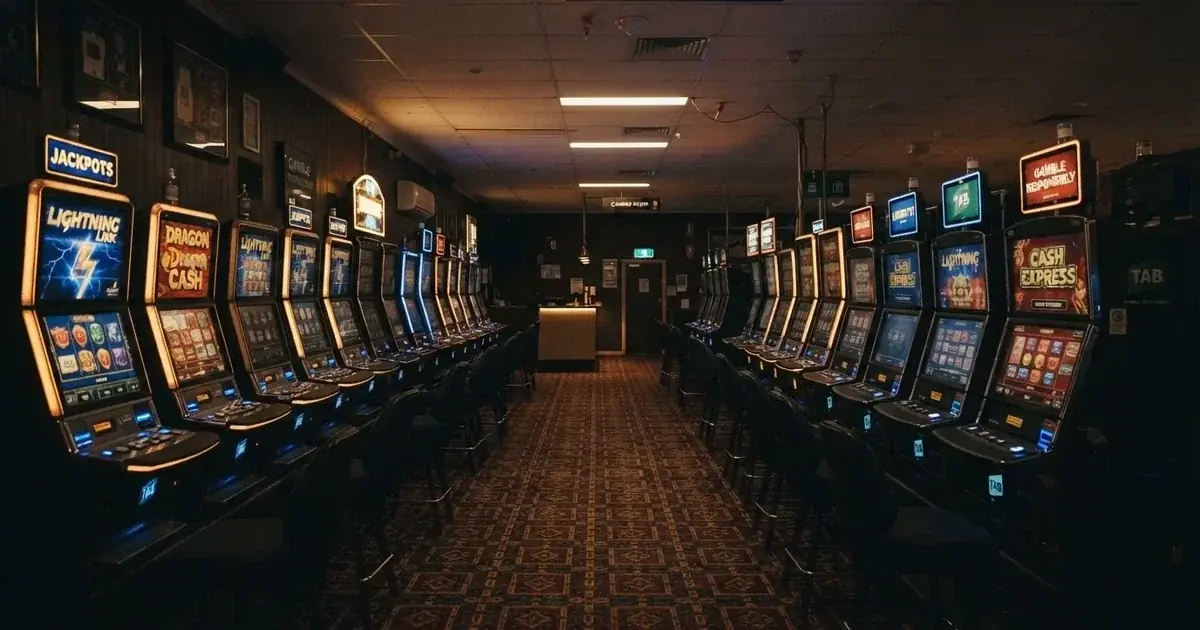
The gaming floor takes up about 220,000 square feet, or 20,000 m², and is licensed for 540 table games — a hundred of them dedicated poker — and 2,500 poker machines. Around it sits a hotel offering 1,604 rooms across three towers, plus the bars, restaurants and conference facilities that turn the venue into a resort rather than a gaming room.
The scale is the point. Crown is not a small gaming floor off a bar; it is the largest single gambling site in the country, and every cost figure on this page turns on that fact — how many machines, how many hours, how many dollars per adult in the state. A visitor who walks in expecting the size of a suburban RSL gaming room is in for a different property.
How Crown got its licence back, and what it cost to keep
The headline figure that hangs over Crown Melbourne in 2026 is not a hotel star rating or a square-metre count. It is the cost of the Royal Commission that nearly took the licence away.
Victoria’s Finkelstein Royal Commission into the Casino Operator and Licence concluded in October 2021 and found evidence of money laundering and strong ties to organised crime at the property. Crown kept its licence, but only for a two-year review period under a court-appointed Special Manager who ran operations alongside the existing executive. The Special Manager’s office became the de facto second management layer of the venue, with sign-off authority over high-roller programmes, junket arrangements and the responsible-gambling code that the venue was supposed to be running.
The financial penalties followed in two instalments. In June 2022 the Victorian gambling regulator fined Crown Melbourne A$80 million for processing A$164 million in illicit payments through the venue’s cage and front operations. Five months later, in November 2022, the same regulator added a further A$120 million fine for a decade of responsible-gambling breaches, including letting patrons gamble for stretches longer than 24 hours without a break. The combined A$200 million is a number worth keeping beside the A$164 million in illicit payments the regulator found: it is the regulator’s written record of what was happening on the floor while the surveillance cameras were running.
The legislative response was the Casino and Gambling Legislation Amendment Act 2021, which created the Victorian Gambling and Casino Control Commission as the new regulator and banned junket operations at Victorian casinos. Junkets had been the principal channel through which high-roller money — much of it offshore — moved through the property; ending them was the operational cost of getting the licence back.
What this costs a casual visitor in 2026 is harder to see than a fine. The Special Manager’s oversight regime is still in place; entry procedures, identification checks and table-game surveillance are noticeably more involved than they were pre-2021, and the venue’s responsible-gambling code is enforced to a tighter standard than the Australian industry average. The cost shows up in queues at the door on a Saturday night, in the time it takes to cash out a large win while the cage staff verifies the source of funds, and in the published policies the operator is now required to apply consistently. None of that is a marketing line; it is the visible consequence of paying A$200 million to keep the licence.
What a visit to the gaming floor actually costs the player
Crown Melbourne’s floor is split between the table games and the poker machines, and the two halves of the floor are priced very differently. The table side runs baccarat, blackjack, roulette, craps and poker in roughly the proportions an international casino of this size would be expected to run. The poker-machine side — what Australians call pokies — is the volume game: 2,500 machines running continuously in a state where the median loss per machine, per adult, is a number worth knowing before walking in.
The state-level data is the cleanest way to read the cost. Victorians lost a record A$3.318 billion on electronic gaming machines in 2025–26, according to the Victorian Local Governance Association. That figure is statewide, across 26,380 gaming machines in 488 venues outside Crown, sitting under the state’s 30,000-machine cap. Crown’s 2,500 machines are inside that statewide envelope as a separate allotment; per-machine losses inside Crown are not published in the same series as the state figure, but the order of magnitude is comparable to the rest of the state’s poker-machine base.
For context, the rest of Australia’s state totals tell the same story at smaller volumes. South Australia had 11,672 gaming machines outside Adelaide Casino in 471 venues in September 2023, and South Australians lost about A$0.92 billion on those machines in 2022–23, equivalent to roughly A$497 per adult. Queensland had 21,122 gaming machines in 351 venues as of October 2023. Crown’s 2,500 machines sit alongside a state base of 26,380 — a little under one-tenth of the state total — and the Victorian per-adult losses implied by the A$3.318 billion figure run well above the South Australian A$497 benchmark once the population is divided in.
The house edge on a poker machine in Victoria is set by the state’s monitoring framework rather than by the venue, and is structurally higher than the edge on a blackjack or baccarat table. That is the trade-off the floor is built around: the tables are slower and lower-margin; the machines are where the volume is. Visitors who treat the gaming floor as a single-night night out lose predictably, at a rate the regulator publishes; visitors who treat it as a side bet on a long session of table play lose less per hour, but the session tends to be longer, and the total cost over a weekend is what trips the responsible-gambling triggers the venue is now required to enforce.
Where Crown sits against the other Australian state casinos
Crown Melbourne is the largest Australian casino by physical size, by gaming-floor area and by number of machines, but it is not the only licensed venue in the country. Two others sit close enough in profile to make a side-by-side comparison useful for any visitor weighing an interstate trip.
Adelaide Casino, operated commercially as SkyCity Adelaide, sits inside the heritage-listed Adelaide railway station building on North Terrace in the centre of the city. The floor is licensed for 90 gaming tables and 950 gaming machines — a fraction of Crown’s footprint, and the venue is the sole licensed casino in South Australia under the Casino Act 1997. The licence was extended to 30 June 2035 under a deal formalised on 11 October 2013, which also allows expansion to up to 200 tables and 1,500 machines as further redevelopment goes ahead; a 2015–2021 A$330 million Riverbank precinct redevelopment added the EOS by SkyCity hotel tower in 2021 with 120 rooms and expanded gaming space. South Australian law sets a minimum return-to-player of 87.5% and a general maximum bet of A$5.00 outside the casino, but the casino itself has no maximum-bet limit — a useful structural difference for high-stakes play. In the 2007–08 financial year the venue paid more than A$41 million in taxes and charges to the state, a useful benchmark for the operator’s local economic footprint.
In Brisbane, Treasury Casino closed on 25 August 2024 to make way for The Star Brisbane, which began a staged opening at the A$3.6 billion Queen’s Wharf precinct on 29 August 2024. The old Treasury had run 80 gaming tables and over 1,300 gaming machines across three levels inside the historic Treasury Building, alongside a hotel, six restaurants, five bars and a nightclub. The new Star is built around a similar product mix at a much larger scale and is intended to anchor the broader Queen’s Wharf development. The opening ran into immediate licensing concerns about its lead partner, Star Entertainment Group, the same operator that has been under sustained regulatory pressure in New South Wales over similar issues.
The comparison for a Melbourne visitor is straightforward. Crown is the largest by every measure that matters for a one-off trip, the closest in geographic convenience to interstate visitors arriving in the city, and the only venue with a deep high-roller table offering. Adelaide is the right answer for a visitor who wants a smaller, less crowded floor and a heritage building, with the option of betting above A$5 a spin in the casino’s high-limit room. Brisbane is the right answer only when the trip is to Brisbane; the new property is still bedding in, and the licensing overhang is real.
Specific games on the floor, and what each one costs
The table-game mix at Crown Melbourne is what an international visitor would expect. Baccarat is the highest-volume table game by turnover, both for international high-rollers and for the Asian VIP play that the property was historically built to attract and that the post-2021 junket ban has substantially curtailed. Blackjack runs at the standard international rules, with the standard house edge. Roulette runs both single-zero and double-zero wheels, with the single-zero wheel offering the lower house edge. Craps is offered but with a smaller footprint than in North American casinos. Poker runs on 100 dedicated tables — one of the larger dedicated poker rooms in the Asia-Pacific region — and is the part of the floor with the most predictable cost-per-hour for a skilled player.
For a visitor who plays table games at modest stakes, the cost per hour is set by the speed of the game and the house edge of the bet, both of which are published on the casino’s own rules sheets and on the regulator’s information pages. The structural cost is straightforward and predictable, and the venue’s rules do not change between shifts.
The structural cost on the 2,500 poker machines is less obvious to the visitor because the bets are smaller and the play is faster. The published return-to-player on Crown’s pokies is set by the state framework rather than by the operator, and sits below the table-game edge on a per-bet basis but ahead of it on a per-hour basis because of the speed of play. This is the standard dynamic across Australian gaming floors: pokies are the dominant revenue line because volume compounds faster than a slightly lower house edge can offset, and the A$3.318 billion Victorians lost on them in 2025–26 is the macro-scale evidence.
For anyone planning a visit who is comparing Crown to the Adelaide or Brisbane properties on a game-by-game basis, the differences are small enough that the choice turns on location, atmosphere and stakes size rather than on which game is cheaper to play. The bigger cost variation, by an order of magnitude, is between playing at the casino at all and playing the prohibited offshore online products the ACMA warns about — which brings the page to its other half.
Practical details for a visitor: getting there, parking, the surrounding hotels
Crown Melbourne sits at 8 Whiteman Street, Southbank, directly across the Yarra from the central city. It is within walking distance of Flinders Street Station, the Arts Centre Melbourne, the National Gallery of Victoria and the Southbank theatre strip, and is connected to the Melbourne Convention and Exhibition Centre by pedestrian bridge. Public transport access runs through the Southbank tram routes and the Flinders Street rail hub; a visitor staying in the CBD will not need a car.
Parking on site runs through Crown’s own multi-storey car park, with rates published at the venue. The cost is comparable to other CBD parking stations and is the practical choice for visitors driving in from outside the tram network. Off-peak rates are noticeably cheaper than Friday and Saturday evening rates, and a visitor planning to stay for an evening session will pay the higher band.
The 1,604 hotel rooms across Crown’s three towers are the easiest accommodation option for a visitor planning to use the gaming floor, and direct booking is generally the cheapest route. For visitors who prefer to stay outside the property, the Southbank and CBD strip within a ten-minute walk runs to several thousand rooms across the major chains, and the price range outside the property is broader. Hotel pricing inside Crown rises sharply during major Melbourne events — the Australian Open, the Melbourne Cup carnival, the Formula 1 Grand Prix weekend — and a visitor planning around one of those should book well ahead.
Dining inside the complex runs from the formal restaurants on the river side to the casual food-court options off the main gaming floor. The cost shape mirrors most large integrated resorts: a small number of high-ticket restaurants, a wider range of mid-market options, and the casual floor accessible without entering the gaming area.
The fundamentals of the Melbourne casino search
The shape of the search for the best casino in Melbourne is set by two simple facts. The first is that Victoria issues a single casino licence, and the holder of that licence is Crown Melbourne. There is no second option in the city and there is no realistic prospect of a second licence being issued in the near term; the regulatory framework treats the licence as a single-grant model, and the Finkelstein Royal Commission did not move Victoria towards a multi-licence system.
The second is that the Interactive Gambling Act 2001 prohibits offering online casino games to anyone in Australia, so the “online casino in Melbourne” half of the search has no licensed answer anywhere. Searches for “online pokies Melbourne” or “online casino Australia real money” lead to offshore sites that have been the subject of ACMA warnings, ACMA-driven ISP blocks, or both.
That is why the search itself tends to collapse onto a handful of follow-up questions: where is the casino, what is the age limit, what games are on the floor, are there hotels nearby, and what parking looks like. The follow-ups are practical, and they are the kind of question an honest page answers without inflating them into a ten-brand online comparison that the law says cannot exist in licensed form.
The cost angle that this page takes is the one that follows naturally from the structure. The licensed option is large, regulated and expensive to play in the same way every Australian casino is expensive — through volume, time and the house edge. The unlicensed online alternatives pitched at Australian players are not cheaper, and they are not legal: they are offshore sites that the ACMA has warned about, blocked or both, and the cost of using them is not a marketing pitch but a balance you may not be able to withdraw.
Why “best” turns on the licence, not the offer
A standard review of this subject would line up ten brands and rank them. The legal shape of the Melbourne market does not allow that: there is one licensed casino in the state, and every online casino pitched at Australians is operating against the Interactive Gambling Act 2001. The comparison the search is actually after is between the licensed venue and the unlicensed alternatives, on the dimensions a player cares about — game mix, stakes, payout reliability, recourse if something goes wrong, and the practical cost of using each.
On that comparison the licensed venue wins on every dimension that has a regulator attached to it. Payouts are made under state law. Disputes go to the Victorian Gambling and Casino Control Commission. The games are run by an operator that has paid A$200 million in fines for past breaches and is now under sustained regulatory scrutiny, which is not a recommendation but is a guarantee that someone is watching. The offshore alternatives win on convenience — no queue, no dress code, no ID check at the door — and lose on everything else, because the convenience is built on the fact that no Australian regulator has jurisdiction over them.
The “best casino in Melbourne” question is therefore not a ranking question at all. It is a question about which licensed option exists, what it costs to use, and what the alternative pitched by offshore marketing actually delivers once the ACMA’s enforcement record is read.
The prohibition and what it stops: the Interactive Gambling Act
The Interactive Gambling Act 2001, tightened by the Interactive Gambling Amendment Act 2017, makes it an offence to provide online casino games, online pokies or in-play betting to a person in Australia. No state or territory issues a licence for these products. The licensed forms of online gambling in Australia are wagering on races and sport placed before the event, lotteries and keno — in practice licensed through the Northern Territory Racing and Wagering Commission, which regulates 52 of Australia’s online bookmakers including Sportsbet, Bet365 and Ladbrokes from a one-day-a-month meeting in Darwin and a small permanent staff.
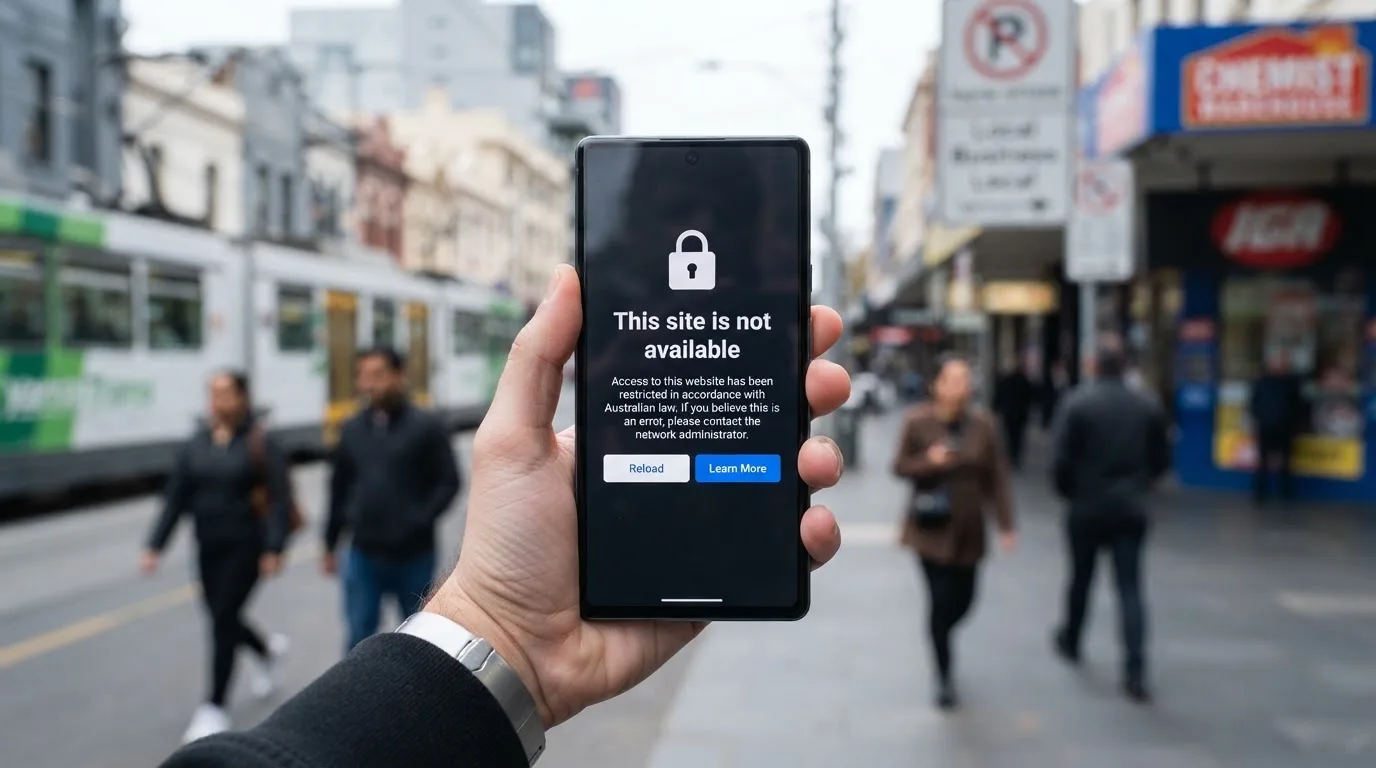
The Act’s structure is the part most readers miss. It targets the provider of the prohibited service, not the customer. The individual player is not prosecuted for placing a bet with an offshore site — the enforcement reach runs the other way, against the company taking the deposit. The practical consequence for a player is sharper than the absence of prosecution: an offshore site gives no Australian consumer protection, no complaints body and no recourse if a withdrawal is refused, and it can be blocked at the ISP level while a balance is still on it.
The prohibition covers both casino games and in-play betting. Race and sports betting placed before the event is licensed through the state and territory wagering regimes; race betting in-play was the subject of a separate regulatory carve-out and sits outside the casino prohibition. For the purposes of this page, the relevant point is that no Australian operator offers online blackjack, baccarat, roulette, craps or online pokies in a licensed form, and no offshore operator offering them to Australians is doing so lawfully.
The blocking rate, and what the ACMA’s running total says about the trend
The ACMA’s enforcement record is the cleanest public measure of how the prohibition is being applied. As of June 2026 the ACMA had asked Australian internet service providers to block 1,751 illegal gambling and affiliate marketing websites since the first blocking request in November 2019 — a running total that includes affiliate pages as well as the operator sites themselves.
Read as a rate against the period, the figure works out to roughly 22 sites blocked per month across the roughly 79 months between November 2019 and June 2026 — a long-run average rather than a steady monthly figure. Individual enforcement rounds have varied widely: the round reported on 26 June 2026 alone added 12 sites (7Signs, ChromaBet, Donbet, Duospin, Freshbet, Slots Gem, Jacks Club, Lucky Start, Pointsbetz, Spinrise, Vinyl Casino and Wildsino), while earlier rounds have typically added between four and ten sites at a time. The honest reading is that the ACMA is currently adding between roughly 10 and 25 new blocks a month across its various rounds, with the running total still rising faster than the queue of completed investigations is clearing.
On top of the blocking total, more than 230 unlicensed services have left the Australian market voluntarily since enforcement was strengthened in 2017 — the ACMA does not always name them, and they are not always reachable in Australia afterwards. The two figures together describe a market that is shrinking in number of accessible sites rather than expanding.
The cost this pattern imposes on a player who uses one of these sites is concrete. A site that is reachable this month may be on the next blocking list. A balance held with the operator at the moment of the block may be unrecoverable, because the ACMA’s enforcement reach is against the provider’s access, not against its accounts. A player who picks an offshore brand on the strength of an affiliate review is, in effect, picking a brand the regulator has not yet got around to.
H2 Gambling Capital’s 2025 estimate puts the dollar figure behind the pattern: Australians lose about A$3.9 billion a year to illegal gambling sites, and the share of gambling going through legal channels fell from 74% in 2021 to 64% — a 10-point shift in three years that the prohibition is plainly not closing. The blocking rate and the loss-rate tell different stories, and both are useful: the blocking rate says the regulator is taking sites off the Australian internet at roughly 22 a month; the loss-rate says the demand is still there.
The fines and warnings that show what the prohibition looks like in practice
The formal warnings the ACMA publishes under the Interactive Gambling Act 2001 are a useful read on which offshore brands have been actively targeting Australians, and on which operator groups have been warned repeatedly. The list of recent warnings is long, and it includes brands that an Australian player might otherwise assume are simply licensed somewhere offshore.
In May 2022 the ACMA issued a formal warning to Dama N.V. covering six brands in a single notice: Bambet, Dazard, Level Up, Rocketplay, Wild Tornado and Cobra Casinos. In March 2025 the same Dama N.V. drew a further warning over Woo Casino, and in May 2025 over Spirit Casino — the same operator, three warnings, three years. In March 2026 the ACMA warned Pulsup Ltd over Rocketplay, the same brand that was part of the original 2022 Dama N.V. notice, this time under a different corporate entity.
In July 2025 the ACMA issued formal warnings to Bamboo Media over Ignition Casino and to Consolutetish S.R.L. over National Casino and Bizzo Casino — the latter of which had already been the subject of a 2022 warning to TechSolutions (CY) Group Limited and TechSolutions Group N.V. In February 2025 the ACMA warned EOD Code SRL over Instant Casino. In April 2026 the ACMA warned Ryker B.V. over Jackbit and CasinOK in a single notice. In April 2025 the ACMA warned Sterplay Holding Ltd over Casino Intense. Earlier, the ACMA had warned Hollycorn N.V. over its Sky Crown and Blue Leo services.
The repetition of operator names — Dama N.V. appearing across 2022, 2025 and 2026, sometimes over different brands; TechSolutions reappearing under Consolutetish S.R.L.; Ryker B.V. named over two brands at once — is the most useful single fact in the list. Offshore operators that have been warned over one brand typically return under another, and a warning to one entity does not block the others.
The 2026 reform, and what changes next year
The Interactive Gambling Amendment (Gambling Reform) Bill 2026 passed Parliament on 19 August 2026. Its advertising and inducement measures commence on 1 January 2027 — law with a start date, not yet in force on a page written in 2026. The reform is the next chapter of the prohibition: it tightens what licensed operators can advertise in Australia, and it gives the ACMA a clearer set of tools to use against unlicensed ones.
The detail of the reform is for a page written after the commencement date; the relevance for a 2026 reader is that the legal direction is towards tighter rules, not looser ones. Any cost calculation that assumes the prohibition will soften over the next twelve months is reading the wrong document. The licensed wagering operators will face new restrictions on inducements; the unlicensed operators will face a regulator with stronger tools.
Payments, tax and what the regulator can actually reach
For licensed online wagering — the sports and racing operators, not casinos — credit cards, credit-related products and digital currency are banned as payment methods since 11 June 2024. Penalties for operators that accept them run up to A$247,500. The legal deposit routes for licensed wagering are debit card, bank transfer, PayID, Osko and BPAY — all of which leave an Australian-paper-trail record and bind the operator to Australian consumer-protection law.
A site asking an Australian customer for a credit card or a crypto deposit is operating outside the Australian rules. For an offshore casino, that is the default state — the site is not bound by the credit-card ban because it is not bound by any Australian rule at all — but it is a useful marker for a player deciding whether a particular site is even pretending to comply.
On tax, gambling winnings of a recreational player are not assessable income under section 6-5 of the Income Tax Assessment Act 1997, and losses are not deductible. The exception is a person who carries on a business of gambling — professional poker players, advantage-play operators, and similar — who is taxed on net winnings under the ordinary income rules. For the median visitor to Crown Melbourne, the winnings from a single session are not reportable income, and the losses are not recoverable against other income. The “you can offset your losses” pitch some offshore sites make is not how Australian tax law works for a recreational player.
Wellbeing, age limits and the tools that exist for the licensed product
The legal floor for entry to Crown Melbourne, as for every Australian casino, is 18. Identification is checked at the door; a patron who cannot produce acceptable ID is refused entry. Inside the venue, the regulator’s responsible-gambling code requires breaks in play, signage about help services and the option to self-exclude from the property. The post-2021 Special Manager regime has tightened the practical application of these rules, and the venue publishes a responsible-gambling code that is materially more detailed than the Australian industry average.

The national framework around the licensed product is BetStop, the National Self-Exclusion Register, which went live in August 2023. BetStop binds Australian-licensed online and phone wagering services — sports betting, racing, lotteries — but does not bind offshore casino operators, because offshore operators are not part of the Australian licensing system at all. For a Crown visitor who wants to exclude themselves, the venue has its own self-exclusion process. For an online wagering customer, BetStop is the binding tool. For an offshore casino customer, there is no equivalent Australian tool.
The 24-hour national Gambling Help line is 1800 858 858, free, with chat at Gambling Help Online. The line is not specific to Crown Melbourne and is not a Crown service; it is the national entry point for anyone whose gambling has become a problem, including family members. The Victorian Responsible Gambling Foundation operates state-level support services that complement the national line, and the venue itself has a responsible-gambling team on the floor. For a visitor whose night at the tables did not go as planned, all three routes exist; the cost of using them is zero.
Why the cost story comes back to pokies
The single largest cost figure on this page is the A$3.318 billion Victorians lost on electronic gaming machines in 2025–26. That number is what the licensed casino market in Victoria is built on, and it is what the ACMA’s enforcement record is trying to keep offshore operators from adding to.
The figure is larger than the A$200 million Crown has paid in fines, larger than the A$164 million in illicit payments the regulator found, and comparable to the A$3.9 billion Australians lose to illegal offshore sites in a year. The fines, the warnings and the offshore blocks are responses to a market in which the licensed product takes A$3.3 billion from one state’s poker machines in a single financial year, and the unlicensed product takes A$3.9 billion nationally from offshore sites the regulator cannot easily reach.
That is the cost shape this page is built around. The licensed option is regulated and expensive in the structural way a casino always is. The unlicensed option is cheaper per spin on a marketing page and more expensive in every other way, because the regulator cannot reach it and the player cannot enforce a withdrawal. The decision the searcher for “best casino in Melbourne” is actually making is which cost they would rather pay — the regulator’s cost, which is large but visible, or the offshore site’s cost, which is opaque and often unrecoverable.
Offshore brands the ACMA has acted against
The brands below are not a recommendation. Each one is on this list because the ACMA itself issued a formal warning over it for offering prohibited online casino services to Australians. The shape of the list is itself the information: an offshore brand can be warned, return under a new name, be warned again, and reappear under a new corporate entity, all while continuing to take Australian deposits.
RocketPlay
The ACMA warned Pulsup Ltd over Rocketplay in March 2026; the same brand was already the subject of a May 2022 warning to Dama N.V. as part of the six-brand notice. The doubling-up is what makes this entry worth singling out: a brand can be warned, change hands, be warned again, and keep pitching at Australian players in between. The brand name on the casino’s own site and the operator name on the ACMA’s register are not necessarily the same, and a player who only reads the casino’s homepage will not see the second regulator action.
Level Up Casino
The May 2022 Dama N.V. warning covered six brands, including Level Up. The brand has continued to operate under that name and is one of the more visible Dama N.V. brands on affiliate listings. The cost of using it from Australia is that the operator has already been told once, in writing, that what it is doing is prohibited, and has continued to do it. A “licensed by” footer on a Curacao or Anjouan registration is not an Australian licence, and the absence of an Australian licence is the operative fact.
Woo Casino
Woo Casino was the subject of a March 2025 warning to Dama N.V., on top of the May 2022 warning that covered the wider group. The same operator, warned twice in three years over related brands, is the operator promising Australian players a welcome package. The “bonus” is the marketing word; the writing on the regulator’s register is the documented history.
Spirit Casino
Spirit Casino drew its own formal warning in May 2025, again to Dama N.V., and is the freshest data point on how the operator has responded to previous warnings: by adding brands. A player reading an Australian-facing page for Spirit Casino in 2026 is reading a pitch from an entity whose corporate parent is on the ACMA’s register three times across three years.
National Casino
The July 2025 warning to Consolutetish S.R.L. covers National Casino. The brand’s pitch to Australian players is the standard offshore pitch — an overseas corporate registration, an offshore licence, no Australian regulator in the chain. The cost of using it from Australia is the same as every other entry on this list: no recourse in Australia if the site refuses a withdrawal, and no guarantee the brand will be reachable next month.
Bizzo Casino
Bizzo Casino was warned over twice — once to TechSolutions (CY) Group Limited and TechSolutions Group N.V. in 2022, and again to Consolutetish S.R.L. in July 2025. The change of corporate entity between the two warnings is the structural fact about offshore operators the ACMA’s enforcement record keeps returning to. A warning over one entity does not stop the brand from reappearing under another, and a player who dealt with Bizzo under the TechSolutions entity in 2022 is dealing with the same brand under a different corporate parent in 2025. The brand name is the constant; the corporate shell is the variable.
Ignition Casino
The July 2025 warning to Bamboo Media over Ignition Casino is on the public register. The brand pitches itself at Australian players through affiliate marketing, and the ACMA’s response is the published warning. The cost to a player who opens an account is the standard offshore cost: no Australian regulator can compel a payout, and the site can be blocked at the ISP level while a balance is on it. The brand’s offshore licence does not cover an Australian customer, because no offshore licence covers an Australian customer.
Instant Casino
The February 2025 warning to EOD Code SRL over Instant Casino was one of the early ACMA actions of 2025 and set the pattern for the year. The “instant” in the brand name is the marketing pitch — instant deposits, instant play, instant withdrawals; the regulator’s posture is the published fact, and the published fact is that the brand has been told, in writing, that what it is offering Australians is prohibited.
Jackbit
The April 2026 warning to Ryker B.V. covered Jackbit and CasinOK in a single notice — two brands operating under the same corporate parent. The paired warning is the structural point: offshore groups run multiple brands, and a warning to one entity over one brand usually means the operator’s other brands are next. Jackbit is the casino brand; CasinOK is the same operator, the same regulator action, and the same outcome for the player.
Casino Intense
The April 2025 warning to Sterplay Holding Ltd over Casino Intense sits on the register alongside the other 2025 actions. Casino Intense has appeared on Australian-facing affiliate listings for several years and the warning is the regulator’s response. The cost of using it is unchanged from any other entry: no Australian consumer protection, no regulator to complain to, and a balance that may not be recoverable if the site is blocked or wound down between the time a player deposits and the time they try to withdraw.
Sky Crown
Sky Crown was the subject of a warning to Hollycorn N.V., the same operator that ran Blue Leo on a separate warning. Hollycorn N.V. is one of the more active multi-brand operators on the affiliate listing circuit, running several brands across the period covered by the ACMA’s enforcement record. A player reading a Sky Crown pitch from Australia is reading a pitch from an entity the ACMA has already named, and the same operator runs a sibling brand that has drawn the same response.
| Brand | ACMA action and date | Operator named by the ACMA | Subject support |
|---|---|---|---|
| RocketPlay | formal warning, March 2026; earlier May 2022 | Pulsup Ltd; earlier Dama N.V. | — |
| Level Up Casino | formal warning, May 2022 | Dama N.V. | listings-only |
| Woo Casino | formal warning, March 2025 | Dama N.V. | listings-only |
| Spirit Casino | formal warning, May 2025 | Dama N.V. | — |
| National Casino | formal warning, July 2025 | Consolutetish S.R.L. | listings-only |
| Bizzo Casino | formal warning, July 2025; earlier 2022 | Consolutetish S.R.L.; earlier TechSolutions | — |
| Ignition Casino | formal warning, July 2025 | Bamboo Media | — |
| Instant Casino | formal warning, February 2025 | EOD Code SRL | — |
| Jackbit | formal warning, April 2026 | Ryker B.V. | — |
| Casino Intense | formal warning, April 2025 | Sterplay Holding Ltd | listings-only |
| Sky Crown | formal warning, on the ACMA register | Hollycorn N.V. | listings-only |
The brands in the table are not a shortlist. They are the brands the ACMA itself has named, in roughly the order the regulator published the warnings. The last column carries an honest reading of what research can and cannot say about each brand’s pitch to Australian players: where affiliate listings mention the brand by name, the entry is marked “listings-only”; where research carries no source, the entry is left blank. None of these brands is licensed to take an Australian deposit, and the entries in the table do not change that.
The honest answer to the search
The best casino in Melbourne is Crown Melbourne, and the cost of using it is the standard cost of using a licensed Australian casino — the house edge, the volume of the pokies product, the regulator’s responsible-gambling code, and the published record of breaches the venue has had to pay for. The offshore “alternatives” pitched at Australian players are not licensed, are not regulated by an Australian authority, and have been the subject of formal ACMA warnings and ISP-level blocks for the better part of a decade.
A reader who has decided they want to play is best served by treating the choice as one between the licensed venue and no play, not between the licensed venue and any of the offshore brands in the table above. The offshore brands are reachable one month and blocked the next, the corporate parent changes between warnings, and the marketing pitch is not a guarantee the regulator can enforce. The cost comparison the search is actually after — between Crown Melbourne and the unlicensed alternatives pitched at Australians — runs heavily in Crown’s favour on every dimension that has a regulator behind it.
Frequently asked questions
What is the name of the main casino in Melbourne?
Crown Melbourne, on the south bank of the Yarra River in Southbank. The complex is the largest casino resort in the Southern Hemisphere at about 510,000 m², and it is the only venue in Victoria licensed under the Casino Control Act 1991 to operate table games and poker machines.
What is the minimum age to enter the casino in Melbourne?
Eighteen. Identification is checked at the door, and anyone who cannot produce acceptable ID is refused entry. The age limit applies to the gaming floor and to the licensed bars and restaurants inside the casino complex, and is enforced under Victorian casino law.
Does the casino in Melbourne offer table games such as blackjack and baccarat?
Yes. The floor is licensed for 540 table games across the complex, including baccarat, blackjack, roulette, craps and 100 dedicated poker tables, alongside 2,500 poker machines. The table-game mix is what an international visitor would expect from a property of this size.
Are there hotels within walking distance of the casino in Melbourne?
Crown Melbourne itself operates 1,604 hotel rooms across three towers on site. Beyond the property, the Southbank and CBD hotel strip within a ten-minute walk runs to several thousand rooms across the major chains, and booking direct with the property is the cheapest option for a guest who plans to use the gaming floor.
Can Australians legally play at an online casino instead of visiting the casino in Melbourne?
No. The Interactive Gambling Act 2001 prohibits offering online casino games or online pokies to anyone in Australia, and no state or territory issues a licence for these products. The ACMA enforces this by issuing formal warnings and asking ISPs to block sites, and any balance held with an offshore operator has no Australian consumer protection behind it.