

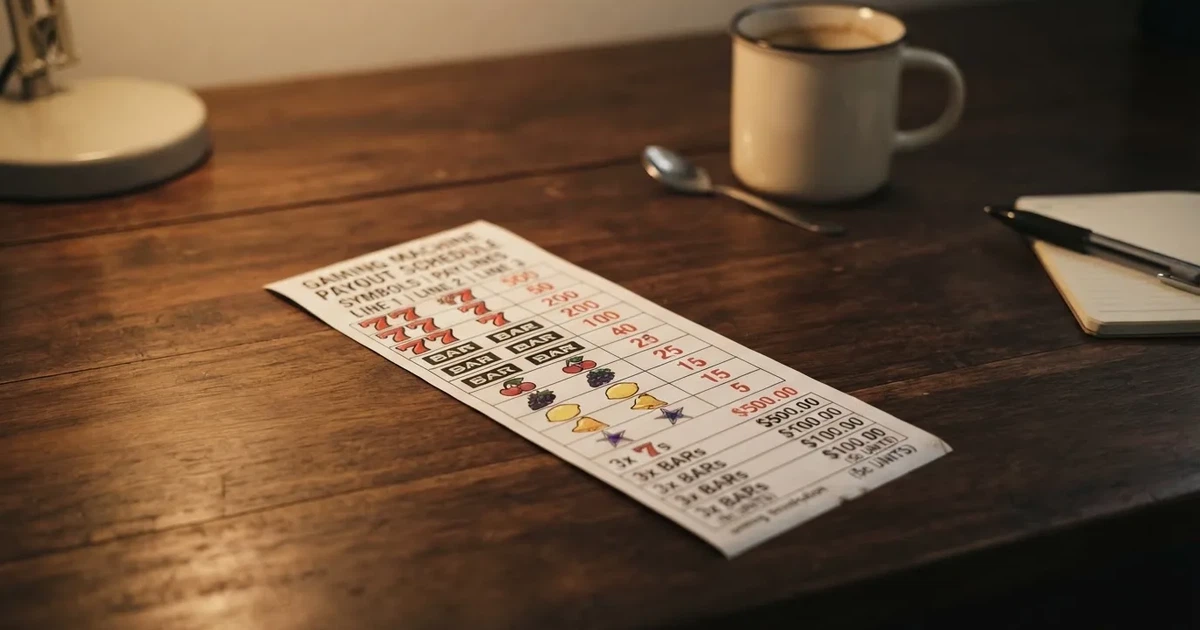
Best BGaming online casinos Australia 2026: the picture before the comparison
The straight answer sits at the top of the page, because the rest of it only makes sense once it has been said: in 2026 no online casino offering BGaming titles is licensed to take bets from anyone in Australia. Every site carrying BGaming content and serving Australian customers is operating outside Australian law, and a meaningful number of them have been on the receiving end of an Australian Communications and Media Authority formal warning in the past two years. That isn’t a consumer caveat at the end of a sales pitch — it is the precondition for everything below it.

This article keeps that fact in plain view, then works through what the search is actually turning up for an Australian player typing the phrase: the shape of the offshore market, how the BGaming label is presented, what a comparison should weigh when no local licence exists, and which sites the regulator has moved against in 2026 and the years immediately before it. The currency stamp sits on the line below.
Data current as of 1 November 2026 and checked against the Australian Communications and Media Authority register of formal warnings.
Table of Contents
- The shape of the BGaming label
- Why an Australian casino page can rank BGaming and still be honest
- How the ACMA has moved in 2026 and the years just before it
- What the comparison should actually weigh
- What the offshore market looks like from the offer side
- How a paytable reads once the marketing is stripped off
- What the player-protection layer looks like for an Australian
- The studios on the same shelf
- What the consumer-facing terms on an offshore site actually mean
- The 2026 reform and what it does and doesn’t change
- What an honest ranking looks like when no licence exists
- How to read the FAQ
- Frequently Asked Questions
The shape of the BGaming label
BGaming is the studio brand, not the operator. The company behind it, Stable Games Ltd of Valletta, has been making games since 2012 under one name or another, with the BGaming brand in its present form from 2018. The product line stretches to more than 250 certified games — video slots, video poker, lottery, card, scratch, crash and a handful of casual titles — and the studio’s own material names around 3,000 operators worldwide using its catalogue, including the names Blaze, Pin-Up and Gamdom. None of that is an Australian licence; none of it requires one for the studio itself, which sits in Malta and supplies under a Malta Gaming Authority Critical Gaming Supply Licence issued in March 2021.

What an Australian player sees when the brand is marketed at them is, in practice, a small set of game mechanics packaged into recognisable slot shapes. BGaming’s own pages name TRUEWAYS, a layout engine credited with up to 262,144 ways to win on a single title, alongside MultiDice X and Merge UP. Those mechanics sit inside a paytable that does the same job every paytable does: a symbol hierarchy, a payout table per combination, and a stake range expressed in credits rather than in dollars. The mechanics differ from studio to studio; the work the paytable does for a player — translating a stake into a list of possible outcomes — does not.
The studio credentials matter less than they sound. A BGaming stamp on a slot tells a player that the title comes from a particular supply chain and sits inside a particular set of game mechanics. It tells them nothing about whether the casino carrying it is licensed to take their business, whether their money can get back out, or whether the site will still be reachable next month. In Australia that distinction is the whole comparison.
Why an Australian casino page can rank BGaming and still be honest
Three points stack up, and the comparison that follows in this article works off all three rather than picking one.
First, no state or territory in Australia issues a licence for online casino games or online pokies. The Interactive Gambling Act 2001, tightened by the Interactive Gambling Amendment Act 2017, makes the supply of those products to anyone in Australia an offence, and the ACMA enforces it. Licensable Australian wagering is racing, sport, lotteries and keno — products the Northern Territory Racing and Wagering Commission regulates across 52 of the country’s online bookmakers (the big names in that set are Sportsbet, Bet365 and Ladbrokes). The commission itself is the smallest kind of regulator: no full-time staff, a monthly meeting in Darwin. Online casino play is not on its list, and no state body has added it.
Second, the ACMA’s enforcement has produced a long paper trail. The register of formal warnings is a public document; a substantial number of BGaming-carrying offshore brands appear on it. The section further down the page works through eleven of them, named by the ACMA itself, with the operator entity the warning was issued to and the month it was issued. That isn’t a blacklist drawn up for this article — it is the regulator’s own record of where it has moved.
Third, the comparison’s own criteria shift when the product is unlicensed. A licensed comparison weighs game catalogue, payout speed, mobile app quality and bonus generosity; a comparison of unlicensed offshore sites weighs how recently the regulator has acted against the brand, whether the entity behind it has changed, whether the payment routes offered include any that are themselves banned for Australian-licensed wagering (credit cards and crypto, both off the menu for legal Australian wagering since 11 June 2024), and how exposed a balance is if the site is blocked. Those are different questions, and the answers are different too.
How the ACMA has moved in 2026 and the years just before it
The blocking regime has been running since November 2019, when the first blocking request went out to Australian internet service providers. By the time of the ACMA’s June 2026 update the running total sat at 1,751 illegal gambling and affiliate marketing websites blocked under that regime, with more than 230 unlicensed services having left the Australian market since enforcement was strengthened in 2017. The most recent round reported added twelve more names: 7Signs, ChromaBet, Donbet, Duospin, Freshbet, Slots Gem, Jacks Club, Lucky Start, Pointsbetz, Spinrise, Vinyl Casino and Wildsino.
The arithmetic that comes out of those two figures — 1,751 sites blocked since November 2019 against roughly seven years of operation — works out to a rate of around 250 sites per year reaching the blocking list, with the count accelerating in the more recent rounds. The right way to read it is as a band rather than a single figure: enforcement has been steady, the rate is best understood as roughly two to three sites blocked per working week on a long-run average, with monthly rounds varying above and below that pace. What the figure is not is a forecast — a site warned this month is not necessarily blocked next month — but it does show what the regulator has been doing with the tool it has.
The same June 2026 reporting cycle noted H2 Gambling Capital’s estimate that Australian players lose around A$3.9 billion a year to illegal offshore gambling sites, and that the share of gambling going through legal Australian channels has fallen from 74% in 2021 to 64%. That share going the wrong way, against a regulator that is actively blocking sites, is the part of the picture that needs to be named.
| Brand | ACMA action and date | Operator named by the ACMA | Subject support |
|---|---|---|---|
| RocketPlay | Formal warning, March 2026 (earlier Dama N.V. warning, May 2022) | Pulsup Ltd | — |
| Level Up Casino | Formal warning, May 2022 | Dama N.V. | Wazdan listed as a supplier |
| Woo Casino | Formal warning, March 2025 | Dama N.V. | — |
| Spirit Casino | Formal warning, May 2025 | Dama N.V. | — |
| National Casino | Formal warning, July 2025 | Consolutetish S.R.L. | Betsoft, Pragmatic Play listed |
| Bizzo Casino | Formal warning, July 2025 (earlier TechSolutions warning, 2022) | Consolutetish S.R.L. | — |
| Ignition Casino | Formal warning, July 2025 | Bamboo Media | — |
| Instant Casino | Formal warning, February 2025 | EOD Code SRL | — |
| Jackbit | Formal warning, April 2026 | Ryker B.V. | — |
| Casino Intense | Formal warning, April 2025 | Sterplay Holding Ltd | 1spin4win, GamCare listing |
| Sky Crown | Formal warning, September 2022 | Hollycorn N.V. | — |
A line on what the table is and is not. The names are the ACMA’s, the dates are the ACMA’s, the operator entities are the ACMA’s. The “subject support” column carries only what the studios’ own listings or third-party catalogues say about whether the brand appears among their partners — the column is empty wherever that couldn’t be confirmed from a primary source. It is not a rating column and it is not a recommendation column. The single fact every row shares, and the one that determines whether any of them is suitable for an Australian reader, is the absence of an Australian licence to operate online casino games.
What the comparison should actually weigh
A licensed comparison ranks sites by the quality of the offer. An unlicensed comparison, in a market where every site is unlicensed, ranks sites by how exposed the reader would be if they used one. That second comparison has five weights, and the rest of this section walks through each of them.
Recency of regulator action
The ACMA’s formal warnings are the most legible piece of evidence available to an Australian player. A warning issued this year is closer in time than a warning issued three years ago, but the older warning is not “spent” — Dama N.V. was warned in May 2022 and then warned again over different brands in March and May 2025, which tells the reader that the entity’s response to the first warning was to keep operating under new names. Two warnings to one operator across three years is a stronger signal than one warning to an operator that has stayed quiet since.
The operator entity, not the brand
Every brand in the table above has an operator company attached to it, and the operator is the entity the warning was issued to. Where the same entity appears behind more than one brand (Dama N.V. behind RocketPlay, Level Up, Woo, Spirit and others; Consolutetish S.R.L. behind National Casino and Bizzo; Hollycorn N.V. behind Sky Crown and Blue Leo) the entity carries a pattern, and a reader weighing a new brand from that entity inherits the pattern. The pattern is not proof of misconduct on the new brand, but it is information that the comparison should not hide.
Payment routes offered
The payment side for Australian-licensed wagering is narrow by design. Since 11 June 2024 the law has banned credit cards, credit-related products and digital currency as a funding method for licensed online wagering, with penalties up to A$247,500 for operators that take them. The legal deposit set is debit card, bank transfer, PayID/Osko and BPAY. A site that offers an Australian customer crypto deposit or a credit card deposit is making an offer that Australian-licensed wagering cannot make — and the offer itself, not the bonus attached to it, is the bigger signal.
Self-exclusion coverage
BetStop, the National Self-Exclusion Register, has been live since August 2023. It binds Australian-licensed online and phone wagering services, which is the universe of products the IGA permits. An offshore casino is not connected to BetStop; registering with BetStop does not exclude a player from an offshore site. That asymmetry matters for a reader who is thinking about restricting their own play, and a comparison that does not name it leaves them with a false sense of coverage.
The balance-and-block risk
An offshore site that has been on the ACMA’s list has a non-trivial chance of being blocked. When the block lands, the balance the reader holds on the site does not move with them. The site’s complaints body is not an Australian body, the site’s licence is not an Australian licence, and the site’s recourse against the operator for a refused withdrawal is whatever the operator’s own terms say it is. The comparison can rank sites by offer quality; it cannot honestly rank them by recourse quality when no recourse exists.
What the offshore market looks like from the offer side
The bonus side of an offshore casino page usually opens with a welcome package, free spins, and a no-deposit offer to lure the account in. None of those figures are reproduced here, because the only sources for them are affiliate marketing pages, and the only honest way to discuss an offer from a brand the ACMA has warned is to describe what such offers generally involve without quoting terms the reader cannot verify.
A typical offshore welcome package is a percentage match on the first deposit — 100% to 200% on a first deposit up to a stated cap — bundled with a tranche of free spins on a named slot, usually from the same studio the casino is using as a marquee name. A wagering requirement is attached to the bonus balance (the rule that says the bonus must be wagered a stated multiple of times before it can be withdrawn), typically somewhere between thirty and fifty times the bonus amount. A maximum cashout cap is sometimes attached to the free-spin winnings, which caps what a player can walk away with from the spin portion of the offer.
The mobile experience is the same picture in miniature. Most offshore sites present a mobile-optimised browser version of the desktop site; some present downloadable apps for the two big mobile platforms. The mobile experience is not where the licence gap sits, so it is also not where the comparison between licensed and unlicensed products lands. A good mobile slot and a poor mobile slot are both unreviewed by an Australian regulator, and that fact does not move with screen size.
How a paytable reads once the marketing is stripped off
A paytable is the boring end of a slot, and it is also the end the reader can read for themselves. The layout convention is consistent across studios: a high-paying symbol tier, a low-paying symbol tier, a special-symbol tier (the wild, the scatter, and on some titles a bonus-trigger symbol), and a payout line per combination. The stake is denominated in credits; the line value is denominated in credits; the conversion to dollars is done by the stake-per-spin the reader has set.
BGaming’s distinguishing feature in the catalogue is the TRUEWAYS layout, which the studio’s own pages credit with up to 262,144 ways to win on a single spin. That number is the count of symbol combinations the engine evaluates per spin rather than a payoff figure — a 262,144-way spin does not pay 262,144 times the stake, it pays the figure the paytable attaches to the combination it lands on. The mechanic changes the geometry of the spin; it does not change the house edge, which is set by the per-symbol weighting and the payout table, and which is what an RTP figure summarises.
A reader who wants to compare games across studios has the few published RTP figures the studios themselves publish. Betsoft’s Good Girl Bad Girl 2 sits at 96.22% RTP with a “Very High” volatility tag and a 15.59% hit rate over 5 reels and 20 paylines. The Slotfather, also Betsoft and live since December 2012, sits at 95.69% RTP, “Medium” volatility, 8.17% hit rate, 5 reels, 30 paylines. Those figures are the studio’s own, posted on the studio’s game pages. Where the figure isn’t published, the comparison cannot make it up — and a paytable comparison that invents an RTP for a title the studio hasn’t published one for is worse than no comparison.
What the player-protection layer looks like for an Australian
The Australian layer is thinner than most readers expect, because most of it sits on the licensed product the reader isn’t using. A short inventory is worth giving in one place rather than scattering across the page.
The helpline. National Gambling Helpline, 1800 858 858, free, 24/7, with chat and web counselling at Gambling Help Online. The service is staffed by professional counsellors and is free to the caller. It is also confidential, which matters in a market where the offshore product has no complaints body the player can walk into.
The self-exclusion register. BetStop is the National Self-Exclusion Register, live since August 2023. A person registering with BetStop agrees to be excluded from Australian-licensed online and phone wagering services for a stated period. The exclusion is enforced by the licensed operators; it does not extend to offshore sites, and registering with BetStop is not, on its own, a barrier to an offshore site the reader can still reach.
The complaints body. There isn’t one for offshore play. The Australian-licensed wagering complaints path runs through the operator first, then through the relevant state or territory body, and on appeal to the Australian Financial Complaints Authority for certain financial disputes. An offshore site has no equivalent. A refused withdrawal is whatever the operator’s terms say it is, and the player has the leverage the player has — which is, in most cases, none.
The legal backstop. The Interactive Gambling Act targets the provider, not the player. An Australian player who places a bet on an offshore site is not committing an offence under the IGA. The provider is. That asymmetry means the player has no criminal exposure, but it also means the player has no statutory recourse.
The studios on the same shelf
The supply side of any BGaming search eventually surfaces a handful of other studios whose names come up alongside it. Three sit close enough to deserve a paragraph each, and the comparison a reader is making should know which is which.
Aristocrat Leisure Limited is the closest thing to an Australian name in this set. Founded in 1953, listed on the ASX in 1996 under the ticker ALL, the company runs electronic gambling machines, casino management systems, online real-money gambling technology, iLottery and social casino games from its North Ryde base. The 2025 revenue figure is A$6.30 billion, normalised net profit after tax and amortisation A$1.55 billion, with 7,400 employees. The online real-money arm is Aristocrat Interactive, formed in April 2024 from the merger of the Anaxi unit with the acquired NeoGames group, which carries Aspire Global, BtoBet and Pariplay. Aristocrat is the largest gambling-machine manufacturer in Australia and the second-largest slot-machine manufacturer worldwide. None of that changes the IGA position; Aristocrat Interactive’s Australian-facing real-money offer is not online casino games.
Betsoft has been operating since 2006 and runs a catalogue of more than 200 RNG games covering slots, table, video poker and specialty titles. Compliance credentials named on the studio’s own site include Italy’s ADM and RNG certification from Quinel and Gaming Labs International, with more than 500 operator partners named across regulated markets in Europe, Scandinavia, Latin America and Africa. Australia is not on that list, and Betsoft titles reach Australian-facing offshore sites via the same supply chain that delivers BGaming titles to them.
1spin4win is a newer name, founded in 2021 by a group with fifteen years of iGaming experience and headquartered in Willemstad, Curaçao, under a Curaçao licence. The catalogue runs to more than 190 online slots built in HTML5 for low-bandwidth connections. The studio reports more than 1,000 partnerships with online casinos and aggregators and a 46% jump in total bet sum between the first halves of 2024 and 2025. The studio is also named in third-party listings of games carried by Casino Intense, one of the ACMA-warned brands in the table above.
None of those three studios is an Australian operator. They are supply-side names, and their relevance to an Australian player is what their games are doing on the offshore sites the ACMA has warned.
What the consumer-facing terms on an offshore site actually mean
Three clauses recur across offshore terms pages, and a reader who knows what they mean in plain English stops reading the marketing copy as if it were a contract.
The wagering requirement. The rule that a bonus balance must be wagered a stated multiple of times before withdrawal. A 40x wagering requirement on a A$100 bonus means A$4,000 of qualifying bets before the bonus balance converts to withdrawable cash. The qualifying bets count depends on the site — some sites count only the bonus, some count bonus plus deposit, some exclude certain game categories from the count entirely. The number is small in the marketing copy and large once the reader does the arithmetic.
The maximum cashout cap. The cap on what a player can withdraw from winnings earned on a bonus or on free spins. The cap is sometimes expressed as a multiple of the bonus, sometimes as a flat figure, sometimes as a per-spin cap above an age threshold on the winnings. The cap is not optional; a bonus that paid a player A$500 in winnings and carried a A$100 cashout cap returns A$100, not A$500.
The jurisdiction clause. The clause that names the legal jurisdiction the site’s licence sits in (Curaçao, Malta, Anjouan and a small number of others) and the country’s courts that hear disputes. An Australian player using an offshore site has agreed, by signing up, to pursue a dispute in that jurisdiction under that country’s law. The clause is binding on the player; it is not binding on the operator, who retains the discretion to apply their own terms.
The three clauses are not unique to BGaming sites or to BGaming-stamped offers; they are standard offshore boilerplate. They are the clauses a reader should know before signing up to any of them, and they are the clauses that make an honest comparison impossible to write in terms of “best offer”.
The 2026 reform and what it does and doesn’t change
The Interactive Gambling Amendment (Gambling Reform) Bill 2026 passed Parliament on 19 August 2026. The advertising and inducement measures in the bill commence on 1 January 2027. That is a law with a start date, not a law in force on a page read in 2026, and the comparison above it does not lean on it.
What the bill does, once it commences, is constrain the way licensed Australian wagering operators can advertise and the inducements they can offer. What the bill does not do is license online casino games. The product prohibition in the Interactive Gambling Act 2001 is unchanged by the 2026 bill; the new layer sits on top of the existing one. A reader looking at the page in 2027 will see a more constrained Australian-licensed advertising market, and the same offshore product prohibition they saw in 2026.
The reform matters for the licensed set. It does not change the position of an Australian reader considering an offshore BGaming-carrying casino in 2026.
What an honest ranking looks like when no licence exists
A ranking that ranks unlicensed sites against each other on offer quality is honest about offer quality and dishonest about whether the offer should be taken. This page does not produce that ranking, because producing it would put the reader one click away from a site the ACMA has named in a formal warning under the Interactive Gambling Act 2001.
A ranking that ranks unlicensed sites by recency and severity of regulator action is honest about risk and honest about what the regulator has done. It is the only ranking that survives contact with the page’s own opening paragraph, and the table above is the closest this article comes to one. The reader who wants a risk-ordered read of the offshore BGaming-carrying market has it in the rows of that table: from RocketPlay (warned March 2026, with a 2022 warning to the same operator’s earlier brand) through the cluster of 2025 warnings to the older Sky Crown warning from September 2022.
A ranking that ranks the licensed Australian product against the offshore product is a different document. There is no Australian-licensed online casino to rank, so the document collapses to a single entry: the licensed Australian wagering market exists for racing, sport, lotteries and keno, and an Australian reader looking for an online casino will not find one on the licensed side of the line. The comparison this article can honestly write is the comparison the regulator’s own record supports.
How to read the FAQ
The questions below cover the gap between what the marketing copy says and what the regulator has done. They are written in plain English; the answers carry the figures the article carries elsewhere, and the qualifiers that research attaches to them. Each question is asked once, in this block, and not repeated higher up the page.
Frequently Asked Questions
Is BGaming itself an operator, or just a game studio that supplies content to sites?
BGaming is a game studio, not an operator. The company is Stable Games Ltd of Valletta, Malta, and it supplies games to operators under a Malta Gaming Authority Critical Gaming Supply Licence issued in March 2021. An Australian player who reaches a BGaming game has reached it through an operator; the studio itself has not taken the bet and does not hold the player’s balance.
Can BGaming titles be played for real money at any licensed Australian casino?
No. No state or territory in Australia issues a licence for online casino games or online pokies. The Interactive Gambling Act 2001, as amended in 2017, makes the supply of those products to anyone in Australia an offence. BGaming titles in an Australian-facing real-money context appear on offshore sites only, and offshore sites sit outside the Australian licensing system.
How does a BGaming slot typically differ from other studios’ games in its paytable?
The mechanic difference the studio names is TRUEWAYS, a layout engine the studio credits with up to 262,144 ways to win on a single spin, plus MultiDice X and Merge UP. Those change the geometry of the spin — how combinations are evaluated, how many positions the spin reads — without changing the underlying paytable model: a symbol hierarchy, a payout per combination, a stake denominated in credits, and a house edge summarised by the published RTP figure.
Does BGaming operate its own casino, or license its games to other operators?
BGaming licenses its games to operators; it does not operate a casino of its own. The studio’s own pages name around 3,000 operators using the catalogue, including Blaze, Pin-Up and Gamdom. None of those operators is licensed to take Australian customers on online casino games under Australian law.
Why do offshore casinos highlight BGaming as a selling point to Australian visitors?
The BGaming label is a recognisable studio brand, and the studio’s supply chain reaches the operator at a known cost. The label is a marketing asset to the operator and a familiarity cue to a player who has seen the studio’s games elsewhere. It is not a quality assurance mark on the operator — the studio’s supply licence does not extend to the operator’s compliance with Australian consumer protection law, because that compliance is not required of an offshore operator in the first place.
Is it legal for a site to offer BGaming games for real money to people in Australia?
No. The Interactive Gambling Act 2001 makes it an offence for a provider to offer online casino games to a person physically in Australia. The ACMA enforces the Act, issues formal warnings and directs internet service providers to block non-compliant sites. The Act targets the provider, not the player; an Australian player does not commit an offence by placing a bet, but they have no statutory recourse if a withdrawal is refused or if the site is blocked.