

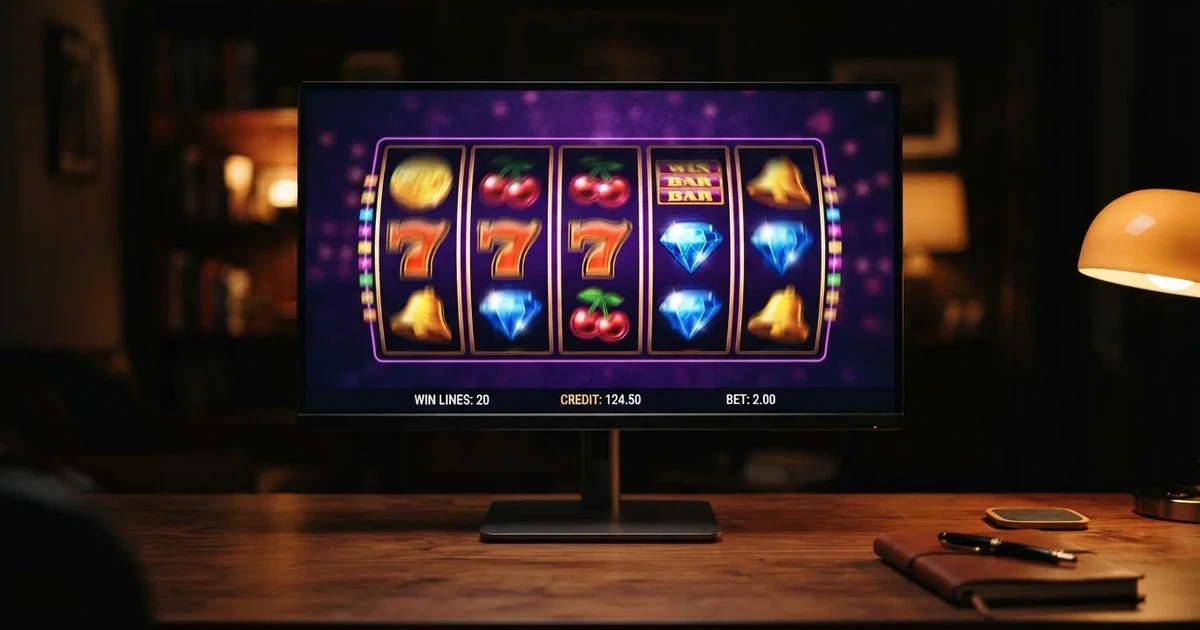
Big jackpot pokies and the Australian law that closes the door on online play
A search for “best online casinos with big jackpot pokies” promises a shortlist. The honest Australian answer is that no such shortlist exists, because offering online casino games to anyone in Australia is prohibited under the Interactive Gambling Act 2001, and no state or territory issues a licence for it. The page that follows is not a ranking and not a recommendation. It is a working guide to the gap: how the law is enforced, what an offshore site actually costs a player reading from Australia, what the lawful alternatives look like, and which games sit under the “jackpot pokie” banner on the licensed floors that do exist.
Snapshot date: 30 October 2026 · verified against ACMA enforcement records as published on the regulator’s website.
Table of Contents
- What “big jackpot pokies” actually covers
- Why no Australian-licensed casino offers them
- How the prohibition is enforced — and what the record looks like
- What an offshore site actually costs the person using it
- The lawful alternatives — and what they offer on the jackpot question
- The maths of a progressive jackpot — and what the house edge actually says
- Reading the ACMA warning list — what it does and does not tell a reader
- Where this leaves the choice
- Frequently asked questions
What “big jackpot pokies” actually covers
The phrase is loose, and a reader comparing options needs the same loose frame pulled taut before anything else. Three distinct mechanics hide inside it, and the cost of play differs between them.

A fixed-prize pokie pays a set amount when a defined combination lands. The top symbol on the paytable might be worth 1,000 times the line bet; nothing about the figure shifts while the machine is in service. These are the everyday pokies on every licensed Australian club and pub floor.
A progressive jackpot behaves differently. The prize grows with each losing wager — a portion of each bet is siphoned into the pool — until a player wins it, at which point the meter resets to a preset minimum and the cycle starts again. The 1986 launch of linked progressives in large casinos produced the format that now dominates the global online market; the first Megabucks progressive, made by International Game Technology, paid its inaugural jackpot of $4,988,842.17 on 1 February 1987. The format moved online in the late 1990s and the prize pool became international.
A must-hit-by progressive is a third shape. A random number generator chooses the exact payout amount from a preset range (commonly $1,000 to $3,000) the moment the previous jackpot is won, and the meter then ticks down toward that ceiling. Hitting the trigger point pays the displayed figure, regardless of which symbol combination is showing. The visible prize is bounded; the volatility around it is not.
The reader looking for the biggest single payout follows the second category. The record online slot jackpot is €19,430,723.60, won on 27 April 2021 by a Belgian player at Napoleon Sports & Casino on Microgaming’s Absolootly Mad: Mega Moolah. Games Global, the successor business to Microgaming, continues to distribute the Mega Moolah series and has since published later Mega Moolah wins of £11.5 million and £13.5 million. Those figures are real, and they are not available inside Australia.
Why no Australian-licensed casino offers them
The product is prohibited at the federal level. The Interactive Gambling Act 2001 (IGA), tightened by the Interactive Gambling Amendment Act 2017, makes it an offence to provide online casino games, online pokies or in-play betting to a person physically in Australia. Lotteries, keno and wagering on races and sport placed before the event are licensable, and the Northern Territory Racing and Wagering Commission (NTRWC) regulates 52 of Australia’s online bookmakers — including Sportsbet, Bet365 and Ladbrokes — for tax reasons. The commission has no full-time staff and meets once a month in Darwin. Wagering and casino are two different products under Australian law; the licence a betting site displays does not extend to a slot.
Minimum age for any gambling activity in Australia is 18. The IGA targets the provider; the individual player is not prosecuted. That distinction is the thin comfort an offshore site offers a player reading from Melbourne or Parramatta, and the next section explains how thin.
How the prohibition is enforced — and what the record looks like
The Australian Communications and Media Authority (ACMA) investigates complaints, issues formal warnings, and can direct Australian internet service providers to block illegal sites. As reported in June 2026, a total of 1,751 illegal gambling and affiliate marketing websites had been blocked since the first blocking request in November 2019, and more than 230 unlicensed gambling services had left the Australian market since enforcement was strengthened in 2017.

The pace has not slowed. In a single round reported on 26 June 2026 the ACMA asked ISPs to block twelve more domains: 7Signs, ChromaBet, Donbet, Duospin, Freshbet, Slots Gem, Jacks Club, Lucky Start, PointsBet, Spinrise, Vinyl Casino and Wildsino. The blocking request is administrative; once the order is in place, Australian readers cannot reach the site through a domestic ISP without a workaround, and any balance sitting on the site at the moment of the block is effectively unreachable.
The ACMA’s blocking rate — the share of sites ever blocked that went out in the most recent twelve months — runs as a band rather than a single figure, because the agency does not publish monthly tallies. Counting back from November 2019 to the June 2026 round, the 1,751-blocked total falls out across roughly 80 months of enforcement, an average of about 22 sites blocked per month. The recent June 2026 round, with twelve in a single decision, sits at the higher end of that band. The reader who treats the average as a steady drumbeat is reading a marketing-grade summary; the actual pattern is bursts around major enforcement pushes, with quiet months between them.
The formal-warning record is more granular. Each warning names the operator behind the brand, and the ACMA publishes them on its own site. What follows is the relevant subset, with the operator name as the ACMA published it:
| Brand | ACMA action and date | Operator named by the ACMA |
|---|---|---|
| RocketPlay | Formal warning, March 2026 (also May 2022 under Dama N.V.) | Pulsup Ltd (March 2026); Dama N.V. (May 2022) |
| Level Up Casino | Formal warning, May 2022 | Dama N.V. |
| Woo Casino | Formal warning, March 2025 | Dama N.V. |
| Spirit Casino | Formal warning, May 2025 | Dama N.V. |
| National Casino | Formal warning, July 2025 | Consolutetish S.R.L. |
| Bizzo Casino | Formal warning, July 2025 (also 2022 under TechSolutions) | Consolutetish S.R.L. (2025); TechSolutions (CY) Group Limited / TechSolutions Group N.V. (2022) |
| Ignition Casino | Formal warning, July 2025 | Bamboo Media |
| Instant Casino | Formal warning, February 2025 | EOD Code SRL |
| Jackbit | Formal warning, April 2026 (also over CasinOK) | Ryker B.V. |
| Casino Intense | Formal warning, April 2025 | Sterplay Holding Ltd |
| Sky Crown | Formal warning (2022) | Hollycorn N.V. |
Two patterns sit inside that list. The first is operator re-use: a single company behind a dozen brands simply rotates the front. Dama N.V. appears on four of the eleven warnings. Consolutetish S.R.L. appears twice with two separate brands. Ryker B.V. drew a single warning that named two sites at once. A formal warning over one brand does not put the rest of the operator’s catalogue out of reach; it puts that one URL on the ACMA’s enforcement track.
The second is re-warning: Bizzo Casino was first warned in 2022 under TechSolutions, then warned again in July 2025 under Consolutetish S.R.L. National Casino received its first warning in the same July 2025 round. A site can be blocked, then reappear under a new front, and the ACMA’s response is to chase the new front. The blocking rate reads more sharply once that pattern is visible: most of the eleven brands above are not the first time their operator has come to the regulator’s attention.
One wider number frames the stakes. H2 Gambling Capital’s 2025 report estimates that Australians lose about A$3.9 billion a year to illegal gambling sites, and that the share of gambling going through legal channels fell from 74% in 2021 to 64%. The leakage is not theoretical; it is the size of a federal budget line, and the ACMA’s enforcement budget is a small fraction of the figure it is trying to recover.
What an offshore site actually costs the person using it
The marketing pitch is generous: a sign-up package, a free spin drop, a “VIP manager”. The pitch assumes the player can take the operator to a regulator if anything goes wrong. An offshore site that targets Australians cannot give that assumption.
An Australian-licensed wagering service is connected to BetStop, the National Self-Exclusion Register that has been live since August 2023, and to the National Gambling Helpline on 1800 858 858 (free, 24/7, with chat at Gambling Help Online). An offshore casino is connected to neither. A self-exclusion registered with BetStop is binding on every Australian-licensed wagering provider; it is not binding on an offshore site the player separately opens, and the offshore site will not check Australian registers before accepting the deposit.
Payment rails are another hinge. Since 11 June 2024, credit cards, credit-related products and digital currency have been banned as payment for licensed online wagering in Australia, with penalties up to $247,500 for operators that breach the rule. The legal deposit routes for licensed wagering are debit card, bank transfer, PayID/Osko and BPAY. An offshore site that asks an Australian player for a credit card or a crypto deposit is operating outside the Australian rules. The deposit gets through; the protection that comes with it does not.
Recourse is the third loss. If an Australian-licensed operator refuses a withdrawal, the player has a complaints body to escalate to. An offshore operator refuses a withdrawal, and the player has the regulator of whatever jurisdiction the licence badge names — typically Curaçao or Anjouan — and a long, slow process that almost never ends with the player’s money returned. The slot is the same; the safety net is not.
The framing matters here because the marketing copy does the opposite. “Play now” and “fast payouts” sound identical across both kinds of operator; only the small print, and the regulator behind it, differs. The reader who decides on the small print has already decided.
The lawful alternatives — and what they offer on the jackpot question
Three channels are open to an Australian reader who wants to play jackpot-style games, and each one carries its own ceiling.
Licensed pub and club pokies. Every Australian state and territory runs a regime for gaming machines in licensed venues. New South Wales alone has tens of thousands of EGMs in clubs and hotels. The machines on these floors include linked progressives — the same Megabucks-style format that began in 1986 — and the prize pools run into the millions for the larger state-wide links. The game selection on the floor is curated by the venue and approved by the state regulator; the RTP, the hit frequency, and the maximum prize are all on the machine’s help screen. The catch is geographic: a Crown Melbourne patron and a Townsville RSL patron are playing different machines under different state rules, and the prize pools are not joined across state borders.
Land-based casinos. Crown Melbourne, The Star Sydney, The Star Gold Coast, Crown Perth, Sky City Adelaide and the smaller Territory casinos run approved table games and a curated slot floor under their state regulator. Crown Melbourne, for instance, offers three baccarat variants — Traditional Baccarat, Crown Baccarat and 2 to 1 Baccarat — as approved table games regulated by the Victorian Gambling and Casino Control Commission (VGCCC), which replaced the VCGLR as Victoria’s casino regulator on 1 July 2022. The casino floors carry linked progressives with the largest pooled prize pools in the country; access is restricted to adults 18 and over, and entry is logged. The reader who can get to a casino floor can play a genuine progressive jackpot machine in a regulated environment, with the regulator behind the rules and a self-exclusion scheme that covers the venue.
Lotteries and keno. Tatts, Tabcorp and the state lotteries run jackpot-style products that are legally online and which fall under the IGA’s lottery carve-out. The prize pools are smaller than the largest slot progressives and the games are draws rather than spins, but the wager is real, the payout is real, and the consumer protection runs all the way back to the state regulator.
The reader who wants the largest single payout the regulated Australian market offers chooses the casino floor. The reader who wants a smaller jackpot from the couch chooses the lottery. The reader who wants an online casino progressive has crossed the line the IGA draws.
The maths of a progressive jackpot — and what the house edge actually says
Two numbers matter, and they sit on different sides of the spin.
The return to player (RTP) is the long-run proportion of money wagered that a machine returns to players in prizes. A 96% RTP returns 96 cents of every dollar wagered over the full cycle; the remaining 4 cents is the house edge. For table games, the equivalent figures are set by the rules: blackjack runs about 0.28% under liberal Las Vegas Strip rules (dealer stands on soft 17, double on any two cards, double after split, resplit aces, late surrender) and about 0.43% under Atlantic City rules; baccarat runs 1.06% on the Banker bet, 1.24% on the Player bet, and 14.36% on the Tie; craps runs 1.41% on Pass/Come, 1.36% on Don’t Pass/Don’t Come, and 11.11% on Any Craps.
For a progressive slot, RTP includes a contribution to the growing jackpot. The headline prize is therefore partly funded by other players’ losing wagers, and the RTP figure a licensed venue publishes is the long-run average across millions of spins. The short-run experience for any individual player is much more volatile: most sessions lose, a small minority win anything significant, and a vanishing fraction of sessions lands the headline prize.
There is one edge case. In some progressive jackpot games — certain video poker variants and Caribbean Stud Poker variants included — the jackpot can grow large enough to push the game’s theoretical return above 100%, creating a positive-expectation bet. The break-even point is calculable for video poker because the paytable is published; for slot machines it is not, because reel layouts are not published, and the practical advice is the same as for any other progressive: the meter is rising, the odds of hitting it are vanishingly small, and the wager required to qualify is the wager the player pays whether the jackpot lands or not.
The reader who treats a rising jackpot as a signal to play more is reading the marketing rather than the maths. A$3.9 billion a year leaves Australian pockets for illegal sites, and that figure is the size of the gap between what the law allows and what the market supplies; it is not a signal that the market on the other side is generous.
Reading the ACMA warning list — what it does and does not tell a reader
The list in this page is a regulator’s list, not a ranking. A formal warning is the ACMA’s first public step against an operator for offering prohibited services to Australians; it is not a verdict on whether the operator is honest about payouts, whether the games are fair, or whether the player will be paid. Those questions belong to the regulator that issued the licence badge on the site, which is almost never an Australian regulator.
Three readings are honest.
First, a warning is a public record. The ACMA publishes the warning, names the operator, and publishes the date. The reader who wants to know whether a brand has been warned can look it up on the regulator’s site; the eleven brands in this page’s table are the ones with the most recent or most relevant warnings.
Second, a warning is not a ban. The site may still accept Australian traffic through a non-domestic ISP, through a mirror domain, or through a workaround. The ACMA’s blocking round targets the specific URL it names; a re-launch under a new URL starts the process again.
Third, a warning does not entitle the player to anything. The operator does not refund deposits, does not pay out pending balances, and does not close the player’s account. The warning is the regulator telling the operator to stop; what the player has already lost stays lost.
The reader using the list to decide whether to deposit on one of these sites is reading the wrong document. The decision the IGA makes is upstream of the list: offering these games to Australians is the offence, not the warning.
Where this leaves the choice
A reader typing “best online casinos with big jackpot pokies” into a search engine in 2026 will find offshore sites promising what the law does not let them promise. The page above is the honest Australian version of that search: the product is prohibited, the regulator is enforcing, the offshore site gives no Australian protection, the lawful alternatives exist and each carries its own ceiling. The casino floor offers the largest legitimate jackpot; the licensed pub and club offers the most accessible one; the lottery offers the only fully remote one. The bet that matters is the one the player can place under Australian law, and the bet that does not exist is the one the offshore marketing copy sells.
Frequently asked questions
What is the largest jackpot ever recorded on an online slot?
The record online slot jackpot is €19,430,723.60, won on 27 April 2021 by a Belgian player at Napoleon Sports & Casino on Microgaming’s Absolootly Mad: Mega Moolah. Games Global, the successor business, has since published later Mega Moolah wins of £11.5 million and £13.5 million. The win was not available inside Australia.
How does a progressive jackpot pokie differ from a fixed-prize one?
A fixed-prize pokie pays a set amount when a defined combination lands. A progressive jackpot grows with each losing wager — a portion of each bet is added to the pool — until a player wins it, at which point the meter resets to a preset minimum. Progressives can be linked across many machines in one venue or across venues in a wide-area network.
Is it legal for an online casino to offer jackpot pokies to Australians?
No. Under the Interactive Gambling Act 2001, as strengthened by the Interactive Gambling Amendment Act 2017, it is an offence to provide online casino games, online pokies or in-play betting to a person in Australia. No state or territory issues a licence for online casino play. The IGA targets the provider; the individual player is not prosecuted, but the offshore site gives no Australian consumer protection, no complaints body, and no recourse if a withdrawal is refused.
Can a free version of a jackpot pokie show the real jackpot total?
No. The figure displayed on a free-play version is cosmetic; the actual progressive meter is fed only by real-money wagers, and a free-play client does not connect to the same pool. The visible number on a free-play screen is a marketing image, not the real jackpot.
Are jackpot-style pokies common on licensed Australian club and pub floors?
Yes. Australian clubs and pubs run linked progressive EGMs under state regulation, and the largest state-wide links run prize pools in the millions. The game selection on any given venue is curated by the venue and approved by the state regulator; the RTP and maximum prize are on the machine’s help screen. State borders do not link — a Sydney club’s progressive pool is not joined to a Melbourne casino’s.