


Instant PayID withdrawal of real money in Australia: what the cash-out actually runs into
A player who has just won real money at an online casino and wants it in their bank account tonight, via PayID, in Australia, is asking for something the country’s gambling law treats as a prohibited service. PayID itself works exactly as advertised — over a hundred Australian banks and building societies run it, transfers settle in under a minute around the clock, and the payee’s name shows up before the sender confirms. The casino side is what fails. Online casino games and online pokies are not licensable in Australia under the Interactive Gambling Act 2001. Every brand a search engine offers a punter under that phrase is an offshore operator that the ACMA has, in most cases, already warned, blocked, or both. The instant cash-out promise is real; the route to it runs through a service the regulator has told Australians not to use.
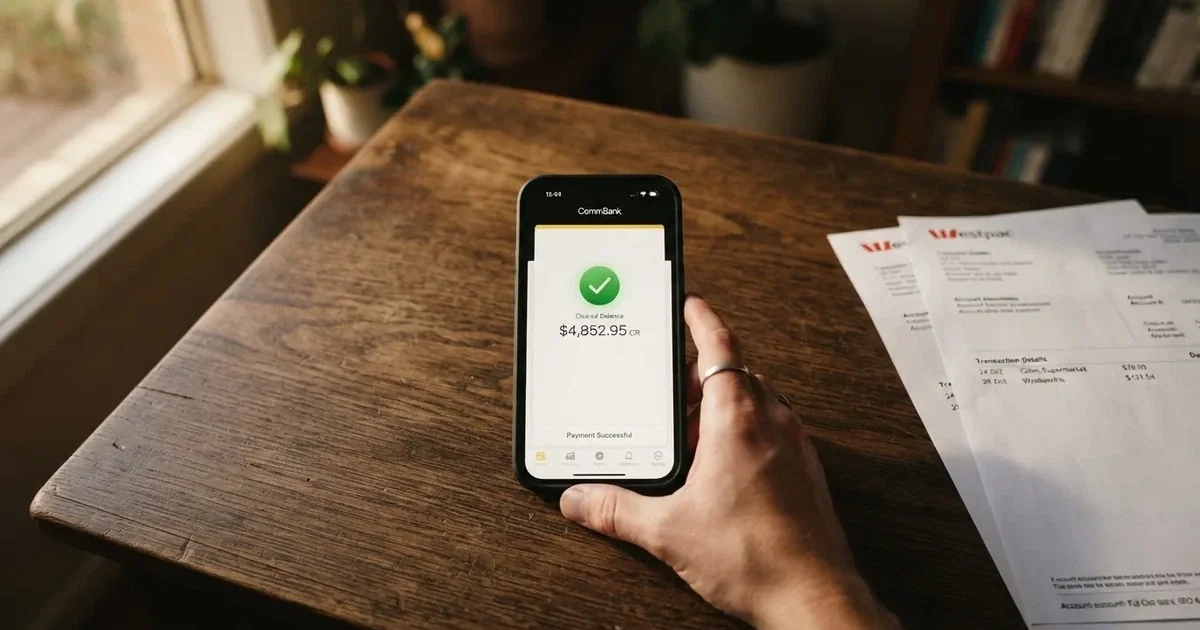
This page walks through what PayID actually does on the banking side, why an offshore casino cash-out via PayID is a different proposition from paying a tradesman, what the ACMA has done about the brands that take Australian deposits, and what a player who arrives at one of them actually stands to lose when enforcement catches up. Current as of 5 November 2026 against the ACMA register and the Reserve Bank and AP+ public material.
Table of Contents
- PayID and Osko: how the money actually moves
- Why a real-money withdrawal is not the same as paying a bill
- What the ACMA has actually done to the brands in this space
- Landscape of enforcement
- What the rest of the regulatory frame looks like around this market
- The cost on the player’s side, when the promise of an instant cash-out falls apart
- Why the bank side of the equation does not save the punter
- Responsible play in a market that is structurally a bad bet
- Frequently asked questions
PayID and Osko: how the money actually moves
PayID is a piece of addressing rather than a separate payment product. It lets someone send a transfer to a phone number, an email address, an ABN or an Organisation Identifier, instead of typing in a BSB and account number, and the receiving bank matches the PayID back to the right account. Australian Payments Plus (AP+), the country’s domestic payments operator, runs the PayID directory; the Reserve Bank of Australia oversees the New Payments Platform underneath it. With Osko, the NPP’s bulk settlement service, a transfer between two participating banks arrives in under a minute, twenty-four hours a day, including weekends and public holidays. A PayID payment behaves the same way as a BSB-and-account-number Osko payment in terms of speed; the PayID is just a friendlier address.

The practical protection that makes PayID usable is the name check. When a payer enters a PayID, their own bank shows the name registered against that PayID and asks the payer to confirm before sending. That step is the single biggest reason a scam PayID almost always gets caught — the user sees that the name they’re paying does not match who they thought they were paying, and stops. AP+ is blunt about what this means for gambling flows: if a site asks a customer to transfer funds to a PayID on an illegal gambling site, it is “almost certainly” a scambling site, the operator’s own portmanteau for an illegal gambling platform advertised on social media and messaging apps that tricks people into gambling on a scam website. PayID itself never contacts a customer, never asks for an “upgrade” fee, and never asks anyone to send money in order to receive money.
As of April 2025 there were more than 25 million registered PayIDs in Australia, and over a hundred financial institutions offer it inside their online banking. The system is mature, ubiquitous and technically reliable. None of those qualities change what flows across it.
| Payment Type | Settlement Speed | Identifier Type |
|---|---|---|
| PayID (Osko) | Under 60 seconds | Phone, Email, ABN |
| BSB & Account | 1-3 Business Days | BSB, Account Number |
Why a real-money withdrawal is not the same as paying a bill
A PayID transfer between a person’s bank account and a known Australian business — a real estate agent, a tradesperson, a friend — is one thing. The same PayID transfer from a person’s bank account to an offshore casino, as a “withdrawal” of winnings, is several other things at once, and they all matter.

The first thing it is, is a transfer of Australian dollars across an NPP-enabled account to a recipient the receiving bank has decided to let hold that account. The recipient on the other end is the casino’s payment processor, almost always registered against an ABN the operator holds for Australian settlement, or against a corporate PayID that resolves to a different entity entirely. Australian bank gambling blocks — at Westpac, ANZ and the other majors — work against transactions registered under the “Betting/Casino Gambling” merchant category code at the card network level, and at ANZ also block gambling transactions made through Apple Pay or Google Pay on an eligible card. Those blocks do not necessarily catch a PayID bank transfer labelled as something else, which is partly why operators route payments this way at all.
The second thing it is, is a deposit instruction from a person in Australia to a prohibited interactive gambling service. The IGA targets the provider, not the player; an Australian punter does not get prosecuted for sending the money. But the provider is the entity that breaks the law by offering the game in the first place, and any operator that is still taking Australian business after a formal ACMA warning is taking the warning as a cost of doing business, not a reason to stop. From the punter’s point of view, the bank transfer looks ordinary; the legal frame around the casino receiving it is anything but.
The third thing it is, is a transaction outside Australia’s consumer-protection regime. BetStop, the National Self-Exclusion Register, binds Australian-licensed online and phone wagering services. An offshore casino does not participate. There is no Australian complaints body a punter can complain to if a withdrawal is refused, no Australian regulator that can compel a payout, and no Australian compensation scheme if the site simply closes with balances still on it. The balance the punter is trying to extract is sitting at an entity that has no statutory obligation to pay it, no Australian audit, and no local route to enforce a judgment.
What the ACMA has actually done to the brands in this space
The Australian Communications and Media Authority enforces the IGA from the supply side. Its tools are formal warnings to operators, formal warnings to affiliate marketers, and directions to Australian internet service providers to block individual websites at the DNS level. By the ACMA’s own June 2026 count, a cumulative total of 1,751 illegal gambling and affiliate marketing websites had been blocked since the first blocking request in November 2019, and more than 230 unlicensed gambling services had left the Australian market since enforcement was strengthened in 2017. A round reported on 26 June 2026 alone added twelve names to the blocking list: 7Signs, ChromaBet, Donbet, Duospin, Freshbet, Slots Gem, Jacks Club, Lucky Start, Pointsbetz, Spinrise, Vinyl Casino and Wildsino.
The brands that run real-money PayID cash-outs to Australian bank accounts are overwhelmingly the brands the ACMA has acted against.
Landscape of enforcement
The table below is the register’s view of that overlap. It is not a ranking, not a recommendation, and not an endorsement — every brand on it is on it because the ACMA itself issued a formal warning over it for offering prohibited services to Australians.
| Brand | ACMA action and date | Operator named by the ACMA | PayID support on this brand’s own materials |
|---|---|---|---|
| RocketPlay | Formal warning, March 2026; earlier Dama N.V. action, May 2022 | Pulsup Ltd (Rocketplay) | — |
| Level Up Casino | Formal warning, May 2022 | Dama N.V. | Westpac lists the operator as a flagged gambling recipient |
| Woo Casino | Formal warning, March 2025 | Dama N.V. | — |
| Spirit Casino | Formal warning, May 2025 | Dama N.V. | — |
| National Casino | Formal warning, July 2025 | Consolutetish S.R.L. | AUSTRAC filings and a public Wikipedia entry reference the operator |
| Bizzo Casino | Formal warning, July 2025; earlier TechSolutions action, 2022 | Consolutetish S.R.L. | — |
| Ignition Casino | Formal warning, July 2025 | Bamboo Media | — |
| Instant Casino | Formal warning, February 2025 | EOD Code SRL | EcoPayz and PayID appear on the operator’s payment pages |
| Jackbit | Formal warning, April 2026 | Ryker B.V. | — |
| Casino Intense | Formal warning, April 2025 | Sterplay Holding Ltd | AUSTRAC filings, IT News coverage and a NAB block page reference the operator |
| Sky Crown | Formal warning, September 2022 | Hollycorn N.V. | — |
Several of these are repeat offenders. Dama N.V. was warned in May 2022 over six brands, then warned again in March 2025 over Woo Casino and again in May 2025 over Spirit Casino. Bizzo Casino was the subject of a 2022 warning to TechSolutions (CY) Group Limited and TechSolutions Group N.V. and was warned again in July 2025 to Consolutetish S.R.L. — same brand on the punter’s screen, different corporate entity on the ACMA’s record. The pattern is the regulator catching the same operation under a fresh shelf company every time it finishes with the last one, and the public-facing brand carries on through the change.
A blocking rate is the page’s read on what that looks like over time. From November 2019, when the ACMA issued its first blocking request, through to June 2026, the cumulative count sits at 1,751 blocked domains — a working average of roughly a quarter of a thousand blocked sites a year, with the rate climbing sharply in the most recent reporting rounds as the ACMA’s section of the blocking pipeline got faster and the list of remaining big offshore operations got shorter. The range to state it in plain language is between two hundred and three hundred and fifty blocked sites a year across that period, with the upper end describing the pace of the 2025 and 2026 rounds and the lower end describing the early years when the blocking power was newer and the operator pipeline was longer. None of this is a forecast: the next round depends on what the ACMA’s investigators find, not on a curve.
What the rest of the regulatory frame looks like around this market
The Interactive Gambling Act 2001, as amended in 2017 and again in 2023, is the spine of Australian online gambling law. It makes it an offence for an offshore or domestic provider to offer online casino games, online pokies, or in-play betting to a person who is physically in Australia. What is licensable is wagering on racing and sport placed before the event, lotteries and keno. In practice, 52 of Australia’s online bookmakers — including Sportsbet, Bet365 and Ladbrokes — are licensed in the Northern Territory through the Northern Territory Racing and Wagering Commission for tax reasons. The NTRWC has no full-time staff and meets once a month in Darwin. A punter placing a real-money wager through a licensed Australian bookmaker is using PayID in a regulated setting; a punter placing a real-money wager through an offshore casino is using PayID in an unregulated one.
Since 11 June 2024, the IGA has also banned credit cards and credit-related products as payment for licensed Australian online wagering, with operator penalties of up to A$247,500. Crypto is also banned as a payment route for licensed wagering. The lawful deposit routes for a licensed Australian bookmaker are debit card, bank transfer, PayID via Osko, and BPAY. An offshore casino does not honour any of those rules, and a PayID transfer to one is, in the strict letter of the law, a transfer to a service the IGA defines as prohibited — though again, the IGA targets the provider, not the player.
The Interactive Gambling Amendment (Gambling Reform) Bill 2026 passed Parliament on 19 August 2026. Its advertising and inducement measures commence on 1 January 2027. On a page read in 2026 the new measures are law with a start date, not yet in force. They sharpen what is already on the books rather than create a new offence; the prohibition on offering prohibited services to Australians has been in place since 2017.
H2 Gambling Capital’s 2025 report estimates that Australians lose about A$3.9 billion a year to illegal gambling sites, and that the share of gambling going through legal channels fell from 74 per cent in 2021 to 64 per cent in 2025. That is the financial shape of what is happening in the gap between the licensed market and the offshore market — most of the money is still flowing through Australian-licensed wagering, but the illegal offshore share has been gaining ground through the period the ACMA’s blocking list has been growing.
The cost on the player’s side, when the promise of an instant cash-out falls apart
An instant PayID withdrawal at an offshore casino is fast in the same way a long-haul flight is fast — the journey time is short, but it assumes the runway is open. Several things can stall a real-money withdrawal after the casino’s own “pending” period, and none of them require the casino to be dishonest for the punter to come out worse.
Identity verification, done once, is the most common first withdrawal delay. The casino asks for a driver’s licence, a passport, a recent bank statement and sometimes a photo of the card used to deposit. A punter who supplied a different card at deposit time, or whose bank statement is in a different name from the casino account, gets bounced into a manual review. The casino may release the withdrawal the same day; it may also keep it pending for several business days while compliance checks the documents. This is the part of the journey the marketing language never quite describes, because every casino is “fully licensed and regulated” until its own compliance team decides to be the regulator of one particular punter.
Bonus-credit cash-outs versus real-money cash-outs are a second common distinction. A no-deposit bonus balance usually has to be converted, often through a wagering multiple on the bonus amount, before any of it can be withdrawn at all — and even then, the maximum cashable amount may be capped. The punter who thought the bonus was free real money finds out, on withdrawal, that the maximum cash-out is ten or twenty dollars or a similar small figure, and that anything above the cap stays at the casino. A no-deposit bonus is a marketing tool, not a withdrawal pathway; the difference between withdrawing bonus credit and withdrawing real money through PayID is the difference between transferring the casino’s promotional budget and transferring the punter’s own winnings, and the casino’s terms treat them very differently.
A third failure mode is the offshore operator simply not paying out, with the offshore jurisdiction being somewhere a judgment is unenforceable. A punter who has been verified, who has cleared the bonus terms, and who has hit “withdraw” can still find the casino slow-walking the request, asking for additional documents, or closing the account and keeping the balance. The operator’s licence is in Curaçao or another small jurisdiction; the punter’s bank is in Australia; the gap between the two is the gap where the money sits.
A fourth failure mode is the ACMA’s blocking round landing on the brand the punter is using while the punter still has a balance. A blocked site does not necessarily close immediately, but its Australian traffic falls sharply, and the operator’s incentive to keep honouring withdrawals to Australian players falls with it. A punter with a balance at a brand that gets blocked is, in practice, holding an IOU from an entity that has just been cut off from the Australian payments and internet ecosystem.
Why the bank side of the equation does not save the punter
A bank blocking transaction at the card level — Westpac’s gambling block refusing authorisation at the “Betting/Casino Gambling” merchant category code, ANZ’s gambling block activated in the ANZ app — is real and effective. It catches debit card and credit card transactions at the network authorisation step, including the digital-wallet variants ANZ blocks. It does not, in general, catch a PayID bank transfer, because the PayID transfer is a direct NPP credit between two bank accounts, not a card transaction at all. The bank’s gambling block is the wrong shape for the threat.
Apple Pay and Google Pay together account for roughly 45 per cent of all card payments in Australia by number at the end of 2025, and the banks have built their blocks to cover those routes too. A player who has activated their bank’s gambling block, who tries to deposit via Apple Pay, will still see the block. The same player, transferring via PayID from the same account to an offshore casino, will not.
This is one of the reasons the offshore market has moved towards PayID and away from cards: PayID transfers are harder for an Australian bank to refuse, and harder for the bank’s gambling block to recognise. The punter is not making a more sophisticated choice — the operator is making it for them.
Responsible play in a market that is structurally a bad bet
A player who is genuinely trying to manage their gambling budget and is reading about instant PayID withdrawals of real money in Australia has, by definition, already left the regulated wagering market. The first responsible-play point in that situation is not budgeting; it is recognising that offshore casino play is not budgeted the way Australian licensed wagering is budgeted. BetStop, the National Self-Exclusion Register, does not cover the offshore casino. A self-exclusion through BetStop will not stop a real-money PayID transfer to an offshore brand.
The National Gambling Helpline at 1800 858 858 is free, 24 hours a day, with chat at Gambling Help Online. The helpline is the same route a person would take for an Australian-licensed wagering problem; the offshore casino side of a person’s gambling is part of that conversation, not separate from it.
A no-deposit bonus round, in particular, is a common trigger for chasing. A punter sees a small free balance, wins a few hundred dollars, and tries to withdraw — and the marketing language around the bonus, which set up the round as “free real money”, gives way to the bonus terms, which say the bonus is promotional credit, not real money, and which cap the maximum cash-out. The punt is to keep depositing to chase the balance through the wagering requirements. That is the funnel the offshore market is designed to be, and the responsible-play answer is to stop before the second deposit.
Frequently asked questions
Is it legal for an online casino to pay out real money through PayID to a player in Australia?
No. Online casino games and online pokies are not licensable in Australia under the Interactive Gambling Act 2001. An offshore operator offering them to a person in Australia is providing a prohibited service; the IGA targets the provider, not the player, but the payout itself runs through an unregulated entity with no Australian complaints body and no statutory obligation to pay. The PayID transfer works; the legal frame around the casino receiving it does not.
What is the difference between withdrawing bonus credit and withdrawing real money through PayID?
Bonus credit is the casino’s promotional balance, governed by the casino’s own bonus terms — usually a wagering multiple on the bonus amount and almost always a cap on the maximum cashable amount. Real money is the punter’s own deposits and winnings, with no wagering requirement on the deposit portion and no cash-out cap unless the punter accepts a bonus that imposes one. A PayID transfer of bonus credit is the casino paying out its own promotional budget; a PayID transfer of real money is the casino paying out the punter. The two transactions look identical on the punter’s banking app and are treated very differently on the casino’s end.
Does a no-deposit bonus balance need to be converted before a real-money PayID withdrawal is possible?
Usually yes. A no-deposit bonus is almost always subject to a wagering requirement, sometimes a high one, and the bonus amount itself may not be withdrawable at all — only the winnings earned while playing through the bonus may be, and only up to a maximum cash-out cap set by the casino’s terms. The bonus is not a real-money balance until the casino’s terms say it is, and the casino’s terms usually say it isn’t. A punter reading “withdraw at any time” on a banner is reading marketing, not terms.
What identity documents are usually required before a first real-money PayID withdrawal?
A driver’s licence or passport for name and date of birth, a recent bank statement or utility bill for address, and sometimes a photo of the front of the card used to deposit. The casino’s compliance team checks the documents manually on first withdrawal; subsequent withdrawals at the same casino usually clear faster. A punter whose documents do not match the casino account — different name on the bank statement, different card at deposit time — will be bounced into a manual review that can take several business days.
Is there a minimum real-money balance needed before a PayID withdrawal can be requested?
Most casinos impose a minimum withdrawal amount, often A$20 to A$50, below which a withdrawal request is either refused or accumulates. There is no maximum set by the PayID or NPP infrastructure itself; a casino’s own minimum is the constraint. A punter with A$8 of real money in an account will not see the PayID button until the balance passes the casino’s threshold.
Why might a real-money PayID withdrawal take longer than an earlier bonus-funded one?
A first real-money withdrawal triggers identity verification that bonus-funded withdrawals do not, because the casino’s compliance team only needs to check identity on a payout of money the punter actually owns. A punter who has previously cashed out a small no-deposit bonus balance has, in some cases, gone through a reduced check; a real-money withdrawal at the same casino, especially a larger one, can trigger a full compliance review that takes several business days. The PayID transfer itself is fast; the casino’s pre-release check is what stretches the timeline.