


Online casinos in Australia that take Visa — what the card gets you, and what it doesn’t
Visa is the rail, not the licence. The card network behind the deposit has nothing to say about whether the site on the other end may lawfully take a single cent from an Australian, and in 2026 the answer to that second question is the same one it has been since the Interactive Gambling Act 2001 took its current shape: no online casino anywhere holds an Australian licence for casino games or online pokies, and every operator this page sets out sits in that prohibited category. So the rest of this page is not a buyer’s guide to eleven offshore sites. It is a record of what a Visa deposit at one of them actually does, what it costs, and what protections the reader loses the moment the card clears.

Data current as of 7 November 2026; ACMA formal-warning register and block list cross-checked.
Table of Contents
- How a Visa deposit works at an offshore casino
- Legality — the part no cashier page prints
- Responsible gambling — the settings the customer does control
- The brands the ACMA has acted against
- The blocking-rate picture
- What a punter should do before the cashier page loads
- A closing read
- Frequently asked questions
How a Visa deposit works at an offshore casino
A Visa deposit at one of these sites looks routine because the network underneath it is the same one that runs Coles, Bunnings and the morning coffee. The card sits in a wallet. The wallet posts the transaction to the issuer’s switch. The issuer routes the authorisation through VisaNet, which handled 257.5 billion transactions worth US$14.2 trillion in 2025. The site receives an approval code. The funds move. There is nothing exotic about any of it — and that is exactly the trap.

The casino on the receiving end is exotic in every way that matters. It is licensed in Curacao, or Malta, or Kahnawake. None of those licences reach Australia. The deposit code that VisaNet stamps onto the transaction carries a merchant category code, and that code is “Betting/Casino Gambling” — the same one Westpac, NAB and ANZ use to identify the merchant when they screen a transaction for their gambling-block feature. The card goes through the same plumbing as a supermarket shop. The merchant behind it sits outside the Australian framework entirely.
The Reserve Bank of Australia’s July 2025 review proposed removing surcharges on eftpos, Mastercard and Visa transactions and lowering interchange caps, a package estimated to save Australian businesses and consumers roughly $1.2 billion a year; the consultation closed on 26 August 2025 with final conclusions expected by the end of 2025. American Express sits outside that proposed scope. None of this changes the casino side. What the RBA’s review would do, if implemented, is take a slice out of surcharging on legitimate retail spending. An offshore gambling site is not the policy’s subject.
The wallet layer on top of the card changes nothing legal and changes a surprising amount operationally. Apple Pay, Google Pay and Samsung Pay together accounted for around 45 per cent of all card payments in Australia by number at the end of 2025, and Apple’s own documentation is plain that any fee comes from the merchant’s card-processing charges, not from Apple, and that transaction limits and PIN requirements sit with the card issuer or the merchant. A wallet is not a separate Visa, it is a Visa with a different front end. ANZ’s gambling block, for example, explicitly catches transactions routed through Apple Pay on an eligible card, not only the physical card, which closes the obvious workaround.
Settleme: the bank can stop the deposit before the casino ever sees it
Australian banks have spent the last few years building the easiest consumer defence the country has ever had against a gambling transaction. Westpac’s gambling block refuses authorisation of any card transaction registered under the merchant category code “Betting/Casino Gambling” on eligible personal credit and debit cards; the block lives inside Online Banking under Card Services and can be switched on in seconds, or by calling 132 032 between 8am and 8pm Sydney time, seven days a week. NAB offers the equivalent block on credit and debit cards through its app, available to the primary cardholder, additional cardholders and people holding a power of attorney. ANZ lets the customer apply the same block in the ANZ app without phoning or visiting a branch. The Commonwealth Bank and Bendigo Bank equivalents work the same way, with their own activation routes.
Once the block is on, the offshore casino’s payment page returns a generic decline. No money leaves. No balance appears on the casino side. The customer sees a failed transaction, not a refusal that lets the merchant profile the customer for a second attempt. ANZ adds a 48-hour cooling-off period if the customer later wants the block removed, and warns plainly that not every gambling transaction will be caught and that some non-gambling ones may be blocked in error. The warning is honest: a merchant category code is a label, not a verdict, and the network matches what it can match.
The minimum deposit the offshore sites quote
The casino market’s published floor for a Visa deposit tends to settle at the A$10 to A$30 mark. That figure is what the cashier page advertises, not what the bank sees. Three things can lift it above the advertised floor before the deposit lands: the card issuer’s own minimum, the bank’s pre-authorisation hold (which sometimes parks 100% or 120% of the deposit for several days), and the casino’s minimum after currency conversion if the cashier runs in a non-Australian currency. A punter who reads “min deposit A$15” and sees a A$45 hold on the statement has not been mischarged; the hold is the network’s standing reservation, and it drops off the statement once the casino settles the deposit, usually inside five working days.
What the published minimum never says is that the minimum exists in a jurisdiction where the operator has no obligation to honour withdrawals against it. A deposit at A$15 with a credit card is also, on the licensed side of the Australian market, illegal: under the Interactive Gambling Act 2001 as amended in 2023, Australian-licensed online wagering services cannot accept payment by credit card or other credit-related products, a restriction that also reaches linked digital wallets such as Apple Pay. The offshore casino is not Australian-licensed, so the rule does not bind it. The bank behind the debit card may still refuse a credit-funded Visa, and the gambling block does not distinguish between credit and debit when it matches the merchant code.
What a Visa withdrawal looks like from the other side
The mechanics of a withdrawal are slower, and less uniform, than the mechanics of a deposit. The casino’s cashier queues the withdrawal request. The site’s finance team reviews it, often manually. KYC checks re-run if the customer’s profile has shifted since the last withdrawal — change of address, change of payment method, expiry of an uploaded document. The finance team approves the payout. The site initiates the Visa credit to the original card. VisaNet carries it back through the issuer. The customer’s bank credits the account.
Two things about that sequence bear on what the reader actually experiences. First, the slowest step is the casino’s own internal review, and the speed of that review is the figure that varies between operators, not the network speed. VisaNet itself is fast. The Australian end of the credit usually clears inside one to three business days once the casino releases it. The release is the part that can run to a week or longer on a first withdrawal at a stricter site. Second, the casino can decline a withdrawal at the review stage. The deposit cleared on a merchant category code “Betting/Casino Gambling”; the refund is a credit back to the same card. The bank does not block the credit; the merchant category code reads differently on the return path, and the funds move on the issuer’s standard credit schedule. The block that mattered on the way in is silent on the way out.
Legality — the part no cashier page prints
The Interactive Gambling Act 2001, as tightened by the Interactive Gambling Amendment Act 2017, makes it an offence to provide online casino games, online pokies or in-play betting to a person in Australia. No state or territory regulator issues an Australian licence for online casino games. The phrase “online casino licence” exists in Australia only as a thing the offshore operator is not holding. Wagering on races and sporting events before the event, lotteries and keno are licensable, and the Northern Territory Racing and Wagering Commission regulates 52 of Australia’s online bookmakers — Sportsbet, Bet365 and Ladbrokes among them — for tax reasons; the commission has no full-time staff and meets once a month in Darwin. None of those 52 bookmakers is an online casino. They take bets on the Melbourne Cup and on a Twenty20 fixture. They do not take a Visa deposit for a hand of blackjack.
The ACMA, the regulator with enforcement responsibility under the IGA, investigates complaints, issues formal warnings and asks Australian internet service providers to block illegal sites. As of a round reported on 26 June 2026, a total of 1,751 illegal gambling and affiliate marketing websites had been blocked since the first blocking request in November 2019, and more than 230 unlicensed gambling services had left the Australian market since enforcement was strengthened in 2017. The same round named 12 more sites for blocking: 7Signs, ChromaBet, Donbet, Duospin, Freshbet, Slots Gem, Jacks Club, Lucky Start, Pointsbetz.com, Spinrise, Vinyl Casino and Wildsino. None of the brands this page looks at sits on that particular list, which is not reassuring: being unblocked on a given day is not the same as being legal, and a formal warning from the ACMA is the regulator’s louder instrument. The block list is a slow march; the warning is the sharper tool.
H2 Gambling Capital’s 2025 report estimates that Australians lose about A$3.9 billion a year to illegal gambling sites, and that the share of gambling going through legal channels fell from 74 per cent in 2021 to 64 per cent. That trajectory tells the reader what the IGA itself has not: the prohibited product has not shrunk, it has grown, and Visa is the rail most of it runs on because the rail was built for everyone else.
What the ACMA’s formal warnings actually say
The ACMA’s formal warning is a public letter to the operator named in it. It states that the ACMA has reasonable grounds to believe the operator has been providing a prohibited interactive gambling service to customers in Australia. It names the operator and the brand. It puts the operator on notice that further enforcement action may follow. It is published on the ACMA’s website with a date and a recipient.
The list of brands that have received one is long, and several operators have received more than one. Dama N.V. was warned in May 2022 across six brands — Bambet, Dazard, Level Up, Rocketplay, Wild Tornado and Cobra Casinos — warned again in March 2025 over Woo Casino, and warned again in May 2025 over Spirit Casino. Consolutetish S.R.L. was warned in July 2025 over National Casino and Bizzo Casino, with Bizzo already the subject of an earlier 2022 warning to TechSolutions (CY) Group Limited and TechSolutions Group N.V. Bamboo Media was warned in July 2025 over Ignition Casino. EOD Code SRL was warned in February 2025 over Instant Casino. Ryker B.V. was warned in April 2026 over Jackbit and CasinOK. Sterplay Holding Ltd was warned in April 2025 over Casino Intense. Hollycorn N.V. was warned over its Sky Crown and Blue Leo services. Pulsup Ltd was warned in March 2026 over Rocketplay.com.au.
The pattern is what matters. One warning to one operator over one brand would be a one-off. The pattern across this list is that operators change name, change parent company, change jurisdiction, and keep taking Australian Visa deposits. The ACMA warning tells the operator to stop. The operator changes brand and continues. The warning does not bar a new domain, and a Visa is happily accepted at the new one. The reader who sees “ACMA warning” next to a brand name and reads it as a past-tense incident is reading the warning backwards.
What protection the reader loses offshore
The IGA targets the provider, not the customer. No Australian punter has been prosecuted for placing a deposit at an offshore casino, and the regulator’s published guidance reflects that. What the customer loses is the surrounding safety net.
There is no Australian dispute resolution body the customer can complain to if the offshore casino refuses a withdrawal. The licence the operator displays sits with the regulator in another jurisdiction, and that regulator’s consumer protection framework rarely reaches a foreign complainant. The customer can pay an Australian dispute fee, lodge a chargeback with the issuing bank, and wait to see whether the bank’s dispute resolution team takes the complaint seriously; banks do sometimes refund disputed gambling transactions, and they do sometimes refuse. There is no consistent answer.
There is no Australian requirement on the offshore operator to honour responsible-gambling settings the customer has applied to a licensed Australian site. The customer’s BetStop registration binds only Australian-licensed online and phone wagering services. BetStop has been live since August 2023, but the offshore casino is not connected to it, and the registration does not propagate. There is no offshore equivalent that the customer can opt into at the cashier page and have honoured on a withdrawal dispute.
There is no Australian deposit limit the operator has to apply. The IGA’s credit-card ban and the licensed operators’ deposit ceilings are Australian rules. The offshore site takes whatever the card sends. If the bank’s gambling block is off, the deposit clears. The block sits on the Australian side of the network, not the merchant’s.
The 2026 reform agenda adds context rather than relief. The Interactive Gambling Amendment (Gambling Reform) Bill 2026 passed Parliament on 19 August 2026; its advertising and inducement measures commence 1 January 2027. The bill is law with a start date. It is not in force on a 2026 page. What it will change, once it commences, is the advertising the Australian punter sees — inducements, sign-up offers, “free spin” promotions — not the underlying prohibition on the product itself, which has been on the statute book since 2001 and tightened in 2017.
Responsible gambling — the settings the customer does control
A punter who reaches an offshore casino page from a Visa deposit has, at the moment of authorisation, three working controls in hand. The first is the bank’s gambling block, which is the most reliable: it sits in front of the transaction and refuses to send it. The second is BetStop, the National Self-Exclusion Register, which excludes the customer from Australian-licensed wagering but does not reach the offshore site. The third is the offshore casino’s own responsible-gambling settings, which the operator may or may not honour, and which depend on the operator’s own terms.
The first control is the one that does the work. Westpac’s block works at card level, refusing authorisation of any transaction carrying the merchant category code “Betting/Casino Gambling” on eligible personal credit and debit cards. NAB’s block does the same on credit and debit, including through the NAB app. ANZ’s block does the same, and explicitly catches Apple Pay and other digital-wallet transactions on the underlying card, not only the physical card. The block is on by default at some institutions, off at others. Activating it is free, instant, and reversible only after a 48-hour cooling-off period at ANZ.
The bank block’s edge is that it works on the merchant code, not on the merchant’s name. The same card that pays for a hotel booking through a payment processor that also processes gambling transactions may be declined because the processor’s MCC sits in the gambling category; the customer sees a failed transaction, not a “blocked at the gambling site” message. ANZ’s published warning that not all gambling transactions will be blocked and some non-gambling transactions may be is honest about the imprecision.
BetStop’s edge is that it covers every Australian-licensed wagering service the customer might otherwise drift towards during a hard patch. It does not cover the offshore casino. A punter who has registered with BetStop and feels the urge to keep gambling has not blocked themselves out of every channel. The offshore casino is still there, the Visa deposit still clears if the bank block is off, and the punter’s exclusion has not propagated.
The National Gambling Helpline at 1800 858 858 is free, 24/7, and connects to Gambling Help Online chat. The helpline does not enforce anything against an offshore operator. It supports the punter. For a punter who has reached the point of noticing they need help, the helpline is the correct next call, not the casino’s live chat.
Prohibiti: what an ACMA warning means in practice
A formal warning from the ACMA is the regulator’s louder tool and the closest thing to an enforcement action that does not require a court order. The ACMA writes to the operator, names the prohibited service the operator is providing, and gives the operator a defined period to stop. The warning is published on the ACMA website. The warning’s status is “reasonable grounds to believe”, not a finding of guilt. The effect is reputational, regulatory and operational: the operator’s bank may close the operator’s account, the operator’s payment processors may drop the operator, and the operator’s marketing affiliates may drop the affiliate links.
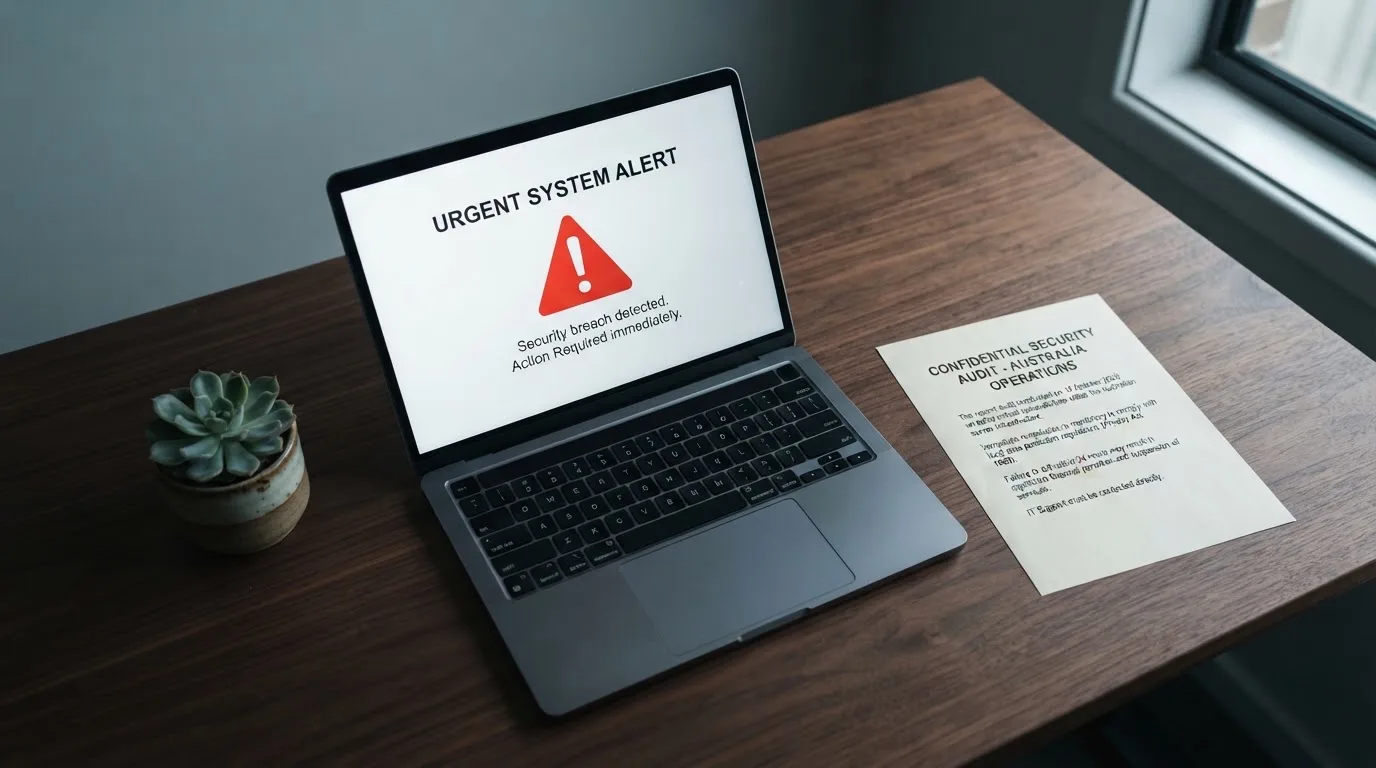
What the warning does not do is bar every Visa deposit the operator takes. The payment flows over VisaNet; VisaNet processes the transaction without reference to the ACMA’s letters. The bank on the customer’s side may refuse the transaction through its own gambling block, or may not. The warning’s primary cost is to the operator, not to the customer. The reader who sees “ACMA warning” and thinks “the site has been shut” is reading the warning as a closure when it is in fact a notice.
What the warning also signals is a higher risk on the customer side that the operator’s bank accounts have started to wobble. A site that has just been warned may struggle to pay withdrawals through its usual banking rails. The customer may see the site’s withdrawal queue lengthen, may see the cashier page’s payment options thin out, may see the site disappear entirely. None of this is the regulator’s doing. It is the regulator’s pressure propagating through the operator’s own counterparties. The punter who deposits at the warned site has not been warned themselves. They are betting that the operator’s payment plumbing survives the regulator’s pressure, on the punter’s money, with no Australian recourse if it does not.
The brands the ACMA has acted against
This is the set the ACMA has put on its own formal-warning register. None of them may lawfully serve an Australian customer for online casino games under the IGA. The list is what the regulator has done; it is not a recommendation, it is not a ranking, and it is not a guide to which of them is the safer deposit. It is a list of names the punter will see in marketing material and should recognise from the regulator’s register.
The table uses the article-language no-data marker — em dash — for subject-support cells that the published listings do not carry. Subject support is a payment-method flag rather than a licence status, and where the public listings have not stated it the cell stays empty rather than inventing one.
| Brand | ACMA action and date | Operator named by the ACMA | Visa subject support |
|---|---|---|---|
| RocketPlay | Formal warning, March 2026 | Pulsup Ltd (Rocketplay.com.au); earlier Dama N.V., May 2022 | — |
| Level Up Casino | Formal warning, May 2022 | Dama N.V. | listings report Visa as a cashier option |
| Woo Casino | Formal warning, March 2025 | Dama N.V. | — |
| Spirit Casino | Formal warning, May 2025 | Dama N.V. | — |
| National Casino | Formal warning, July 2025 | Consolutetish S.R.L. | listings report Visa as a cashier option |
| Bizzo Casino | Formal warning, July 2025 (earlier 2022 to TechSolutions) | Consolutetish S.R.L. | — |
| Ignition Casino | Formal warning, July 2025 | Bamboo Media | — |
| Instant Casino | Formal warning, February 2025 | EOD Code SRL | listings report the cashier accepting Visa-linked funding routes |
| Jackbit | Formal warning, April 2026 | Ryker B.V. | — |
| Casino Intense | Formal warning, April 2025 | Sterplay Holding Ltd | listings report Visa as a cashier option |
| Sky Crown | Formal warning, September 2022 | Hollycorn N.V. | — |
The number that bears on the reader is the spread of operators, not the names on it. Eleven brands, ten parent companies, and the regulator writing the same letter to several of them more than once. The pattern is not that a single rogue operator slipped through. It is a market structure, and the structure does not change between rounds.
RocketPlay
Pulsup Ltd received the most recent of the ACMA’s letters on Rocketplay.com.au in March 2026; Dama N.V., the earlier owner, was warned over Rocketplay in May 2022. The brand has changed hands at least once and kept the same front-end shape. The card processor the cashier page lists at any given moment is the variable. As with the other brands on this list, online casino games cannot be licensed anywhere in Australia, whatever licence the site displays — the licence the cashier page advertises sits outside the IGA’s reach. Public listings do not state Visa subject support for this brand, and the absence is recorded rather than inferred. The punter who arrives at the cashier page from a Visa deposit is sending funds into a brand the regulator has told twice to stop.
Level Up Casino
Level Up’s ACMA warning dates to May 2022 and names Dama N.V. The same parent was named again over Woo Casino and Spirit Casino in 2025, and earlier in 2022 across six brands including Level Up. The cashier listings the public has access to report Visa as one of the funding routes at the brand, which is a listings-level statement rather than a statement about Level Up specifically. The bank on the customer’s side applies the merchant category code to every transaction at the site the same way it would to any other gambling merchant, and the gambling block on the customer’s card declines the deposit on the same MCC match. The punter who reads the cashier page’s Visa logo as the regulator’s endorsement has read it as something it has never been.
Woo Casino
Dama N.V. was warned over Woo Casino in March 2025, the second of the ACMA’s letters to that parent. The earlier 2022 letter covered six Dama brands; the 2025 letters added two more. The accumulation tells a reader what a single letter does not: that the operator’s response to the first warning was to continue, and that the regulator’s response to the continuation was another warning rather than a referral. The escalation has its own ceiling. The cashier page on Woo Casino lists the same Visa logo the cashier pages on the other Dama brands list, and the deposit route is identical at the network level. The differences between brands at this operator are cosmetic rather than structural.
Spirit Casino
Spirit Casino was named in the ACMA’s May 2025 warning to Dama N.V., the third warning to that parent in three years. Public listings do not state Visa subject support for Spirit Casino specifically, and the page records that absence rather than substituting a different brand’s listings. The card route is the network route; the cashier page’s choice of payment-method logos is the site’s marketing layer. The punter’s deposit clears or declines on the merchant category code, not on the brand.
National Casino
National Casino was named in the ACMA’s July 2025 warning to Consolutetish S.R.L. The same parent was warned in the same letter over Bizzo Casino, with Bizzo already the subject of an earlier 2022 warning to TechSolutions (CY) Group Limited and TechSolutions Group N.V. The public listings report Visa among the cashier options at National Casino. The reader who uses that listings signal to choose between two Consolutetish brands is choosing between two brands under the same warning. The card’s behaviour at the cashier is identical: the merchant category code match is the same, the gambling-block outcome on the customer’s side is the same, and the operator’s recourse framework is the same.
Bizzo Casino
Bizzo carries the longest warning history of any brand in this set. The ACMA wrote to TechSolutions (CY) Group Limited and TechSolutions Group N.V. over Bizzo in 2022, then wrote to Consolutetish S.R.L. over Bizzo and National Casino in July 2025. The brand has changed parent company twice in three years; the cashier page has not changed with the warning history. The Visa logo at the cashier is the same one that was there in 2022. The card network does not see the warning. The bank’s gambling block does not see the parent company name. The deposit either clears or it does not, on the merchant code match alone.
Ignition Casino
Bamboo Media was the recipient of the ACMA’s July 2025 warning over Ignition Casino. The brand is one of the older names in the offshore poker-and-casino segment. The cashier page’s payment-method line-up is the same Visa-plus-alternatives mix the segment uses. The merchant category code that triggers the customer’s bank block is the same one Westpac, NAB and ANZ key on. The brand sits behind the warning; the deposit sits in front of it.
Instant Casino
EOD Code SRL received the ACMA’s formal warning over Instant Casino in February 2025. The brand’s public listings include a cashier that accepts Visa-linked funding routes, including digital-wallet funding paths that draw on a Visa. The ANZ gambling block, for example, catches digital-wallet transactions on an eligible card. The punter who funds Instant Casino through Apple Pay on a Visa is sending a transaction whose merchant category code carries the same gambling flag as a direct card swipe, and the bank’s block sees it the same way.
Jackbit
Ryker B.V. received the ACMA’s April 2026 warning over Jackbit and CasinOK, the two brands named in the same letter. Ryker is the most recent parent company on this list. Public listings do not state Visa subject support for Jackbit. The absence is recorded. The card network’s behaviour is the same as it would be at any other gambling merchant.
Casino Intense
Sterplay Holding Ltd received the ACMA’s April 2025 warning over Casino Intense. The public listings report Visa as a cashier option. The punter’s experience of the deposit is the same experience as at any other brand on this list: the merchant category code matches “Betting/Casino Gambling”, the bank’s block declines if it is on, the funds move if it is off. The brand is the brand on the cashier page. The transaction is the transaction on the network.
Sky Crown
Hollycorn N.V. was warned over Sky Crown and Blue Leo, the ACMA’s September 2022 letter covering both brands at the same parent. Hollycorn sits in the older layer of the offshore segment. This operator’s listings do not carry confirmation of Visa subject support. The bank-block outcome is the same.
The blocking-rate picture
The ACMA’s blocking programme has been running since November 2019, and the rate of accumulation is what the regulator’s own figures describe. The first blocking request went out in November 2019. The round reported on 26 June 2026 brought the cumulative total of blocked illegal gambling and affiliate marketing websites to 1,751. That is a little over 22 blocked sites a month on average across the period, with the rate varying year to year and round to round.
Read the rate the way the regulator’s data lets the reader read it: a band rather than a single figure, because individual rounds vary. The June 2026 round itself named 12 sites. Earlier rounds in other years named more or fewer. The reader who wants a single number has a band of roughly 5 to 25 sites per blocking round across the period from late 2019 to mid-2026, with an average that sits in the low twenties per month and a total that has crossed 1,700.
The blocking rate is the regulatory footprint, not the closure rate. The ACMA’s job is to make the site harder to reach from an Australian IP. The site itself often moves to a new domain. The operator often re-emerges under a new parent company. The Visa deposit at the new domain behaves identically to the Visa deposit at the old one. The block rate is the regulator’s answer to a moving target, and the target is still moving.
What a punter should do before the cashier page loads
Three settings, in order. Activate the bank’s gambling block before the deposit is attempted; the block sits in the customer’s card and declines the transaction before the merchant receives it. ANZ’s block, once set, requires a 48-hour wait to remove. Westpac’s and NAB’s are reversible on the same terms. The block is the only one of the three settings that stops the funds from leaving.
Register with BetStop if the punter wants to be excluded from Australian-licensed wagering. BetStop binds every Australian-licensed online and phone wagering service; it does not bind the offshore casino. The registration does not propagate. The punter’s exclusion is enforced by the Australian side of the market.
Keep the National Gambling Helpline — 1800 858 858 — at hand. Free, 24/7, with chat at Gambling Help Online. The helpline does not enforce anything. It connects the punter to support.
The settings are independent. The bank block does not register the punter with BetStop. The BetStop registration does not turn on the bank block. The helpline does neither. A punter who uses one of the three has used one of the three, and the other two remain available.
A closing read
The Visa logo at the cashier page is a network convenience, not a regulatory endorsement. The card works at every offshore casino that lists it because the network underneath the card has no view on the merchant’s Australian legality. The bank’s gambling block is the only friction that travels with the card, and the block is opt-in rather than default. The ACMA’s warnings and block requests are the regulator’s tools, and they have produced a 1,751-site block list and a register of formal warnings across more than a dozen operators, none of which has converted the prohibited product into a legal one. The card is unchanged. The merchant is unchanged. The law is unchanged. The punter’s recourse if the merchant disappears with the balance is unchanged, and it remains whatever the bank tells the customer when the chargeback lands.
Frequently asked questions
Is it legal for an online casino to accept Visa from a player in Australia?
No. The Interactive Gambling Act 2001 prohibits the supply of online casino games and online pokies to Australian customers, and no Australian regulator licenses the product. The Visa acceptance the cashier page displays sits on the network side, not the regulatory side, and the offshore operator’s licence is granted by a jurisdiction outside Australia.
What is the smallest deposit a Visa casino site usually asks for?
The cashier pages on offshore casino sites tend to advertise a minimum of A$10 to A$30. The published floor is the site’s marketing figure; the bank’s pre-authorisation hold, the issuer’s own minimum, and the currency-conversion rules on a non-Australian cashier can each push the figure the customer actually sees higher than the floor printed.
Does a Visa withdrawal clear any faster than a card withdrawal at these sites?
Not on the network side. VisaNet is fast in both directions. The variable is the operator’s internal review queue, which can run to several business days on a first withdrawal and which can decline the request before the network step is reached. The Australian end of a credit typically clears inside one to three business days once the operator releases the funds.
Can Visa be used at every offshore pokies-style site, or only some of them?
Most of the segment lists Visa as a cashier option, because Visa’s network carries the MCC that matches gambling and because the card is the customer’s default rail. Some sites route Visa through a payment processor rather than a direct merchant account, and some exclude Visa from bonus eligibility while still accepting it as a deposit method. The cashier page tells the punter which version applies on the day.
Does depositing with Visa add an extra fee at these casino sites?
Most cashier pages advertise zero fees on the deposit side, and the network does not add a consumer fee. The Reserve Bank of Australia’s July 2025 review proposed removing surcharges on eftpos, Mastercard and Visa transactions entirely, a change that would affect surcharging on legitimate retail spending rather than offshore gambling. The punter’s own statement may still show a pre-authorisation hold above the deposit amount, which is not a fee and which drops off once the casino settles.