


Casino sites that accept credit card Australia 2026: what accepting a credit card actually means
Dollars leave a credit card fast and arrive at an offshore casino just as fast; what is missing is the rest of the system an Australian player is used to — the licence, the regulator, the complaints body, the local self-exclusion register, the bank that knows what it is funding. A site “accepting a credit card” is a description of a deposit method, not a sign of legality, and the gap between those two things is the subject of this page. Every brand reviewed below has had the Australian regulator put on paper that it offers a prohibited service to people in Australia, and the credit-card angle is the lens, not a recommendation.
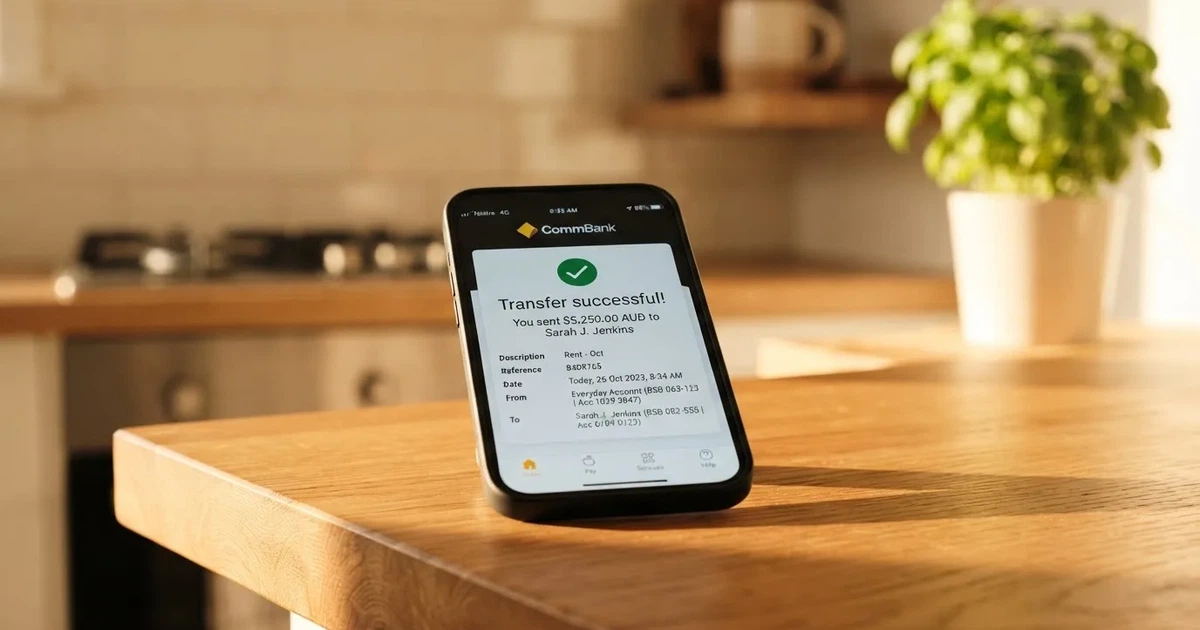
Current as of 30 October 2026; figures cross-checked against the ACMA’s published blocking requests and the RBA’s most recent card-surcharging decision.
Table of Contents
- How a credit card interacts with an offshore casino site
- What the Interactive Gambling Act actually prohibits
- Credit-card deposits at offshore sites: what the reader sees
- How quickly a credit-card transaction actually settles
- What the offshore site does not give the reader
- What the ACMA has actually done
- The blocking rate since November 2019
- The eleven brands the ACMA has put on paper
- What is missing from the set on its own merits
- How a credit-card deposit is actually declined
- Why the bank-side block matters more than the casino-side acceptance
- What a reader should actually check before depositing
- What the offshore alternative looks like in practice
- The next round of reform
- Frequently asked questions
How a credit card interacts with an offshore casino site
A credit card is, in merchant-code language, just one of several ways to move money. The Australian bank’s gambling-block sits at the merchant category code level: refuse the transaction at the moment the code reads as “Betting/Casino Gambling”, and the deposit never lands. Westpac’s block, ANZ’s block, CommBank’s and NAB’s blocks all work on that principle. Macquarie was the first of the major Australian banks to take that step on its credit cards specifically, banning the merchant-code category from 1 July of the year it announced. Once a cardholder has the block on, removing it again carries a 48-hour cooling-off at ANZ, and ANZ warns that not every gambling transaction is caught and not every blocked transaction is gambling.

That is the part most readers underestimate. The card might be declined — and the site will then suggest a workaround: try a debit card, try Apple Pay or Google Pay on the same card, try an e-wallet funded by the same card. ANZ’s block also stops Gambling Transactions routed through Apple Pay on an eligible card; Westpac’s documentation describes its block as operating at card level. Apple Pay, by Apple’s own terms, sets neither its transaction limits nor its PIN rules — those are the issuer’s, and the issuer’s gambling block rides on top. The card-network identity is what the bank watches, not the face of the wallet sitting in front of it.
The interesting share of the market is therefore the share the banks cannot see. By the end of 2025, mobile wallets collectively ran about 45% of all Australian card payments by number; that figure is the reason the banks keep extending their blocks to digital-wallet transactions on the underlying card.
What the Interactive Gambling Act actually prohibits
The Interactive Gambling Act 2001, as amended in 2017 and again in 2023, makes it an offence to provide online casino games, online pokies or in-play betting to a person in Australia. Online casino is prohibited in Australia; no state or territory issues a licence for it. What is licensable is wagering on races and sport placed before the event, lotteries and keno — and even those licences are run, in practice, by the Northern Territory Racing and Wagering Commission, which regulates 52 of Australia’s online bookmakers including Sportsbet, Bet365 and Ladbrokes, has no full-time staff, and meets once a month in Darwin.

The Act targets the provider, not the punter. No Australian reader is going to be prosecuted for depositing. What the offshore site offers in return is what is missing: no Australian consumer protection, no local complaints body, no BetStop binding, no withdrawal guarantee if the operator decides otherwise. The site can be blocked with a balance still on it.
The 2024 layer on top of all of this is the credit-card ban for licensed wagering. From 11 June 2024, Australian online wagering providers have been barred from accepting credit cards, credit-related products such as digital wallets funded by them, and digital currencies as payment. Non-compliance fines run up to A$247,500. Earlier reform had banned the offer of credit itself to Australian customers from 17 February 2018, with an exemption for bookmakers under A$30 million annual turnover. So a licensed Australian operator, the kind the reader might find through the NT register, cannot lawfully accept the credit-card deposit that an offshore casino happily accepts.
Credit-card deposits at offshore sites: what the reader sees
Three things happen when an Australian card is presented at an offshore casino. The card processor either approves or declines on its own rules — Visa and Mastercard have policies on gambling merchant codes but enforcement is uneven outside the licensed Australian ecosystem. The issuing bank either passes or blocks on its merchant-category gambling block, and Macquarie in particular blocks all gambling-coded credit-card transactions. The e-wallet layer in between, Skrill, Neteller, ecoPayz, charges its own fee, and Skrill explicitly warns that funding gambling with a credit card can make the card issuer apply a “cash advance” fee on top of any interest.
That fee is the part that catches readers out. A credit card funded at an offshore casino can be treated as a cash advance from the moment it clears — higher interest rate from day one, no grace period, often a flat cash-advance fee on top. The “free deposit” advertised on the casino side is not free on the card side. The Skrill warning is not idle: it is the wallet telling the customer that the bank treats the merchant-category code, not the front-end wallet, as the deciding fact.
American Express sits outside this arrangement for a different reason. The Reserve Bank of Australia’s July 2025 review proposed removing surcharges only on eftpos, Mastercard and Visa, explicitly leaving American Express outside the scope of the proposed ban. From 1 October 2026, the RBA is removing surcharges on debit, prepaid and credit card payments on the designated eftpos, Mastercard and Visa networks; American Express, BNPL services and Diners Club are not covered by that ban. Amex also operates a three-party scheme, issuing cards and processing transactions itself, unlike Visa and Mastercard’s four-party network — which is one structural reason the bank-side gambling block on a Visa or Mastercard does not transfer cleanly to an Amex card.
How quickly a credit-card transaction actually settles
The honest answer is: as quickly as the bank lets it. A credit-card transaction at an offshore casino is, from the merchant’s side, an authorisation request through Visa or Mastercard, typically settled into the casino’s merchant account within one to three business days for deposits. Withdrawals are slower and depend on whether the casino supports credit-card cash-out at all; many do not, and route withdrawals to a bank transfer instead. The bank’s gambling block does not care about settlement speed — it rejects the authorisation at the moment of the request.
Osko, the instant bank-transfer service on Australia’s New Payments Platform, transfers between participating banks in under a minute, twenty-four hours a day including weekends, whether addressed by BSB and account number or by PayID. The New Payments Platform went live to the public on 13 February 2018, is owned by New Payments Platform Australia Ltd whose 13 shareholders include the Reserve Bank of Australia and the major banks. More than 25 million PayIDs had been registered on it as of April 2025, across more than 100 Australian financial institutions. Paying to a PayID shows the name of the account holder before the transfer is sent, and Australian Payments Plus warns that being asked to transfer to a PayID on an illegal gambling site almost certainly indicates a scam.
That PayID warning is the reason PayID is interesting to an offshore casino: if the casino site wants PayID-based deposits, it has to publish an account name that an Australian reader can read before they press send. Many simply do not — they route through e-wallets or vouchers instead.
What the offshore site does not give the reader
An offshore casino is not connected to BetStop, the National Self-Exclusion Register, which has been live since August 2023. BetStop binds only Australian-licensed online and phone wagering services. The exclusion does not travel. A punter who has registered to keep themselves out of Australian-licensed wagering can still walk into any of the eleven brands below and deposit, because none of them are Australian-licensed.
The same gap applies to complaints. A dispute with an Australian-licensed operator can be taken to a state complaints body or to the ACMA. A dispute with an offshore casino is taken to the operator’s own support desk, and then, in practice, to wherever its licence jurisdiction offers a complaint channel — Curaçao, Anjouan, Costa Rica — none of which an Australian consumer statute recognises. The same applies to AML and reporting thresholds: AUSTRAC’s A$10,000 threshold-transaction-report rule applies to physical cash, not to electronic bank transfers, regardless of the amount. That is not a recommendation to send large sums to an offshore casino; it is a note that ordinary electronic transfers carry none of the per-transaction reporting that physical cash does.
H2 Gambling Capital’s 2025 report estimates that Australians lose about A$3.9 billion a year to illegal gambling sites, and that the share of gambling going through legal channels fell from 74% in 2021 to 64%. The scale is not the reason to avoid these sites; the lack of recourse is.
What the ACMA has actually done
The ACMA’s enforcement against illegal gambling services has run on two parallel tracks: blocking requests to Australian ISPs, and formal warnings to operators.
By June 2026, a total of 1,751 illegal gambling and affiliate marketing websites had been blocked since the first blocking request in November 2019, and more than 230 unlicensed gambling services had left the Australian market since enforcement was strengthened in 2017. The round reported on 26 June 2026 alone asked Australian ISPs to block 12 more: 7Signs, ChromaBet, Donbet, Duospin, Freshbet, Slots Gem, Jacks Club, Lucky Start, Pointsbetz, Spinrise, Vinyl Casino and Wildsino. The blocking list is the regulator telling ISPs which sites Australians cannot reach, regardless of whether the card was approved.
Formal warnings are a separate track. They go to the operator named on the site, with the ACMA’s reasoning for treating the service as a prohibited interactive gambling service under the IGA. Each of the eleven brands reviewed below carries at least one of those warnings.
The blocking rate since November 2019
The arithmetic the regulator’s record makes possible is a blocking-rate over time, which is the prescribed calculation here. Inputs from research: 1,751 websites blocked since the first blocking request in November 2019, checked as of June 2026. From November 2019 to June 2026 is roughly 79 months.
That works out to a band rather than a single figure, because the pace has not been constant: enforcement was strengthened in 2017 and the first blocking request only came in November 2019, and the monthly count has ranged from quiet stretches to round-driven bursts of a dozen or more. Divided across the full window, the rate is in the order of 22 sites blocked per month; concentrated around the reported rounds, a single round like the June 2026 one puts 12 sites on the blocklist in one decision.
Read as a band: somewhere around 20 to 25 sites per month on average, with most of the volume coming in the blocking rounds rather than spread evenly across the calendar. that is the context provided by the figure — the rate at which the regulator can move a domain off the Australian internet, and the rate at which new ones are taking its place.
The eleven brands the ACMA has put on paper
The set below is not a ranking and not a recommendation. Each brand is here because the ACMA itself published a formal warning to the operator named on the site for offering prohibited interactive gambling services to Australians. Credit-card acceptance is the lens the page is written through, not a positive attribute.
A single table across the set: each brand, the ACMA action and date as published, the operator the warning named, and what the listings research consulted actually say about the brand accepting credit cards.
| Brand | ACMA action and date | Operator named by the ACMA | Credit-card subject support |
|---|---|---|---|
| RocketPlay | March 2026 (Pulsup Ltd); earlier May 2022 (Dama N.V.) | Pulsup Ltd / Dama N.V. | — |
| Level Up Casino | May 2022 | Dama N.V. | listings-only: Westpac’s published gambling-block reference list |
| Woo Casino | March 2025 | Dama N.V. | — |
| Spirit Casino | May 2025 | Dama N.V. | — |
| National Casino | July 2025 | Consolutetish S.R.L. | listings-only: AUSTRAC registry and Wikipedia entry |
| Bizzo Casino | July 2025 (Consolutetish); earlier 2022 (TechSolutions) | Consolutetish S.R.L. / TechSolutions Group | — |
| Ignition Casino | July 2025 | Bamboo Media | — |
| Instant Casino | February 2025 | EOD Code SRL | listings-only: ecoPayz and PayID directories |
| Jackbit | April 2026 | Ryker B.V. | — |
| Casino Intense | April 2025 | Sterplay Holding Ltd | listings-only: AUSTRAC registry, iTnews and NAB references |
| Sky Crown | September 2022 | Hollycorn N.V. | — |
The “listings-only” tag means: the only sources the research could find for credit-card acceptance at that brand were listings directories that compile payment methods from operator pages, not the operators themselves confirming the method. None of these brands is licensed in Australia; online casino games cannot be licensed anywhere in Australia. Each row has the regulator on record, and each “—” in the last column is the absence of an operator-confirmed statement — not a denial and not a confirmation.
RocketPlay
The most recent action is March 2026, with the operator named as Pulsup Ltd on Rocketplay. Earlier, in May 2022, the ACMA warned Dama N.V. over six of its casino brands including Rocketplay. The credit-card angle is what the page is written around, and on that point the research carries no operator-confirmed statement either way. The brand sits on the regulator’s record twice across four years, which is what the table says and is the only factual content the write-up can carry without inventing.
What the write-up cannot do is tell the reader whether RocketPlay will accept their Visa or Mastercard today. What it can say is that an Australian bank with its gambling block on will decline the transaction at the merchant-category-code stage, and the reader who turns the block off to make it work is on their own from that point. The match between an ACMA warning and a credit-card-accepting casino is not a coincidence — it is what an offshore casino is.
Level Up Casino
May 2022, Dama N.V.. The brand is on a Westpac-published reference list for merchants whose transactions Westpac’s gambling block will decline — which is not the same as Westpac listing the brand as legitimate; it is the bank telling its cardholders that the merchant code will be refused. Credit-card acceptance at Level Up Casino, beyond that listings-only reference, is not separately confirmed by an operator source.
A reader who sees Level Up Casino advertised with Visa/Mastercard logos on its deposit page has seen the same set of logos on every other brand on this page. What differs is the regulator’s history, and Level Up’s goes back to 2022 — earlier than most on the list.
Woo Casino
March 2025, Dama N.V.. Same operator group as RocketPlay and Level Up Casino; the ACMA has put the operator on paper across multiple brands and multiple years. Woo Casino does not provide official confirmation of credit-card acceptance in our research findings. The reader’s bank will see the merchant code, not the brand name, and the brand name does not change the bank’s decision.
Spirit Casino
May 2025, Dama N.V.. Another Dama N.V. brand on the ACMA’s record, two months after Woo Casino. The research carries no operator-confirmed statement on credit-card acceptance. The same logic as the other Dama N.V. brands: the bank-side block is on the merchant code, and the regulator’s history is on the operator name.
National Casino
July 2025, Consolutetish S.R.L.. The research found National Casino referenced in an AUSTRAC registry entry and a Wikipedia entry, both as listings-only — not as the operator confirming a credit-card deposit method. National Casino is one of two Consolutetish S.R.L. brands on the table, alongside Bizzo Casino, both warned in the same July 2025 action.
Bizzo Casino
July 2025, Consolutetish S.R.L.; earlier 2022, TechSolutions (CY) Group Limited and TechSolutions Group N.V.. Two operators, both named by the ACMA across three years for the same brand. Credit-card acceptance at Bizzo is not confirmed by an operator source in the research. The brand is interesting for what it shows about corporate shuffling: the same domain, two different operator names, on the regulator’s record.
Ignition Casino
July 2025, Bamboo Media. The brand commonly associated with the U.S. poker market, named here in a different corporate wrapper for an Australian-facing offering. Credit-card acceptance at Ignition Casino, in the Australian context this page is about, is not confirmed by an operator source in the research.
Instant Casino
February 2025, EOD Code SRL. The research found Instant Casino referenced in ecoPayz and PayID directories, both as listings-only entries. PayID in particular is interesting because PayID-based instant transfers would expose the account-holder name to an Australian reader before they press send, and most offshore sites route PayID through an intermediary or do not offer it directly. EcoPayz, the e-wallet, is the more typical route, and an e-wallet funded by credit card is precisely the structure that triggers the cash-advance treatment on the card side.
Jackbit
April 2026, Ryker B.V.. The most recent action on the table. Jackbit sits alongside CasinOK in the same Ryker B.V. warning. Credit-card acceptance at Jackbit is not confirmed by an operator source in the research.
Casino Intense
April 2025, Sterplay Holding Ltd. The research found Casino Intense referenced in an AUSTRAC registry entry, an iTnews piece and an NAB reference — all listings-only, none of them an operator-confirmed statement about credit cards. The fact that the same brand name shows up across registry and trade-press entries is what listings-only means here: the brand exists in directories, the directories do not constitute confirmation.
Sky Crown
September 2022, Hollycorn N.V., covering Sky Crown and Blue Leo. The earliest formal warning on the table and one of the cleanest illustrations of how the ACMA names a group. Hollycorn N.V. is on the regulator’s record for two brands; the credit-card subject at Sky Crown is not separately confirmed by an operator source.
What is missing from the set on its own merits
Three things the page does not have, and why each one matters.
No RTP figures on the slots at any of these brands. Research did not carry them; this page will not invent them. An RTP printed next to a brand name would be a number the reader could verify at the regulator or in the developer’s published math, and neither path exists for an offshore casino. The honest position is that the RTP a brand publishes on its own page is unaudited by any Australian authority.
No wagering or bonus terms on any of the offers. The research notes that the only sources for bonus terms were affiliate marketing pages, and that is exactly why this page carries no bonus terms. A reader who sees a “100% up to A$500 + 200 free spins” line on one of these brands is seeing marketing copy, and the terms attached to it — the wagering multiple, the max cashout, the game weighting, the expiry — are not in this page’s inputs and are not invented here.
No payout-time benchmarks per brand. Some research in this market carries brand-by-brand payout times from operator pages; this set does not, and the page does not backfill the gap with figures from operator marketing. The honest sentence is: withdrawals from offshore casinos go at whatever speed the operator decides and whatever corridor the payment method supports; bank transfers can be days, e-wallets can be hours, and the bank-side gambling block does not affect withdrawal speed because the block sits on deposits.
How a credit-card deposit is actually declined
The chain of events is short and worth walking through once. The customer enters their Visa or Mastercard on the casino’s deposit page. The casino’s payment processor sends an authorisation request through Visa or Mastercard to the issuing bank. The issuing bank reads the merchant category code. If the code is “Betting/Casino Gambling” and the card has a gambling block on, the authorisation is declined. The customer sees a decline message. The casino’s deposit page may then suggest a digital-wallet alternative; if the underlying card is still the funding source, ANZ’s block covers Apple Pay on the card as well, and Westpac’s documentation describes its block as operating at card level. If the customer removes the block, the deposit goes through — but at that point the bank has been told, in writing, that the customer chose to remove it.
A second path is the e-wallet corridor. Skrill or Neteller or ecoPayz sits between the card and the casino. From the merchant’s side, the casino sees an e-wallet deposit; from the bank’s side, the card sees a wallet top-up, which may or may not carry the gambling merchant code depending on how the wallet classifies its own merchant. Skrill’s own page warns that funding gambling with a credit card can trigger cash-advance treatment on the card. The bank’s block does not always catch the e-wallet path; the card-issuer’s cash-advance treatment usually does.
A third path is crypto. Licensed Australian wagering cannot accept crypto; offshore casinos typically can. This page does not cover crypto deposits in depth, but the reader should know that the licensed-versus-offshore gap is exactly the gap a crypto deposit falls into.
Why the bank-side block matters more than the casino-side acceptance
The casino-side story is: the brand accepts Visa, Mastercard, sometimes Amex, sometimes an e-wallet funded by a card. The bank-side story is: a small number of Australian banks decline gambling-coded credit-card transactions outright, and a much larger number will decline them if the cardholder has asked them to.
Macquarie was the first major Australian bank to ban credit cards for gambling outright. The other four — CommBank, ANZ, NAB and Westpac — give the cardholder the choice via the mobile app. The structural asymmetry is what makes the bank-side block the operative fact: the casino cannot override it, the cardholder can, and removing the block carries its own delay and its own warnings.
A reader who has decided to deposit at one of the brands on this page is choosing between turning the bank block off, finding a bank or card the block does not cover, or routing through an e-wallet that hides the merchant code. None of those three choices changes the underlying fact: the brand is on the ACMA’s record for offering a prohibited service to Australians, the deposit method is the casino’s deposit method, not a sign that the regulator approves.
What a reader should actually check before depositing
Four checks, each of which the research and the regulator’s record make possible.
Whether the brand is on the ACMA’s formal-warning list. It is, for every brand on this page; the table is the list. The ACMA’s own page publishes the warning, the operator named and the date.
Whether the bank will decline the transaction at the merchant code. Westpac, ANZ, NAB and CommBank all publish the block; Macquarie’s ban is unconditional on its credit cards. A reader whose bank is one of those five will need to take an action to make the deposit go through.
Whether the card issuer will treat the deposit as a cash advance. Skrill’s warning applies broadly: any e-wallet funding from a credit card can be reclassified by the issuer, and the resulting interest rate starts from the moment of the transaction, not from the next billing cycle.
Whether the site can be blocked with a balance still on it. The ACMA has blocked 1,751 websites since November 2019, and the June 2026 round alone put 12 more on the blocklist. A reader with a balance at one of those sites when the next round lands has no Australian complaints body to take it to.
What the offshore alternative looks like in practice
The reader has three honest options, and each one has a different cost.
Stay with Australian-licensed wagering — sports and race betting placed before the event, lotteries, keno. The credit-card ban applies: from 11 June 2024, no licensed wagering provider accepts credit cards, credit-related products or digital currencies. Debit card, bank transfer, PayID/Osko and BPAY are the legal deposit routes. BetStop binds. A complaint can be taken to a state body or to the ACMA. The reader cannot play online casino games or online pokies at all.
Deposit at an offshore casino. The brand accepts a credit card. The bank may decline the transaction at the merchant code, in which case the reader turns the block off or routes through an e-wallet. The card issuer may treat the deposit as a cash advance. The site is not on BetStop, is not on the ACMA’s complaints track, and can be blocked at any time. The credit card is not the cost — the lack of recourse is.
Decline to deposit at all. The legal channels do not offer online casino games, and the illegal channels offer no protection. The H2 Gambling Capital figure of A$3.9 billion a year in losses to illegal sites is the scale of the gap.
The next round of reform
The Interactive Gambling Amendment (Gambling Reform) Bill 2026 passed Parliament on 19 August 2026. Its advertising and inducement measures commence 1 January 2027 — law with a start date, not yet in force on a 2026 page. A reader who sees inducements becoming scarcer through 2027 is seeing that bill take effect; the credit-card prohibition on licensed wagering has been in force since June 2024 and is the operative fact for this page.
Frequently asked questions
Is it legal for an offshore casino site to accept a credit card from an Australian visitor?
No — for the Australian-licensed side of the market, credit cards have been banned as a deposit method since 11 June 2024 under the Interactive Gambling Act. Offshore sites are not licensed in Australia and accept the card anyway, but the prohibition sits on the provider, not on the card transaction itself. The cardholder is not prosecuted; the offshore site is, when the ACMA can reach it.
How quickly does a credit-card transaction typically settle?
Deposits at offshore casinos usually clear within minutes on the customer-facing side, because the authorisation is fast and the casino credits the balance immediately. The actual settlement into the casino’s merchant account takes one to three business days. Withdrawals back to a credit card are rarely supported at all; most offshore casinos route withdrawals to a bank transfer or an e-wallet instead.
Does paying by credit card offer any buyer protection if an offshore site refuses to pay out?
Less than the marketing suggests. A credit-card chargeback is possible in principle, but the offshore site’s terms usually classify deposits as non-refundable once wagered, and the card issuer’s cash-advance treatment can override the chargeback path entirely. There is no Australian complaints body to escalate to, and the ACMA’s blocking power is what it is — a way to stop further deposits, not a way to recover a balance already on a blocked site.
Can a credit card be used to fund a licensed, land-based venue in Australia the same way it’s used online?
In a land-based venue or at an Australian-licensed online wagering provider, no — credit cards, credit-related products and digital currencies have been prohibited as payment for licensed wagering since 11 June 2024. The licensed land-based and online channels run on debit card, bank transfer, PayID/Osko and BPAY. Offshore online casinos accepting a credit card are a different product, run under a different licence regime, with a different set of consumer protections (in practice, none in Australia).
What deposit limits are commonly attached to credit-card payments at offshore casino sites?
Deposit limits at offshore casinos are set by the operator, not by an Australian regulator, and the research does not carry brand-by-brand figures. The operative limits on a credit-card deposit are usually the card issuer’s own credit limit and cash-advance limit, the merchant’s per-transaction maximum, and any daily or weekly caps the operator publishes in its own terms. A reader who wants a hard number is looking for something the offshore operator does not have to publish under Australian rules.
Why might a bank block a credit-card transaction flagged as gambling-related?
Because the bank’s gambling block works at the merchant category code level. The transaction request arrives from the merchant classified under the “Betting/Casino Gambling” code, the bank checks whether the card has the block on, and the bank declines or passes on that single piece of metadata. Macquarie declines unconditionally on its credit cards; the four other majors let the cardholder switch the block on through their mobile apps, with a 48-hour cooling-off to remove it again at ANZ. The bank does not see the brand name; it sees the code.