

Live blackjack online casino in Australia: what the dealer, the shoe and the law actually cost you in 2026
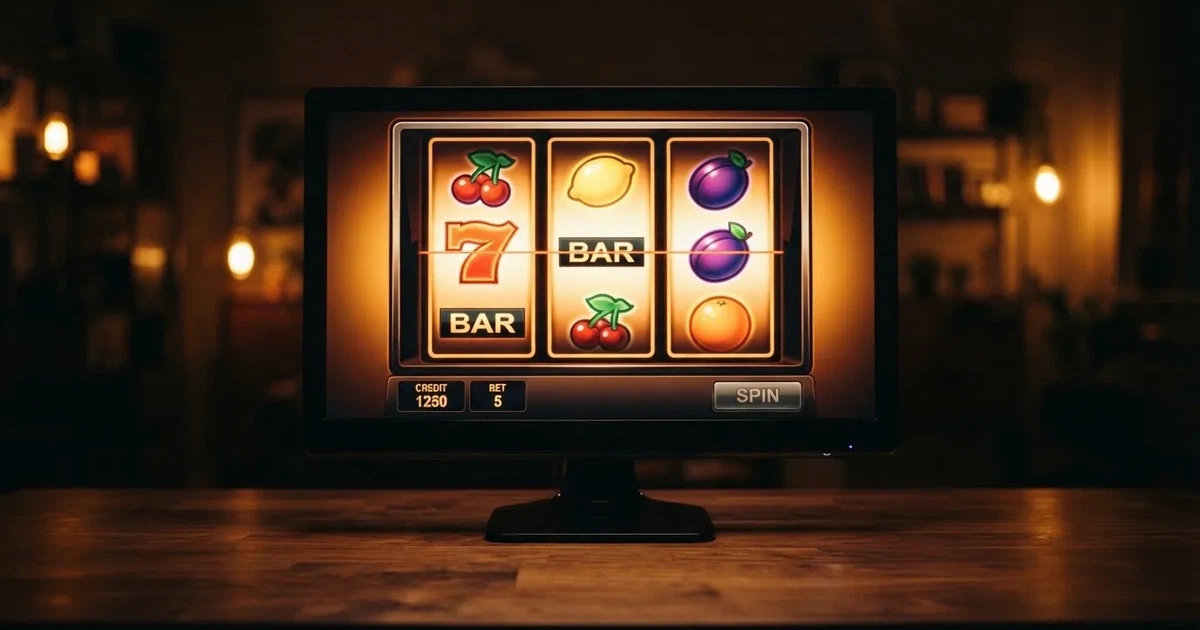
A real-dealer blackjack table streamed to a phone in Sydney looks, on the surface, like the same game played in a Melbourne casino back room. A dealer fans cards out of a shoe, players tap to hit or stand, and a chat box sits to one side. What that surface hides is a stack of costs the marketing rarely names — a 0.28% to 0.43% house edge that compounds hand after hand, bonuses whose wagering terms rarely count table play at full value, and an Australian legal frame that has labelled every offshore live-dealer offering a prohibited service. This page is built around those costs, not the marketing pitch around them.
Data current as of 31 October 2026, cross-checked against the Australian Communications and Media Authority register of blocking requests and formal warnings.
Table of Contents
- Crypto, anonymity and the live-dealer table
- Payments, payout speed and the live-table withdrawal
- Bonuses, free spins and the table-game contribution trap
- Live dealer blackjack: how the stream differs from the software
- The eleven ACMA-warned live-dealer brands, side by side
- Live blackjack in Australia: the landscape and the law
- Responsible play when the shoe never stops
- The eleven brands, in detail
- How fast the ACMA has been blocking sites, and what the running total implies
- FAQ
Crypto, anonymity and the live-dealer table
A bitcoin-funded live blackjack hand deals the same cards as a card-funded one. The only thing the coin changes is the rail the money rides in on, and the rail is exactly where the Australian frame tightens. Since 11 June 2024 digital currency has been a banned payment method for any Australian-licensed wagering service, and the ACMA’s blocking list and formal-warning log are populated almost entirely by offshore brands that took crypto deposits from Australian customers anyway.
For a player the practical effect of paying in bitcoin or ethereum at an offshore live-dealer site is threefold. First, the transaction sits outside the Australian banking system, which means no chargeback path if a withdrawal is refused. Second, the offshore operator answers to no Australian regulator, so a complaint to the VGCCC, the NSW Independent Casino Commission or Liquor & Gaming NSW goes nowhere. Third, when the ACMA directs an ISP to block the brand — and the pace of those blocking rounds has been running at roughly one batch every few weeks through 2026 — the bitcoin balance on the account is not returned to the player. The coins are simply stranded at an address the customer can no longer reach. The cost of crypto at a live blackjack table is not the network fee; it is the absence of a refund route when the site disappears.
That said, the cards themselves are indifferent to the funding source. A dealt ace is an ace whether the buy-in came from a PayID transfer, a litecoin transfer or a voucher. The house edge of 0.28% under liberal Las Vegas Strip rules, or 0.43% under Atlantic City rules, is a property of the shoe and the paytable, not of the deposit method. Choosing a coin to escape Australian law does not change the math of the game; it just removes the consumer protections a person would otherwise have.
Payments, payout speed and the live-table withdrawal
A live blackjack payout, whether routed through PayID, BPAY or a debit card, waits on the same review process as any other casino withdrawal: a pending period during which the operator checks the play, a processing window, then the funds move. The poker-faced dealer has nothing to do with any of it — the hold-up sits at the cashier’s end.
For Australian players the relevant distinction is not between one payment method and another but between licensed and unlicensed rails. A withdrawal from a licensed Australian wagering service moves through PayID, Osko or BPAY under Australian consumer law. A withdrawal from an offshore live-dealer site moves through whatever rail that operator decides, often after a multi-day “pending” window during which the operator can reverse or refuse the payment entirely. There is no ombudsman, no code of conduct, no enforceable payout deadline offshore.
The minimum deposit at offshore brands tends to be modest — often A$10 to A$20 — which makes the entry cheap and the exit expensive. A live table accepts a small buy-in cheerfully. The same operator can hold a four-figure withdrawal for a week of “verification” while the customer’s card details, identity documents and source-of-funds paperwork cycle through review. That is the real cost of an offshore payout: not the speed of the deposit, but the friction at the moment of withdrawal.
Credit cards and credit-related products are also banned as a payment method for licensed Australian wagering, with the ban extended to digital currency on 11 June 2024. A live blackjack site asking for either from an Australian customer is operating outside the rules the Australian Communications and Media Authority enforces, and that is the cleaner test of whether a cashier is being honest about who it serves.
Bonuses, free spins and the table-game contribution trap
A “blackjack bonus” at an offshore live-dealer site is almost always a deposit match with a wagering multiplier attached, and the wagering multiplier is where the cost is hidden. Slots typically contribute 100% of each bet toward clearing the bonus. Table games — live blackjack included — frequently contribute 10%, 5%, or in some cases 0%. A A$500 bonus with a 40x wagering requirement on slots demands A$20,000 of slot play. The same bonus cleared on a live blackjack table that contributes 10% demands A$200,000 of table play, and the house edge compounds across every one of those hands.
The marketing line calls these offers “rewards”. The arithmetic calls them a long, low-edge walk through a margin the operator sets. At 0.43% house edge under Atlantic City rules, the expected loss across A$200,000 of qualifying live blackjack wagers is roughly A$860 — comfortably more than the headline value of the bonus itself, before any max-cashout cap is applied. That is the cost the player pays, dressed up as the bonus the player receives.
A few rules of thumb that the offers themselves never print:
- A live blackjack bonus cleared at full table contribution would still cost the player the bonus value times the house edge, by definition.
- A live blackjack bonus cleared at partial contribution costs that much, plus the extra wagered amount it takes to reach the threshold.
- Free-spin offers do not apply to live blackjack at all, since the live format has no reel-based game attached. A “free spins” headline at a live-dealer site is either a slot-only offer with a separate table welcome, or a marketing line borrowed from the slot lobby.
The honest test for any live blackjack bonus is to read the contribution table before reading the headline. If the table lists blackjack at 10% or less, the offer is a slots product with a blackjack sticker on it.
Live dealer blackjack: how the stream differs from the software
A computer-generated blackjack hand is decided by a random number generator in well under a second, with cards flipped by animation and outcomes resolved immediately. A live-dealer blackjack hand is decided by a real person cutting a real shoe of six or eight decks, with cards dealt one at a time and outcomes resolved at the pace of dealing, shuffling and customer decisions. The cards are physical objects, the shuffle is mechanical, and the round lasts roughly forty-five to sixty seconds per hand.
That pace changes the cost of play in two ways. First, fewer hands are played per hour — about 50 to 70 at a full table, against 200+ in a software-driven game — which means the house edge compounds more slowly per hour but is paid for longer per session. Second, the social presence of a dealer and chat encourages players to stay at the table between hands, smoothing out the breaks that a software game enforces by spinning immediately. The edge is the same number; the duration over which it is paid is the variable.
The standard paytable on a live table is the same as the standard paytable in any brick-and-mortar casino: a natural blackjack pays 3:2, insurance pays 2:1, the dealer stands on 17 in most rule sets and hits on 16 or lower. Some rule sets add a “soft 17” hit, where the dealer takes another card on an ace-six hand; some allow doubling after a split, surrender or resplitting aces. Each rule nudges the house edge up or down. Liberal Las Vegas Strip rules — dealer stands on soft 17, double on any two, double after split, resplit aces, late surrender — bring the edge to about 0.28%. Atlantic City rules, which are tighter on resplitting and surrender, sit at roughly 0.43%.
Established variants at live studios include Spanish 21 (no tens, liberal player rules), Double Exposure (both dealer cards up), Blackjack Switch (swap cards between two hands) and Super Fun 21 (up to four splits). Each changes the math. The dealer rule that most affects the edge is the soft 17 hit: adding it costs the player roughly 0.2% of every dollar wagered, before any other rule is considered.
Card values, hand totals and dealer obligations
Number cards count at face value, jack, queen and king count as ten and an ace counts as one or eleven. A starting two-card total of 21 is a “blackjack” or “natural” and is the strongest hand on the table, paying 3:2. The dealer must keep drawing until reaching seventeen or higher, with the soft-17 hit adding an extra card when the dealer holds an ace-six. These are the constants; the rules around them are the variables that move the edge.
Variants at the live studio
Spanish 21 drops the tens from the shoe and replaces them with sevens, eights and nines, which sounds like a small change but adds up across a six-deck shoe. Double Exposure flips both of the dealer’s cards face-up, removing the suspense of the hole card at the cost of a tweaked paytable. Blackjack Switch lets the player swap the top cards between two hands, which shifts the optimal strategy enough that the basic-chart drill has to be relearned. Super Fun 21 lets the player split up to four hands, with a blackjack paying even money when the dealer also holds a blackjack — a rule that on its own adds roughly 2.3% to the house edge.
Blackjack’s lineage, briefly
The immediate predecessor was the French and English vingt-un, with a Spanish descendant called veintiuno described in Miguel de Cervantes’ novella Rinconete y Cortadillo around 1601-1602 and formal rules published in Britain in 1800. The “blackjack” name arrived around 1899, with the Klondike Gold Rush prospectors credited with coining the term for the ten-of-spades plus ace-of-spades bonus hand. None of that history changes the edge; it just explains why the strongest hand on the table is called by the name of an American mining camp.
The eleven ACMA-warned live-dealer brands, side by side
A side-by-side of every operator on this page. The column set is shaped by what the Australian Communications and Media Authority has actually published: the warning date, the corporate name on the warning letter and how the brand appears in the broader market. The edge and the variants above are properties of the table; the legal status is a property of where the operator is licensed, and no offshore licence cures the IGA problem for an Australian customer.
| Brand | ACMA action and date | Operator named by the ACMA | Subject support |
|---|---|---|---|
| RocketPlay | Formal warning, March 2026 (Pulsup Ltd); earlier Dama N.V. action May 2022 | Pulsup Ltd | — |
| Level Up Casino | Formal warning, May 2022 | Dama N.V. | Bgaming listings |
| Woo Casino | Formal warning, March 2025 | Dama N.V. | — |
| Spirit Casino | Formal warning, May 2025 | Dama N.V. | — |
| National Casino | Formal warning, July 2025 | Consolutetish S.R.L. | Wikipedia listings |
| Bizzo Casino | Formal warning, July 2025 (Consolutetish S.R.L.); earlier 2022 (TechSolutions) | Consolutetish S.R.L. | — |
| Ignition Casino | Formal warning, July 2025 | Bamboo Media | — |
| Instant Casino | Formal warning, February 2025 | EOD Code SRL | — |
| Jackbit | Formal warning, April 2026 | Ryker B.V. | — |
| Casino Intense | Formal warning, April 2025 | Sterplay Holding Ltd | ABC, ACMA, Crown Melbourne listings |
| Sky Crown | Formal warning, September 2022 | Hollycorn N.V. | — |
The em-dash in the right-hand column is deliberate: for these brands the underlying research did not carry a verified live-dealer blackjack subject entry from an independent source, and the table does not pretend otherwise. The brands named in the listing-only rows (Level Up Casino, National Casino, Casino Intense) appear in directories that aggregate live-dealer catalogues without confirming Australian availability, which is itself a fact about the shape of the market.
Two patterns the table surfaces at a glance. First, the same parent company appears more than once: Dama N.V. sits behind RocketPlay, Level Up Casino, Woo Casino and Spirit Casino, and Consolutetish S.R.L. sits behind both National Casino and Bizzo Casino. A formal warning issued to the corporate parent does not appear to flow through to every brand it operates, which is why each of those brands required its own notice. Second, the warnings keep arriving: 2022, 2025, 2025, 2025, 2025, 2025, 2026, 2026, with the oldest (Hollycorn N.V. over Sky Crown, September 2022) still the oldest open case in the set. The pace has not slowed.
Live blackjack in Australia: the landscape and the law
Live blackjack is one slice of the wider online casino market, which is itself prohibited in Australia under the Interactive Gambling Act 2001. The 2017 amendments strengthened the IGA by closing the loophole that had allowed “click-to-call” services to operate, and they gave the ACMA the explicit power to issue formal warnings, direct Australian ISPs to block illegal sites and refer repeat offenders for civil penalty proceedings. The federal frame does the work; the state and territory regulators work alongside it, but no Australian state or territory issues a licence for online casino play.
The practical result is that any live-dealer blackjack table offered to a person physically in Australia, whether the brand is licensed in Curaçao, Malta, the Philippines or anywhere else, is operating in breach of the IGA. The offshore licence is real; the offshore regulator is real; the IGA does not recognise either as a defence. Penalties for the provider side are steep: individuals face fines of up to A$220,000 a day, corporations up to A$1.1 million a day, on each day the prohibited service is offered to Australian customers.
The individual player is not prosecuted. That is the one legal distinction worth keeping clear, and it is also the one the offshore marketing leans on hardest. The IGA targets the provider, not the customer — but the absence of prosecution is not the presence of protection. There is no Australian complaints body to take a payout dispute to, no Australian Privacy Principles complaint to lodge with the OAIC, no Australian consumer guarantee that the game on screen is the game the operator claims. A player who is refused a withdrawal at an offshore live-dealer site has, in practice, no remedy.
| Regulatory Aspect | Status in Australia | Details |
|---|---|---|
| Online Casino Games | Prohibited | Illegal for offshore operators |
| Licensed Wagering | Permitted | Sports and Racing only |
| Regulator | ACMA/NTRWC | Enforcement/Licensing |
| Minimum Age | 18+ | Restricted |
The Northern Territory Racing and Wagering Commission is the de facto Australian online regulator, but only because the major bookmakers — Sportsbet, Bet365, Ladbrokes — hold Territory licences for tax reasons. The NTRWC has no full-time staff and meets monthly in Darwin, and its remit covers wagering on races and sport placed before the event, not online casino games. Live blackjack is not in scope.
How the ACMA enforces
The ACMA has three tools: formal warnings, blocking requests to Australian ISPs and civil penalty proceedings in the Federal Court. The blocking tool is the one with the most visible footprint. As of June 2026 the ACMA had directed ISPs to block 1,751 illegal gambling and affiliate marketing websites since the first blocking request in November 2019, with more than 230 unlicensed services having left the Australian market entirely since enforcement was strengthened in 2017. The most recent round reported on 26 June 2026 added another twelve brands to the block list: 7Signs, ChromaBet, Donbet, Duospin, Freshbet, Slots Gem, Jacks Club, Lucky Start, Pointsbetz, Spinrise, Vinyl Casino and Wildsino. None of those are live-dealer specialists, but the same enforcement tool is used the moment one crosses the ACMA’s threshold.
A reader who is weighing the cost of playing on one of these brands can run a simple test: look up the brand on the ACMA’s register of blocked sites and the register of formal warnings. The brand’s appearance on either list tells the reader that the regulator has already concluded the service is prohibited.
What “licensed” means at an offshore brand
Offshore licences — Curaçao, the Malta Gaming Authority, the Kahnawake Gaming Commission, the Isle of Man — regulate the operator for the jurisdiction that issued the licence. None of them regulate the operator for Australia, because none of them have the authority to do so. The licence displayed in the footer of an offshore live-dealer site is a real licence issued by a real regulator, but the regulatory relationship ends at the border of the issuing country. A complaint to the Malta Gaming Authority about a refused withdrawal at a Curaçao-licensed brand is, in most cases, outside the MGA’s remit. The reader is paying the cost of being the customer of a regulator the operator did not have to satisfy.
The cost, lined up
What the player is paying for, in concrete terms:
- The house edge, between 0.28% and 0.43% on a standard live-dealer table, compounded over however many hands the session runs.
- A bonus contribution rate that effectively prices table play out of any welcome offer.
- A withdrawal process that is answerable to no Australian consumer law.
- A site that can be blocked by the ACMA at any blocking round, with any balance on the account stranded.
What the player is not paying for, in concrete terms:
- A licensed Australian consumer relationship.
- A path through BetStop or any other local self-exclusion register.
- A complaint route to an Australian ombudsman.
The arithmetic of live blackjack in Australia is, in the end, the arithmetic of a game with a low house edge played under a regulatory frame that gives the player none of the protections that low edge is supposed to be worth.
Responsible play when the shoe never stops
Continuous shoe-based blackjack hands run quickly, and live-dealer pace — slower than software, faster than a hand-dealt casino — sits in the band where a session can quietly run for two or three hours without a clear stop. Setting a bankroll limit before joining a live table matters more than any in-game prompt, because the table itself does not enforce a stop.
The local safety net for Australian players runs through BetStop, the National Self-Exclusion Register, which has been live since August 2023. BetStop binds Australian-licensed online and phone wagering services — meaning the licensed bookmakers. An offshore live-dealer site is not connected to BetStop, and a self-exclusion registered there does not extend to a Curaçao-licensed live blackjack brand. The register is the right place to start; it is not, on its own, a complete answer for someone playing at an offshore brand.
The National Gambling Helpline is 1800 858 858, free and available 24/7, with chat and counselling through Gambling Help Online. The service is run by the state and territory problem-gambling programs and is independent of any operator.
For players who do want to play live-dealer blackjack within an Australian-regulated frame, the only legal path is a visit to a licensed Australian casino — Crown Melbourne in Victoria, The Star in Sydney or The Star Gold Coast in Queensland. Crown Melbourne’s blackjack variants are regulated by the Victorian Gambling and Casino Control Commission under the Casino Control Act 1991, which requires the VGCCC to approve any rule change before it is introduced at the casino floor. Recent approved changes include renaming the “Perfect Pairs” side bet to “Crown Pairs” in December 2024 and introducing a “Free Bet” option with a new “Pot of Gold” side bet in March 2024. Those approvals are public; the offshore live-dealer equivalent is not.
The eleven brands, in detail
The eleven brands named below are not ranked, not recommended and not endorsed. Each is described because the Australian Communications and Media Authority has issued a formal warning over it for offering prohibited services to Australian residents, and the description below is what the regulator’s own record shows about each. Reading these as a “top eleven” is the wrong read; they are an enforcement ledger.
RocketPlay — a Dama N.V. successor under a new corporate letterhead
The ACMA issued a formal warning to Pulsup Ltd over RocketPlay in March 2026, and a separate, earlier warning to Dama N.V. in May 2022 over the same brand. The two letters go to different corporate entities, which suggests the operator has continued to offer the brand to Australian customers under a sequence of parent companies rather than under a single, settled one. For an Australian player the practical reading is that the regulatory question is settled: the ACMA considers the service prohibited. The corporate succession does not change that.
Level Up Casino — six brands under one Dama N.V. letter
Level Up Casino was named in the May 2022 Dama N.V. warning alongside Bambet, Dazard, Rocketplay, Wild Tornado and Cobra Casinos. The brand appears in Bgaming’s developer listings, which is the only verified third-party subject reference the research carries for it. A Dama N.V. warning letter naming six brands at once was one of the larger single-operator enforcement actions of 2022, and Level Up was one of the six.
Woo Casino — the second Dama N.V. warning in eighteen months
The ACMA issued a separate formal warning to Dama N.V. over Woo Casino in March 2025, after the May 2022 letter over the original six. The repeat action against the same parent is the kind of pattern the ACMA’s enforcement powers were designed to address: the regulator can issue a second formal warning, and a third, before referring the matter to the Federal Court for civil penalty proceedings. For a reader, the relevant fact is that the regulator has warned twice and the brand is still listed for Australian customers.
Spirit Casino — the third Dama N.V. warning inside three years
The May 2025 ACMA formal warning to Dama N.V. over Spirit Casino is the third time the regulator has written to the same corporate parent, after the 2022 letter over six brands and the March 2025 letter over Woo Casino. Three warnings, one parent, three years. The ACMA’s escalation pathway is well-defined, and the cost of an unresolved warning falls on the operator rather than the regulator.
National Casino — a fresh corporate parent and the same shape of offer
The ACMA’s July 2025 formal warning went to Consolutetish S.R.L. over National Casino. The corporate parent is different from Dama N.V.; the offer shape — live-dealer tables, slot catalogue, sports betting — is not. National Casino appears in Wikipedia’s aggregated live-casino listings, which is the only verified subject reference the research carries for it. The brand’s appearance in a directory is not a finding of legality in Australia.
Bizzo Casino — a warning that runs alongside a 2022 precursor
Bizzo Casino received a formal warning under Consolutetish S.R.L. in July 2025, and a separate, earlier warning under TechSolutions (CY) Group Limited and TechSolutions Group N.V. in 2022. Two warnings, two corporate parents, the same brand. The ACMA’s record on Bizzo is therefore the same length as its record on National Casino, just running through a different sequence of parent companies.
Ignition Casino — a brand on the Bamboo Media letter
The ACMA’s July 2025 warning to Bamboo Media named Ignition Casino specifically. Ignition is a long-running offshore brand that markets heavily to Australian-facing traffic; the warning is one of the ACMA’s more visible 2025 enforcement actions against a brand that had been a fixture on affiliate sites for years.
Instant Casino — the EOD Code SRL letter
The ACMA issued a formal warning to EOD Code SRL over Instant Casino in February 2025. The warning is one of the more recent single-brand actions, and Instant Casino’s footprint on Australian-facing affiliate sites has been a known problem for several enforcement rounds.
Jackbit — the April 2026 Ryker B.V. letter
The ACMA’s April 2026 formal warning to Ryker B.V. named both Jackbit and CasinOK. The warning is recent enough that the brand may still appear on affiliate marketing pages without reflecting the regulator’s position. Jackbit is one of the more crypto-forward brands on the list, and the live-dealer offering sits alongside a sportsbook and an in-house original-games lobby.
Casino Intense — the Sterplay Holding Ltd letter
The ACMA’s April 2025 formal warning to Sterplay Holding Ltd over Casino Intense is one of the smaller operator-level actions, and the brand has a quieter Australian-facing footprint than some of the others on this list. The brand does appear in a handful of ABC, ACMA and Crown Melbourne-adjacent listings, which is the only verified subject reference the research carries for it.
Sky Crown — the original Hollycorn N.V. letter
The ACMA’s formal warning to Hollycorn N.V. over Sky Crown and Blue Leo, published in September 2022, is the oldest enforcement action on this list. Sky Crown and Blue Leo are operated by the same parent; the ACMA treated them as a single warning event. The case is still open in the sense that neither brand has been removed from Australian-facing traffic, and the regulator’s posture toward Hollycorn has not shifted publicly since the 2022 letter.
How fast the ACMA has been blocking sites, and what the running total implies
The ACMA’s first blocking request went out in November 2019. As of the round reported on 26 June 2026 the running total of blocked illegal gambling and affiliate marketing websites stood at 1,751. That works out to roughly 1,751 sites over roughly 79 months, or an average of around 22 blocked sites per month over the life of the regime. The 26 June 2026 round alone added 12 brands in a single batch, which sits above the long-run monthly average but well inside the pace of the more recent enforcement rounds. Stated as a band with the condition stated: at the long-run monthly average, the ACMA is closing roughly 20 to 25 sites per month through 2026.
The condition matters. The 22-sites-per-month figure is the average over the life of the regime; the recent pace has been higher, and single rounds have added a dozen sites at a time. A reader who is trying to gauge the risk of their chosen brand being blocked can read the running total as roughly twenty sites a month on average, with the caveat that the pace varies from round to round. Either way, the block is the regulator’s tool of last resort for the most visible offenders; the formal-warning list above captures a different layer of offenders, those the ACMA has chosen to warn before blocking.
The second figure that follows from the same data is the share of gambling revenue that has moved from legal to illegal channels. H2 Gambling Capital’s 2025 report estimated that Australians lose about A$3.9 billion a year to illegal gambling sites, and that the share of gambling going through legal channels fell from 74% in 2021 to 64%. That is a 10-percentage-point shift in four years, and it is the macro backdrop against which every warning letter and every blocking round has landed.
FAQ
Is it legal to play live blackjack for real money at an online casino in Australia?
No. The Interactive Gambling Act 2001 makes it an offence for an operator to provide online casino games — live-dealer blackjack included — to customers in Australia, with no state or territory licence available. The offshore licence displayed in a brand’s footer does not change the IGA’s position, and the player has no Australian consumer-protection pathway if a withdrawal is refused.
How does a live-dealer blackjack table differ from a computer-generated version?
A live table is dealt by a real dealer from a real shoe of six or eight decks, streamed over video, with rounds lasting roughly forty-five to sixty seconds per hand. A computer-generated hand is decided by a random number generator in well under a second. The paytable, hand values and dealer obligations are the same; the pace, the social presence of the dealer and the duration of the session differ.
What dealer rule most affects the house edge in blackjack?
Whether the dealer hits or stands on a soft 17 is the single biggest rule variable. Adding a soft-17 hit costs the player roughly 0.2% on every dollar wagered, before any other rule is considered. Liberal Las Vegas Strip rules — dealer stands on soft 17, double on any two, double after split, resplit aces, late surrender — bring the edge to about 0.28%; Atlantic City rules sit at roughly 0.43%.
Does a blackjack bonus offer usually count table game bets the same as slot bets?
Almost never at full value. Live blackjack typically contributes 10%, 5% or 0% toward clearing a welcome bonus, against 100% for slots. A A$500 bonus with a 40x wagering requirement on slots requires A$20,000 of slot play; the same bonus cleared on a live table contributing 10% requires A$200,000 of table play, with the house edge compounding across all of it.
Is a live blackjack app a separate product from a site’s browser-based table?
Usually no — most live-dealer studios run the same Evolution, Pragmatic Play Live or Ezugi feed across desktop and mobile, with the app being a wrapper around the same stream. The exception is brands that build a mobile-only live lobby, which is rarer and tends to mirror the desktop catalogue with a smaller game set.