


Live dealer casinos and the Australian reader: what is on offer, what is illegal, what it costs
Current as of 30 October 2026 — verified against the ACMA’s public register of formal warnings and blocking actions.
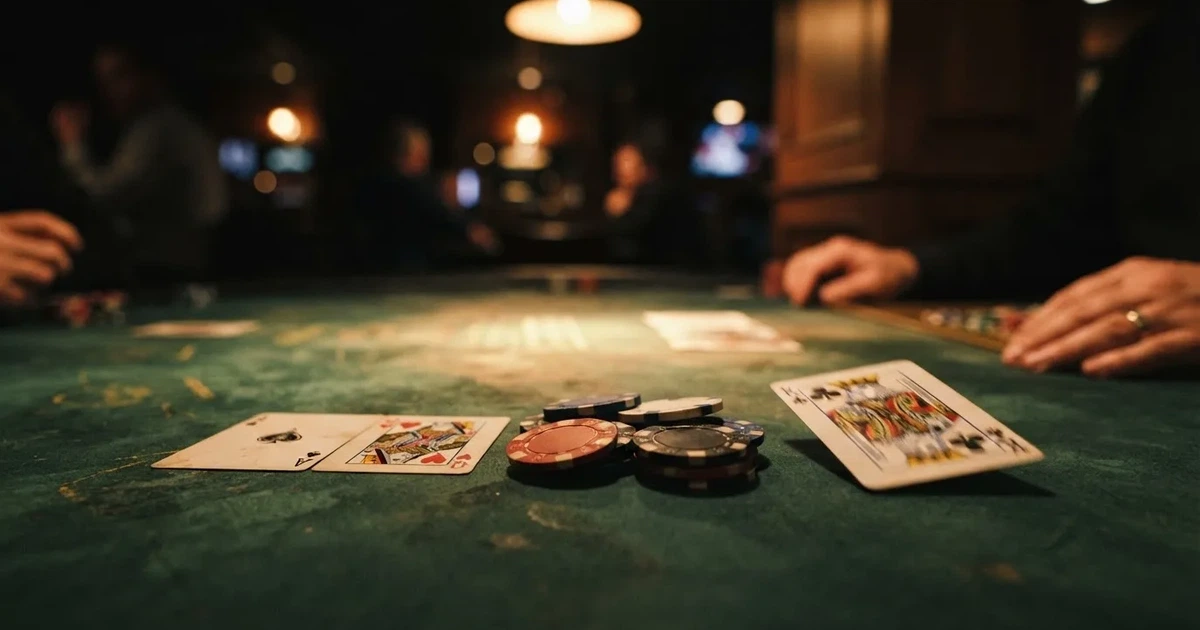
A reader searching for a “best live dealer casino online Australia 2026” is, almost without knowing it, asking for a product Australia has spent more than two decades making unlawful. The streaming table with the real croupier, the side bets, the chat box — those are sold on hundreds of offshore sites that take Australian dollars, advertise in Australian time zones and welcome an Australian sign-up. The Interactive Gambling Act 2001 makes that offer a criminal one for the operator, not the player, and the Australian Communications and Media Authority (ACMA) has spent the last five years turning the prohibition from a warning letter into a blocked domain. This page sets out what is actually being sold, why the law reads the way it does, what the reader pays when they use one of these sites anyway, and where an Australian who wants a live table actually has lawful options.
Table of Contents
- The crypto angle: bitcoin deposits and the offshore live casino
- Bonuses and welcome packages: the cost behind the headline number
- The product behind the marketing: games, providers and the live table
- The shortlist a reader cannot legally use
- What the Australian reader is actually being offered
- The legal frame: what the Interactive Gambling Act 2001 actually says
- Player protection: BetStop and what an offshore site does not connect to
- Frequently asked questions
The crypto angle: bitcoin deposits and the offshore live casino
Bitcoin and other cryptocurrencies have become the marketing hook of a particular corner of the offshore live casino market, and this topic brings readers here for a reason — speed of payout, light paperwork, no bank statement to scan. What the marketing does not foreground is that the same feature set sits on the wrong side of Australian law.

The Interactive Gambling Act 2001 prohibits offering online casino games to anyone in Australia. Cryptocurrency changes nothing about that: the prohibition is on the service, not the payment rail. Since 11 June 2024 the same prohibition extends to the payment side for Australian-licensed wagering — credit cards, credit-related products and digital currency are banned as a means of paying for any licensed online wager. An offshore live casino is not licensed wagering, so the credit-card and crypto ban does not bind it in the way it binds Sportsbet or Ladbrokes, but the operator remains in breach of the IGA regardless of which coin the deposit is made in. A bitcoin deposit to an offshore site is, from the regulator’s perspective, indistinguishable from a debit-card deposit to the same site: both fund a service it is illegal to provide in Australia.
The marketing pitch for crypto at these brands leans on anonymity. That pitch is, at best, half-true. Bitcoin transactions are pseudonymous, not anonymous — every transaction is on a public ledger, and chain-analysis firms routinely trace deposits for civil recovery and for law-enforcement subpoena. What bitcoin does remove is the bank’s middleman: no card decline, no gambling-flag block, no transaction description reading “CASINO XYZ” on a statement. For an Australian player that convenience comes at a price that is easy to understate. There is no Australian complaints body for a payout that never lands. There is no Australian regulator to appeal to if a withdrawal is “verified” indefinitely. And the ACMA can direct an Australian internet service provider to block the domain, at which point the balance a player held on the site becomes the site’s problem, not theirs — the player has no Australian-law claim to it.
The deeper risk is one the marketing never mentions. Under Australian law, gambling winnings of a recreational player are not assessable income, but the corollary cuts the other way: losses are not deductible. A bitcoin deposit that goes to an offshore site and never comes back is, for tax purposes, simply gone — neither a loss the ATO will recognise nor a gain it will tax. That is the practical shape of “anonymity” in this market: anonymous from the player’s own recourse as much as from anyone else’s.
Bonuses and welcome packages: the cost behind the headline number
Live dealer welcome bonuses arrive looking generous — match percentages, free chips, sometimes “free spins” on a side product. The number on the front of the envelope is the smallest part of the calculation; the wagering requirement, the game-weighting, the max bet per round and the max cashout are the cost.
Wagering requirements at offshore live casinos typically run between 35× and 50× the bonus amount, occasionally higher on headline offers. Game weighting is where most readers lose the thread: a casino will weight slots at 100% toward clearing the bonus but live dealer tables at 5% to 20%, on the rationale that the house edge is lower and the player can actually beat them. A “100% match up to A$500 with 40× wagering” sounds like a A$500 bonus, but at 10% weighting on live tables a player has to turn over A$200,000 of live-dealer bets to clear A$500 of bonus money. That is the offer’s real price, and it is the part the homepage does not print.
Two clauses cost more than the wagering multiple. The first is the maximum-bet rule — most live casino bonuses forbid wagers above a token amount (often A$5 to A$10) while the bonus is active. A single blackjack hand at the wrong stake voids the bonus and the winnings from it, and the casino’s automated enforcement is unforgiving. The second is the max-cashout clause, particularly common on no-deposit and free-chip offers, which caps the amount a player can withdraw from bonus play regardless of what they win. A A$100 free chip that turns into a A$2,000 session and pays out A$300 is a successful bonus by the casino’s own terms, and is the only outcome the terms were written to produce.
For an Australian player specifically, none of this sits inside Australian consumer law. The Australian Competition and Consumer Commission cannot enforce a misdescribed bonus term against an offshore operator. The ePayments Code does not apply. The only forum for a dispute is the offshore operator’s own complaints process, often routed through a Curaçao or Anjouan master licence that has no real enforcement arm. A reader who treats the bonus as a contract they can fall back on is reading a one-sided document.
The product behind the marketing: games, providers and the live table
The live dealer format itself is straightforward and worth describing on its own terms, because the reader who searches for it usually knows the marketing words and not the mechanics. A live dealer casino streams real-time action from a studio or a land-based casino floor to the player’s screen. Optical camera recognition technology converts the dealer’s physical action — a card slid out of the shoe, a roulette ball coming to rest — into data the player’s software reads. There is no random number generator deciding the outcome; the outcome happens on camera and the software transcribes it.
Three games dominate. Baccarat, blackjack and roulette account for the bulk of live tables at every major provider. Baccarat’s house edge sits at 1.06% on the Banker bet and 1.24% on the Player bet, with a punishing 14.36% on the Tie bet — the Tie bet is the textbook example of a wager whose existence is a marketing tool rather than a value proposition. Blackjack under liberal Las Vegas Strip rules — dealer stands on soft 17, double on any two cards, double after split, resplit aces, late surrender — gives a house edge of about 0.28%; Atlantic City rules bring it to about 0.43%. Roulette sits higher; the European single-zero wheel at 2.7% and the American double-zero wheel at 5.26% are the two reference points a serious player knows by heart. Craps, with a 1.41% edge on Pass/Come and 1.36% on Don’t Pass/Don’t Come, is offered but less common in the live dealer format outside US-styled studios.
The dominant supplier is Evolution, founded in 2006 by Jens von Bahr and Fredrik Österberg. By 2013 the company had 100 live tables running from its Riga studios, then the largest single-site casino operation in Europe; a Malta studio followed in 2014. Evolution completed its acquisition of NetEnt on 1 December 2020 and now operates under a wider group banner that includes Red Tiger, Big Time Gaming, Nolimit City and Ezugi. The company states that more than 700 gambling platforms worldwide carry its live casino games, streamed 24/7 from its studios. Pragmatic Play Live runs a credible second operation. The studio a live table is streamed from is, for a player comparing offers, the single most informative line in a casino’s footer.
Baccarat deserves a paragraph of its own because the game has more history than most readers realise, and that history shapes how it is played today. The game has disputed origins — some accounts place it in 19th-century France, others argue it was introduced from Italy at the end of the 15th century during the reign of King Charles VIII — but the form most players meet online, punto banco, was developed in Havana during the 1940s and runs on fixed drawing rules with the casino banking the game at all times. Cards two through nine count at face value, ten and the face cards count as zero, aces count as one, and hand totals are taken modulo ten. The shoe holds six or eight decks. Chemin de fer, the French two-player variant, is rarer in live studios. Blackjack’s own lineage runs through the English game vingt-un and a Spanish variant, veintiuno, that Miguel de Cervantes described in Rinconete y Cortadillo around 1601–1602; formal rules were published in Britain in 1800, and the name “blackjack” itself dates to roughly 1899, courtesy of the Klondike Gold Rush.
The mechanics matter because they decide what the player is buying. A 0.28% edge on blackjack sounds negligible until a player runs the volume a clearing bonus demands: at A$200,000 of turnover, the expected loss at that edge is A$560, before any side bet or rule variation. A reader who reads a welcome offer in terms of the headline match and not the required turnover is reading a number the casino does not expect them to read.
The shortlist a reader cannot legally use
Eleven offshore casino brands that operate live dealer tables have been the subject of ACMA formal warnings for offering prohibited services to Australians. They are not a ranking and not a recommendation. The only reason to list them together is that the ACMA has, in each case, named them in a public enforcement action, and a reader searching for live dealer play in Australia will meet every one of them in sponsored results within a few queries. Each is described below with the date of the ACMA action, the operator the ACMA named, and any source the public listings carry on the brand’s live-dealer or crypto support. Where the listings carry no information, that absence is itself the finding.
The table below summarises the ACMA’s enforcement record against each of these brands.
| Brand | ACMA action and date | Operator named by the ACMA | Subject support |
|---|---|---|---|
| RocketPlay | Formal warning, March 2026; earlier warning to Dama N.V., May 2022 | Pulsup Ltd (Rocketplay.com.au) | — |
| Level Up Casino | Formal warning, May 2022 | Dama N.V. | listings-only (Bgaming.com) |
| Woo Casino | Formal warning, March 2025 | Dama N.V. | — |
| Spirit Casino | Formal warning, May 2025 | Dama N.V. | — |
| National Casino | Formal warning, July 2025 | Consolutetish S.R.L. | listings-only (en.wikipedia.org) |
| Bizzo Casino | Formal warning, July 2025; earlier warning to TechSolutions, 2022 | Consolutetish S.R.L. | — |
| Ignition Casino | Formal warning, July 2025 | Bamboo Media | — |
| Instant Casino | Formal warning, February 2025 | EOD Code SRL | — |
| Jackbit | Formal warning, April 2026 | Ryker B.V. | — |
| Casino Intense | Formal warning, April 2025 | Sterplay Holding Ltd | listings-only (Abc.net.au, acma.gov.au, Crownmelbourne.com.au) |
| Sky Crown | Formal warning, September 2022 | Hollycorn N.V. | — |
The same pattern runs down every row: a Curacao- or Anjouan-registered operator, a parent company that runs a portfolio of similarly-named brands, and a formal warning from the ACMA that has, in most cases, not been followed by an exit from the Australian market. Several of these operators rebrand faster than the ACMA can publish — Dama N.V. alone accounts for four of the entries above, and Hollycorn N.V. operates a wider stable still. The recategorisation is the point: the operator’s domain changes, the studio feed does not.
RocketPlay
Pulsup Ltd was the operator named when the ACMA issued a formal warning over Rocketplay.com.au in March 2026, an action that came on top of an earlier May 2022 warning to Dama N.V. covering Rocketplay among six brands. No public listing reviewed for this page carries any confirmation that the brand offers a live-dealer product under that specific operator name, so the only honest statement is the negative: the subject support column is empty for a reason. The relevant reading is the warning itself — RocketPlay is operating against an Australian audience in breach of the Interactive Gambling Act 2001, and the A$ balance a reader keeps on the site sits behind a domain the ACMA can direct Australian ISPs to block.
The brand carries the standard live-casino architecture at the marketing level, but on the live-dealer question specifically there is no confirmation either way. A reader weighing the site is weighing a name on a list, not a verified product.
Level Up Casino
Dama N.V. was the operator named in a May 2022 ACMA formal warning covering Level Up among six casino brands. The single source that places Level Up in any live-dealer context is Bgaming.com, which lists the brand in a catalogue — listings-only, and that wording matters: a studio or aggregator listing a brand is not the same as the brand confirming it runs Evolution or Pragmatic Play Live on its own terms. For a reader, the absence is information. Level Up is one of the better-known Dama N.V. brands in the offshore market; it is also one of the older ACMA targets, which means a player who has been reading Australian-facing bonus emails for three years has almost certainly seen this name.
Woo Casino
The ACMA issued a formal warning to Dama N.V. over Woo Casino in March 2025, one of two warnings the operator received that year over Australian-facing play. There is no confirmation in the public sources that Woo Casino runs a specific live-dealer product distinct from the wider Dama N.V. portfolio. The reader-relevant finding is the operator pattern: a single corporate owner keeps accumulating warnings across a stable of brands, and the brands themselves rebrand at the speed of marketing while the studio feeds underneath remain the same. Woo Casino is, in that sense, the same offer under a different name.
Spirit Casino
In May 2025, Dama N.V. received another formal warning from the ACMA, this time specifically for Spirit Casino, six months after the warning over Woo Casino and three years after the original Dama N.V. warning in May 2022. There is no public confirmation that Spirit Casino runs a live-dealer product distinct from other Dama N.V. skins. The relevant reading is the pattern, not the absence: a corporate owner that has now been formally warned three times in three years is, from the ACMA’s perspective, an enforcement target that has escalated to blocking requests rather than warnings.
National Casino
Consolutetish S.R.L. received a formal ACMA warning over National Casino in July 2025, alongside Bizzo Casino. The only public source connecting National Casino to a live-dealer or cryptocurrency context is the Wikipedia entry for online casino, which lists the brand among operators in the market — a listings-only mention, not a confirmation of any specific product. The reader-relevant finding is the operator pair: Consolutetish S.R.L. operates National Casino and Bizzo Casino as a matched pair, and the ACMA has named both in the same enforcement action.
Bizzo Casino
Bizzo Casino was named in the same July 2025 ACMA formal warning to Consolutetish S.R.L., and had already been the subject of a 2022 formal warning to TechSolutions (CY) Group Limited and TechSolutions Group N.V. That earlier warning makes Bizzo Casino unusual on this list: it has been the subject of two separate ACMA formal warnings under two different parent companies, four years apart. The recategorisation under a new operator is, in the ACMA’s own enforcement record, treated as a continuation of the same breach rather than a fresh start. Public records offer no specifics on any live-dealer product unique to Bizzo Casino.
Ignition Casino
Bamboo Media received an ACMA formal warning over Ignition Casino in July 2025. Ignition has a particular profile in the offshore market: it is one of the longer-running US-facing brands and is often pitched at Australian readers through affiliate sites as a crypto-friendly live dealer room. Reviewing the available sources reveals no confirmation that the brand operates a live-dealer product for Australian users, so the brand’s reputation as a live casino is exactly that — a marketing reputation, not an audited offering.
Instant Casino
The ACMA issued a formal warning to EOD Code SRL in February 2025 concerning Instant Casino. Instant Casino is one of the more aggressively marketed brands in this corner of the market — its name is built around speed and its pitch leans on fast crypto withdrawals. It remains unclear if EOD Code SRL offers any live-dealer product distinct from the rest of the market, and the relevant reading is the legal one: an Australian reader depositing at Instant Casino in 2026 is using a service the ACMA has named in a formal warning within the last twelve months.
Jackbit
Jackbit was named in an ACMA formal warning issued to Ryker B.V. in April 2026, alongside CasinOK. Jackbit markets itself as a crypto-first live casino and sportsbook, and the brand is the most explicitly cryptocurrency-positioned on this list. There is no public confirmation of a specific live-dealer product configuration at Jackbit beyond the brand’s own marketing. For a reader specifically searching for a bitcoin live dealer casino, Jackbit is the closest match in this set on the marketing claim and the most recent ACMA target.
Casino Intense
Casino Intense was named in an ACMA formal warning issued to Sterplay Holding Ltd in April 2025. The brand appears across multiple Australian-facing source listings, including the ABC and the ACMA’s own register, alongside references on Crown Melbourne’s site — which is itself a useful piece of context: an Australian land-based casino does not link to an offshore brand, and any such cross-reference is a third-party listing rather than a partnership. Casino Intense is the one entry on this list where the public listings carry information, but the information is the breadth of marketing reach rather than confirmation of a specific product.
Sky Crown
Sky Crown was named in an ACMA formal warning issued to Hollycorn N.V., the corporate operator that also runs Blue Leo Casino and a wider stable. The Hollycorn warning was published in September 2022, making it one of the older entries on this list. There is no public confirmation that Sky Crown runs a specific live-dealer product distinct from other Hollycorn brands. The reading is the parent pattern: Hollycorn N.V. is a single corporate owner operating a portfolio of Australian-facing casino brands, all of them in breach of the IGA, and Sky Crown is one name on a longer list.
What the Australian reader is actually being offered
Strip away the crypto pitch, the bonus headline and the live-table glamour and the offer is the same on every one of these eleven brands. A reader in Australia is being invited to deposit at an offshore operator that the ACMA has, in writing, told to stop. The operator has not stopped. The reader’s balance, if any, sits behind a domain that the ACMA can direct Australian internet service providers to block, at which point the player has no Australian-law claim to it and no Australian complaints body to take a complaint to.
The H2 Gambling Capital 2025 report puts the scale of this market in Australian dollar terms: Australians lose about A$3.9 billion a year to illegal gambling sites, and the share of gambling going through legal channels fell from 74% in 2021 to 64%. That is the size of the market the ACMA is enforcing against, and it is also the size of the balance that sits offshore and outside Australian consumer law at any given moment.
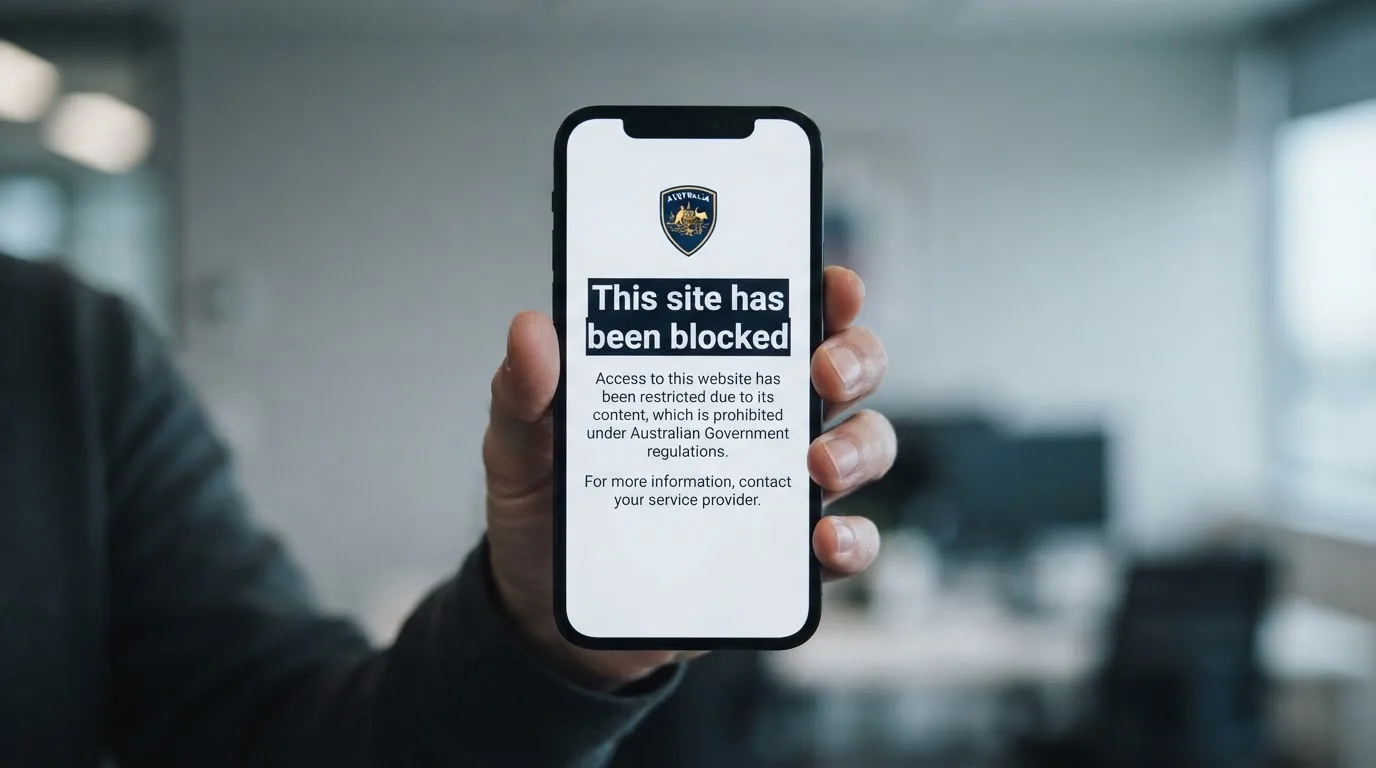
The blocking record is the clearest measure of enforcement intensity. As reported in June 2026 the ACMA had directed Australian ISPs to block 1,751 illegal gambling and affiliate marketing websites since the first blocking request in November 2019. The June 2026 round alone added another twelve sites: 7Signs, ChromaBet, Donbet, Duospin, Freshbet, Slots Gem, Jacks Club, Lucky Start, Pointsbetz.com, Spinrise, Vinyl Casino and Wildsino. The arithmetic is the point. Over roughly six and a half years, the ACMA has blocked 1,751 sites, which works out to a steady cadence of blocks rather than a one-off sweep — the regulator has been moving at this pace since 2019 and is still moving at it in 2026. The pace tells the reader something the marketing never does: an Australian-facing live casino that exists today is a site that has either not yet been blocked or has been blocked and has re-emerged under a new domain.
The legal frame: what the Interactive Gambling Act 2001 actually says
The Interactive Gambling Act 2001 is the central statute, and its central provision is short. Providing an interactive casino-style gambling service — online blackjack, online roulette, online baccarat, online craps, online poker, online pokies — to a person in Australia is a prohibited interactive gambling service. The Interactive Gambling Amendment Act 2017 strengthened the original Act to clarify that the prohibition extends to any service that has a “carriage service” component, which in practice means any online gambling product offered to an Australian end-user. The amendment also brought in-play online betting on a sporting event into the prohibition.
The enforcement target is the provider, not the player. An Australian reader who opens an account, deposits and plays is not committing an offence under the IGA. That asymmetry is the reason offshore casinos continue to accept Australian players — the legal risk sits with the operator in Curaçao or Anjouan, not the customer in Sydney or Perth. The reader’s risk is the consumer-law one: no Australian regulator to appeal to, no Australian complaints body, no Australian small-claims jurisdiction, and a real prospect of the domain being blocked while a balance sits on it.
What is licensable under Australian law is narrower than the marketing suggests. Wagering on racing and on sporting events, placed before the event, is licensable; lotteries and keno are licensable. In practice, online bookmakers — including Sportsbet, Bet365 and Ladbrokes — are licensed by the Northern Territory Racing and Wagering Commission, which regulates 52 of Australia’s online bookmakers. The Commission, by the ABC’s April 2026 reporting, has no full-time staff and meets once a month in Darwin, a structural detail worth knowing because it shapes how the licence is administered. No Australian jurisdiction issues a licence for an online casino. The “licensed” claim on the footer of any offshore live dealer site is a Curaçao or Anjouan or Kahnawake licence; it has no standing in Australia.
The payment side is its own layer of prohibition. Since 11 June 2024, credit cards, credit-related products and digital currency have been banned as payment for any Australian-licensed online wagering service, with penalties up to A$247,500 for an operator that accepts them. The legal deposit routes for licensed wagering are debit card, bank transfer, PayID/Osko and BPAY. A site asking an Australian player for a credit card or a crypto deposit is, again, operating outside the Australian rules — but the ban binds licensed wagering, not the offshore live casino that does not hold an Australian licence at all.
The reform in train in 2026 is the Interactive Gambling Amendment (Gambling Reform) Bill 2026, which passed Parliament on 19 August 2026 and whose advertising and inducement measures commence on 1 January 2027. That is law with a start date, not yet in force on this page, and the reader-relevant point is timing: a reader who sees inducements disappear from Australian-facing marketing in early 2026 is seeing the result of this Bill, not a voluntary industry move.
Player protection: BetStop and what an offshore site does not connect to
The National Self-Exclusion Register, BetStop, has been live since August 2023 and binds Australian-licensed online and phone wagering services. An Australian reader who self-excludes through BetStop is excluded from every Australian-licensed wagering service for the period they nominate; the obligation sits on the operator. The same reader opening an account at an offshore live casino is opening an account at a service that is not connected to BetStop. Self-exclusion through BetStop does not exclude an Australian reader from an offshore site; the offshore site’s own self-exclusion tool, if it has one, is the only one that applies.
For an Australian who has decided to stop gambling and has used BetStop, the offshore live casino is a live channel that BetStop does not close. The tools at the offshore end — deposit limits, session limits, time-outs, self-exclusion — are tools the player can ask the operator to apply, and an operator that holds a Curaçao or Anjouan licence will, in most cases, comply. The contrast with BetStop is that BetStop is enforced by the Australian regulator across every Australian-licensed operator at once; the offshore tool is enforced by the offshore operator, on its own terms, against its own customer.
The other consumer protection that sits behind BetStop is the National Gambling Helpline on 1800 858 858, free and 24/7, with chat support through Gambling Help Online. The Helpline is the right first contact for an Australian reader who is concerned about their own or someone else’s gambling, and the service is independent of any operator, licensed or offshore. For an Australian reading this page from inside the country, the Helpline and Gambling Help Online are the parts of the system that work regardless of which kind of site a player has been using.
The tax position is the last consumer-protection point and the one most readers have to learn the hard way. Gambling winnings of a recreational player are not assessable income under section 6-5 of the Income Tax Assessment Act 1997, and losses are not deductible — except where the person carries on a business of gambling, which is a model only and requires checking with the ATO. The practical upshot is that an Australian who deposits A$2,000 at an offshore live casino, plays through the bonus, wins A$1,500 and withdraws has not made a taxable gain and cannot claim the net A$500 loss against anything. The A$500 is gone, and the ATO has no record-keeping expectation either way. That is the consumer frame the reader is operating in, and it is the one the marketing never sets out.
Frequently asked questions
How many live tables did Evolution operate from its Riga studios by 2013?
Evolution had reached 100 live tables at its Riga studios by 2013, at the time the largest single-site casino operation in Europe. The company was founded in 2006 by Jens von Bahr and Fredrik Österberg, opened a Malta studio in 2014, completed its acquisition of NetEnt on 1 December 2020, and today operates under a group banner that includes Red Tiger, Big Time Gaming, Nolimit City and Ezugi.
Does a live dealer casino accept cryptocurrency deposits?
Several do, and crypto-first brands are a recognisable segment of the offshore market — Jackbit and Ignition Casino both pitch bitcoin and other digital currency as a primary deposit rail. The relevant Australian frame is that crypto is banned as a payment for Australian-licensed online wagering since 11 June 2024; an offshore site that accepts bitcoin is operating outside the Australian rules in any case, and the ACMA has named several crypto-friendly brands in formal warnings.
Is it legal for a live dealer casino to accept Australian players?
No. Under the Interactive Gambling Act 2001, providing an interactive casino-style gambling service — including online blackjack, online roulette and online baccarat — to a person in Australia is a prohibited interactive interactive gambling service. The enforcement target is the provider, not the player, but the reader has no Australian consumer protection, no complaints body and no recourse if a withdrawal is refused, and the ACMA can direct Australian ISPs to block the domain while a balance sits on it.
What responsible-gambling tools should a live dealer casino site provide?
A licensed Australian wagering site connects to BetStop, the National Self-Exclusion Register live since August 2023, and must offer deposit limits, session limits and time-outs as a baseline. An offshore live casino does not connect to BetStop; the operator’s own tools — deposit caps, self-exclusion, time-outs — are the only ones that apply, and the player’s recourse if they are not honoured is the operator’s own complaints process.
What is usually attached to a live dealer casino welcome bonus?
A wagering requirement, typically 35× to 50× the bonus amount, plus a maximum-bet rule (often A$5 to A$10 per round), plus game-weighting that discounts live dealer play toward clearing the bonus — frequently down to 5% to 20% — and, on free-chip offers, a max-cashout clause that caps the amount the player can withdraw. None of these terms is enforced by an Australian regulator on an offshore site.
Can Australians find a shortlist of licensed live table games anywhere other than online?
Yes — at Crown Melbourne in Victoria and at The Star in Sydney, both of which run approved live baccarat and blackjack tables under state casino regulators. Crown Melbourne offers three baccarat variants under rules approved by the Victorian Gambling and Casino Control Commission, which replaced the VCGLR as Victoria’s casino regulator on 1 July 2022, and publishes its approved changes to blackjack side-bet rules on a public log. In NSW, section 66 of the Casino Control Act 1992 requires any table game and its rules to be approved by the regulator before play.