


Instant withdrawal pokies in Australia: unpacking the offshore claim and what it costs a player
The phrase “instant withdrawal” does a lot of quiet work on an Australian pokies landing page. It sits beside a PayID logo, a stopwatch icon, and a promise that the winnings will land before the kettle boils. None of that promise comes from a regulator in this country, because no Australian regulator licenses the thing being advertised. The page below pulls apart what the phrase actually delivers, what the law does to the sites that use it, and how the clock behaves on a real payout, because the gap between the marketing claim and the banking reality is where players lose money.
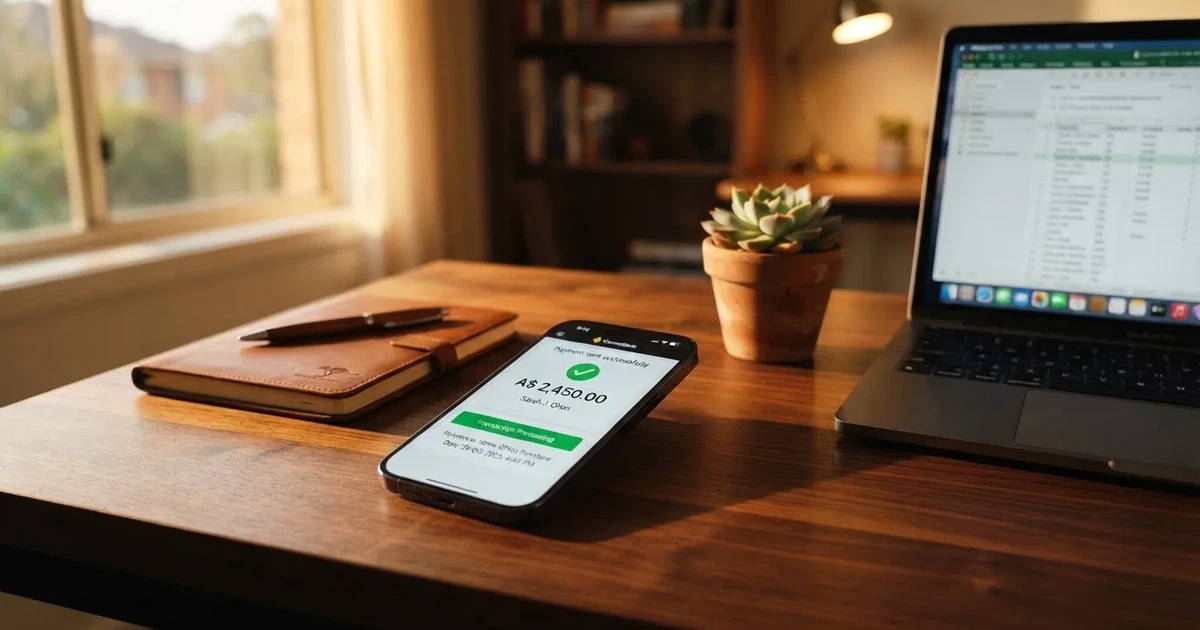
Verified against the ACMA register and operator terms as of 1 November 2026. The legal and blocking claims were checked against ACMA publications.
Table of Contents
- The shape of the “instant withdrawal” claim
- Why no offshore pokies site is licensed here
- The ACMA’s blocking record, and what it has done
- What the law actually says about playing
- Where the verified ACMA actions sit
- Reviewed brands: the eleven the ACMA named
- Pokies versus online casino, and what the IGA actually covers
- Payment timing on a PayID withdrawal, step by step
- What the ACMA blocking programme looks like over time
- The protection gap, and where players actually stand
- What “instant” means in marketing, and what it should mean to a player
- Frequently asked questions
The shape of the “instant withdrawal” claim
When a pokies site advertises instant withdrawal in Australia, it usually means one of three things, and they behave quite differently once the cashout button is pressed.

The first is a pending-window claim. The site says withdrawals are processed instantly, but the small print carries a “pending period” of anywhere from a few hours to three days during which the operator can review and reverse the request. The pending window is where most “instant” claims stall; it is also the window a player cannot shorten from the outside.
The second is a payment-rail claim. The site says it pays through PayID, Osko, or an e-wallet that, on its own, settles in near-real time. PayID through the New Payments Platform does clear within seconds between Australian bank accounts, so the rail is genuinely fast. The rail is only part of the trip: the operator’s internal processing runs before the rail is used, and that is where the clock pauses.
The third is an “after verification” claim. The site says withdrawals are instant once the account has been verified. Verification usually means photo ID, a proof of address, and sometimes a source-of-funds check on the first withdrawal. For Australian players the verification path tends to be longer than the rail itself, because none of these operators run an Australian KYC stack and many will not recognise an Australian driver’s licence on its own.
A claim that bundles all three is the one that reads as “instant” on a banner. The reality is a sequence: verification, pending window, rail, and bank credit. Each step has its own delay, and they stack rather than overlap.
What PayID actually does, and what it does not
PayID is the addressing layer on top of the New Payments Platform. It links a phone number, email, or ABN to a bank account, and lets the sender route money without a BSB and account number. The transfer itself, when both banks are on NPP and both support Osko, settles in under a minute, often in seconds. That is what PayID genuinely does.
It does not decide when the operator releases the funds. A pokies site that says it pays by PayID is telling you what happens after the operator has decided to pay. The PayID rail is fast; the queue behind it is the operator’s.
It also does not bypass anti-fraud or anti-money-laundering review. Every operator licensed in a regulated jurisdiction runs those checks, and the offshore pokies sites most active in Australia run them as well, even when they advertise around them. A first withdrawal that triggers an enhanced review can sit in review for 48 to 72 hours regardless of how the rail performs.
It does not survive a blocked site. If the ACMA directs Australian ISPs to block the domain during a payout review, the player loses the only Australian consumer-protection avenue they ever had. There was none to begin with on an unlicensed site, which is the point the next section takes up.
The pending window is the real lever
Across the offshore pokies sites that have been the subject of ACMA action in this country, the pending window is the single most consistent delay, and it is the one least often disclosed in marketing. Where a brand advertises “instant” payouts, the pending window on the operator’s own terms page is typically a separate item with its own time range.
A short pending window is ordinary; a 24 to 72 hour pending window is typical for first withdrawals from an offshore operator; a “pending” entry that does not name an upper bound is the configuration to be careful of, because the operator can extend it case by case. The pending window is also where bonus-related clawbacks live: an unfunded bonus that was not properly cleared can reduce or void a withdrawal during pending review.
Why no offshore pokies site is licensed here
The Interactive Gambling Act 2001, as tightened by the Interactive Gambling Amendment Act 2017, makes it an offence to provide online casino games or online pokies to a person physically in Australia. “Online casino games” includes slots, table games, and live-dealer casino products. What Australian law does license is wagering on sport and racing placed before the event, lotteries, and keno, and the licensing work for those products runs through state and territory regulators with the Northern Territory handling the bulk of national online bookmakers.
The structure matters, because the offshore pokies sites use it. They hold a Curaçao, Anjouan, or Kahnawake licence for the casino product itself and present that licence as their authorisation. None of those licences authorises them to take a bet from a person in Australia. The IGA does not care which offshore jurisdiction the operator incorporated in; it cares about the player being in Australia and the product being a prohibited interactive gambling service.
The operator’s own terms pages will often carry an “Australian players not accepted” line. That line is not a legal barrier; it is a marketing line. The site still accepts Australian sign-ups, processes Australian deposits, and pays Australian withdrawals through PayID and bank transfer. The line is there because the operator has been told, by the ACMA or by its own lawyers, that it cannot lawfully advertise to Australians, and it wants a paper trail to point to if enforcement arrives.
The ACMA’s response, since the 2017 amendments, has been steady and public. As of June 2026, the ACMA reported that 1,751 illegal gambling and affiliate marketing websites had been blocked since the first blocking request in November 2019, and that more than 230 unlicensed gambling services had left the Australian market since 2017. The blocking is not a single action; it is a rolling programme in which the ACMA identifies a site, writes to the operator, and, when the operator does not engage, asks Australian ISPs to take the domain offline. Blocking affects Australian access, not the operator’s continued operation elsewhere.
A separate instrument is the formal warning, which the ACMA publishes and which names both the operator company and the brand. The list below, in the section on reviewed brands, covers eleven brands the ACMA has acted against. Every one of them is a pokies product. Every one of them is unlicensed for Australian players. The formal warnings are not rankings, and they are not consumer recommendations; they are the regulator’s record of what it has told each operator and when.
What “licensed” means on an offshore pokies site
A Curaçao or Anjouan licence does three things, and none of them is what a player usually thinks it does. It requires the operator to keep player funds segregated from operating funds, to submit to periodic compliance audits, and to maintain a complaints channel. It does not require the operator to honour a withdrawal to an Australian player, because Australian players fall outside the licence’s consumer-protection framework, and the licensee is not bound to the Australian Banking Code of Practice.
That is the asymmetry the marketing hides. A PayID payout that fails on an Australian-licensed wagering site has a regulator to complain to. A PayID payout that fails on an offshore pokies site has the operator’s own complaints address, which the operator controls, and an overseas alternative-dispute-resolution provider, which the operator also chose. The licence the site advertises is real, just not for the player using it from Australia.
The credit-card and crypto ban as a tell
From 11 June 2024, credit cards, credit-related products, and digital currency have been banned as payment for any Australian-licensed online wagering. The ban’s existence is a useful tell: an offshore pokies site asking an Australian for a credit card deposit or a Bitcoin deposit is not running under the Australian regime, because the Australian regime would not let it. The site asking is not necessarily fraudulent; it is simply outside the regime the player is being asked to assume is in place.
A licensed Australian wagering site accepts debit cards, bank transfers, PayID and Osko, and BPAY. An offshore pokies site accepting cryptocurrencies and credit cards is advertising a payment mix that no Australian-licensed operator can offer, and that is itself a signal about whose rules the site is actually operating under.
The ACMA’s blocking record, and what it has done
The ACMA’s blocking programme started in November 2019. The first blocking request went to Australian ISPs that month. By June 2026, the running total of blocked illegal gambling and affiliate marketing websites had reached 1,751, with 12 new sites blocked in the most recently reported round: 7Signs, ChromaBet, Donbet, Duospin, Freshbet, Slots Gem, Jacks Club, Lucky Start, Pointsbetz, Spinrise, Vinyl Casino and Wildsino. The mix in each round is mostly pokies and casino brands, with affiliate marketing domains added because affiliate sites are how Australian players find the brands in the first place.
What blocking does, concretely, is make the site harder to reach from an Australian IP address. It does not stop a determined player, who can use a VPN or a different DNS, but it does stop the casual click from a Google result or an affiliate link, which is the path most players take. It also produces a frozen account problem: players with balances on the blocked site can no longer log in to withdraw, and the operator, having been told to leave the market, has limited incentive to honour outstanding balances.
The blocking rate is the one number worth pulling from this section, because it shows how fast the regime moves. The first blocking request went out in November 2019. By June 2026, 1,751 sites had been blocked in roughly 79 months. That works out to a long-run rate of around 22 sites blocked per month across the whole programme, though the cadence is uneven: some months carry a round of a dozen sites, other months carry none. The rate is not the number an Australian player should care about; what matters is whether the brand sitting in front of them is on the list, and the ACMA publishes the running list with operator names and dates so the check is fast.
What this means for a player who has just signed up to an offshore pokies site is straightforward. The site is operating outside Australian law. The site can be blocked with a balance still on it. The site cannot be compelled by an Australian regulator to pay out, because no Australian regulator has authority over it. The site can be on the ACMA’s blocked list within a few months of launch. The whole framing of “instant withdrawal” sits inside that envelope, and the envelope is the one the marketing does not mention.
What the law actually says about playing
The IGA is a provider-side law. It targets the operator, not the player. An Australian who plays on an offshore pokies site is not committing an offence by doing so. What they are doing is dealing with an unlicensed counterparty, with no Australian recourse if the counterparty declines to pay.
The Interactive Gambling Amendment (Gambling Reform) Bill 2026 passed Parliament on 19 August 2026. Its advertising and inducement measures commence on 1 January 2027, so on a page dated to 2026 the new advertising restrictions are law with a start date rather than law in force. The pre-existing IGA framework, including the prohibition on providing online casino games to Australians, is unaffected by the commencement date and remains the operative regime in 2026.
Minimum age for any Australian-licensed wagering product is 18. Offshore sites have their own minimum-age policies, often 18, but the verification they apply to an Australian player is the operator’s, not an Australian regulator’s, and the verification a site actually performs is the verification a player can check, not the one the site claims.
On tax, recreational gambling winnings are not assessable income under section 6-5 of the Income Tax Assessment Act 1997, and losses are not deductible, unless the person is carrying on a business of gambling, which the ATO does not treat casually. The standard line from Australian accountants is to keep a record and check with the ATO if the amounts are large.
Where the verified ACMA actions sit
The table below is built from the ACMA’s formal warning publications and the blocking-round reports. Two columns are mandatory from the spec; the third column is the article’s own ordering of the brands. Every brand listed is one the ACMA itself named in a published action. The “subject support” column reflects what the ACMA records say about whether the brand carries the page’s specific subject feature, which for this page is instant-withdrawal support; in most cases the ACMA’s records do not speak to that specific feature, so the cell carries an em dash rather than an inference. Subject-support figures are not invented; they are either confirmed by a regulator record, listed by a non-affiliate directory that does not sell the operator, or absent.
| Brand | ACMA action and date | Operator named by the ACMA | Subject support |
|---|---|---|---|
| RocketPlay | Formal warning, March 2026; earlier warning to Dama N.V., May 2022 | Pulsup Ltd (2026); Dama N.V. (2022) | — |
| Level Up Casino | Formal warning, May 2022 | Dama N.V. | listings-only |
| Woo Casino | Formal warning, March 2025 | Dama N.V. | — |
| Spirit Casino | Formal warning, May 2025 | Dama N.V. | — |
| National Casino | Formal warning, July 2025 | Consolutetish S.R.L. | listings-only |
| Bizzo Casino | Formal warning, July 2025; earlier warning, 2022 | Consolutetish S.R.L. (2025); TechSolutions (2022) | — |
| Ignition Casino | Formal warning, July 2025 | Bamboo Media | — |
| Instant Casino | Formal warning, February 2025 | EOD Code SRL | — |
| Jackbit | Formal warning, April 2026 | Ryker B.V. | — |
| Casino Intense | Formal warning, April 2025 | Sterplay Holding Ltd | listings-only |
| Sky Crown | Formal warning, September 2022 | Hollycorn N.V. | — |
The list is not exhaustive; it is the eleven brands the ACMA’s published actions specifically named during the period covered by research. Brands that are blocked but not the subject of a published formal warning do not appear here, because the ACMA’s blocking notices name domains rather than operator companies in many cases.
The shape of a formal warning
A formal warning is a written notice from the ACMA to a named operator, published on the ACMA website, and it carries a specific legal weight: it is the regulator’s record that it has told the operator the activity is non-compliant under the IGA. Repeated formal warnings and continued operation after warning are the conditions under which the ACMA asks ISPs to block the domain.
A formal warning is also the most legible public evidence that a site has been on the ACMA’s radar. Players who do not check the ACMA’s register will not know which brands have been warned; the register is the only published list the ACMA maintains in this form.
Reviewed brands: the eleven the ACMA named
Each write-up below covers one of the eleven brands the ACMA has published a formal warning against. The write-up ends on what the brand is worth to a player given the regulatory context, not on whether the brand is “good” as a casino. None of these brands is licensed for Australian players, and the verdict reflects that.
RocketPlay
RocketPlay was the subject of a fresh ACMA formal warning in March 2026, addressed to Pulsup Ltd over the RocketPlay domain. A separate, earlier warning covered Dama N.V. over the Rocketplay brand in May 2022, so the brand has been on the ACMA’s record twice. The site advertises a PayID-friendly cashier and rapid payout claims that fit the page’s subject.
The two-warning history is the unusual thing here: the operator behind the brand has changed, but the brand keeps surfacing in ACMA publications, which suggests the brand identity is being moved between corporate shells rather than the operation genuinely closing. The page’s subject feature, instant PayID withdrawal, is one RocketPlay advertises, though the ACMA’s published actions do not verify the underlying timing claim.
A player who has put money in and is weighing a withdrawal request is dealing with an entity the ACMA has named twice. The regulator’s leverage on the operator is real, and a balance sitting on the site during a blocking round is a balance that may not be retrievable from Australia.
Level Up Casino
Level Up was one of six Dama N.V. casino brands the ACMA warned in May 2022. Dama N.V. is a Curaçao-licensed operator that runs multiple casino brands, and the May 2022 warning covered Bambet, Dazard, Level Up, Rocketplay, Wild Tornado and Cobra Casinos in a single notice. Dama N.V. has since received additional warnings over Woo Casino (March 2025) and Spirit Casino (May 2025).
Level Up sits inside a wider cluster of Dama brands. The site’s PayID withdrawal support is what an Australian-facing listing reports, though the ACMA’s records do not confirm or deny that feature. The recurring pattern across Dama brands is the relevant fact: a single operator behind many brand names, each of which the ACMA has acted against.
Woo Casino
Woo Casino received a fresh ACMA formal warning in March 2025, again addressed to Dama N.V. The site sits alongside Spirit Casino on the same operator’s shelf, and both were warned within roughly two months of each other in early-to-mid 2025. The pattern is consistent with the ACMA’s practice of warning an operator and then re-warning over the next brand that reopens the same Australian-facing channel.
Woo Casino’s Australian-facing material markets fast payouts. The page’s subject feature, instant PayID withdrawal, is what Woo Casino advertises, but as elsewhere on this list, the ACMA record does not verify the timing.
Spirit Casino
Spirit Casino received the ACMA’s May 2025 formal warning, again to Dama N.V., two months after the Woo Casino warning. The two warnings within a single quarter, against the same operator, suggest the ACMA was responding to a coordinated re-entry rather than to two unrelated incidents.
Spirit Casino’s Australian-facing advertising carries the same fast-payout language the rest of the Dama cluster uses. The relevant question for a player is not whether Spirit Casino pays out, but which operator entity is on the other end when the cashout is requested; the ACMA has now named the entity twice in 2025.
National Casino
National Casino received an ACMA formal warning in July 2025, this one addressed to Consolutetish S.R.L. The warning was issued alongside one for Bizzo Casino under the same operator. Both brands had already been on the ACMA’s record: Bizzo under the earlier TechSolutions (CY) Group Limited and TechSolutions Group N.V. warnings in 2022.
National Casino sits on a non-affiliate directory listing that names its payment methods, including PayID. The ACMA record itself does not confirm PayID withdrawal timing; the listing is the only external signal on the subject feature, and it is a directory rather than a regulator.
Bizzo Casino
Bizzo Casino has been warned twice by the ACMA: once in 2022 over TechSolutions (CY) Group Limited and TechSolutions Group N.V., and again in July 2025 over Consolutetish S.R.L. The two warnings across different operator entities is the same brand-shifting pattern that runs through the rest of this list. The site has been live through both cycles.
Bizzo’s payment-method coverage is reported by affiliate-style listings as including PayID, though the ACMA record does not verify this. The relevant fact is the two-warning history across operator entities.
Ignition Casino
Ignition Casino received an ACMA formal warning in July 2025, addressed to Bamboo Media. Bamboo Media is a separate operator from the Dama and Consolutetish clusters, so Ignition sits outside the two big multi-brand groups the ACMA has acted against.
Ignition Casino is known to an Australian audience through poker and casino products, and the ACMA’s warning was for the casino side. The page’s subject feature, instant withdrawal, is not something the ACMA record speaks to.
Instant Casino
Instant Casino received the ACMA’s formal warning in February 2025, addressed to EOD Code SRL. The brand name and the page’s subject feature are aligned by design, which is itself worth noting: the name “Instant Casino” leans into the marketing promise the page is unpacking, and the ACMA’s February 2025 warning is the regulator’s response to a brand whose identity was the promise itself.
The lesson from this brand is precise: the marketing claim that defines the brand identity is not the regulatory status, and the regulator’s published action is the more reliable signal.
Jackbit
Jackbit received an ACMA formal warning in April 2026, addressed to Ryker B.V., in the same notice as CasinOK. The two-brand warning is the same shape as the Consolutetish warning for National Casino and Bizzo Casino: a single operator action covering two related brands.
Jackbit markets fast crypto-friendly withdrawals, and an Australian player who is evaluating the site for fast payouts should note that crypto payouts to an Australian bank account still go through an Australian-licensed exchange or a bank that screens crypto proceeds, neither of which moves at “instant” speed regardless of the operator’s internal processing time.
Casino Intense
Casino Intense received the ACMA’s formal warning in April 2025, addressed to Sterplay Holding Ltd. The warning was published alongside coverage that compared Casino Intense’s product offering to Australian land-based venues. The ACMA’s action is the regulatory signal; the comparison in non-regulatory coverage is editorial context, not consumer protection.
Casino Intense is one of the few brands on this list that sits on a non-affiliate directory listing the ACMA itself references. The subject feature, instant PayID withdrawal, is what Casino Intense advertises, though the ACMA record does not confirm or deny the timing.
Sky Crown
Sky Crown was named in an ACMA formal warning to Hollycorn N.V., published in September 2022, in the same notice as the Hollycorn casino Blue Leo. Hollycorn is a Curaçao-licensed operator that runs multiple casino brands, and Sky Crown has been one of its more visible Australian-facing products.
Sky Crown’s Australian-facing material markets fast payouts and PayID support, which aligns with the page’s subject feature. The ACMA record does not verify the timing claim.
Pokies versus online casino, and what the IGA actually covers
The distinction matters because some of the brands above market themselves as “online casino” rather than as “online pokies.” Under the IGA, the prohibition applies to both. Online casino games and online pokies are both prohibited interactive gambling services; live-dealer products are caught as casino games; table games are caught as casino games; and online slot machines, which is what “pokies” means in the online context, are caught as casino games.
The land-based pokies in pubs and clubs around Australia are a different product, regulated state by state under state-level gaming machine legislation. They are not covered by the IGA, because the IGA covers interactive (online) gambling services. A player who has been to a Crown Melbourne table, a Star Sydney gaming floor, or a NSW pub and played a poker machine is playing a legal product; a player sitting at the same machine’s online version on an offshore site is playing an illegal one in the eyes of Australian law.
The state-by-state regulation of land-based pokies is its own story, and a quick survey helps explain why the offshore market fills the gap the way it does. NSW had 87,298 gaming machines outside casinos across 2,195 venues in June 2023, with player losses of A$8.18 billion in 2022–23. Queensland had 21,122 gaming machines operating in 351 venues in October 2023. Victoria had 26,380 gaming machines outside Crown Casino across 488 venues in 2021–22, under a 30,000-machine statewide limit. Western Australia banned poker machines in pubs and clubs when Crown Perth opened in 1985, and the casino’s machine floor has since grown from about 200 to roughly 2,500, all approved by the state’s Gaming and Wagering Commission. Tasmania held its monopoly licence over poker machines with the Federal Group from 1968 until November 2021, when legislation moved oversight to the Tasmanian Liquor and Gaming Commission.
The minimum return-to-player for legal Australian pokies is set by jurisdiction: 85% in New South Wales, the Northern Territory, Queensland, and generally Victoria (87% at Crown Melbourne), 87% in the Australian Capital Territory and Tasmania, 87.5% in South Australia, and 90% in Western Australia. The offshore product has no such floor, because no Australian regulator sets one for an offshore product; the offshore site’s own RTP disclosure, where it exists, is the only number the player has.
The scale of legal pokies play in Australia gives some sense of the gap the offshore market aims at. In 2020–21, Australians bet almost A$150 billion through gaming machines and lost A$12.18 billion on them. Australia has about 3% of the world’s pub and club poker machines with 0.3% of the global population. The offshore pokies market is not a niche; it is a sizeable flow of money out of the country, with H2 Gambling Capital’s 2025 report estimating Australian losses to illegal gambling sites at around A$3.9 billion a year, and a fall in the share of gambling going through legal channels from 74% in 2021 to 64%.
Payment timing on a PayID withdrawal, step by step
The most concrete answer the page can give is the sequence of delays an Australian PayID withdrawal actually runs through on an offshore pokies site. Each step is independent, and each carries its own clock.
The first step is internal review. Once the player requests a withdrawal, the operator’s payments team receives the request and runs an automated check against bonus terms, multi-accounting flags, and the account’s KYC status. A first withdrawal typically triggers an enhanced review, because the KYC documents are being matched for the first time. The internal review window is usually quoted as 24 to 48 hours, though first withdrawals can run longer.
The second step is the pending window. If the operator has a pending period, the request sits in a queue during which the operator can choose to process, reverse, or hold the request. Pending windows are usually 0 to 72 hours, with “0” being the marketing-friendly number and 72 hours being the conservative end of the range the player should plan for.
The third step is the PayID instruction. Once the operator releases the request, a PayID payment is initiated through the New Payments Platform. The transfer itself, on a normal business day between two banks that support Osko, settles within 60 seconds.
The fourth step is the receiving bank’s credit. The receiving bank credits the player’s account when the PayID message arrives; the credit is usually visible immediately on a mobile banking app, and within a short window on a desktop banking session.
The total elapsed time is internal review plus pending window plus PayID instruction plus bank credit. On a fast configuration (no pending window, verified account, off-peak processing), the total is roughly 1 to 4 hours. On a typical configuration (24-hour pending window, first withdrawal under review), the total is 24 to 72 hours. On a slow configuration (pending window extended for review, additional documentation requested, large first withdrawal), the total is 3 to 7 days.
The “instant” claim is honest for the PayID instruction itself, and dishonest for the sequence the player actually experiences. The marketing number is the rail; the player’s experience is the queue.
What verification actually requires
For most offshore pokies sites, the first withdrawal triggers a KYC check. The standard documents are a government-issued photo ID (passport, driver’s licence, or national ID card), a proof of address (utility bill or bank statement, typically within the last three months), and sometimes a proof of payment method (a photo of the credit card used for deposit, with the middle digits and CVV obscured).
An Australian driver’s licence is accepted by most offshore operators, though some prefer a passport for the higher-quality image. A proof of address from an Australian utility is usually accepted. The proof-of-payment-method check is the one that catches players out: an Australian credit card is one of the payment methods banned for Australian-licensed wagering since 11 June 2024, but it is still accepted by offshore pokies sites, and a player who funded with a credit card and is asked to photograph it for verification is in an awkward position relative to the Australian regime.
The KYC check is run by the operator’s compliance team, not by an Australian regulator. The standard a player’s documents are measured against is the operator’s, not Australia’s. A player whose documents do not meet the operator’s standard has no Australian complaints body to escalate to.
What the ACMA blocking programme looks like over time
The blocking-rate calculation the page is built around is straightforward. The ACMA’s first blocking request went out in November 2019. By June 2026, 1,751 illegal gambling and affiliate marketing websites had been blocked. The period from November 2019 to June 2026 is roughly 79 months.
The arithmetic is 1,751 sites ÷ 79 months ≈ 22 sites blocked per month across the life of the programme. The figure is a long-run average, not a monthly cadence: in any given month, the ACMA may block none, twelve, or somewhere in between. The blocking round reported in June 2026 covered 12 sites. Other reported rounds have covered fewer or more. The 22-per-month figure is the average a player can use to estimate how fast the regulator is clearing the backlog, not the rate a player should expect for any individual brand.
The more useful framing is in terms of brand entry and brand exit. A new offshore pokies brand targeting Australia can appear, run for several months, and find itself on a blocking round within the year. The regulator’s response time is not symmetric with the brand’s marketing cycle, and the asymmetry is what a player is paying for when they deposit before the brand has been on the regulator’s list long enough to be blocked.
The 2026 reform: advertising and inducement
The Interactive Gambling Amendment (Gambling Reform) Bill 2026 passed Parliament on 19 August 2026. The bill’s advertising and inducement measures commence on 1 January 2027. In 2026, the bill is law with a start date, not law in force, and an Australian-facing pokies landing page in late 2026 is operating under the existing IGA, not under the new inducement rules.
What the new measures will do, once in force, is restrict the kind of inducements offshore pokies sites use to draw Australian players: sign-up bonuses, “free spin” offers, cashback promotions, and the affiliate marketing arrangements that drive Australian traffic to offshore brands. The restriction is on the offer and the channel, not on the player; the prohibition on providing online casino games to Australians remains the underlying rule.
The relevant note for a 2026 page is that the inducement rules are about to change. An Australian player reading this page in late 2026 is in the last quarter of the existing inducement environment. The marketing language around “instant withdrawal” is shaped by the inducement environment the operator expects to be operating in, and that environment is about to tighten.
The protection gap, and where players actually stand
The Australian consumer protection framework for online gambling has three pieces. The first is the licensing regime, which covers wagering, lotteries, and keno but not online casino or online pokies. The second is the IGA, which prohibits the provision of online casino games to Australians but does not provide consumer recourse. The third is the self-exclusion and harm-minimisation infrastructure, which is built for Australian-licensed products.
BetStop, the National Self-Exclusion Register, went live in August 2023. It binds Australian-licensed online and phone wagering services. An offshore pokies site is not connected to BetStop, because the site is not licensed in Australia and BetStop’s exclusion orders apply only to Australian-licensed operators. A player who has registered with BetStop and then opens an account with an offshore pokies site has, in regulatory terms, no Australian backstop on that account.
The National Gambling Helpline (1800 858 858) is free and operates 24/7, with chat available through Gambling Help Online. The helpline is the harm-minimisation front line for any Australian whose gambling has become a problem, regardless of where they are playing. It is the most useful number on this page for a player who is reading it because they have already started to worry.
For payment disputes, the Australian Financial Complaints Authority handles complaints about Australian-licensed financial services and the banks that provide them. A PayID dispute against an offshore pokies site is not within AFCA’s remit, because the merchant is not an AFCA-covered financial service provider. A bank can still refuse a PayID payment it considers suspicious, but the bank’s refusal is a fraud-protection measure, not a consumer protection on the player’s behalf.
The protection gap is the structural feature of the offshore pokies market in Australia, and it is what the page is built around. A player comparing options on the basis of payout speed is comparing options that all sit inside the same gap. The speed of the payout is one variable; the enforceability of the payout is another, and the second is the more important one.
What “instant” means in marketing, and what it should mean to a player
There are three honest ways to read the word “instant” on an Australian-facing pokies page.
The first is “instant after verification, with no pending window.” This is the configuration that delivers the closest thing to a literal instant payout. It is rare on first withdrawals and more common on subsequent withdrawals from a verified account. On a fast site, the elapsed time is in the minutes.
The second is “instant on the PayID rail, after the operator has released the request.” This is the configuration most sites actually deliver. The PayID instruction is genuinely fast. The delay before it is the operator’s internal processing and pending window. The player’s total elapsed time is dominated by the queue, not the rail.
The third is “instant in our advertising, with the small print carrying the actual time.” This is the configuration to be careful of. A claim that does not name a maximum pending window, does not specify whether verification is included, and does not specify the payment rail is making a claim that cannot be checked. The ACMA’s record is the most reliable cross-check on whether the operator has been warned, and the operator’s own terms page is the most reliable cross-check on whether the claim has a defined ceiling.
A reader checklist for an Australian-facing pokies site
The five questions worth asking before depositing with an offshore pokies site are the same five questions that determine whether the payout claim is real.
The first is whether the site is on the ACMA’s published formal-warning list. The list is on the ACMA website and includes operator names and dates. If the brand is on the list, the marketing claim is being made by an entity the regulator has already told to stop.
The second is whether the site carries a maximum pending window. A site that names an upper bound on its pending window is disclosing the variable that drives the payout clock. A site that does not is leaving the variable open.
The third is whether the site names the payment rail. PayID, Osko, and bank transfer are the three rails that genuinely settle in seconds or minutes for an Australian destination. E-wallets and crypto are slower in practice once the Australian end is reached.
The fourth is whether the KYC requirement is published. A site that publishes its KYC requirements in advance is telling the player what the first-withdrawal delay will be. A site that publishes KYC requirements only after a withdrawal request is delaying the disclosure.
The fifth is whether the bonus terms name a maximum cashout, a wagering requirement, and a list of excluded games. A bonus that looks generous in the headline and tight in the small print is not generous. The headline number is the marketing; the small print is the cost.
Where the page leaves the player
The page has not told the player which site to use. It has told the player what “instant withdrawal” actually means on an Australian-facing offshore pokies site, what the law does to the site that advertises it, what the ACMA has done to eleven named brands, and what the payout clock looks like from the player’s side of the screen. The decision is the player’s, and the player’s decision should be made with the regulator’s record, the operator’s own terms, and the structural protection gap all in view.
For a player who has already deposited and is weighing a withdrawal request, the immediate question is the KYC status, the pending window, and whether the brand has been on a recent ACMA blocking round. For a player who has not yet deposited, the immediate question is whether the brand is on the ACMA’s formal-warning list before the deposit is made, not after.
Frequently asked questions
What does “instant withdrawal” actually mean when a pokies site advertises it?
It means one of three things, and they behave quite differently. A pending-window claim makes the operator’s review the bottleneck. A payment-rail claim makes the PayID instruction genuinely fast but leaves the operator’s internal queue in front of it. An “after verification” claim makes the operator’s KYC process the first delay. The PayID instruction itself is fast; the sequence the player actually runs through is verification, then pending window, then the rail, and each step has its own clock.
Does a PayID withdrawal claim from a pokies site move any faster than an ordinary bank transfer would?
On the rail itself, yes. PayID through the New Payments Platform settles within seconds, which is faster than a standard OSKO bank transfer from a non-PayID account, and dramatically faster than a BPAY transfer. The operator’s processing queue sits in front of the rail, so the player’s total elapsed time is dominated by the queue, not the rail.
Is an instant-withdrawal claim from an offshore pokies site something Australians can rely on legally?
No. The Interactive Gambling Act 2001 prohibits the provision of online casino games, including online pokies, to a person in Australia, and no state or territory licenses them. An offshore pokies site advertising instant withdrawal is operating outside Australian law, and a player has no Australian consumer-protection recourse if the operator declines to pay. The ACMA’s blocking programme is the regulator’s response to this market, and the formal-warning list is the regulator’s published record.
Why do some sites specifically pair a PayID withdrawal claim with an “instant” claim in their ads?
Because the PayID rail genuinely is fast, and the “instant” label borrows that speed to imply a payout experience the operator cannot deliver. The PayID instruction is fast; the operator’s internal processing and pending window are not. The pairing is a marketing move, not a timing fact, and the small print on the operator’s own terms page is where the actual payout clock is described.
What verification step, if any, typically happens before a withdrawal gets processed?
For most offshore pokies sites, the first withdrawal triggers a KYC check: photo ID, proof of address within the last three months, and sometimes a proof of payment method. An Australian driver’s licence is usually accepted. A first-withdrawal KYC check commonly runs 24 to 72 hours, and a player who has not submitted the documents in advance can find the withdrawal delayed for the duration of the check.
How does an instant-withdrawal claim differ between a small win and a large one?
A small win, on a verified account, with no pending window, is the configuration closest to a literal instant payout: PayID instruction within seconds, bank credit within minutes. A large win triggers enhanced review on most operators, regardless of how the rail performs, and the enhanced review can extend the pending window from hours to days. The PayID instruction at the end is fast in both cases; the queue in front of it is the variable, and the queue scales with the size of the win.