


Easy withdrawal casinos in Australia 2026: the cost behind a fast payout
Data current as of 30 October 2026, verified against the ACMA’s public register of formal warnings and blocking actions.

A short, smooth withdrawal screen has become the quiet selling point of offshore casino marketing aimed at Australian players. The pitch is simple: deposit, play, tap once, money lands. What the pitch doesn’t say is what sits behind that tap — a verification step the site may run anyway, a credit-card ban that pushes the route off the cards the page advertises, and a regulator in Canberra that has already told most of these operators, in writing, to stop offering their product to Australians at all. This page works through what an “easy withdrawal” actually buys a player in 2026, what it doesn’t, and what the cost of the apparent simplicity turns out to be.
Table of Contents
- The shape of an “easy” withdrawal
- The payment landscape an Australian actually walks into
- How quickly the ACMA has been closing these sites down
- What an “easy withdrawal casino” actually is
- The legality question, plainly stated
- Responsible play when the marketed product is itself illegal
- The brands the ACMA has named
- How to read what is on this page
- Frequently asked questions
The shape of an “easy” withdrawal
An easy withdrawal at an offshore casino is shorthand for a particular cluster of choices the operator has made on the back end. None of them are about the player, and none of them change the legal position an Australian is in when the cash-out button is tapped.
What cash-out operators advertise as “easy”
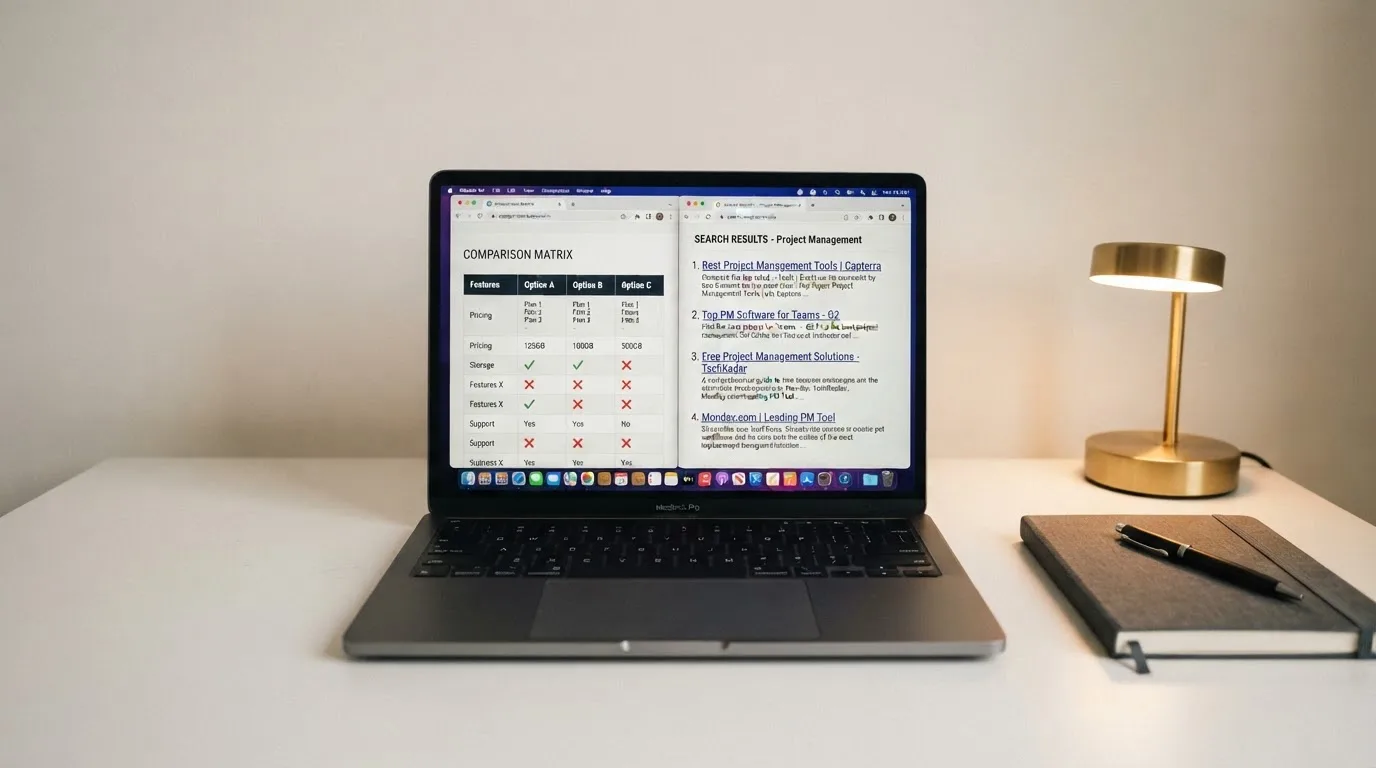
The marketing language clusters around a small set of features: one-click approval, no document upload, instant processing, “no fees”, and a long list of supported methods that reads like the back of a bank statement. The through-line is that the player should not have to do anything between requesting the withdrawal and seeing the money.
In practice, the features that drive that experience are mostly about plumbing. A site with a single cashier provider, a payment processor willing to reverse-pay to the same method the deposit came from, and a low default risk threshold on the first withdrawal can clear the queue without asking the customer for paperwork. None of those things are regulated features in the Australian sense; they are operational decisions the operator is free to make for as long as it is willing to absorb the chargeback risk that comes with skipping the standard KYC step.
What the player notices instead
What a player feels on the other side is the absence of friction rather than the presence of a benefit. There is no upload of a driver’s licence, no selfie, no waiting on a compliance team in another time zone, no request for a utility bill to confirm an address. That absence is real, and it is the entire product.
The features the operator does not advertise are the ones that tend to matter after a win:
- the maximum amount that can be cashed out per day, week or month
- whether bonus winnings carry a separate, lower cash-out cap
- whether the same method used to deposit is the only method allowed for withdrawal
- how the operator handles a partial verification request three days after the win
- whether the licence on display covers Australian residents at all (it does not, for casino games)
These conditions sit in the terms page, not the homepage. They are also where the cost of an “easy” withdrawal tends to surface.
Why “easy” is mostly a verification question
The largest single reason a withdrawal stalls is that the site has decided it needs to confirm the customer’s identity, source of funds, or both, before releasing the funds. Sites that skip this step on the first withdrawal often catch up by the third, or after a win of a certain size, or when the cumulative withdrawals cross a threshold. Easy-withdrawal marketing usually means the threshold is set high enough that most customers never see it; a player who does see it tends to be a player who has just had the kind of session the marketing is aimed at.
That is the structural shape of the offer. It looks frictionless at low stakes and low volume, and it imposes the standard friction at the exact moment the player has the most to lose by waiting.
The payment landscape an Australian actually walks into
The interesting thing about an “easy withdrawal casino” aimed at Australians in 2026 is how little the Australian payment system actually helps the offshore side. Australian banks have spent the last several years closing off the routes an offshore casino needs to look effortless.
Cards and digital wallets
Credit cards have been banned as a payment method for licensed Australian online wagering since 11 June 2024, with the rule extended to credit-related products and digital wallets linked to credit. That rule applies to Australian-licensed operators. Offshore operators are not bound by it, but the banks that issue the cards are.
Westpac runs a gambling transaction block at the card level. It refuses authorisation of transactions registered under the merchant category code for betting and casino gambling on eligible personal credit and debit cards. Commonwealth Bank lets customers apply a gambling lock to eligible cards through its app, and warns that it cannot guarantee every gambling-related purchase will be stopped. ANZ’s gambling block, once turned on, also blocks gambling transactions run through a digital wallet such as Apple Pay on the same card — not just the plastic — and removing it requires a 48-hour waiting period.
That is the practical shape of the credit-card and wallet route for an Australian player in 2026. The site may list Visa, Mastercard or Apple Pay on its deposit page; whether the player’s bank accepts the transaction is a different decision, made at the issuing bank’s switch, before the casino’s cashier ever sees the request. Apple itself charges nothing for using Apple Pay, but transaction limits and PIN requirements are set by the card issuer, not by Apple.
By the end of 2025, Apple Pay, Google Pay and Samsung Pay together accounted for around 45% of all card payments in Australia by number, which means the route most Australians are used to tapping is, for gambling purposes, exactly the route their own bank is most likely to block.
PayID, Osko and BPAY
PayID and Osko are the workhorses of the Australian instant-payment system. Osko transfers between participating banks land in under a minute, 24/7, including weekends, whether addressed to a BSB and account number or to a PayID. PayID-based instant transfers are available at over 100 Australian financial institutions, and more than 25 million PayID identifiers had been registered on Australia’s New Payments Platform as of April 2025.
For an offshore casino, the same system cuts both ways. A PayID transfer shows the name of the account holder before the money is sent; Australian Payments Plus warns that being asked to transfer money to a PayID on an illegal gambling site almost certainly means a scam site. The transfer itself is fast — but the recipient is identified, and that identification is visible to the player before they commit.
BPAY is the older bill-payment rail, operating in Australia since 1997 and available through the online banking of over 140 banks and financial institutions. It is built around a Biller Code and a Customer Reference Number on a bill, which is the wrong shape for a casino withdrawal. The licensed operators that do use the Australian banking system at all tend to use it for deposit collection, not for paying winners back.
What AUSTRAC sees and doesn’t
AUSTRAC’s threshold-transaction-report rule, which requires reporting of transfers of A$10,000 or more, applies only to physical cash. Ordinary electronic bank transfers are not subject to that per-transaction reporting requirement, regardless of the amount sent. There is no equivalent automatic-reporting trigger for a casino withdrawal paid through the NPP.
That does not mean the money is invisible. The receiving bank still sees the transfer, the originating account is still named, and an investigation that started somewhere else can still reach the transaction record. It means only that the withdrawal itself does not trip a wire to AUSTRAC by its size alone.
What the merchant sees on the other end
The Australian bank on the other end of the withdrawal is the part of the chain most offshore casinos do not talk about. The casino’s payment processor, the merchant account the casino uses, the acquirer that sits behind it, and the card network or NPP participant that finally pays the money out are all entities that operate under Australian rules and under the rules of the regulator that licensed them. A withdrawal that a casino is willing to release can still be delayed, returned or held at any of those layers, for reasons that have nothing to do with the casino’s own processing time.
The fastest advertised withdrawal on an offshore casino’s marketing page therefore has a hard ceiling that the casino does not control: the speed at which the Australian banking system is prepared to deliver funds to an account whose origin is an entity the ACMA has told to stop offering its product to Australians. That ceiling is not on any comparison table.
| Payment Method | Typical Speed | Availability | Notes |
|---|---|---|---|
| Osko / PayID | Near-instant | High | 24/7 bank transfers |
| BPAY | 1–3 business days | High | Bill payment structure |
| Credit/Debit Card | Variable | Restricted | Heavily blocked by banks |
How quickly the ACMA has been closing these sites down
The clearest single picture of how Australian regulators have treated the “easy withdrawal casino” market is the pace at which they have been blocking the sites themselves.
In November 2019 the ACMA issued its first blocking request under the strengthened Interactive Gambling Act regime. By June 2026, the running total of illegal gambling and affiliate marketing websites blocked since that first request had reached 1,751 — a figure reported in the 26 June 2026 round of enforcement, alongside the announcement that more than 230 unlicensed gambling services had left the Australian market since enforcement was intensified in 2017.
A single rate captures what that pace has meant for the sites on the comparison table below. Spread across roughly 79 months between the first blocking request in November 2019 and the June 2026 round, the running total of 1,751 blocked sites works out to an average of around 22 sites blocked per month — a band that sits a little higher in the heavy rounds and lower in the quiet ones, but holds its order of magnitude across the whole period. That is the rate at which the ACMA has been removing the easy-withdrawal pitch from Australian-facing search results.
The 26 June 2026 round alone added twelve more sites to the blocked list: 7Signs, ChromaBet, Donbet, Duospin, Freshbet, Slots Gem, Jacks Club, Lucky Start, Pointsbetz, Spinrise, Vinyl Casino and Wildsino. That is the most recent data point in the figure, and it is the one the band should be read against.
| Brand | ACMA action and date | Operator named by the ACMA | Subject support |
|---|---|---|---|
| RocketPlay | Formal warning, March 2026; earlier Dama N.V., May 2022 | Pulsup Ltd (Rocketplay) | Listings-only (Gambling Insider) |
| Level Up Casino | Formal warning, May 2022 | Dama N.V. | Listings-only (Westpac) |
| Woo Casino | Formal warning, March 2025 | Dama N.V. | — |
| Spirit Casino | Formal warning, May 2025 | Dama N.V. | — |
| National Casino | Formal warning, July 2025 | Consolutetish S.R.L. | Listings-only (acma.gov.au, austrac.gov.au, betstop.gov.au) |
| Bizzo Casino | Formal warning, July 2025; earlier TechSolutions, 2022 | Consolutetish S.R.L. | Listings-only (Gamblinginsider.com) |
| Ignition Casino | Formal warning, July 2025 | Bamboo Media | — |
| Instant Casino | Formal warning, February 2025 | EOD Code SRL | Listings-only (ecoPayz, PayID) |
| Jackbit | Formal warning, April 2026 | Ryker B.V. | — |
| Casino Intense | Formal warning, April 2025 | Sterplay Holding Ltd | Listings-only (austrac.gov.au, betstop.gov.au, Gamblinginsider.com) |
| Sky Crown | Formal warning, September 2022 | Hollycorn N.V. | — |
The table is built from the ACMA’s own register. Each row is an operator the ACMA has formally told to stop offering prohibited interactive gambling services to Australians. Where the same operator shows up twice, it is because the ACMA came back with a second warning after the first one did not produce a change; where a different operator is named on the second warning, it is because the brand moved.
What an “easy withdrawal casino” actually is
The phrase covers a particular kind of offshore operator: one that runs its own cashier, sets its own compliance thresholds, and serves customers in jurisdictions — including Australia — where its product is not licensed to be sold. The withdrawal process can be made to look as smooth as the operator wants, because the operator is the only party setting the standard.
The product the brand is selling
The product is access to online casino games — slots, table games, live dealer — to a customer base that cannot legally be supplied with those games domestically. The offshore operator takes the position that it is licensed in some other jurisdiction (Curaçao, Anjouan, the Kahnawake Territory are the usual names on the licence line of the page), and that its licence covers customers regardless of where they live. Under Australian law, that position is not a defence.
The Interactive Gambling Act 2001, strengthened by the Interactive Gambling Amendment Act 2017, makes it an offence to provide online casino games, online pokies or in-play betting to a person physically in Australia. The offence sits with the provider, not the player. What that means in practice is that the player is not prosecuted for using the site, but the player is also not protected by any Australian regime when the site stops paying.
The cash-out process, end to end
In its smoothest form, the cash-out runs like this. The player requests a withdrawal to the same method that was used to deposit. The operator’s cashier marks the request as approved, often automatically. The payment processor routes the funds back to the originating method — a bank transfer to the same account, an e-wallet credit to the same wallet, sometimes a crypto transfer to the same wallet address. The player sees the money inside whatever window the operator advertised on its homepage.
In its rougher form, the same flow picks up extra steps. The operator runs an automated KYC check, asks for a photo of a card or an ID document, requests a source-of-funds declaration, asks for a screenshot of a bank statement, or puts the request into a manual review queue that takes 48 to 72 hours to clear. The player who hits these steps will usually have hit one of the trigger conditions — the cumulative withdrawal threshold, a win above a certain size, a deposit pattern the operator’s risk model has flagged, a name or address mismatch.
What the licence on display actually covers
The licence displayed in the footer of an offshore casino page is a real licence, issued by a real regulator, and it covers a real set of obligations — but it does not cover the player in front of the screen. It is a licence to operate the casino in the jurisdiction that issued it. It is not a licence to supply online casino games to a person in Australia. The casino’s own terms page usually contains a country-exclusion list and an “your responsibility to check your local law” clause that says exactly that, in smaller type.
The honest reading of the footer licence is “this operator is regulated somewhere, by someone, for someone else.” The player in Australia is not within that regulated perimeter.
The cost of an apparently frictionless withdrawal
The friction that doesn’t appear in the cash-out flow shows up elsewhere, and that is where the cost sits:
- if the operator is blocked mid-session, the balance on the account is stuck inside an entity that may or may not still exist in a week
- if the operator decides the player has breached a bonus term, the withdrawal can be refused or reduced after the fact
- if the player has a complaint about a refused withdrawal, the only available recourse is the regulator named on the licence line, which is not an Australian regulator
- if the player has a complaint about how the operator handled their data, the same applies
- if the player needs to stop, BetStop — the National Self-Exclusion Register — does not bind the operator, because the operator is not connected to it
The friction is not absent. It has just been moved to the place where the player is least equipped to deal with it.
The legality question, plainly stated
Australia’s position on online casinos is not ambiguous, and the ACMA’s position on operators that target Australians is not either.
What is and isn’t licensable in Australia
The Interactive Gambling Act 2001 prohibits the supply of online casino games, online pokies and in-play betting to people in Australia. No state or territory licences those products. What is licensable is wagering on racing and sporting events placed before the event, lotteries and keno.
In practice, online wagering on sport and racing is licensed by the Northern Territory. The Northern Territory Racing and Wagering Commission regulates 52 of Australia’s online bookmakers — including Sportsbet, Bet365 and Ladbrokes — and operates with no full-time staff, meeting once a month in Darwin. That commission is the regulator that exists; it is not the regulator that covers any of the brands on the comparison table above.
What the ACMA actually does
The ACMA investigates complaints, issues formal warnings, and directs Australian internet service providers to block illegal sites. The site-blocking power is what produces the 1,751-site running total quoted above; the formal warnings are the public, named action that puts the operator on the record.
A formal warning is not a prosecution. It is a written notice that the ACMA believes the operator has been supplying prohibited interactive gambling services to Australians and that further action may follow. The warnings published by the ACMA over the brands in the comparison table above are the ACMA’s own statement that the brand has been supplying exactly that.
What the 2026 reform changes
The Interactive Gambling Amendment (Gambling Reform) Bill 2026 passed Parliament on 19 August 2026. Its advertising and inducement measures commence on 1 January 2027. That is a law with a future start date, not a measure that changes the position of any site on a 2026 page. The position in 2026 is the same as the position before the bill passed: online casino games cannot be supplied to Australians, and offshore operators that do so are the subject of ACMA action.
Where the player stands
The player is not prosecuted for using an offshore casino. The offence sits with the provider. The trade-off the player takes on, knowingly or not, is the loss of Australian consumer protection — no complaints body, no local regulator to complain to, no recourse if a withdrawal is refused on a basis the player considers unfair.
A player who has a balance with an offshore casino at the moment that operator is added to the ACMA’s blocking list has a balance with an entity the Australian internet service providers have been ordered to make unreachable. The block is a wire-level decision, made by the Australian ISP on the ACMA’s direction; it does not touch funds already in the casino’s account, and the casino has no obligation to refund them to a customer it can no longer reach by the same route.
Responsible play when the marketed product is itself illegal
A fast, simple withdrawal is not a safety feature. It is the opposite — it is the marketing surface of an operator whose primary customer-acquisition channel is the appearance of being easier than the licensed alternative. The genuine safety tools sit on the other side of the wall.
What BetStop does and doesn’t cover
BetStop, the National Self-Exclusion Register, has been live since August 2023. It binds every Australian-licensed online and phone wagering service. A person registered with BetStop cannot open a new account with a licensed Australian wagering operator, and existing accounts are closed.
It does not bind offshore operators. None of the brands on the comparison table above is connected to BetStop. A self-exclusion through BetStop has no effect on the player’s ability to deposit, play or withdraw at an offshore casino. The exclusion protects the player from the licensed market; the unlicensed market is unaffected.
Bank-side tools
Australian banks have responded to the same problem with their own tools, which work on the payment side rather than the operator side:
- Westpac’s gambling block works at the card level, declining authorisation on transactions registered under the betting and casino gambling merchant category code
- Commonwealth Bank’s gambling lock, applied through the CommBank app, blocks most gambling transactions on eligible cards, with the bank’s own caveat that not every gambling-related purchase will be stopped
- ANZ’s gambling block, activated in the ANZ app, blocks gambling transactions made through a digital wallet on the same card, and requires a 48-hour wait to remove once activated; the bank warns that not all gambling transactions will be blocked and that some non-gambling transactions may be blocked in error
These tools are imperfect — every bank that runs them says so — but they are the only tools that touch the offshore operators directly, because they stop the money at the player’s own bank before it reaches the casino.
Where to get help
The National Gambling Helpline is 1800 858 858, free, 24/7, with chat available through Gambling Help Online. The service is set up for people affected by problem gambling regardless of whether they have used licensed or unlicensed operators, and a call is not a commitment to anything other than a conversation.
What an “easy withdrawal” is worth to a player trying to stop
The structural irony of the easy-withdrawal pitch is that the same speed and simplicity that sells the product to a player in the moment is what makes it the most damaging product for a player trying to stop. A licensed Australian wagering operator is connected to BetStop; an offshore casino is not. A licensed Australian wagering operator will close an account on a self-exclusion request; an offshore casino will, at best, ask the player to confirm. The faster the cash-out, the harder it is to interrupt the next cycle of deposit, play and withdrawal.
That is the cost an “easy withdrawal casino” charges in 2026, once the speed at the cashier is taken off the table and the rest of the position is looked at. The marketing is real. The friction the marketing hides is also real, and it sits on the side of the player who can least afford it.
The brands the ACMA has named
Each brand below is one the ACMA has formally warned under the Interactive Gambling Act 2001 for offering prohibited interactive gambling services to Australians. They are not ranked, they are not recommended, and they are not being suggested as places to play. They are listed because they are the brands the ACMA itself has acted against in the period covered by this page.
RocketPlay
The ACMA’s March 2026 formal warning named Pulsup Ltd as the operator behind Rocketplay.com.au. That warning came on top of a separate May 2022 warning to Dama N.V. over the same brand, which means the ACMA has been telling the operator behind this domain to stop for nearly four years and has had to come back.
RocketPlay’s marketing emphasises speed and a wide cashier, which is the standard shape of the easy-withdrawal pitch. The brand’s appearance on the ACMA’s register twice in four years is what an Australian player is actually being offered when the cashier screen says “fast payout.”
For a player who arrived at this brand through search and is weighing the ACMA’s action against the advertised speed: the ACMA’s action is the part that tells you what the operator does when a regulator is watching. The advertised speed tells you what the operator does when nobody is.
Level Up Casino
The ACMA’s May 2022 warning named Dama N.V. as the operator behind Level Up Casino. Dama N.V. is the same operator named in the 2022 warnings over Rocketplay, Dazard, Wild Tornado, Cobra Casinos and Bambet, which makes it the most-warned operator in the ACMA’s register for online casino products over that period.
A player looking at a Level Up Casino cashier page in 2026 is looking at a cashier page belonging to an entity the ACMA told to stop four years ago. The site’s withdrawal flow is what it has always been. The operator’s status under Australian law is what the ACMA has already said it is.
Woo Casino
The ACMA’s March 2025 formal warning named Dama N.V. as the operator behind Woo Casino, making Woo the second Dama N.V. brand added to the ACMA’s warning list after the May 2022 round. Dama N.V. is now the operator behind a meaningful share of the ACMA’s casino-brand warning history.
Woo Casino markets itself on speed of withdrawal and a generous bonus ladder. Neither claim has anything to do with the ACMA’s action. The ACMA’s action is the only part of the picture that tells a player what the operator has been told, in writing, about serving Australians.
Spirit Casino
The ACMA’s May 2025 formal warning named Dama N.V. as the operator behind Spirit Casino, the third Dama N.V. brand added to the ACMA’s warning list in the period covered by this page. Spirit Casino shares an operator with Woo Casino, with RocketPlay at one remove, and with four other brands warned in 2022.
A player comparing Spirit Casino against Woo Casino on payout speed is comparing two cashier pages operated by the same legal entity, which has been the subject of three separate ACMA formal warnings over its Australian-facing brands.
National Casino
The ACMA’s July 2025 formal warning named Consolutetish S.R.L. as the operator behind National Casino. The same warning covered Bizzo Casino, and was issued alongside a separate warning to Bamboo Media over Ignition Casino.
National Casino markets on a broad cashier and same-day processing. The ACMA’s action sits in the same place it always sits: at the level of the legal entity, not the cashier screen, and the player who sees a National Casino withdrawal in their bank account the same day is seeing the only part of the experience the marketing cares to show.
Bizzo Casino
The ACMA’s July 2025 formal warning named Consolutetish S.R.L. as the operator behind Bizzo Casino, the second brand on the same warning. Bizzo had already been the subject of a 2022 formal warning to TechSolutions (CY) Group Limited and TechSolutions Group N.V., which makes Bizzo the clearest example on the table of a brand that has changed operators and kept the same withdrawal pitch.
For a player weighing Bizzo Casino: the brand’s withdrawal page looks the same in 2026 as it did in 2022. The operator behind it has changed at least twice, and the ACMA has formally warned each iteration.
Ignition Casino
The ACMA’s July 2025 formal warning named Bamboo Media as the operator behind Ignition Casino. Ignition is positioned as a poker-and-casino hybrid aimed at a global market, with the same withdrawal-speed pitch as the rest of the brands on this list.
The ACMA’s warning makes clear that Ignition Casino is being supplied to Australians in breach of the IGA. The site’s withdrawal flow is unchanged by that finding.
Instant Casino
The ACMA’s February 2025 formal warning named EOD Code SRL as the operator behind Instant Casino. Instant Casino is one of the more recent additions to the ACMA’s warning list.
A player reading a withdrawal confirmation from Instant Casino is reading a confirmation issued by an entity the ACMA formally warned seven months before. The speed of the confirmation does not address the regulatory position the confirmation was sent under.
Jackbit
The ACMA’s April 2026 formal warning named Ryker B.V. as the operator behind Jackbit, alongside a separate warning over CasinOK. Jackbit is one of the most recent brands added to the ACMA’s register, and the warning is one of the freshest entries in the table.
Jackbit markets on a crypto-heavy cashier and a fast-payout promise. The ACMA’s April 2026 action is the part of the picture that tells a player what the regulator has seen, and the crypto-heavy cashier is the part of the picture that the ACMA’s credit-and-digital-currency ban for licensed wagering has been aimed at since 2024.
Casino Intense
The ACMA’s April 2025 formal warning named Sterplay Holding Ltd as the operator behind Casino Intense. Casino Intense is one of the smaller brands on the ACMA’s warning list by marketing reach.
The brand’s withdrawal pitch is the standard easy-withdrawal pitch in miniature. The ACMA’s action against it is what an Australian player in 2026 would actually be relying on, if anything, if a withdrawal from Casino Intense were refused.
Sky Crown
The ACMA’s formal warning named Hollycorn N.V. as the operator behind Sky Crown and its sister brand Blue Leo. The warning is one of the older entries on the table, dating to September 2022.
Sky Crown markets itself on a fast withdrawal process and a wide game library. The ACMA’s 2022 warning is the longest-standing item on this page, and the brand’s continued presence in Australian-facing search results is itself a data point about how lightly the easy-withdrawal pitch is constrained by Australian law.
How to read what is on this page
The brands above are presented because the ACMA has formally warned each one over the supply of prohibited interactive gambling services to Australians. The comparison table is built from the ACMA’s register; the operator names are the ACMA’s own, the dates are the ACMA’s own, and the subject-support column reflects what the underlying sources actually carry.
What the table is not, and what this page is not, is a list of places to play. The Interactive Gambling Act 2001 prohibits the supply of these products to people in Australia. The ACMA’s formal warnings are the regulator’s public record that this prohibition has been breached, repeatedly, by every operator on the list. The withdrawal speed those operators advertise is a feature of an illegal product; the cost is everything that sits underneath it.
For a player who has used one of these brands and wants to step away, the tools that work are the ones that work on the payment side rather than the operator side. Westpac’s card-level gambling block, Commonwealth Bank’s gambling lock, and ANZ’s gambling block are the practical instruments; they stop the money before it reaches the cashier, which is the only place an offshore operator’s withdrawal flow can be intercepted. BetStop, the National Self-Exclusion Register, binds the licensed Australian market; it does not bind any brand on this page, and the player who relies on it alone has not been excluded from any of the cashier flows described above.
The National Gambling Helpline (1800 858 858) and Gambling Help Online are the front door for anyone who wants a conversation about what to do next. That conversation is not a referral; it is a service, and it is set up to be the first step regardless of which operators a person has been using.
Frequently asked questions
What usually makes a casino withdrawal process count as easy?
An easy withdrawal is one where the operator sets its verification threshold high enough that most players never trip it. The features that drive it — a single cashier provider, automatic approvals, no manual document checks — are operational choices, not regulated ones, and they apply most consistently to low-stakes, low-volume play. Once a player crosses a cumulative withdrawal threshold, has a win above a certain size, or matches a risk-model flag, the same site will usually run a standard KYC check before releasing funds.
Why do some casino sites ask for identity documents before releasing a withdrawal?
Identity checks before withdrawal are part of the operator’s anti-money-laundering and counter-terrorism-financing obligations under the licence it displays. They exist to confirm that the person requesting the withdrawal is the same person who deposited, and that the funds being withdrawn are legitimate. A site that skips this step on the first withdrawal usually catches up by the third, or after a win large enough to change the risk profile of the account. Easy-withdrawal marketing is built around setting the trigger high enough that most customers never see it.
Is a one-click withdrawal process a sign that a casino site is well run?
A one-click process tells you the operator has decided to defer its compliance checks rather than waive them, and that the operator’s payment processor is willing to handle the chargeback risk that comes with that decision. It does not tell you whether the operator is licensed to serve customers in your country (for Australians, none of these operators are), whether the operator is on a regulator’s warning list (most are), or whether a complaint about a refused withdrawal has any path to resolution. The smoothness of the button is a feature of the cashier screen; it is not a measure of the operator.
Does an easy withdrawal process mean fewer fees are taken out along the way?
An easy-withdrawal site does not necessarily charge lower fees than a slower one, because the fees on an offshore casino withdrawal are mostly the fees on the underlying payment route — a card acquirer’s interchange, an e-wallet’s transfer fee, a crypto network’s gas cost — rather than fees the casino itself levies. A site that advertises “no fees” is usually saying it does not add a fee of its own on top of the route’s fee; it is not saying the route is free. The fees the player actually pays are the ones the underlying payment system charges, regardless of how the casino’s cashier labels them.
Can a withdrawal request be cancelled after it has been submitted?
Most offshore casinos allow the player to cancel a pending withdrawal while the request is still in the operator’s queue. Once the operator has approved the request and released it to the payment processor, cancellation is no longer possible on the casino’s side. At that point the money is in transit through whatever route the casino used, and the only way to reverse it is for the receiving bank to return the funds. A reverse-transaction at the bank is not a withdrawal cancellation in any sense the player controls.